-
-
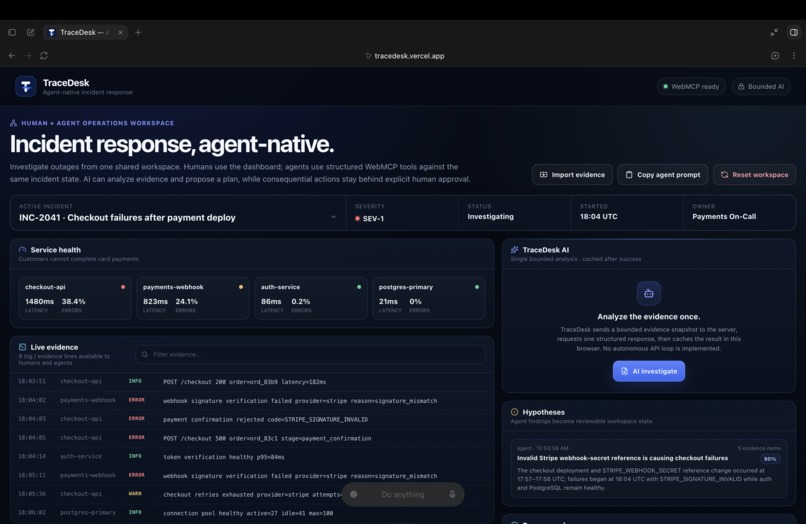
UI image #1 during demo
-
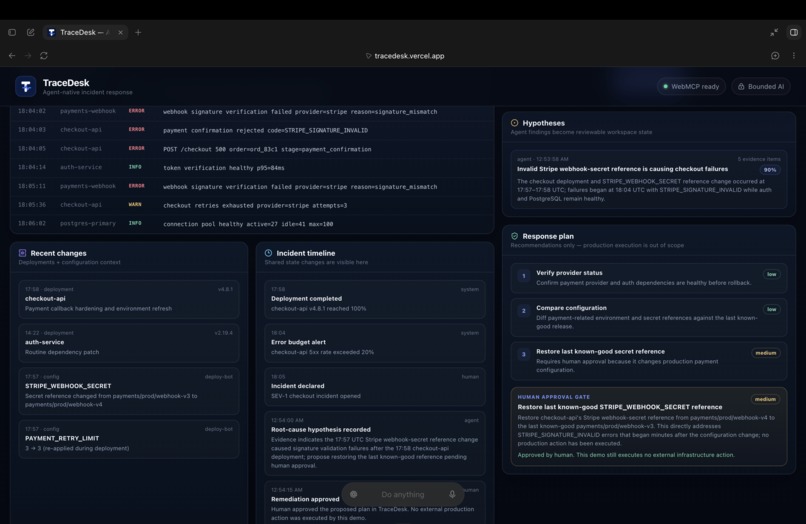
UI image #2 during demo
-
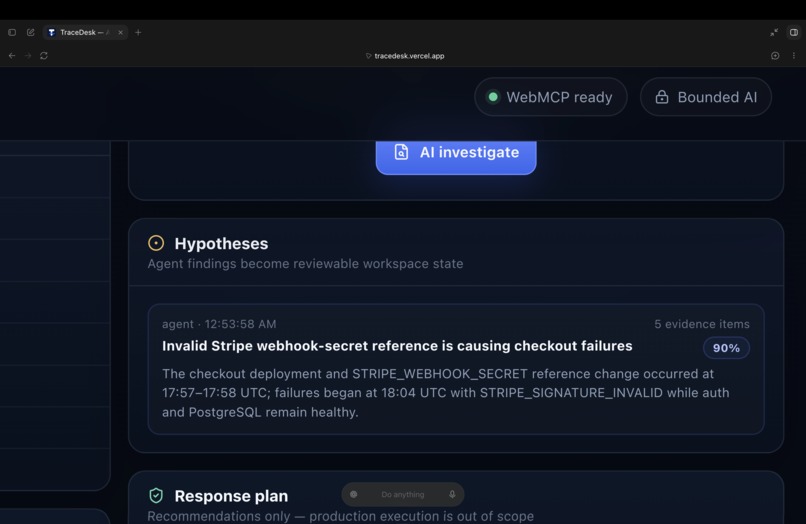
UI image #3 during demo
-
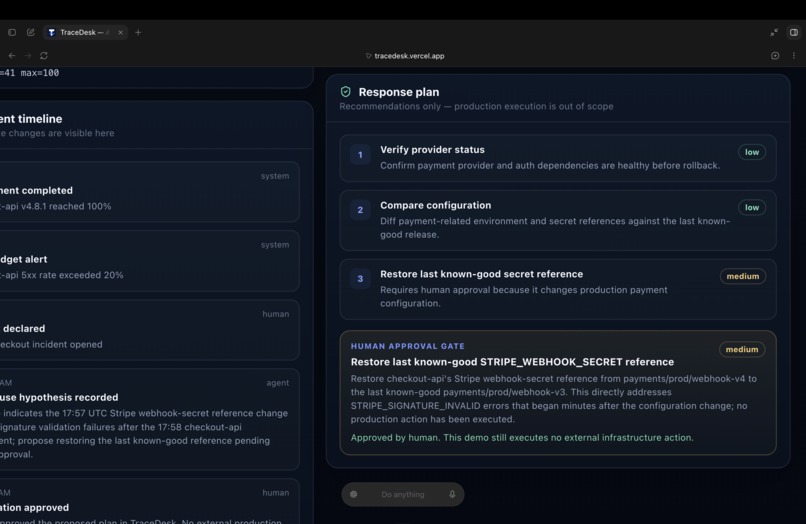
UI image #4 during demo
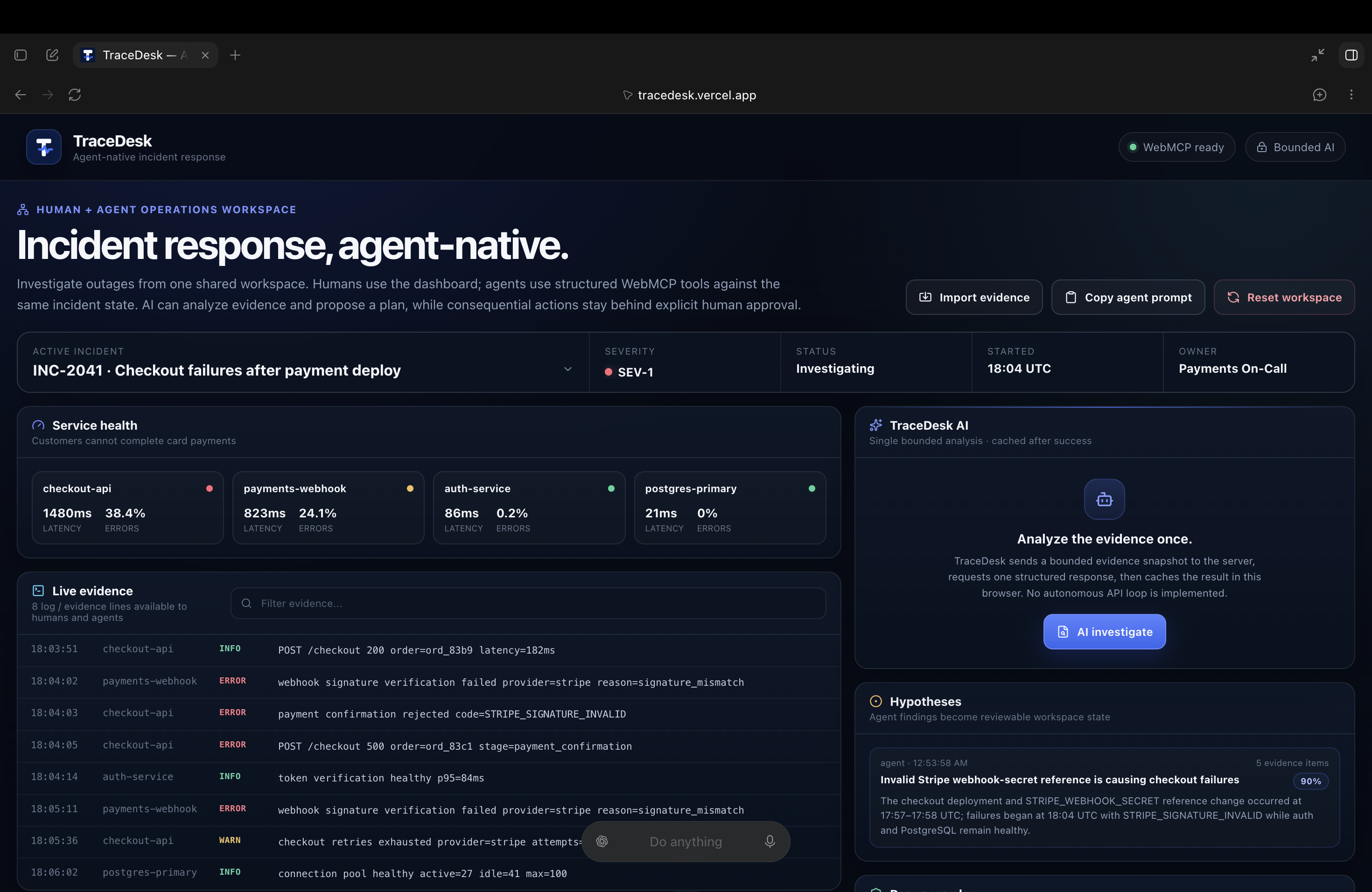
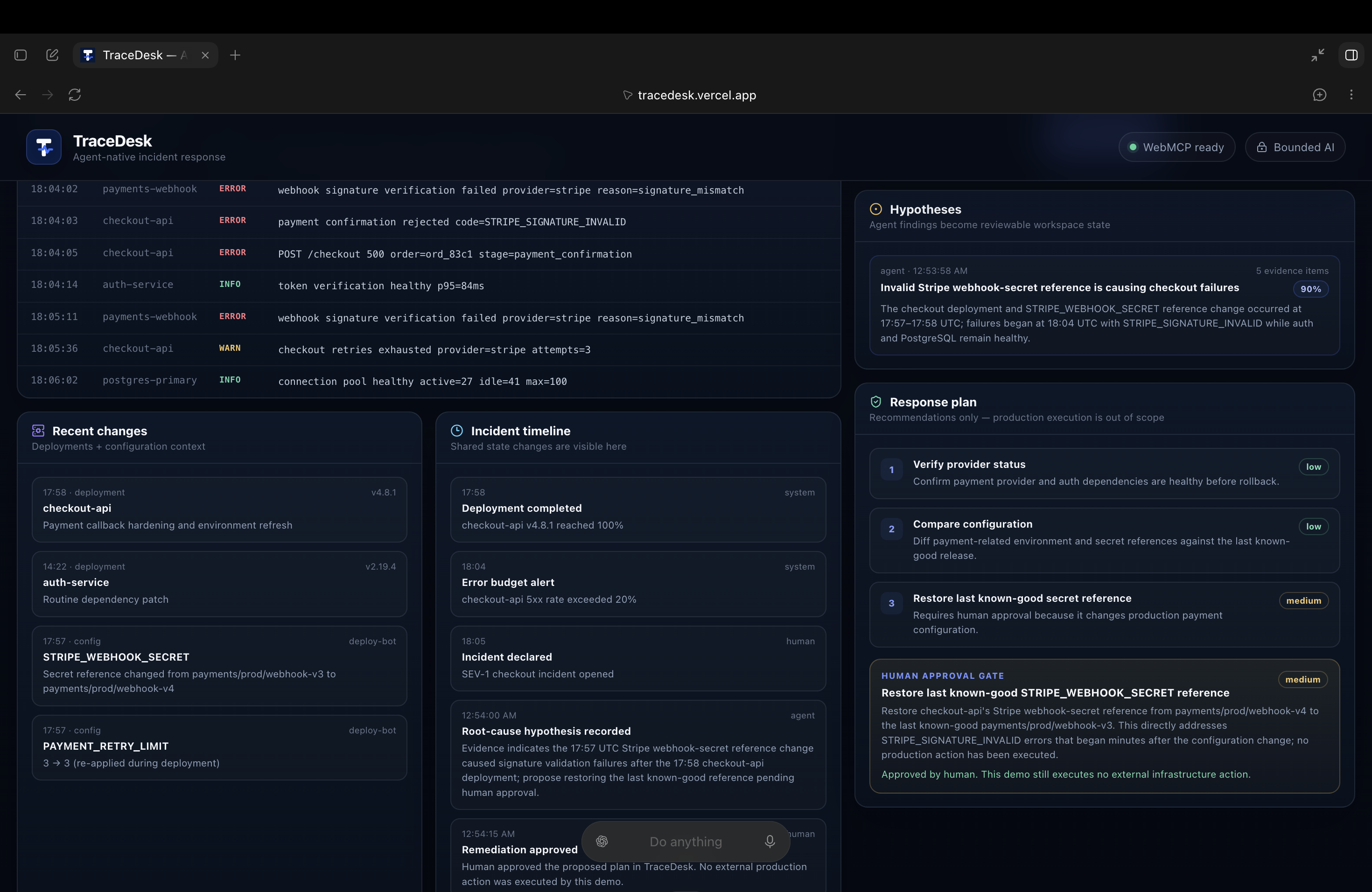
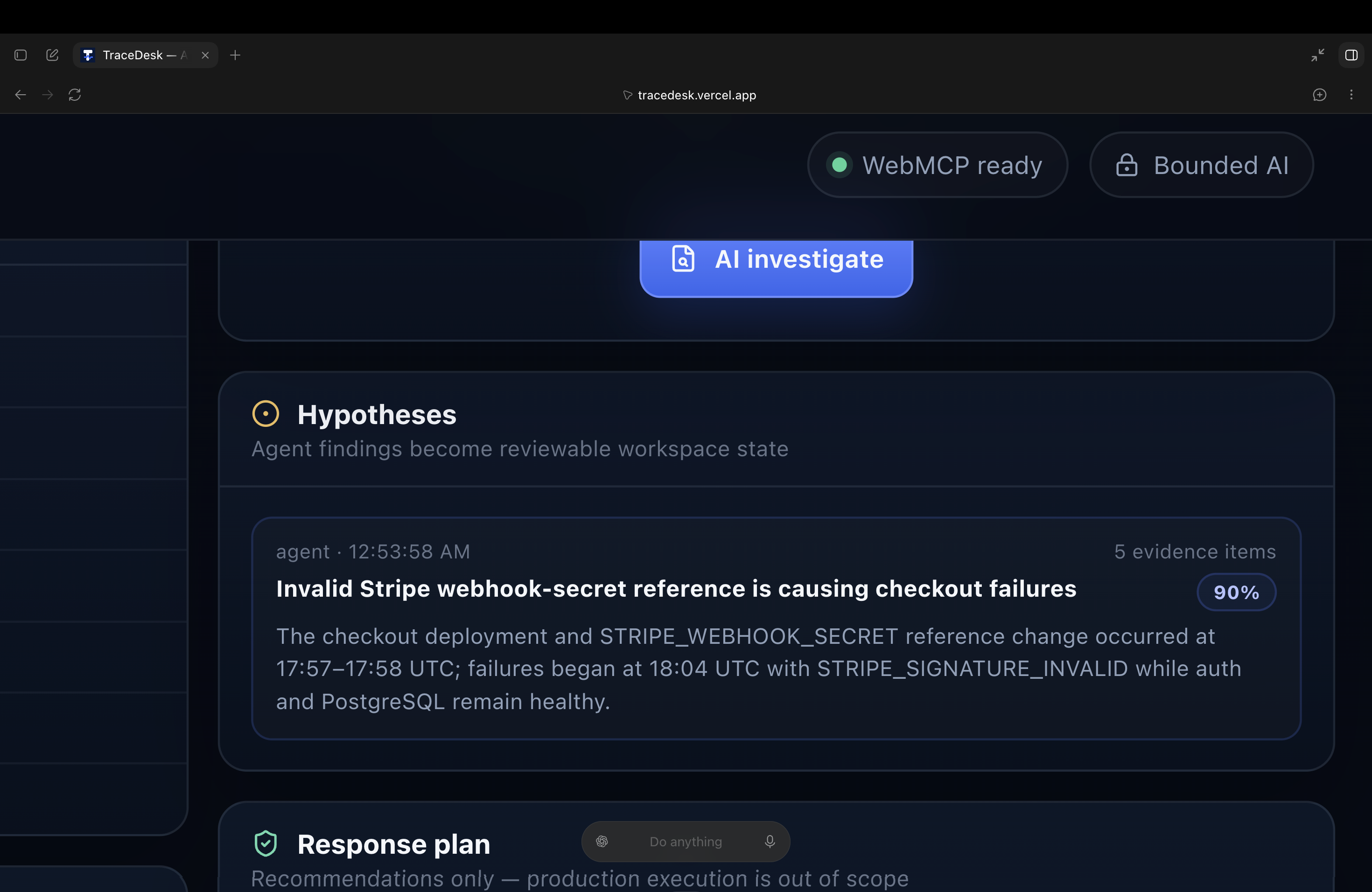
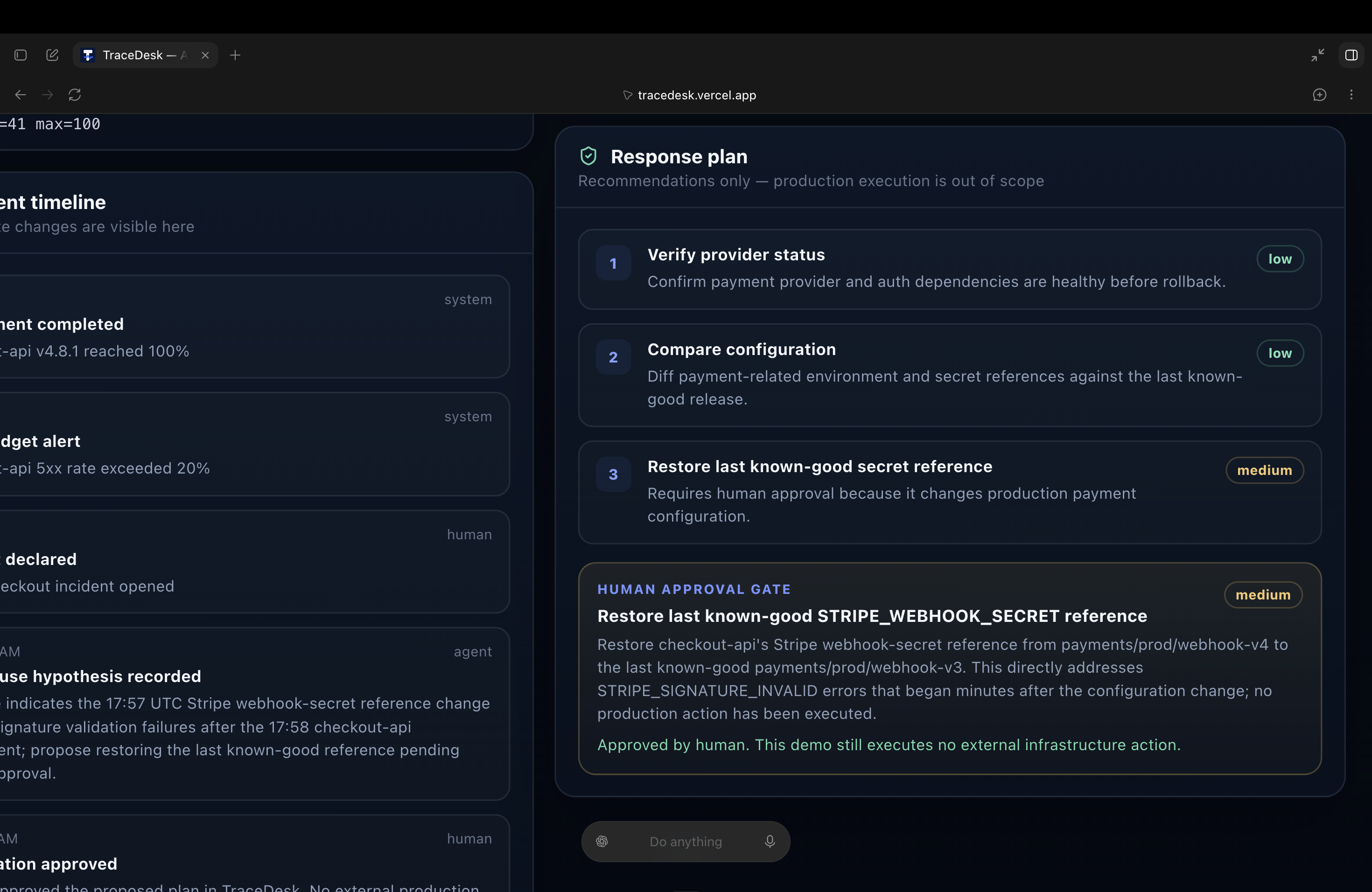
Inspiration
Incident response is still highly fragmented. Engineers investigating an outage often jump between logs, deployment history, configuration changes, dashboards, runbooks, and communication tools while trying to determine what actually went wrong.
TraceDesk explores what incident response could look like when a web application is designed for both humans and AI agents from the beginning.
What it does
TraceDesk is an AI-powered incident response workspace where humans and agents investigate software outages together.
The workspace combines incident details, service health, logs, recent deployments, configuration changes, evidence, hypotheses, and remediation plans in one interface.
Using WebMCP, an AI agent can directly access structured TraceDesk capabilities such as searching logs, inspecting deployments, reviewing configuration changes, adding evidence, updating hypotheses, and preparing remediation plans.
The human remains in control of consequential actions.
Why WebMCP
Without WebMCP, an AI agent would need to interpret the visual interface, find buttons, navigate panels, and infer how to interact with the application.
TraceDesk instead exposes meaningful application capabilities directly as structured WebMCP tools.
This allows the agent to focus on investigating the incident rather than figuring out how to operate the website.
Humans use the visual workspace while agents use structured tools, but both collaborate on the same incident state.
Human + agent collaboration
A human can ask an agent to investigate an outage and determine the most likely root cause.
The agent can then use TraceDesk's WebMCP tools to gather evidence from logs, deployments, service health, and configuration changes before adding its findings back into the shared workspace.
The human can review the evidence, confidence, and proposed remediation before approving any high-risk action.
How we built it
TraceDesk is built with TypeScript, Next.js, React, Tailwind CSS, WebMCP, and the OpenAI API.
WebMCP tools are registered by the application and mapped to real TraceDesk functionality. The OpenAI API provides incident analysis and structured reasoning over technical evidence.
The application is deployed on Vercel and the source code is publicly available on GitHub.
Challenges
The main challenge was designing WebMCP tools that represent meaningful product capabilities rather than simply exposing UI controls.
We also focused on separating autonomous investigation from actions that should require human approval.
What we learned
WebMCP changes the way a web product can be designed. Instead of treating AI as a chatbot added on top of an existing application, the application itself can expose structured capabilities that agents understand and use directly.
What's next
TraceDesk could eventually connect to real observability platforms, deployment systems, incident-management tools, and infrastructure providers, allowing agents to investigate real production incidents while preserving human oversight.
Built With
- api
- css
- javascript
- next.js
- openai
- react
- tailwind
- typescript
- vercel
- webmcp

Log in or sign up for Devpost to join the conversation.