-
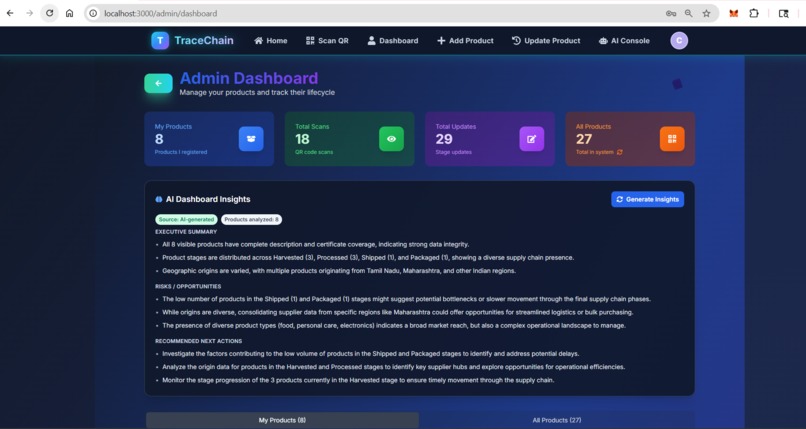
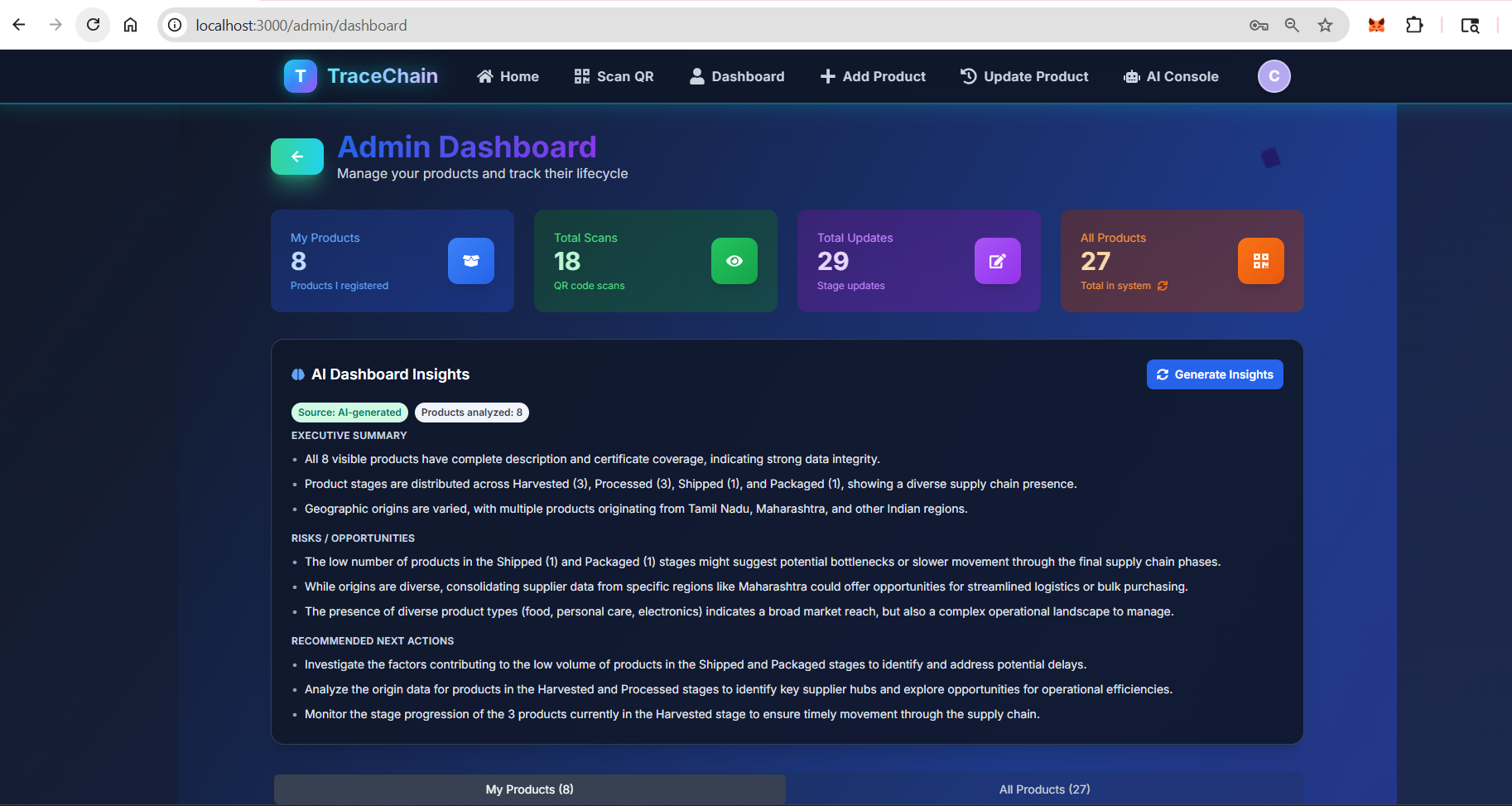
Admin dashboard
-
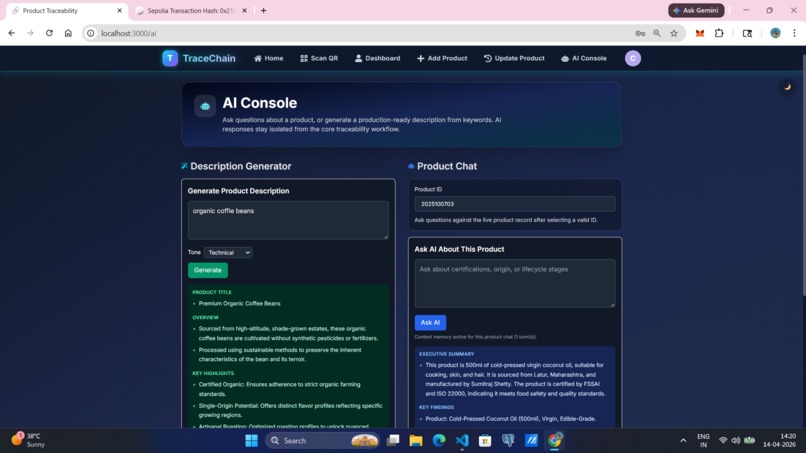
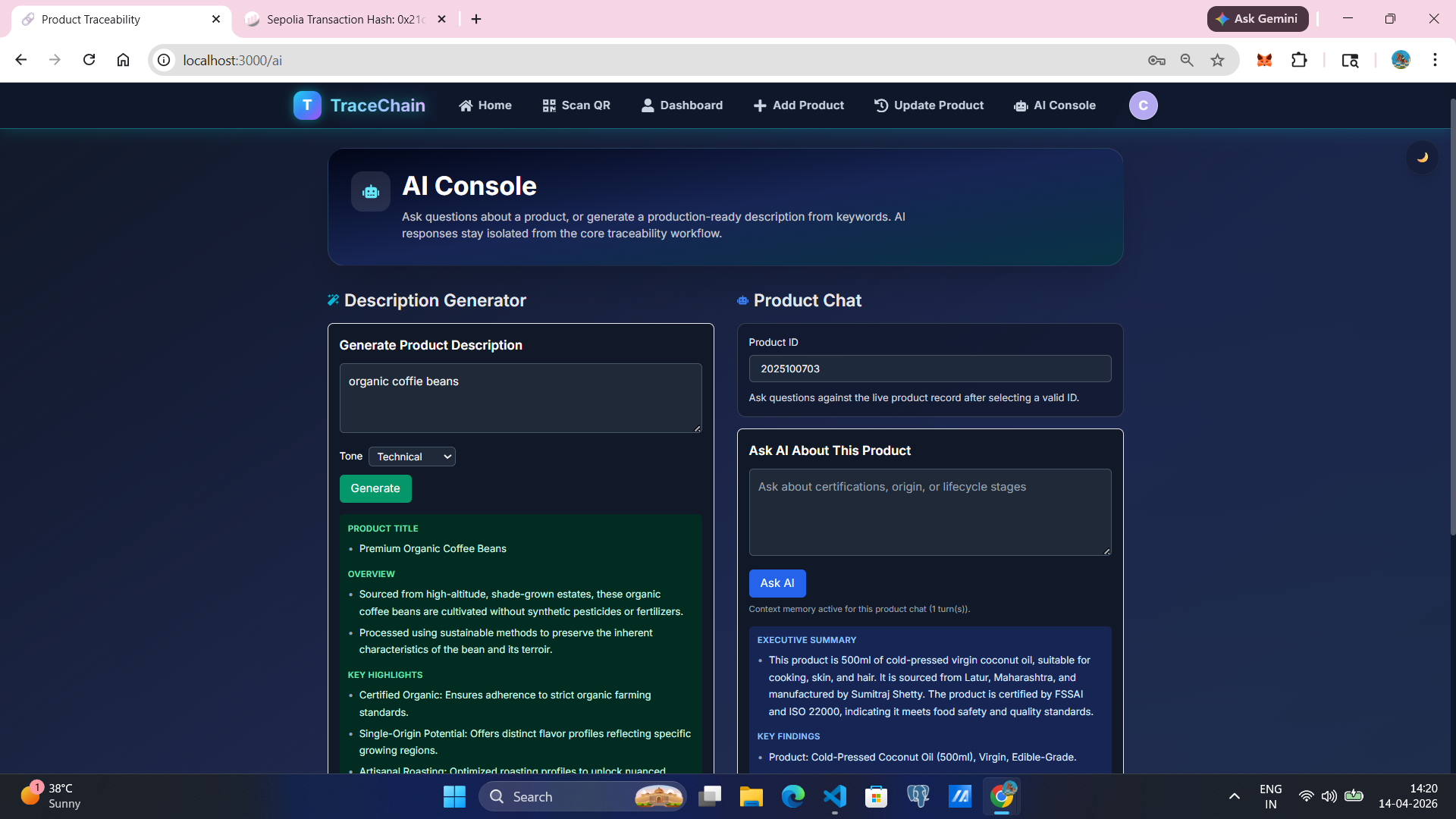
AI console
-
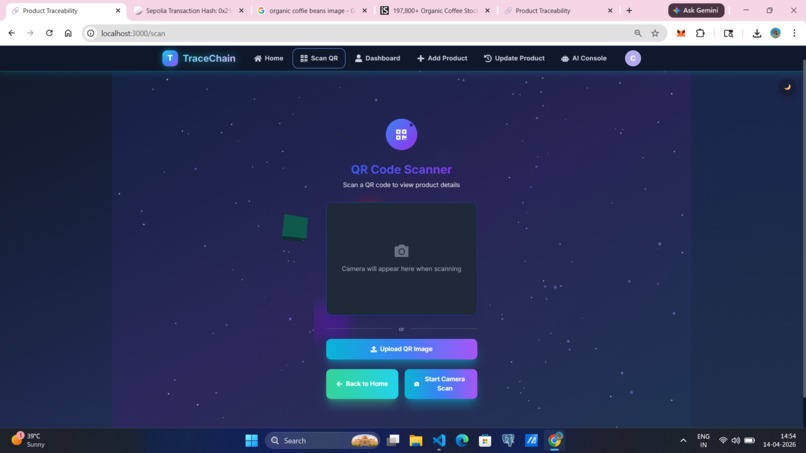
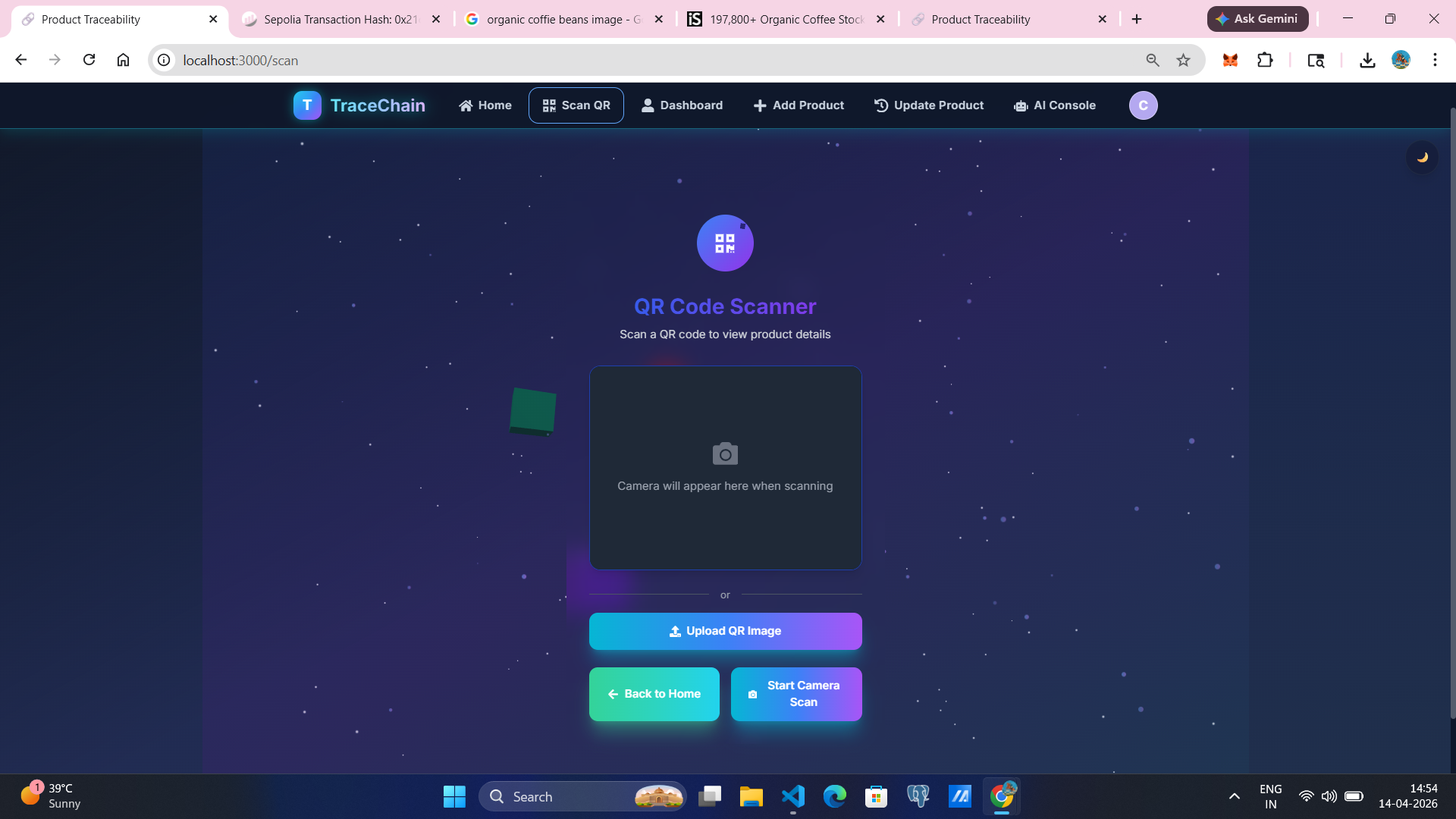
QR Scanner
-
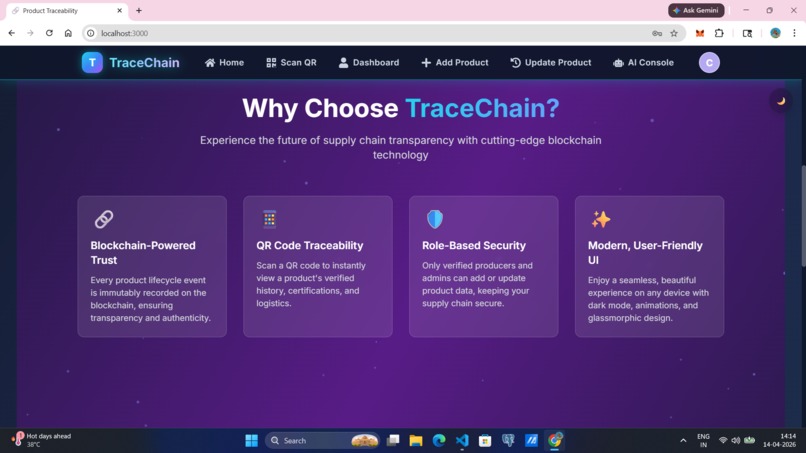
Info
-

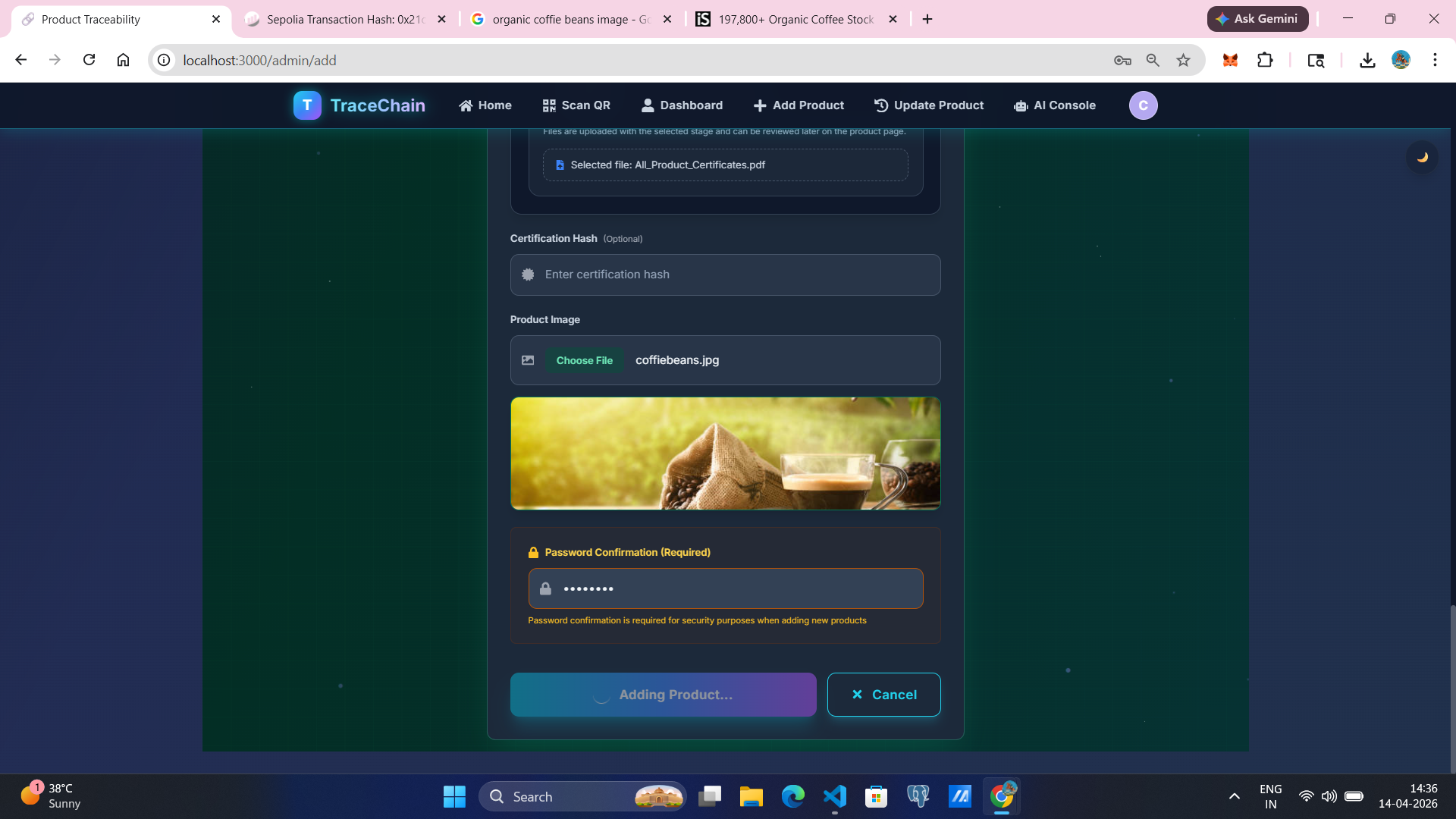
How to add Product?
-
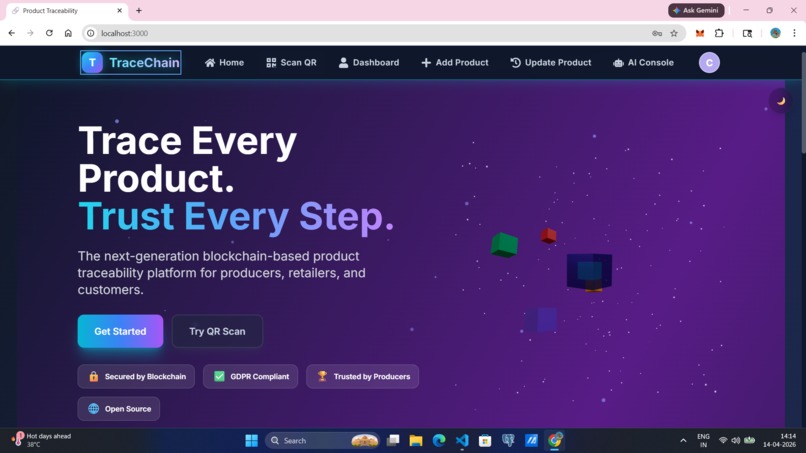
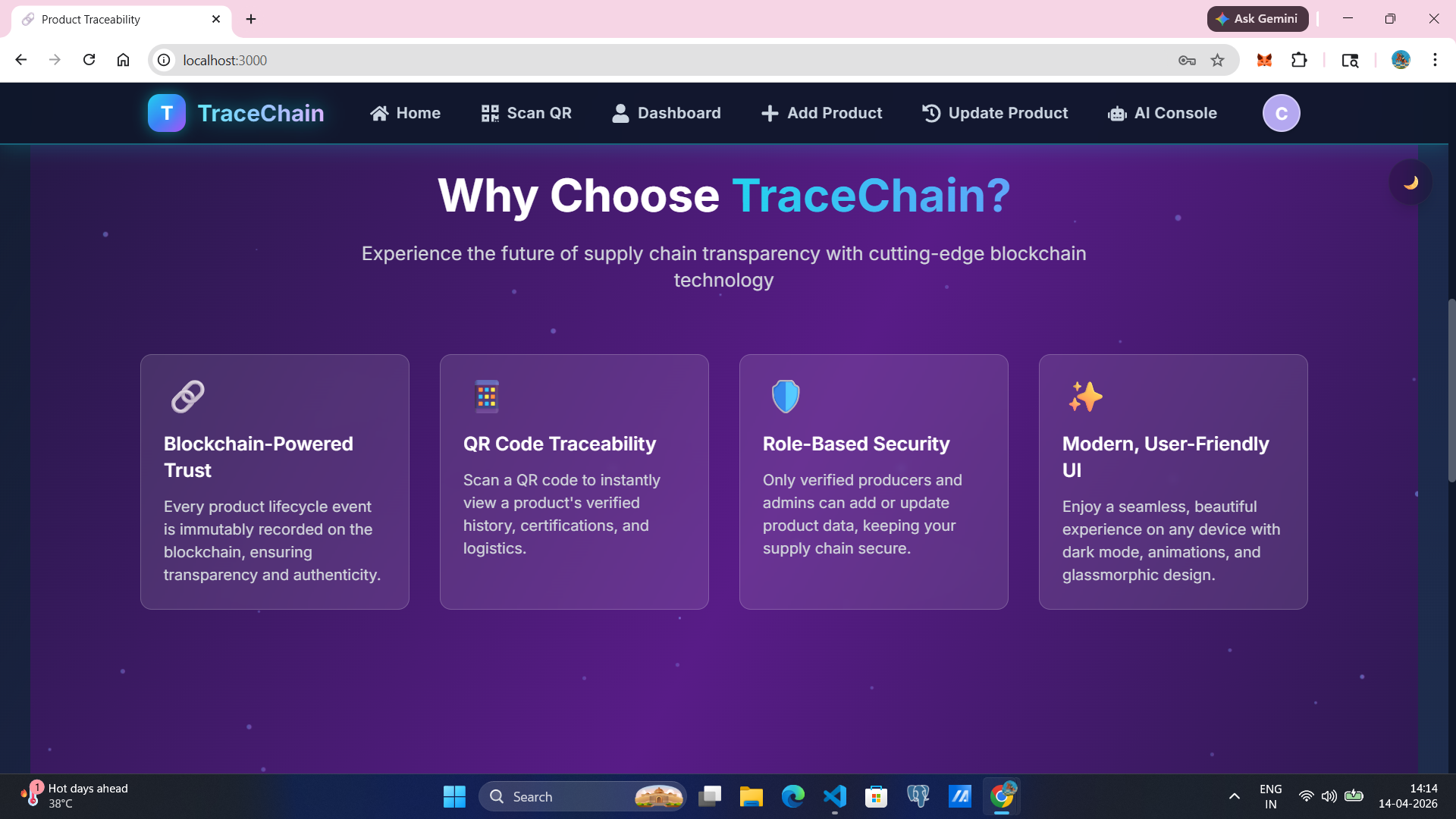
Home page
-
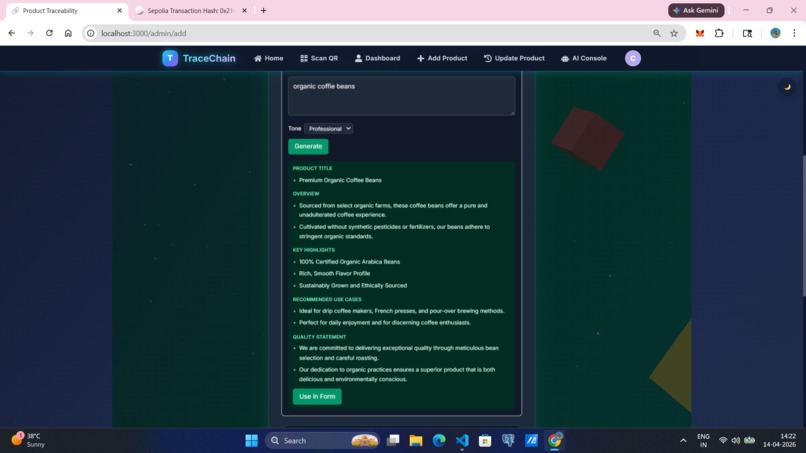
AI ChatBot
-
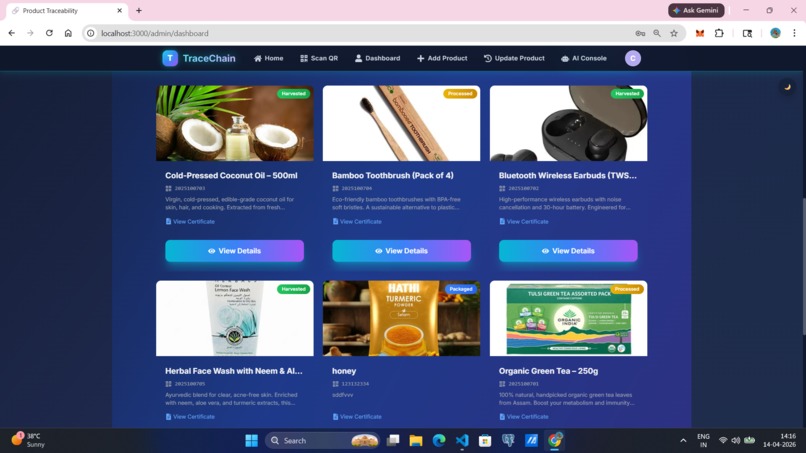
Listed Products UI
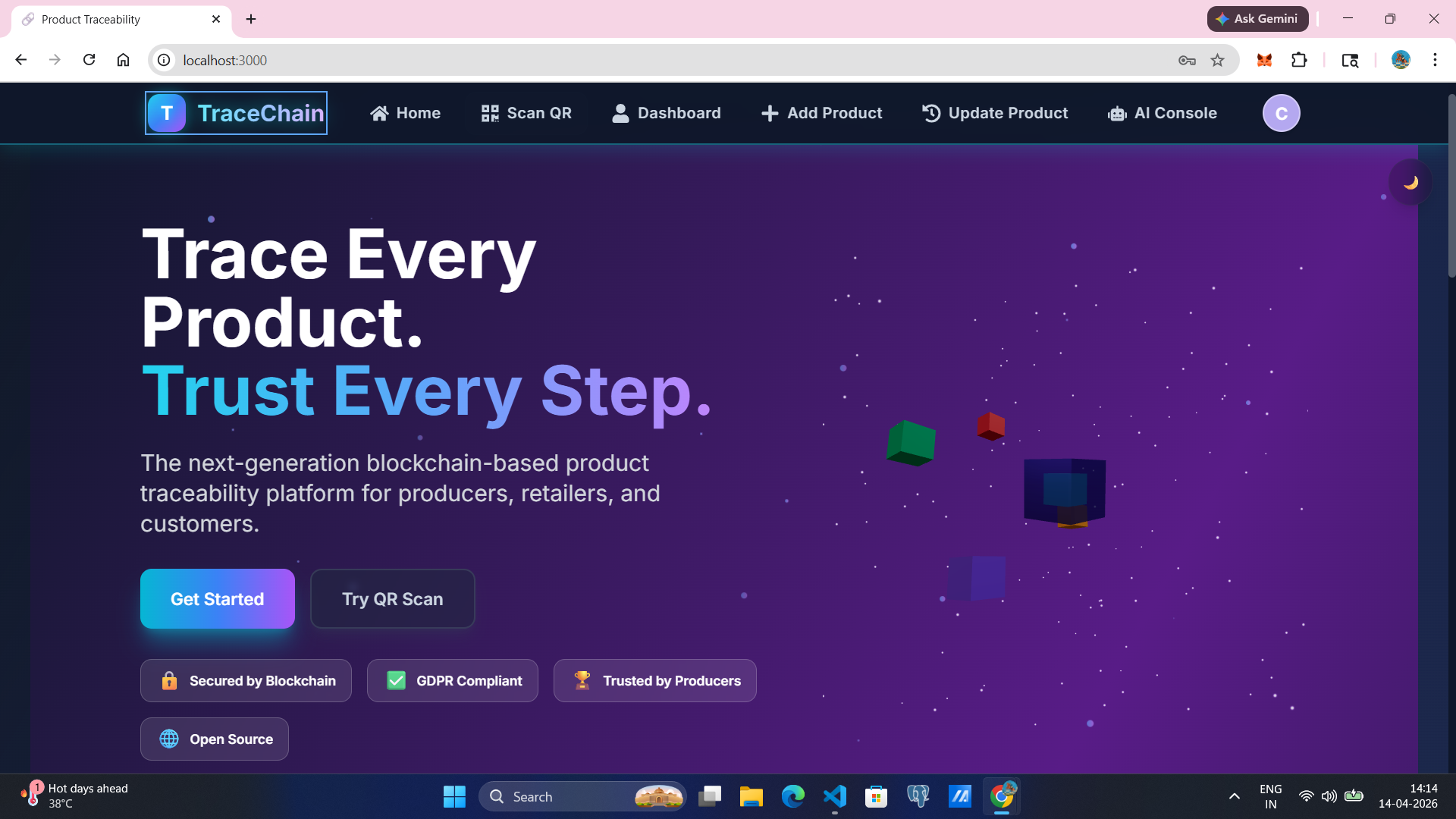
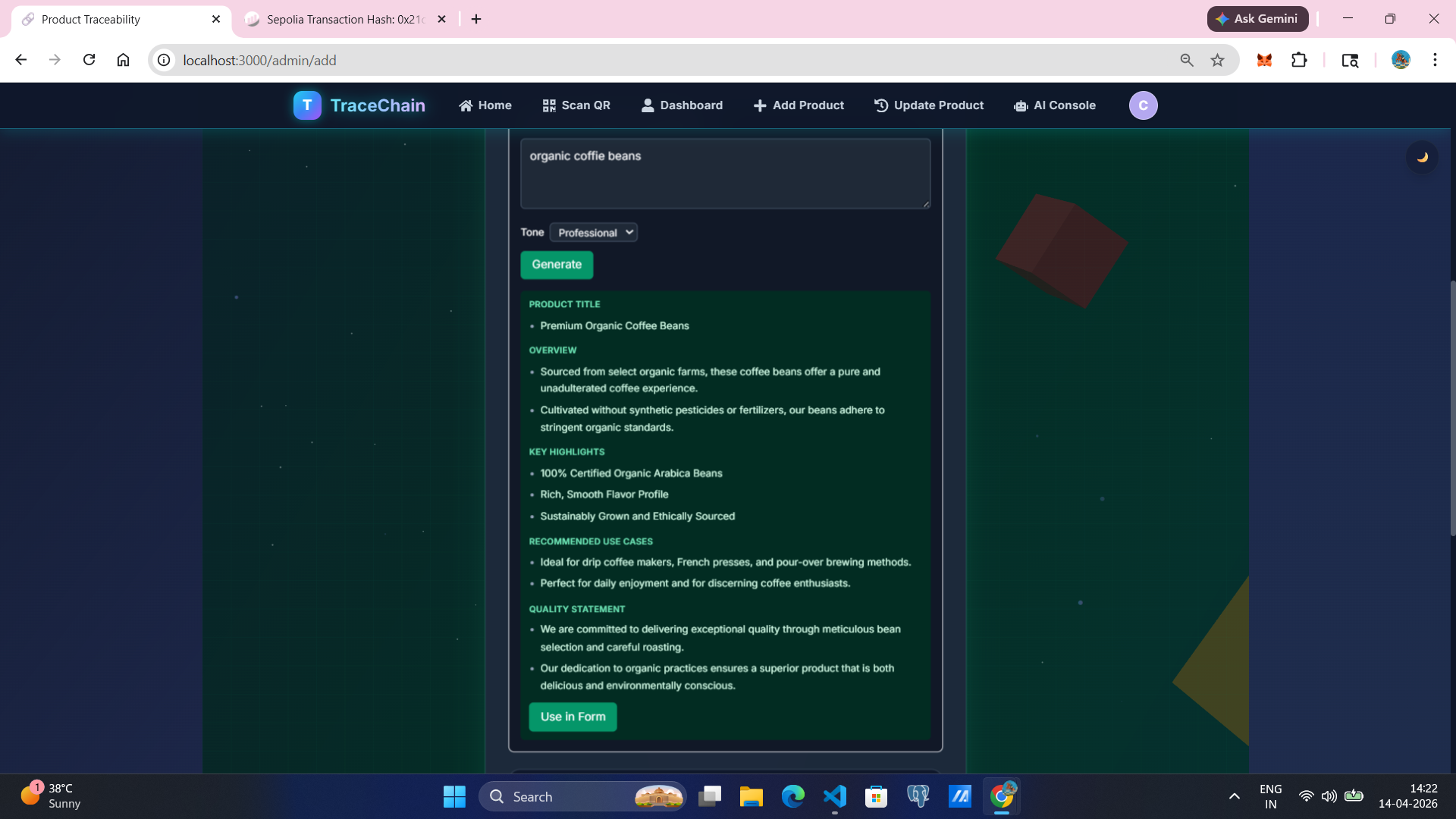
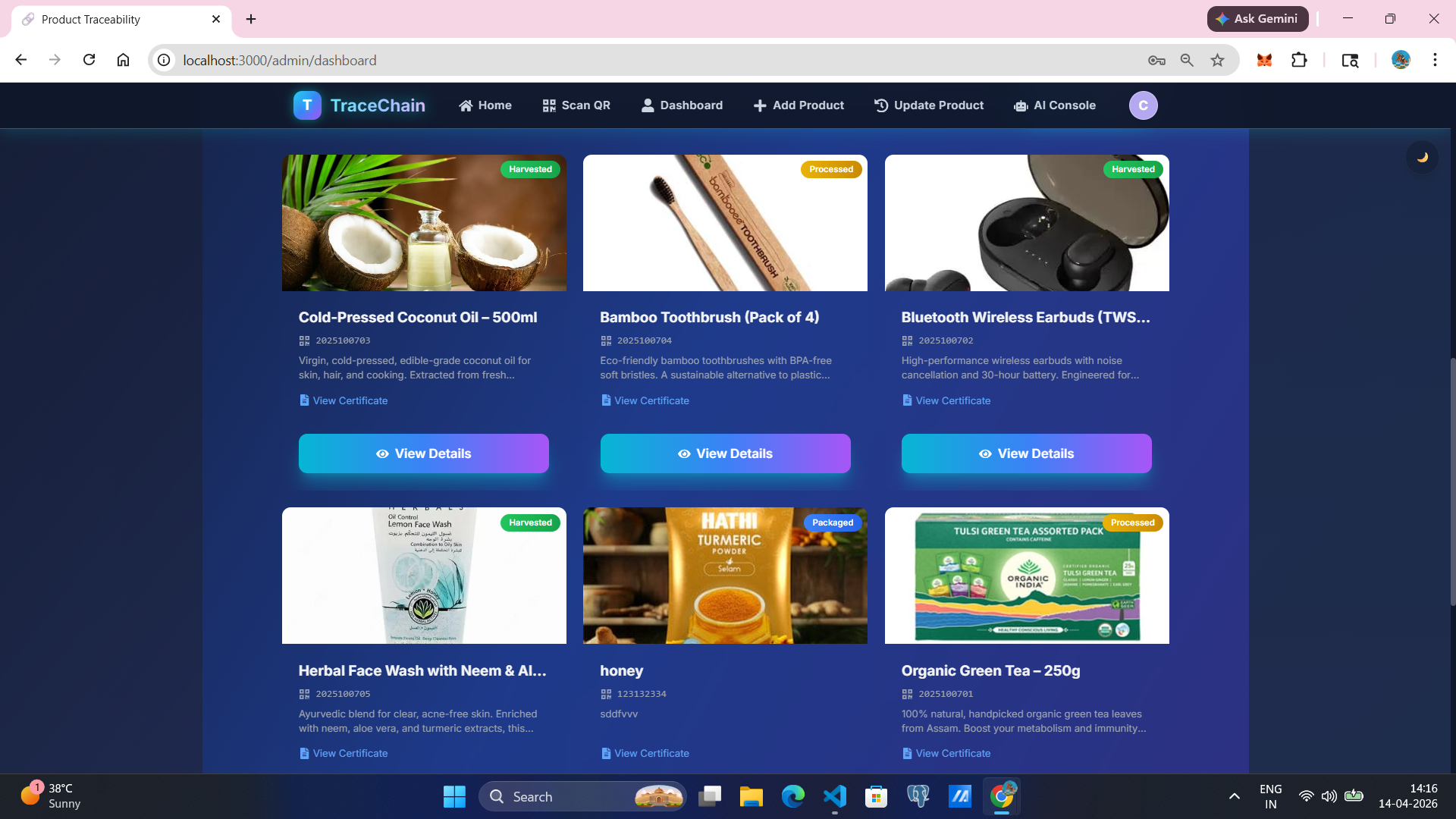
TRACECHAIN is a web-based platform designed to solve one of the most critical issues in modern supply chains—lack of transparency and trust. In industries such as food, agriculture, and pharmaceuticals, verifying a product’s origin, authenticity, and journey is extremely difficult due to fragmented data and easily tampered traditional systems.
The idea for TRACECHAIN was inspired by the increasing number of counterfeit products and the absence of a unified system that ensures end-to-end traceability. We wanted to create a solution where every stakeholder—from manufacturer to consumer—can trust the product data without relying on centralized or manipulable systems.
What Inspired Us Growing cases of fake medicines and adulterated food products Lack of consumer visibility into product origins Inefficiencies in manual record-keeping systems Need for trustworthy digital verification using emerging technologies
These challenges motivated us to combine blockchain technology with AI and QR-based systems to create a transparent and reliable ecosystem.
How We Built the Project
TRACECHAIN is built using a multi-layered architecture integrating frontend, backend, blockchain, and AI components.
System Workflow
The overall workflow follows: Product Creation →Event Recording →Blockchain Anchoring →QR Scan →Verification
Key Technologies Used Frontend: React.js (User dashboards, QR scanning interface) Backend: Node.js + Express.js (API handling, authentication, business logic) Database: MongoDB (stores product metadata and events) Blockchain: Smart contracts (Polygon/Ethereum) for immutable records Cloud Storage: For certificates and documents AI Integration: Google Gemini for intelligent assistance Core Functional Flow Manufacturer registers a product System generates a unique product ID + QR code Supply chain stakeholders update product events Data is stored and hashed into blockchain Consumer scans QR code to verify product authenticity Role of AI
What We Learned
Through this project, we gained practical and technical insights into:
Blockchain fundamentals and smart contract usage Designing tamper-proof systems Implementing role-based access control (RBAC) Integrating AI into real-world applications Building scalable full-stack web applications Handling real-world supply chain complexities Challenges We Faced
Blockchain Integration Understanding how to efficiently store data on-chain while keeping costs low was challenging. We solved this by storing only hashed references instead of full data.
Data Consistency Across Stakeholders Ensuring that all participants update accurate data required designing role-based validation mechanisms.
User Experience Complexity Making blockchain data understandable for non-technical users was difficult. This was addressed using AI-powered explanations.
Scalability Concerns Handling large volumes of supply chain data required careful system design using modular architecture and cloud storage.
Security and Trust Maintaining data integrity while allowing multiple actors to interact with the system required strong authentication and verification layers.
Impact of the Project
TRACECHAIN has the potential to:
Improve transparency in supply chains Reduce counterfeit products Increase consumer trust and confidence Enable quick product recalls and quality checks Support global compliance and auditing systems Conclusion
TRACECHAIN demonstrates how combining Blockchain + Web Technologies can solve real-world problems effectively. It transforms traditional supply chains into transparent, secure, and intelligent ecosystems, making product verification simple, reliable, and accessible to everyone.

Log in or sign up for Devpost to join the conversation.