-
-
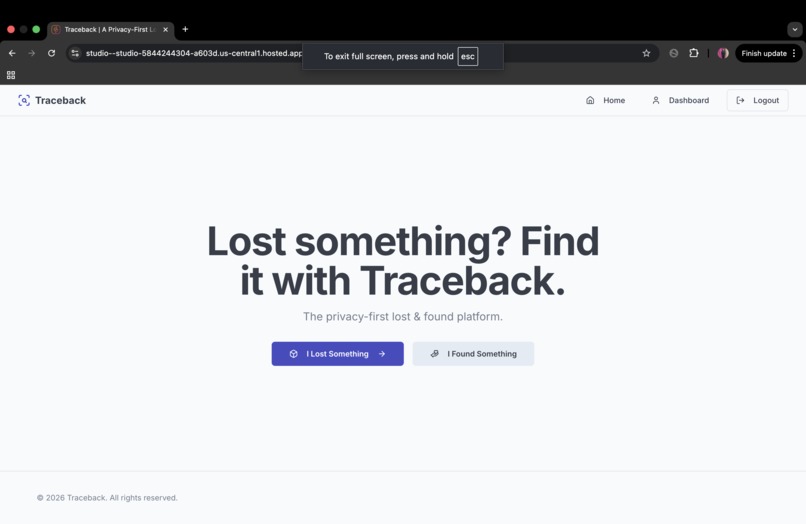
HomePage
-
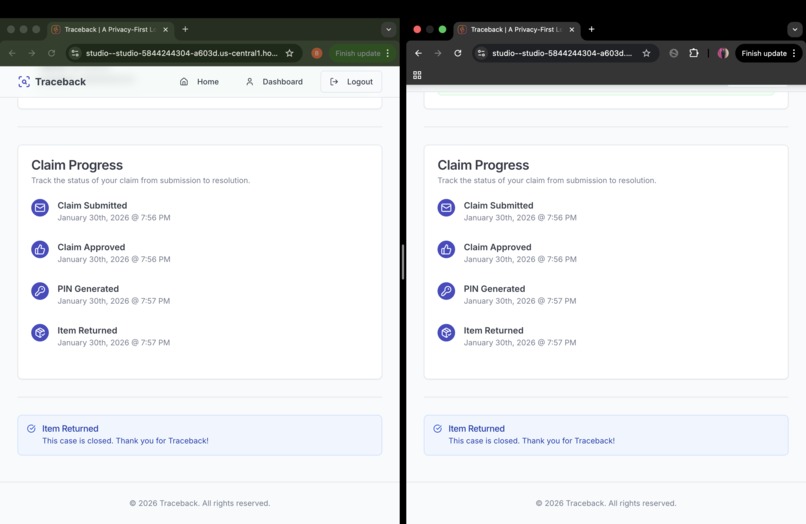
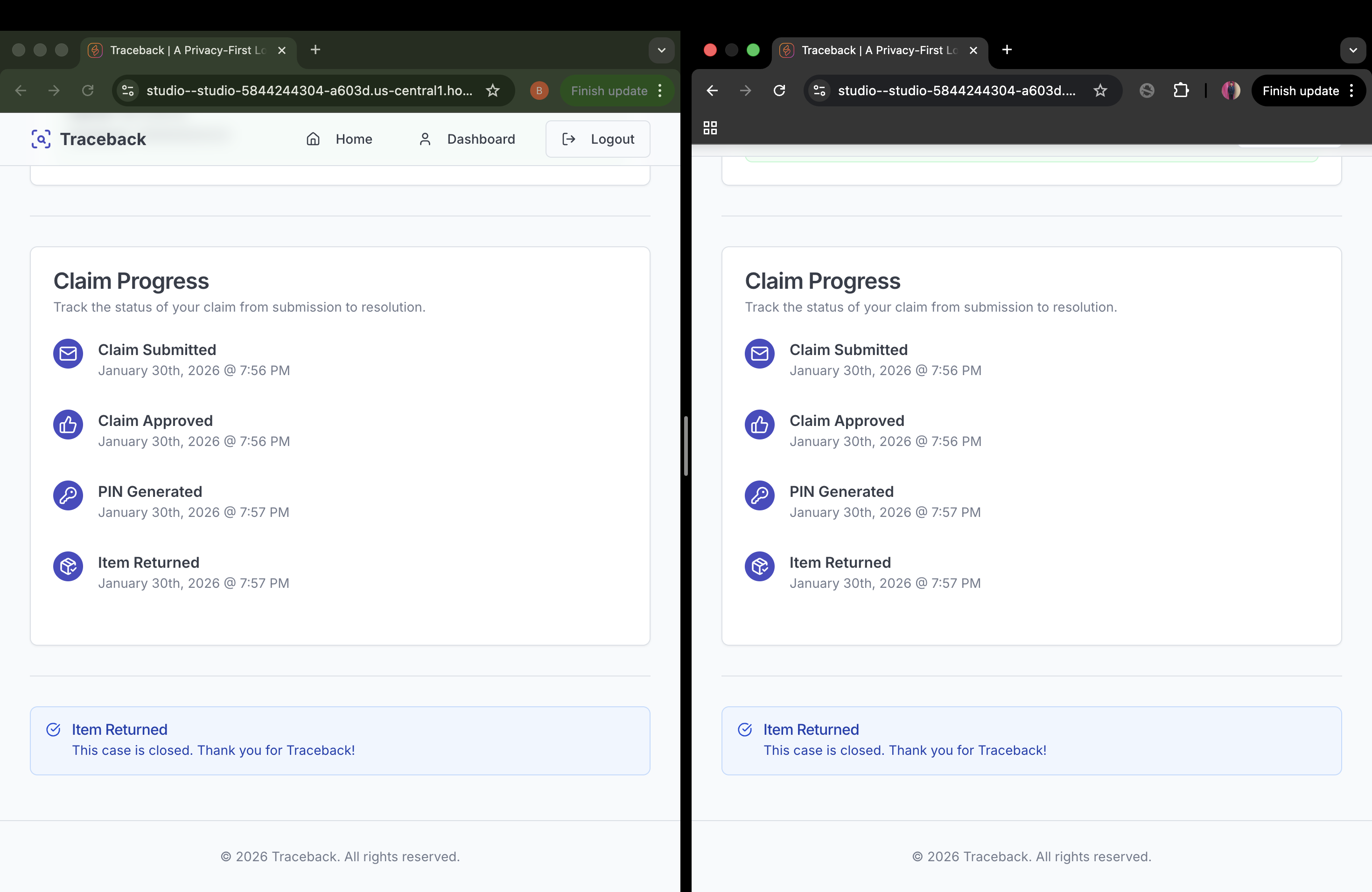
Claim Progress
-
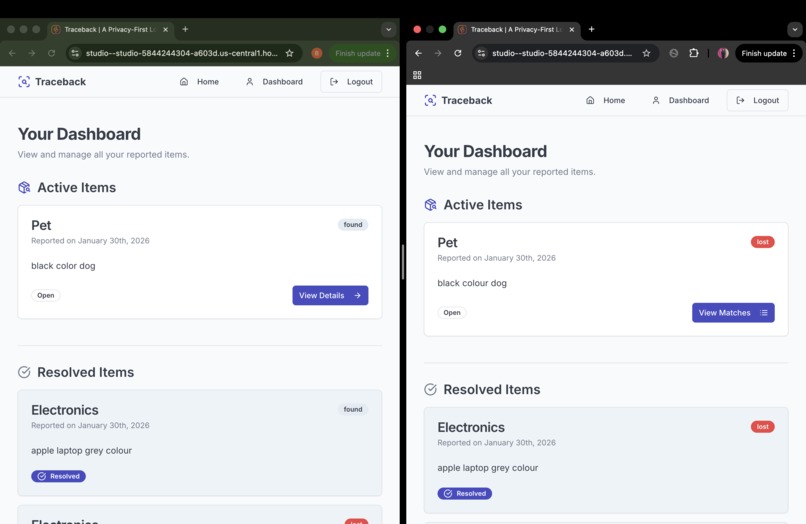
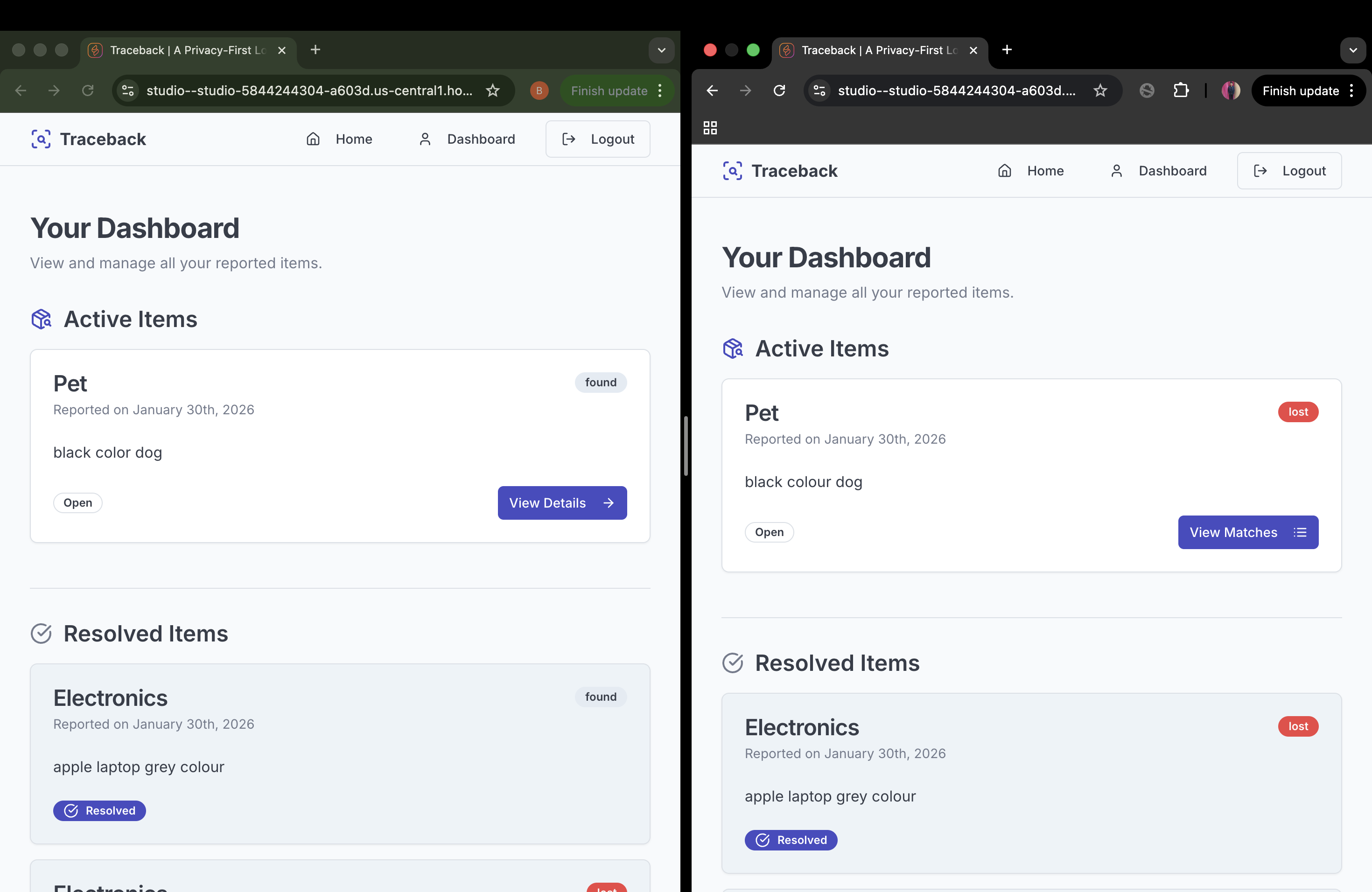
Dashboard
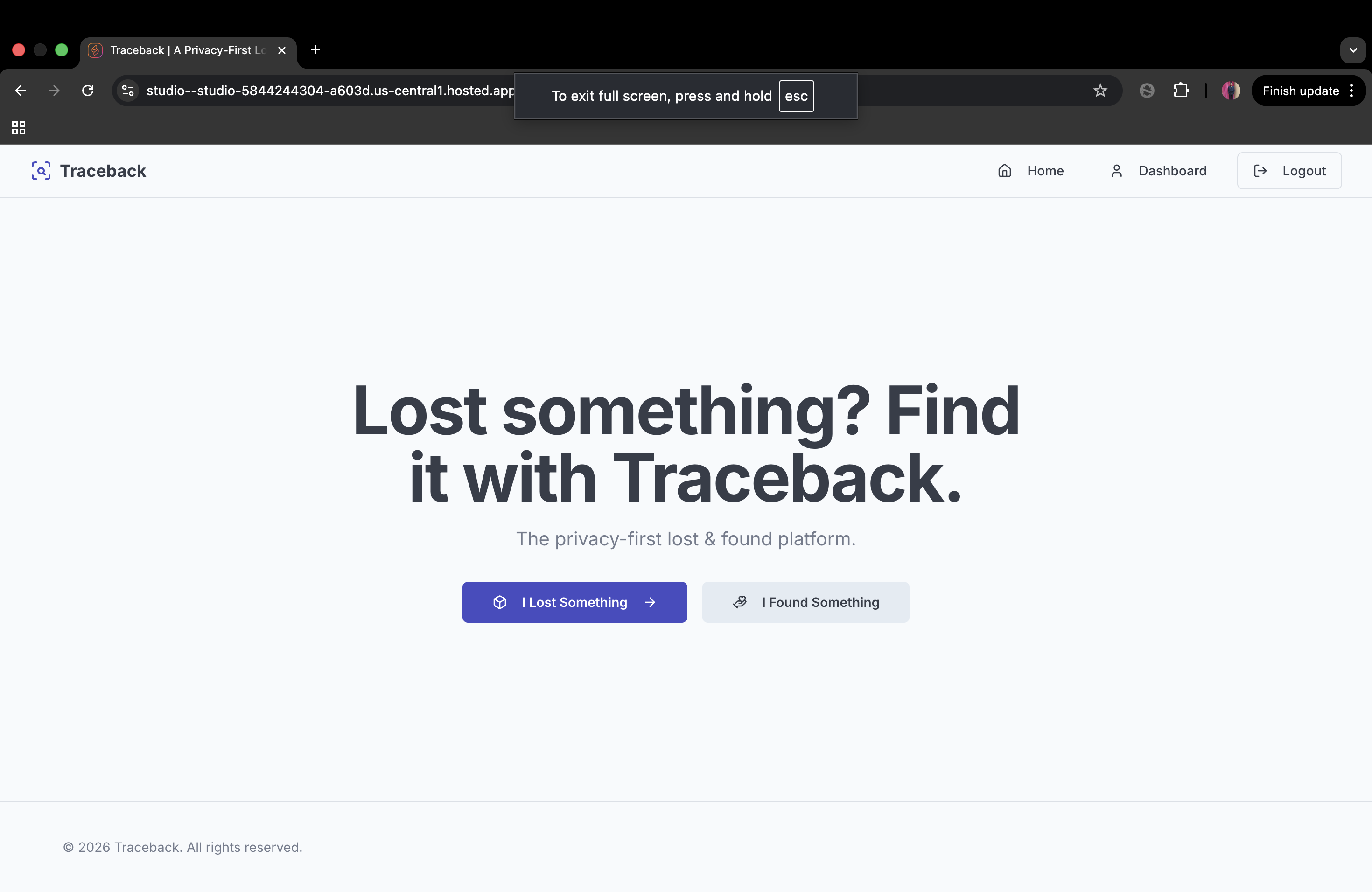
Inspiration
Losing personal belongings often leads to chaos — scattered posts, privacy risks, and no clear way to verify ownership. I wanted to build a structured, secure system that replaces informal lost-and-found methods with a trustworthy digital workflow.
What it does
Traceback is a full-stack lost & found web application that allows users to report lost or found items, submit claims, verify ownership, and complete secure handovers using a controlled, state-based workflow.
The platform prioritizes privacy, accountability, and clarity at every step.
How it works
- Users authenticate securely and access a personal dashboard
- Lost and found items are reported through structured forms
- AI-assisted logic helps surface potential matches
- Ownership is verified through system-generated questions
- Once approved, a one-time PIN is generated for secure physical handover
- Claims follow a strict lifecycle: pending → approved → closed
How I built it
The application is built using Next.js and Firebase, with Firestore security rules enforcing valid claim transitions. AI-assisted features are implemented experimentally to explore how intelligent systems can support discovery and verification workflows.
Challenges faced
- Designing secure claim state transitions
- Preventing unauthorized data access
- Balancing AI assistance without over-automation
- Building a complete workflow instead of a demo-only prototype
What I learned
This project strengthened my understanding of full-stack architecture, authentication systems, database security rules, and real-world product design constraints.
Future scope
- Smarter AI-based matching
- Location-based discovery
- Institution-level deployments (campuses, transport hubs)
- Moderation and trust scoring
Built With
- firebase-authentication
- firebase-storage
- firestore
- google-genkit-(ai)
- next.js
- react
- react-hook-form
- shadcn/ui
- tailwind-css
- typescript


Log in or sign up for Devpost to join the conversation.