Inspiration
As college students, budgeting is often not a priority until it suddenly becomes a problem. We noticed that we overspent only after checking our balance and wondering what went wrong. Most budgeting apps show where money went, but not what decision actually caused the issue.
We wanted to build a tool that helps students enjoy college life while still building smarter financial habits by identifying the single spending habit that matters most.
That’s why we created TraceBack, which will always have YOUR back.
What it does
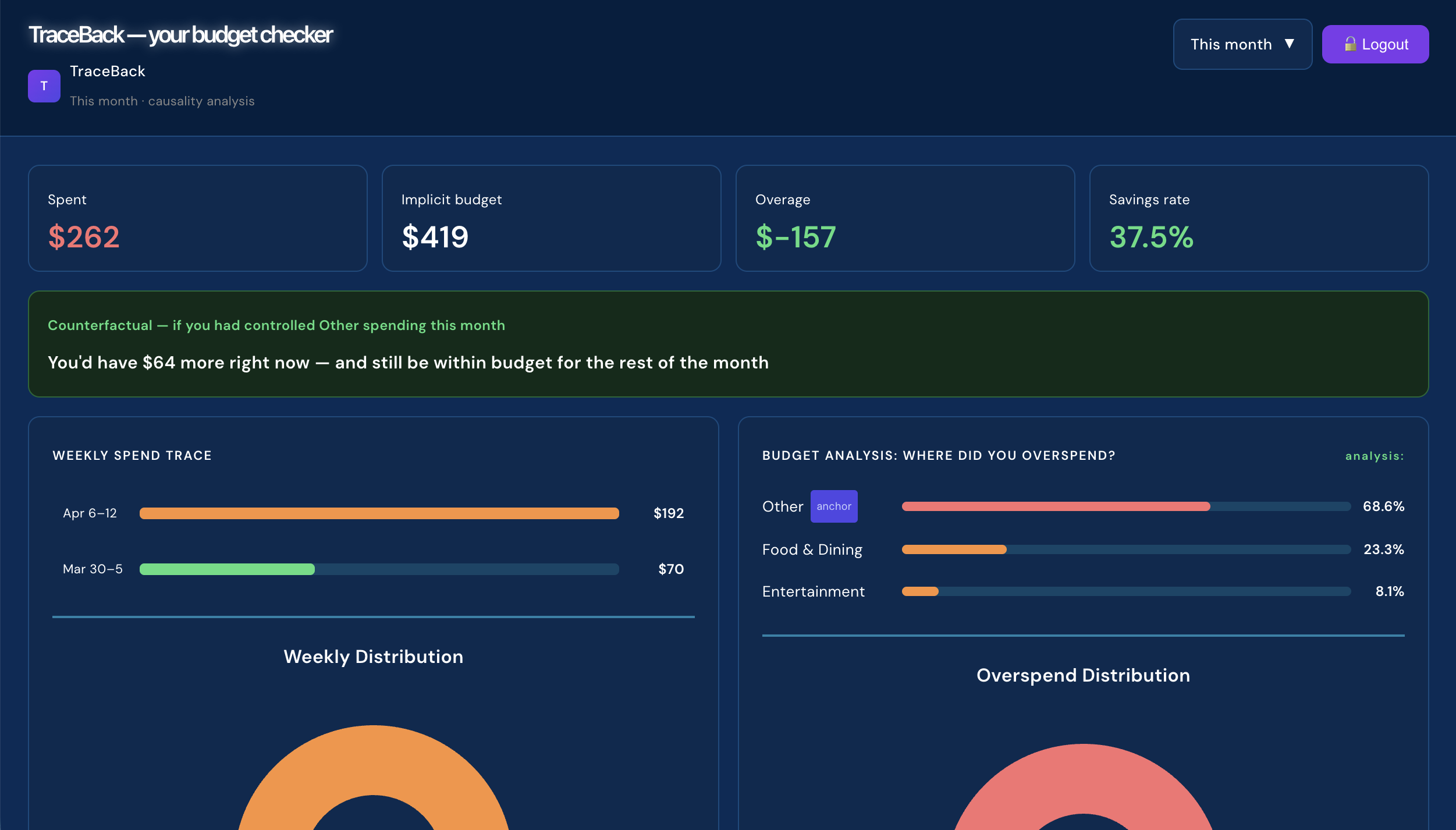
TraceBack analyzes your transaction history to identify the exact decision that caused you to go over budget and shows how small habit changes could improve your finances.
-Transaction Analysis: Imports spending data and organizes purchases by category and time
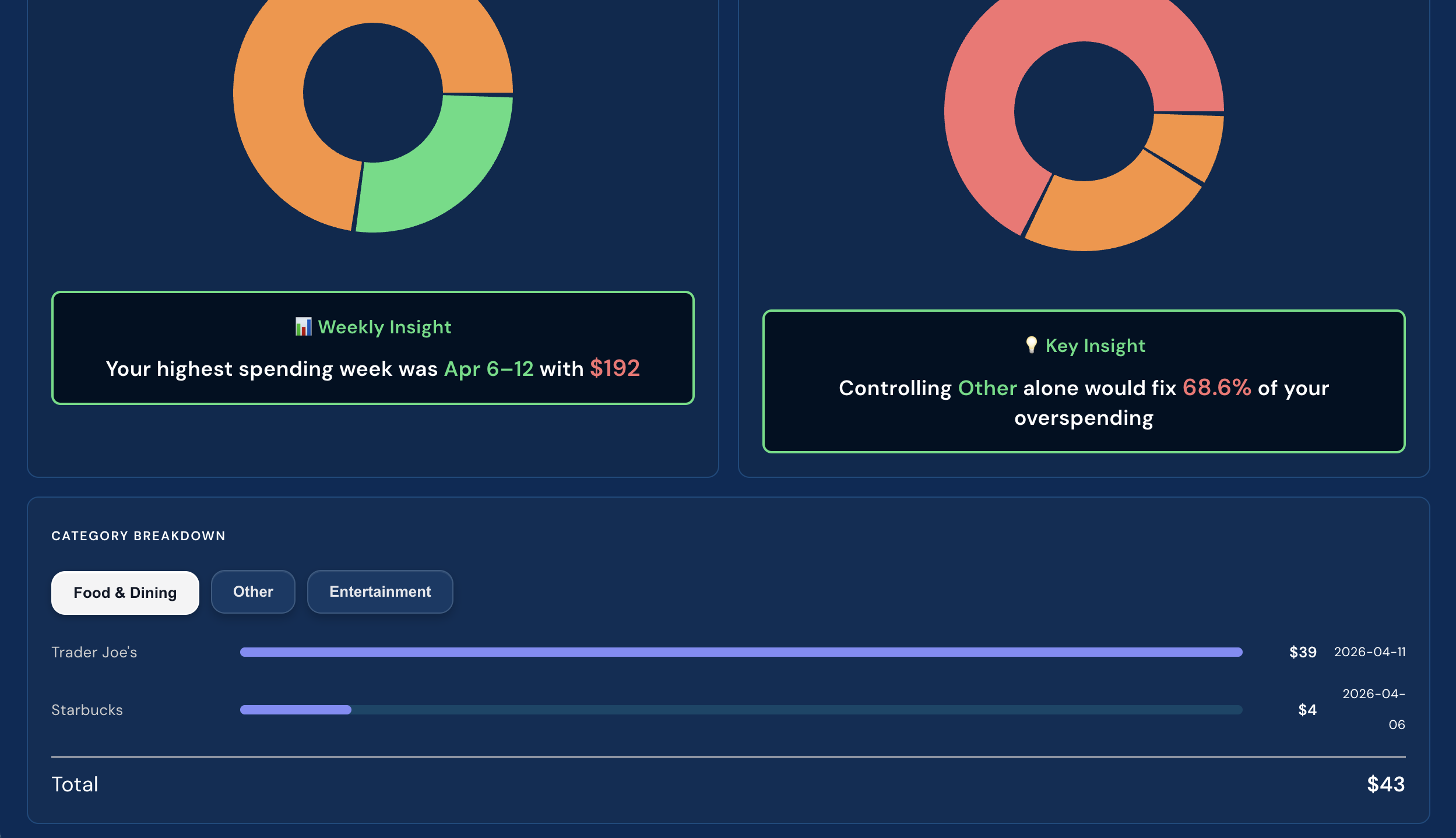
- Tipping Point Detection: Identifies the exact purchase, category, or week that caused you to exceed your budget
- Habit Impact Ranking: Highlights the spending habit responsible for the largest share of overspending
- Category Insights: Breaks down which areas, like dining, shopping, or subscriptions, drive the biggest losses
- Clear Action Steps: Gives users the most high-impact behavior to adjust instead of overwhelming dashboards
How we built it
We built TraceBack using React (Vite), Tailwind CSS, and Recharts for interactive financial visualizations. The backend uses FastAPI with Plaid integration for transaction data, and Python powers tipping-point detection and Shapley attribution to identify the habits driving overspending.
Challenges we ran into
- Nessie API limitations: Documentation pages were unavailable during development, making endpoints difficult to test and forcing us to pivot our data integration approach
- Plaid API: Mock transactions were duplicated across months, and limited bank connectivity required additional debugging and custom handling to generate realistic test customer data for development
- Insight logic design: Defining a meaningful “tipping point” that worked across different spending patterns required careful iteration
Accomplishments that we're proud of
We're proud to have built a user-friendly personal finance tool that helps students, young adults, and budgeting beginners prevent overspending. We seamlessly integrated the Plaid API for secure real-time data access, implemented Shapley attribution analysis to pinpoint exact spending drivers, and designed a polished UI with smooth animations and interactive charts that make financial data understandable and engaging! Despite API hurdles along the way, we delivered a prototype that uses historical data analysis and counterfactual insights to highlight real spending behavior.
What we learned
Over the past weekend, we developed new technical skills and strengthened our ability to work with financial data and API integrations!
- Learned how to integrate the Plaid API into a working platform and structure financial transaction data for analysis
- Designed graphical breakdowns to clearly identify tipping points and high-impact spending habits
- Built and refined logic to clean duplicated sandbox transactions and generate realistic mock user behavior
- Learned how to translate raw transaction histories into understandable and impactful financial insights for students
What's next for TraceBack
In the future, we plan to implement a machine learning system that analyzes longer-term spending behavior to predict when users are at risk of overspending and provide early warnings BEFORE it happens. We also want to expand TraceBack with personalized and engaging budgeting tips that help users build smarter financial habits and make more confident financial decisions over time.


Log in or sign up for Devpost to join the conversation.