-
-
Home
-
Case-1
-
Clues
-
About
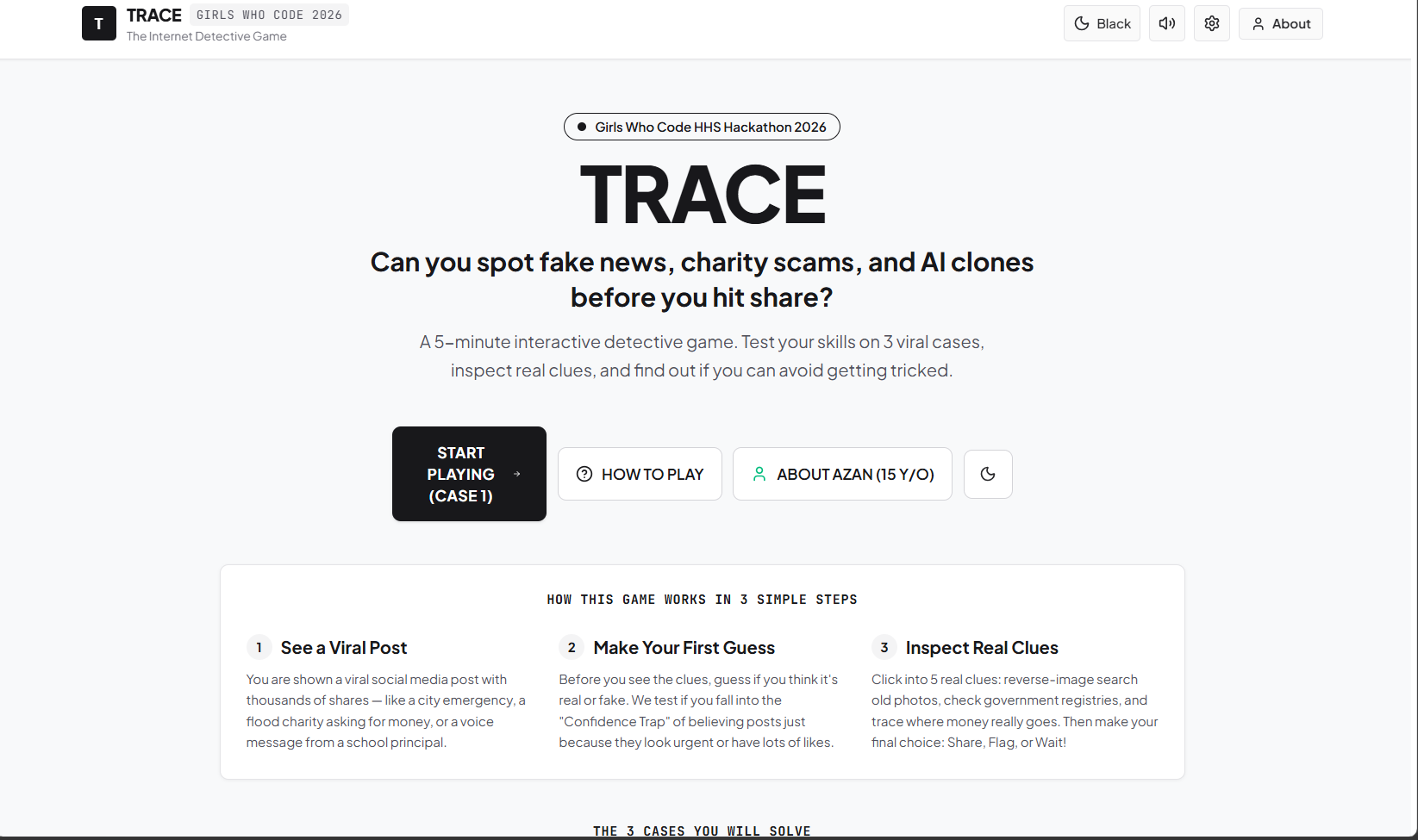
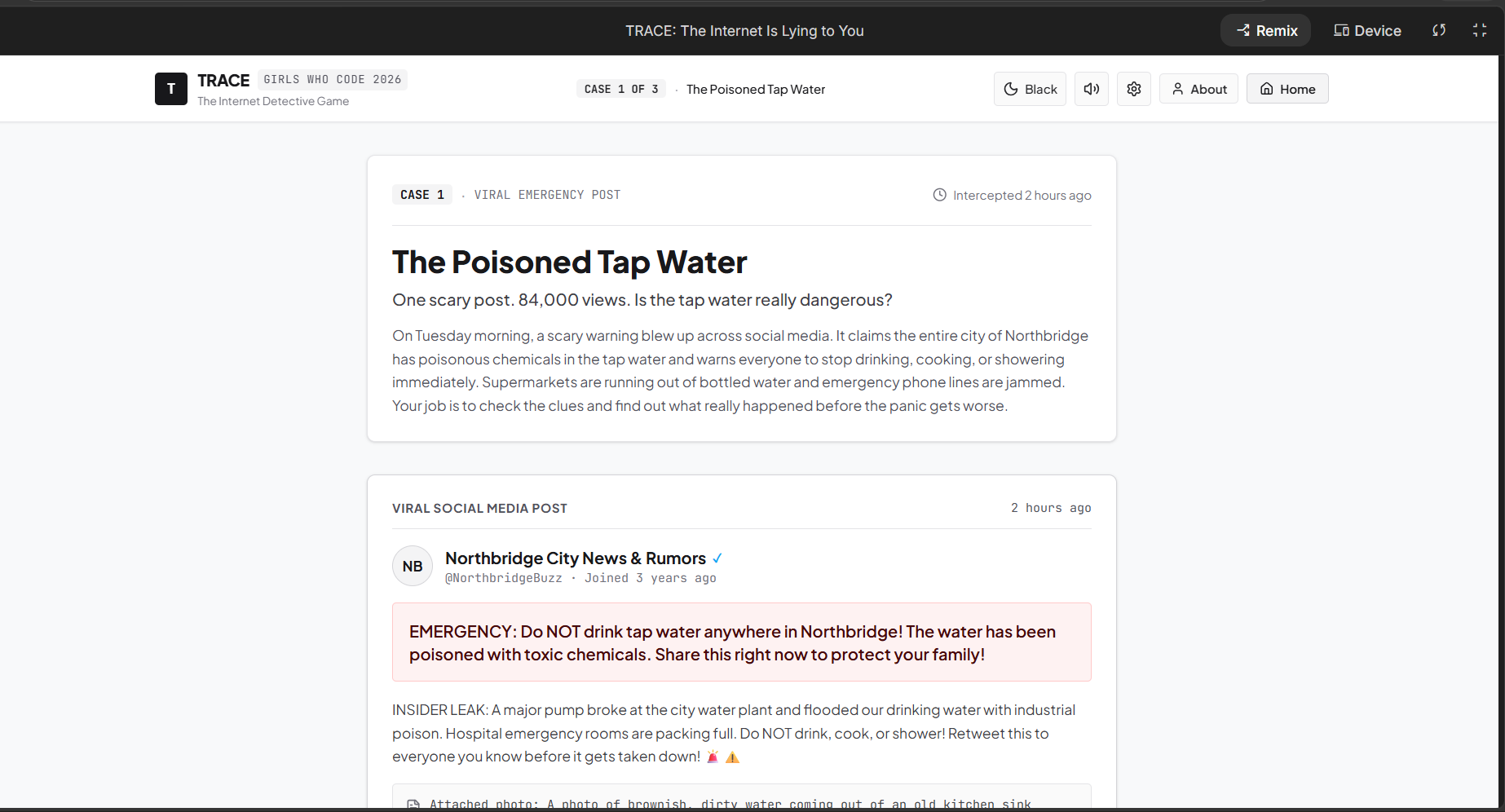
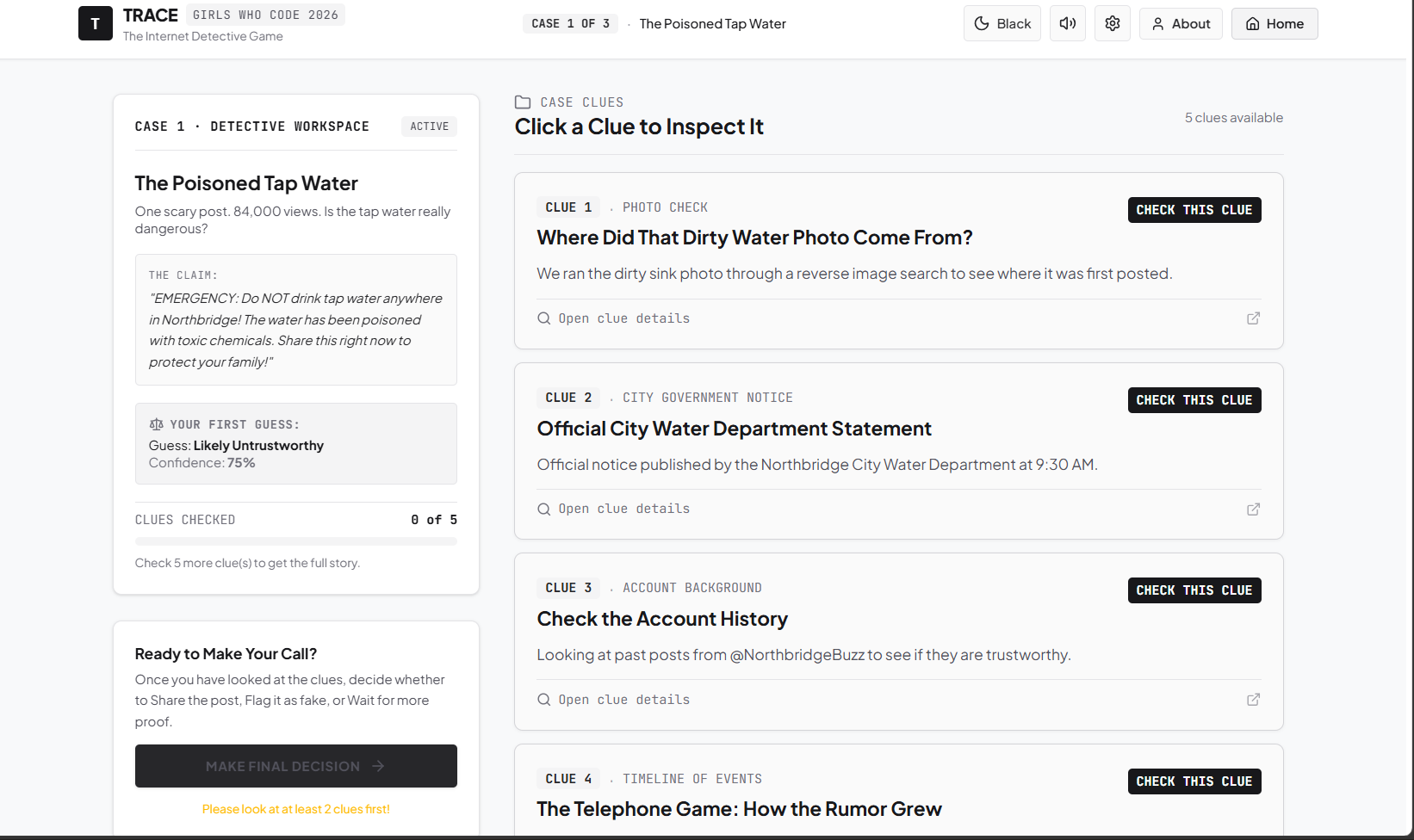
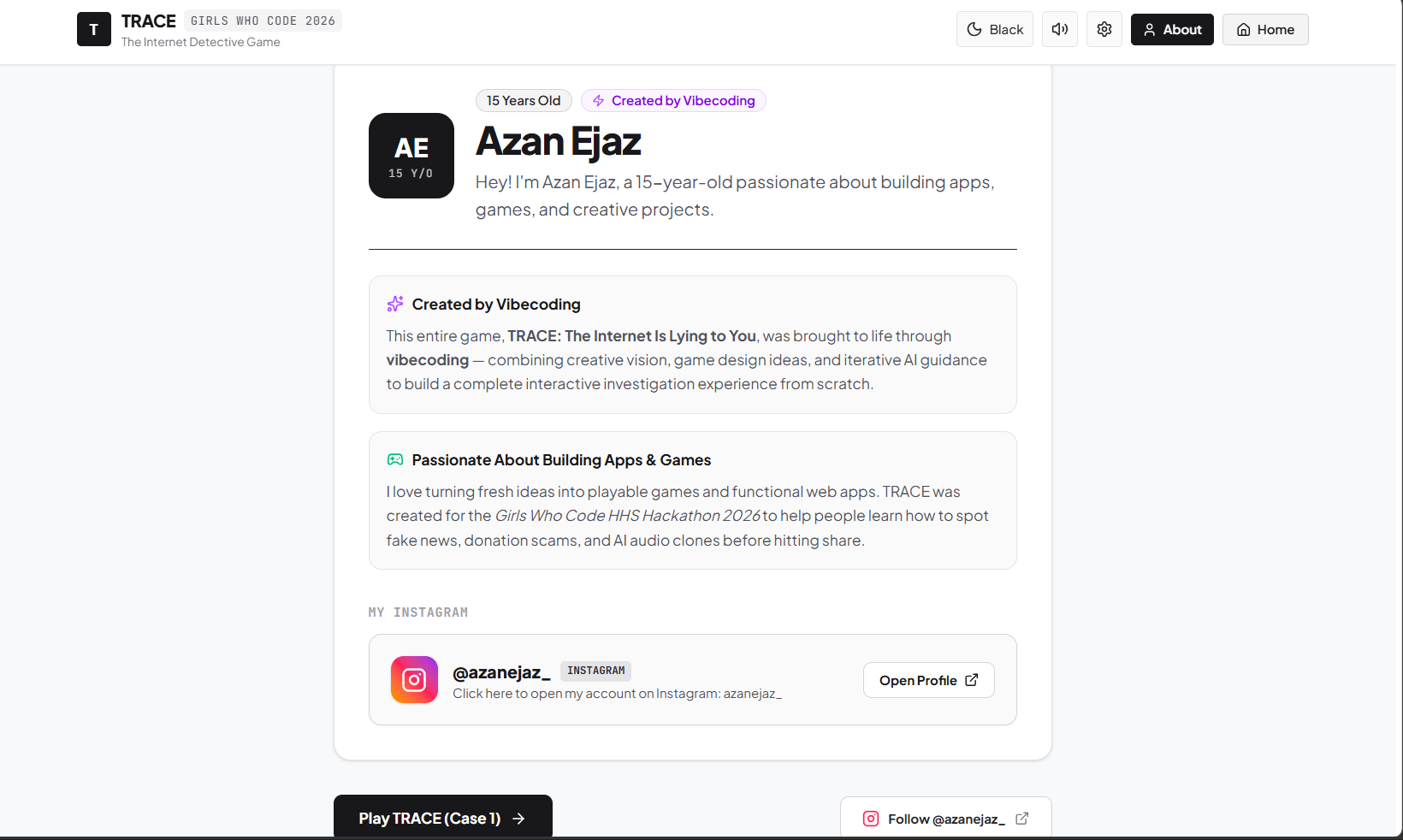
TRACE: The Internet Detective Game
💡 Inspiration
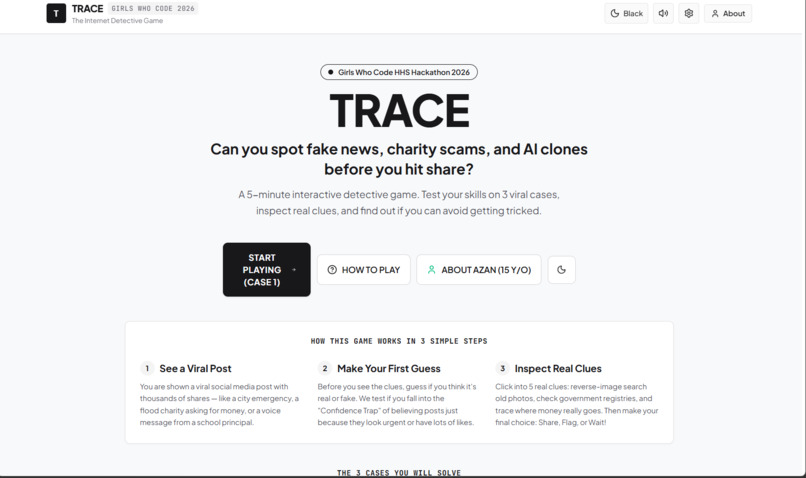
Every day, we encounter viral social media posts, alarming news, suspicious charity campaigns, and messages that may be generated or manipulated by AI. People can easily believe and share misleading information without checking whether it's trustworthy.
I wanted to explore a simple question: What if learning to recognize misinformation felt like solving a detective mystery instead of sitting through another lecture?
That question inspired TRACE, an interactive detective game designed to encourage critical thinking, digital literacy, and responsible online sharing.
🎮 What It Does
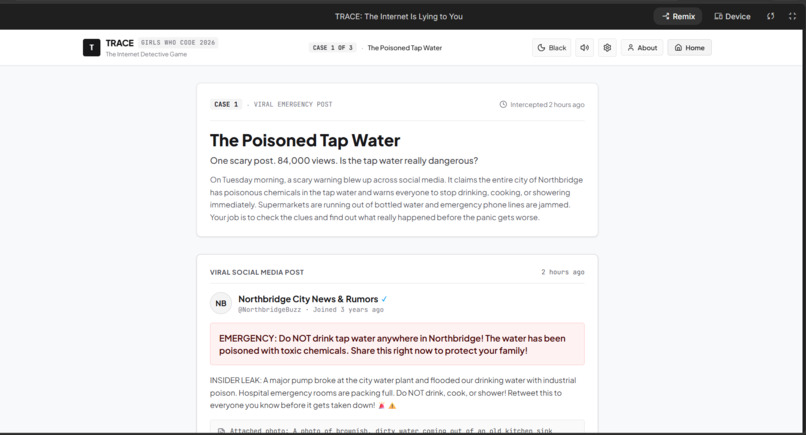
TRACE challenges players to investigate three fictional cases involving viral claims, charity scams, and AI impersonation.
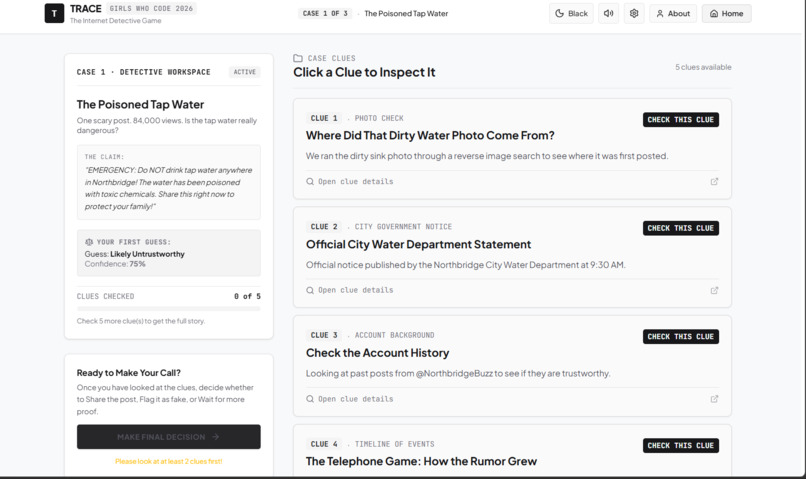
Players examine clues, evaluate evidence, and decide whether to share a claim, flag it for review, or investigate further. The game encourages players to question their first impressions, distinguish verified information from unsupported claims, and understand why popularity doesn't automatically make something true.
One of its central ideas is the Confidence Trap: players make an initial judgment before examining the evidence, then compare that impression with their final conclusion.
The goal isn't to teach people to distrust everything they see online. It's to help them develop the habit of checking evidence before deciding what to believe.
🛠️ How I Built It
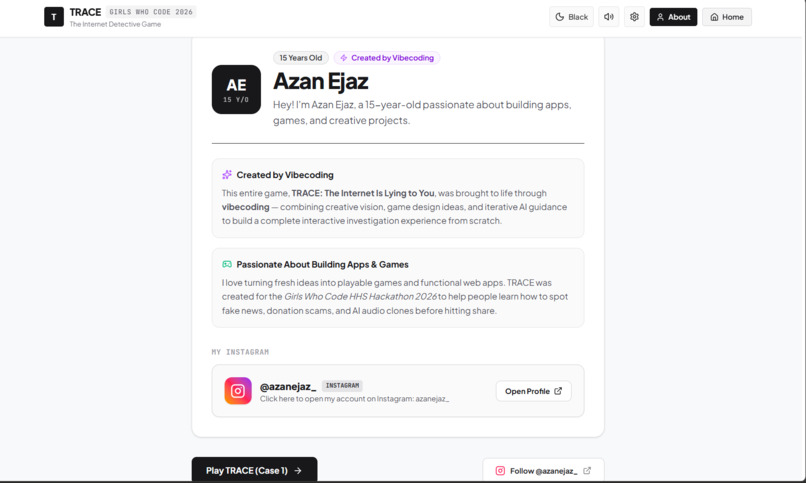
I built TRACE using an AI-assisted, vibe-coding workflow. I used Google AI Studio to help generate the application, develop the interface, and turn my concept into an interactive browser-based experience.
Rather than manually writing every component from scratch, I used prompts to communicate the game's concept, visual direction, features, and gameplay requirements, then worked with the generated implementation.
This approach allowed me to focus on the overall experience: making the game understandable for beginners, connecting its mechanics to a meaningful social issue, and creating an engaging way to learn about misinformation.
🧩 Challenges I Faced
One of the biggest challenges was turning a broad problem like misinformation into an actual game. Simply displaying fake headlines and asking players to identify them would have made TRACE feel like an ordinary quiz.
I wanted players to investigate evidence and think about why a claim might be trustworthy, suspicious, or still unverified. Balancing the educational message with an engaging gameplay experience was an important part of the design process.
Another challenge was using AI-generated code effectively. Vibe coding can accelerate development, but generated code still needs to be reviewed and tested to ensure that the interface, interactions, and game mechanics behave as intended.
📚 What I Learned
Building TRACE helped me explore how game design can make digital literacy more engaging. I also learned more about AI-assisted development, translating an idea into a working prototype, and the importance of designing around a specific user problem rather than adding features simply because they seem impressive.
Most importantly, I learned that responsible digital literacy isn't just about identifying false information. It's also about recognizing uncertainty, checking reliable sources, and being willing to investigate before reaching a conclusion.
🌍 What's Next?
I'd like to expand TRACE with more investigation scenarios, improved feedback, additional accessibility options, and opportunities to evaluate how much players learn after completing the game.
My hope is that players will leave TRACE with a simple habit they can use every day:
Before you believe it. Before you share it. Investigate.
Built With
- ai
- artificial
- awareness
- coding
- css
- development
- digital
- game
- html
- intelligence
- interactive
- javascript
- learning
- literacy
- misinformation
- react
- studio
- typescript
- vibe
- vite
- web

Log in or sign up for Devpost to join the conversation.