Inspiration
We were inspired by Palantir’s Ontology concept. It connects information around real operational objects and their relationships. We wanted to apply that idea to industrial maintenance, connecting machines, evidence, decisions, repairs and outcomes. Our question was, why should the next crew have to rediscover what the previous crew already learned? The goal for TRACE is that every repair teaches the fleet and improves upon it.
What it does
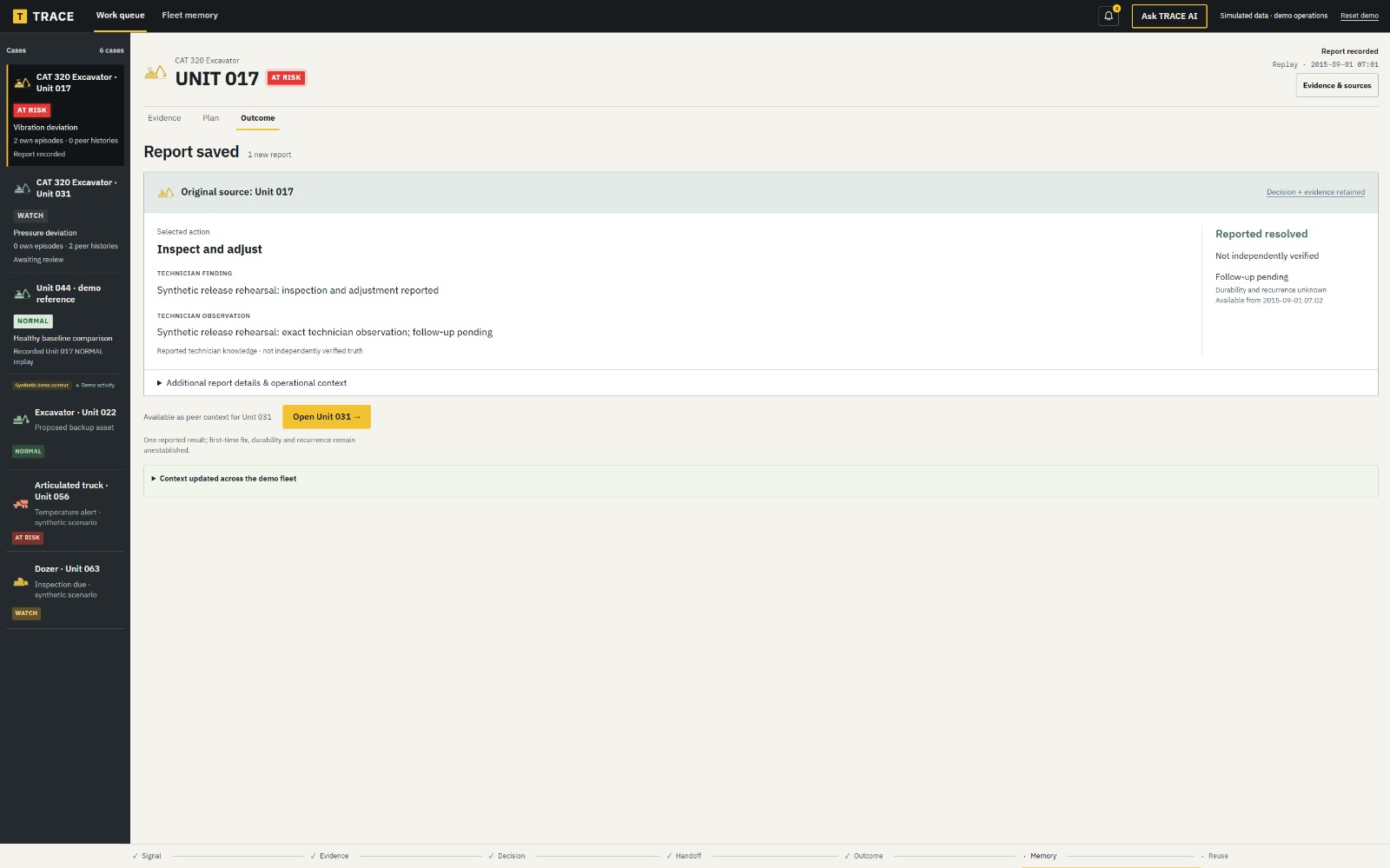
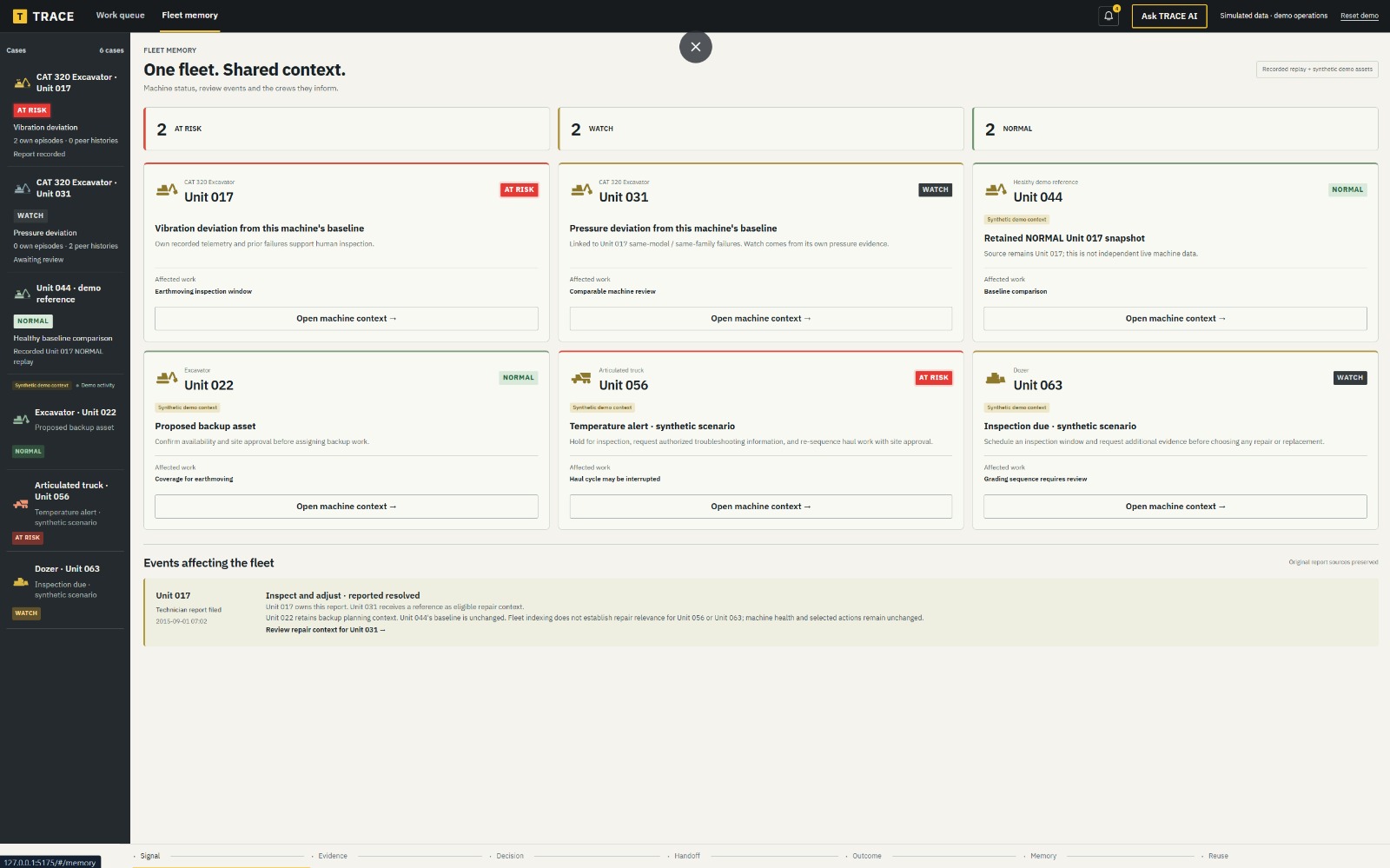
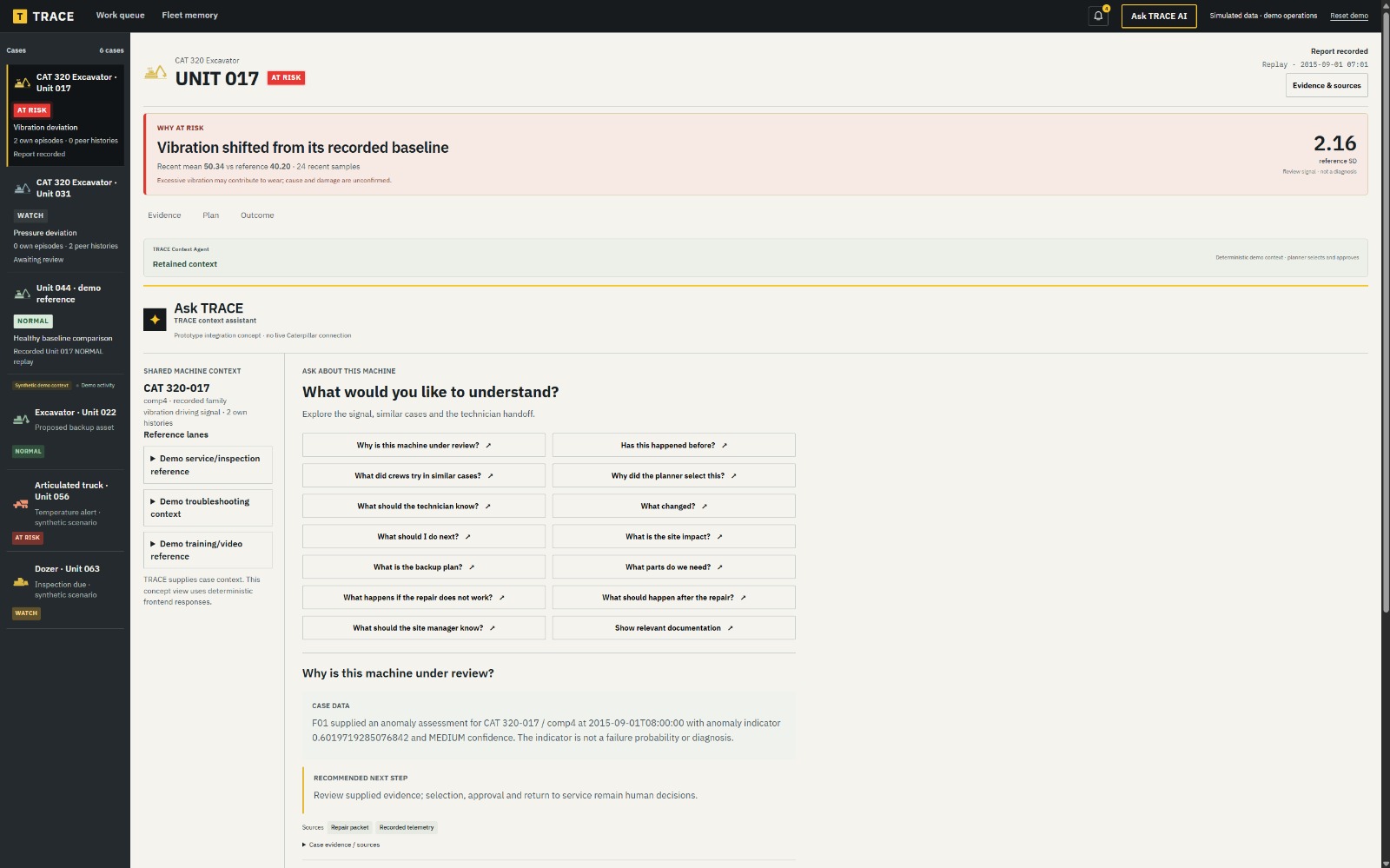
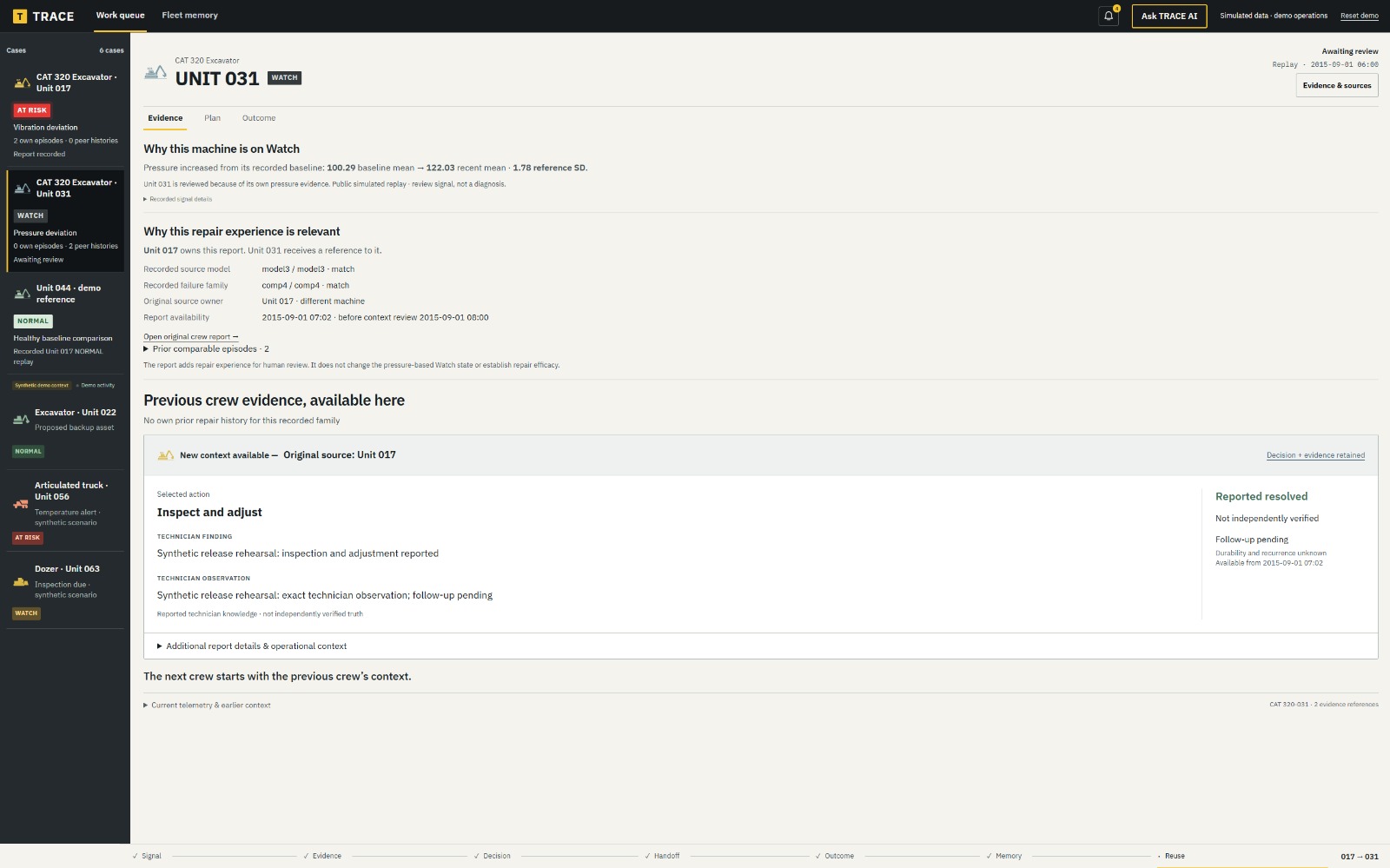
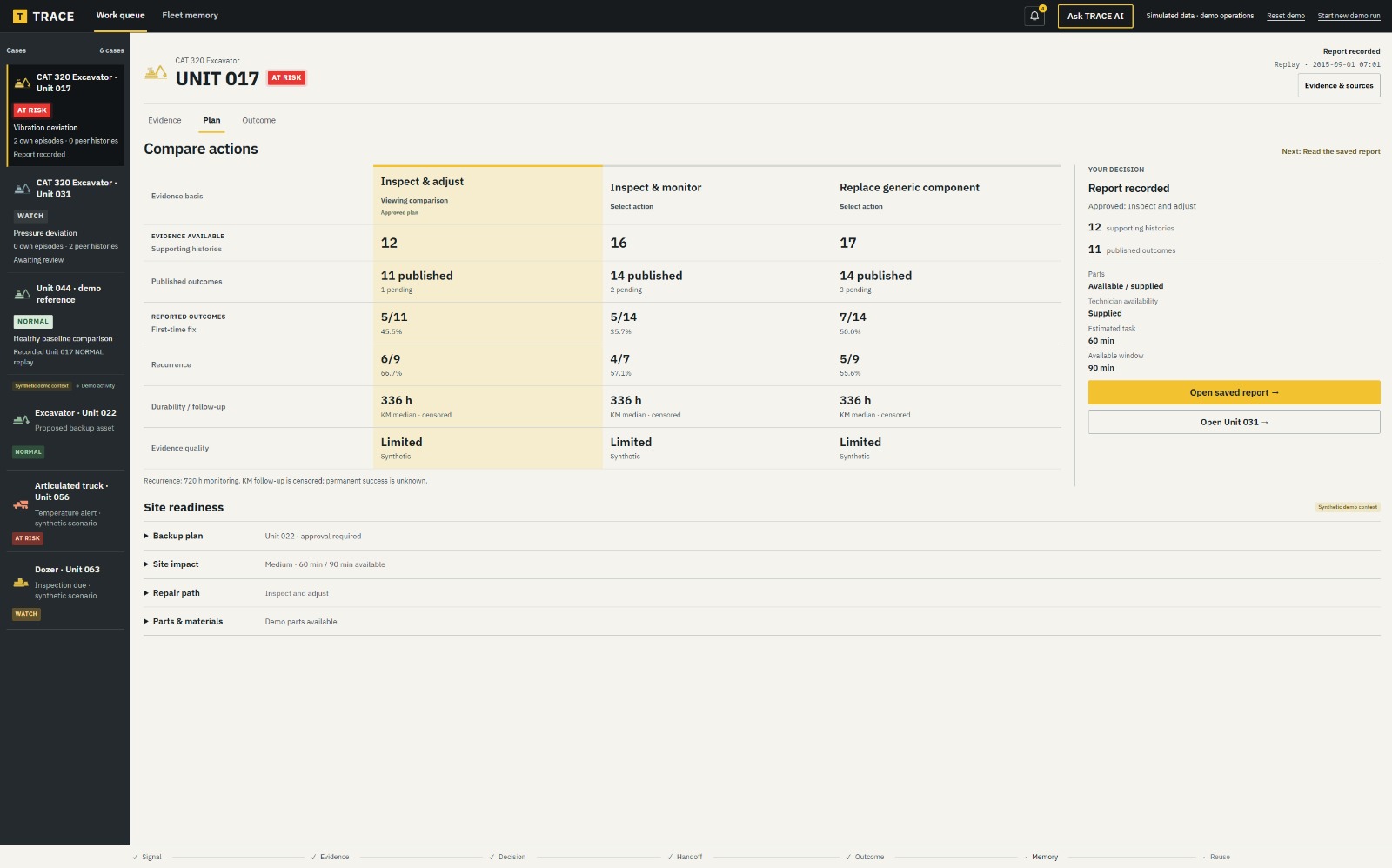
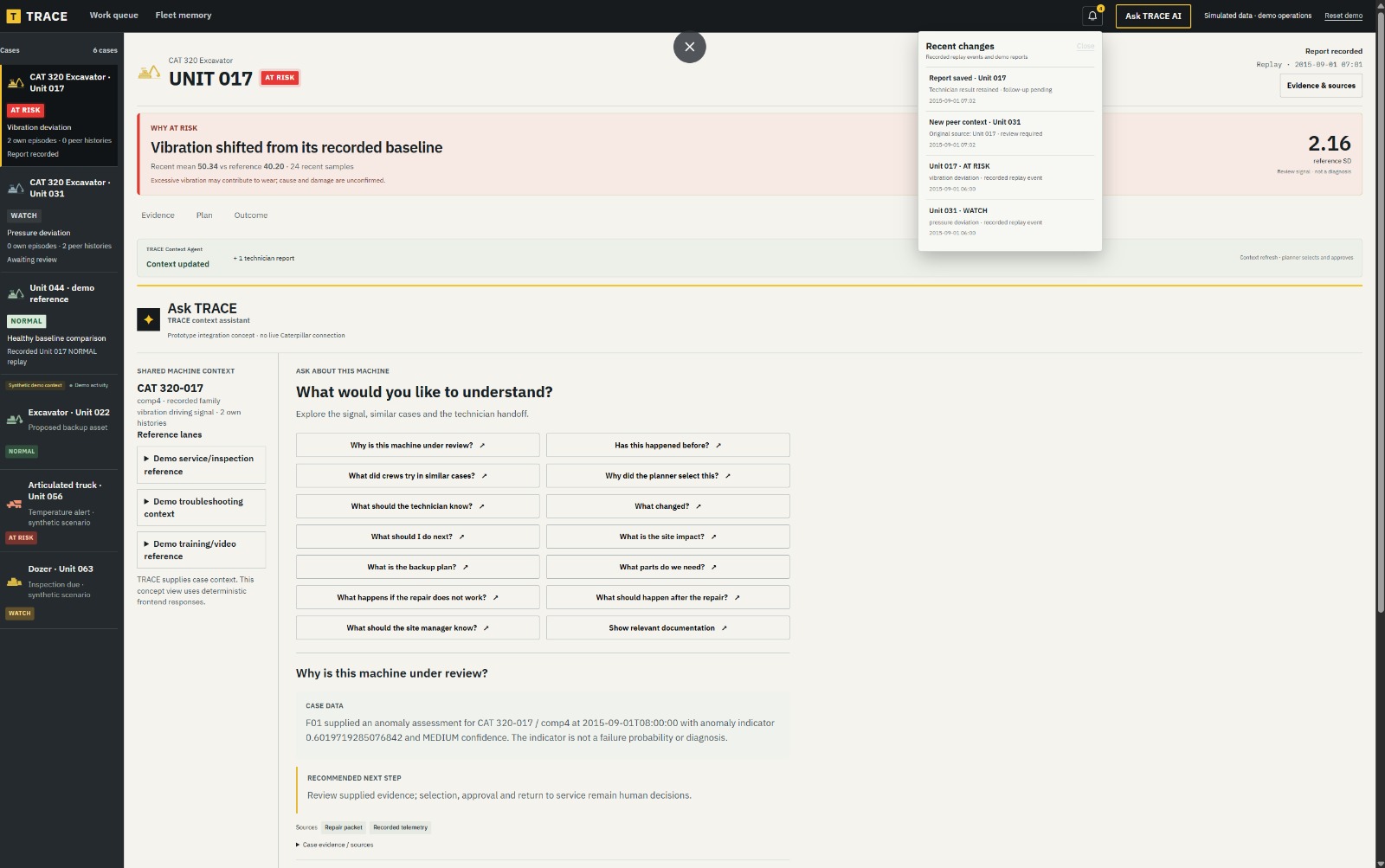
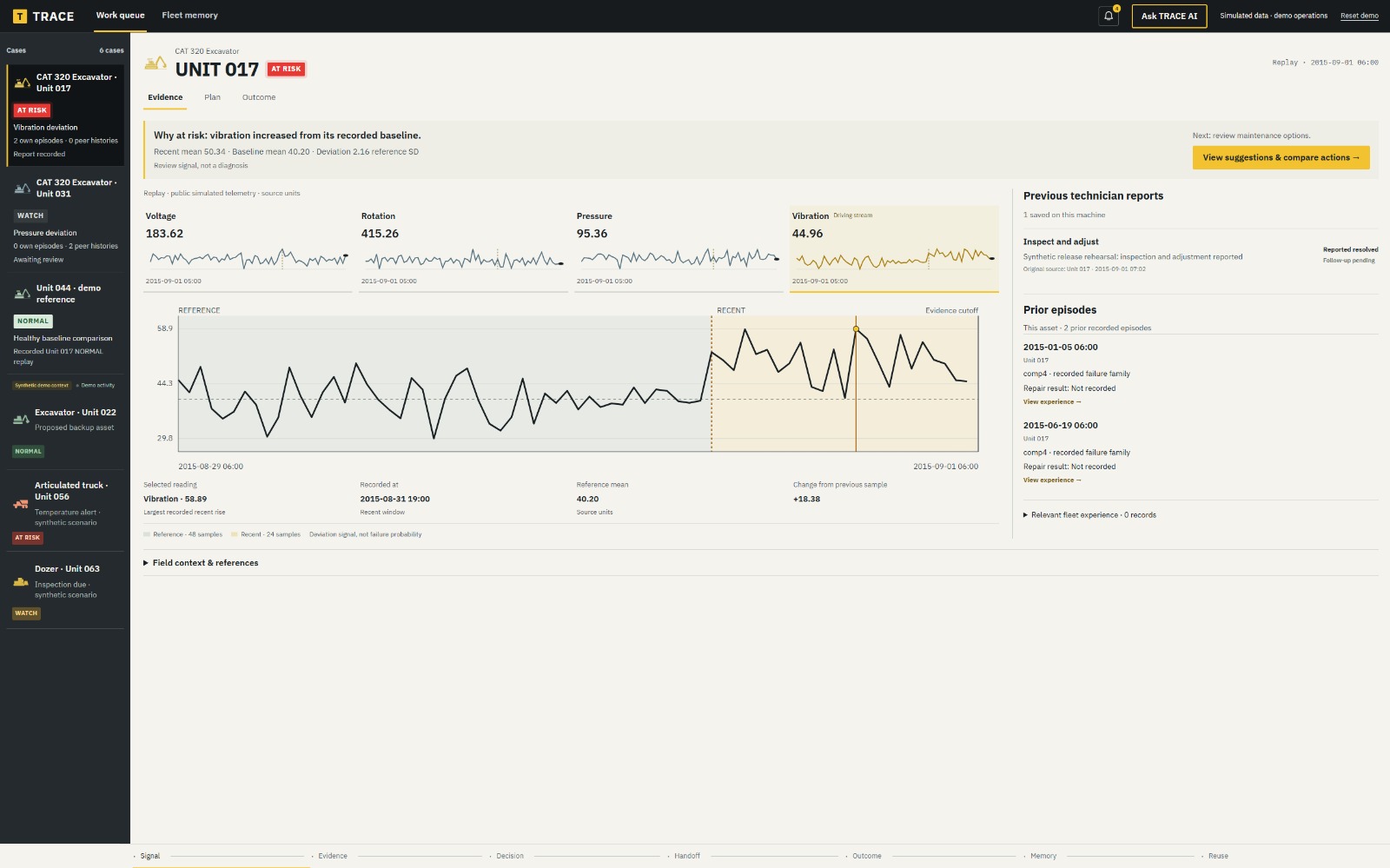
TRACE helps maintenance teams carry evidence through a complete case by understanding a machine signal, reviewing prior experience, comparing actions, making a human decision, preparing a technician handoff, and recording the result. The resulting report retains its original machine, decision, evidence and source. A comparable machine can then retrieve that report as supporting context. Our central demonstration follows Unit 017 through a maintenance case, then makes its saved report available to Unit 031. Unit 031 receives the previous crew’s context without treating it as its own repair history. TRACE also assembles grounded case context and answers fixed questions about history, decision support and next workflow steps. Human approval remains required for maintenance decisions.
How we built it
We built the backend in Python with Pydantic contracts, FastAPI and SQLite. The frontend uses React, TypeScript and Vite. Each feature has a defined interface and dedicated tests. A shared preparation layer handles recorded data, while deterministic replay controls what information is available at each point in time. Our demo combines a public simulated predictive-maintenance dataset with clearly labelled synthetic machine identities, repair outcomes and operational resources. Cat Inspect-style and Cat AI Assistant-style adapters demonstrate potential context sources without claiming live Caterpillar integration. We used separate Git worktrees to develop independent features in parallel while keeping shared contracts and integration work coordinated.
Challenges we ran into
The hardest challenge was connecting individually working features into a durable product loop. Returning a repair result was not enough because it had to survive a restart and become retrievable by the next machine. We also had to preserve uncertainty. A reported resolution does not prove first-time fix or long-term durability, and missing recurrence data does not mean a repair never failed again. Another challenge was keeping original ownership and provenance intact as information moved between machines. Synthetic evidence must remain synthetic, and peer experience must remain attached to its source machine.
Accomplishments that we're proud of
We built a durable repair-report loop that preserves decision context and supports qualified reuse after an application restart. We kept human selection, approval, resource feasibility and reported completion as distinct steps. We also built tested foundations for machine memory, jobsite retrieval, evidence explanations, decision lineage, context assembly and deterministic replay, all while retaining explicit unknowns and source distinctions.
What we learned
We learned that useful maintenance intelligence depends on the relationships between facts, decisions and outcomes. More context does not automatically mean more certainty. A trustworthy system must explain what it knows, where that information came from and what remains unverified. We also learned that the strongest demonstration is one connected journey where a crew records useful evidence, and the next crew can actually retrieve it.
What's next for TRACE
We want to complete the sponsor-feedback experience, expand the synthetic fleet across more equipment categories and connect the context adapters to the application. Beyond the prototype, our priorities are authorized service-system integrations, authenticated roles, structured follow-up observations and validation with maintenance teams. We would measure whether TRACE improves handoff completeness and reduces repeated diagnostic effort before claiming operational savings or repair effectiveness.

Log in or sign up for Devpost to join the conversation.