-
-
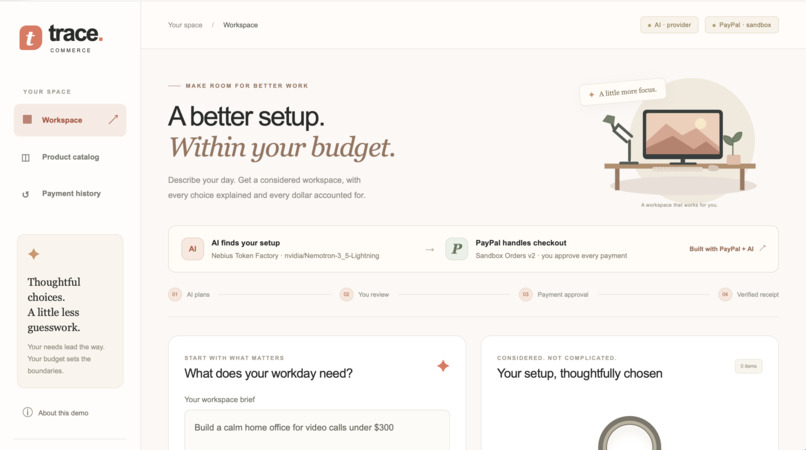
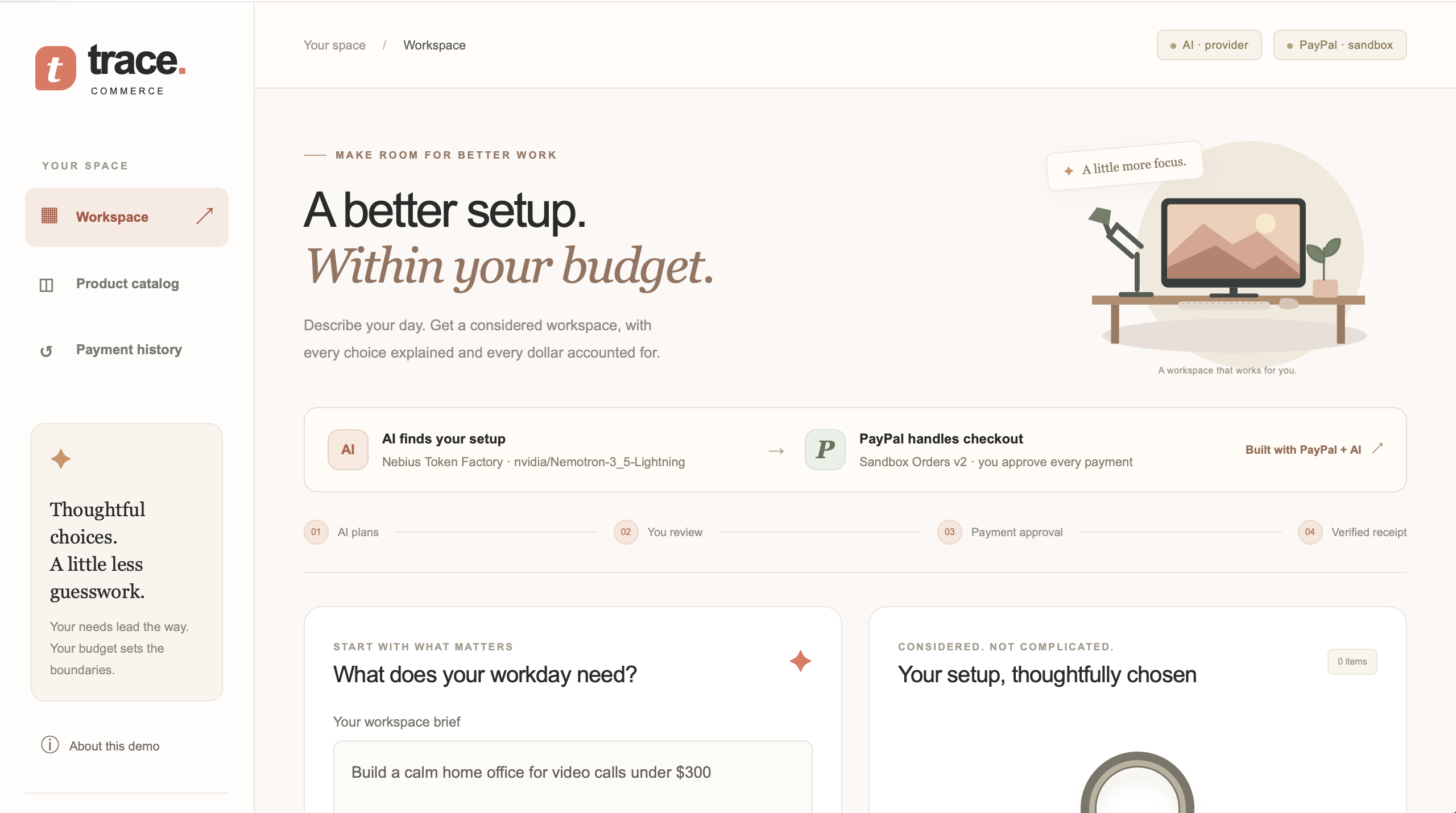
TRACE Commerce workspace, where Nebius AI builds a shopping cart around your budget and PayPal Sandbox handles checkout.
Inspiration
Setting up a home office on a fixed budget means comparing products, figuring out which ones work together, and tracking the total. I built TRACE Commerce to turn a simple request, like “Build a calm home office for video calls under $300,” into a cart someone can understand, edit, and approve.
What it does
TRACE Commerce uses Nebius Token Factory and the Nemotron model to recommend products from a demo catalog and explain why they fit the request. Users can adjust the cart before checkout. The server checks product IDs and quantities, calculates prices from the catalog, and verifies that the cart fits the budget.
The user approves the order in PayPal Sandbox and returns to TRACE Commerce to complete the payment. The app verifies the capture and displays a receipt with the amount, payment status, PayPal references, and the AI model that generated the original recommendation. The video shows a completed $230 USD sandbox payment.
How I built it
I built the web interface with HTML, CSS, and JavaScript, and used Python, FastAPI, and SQLite for the backend. I integrated PayPal OAuth 2.0 and the Orders v2 REST API for order creation, buyer approval, and capture. I used Postman to test the API flow and deployed the demo on Render.
Challenges and what I learned
The biggest design challenge was turning a flexible AI recommendation into a checkout with an exact amount. I learned to validate the model’s suggestions against the catalog and let the server calculate the payable total.
I also encountered a currency error while testing PayPal Sandbox. Testing with a sandbox merchant configured for USD and a separate sandbox buyer helped me complete the checkout. That experience taught me to test the full journey, including buyer approval, capture, and receipt verification.
