-
-
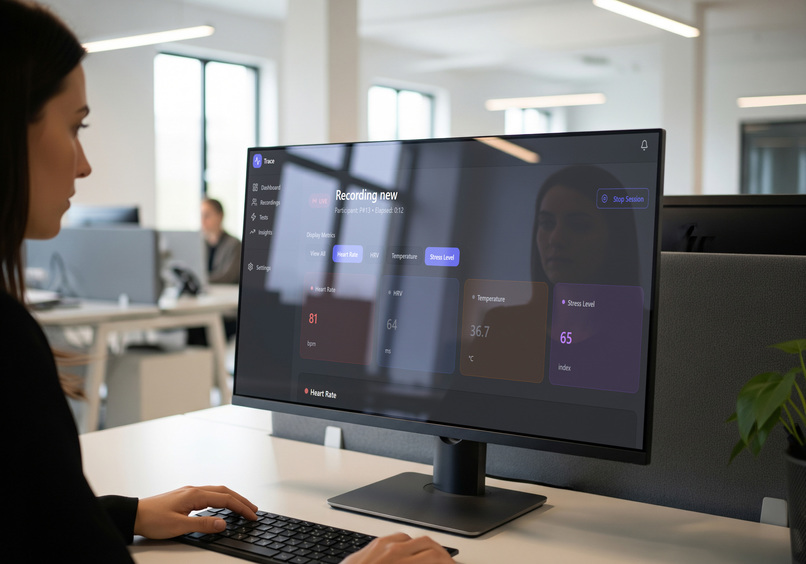
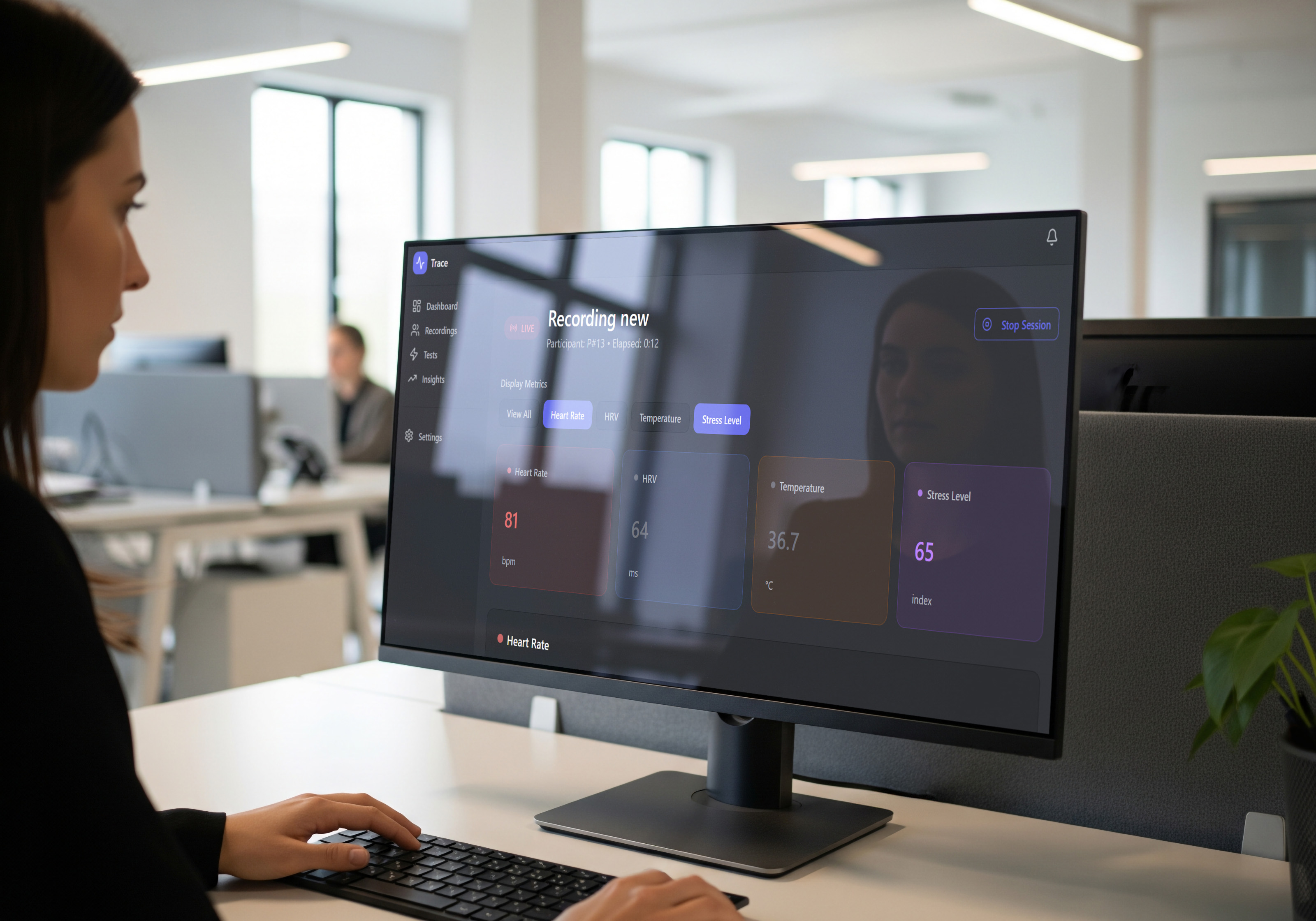
trace mockup
Inspiration
Usability testing today relies heavily on think-aloud protocols and observation notes. While valuable, these methods capture only what users consciously report. Many reactions- such as tension, hesitation, or cognitive strain- happen in the body before users can articulate them. We were inspired by the concept of interoception, the body’s internal sensory system that detects physiological states like heart rate, muscle tension, and stress. We began asking: What if usability testing could reveal how an experience feels in the body, not just what users say about it? This question led to Trace, a tool that makes the body’s response to design measurable.
What it does
Trace is a speculative usability testing tool that detects physiological responses during interaction and maps them directly to prototype screens.
How we built it
We built Trace with the help of Figma Make by Figma.
Challenges we ran into
One challenge was translating complex physiological signals into meaningful design insights. Instead of exposing raw biometric data, we created interpretable dimensions like tension, pulse, and release so designers can quickly understand user responses. Another challenge was addressing privacy and ethics. Because physiological data is sensitive, Trace emphasizes explicit consent, anonymized session data, and the ability for participants to stop or delete recordings at any time. Finally, working within the constraints of Figma Make meant focusing on demonstrating the design workflow and visualization layer, rather than implementing the full sensing technology.
Accomplishments that we're proud of
We are proud that it reframes usability research to consider how experiences affect the body, not just task completion. Given that it's our first ever Hackathon, glad we pulled it off!
What we learned
Through this project we learned that many user reactions are physiological before they are verbal. Exploring research on interoception and affective computing showed us how usability testing could benefit from combining behavioral observation with physiological insight. Working with Figma Make also taught us how to rapidly prototype speculative tools and focus on communicating the core interaction and visualization, even when the underlying sensing technology is conceptual.
What's next for Trace
Next steps for Trace would include: Exploring real physiological sensing technologies such as EDA and HRV sensors, developing machine learning models that translate biometric signals into interpretable experience patterns, expanding Trace beyond usability testing to support experience design in areas like healthcare, VR, and accessibility.
Built With
- figma


Log in or sign up for Devpost to join the conversation.