-
-
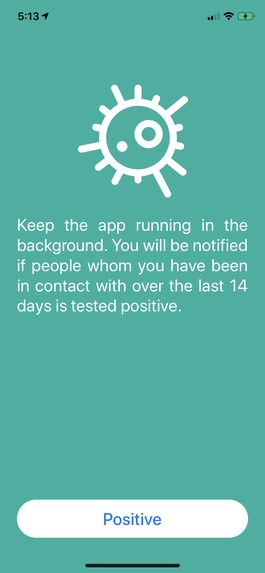
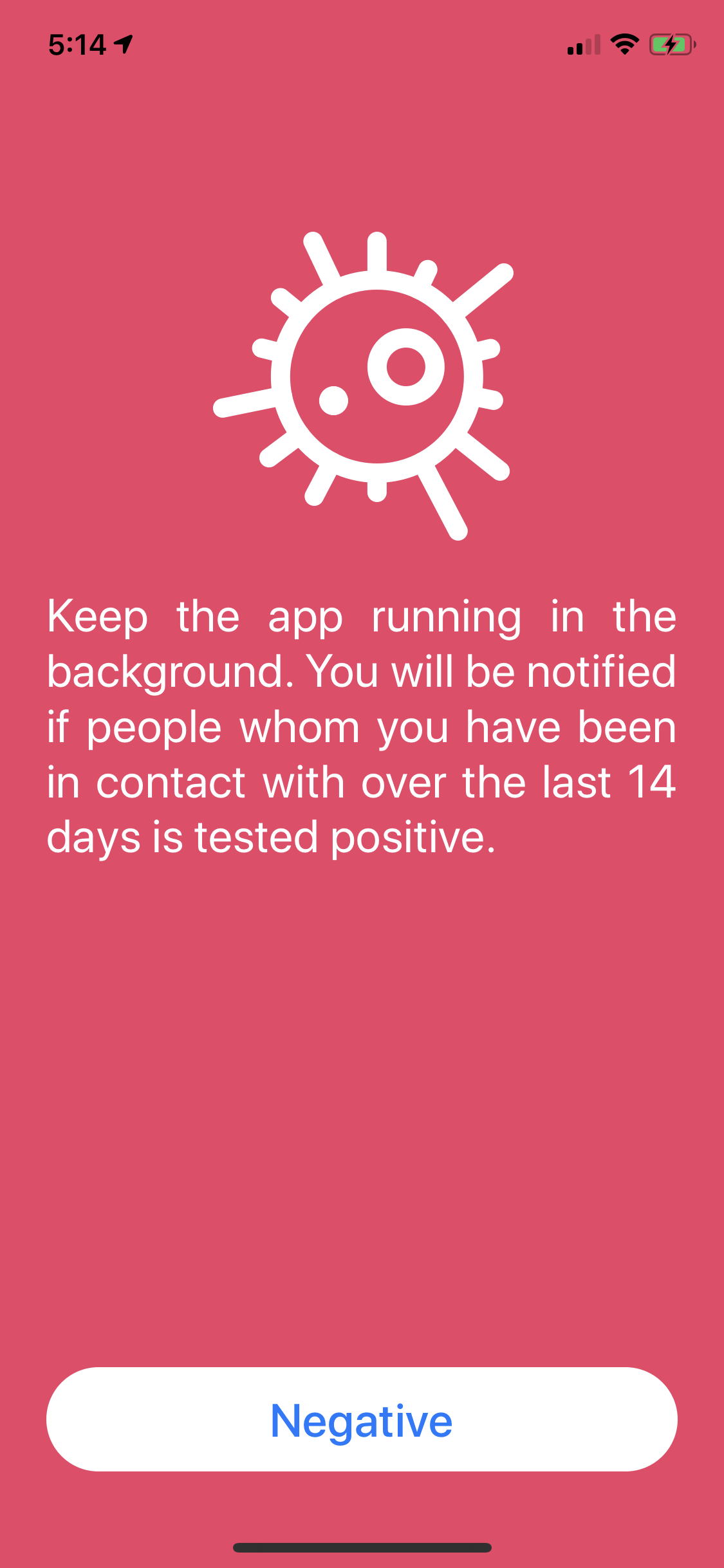
Run the app, it will run in the background and detecting other instances of the app by Bluetooth.
-
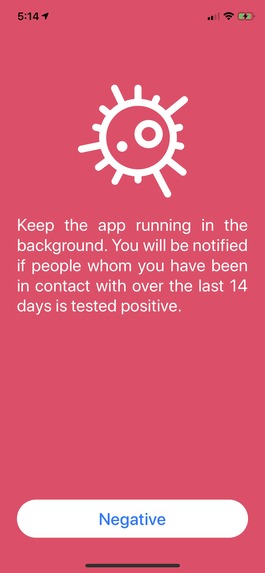
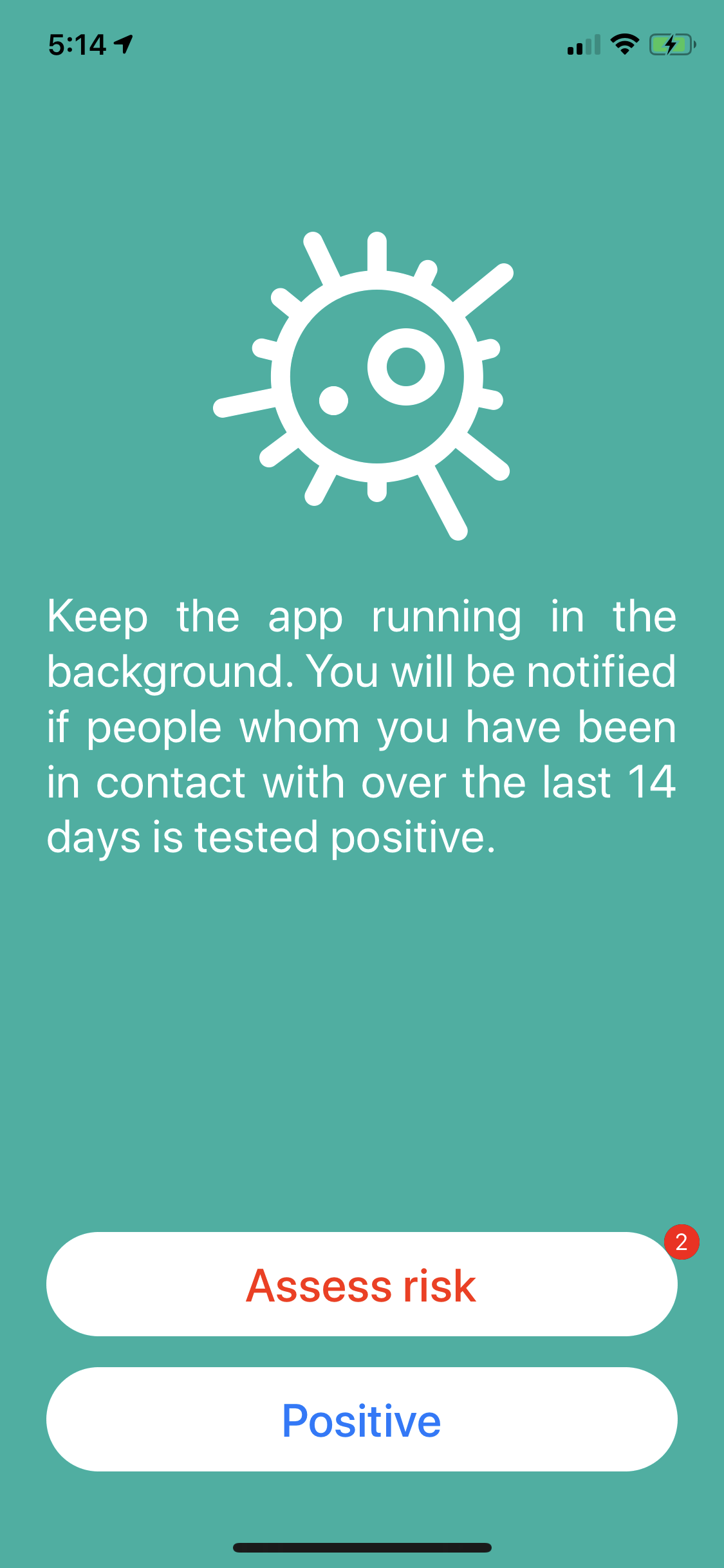
When you are tested positive, alert the others.
-
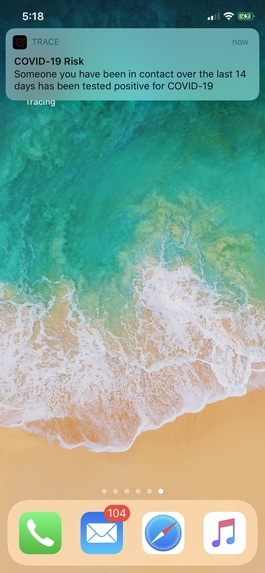
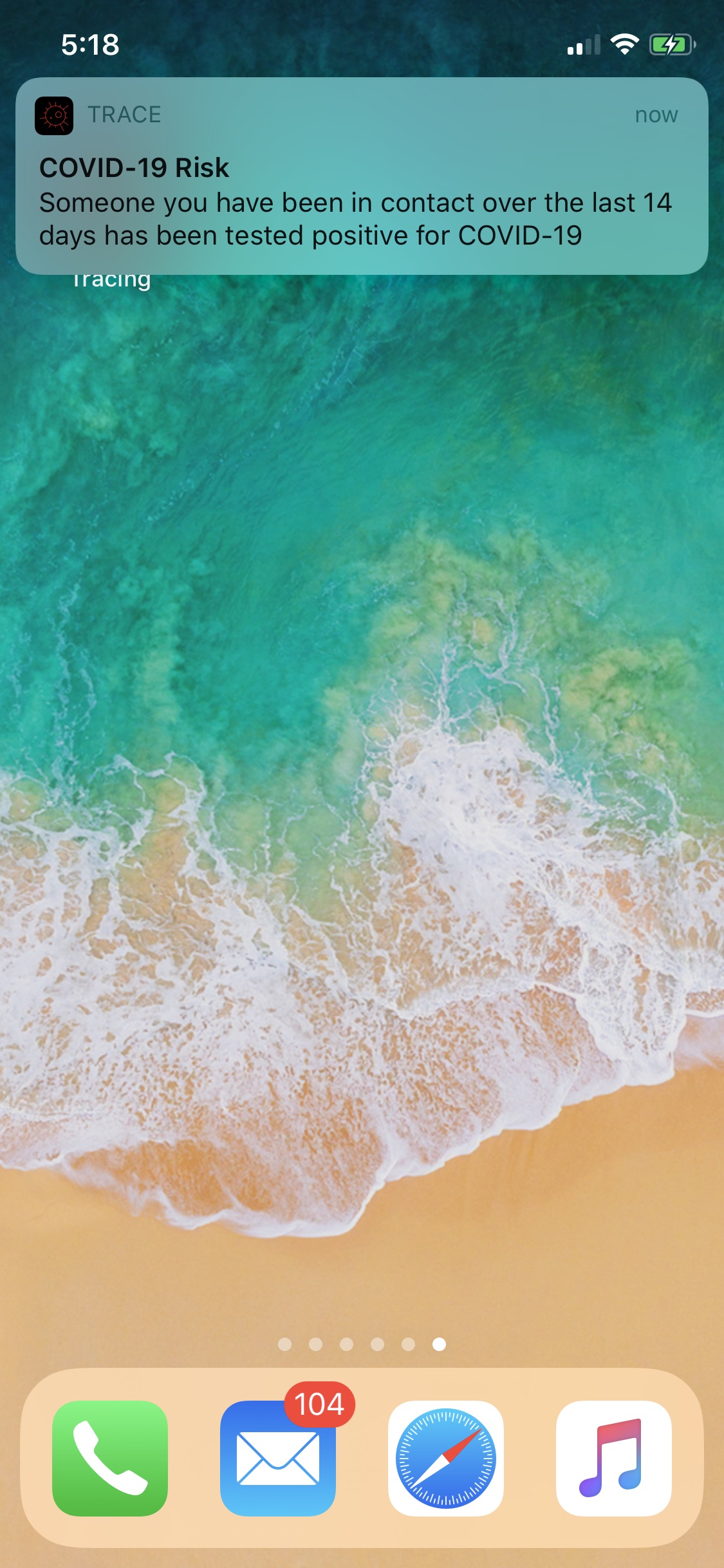
People who have been close to you, even strangers, will be alerted.
-
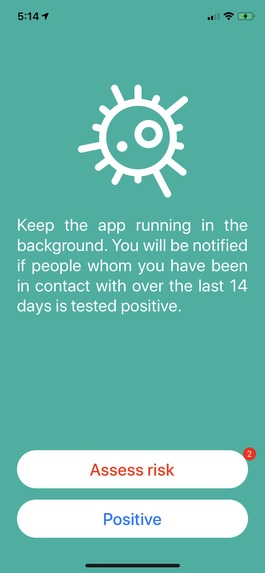
You may have been exposed to people who have been tested positive.
-
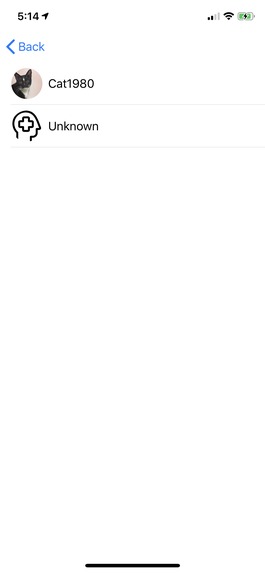
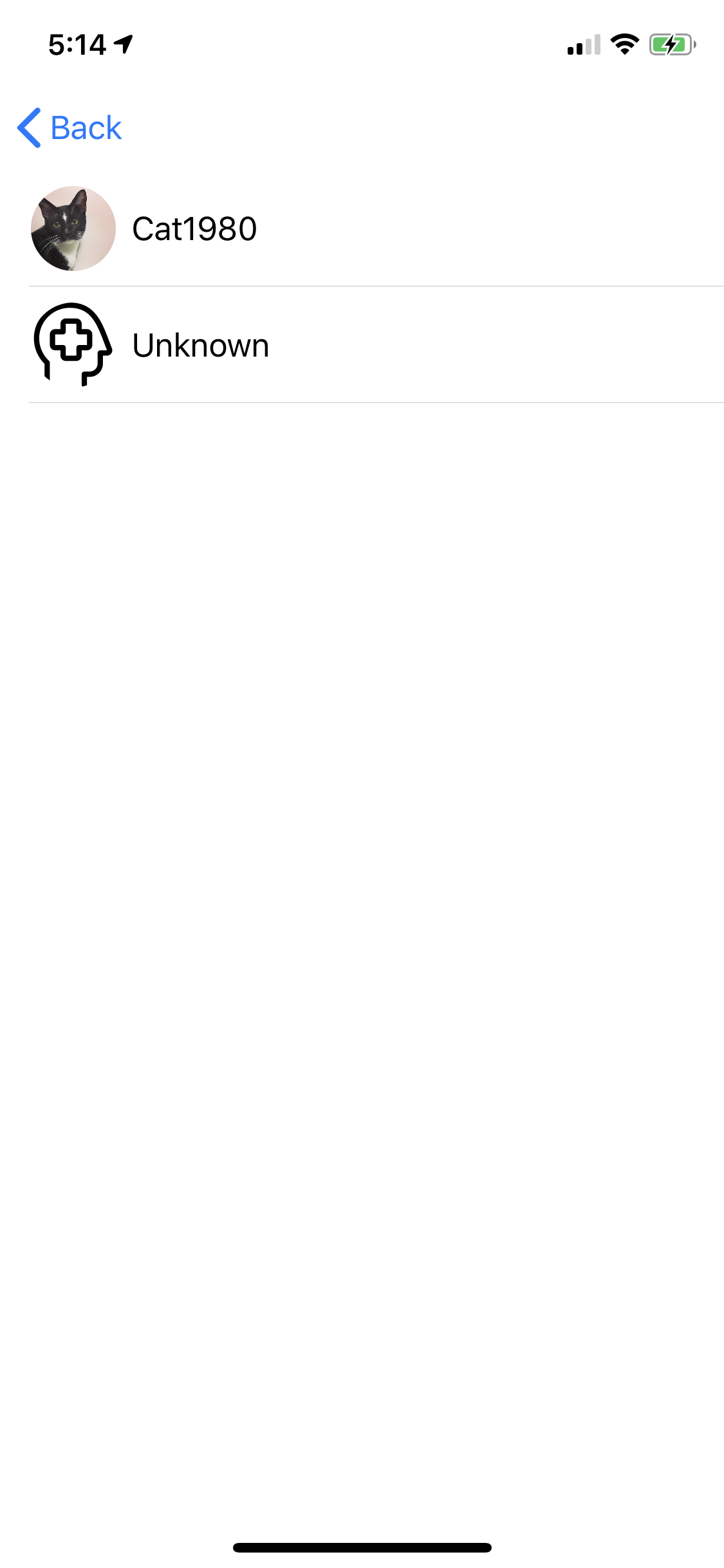
Browse the potential contacts and assess the risks.
-
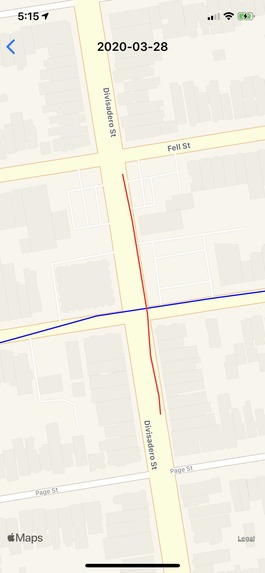
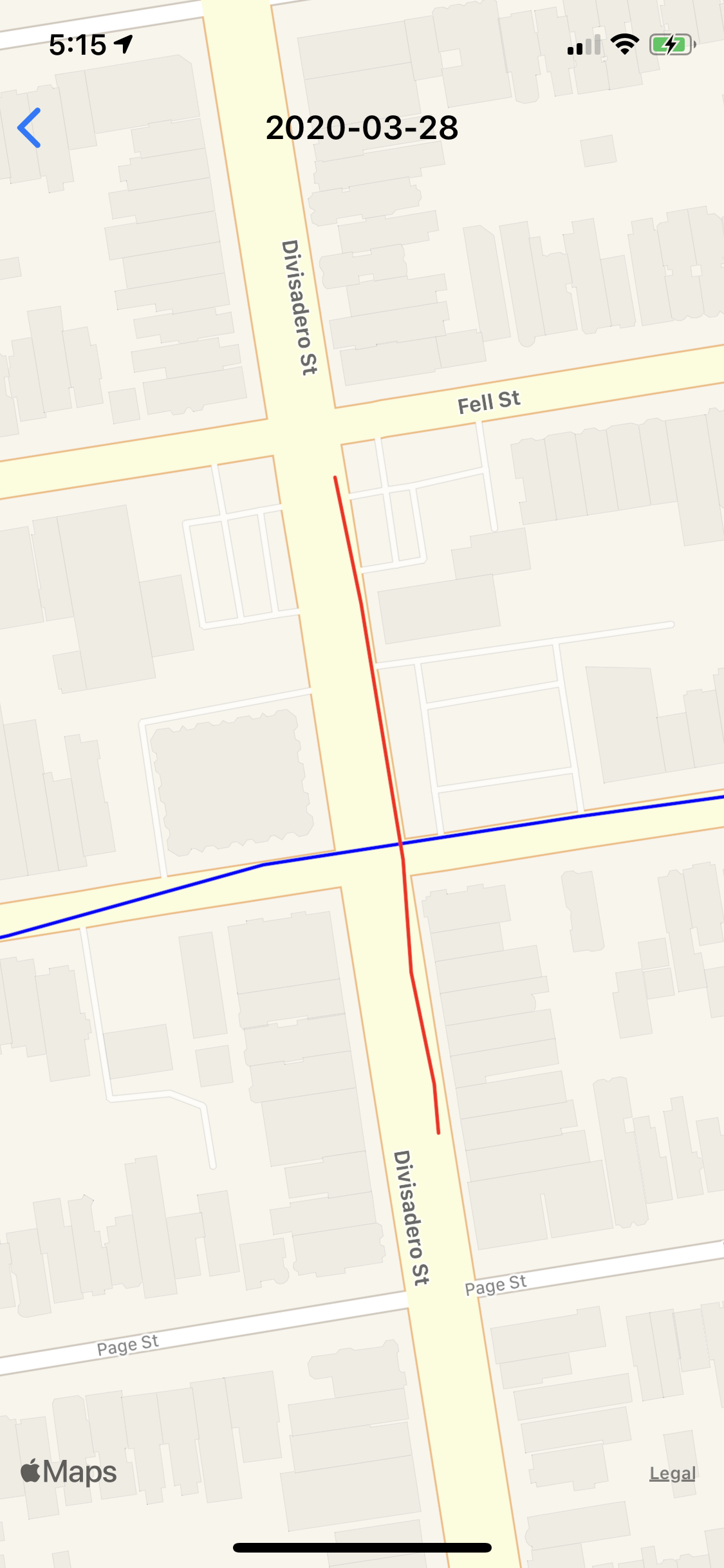
No problem, this is obviously driving by.
-
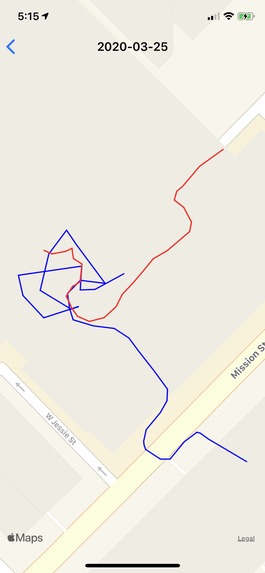
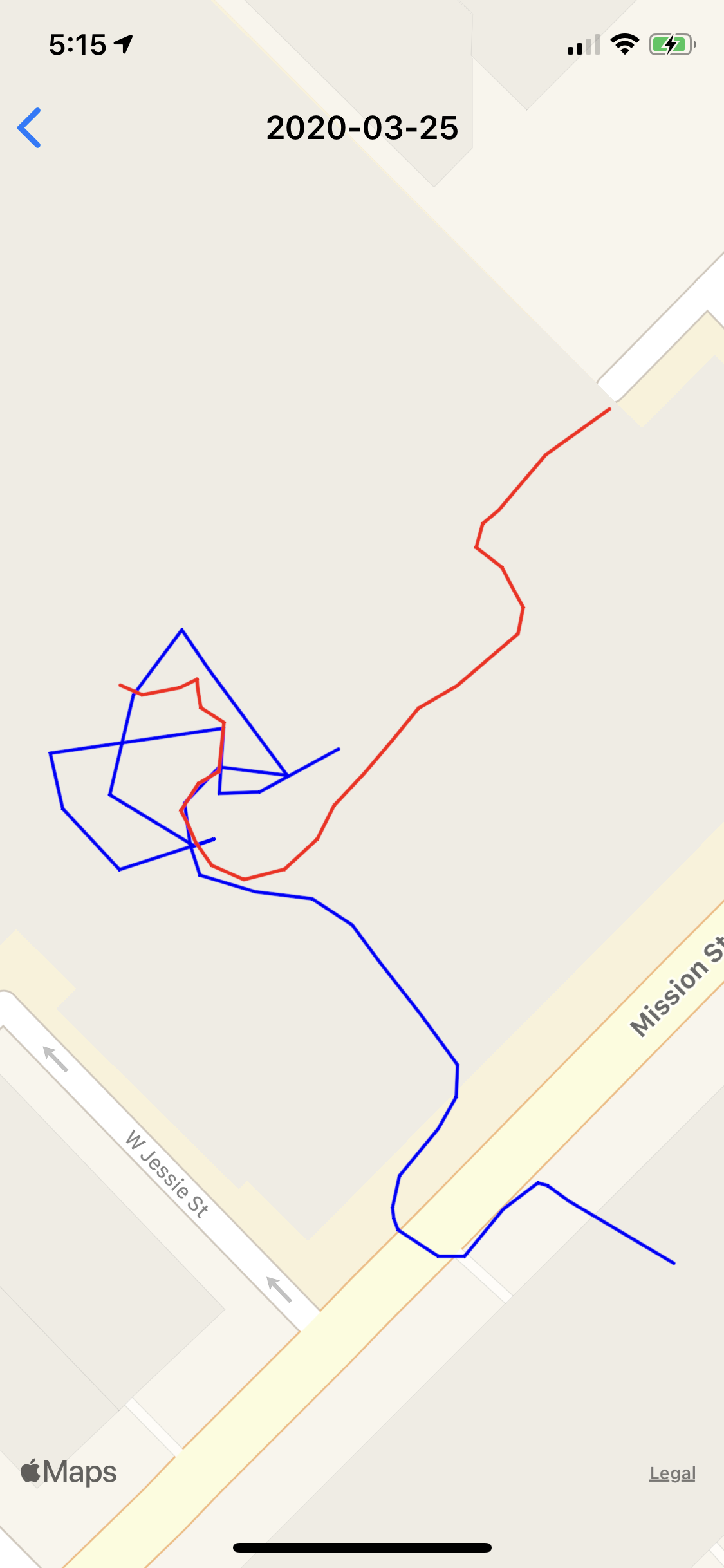
Oh, no! This is the food court at the mall. I'd better call the Doctor!
Inspiration
Contact tracing is difficult in a world where people move around. It requires manual interviewing, which places the public health worker at risk. The interviewing is time consuming and requires the patient to have clear memory. If the patient has been to public transportation, store, or other public places, it is impossible to trace everyone whom he has been around.
China uses QRCode based contact tracing. By "checking-in"at premises with QRCode, a person's path of daily activity is recorded. If someone is tested positive, everyone who have checked-in around the same time are tagged as potential cases. Their QRCode becomes yellow and cannot move around freely. This raises privacy concern and doesn't cover the contacts outside specific locations.
Korea uses Smartphone to track people's movement. The data is pushed to the server. When someone is tested positive, his path is pushed to the users in the neighborhood and it is up to everyone in the area to check the patient's path and see if there is a potential to get infected.
A better way of automated tracing movement with minimum risk of invasion of privacy is needed for maximum adoption in US and other countries where privacy is valued.
What it does
Tracing is a mobile app which uses Bluetooth for contact tracing. By broadcasting and detecting Bluetooth ID, the app is aware of all the instances of Tracing around it. The data is recorded locally on the phone, as well as location records.
When a person is diagnosed positive, he marks it on the app. It triggers push notifications to all those other instances of Tracing which he has been around over the last 14 days. His location records are pushed to those Tracing instances without revealing personal identity. The patient can optionally logs into a Social network to provide recognizable face for this alert.
When a person receives the alert,Tracing will retrieve the location records of the patient and calculate the encounters. User will see the time and location of the encounter, shown in a map. He then evaluates the risk and decide the next steps.
By using Bluetooth, Location Service and Push Notifications, Tracing enables easy, fast, and complete contact tracing with no need for public health worker involvement. Its effectiveness depends on the adoption rate. With high adoption, it can enable the society to recover the economic activities with low risk of restarting the epidemic.
How I built it
It is built for iOS and can be easily ported to Android. It uses Bluetooth, Location Service, and Push Notifications.
Challenges I ran into
Calculation of the encounter time and location.
Accomplishments that I'm proud of
The development was quick and I am able to develop a reasonable working demo.
What I learned
I need a good designer ;-)
What's next for Trace
For this app to be adopted, it needs to be a cooperation between Google and Apple and made first-party apps. The app must work cross-platform, meaning Tracing running on Android should detect Tracing on iOS, and vice versa.


Log in or sign up for Devpost to join the conversation.