


Inspiration
The inspiration behind ToyotAI was to revolutionize the car-buying experience by making it more user-centric, personalized, and efficient. We wanted to create a platform that not only simplifies decision-making for customers but also leverages modern technology like NLP and machine learning to enhance engagement.
🎯 What Does ToyotAI Do?
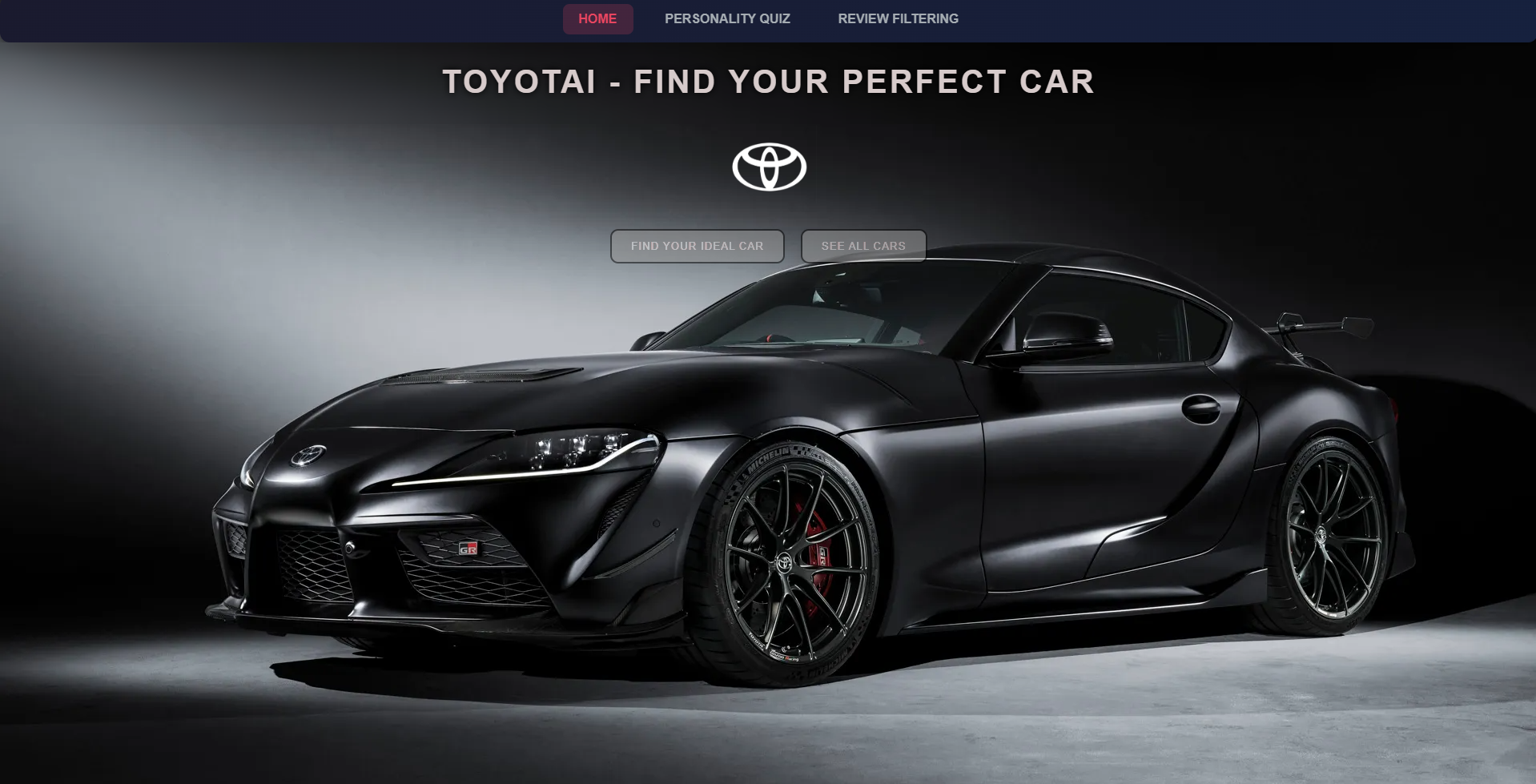
toyotAI is an AI-powered car recommendation platform designed to make car shopping seamless and fun! Instead of endless filtering and manual searches, users can:
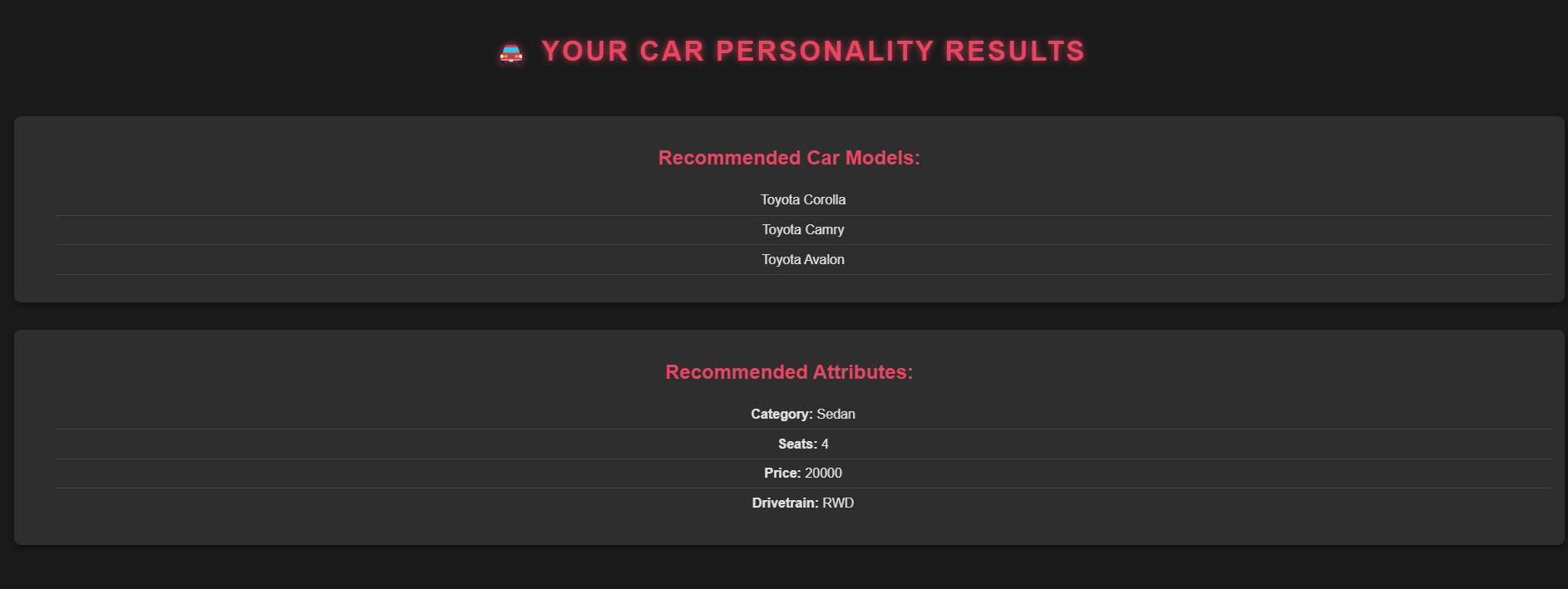
🚀 Take a Fun Personality Quiz – Discover the best Toyota model that matches your lifestyle.
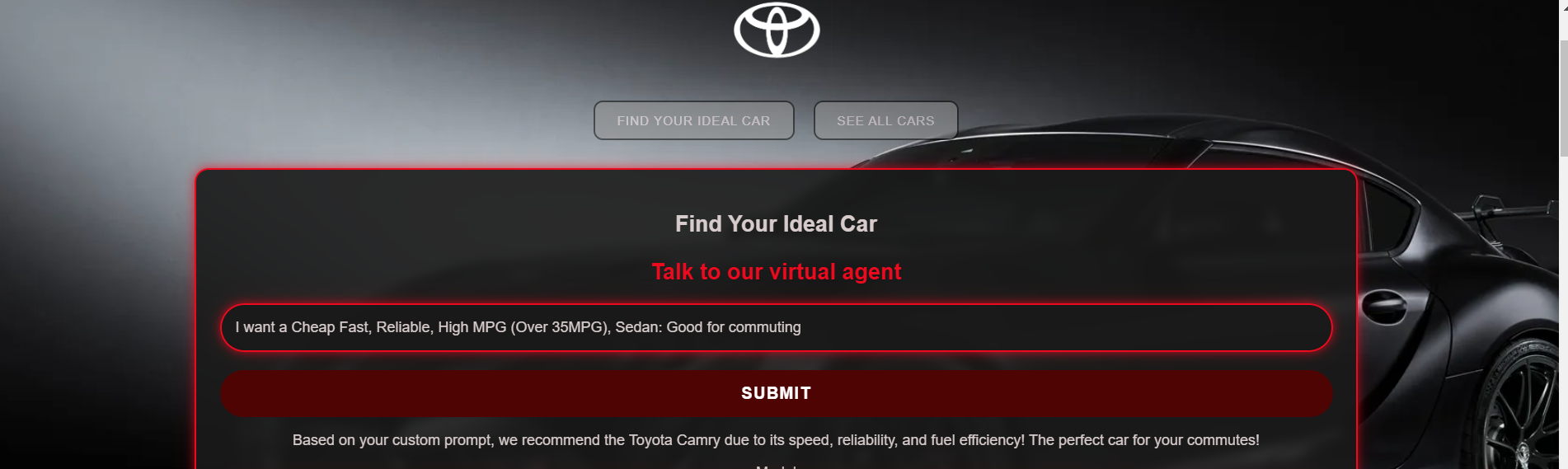
💬 Chat with a Virtual Salesman – Get AI-driven insights on the best car options tailored to you.
🔍 Use Traditional Filtering – For those who prefer a classic approach, refine your search with familiar filters like price, MPG, and features.
💡 What We Learned This project was an incredible opportunity to deepen our technical and teamwork skills. Some of the major takeaways include:
📊 Backend with Pandas – We used the Pandas library to process and analyze car data efficiently, making our recommendation system smarter.
🎨 Enhanced UI/UX in React – We refined our frontend skills, creating an engaging and responsive experience with React and CSS.
🤝 Collaboration & Teamwork – Working under time constraints pushed us to efficiently divide tasks, communicate effectively, and integrate our work seamlessly.
🧠 Implementing AI Features – Our virtual salesman leverages OpenAI's GPT API for intelligent conversations, and for our recommendation system/vehicle matching quiz.
🛠️ Tech Stack Frontend: React, CSS Backend: Python (Flask), Pandas AI Features: OpenAI API, Database: JSON-based, and csv storage (for rapid prototyping
How we built it
The front end was built using React for a dynamic and responsive user experience. HTML and CSS ensure seamless design across devices, while JavaScript powers API integrations for live data updates with a flask python server and a pandas database. The back end utilizes a detailed Toyota/Lexus car dataset and machine learning algorithms to predict user preferences and recommend vehicles. Our custom APIs bridge the gap between the front end and back end to deliver tailored car suggestions.
Challenges we ran into
- Issues with our coding environments and sharing code
- Implementing our LLMs data into user results after user inputs and managing front end compatibility
- Utilizing APIs effectively to connect frontend and backend integration.
- Working with new software
- Communicating effectively to separate sections of the project
Accomplishments that we're proud of
- Successfully creating a system that combines NLP, machine learning, and dynamic front-end development to deliver personalized car recommendations.
- Developing an intuitive quiz and recommendation system that simplifies the car-buying process.
- Building trust with users by incorporating real-time data and transparency features like vehicle popularity metrics.
What we learned
Since most of our members were fairly new to most of the concepts that we utilized, there was a huge learning curve. We learned a lot about how LLMs work, how to develop a functional UI, how to seamlessly integrate frontend and backend, and creating a user-friendly app with all of the features that we intended it to have.
What's next for ToyotAI
- Add more cars and attributes for AI to train on and output
- Location-Based Tracking: Enhancing personalization by using location data to recommend nearby dealerships, local promotions, and region-specific models.
- Enhanced AI Features: Introducing advanced machine learning algorithms to analyze deeper user insights and refine car recommendations for even higher accuracy.
- Integration with Toyota Services: Allowing users to seamlessly schedule test drives, view exclusive promotions, check vehicle availability, and connect directly with local dealerships for a complete car-buying experience.
- Increase the speed of our AI models by reducing redundancies and using more innovative solutions to our issues with inefficiency.


Log in or sign up for Devpost to join the conversation.