-
-

Thumbnail
-
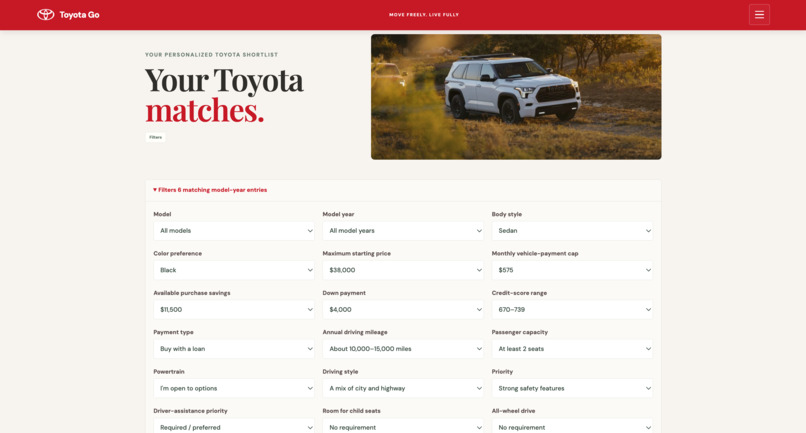
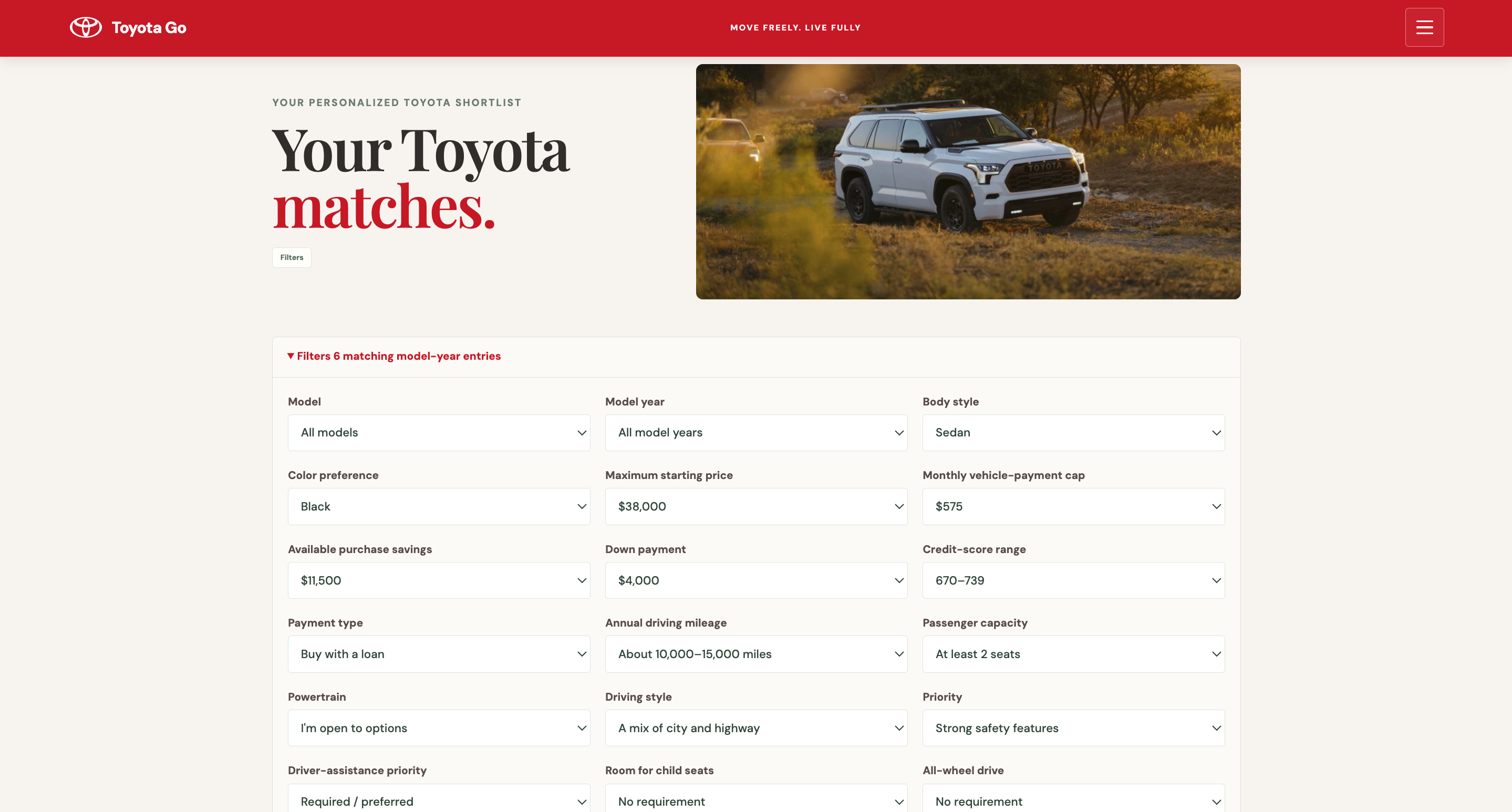
Filter Feature
-
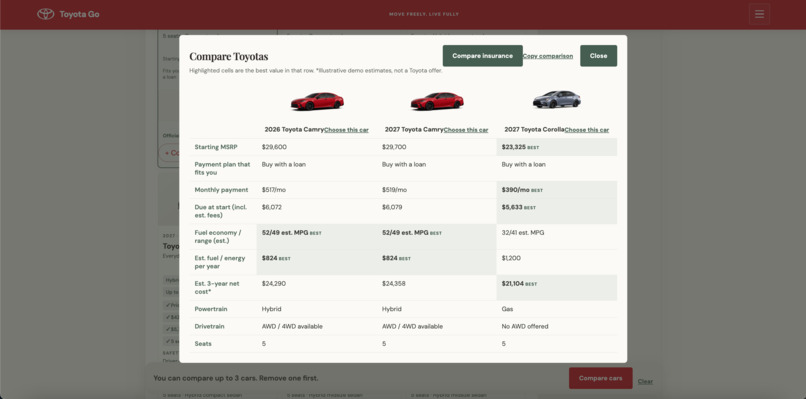
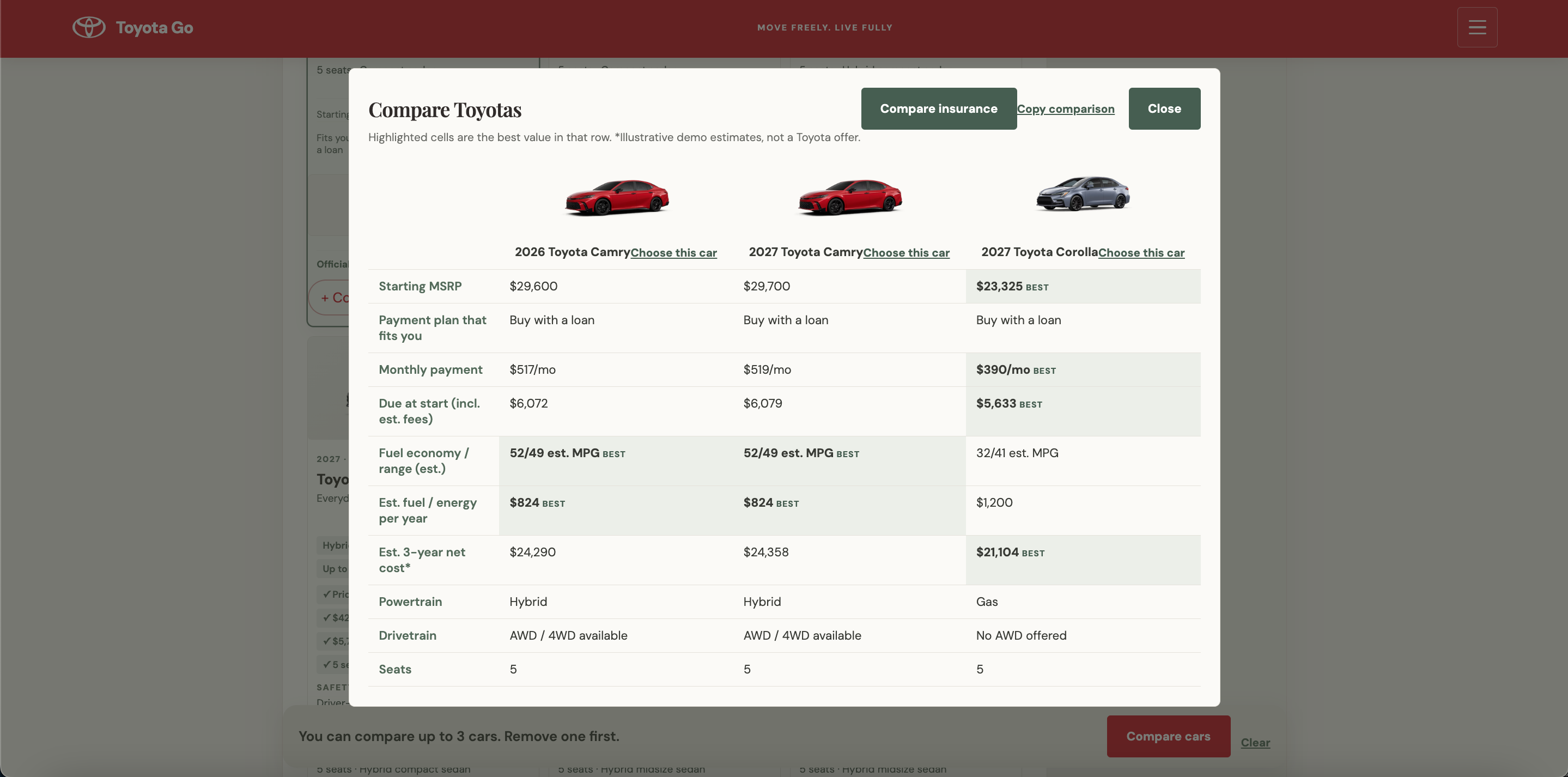
Car Comparison
-
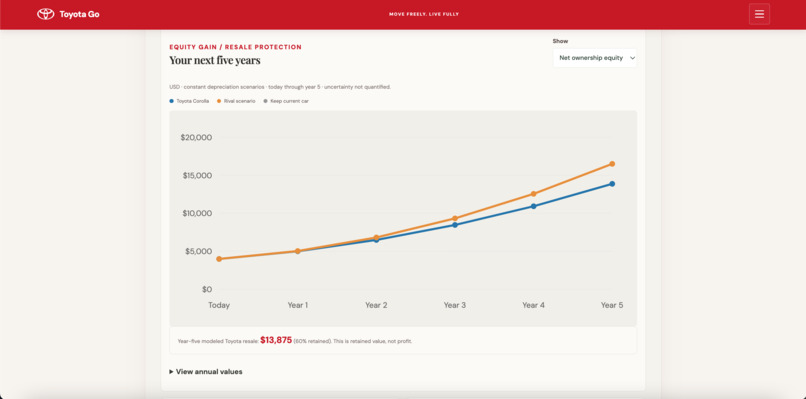
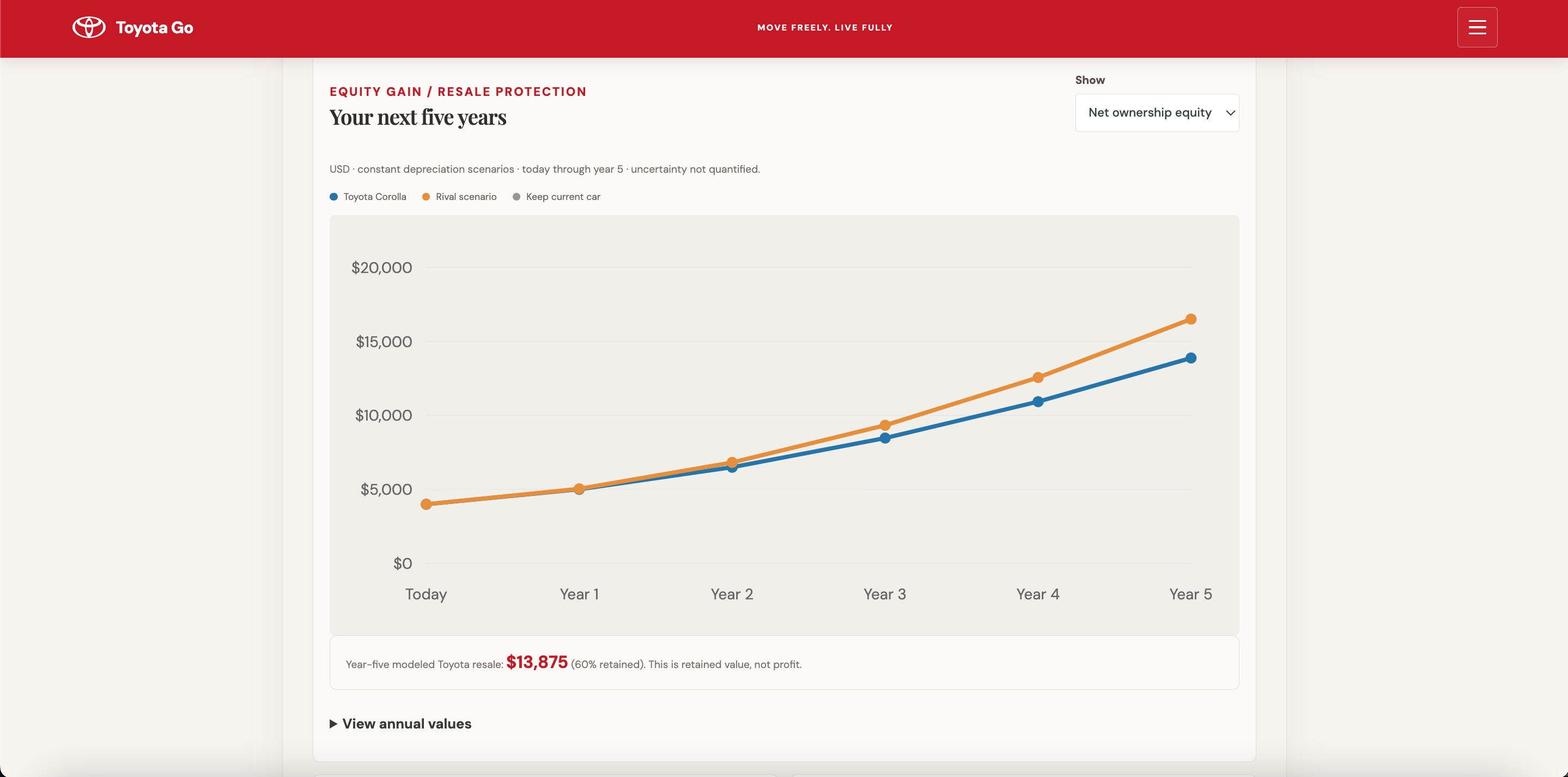
5 Year Graph
-
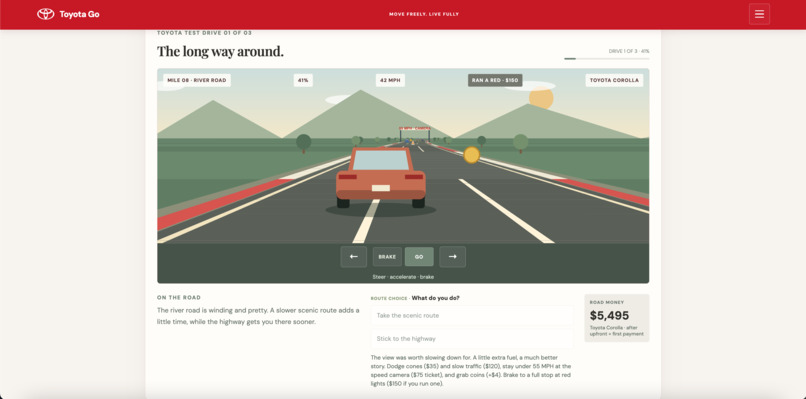
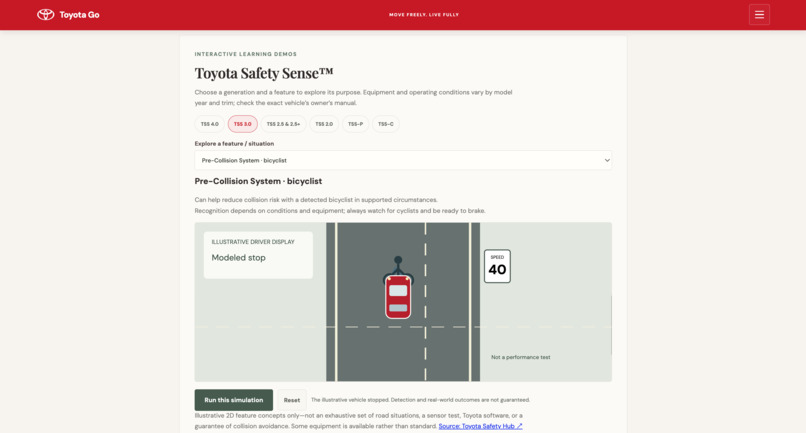
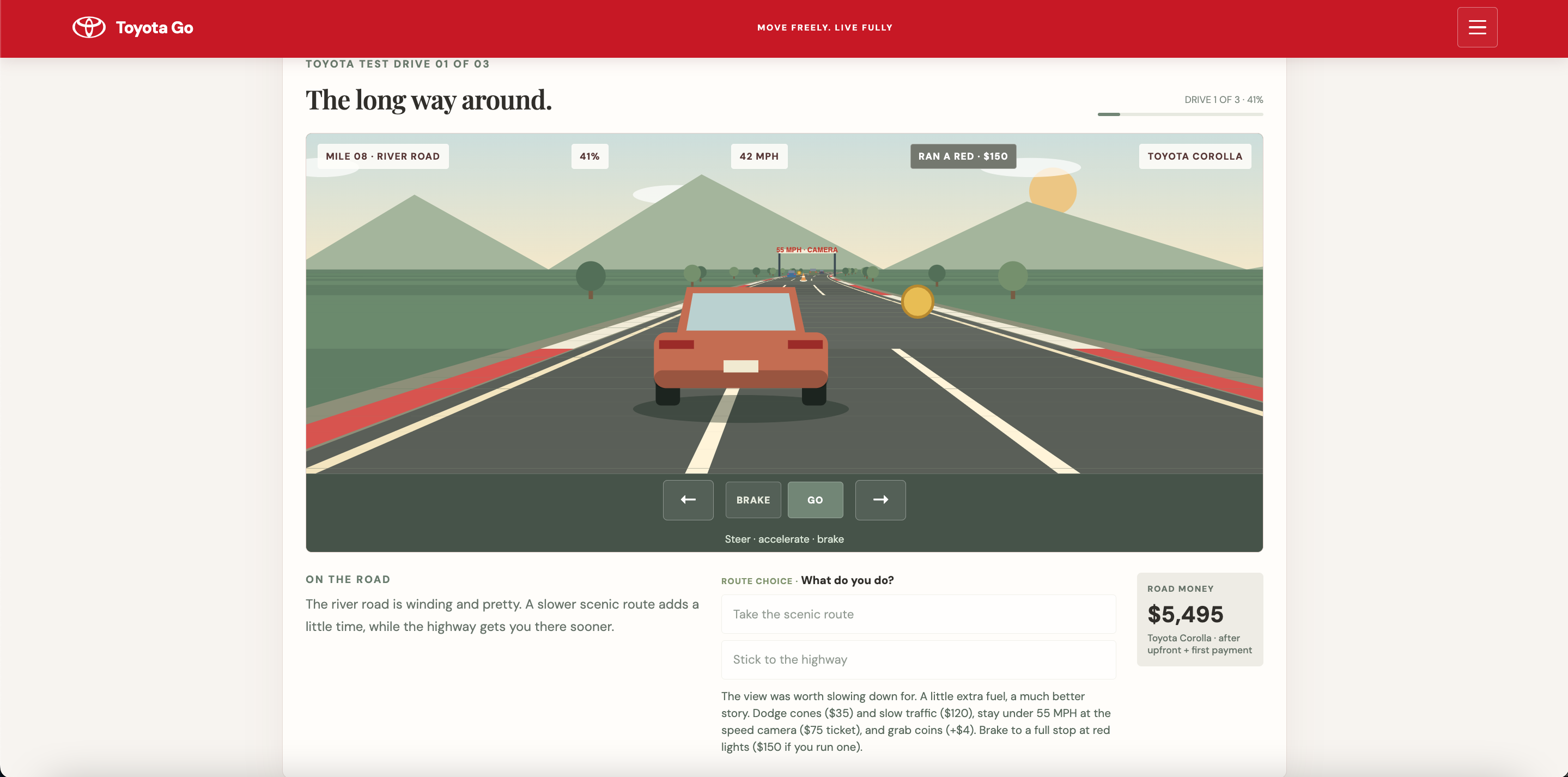
2d "test drive" simulation
-
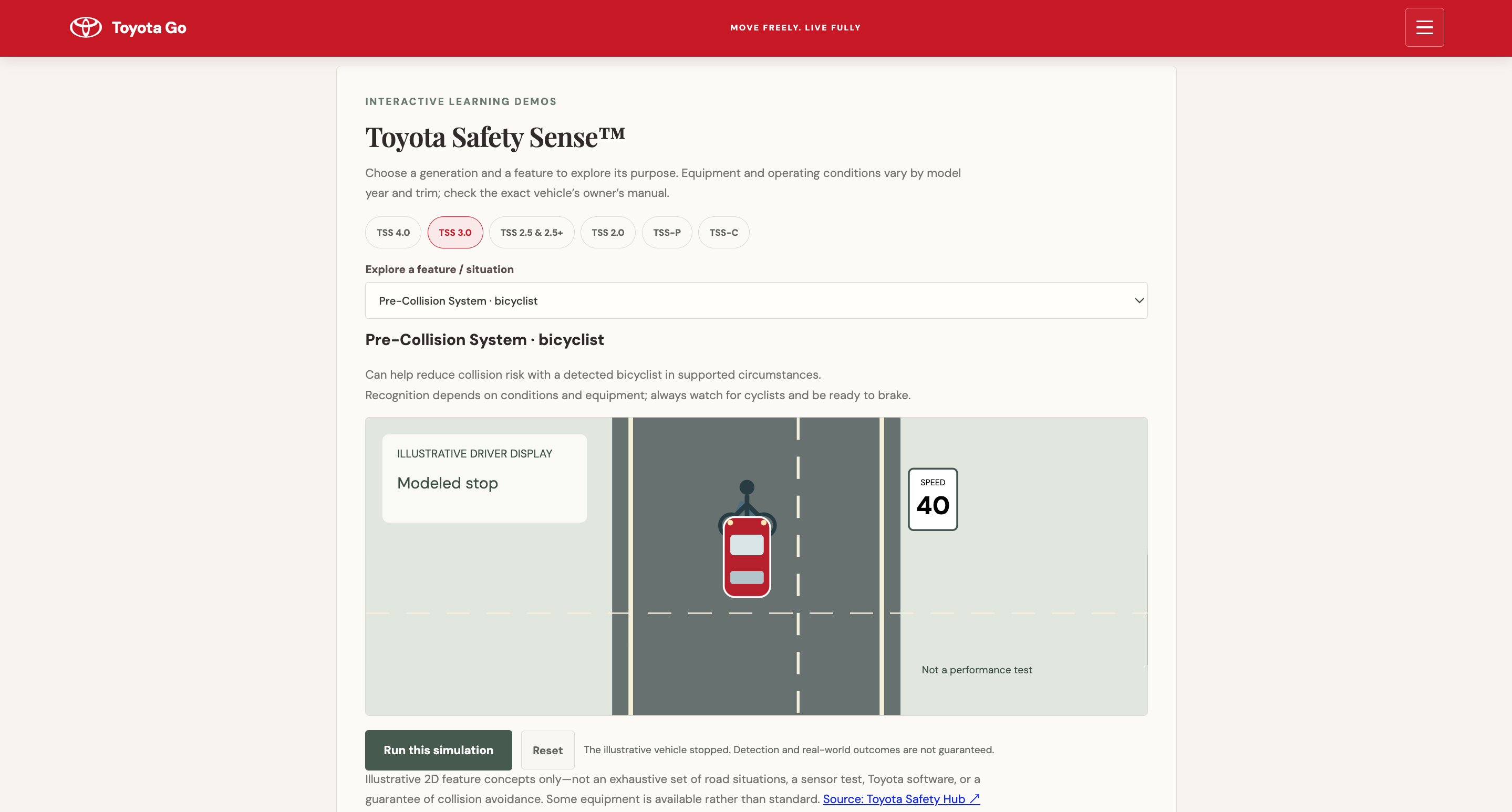
Car Safety

Inspiration
Choosing a car is about more than finding a model you like. It means balancing monthly payments, everyday needs, safety, environmental impact, and long-term ownership costs. Yet this information is often scattered across different websites, calculators, and brochures. We created Toyota Go to bring these decisions into one approachable experience. Our goal was to help people move from “Which car looks right?” to “Which car makes sense for my life?” Our tagline, Move Freely. Live Fully., reflects that vision: helping people explore their options with greater clarity and confidence.
What it does
Toyota Go 🚗 is an interactive car-buying platform that combines personalized recommendations, financial analysis, vehicle comparisons, and hands-on learning.
Personalized recommendations: Helps users explore Toyota models based on their budget, driving habits, and preferences.
Financial decision analysis: Compares cash purchases, loans, and leases, with an Instant Deal Benefit Score that considers financial fit, safety features, sustainability, and maintenance costs.
Interactive graph visualizations: Presents five-year ownership projections, estimated costs, resale value, and emissions to help users compare different vehicle scenarios.
Capital One Nessie integration: Uses a sandbox banking API to demonstrate financial data workflows, affordability analysis, and sample reserve transfers without moving real money.
2D safety simulation: Demonstrates Toyota Safety Sense concepts through interactive scenarios that help users explore driver-assistance technology.
Sustainability insights: Compares estimated emissions and explores the environmental benefits of electrified vehicles.
How we built it
We built Toyota Go as a web application, combining an interactive user interface with financial calculations, visualizations, vehicle comparison tools, and educational simulations. We integrated Capital One's Nessie sandbox API to explore how banking data could support affordability analysis. We also developed our own scoring logic to combine multiple decision factors into a single Deal Benefit Score.
Challenges we ran into
One of our biggest challenges was bringing several complex parts of car ownership into one cohesive experience. Comparing financing options requires looking beyond monthly payments, so we incorporated longer-term projections and multiple factors into our analysis. Another challenge was making financial information accessible through graphs and interactive features rather than overwhelming users with numbers.
Accomplishments that we're proud of
We developed a 2D car simulation game where users can explore vehicle safety scenarios and see demonstrations of driver-assistance technologies. We also created a vehicle difference chart that makes it easier to compare Toyota models across key specifications and features. Another achievement was connecting Capital One's Nessie sandbox API to demonstrate financial data workflows, including sample reserve transfers.
What we learned
Building Toyota Go taught us the importance of time management, especially when developing multiple features under a tight hackathon deadline. We learned to prioritize essential functionality, divide tasks efficiently, and adapt when things did not work as expected. We also gained experience integrating APIs, designing interactive simulations, and turning our ideas into a working product. Most importantly, we learned how important it is to balance technical complexity with a simple, intuitive user experience.
What's next for Toyota Go
We plan to add real time vehicle pricing and more accurate financing estimates so users can compare Toyota models using up to date information. We want to expand the five-year cost graphs to include insurance, fuel, maintenance, and depreciation, giving users a clearer picture of total ownership costs.
Built With
- analysis
- api
- chatgpt
- css
- data
- financial
- gemini
- html
- javascript
- nessie
- react
- replit
- visualization


Log in or sign up for Devpost to join the conversation.