Inspiration
Our inspiration was to make environmental data accessible and understandable to everyone. We wanted to increase public awareness of industrial pollution.
What it does
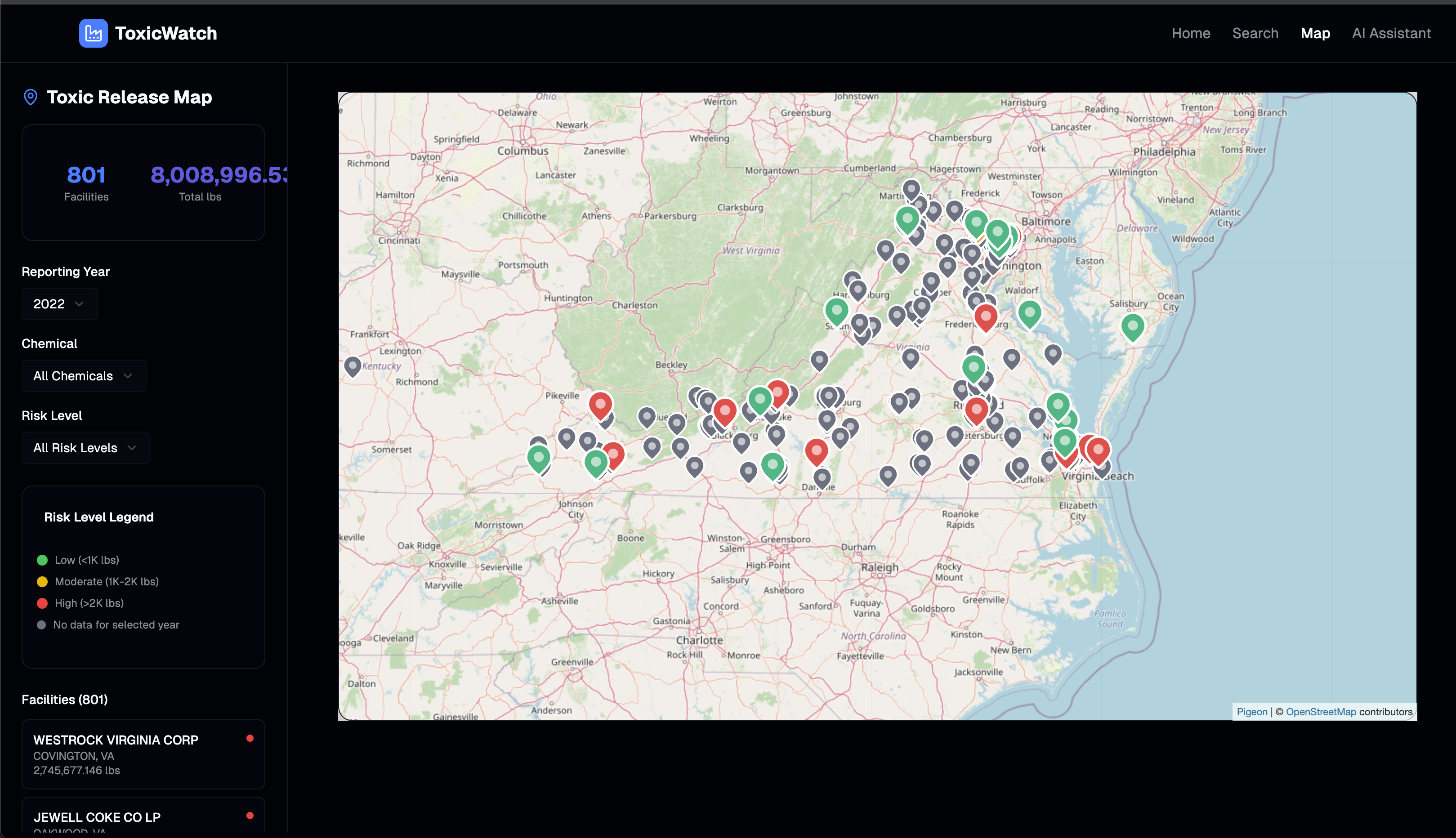
ToxicWatch provides an interactive map to visualize toxic chemical releases reported to the EPA. It allows users to search for facilities, view detailed chemical release reports, and use an AI-powered assistant to get answers to health questions about industrial pollution.
How we built it
We developed a full-stack application using Next.js with TypeScript for the frontend and a Node.js/Express server for the backend, with a MongoDB database. The backend processes data from the Public EPA's Toxic Release Inventory.
Challenges we ran into
We faced challenges with large and inconsistent datasets from the EPA, which required building a robust data import and cleaning process.
Accomplishments that we're proud of
We're proud of creating a high-performance application. We also successfully integrated an AI assistant that provides valuable, context-aware information about chemical releases.
What we learned
This project taught us a great deal about working with large-scale government datasets and the importance of a well-designed backend for a better user experience. It also deepened our understanding of full-stack development best practices, including the benefits of using TypeScript for end-to-end type safety.
What's next for Toxic release mapper
We plan to expand the dataset to include more historical data and other environmental factors. We also aim to enhance the AI assistant's capabilities to offer more personalized and actionable insights for users.


Log in or sign up for Devpost to join the conversation.