-
-
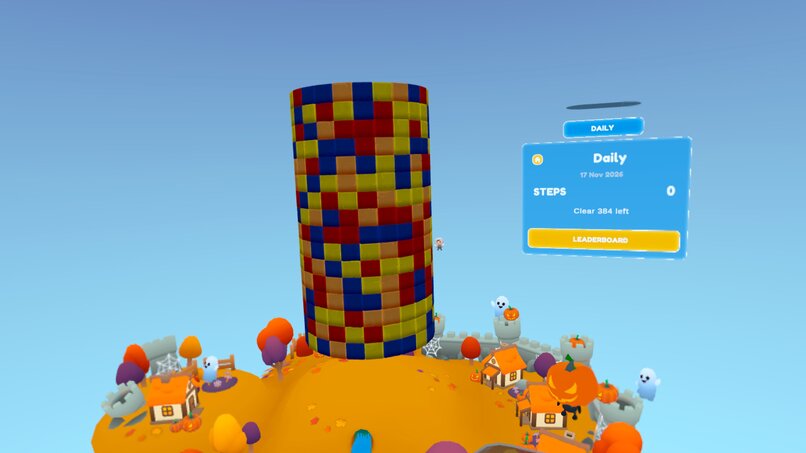
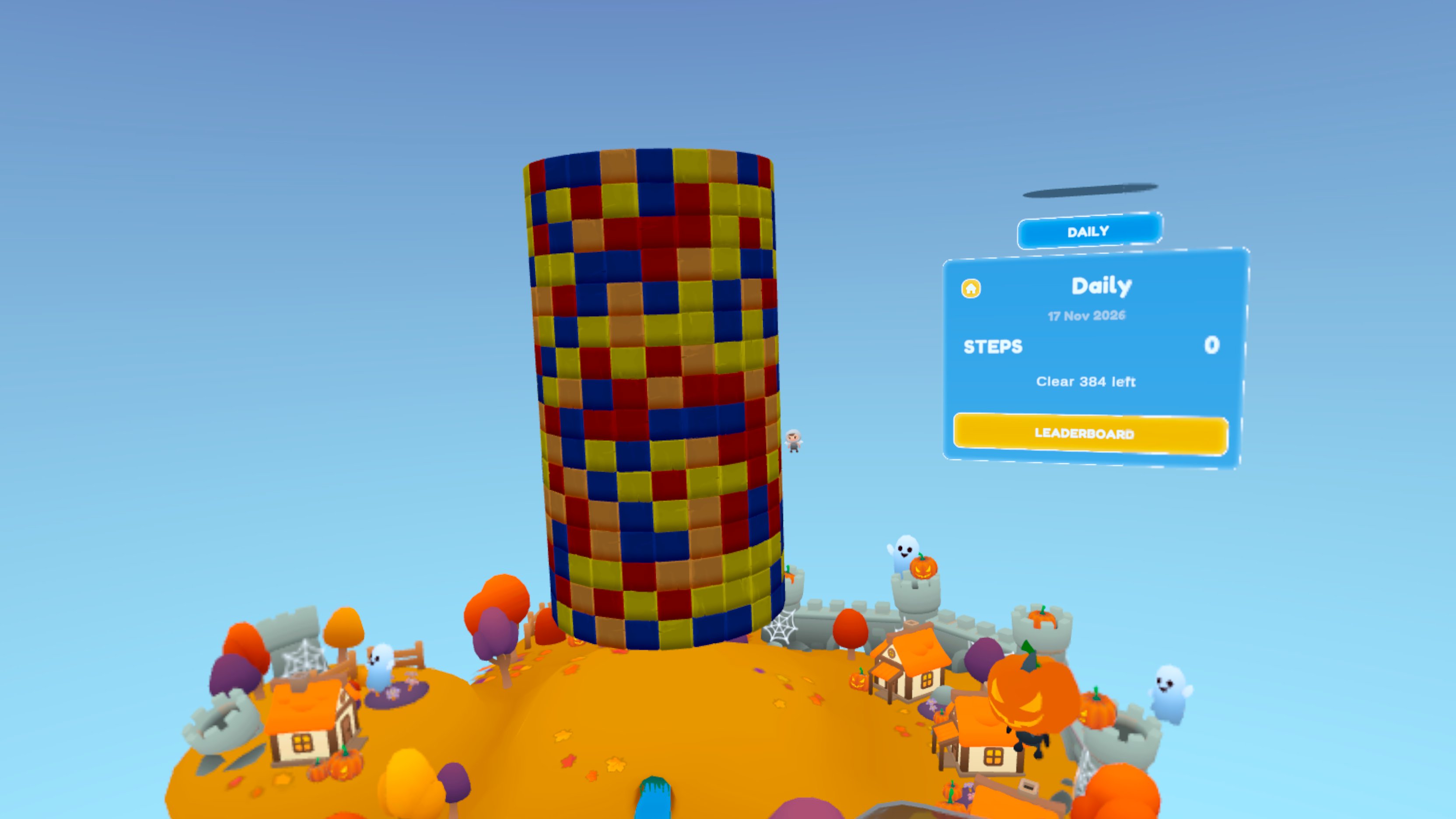
Daily mode (seasonal skin).
-
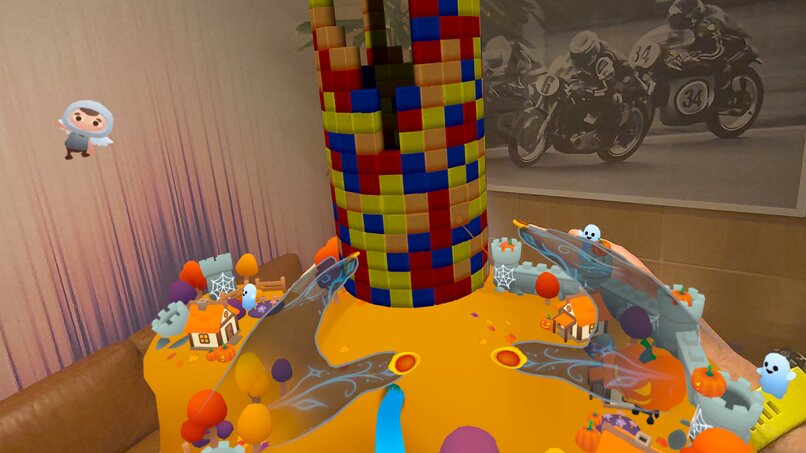
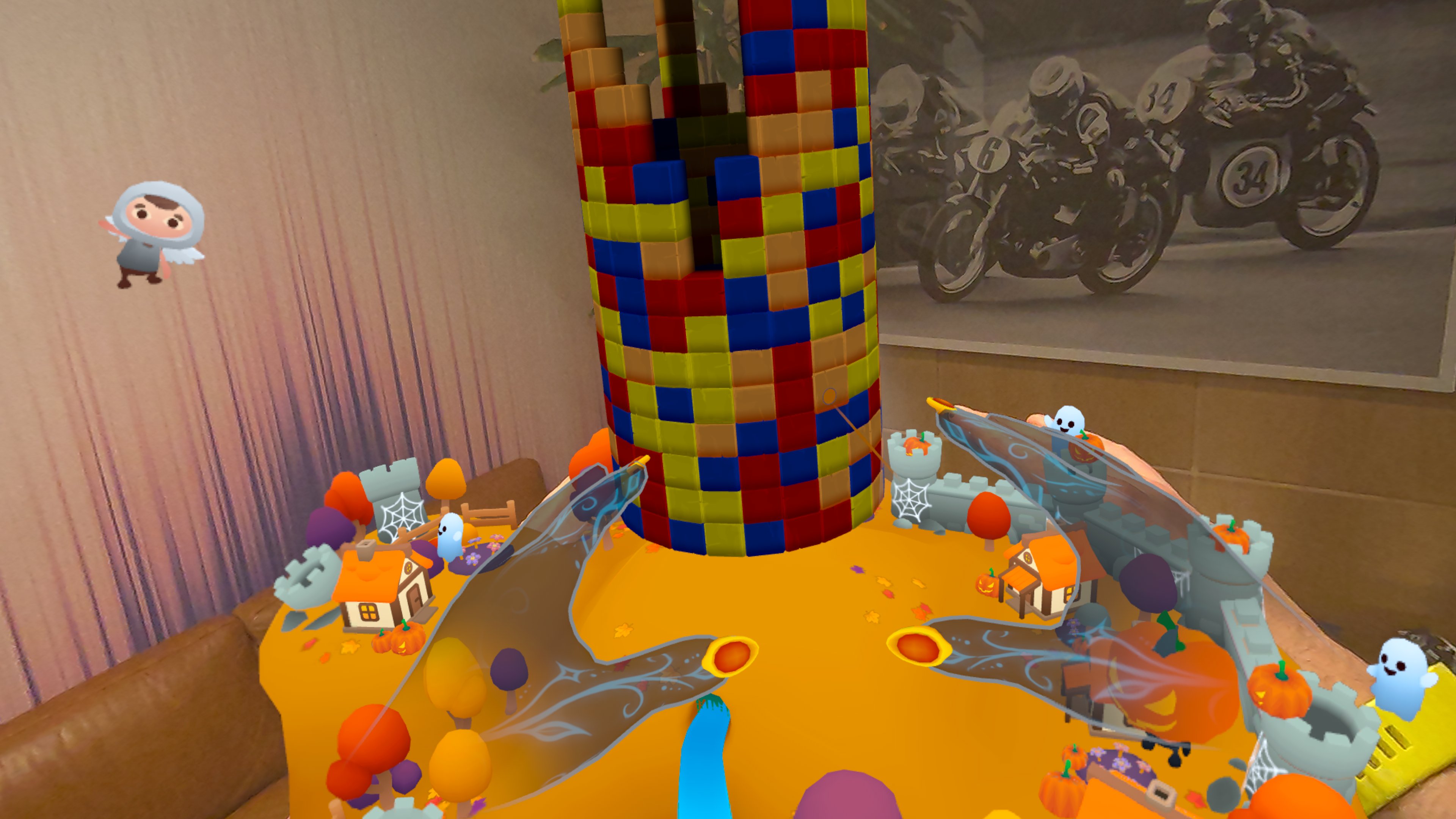
Mixed Reality Daily
-
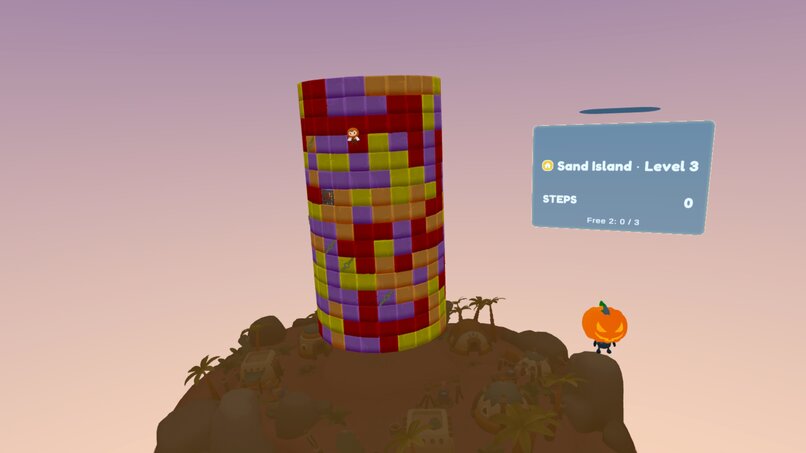
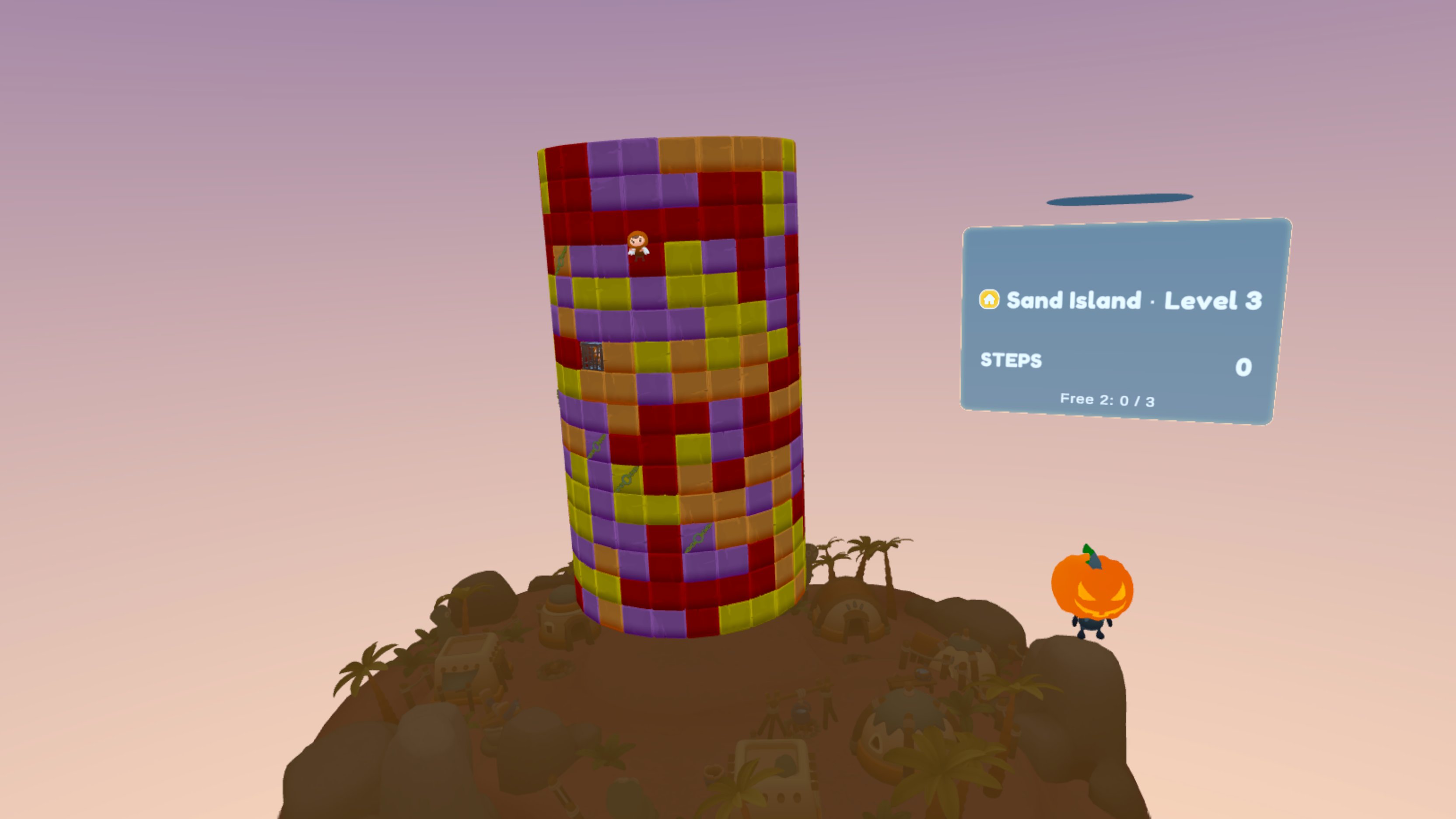
Sand island puzzles
-
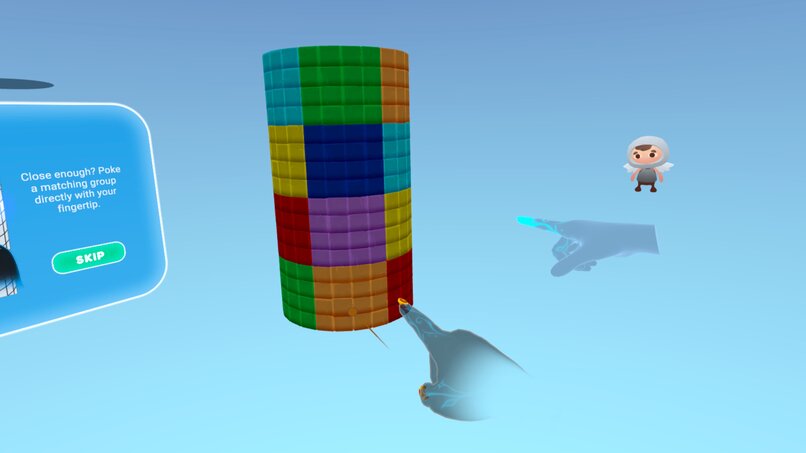
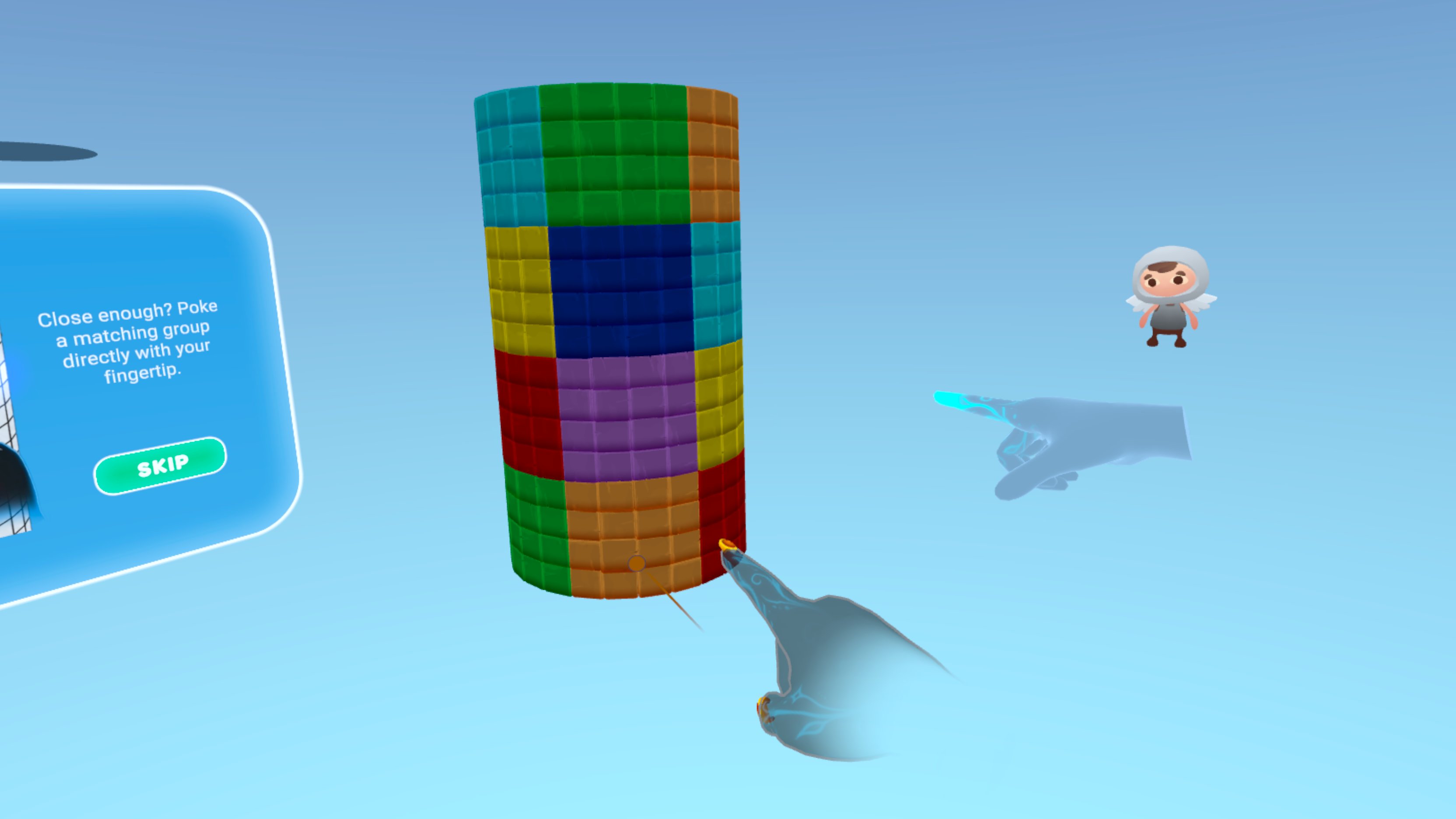
Poke to select
-
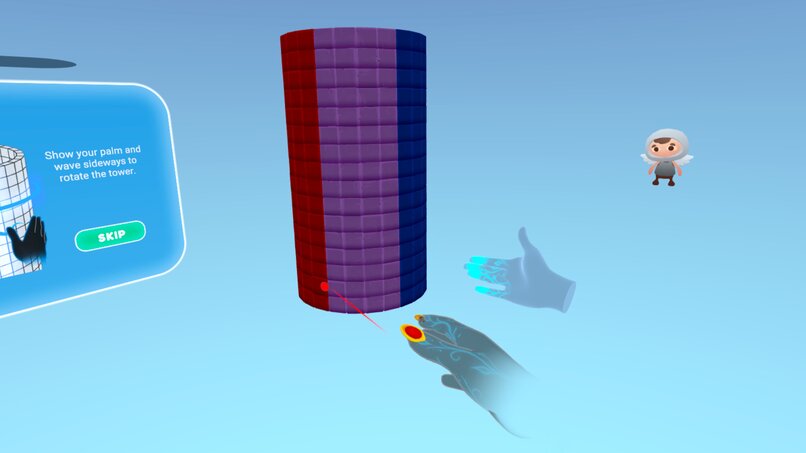
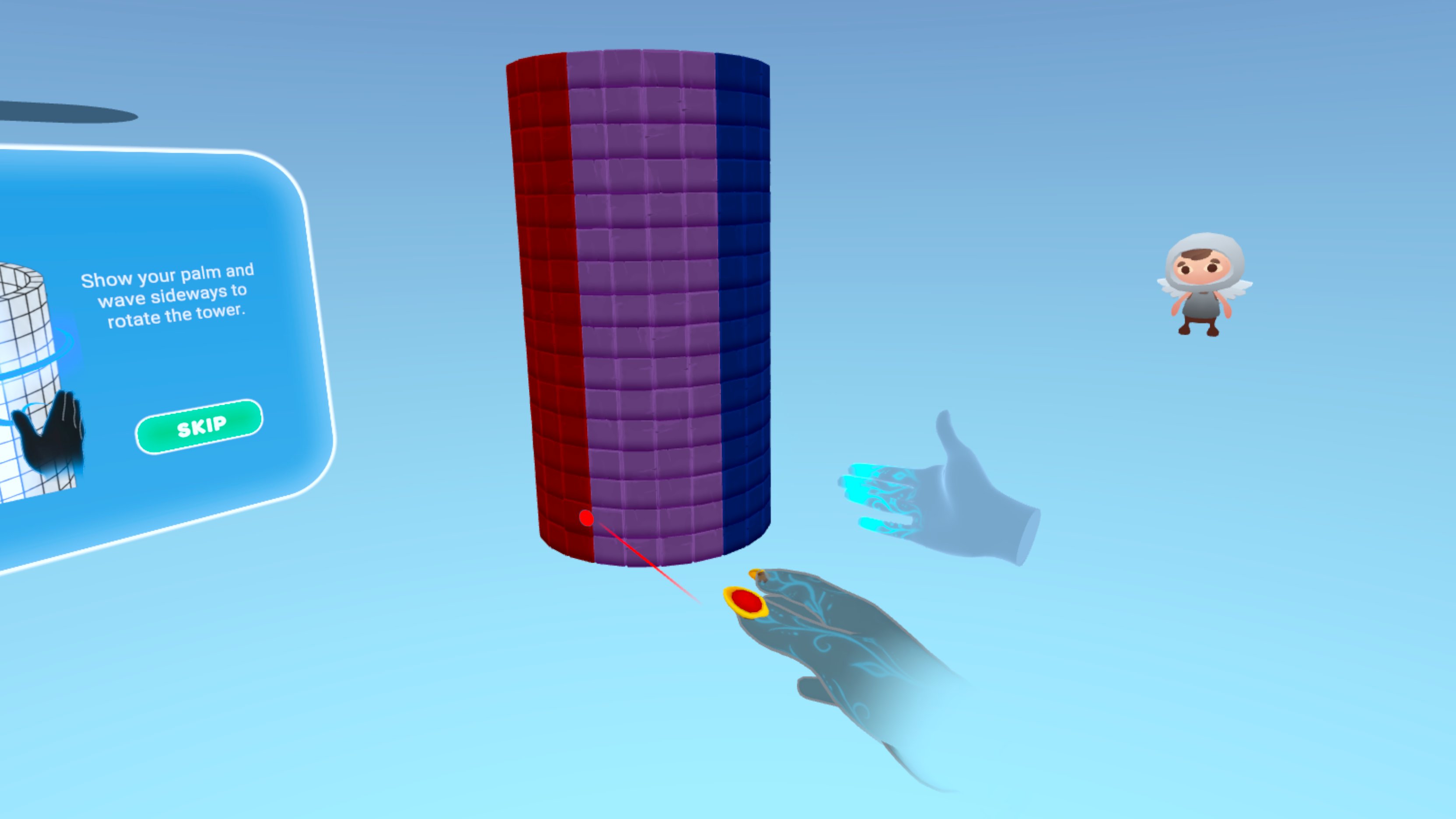
Wave to spin
-
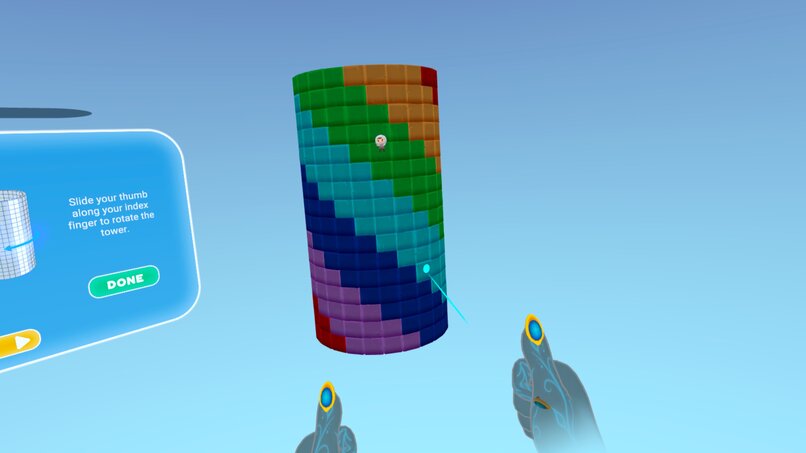
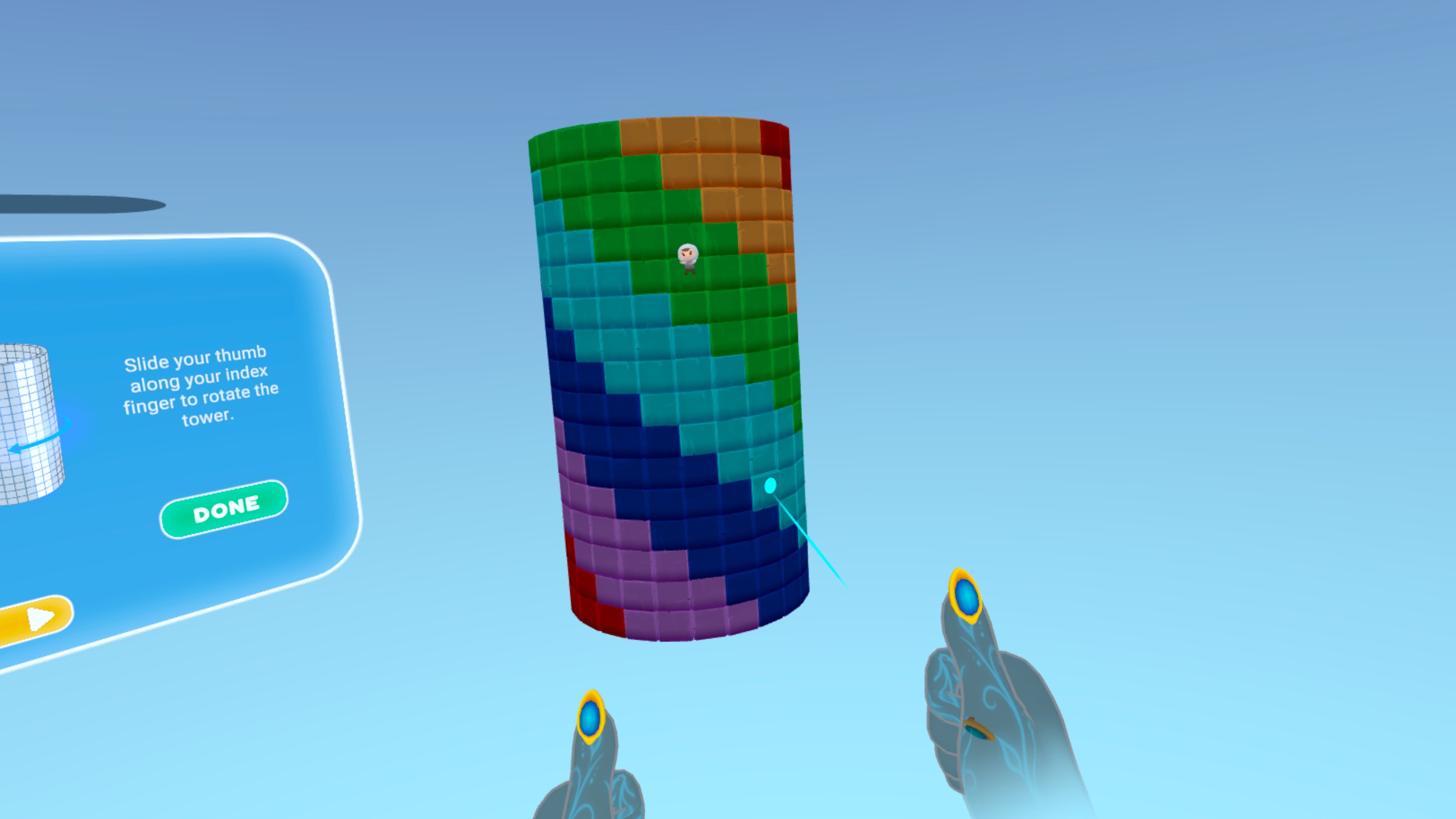
Use microgestures
-
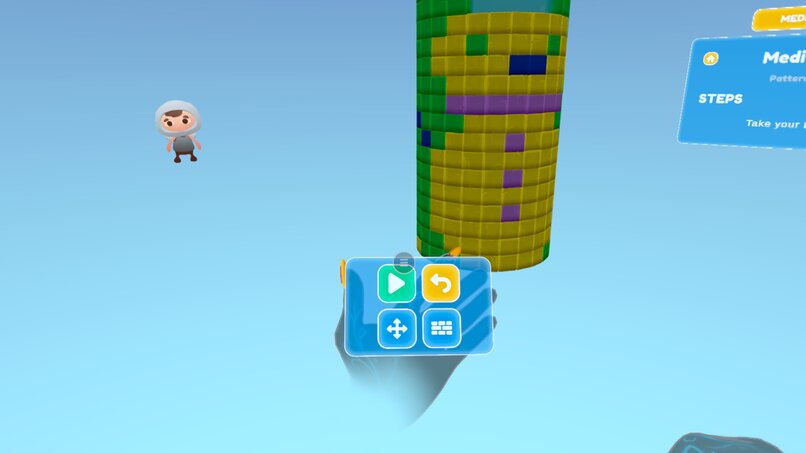
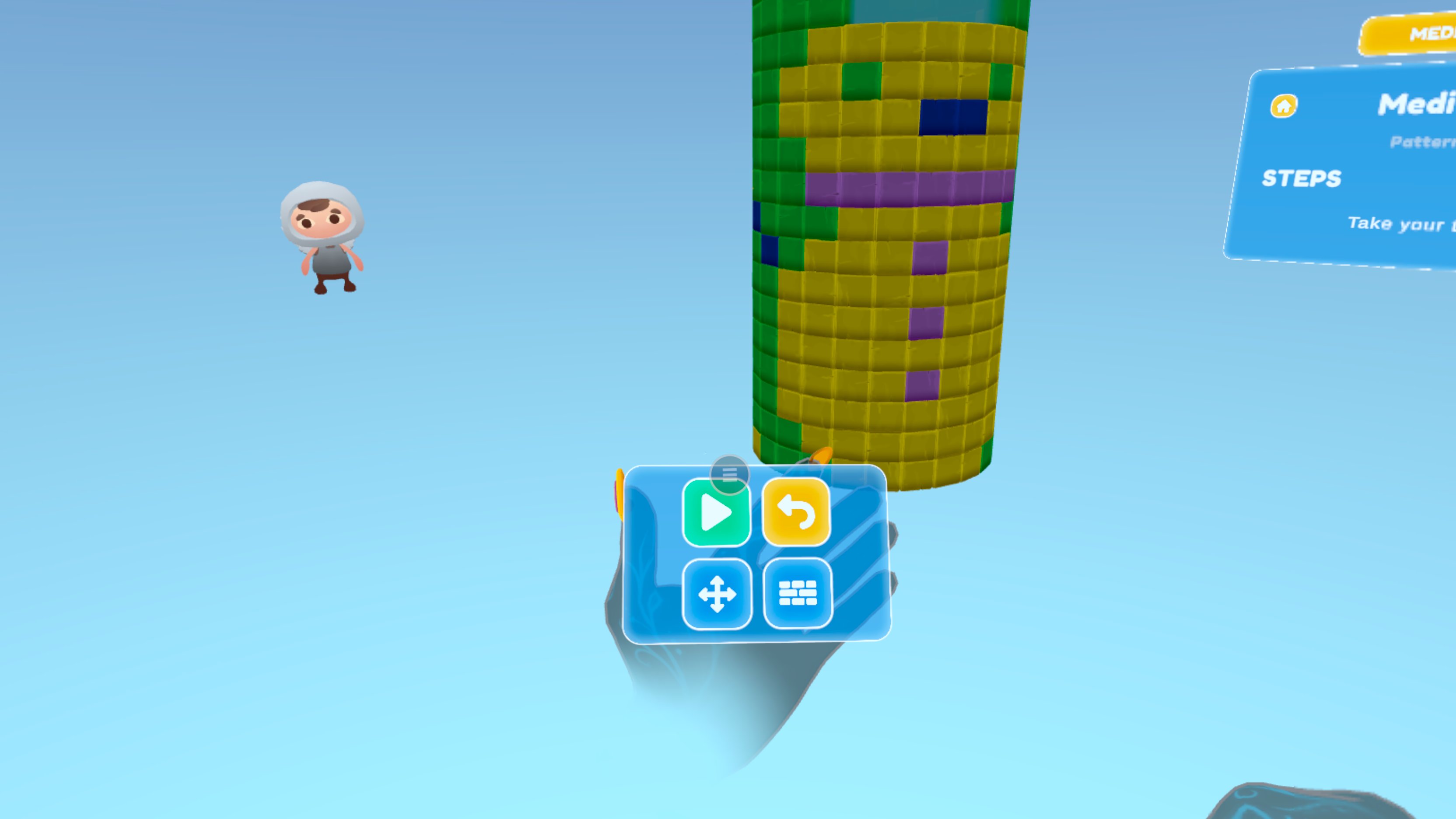
Quick menu: Undo, Adjust, Next, Play mode
-
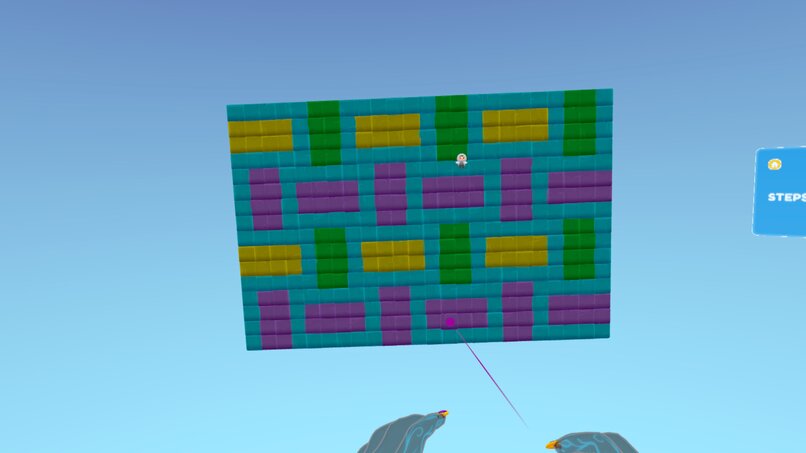
Tired rotating? Try flat mode.
Inspiration
Clickomania—also known as SameGame—has always captured the perfect “one more move” feeling. But on a flat screen, the interaction is limited to clicking. We imagined how physical it could feel in VR: a tower you spin like a pottery wheel and clusters of blocks you pop with your fingertips.
Quest hand tracking led us to a simple question: what if your hands were both the controller and the magic wand? As the game evolved, its colorful block patterns began to resemble Andean poncho textiles, inspiring Toweris VR’s visual identity and magical world.

What it does
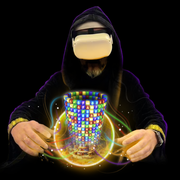
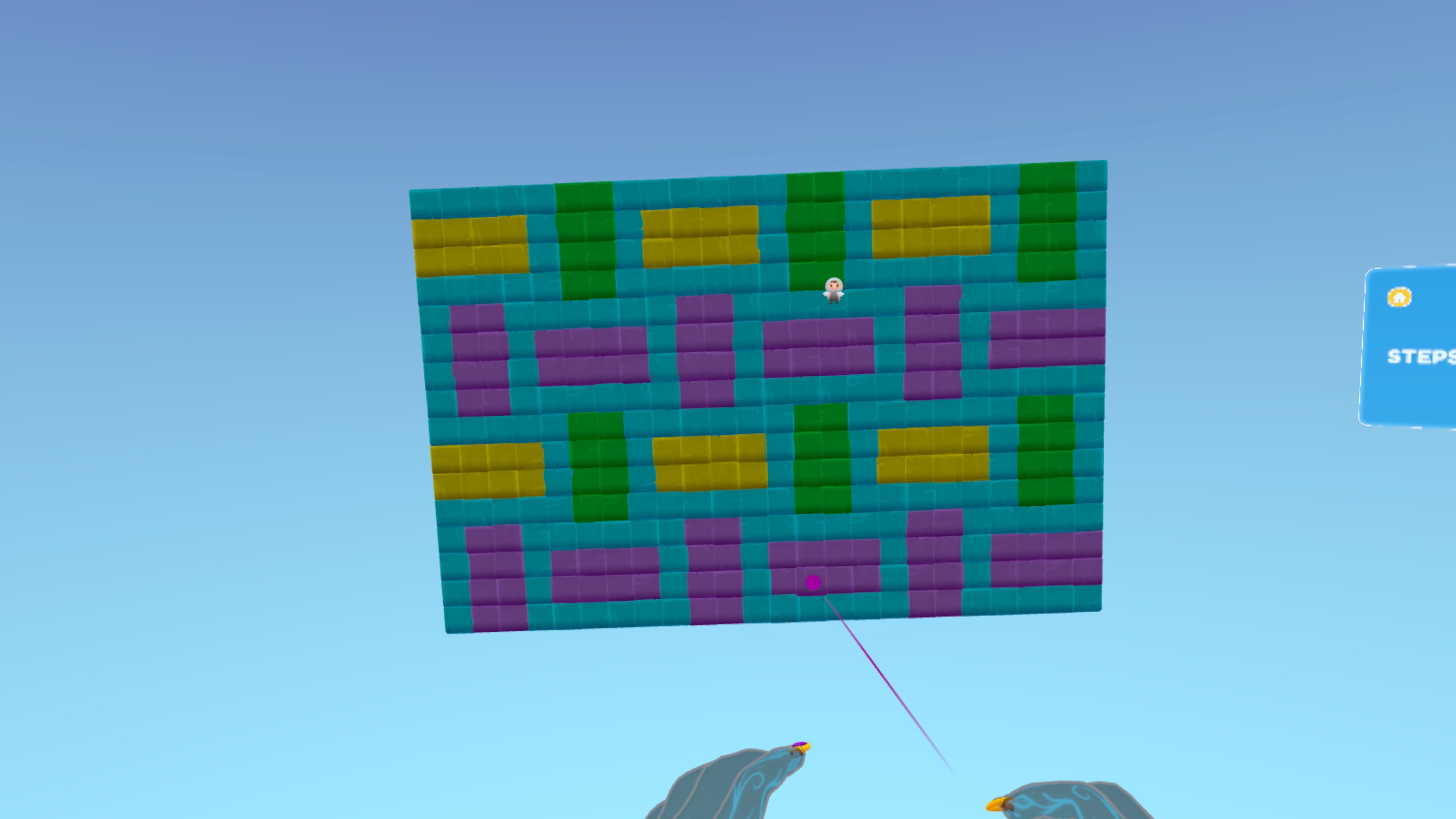
Toweris VR is a hands-first puzzle adventure built around a tower of colored blocks. Grab and spin the tower like a pottery wheel, poke matching clusters with your fingertip, or select them from a distance with a pinch. When a cluster disappears, the remaining blocks fall and create opportunities for chain reactions.
Every match charges elemental magic on the fingertips of your free hand. Choose a power from the fingertip menu and a magical tattoo appears on your casting hand. Aim at the tower and unleash one of seven spell types—including Fire, Sand, Stone, Ice, Water, Storm, and Life—to reshape the puzzle.
The world responds to natural gestures. Wave to the Friend and it waves back. Hold out an open palm and it can land on your hand, helping point out a move when you are stuck. Meanwhile, the Enemy trickster interferes by transforming blocks into obstacles.
From the central Hub, players can learn through the interactive Tutorial, progress through elemental islands in Story mode, compete on a shared Daily Challenge, or relax with 130 no-fail patterns in Meditate mode.
The complete experience is playable with bare hands, from first launch through gameplay and menus. Interactions are designed for seated play, including relaxed use with hands resting and precise microgestures. Controllers remain supported, but are never required.

How we built it
Toweris VR was built in Unity 6 using the Universal Render Pipeline and Meta XR SDK. We used the Interaction SDK for hand tracking, fingertip pokes, pinch selection, distance interaction, and microgestures. The Meta Platform SDK powers player identity and leaderboards, while Unity Analytics helps us understand the player journey.
The project follows an MVC-inspired architecture with registered services and interchangeable input providers. This allows the same puzzle logic to work with hands, controllers, and mouse input in the Unity Editor while keeping gameplay rules independent from the interaction method. The architecture also allowed us to explore a head-directed targeting proof of concept, even though we ultimately focused the submitted experience on reliable hand interaction.
At its core is a custom Clickomania-style rules engine supporting flat and cylindrical boards, horizontal wrapping, multi-stage objectives, crates, color locks, ice, blockers, and cages. We created our own solver and simulation tools to verify that levels are solvable and to help tune their difficulty.
To teach interactions without relying on walls of text, we recorded demonstrations from real hand-tracking sessions, converted them into animation clips, and placed the animated hands directly beside the relevant tutorial panels. The demonstrations are automatically mirrored for left-handed players.
We also created custom visual systems for elemental fingertip veins, hand tattoos, magical projectiles, the onboarding orb, lava and sand blocks, obstacle damage, and the transition between round and flat towers. Effects are pooled and shaders are designed with standalone Quest performance in mind.
Challenges we ran into
Building a hands-only experience from end to end was our biggest challenge. Every menu, panel, and gameplay action had to work without a controller. World-space UI needed to support both poke and pinch while avoiding accidental double activation when a fingertip entered and left a button. We also had to prevent UI interactions from passing through panels and affecting the tower behind them.
Precise distance targeting was especially difficult on a tall, curved tower. Small hand movements created visible ray jitter and made individual blocks harder to select. We improved this with One Euro filtering and a short quick-pinch commitment window, producing a steadier ray without making it feel sluggish.
We also experimented with gaze-assisted interaction. Eye-gaze targeting did not reach the reliability and usability level we wanted for this release, but the work produced a functional head-directed targeting proof of concept and taught us how gaze, head direction, and hand confirmation could complement one another in future versions.
Teaching unfamiliar gestures without interrupting play required several iterations. Instead of relying on text-heavy instructions, we recorded real hand interactions, turned them into animated demonstrations, and displayed them next to the relevant tutorial panels. The demonstrations are mirrored automatically to match the player’s chosen leading hand.
Maintaining smooth performance on standalone Quest hardware was another constraint. We used pooled visual effects, lightweight custom shaders, and a fast startup path to reduce frame-time spikes and loading delays.
Finally, we had to balance elemental magic against the puzzle rules. Spells needed to feel powerful and rewarding without making obstacles, cages, rescue missions, or boss towers trivial.
Accomplishments we're proud of
We are most proud that Toweris VR feels genuinely physical. Spinning the tower like a pottery wheel, touching blocks with a fingertip, and casting magic with your hands transform a familiar matching puzzle into something that could only exist in VR.
The submitted build provides a complete hands-only journey from first launch through onboarding, menus, gameplay, pause, and return to the Hub. Players can experience everything without pairing a controller, including while seated with their hands resting and using small, comfortable gestures.
We created an onboarding and tutorial system that shows interactions instead of merely describing them. Recorded demonstration hands teach each gesture beside the relevant interface and adapt to the player’s selected leading hand.
We are also proud of our gesture-responsive characters. The Friend recognizes a wave, waves back, lands on an open palm, and helps players when they are stuck. These small interactions make the world feel aware of the player rather than simply displayed around them.
During the competition window, Toweris VR grew from a puzzle prototype into a broader magical experience with elemental powers, story islands, rescue missions, boss towers, Daily Challenges with Meta leaderboards, and 130 relaxed Meditate patterns.
Most importantly, all these systems—puzzle rules, hand interaction, characters, magic, progression, and platform features—come together in a build designed to remain clear, responsive, and comfortable on standalone Quest hardware.
What we learned
We learned that hands-first design must begin with clear affordances and immediate feedback. A player should understand what can be touched, grabbed, or pinched before trying it, and every successful interaction needs a visible, audible, or haptic-like visual response.
We also learned that hand tracking works best when interactions respect its strengths. Large natural motions are expressive, while small resting-hand gestures are comfortable and precise. Supporting both allowed Toweris VR to feel magical without becoming tiring during longer sessions.
Reading a puzzle wrapped around a three-dimensional tower introduced challenges that do not exist in the original flat-screen game. We had to carefully balance tower rotation, block readability, targeting stability, and visual effects so that the spectacle never obscured the player’s next move.
Our gaze experiments taught us that gaze or head direction works best as an aid rather than the only source of intent. The head-directed proof of concept showed promise, but reliable selection still benefits from an explicit hand confirmation. We want to continue exploring this combination on future devices.
Finally, we learned the importance of protecting the core experience when working toward a deadline. We reduced scope where necessary and focused on making the submitted modes coherent, comfortable, and fully playable with hands from beginning to end.
What's next
Our next goal is to complete the remaining nine elemental islands, drawing from approximately 90 drafted levels, and expand the Story with new mechanics, characters, rescue missions, and boss encounters.
We also plan to build a player-facing level editor for creating and sharing custom towers. Toweris VR’s puzzle engine already supports a wide range of obstacles and objectives, giving players the ingredients to create challenges far beyond the official campaign.
Interaction research will continue as well. We want to develop the current head-directed targeting proof of concept into a more complete eyes, head, and hands interaction model for supported devices, including Quest Pro and future Meta VR devices. Our aim is to let gaze suggest intent while a natural hand gesture confirms the action.
Longer term, we want Toweris VR to become an evolving puzzle world with new daily challenges, community-created levels, additional magical powers, and more reasons to return.