-
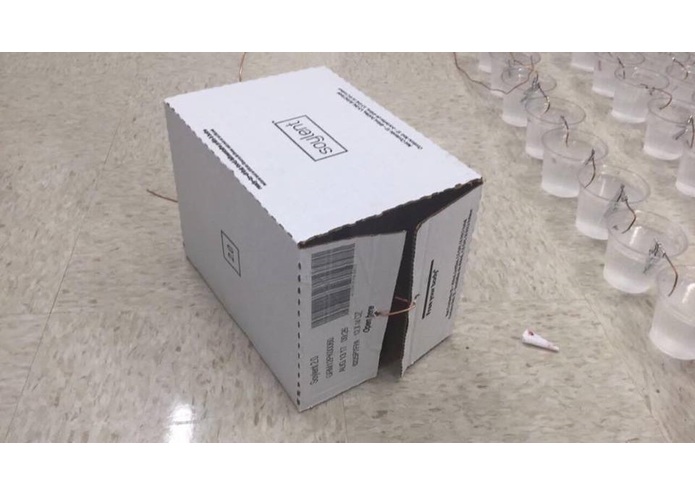
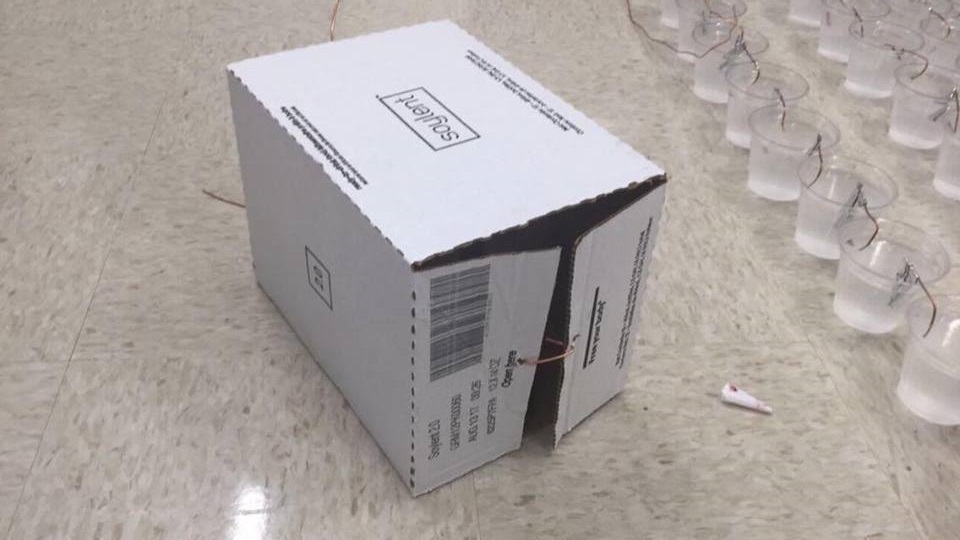
The box we made. A tower would consist of multiple boxes. (Real-world boxes would be metal)
-
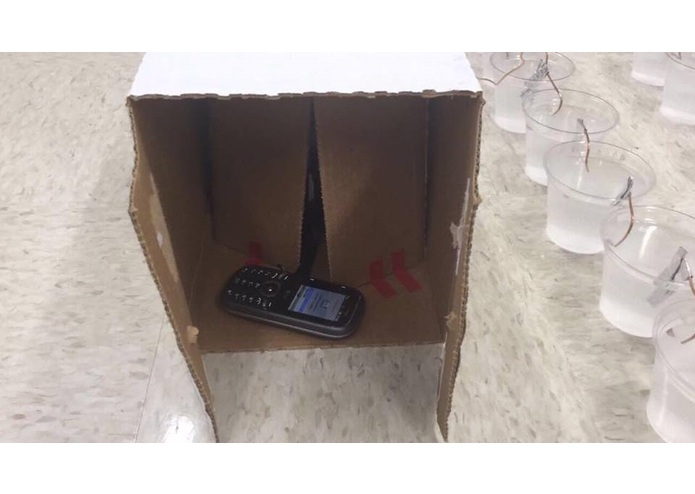
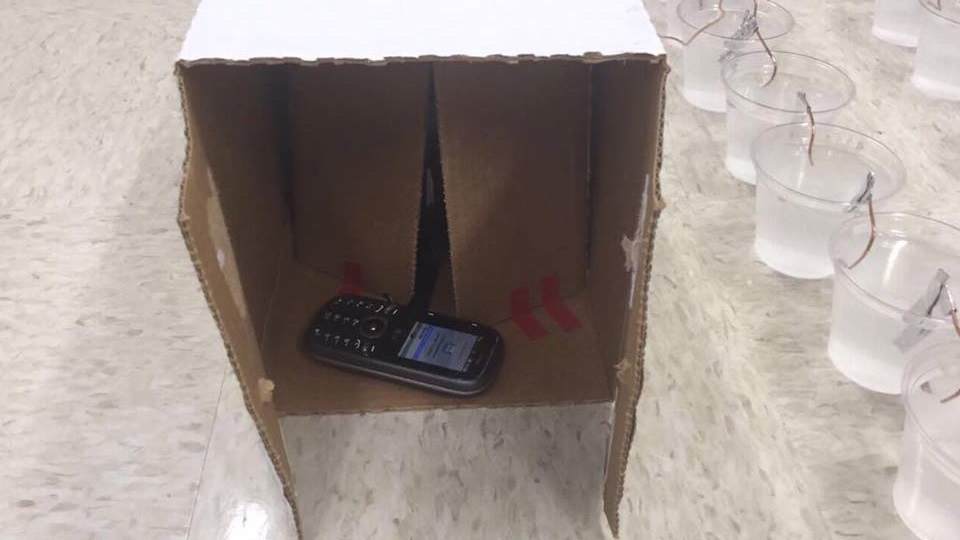
The only thing inside each box is a charging cord and a space to put your phone.
-
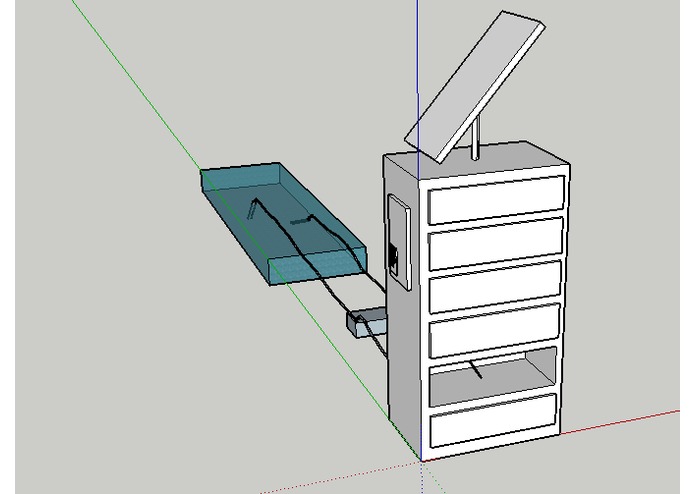
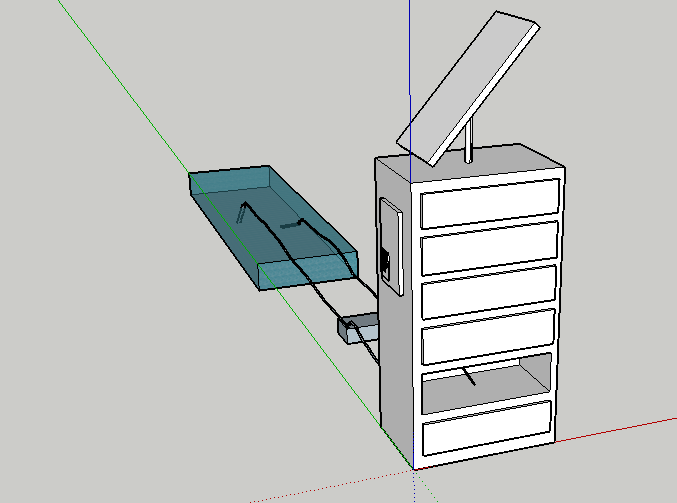
A Google Sketchup rendition of what a finished tower could look like (designed by Max Blais).
-
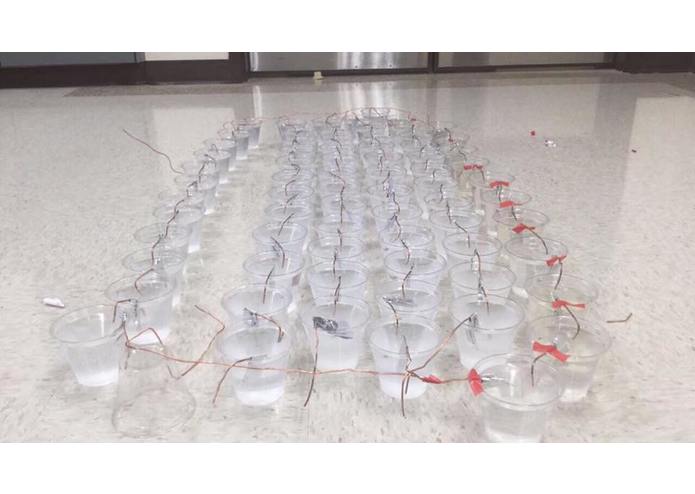
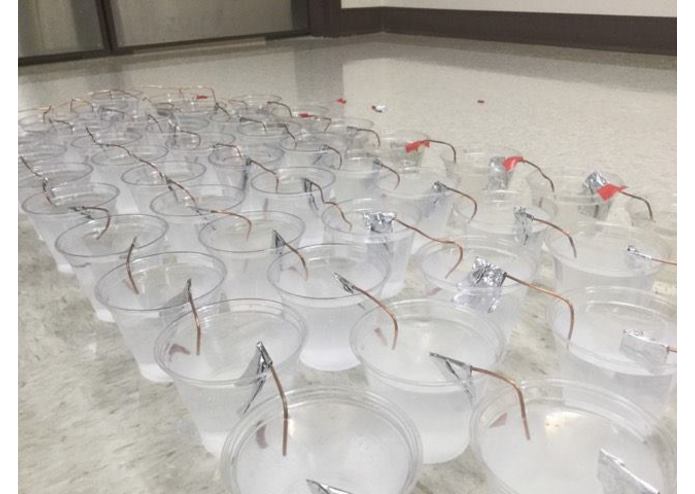
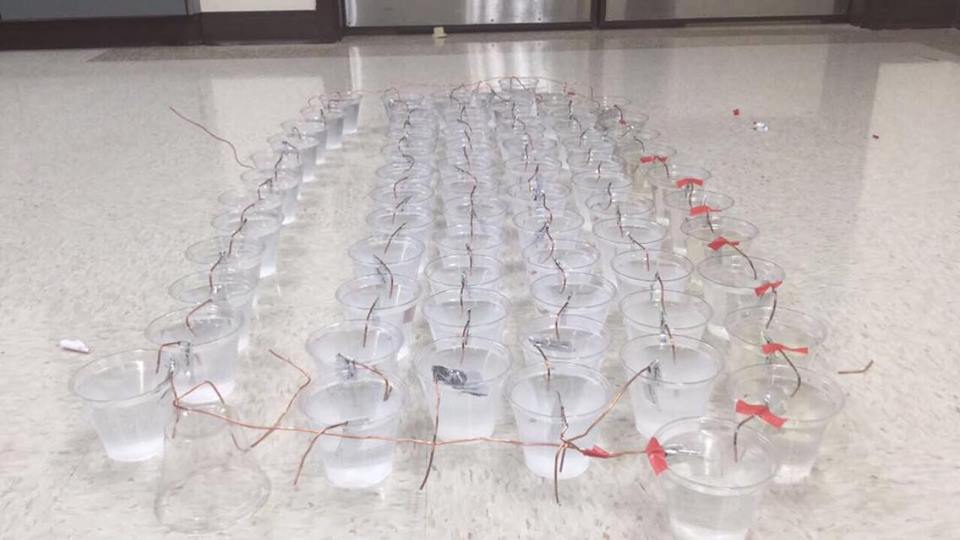
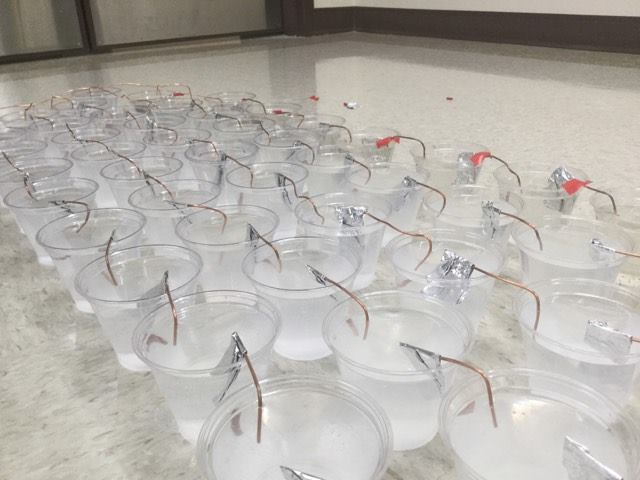
72 cells (6 parallel rows of 12) were used to generate electricity.
-
-
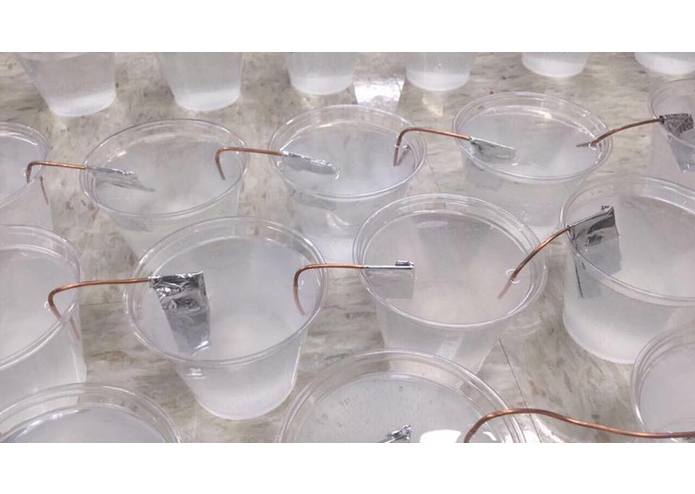
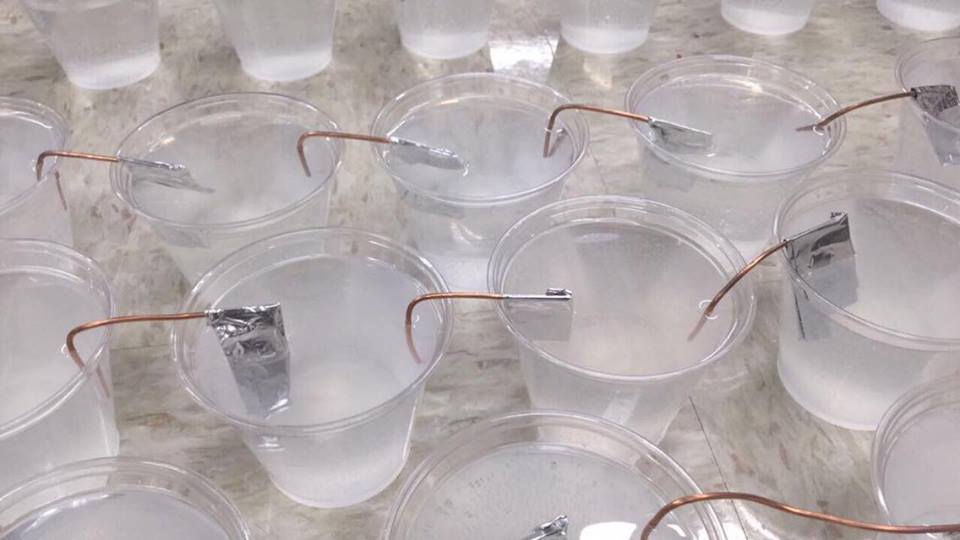
A close up of the cells. Each is connected with a copper wire, with one end wrapped in aluminium.
-
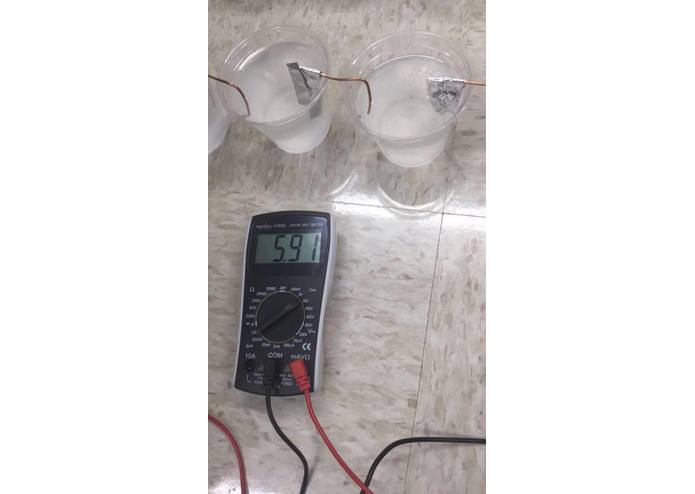
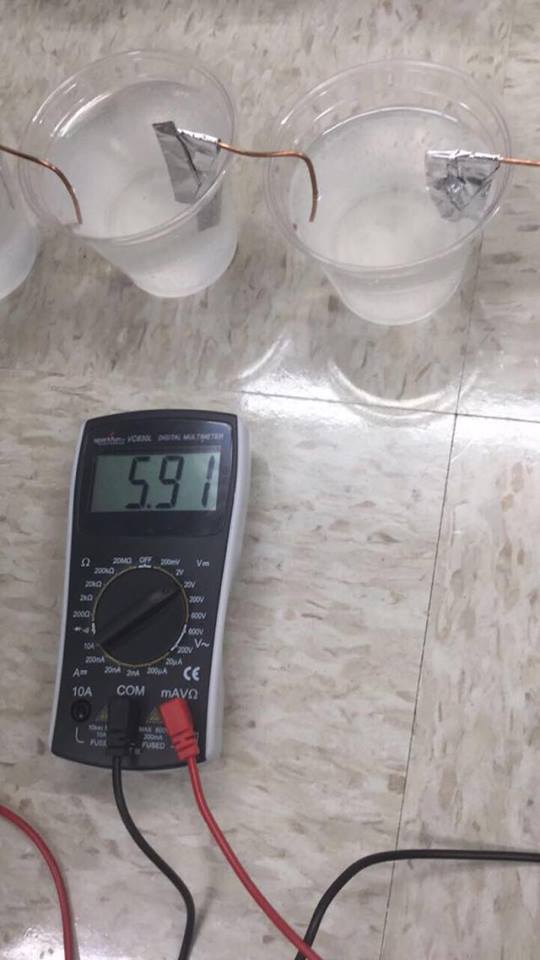
The array of cells created a large voltage difference.
-
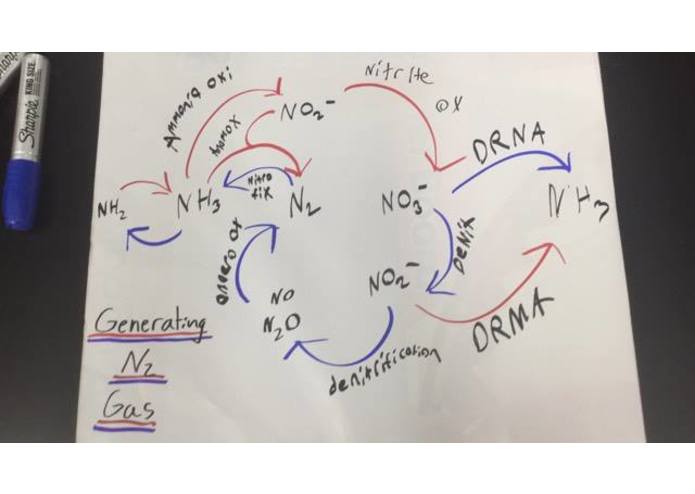
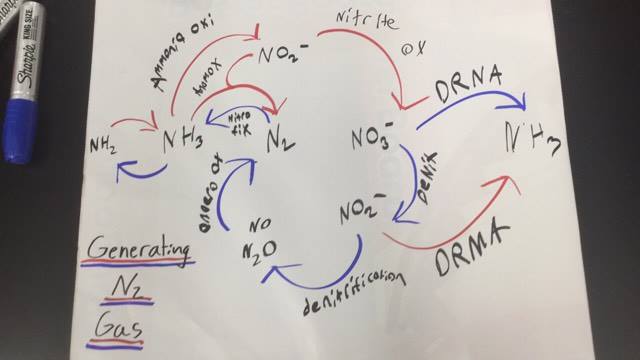
Our theoretical N2 generating system (designed by Brian Monahan).
Inspiration
We wanted to solve a problem that many tourists come across: it's difficult to find a place to charge your phone in a city you don't know. Tower of Power was designed to provide free, renewable electricity to the consumer for just this purpose.
What it does
Tower of Power would be able to draw its power from a wide variety of renewable sources. The model we built today uses 72 salt water reaction cells to generate electricity and charge a battery (the salt water would come from a nearby body of water, most likely the ocean). That battery could then be used to charge cell phones and devices plugged into the tower. We also drew up a theoretical model that used the gasses generated from compositing to turn a small turbine.
How we built it
We made a simple model using a cardboard box, a converter, and a battery. The converter was placed inside the box, with wiring coming out the back to connect to the battery. A cell phone could then be plugged into the converter, and then the box could be locked (to prevent the phones from being stolen). The "Tower" part of the Tower of Power comes from the fact that a you could put multiple of these boxes on top of each other very easily. Each salt water cell is made of a plastic cup, some water, salt, three inches of copper wire, and a small amount of aluminium foil. In the real world, the box would be metal instead of cardboard, and the cells, instead of plastic cups, would be made a sturdier insulator.
Challenges we ran into
The salt water cells generated significantly less current than we anticipated. The voltage (5.9 V) was fine, but not a lot of power was being sent through the system (only 1.6 mV was being created). Also, our composting model hit a wall, as a system that captured enough gas to turn any sort of turbine would have to be massive, as composting generates a relatively small amount of N2 gas. We were also planning on building more cells the boost the current, but we ran out of copper wire.
Accomplishments that we're proud of
We were able to generate electricity with simple household materials and salt water. In theory, It could charge a dead battery, it would just do it really slowly due to how little current the cells produce.
What we learned
Salt water is not a good energy source for this type of project. It could be done, but it would have to be a large assembly and it wouldn't be cost efficient. All in all, The tower itself works, it was the power source we were using today that had issues. The tower could easily run off solar or wind power.
What's next for Tower of Power
Using different power sources other than salt water, perhaps solar.

Log in or sign up for Devpost to join the conversation.