-
-
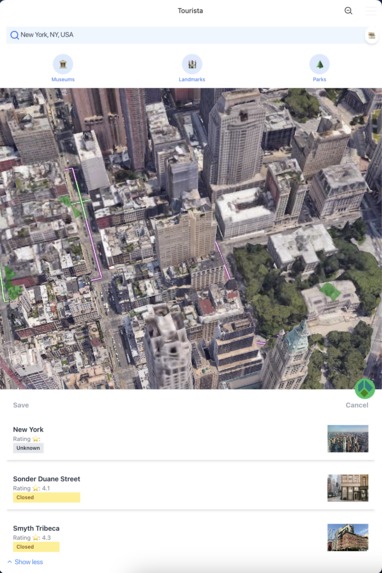
Tourista Guiding a Tourist Around New york
Inspiration
The idea for Tourista came from the desire to create a travel companion that goes beyond just providing maps or lists of attractions. We wanted to build something interactive that can help travelers experience cities more immersively. The aim was to create a tool that combines convenience with excitement, offering users a personalized experience as they explore new places. We were inspired by the way people engage with technology and how they can interact with their environment through voice commands and immersive technologies.
What it does
Tourista is an AI-powered travel assistant designed to enhance the travel experience. Here are the main features:
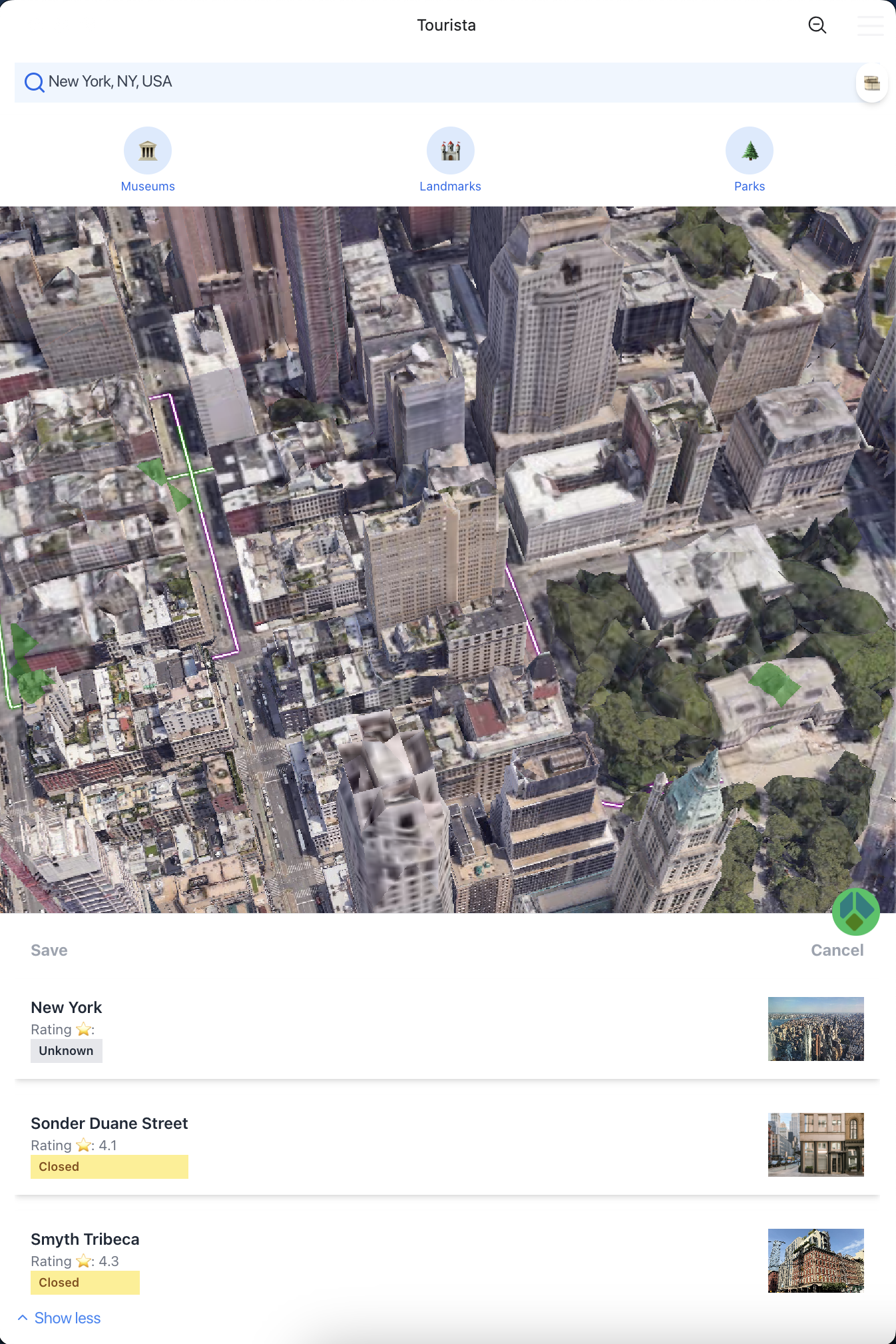
City Search and Recommendations: Users can search for a city and get a curated list of the most interesting locations such as historical sites, museums, parks, and local gems.
Drag-and-Drop Sorting: The list of attractions is customizable—users can simply drag and drop to reorder locations, tailoring the itinerary to their preferences.
AI Assistant "Tourista": By saying "Hi, Tourista," users can invoke the app's AI assistant to add new locations to the list, simply by speaking to it. This allows for a hands-free, voice-driven experience.
Immersive Full-Screen Mode: Once the user selects an area of interest, they can enter full-screen mode. This mode provides an aerial view of the city with locations marked on the map. The camera moves automatically, taking the user on a virtual tour, highlighting key attractions and giving an immersive feel of the city.
How we built it
Tourista was built using modern web technologies, combining the power of ReactJS for the front end, with Google Maps API for location and route mapping. The AI assistant was integrated using a voice recognition API, allowing users to interact with the app through voice commands. The full-screen immersive mode was implemented using CesiumJS to create a 3D virtual environment. The backend was powered by a simple REST API to handle user requests and store data, ensuring that users' preferences are saved for future interactions.
Challenges we ran into
API Integration: Integrating the Google Maps API with the custom features like sorting and filtering locations, while ensuring smooth performance in a dynamic and interactive environment, was a major challenge.
Voice Recognition: Training the AI assistant to accurately understand user input in different environments and accents was complex. Ensuring the system responded quickly and reliably was a key hurdle.
Immersive Mode Design: Creating a fluid, interactive full-screen mode that transitions between locations smoothly while providing a 3D perspective of the city required careful design and coding to ensure it felt both realistic and user-friendly.
Accomplishments that we're proud of
Interactive Features: The drag-and-drop feature and voice-controlled AI assistant are standout elements, making the app feel more personalized and interactive.
Immersive Experience: The full-screen mode that lets users explore the city in 3D, with the camera transitioning between attractions, brings a new level of immersion to the experience.
User-Centric Design: Tourista focuses on simplicity, ease of use, and seamless interaction, making it accessible for anyone who loves to travel.
What we learned
We learned how to integrate multiple APIs and technologies to create a unified experience. This project also gave us valuable insights into 3D mapping and voice recognition technology. Additionally, it taught us how to optimize for performance, ensuring a smooth experience even when dealing with large datasets like city maps and routes.
What's next for Tourista
Adding More Cities and Features: Expanding the number of cities available and adding more location-based features, such as restaurant recommendations or personalized itineraries based on user preferences.
Enhancing the AI: Improving the AI assistant's ability to understand more natural language commands and context, making it even more intuitive for users.
User Customization: Allowing users to fully customize their travel experience, such as selecting themes or categories of places they are most interested in, and integrating social sharing features to share their experiences with friends.
Built With
- google-cloud
- picovoice
- react
- socket.io
- three.js


Log in or sign up for Devpost to join the conversation.