IndyCate: A website that does it all!
Overview
Now more than ever, people are concerned about the safety precautions and wait times of restaurants and other attractions. Unfortunately, there is currently no platform available to users that provide them with updated information regarding these two topics. From Team Staycation emerges a solution: IndyCate. IndyCate is a web-based platform that allows users to search local Indianapolis attractions with filters in both distance and COVID-preparedness. With IndyCate, both inbound traffic and Indianapolis residents can now easily and safely travel through Indianapolis.
Team Members
Justin Bates: A Ball State University Senior majoring in Computer Technology with a minor in Business Administration, Justin Bates came to the team as a bridge between the Pro team and Go team. With the technical knowledge to understand the Pro team deliverables and challenges, and the business knowledge to understand terms and requests from the Go team. He was able to help establish what was possible for the prototype that was created for IndyCate.
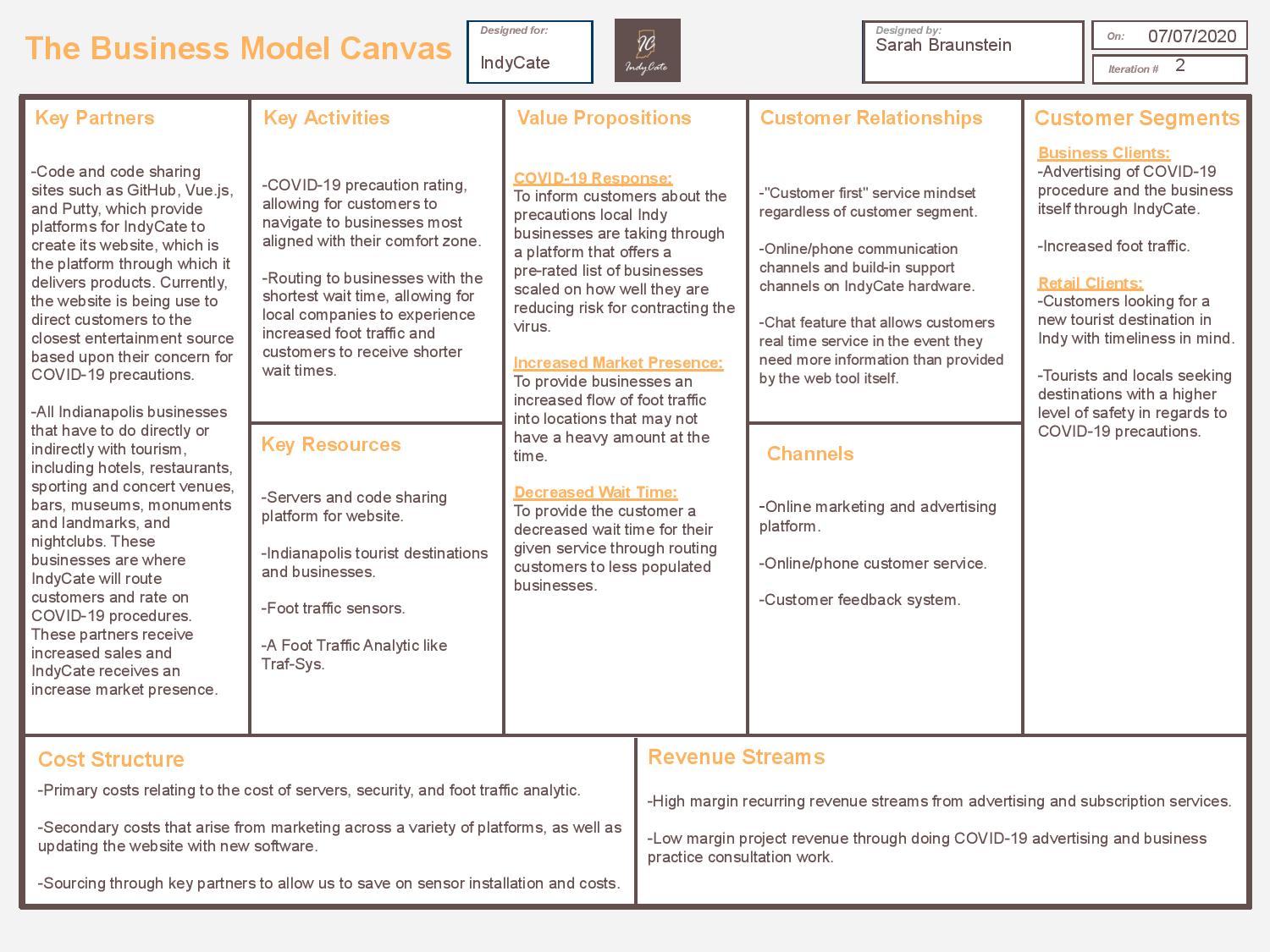
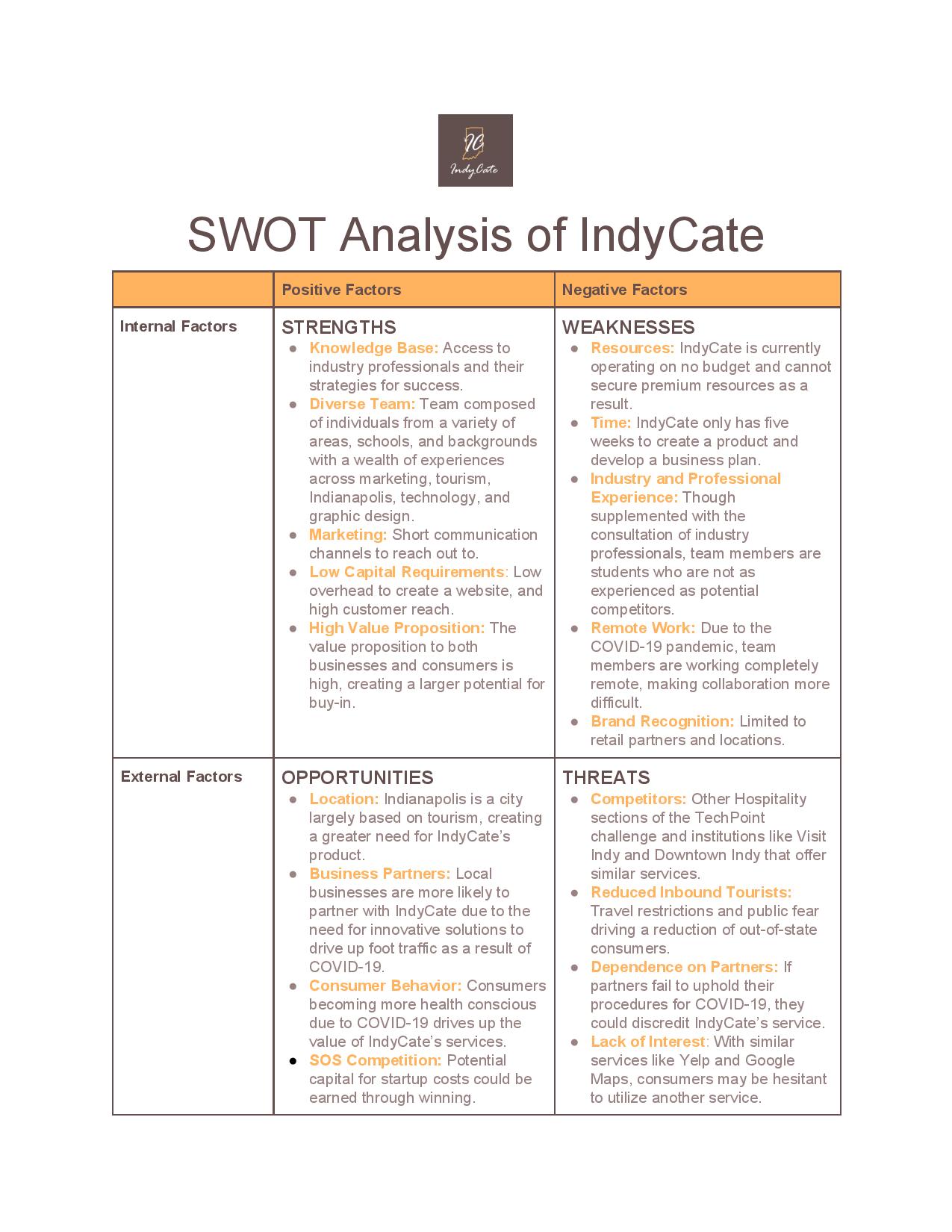
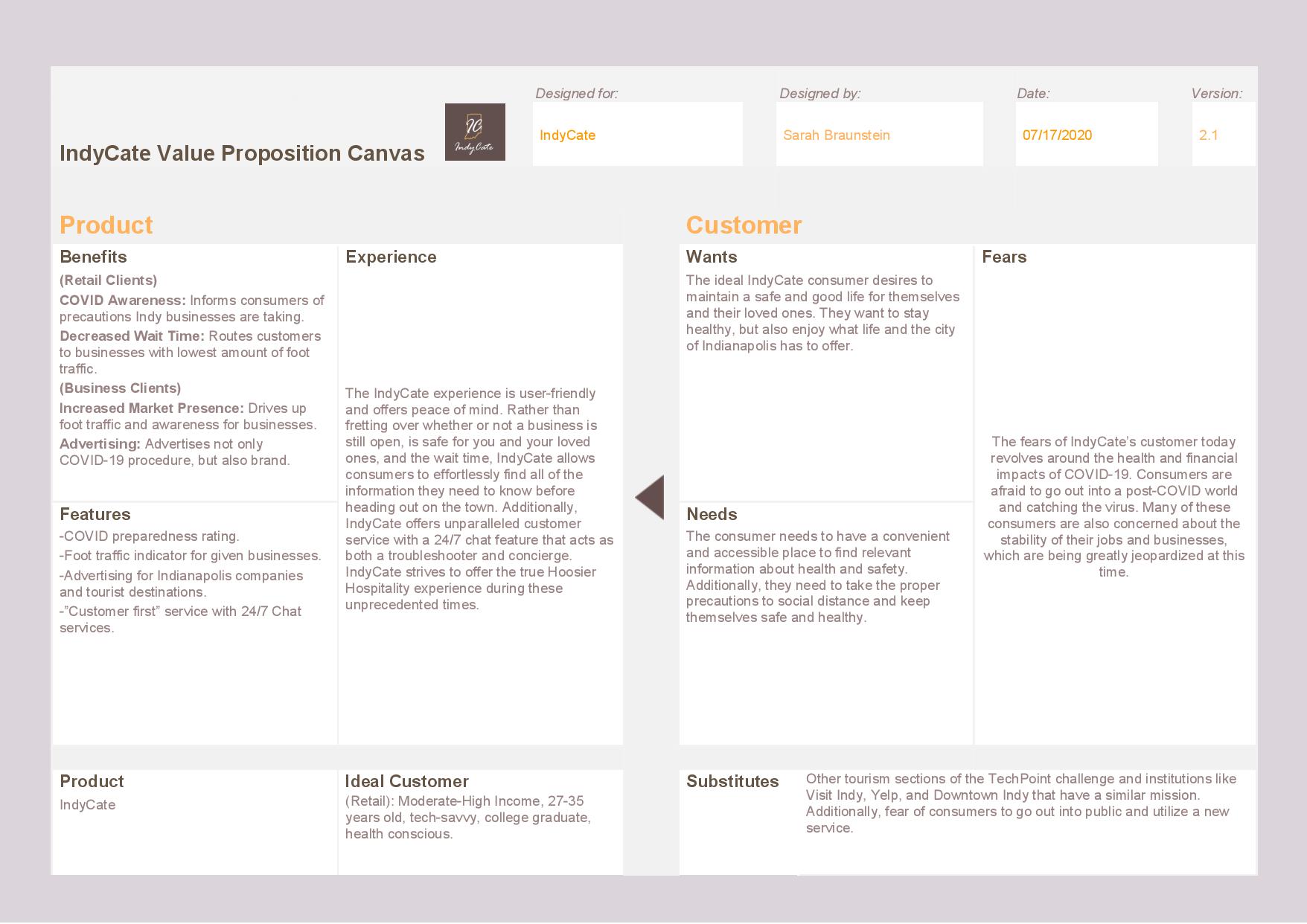
Sarah Braunstein: A Butler graduate who majored in Multilingual Studies and minored in Strategic Communication, Sarah Braunstein came to the team with a wealth of knowledge regarding both the Indianapolis tourism industry and marketing. She took charge of the majority of the Go Team deliverables, including the Business Model Canvas, SWOT Analysis, and the Value Proposition Canvas, as well as crafting the slide deck for Team Staycation. She tremendously enjoyed being able to create an operation plan for IndyCate and working with ComCast to produce IndyCate.
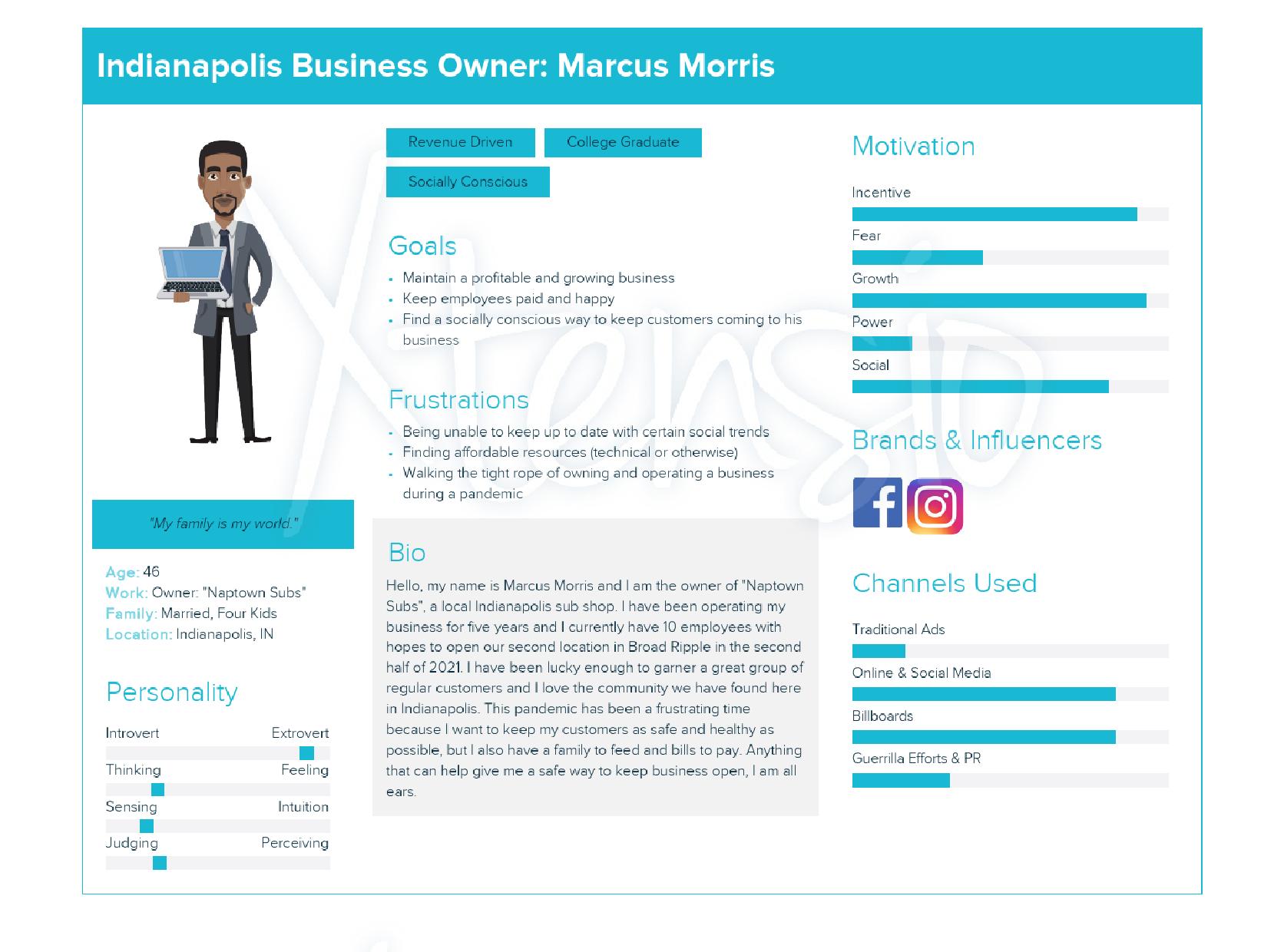
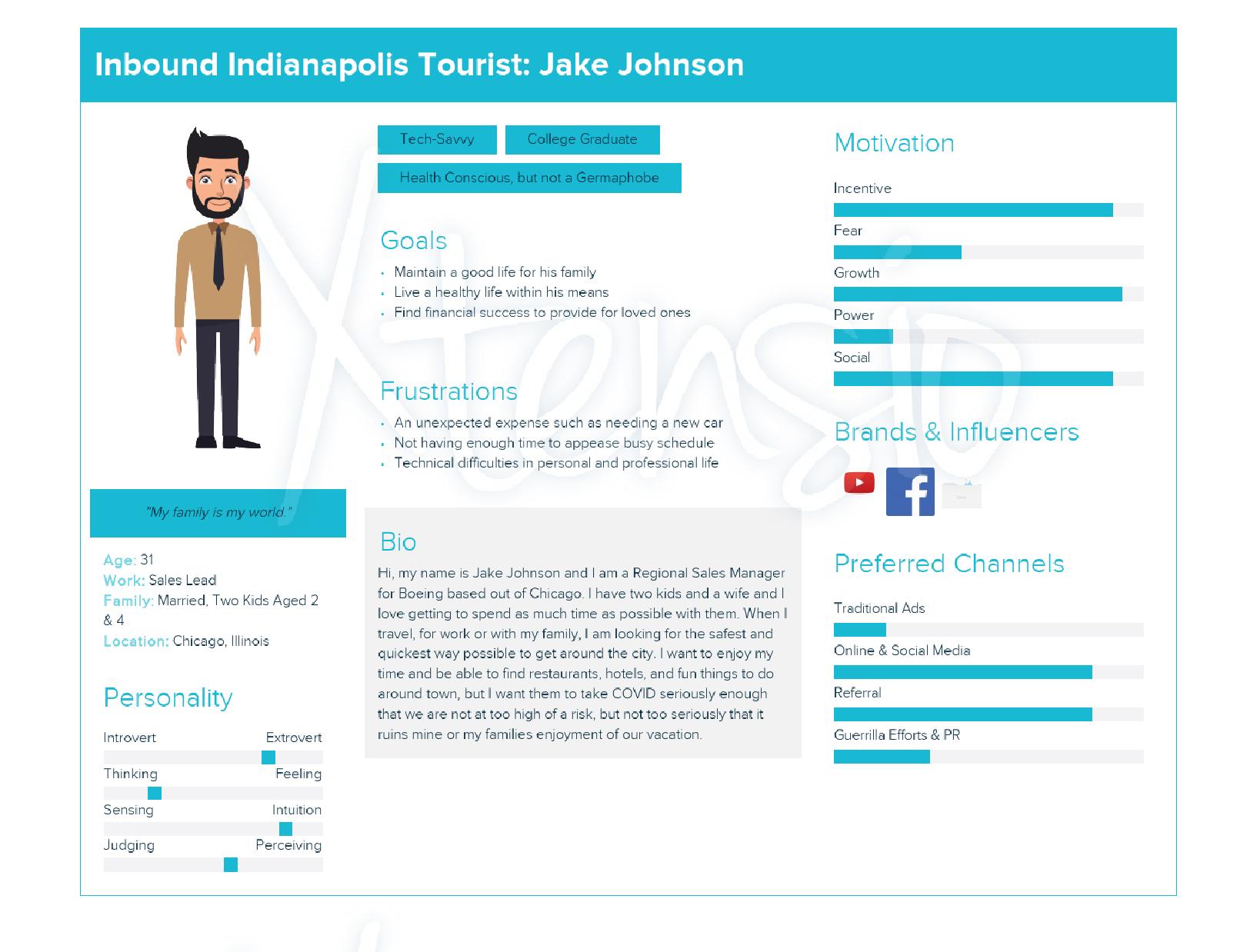
Scott Imel: A IUPUI Senior in the Kelley School of Business Majoring in Marketing, Supply Chain Management, and International Studies with a Minor in Economics and a Certificate in Data Analytics. Scott Imel came to the team with a background in both Marketing and Supply Chain and an ability to motivate others. He was able to take the lead on developing the personas based on demographic data and took the lead on creating a long-term plan for IndyCate.
Cameron Luzadder: A Trine University Junior majoring in Computer Science and Information Technology with a concentration in Cyber Security and a minor in Criminal Justice. Cameron Luzadder came to the team with the knowledge of front-end development. He took charge of the team as Project Manager and helped to create the web pages.
Pallavi Negi: A Senior majoring in Media Arts and Science at the School of Informatics and Computing at IUPUI, Pallavi came to the team with knowledge and experience in Design. She created prototypes that were used for the development of the website by the Pro Team and came up with the color schemes for branding as well as the unique logo that represents IndyCate. With a specialization in video production, she was also able to play a role in putting together the final video presentation and website demo. She enjoyed working with her teammates under the guidance of Coaches from ComCast to create a solution for the tourism industry in Indianapolis.
Jared Schoolcraft: A IUPUI Senior majoring in Computer Science with minors in Mathematics and Video Game Design, Jared Schoolcraft came to the team with knowledge of back-end development, particularly in JavaScript. He took charge of building the prototype using JavaScript and the Vue framework as well as helped format some of the web pages.
How did you decide on this customer segment, problem, and solution?
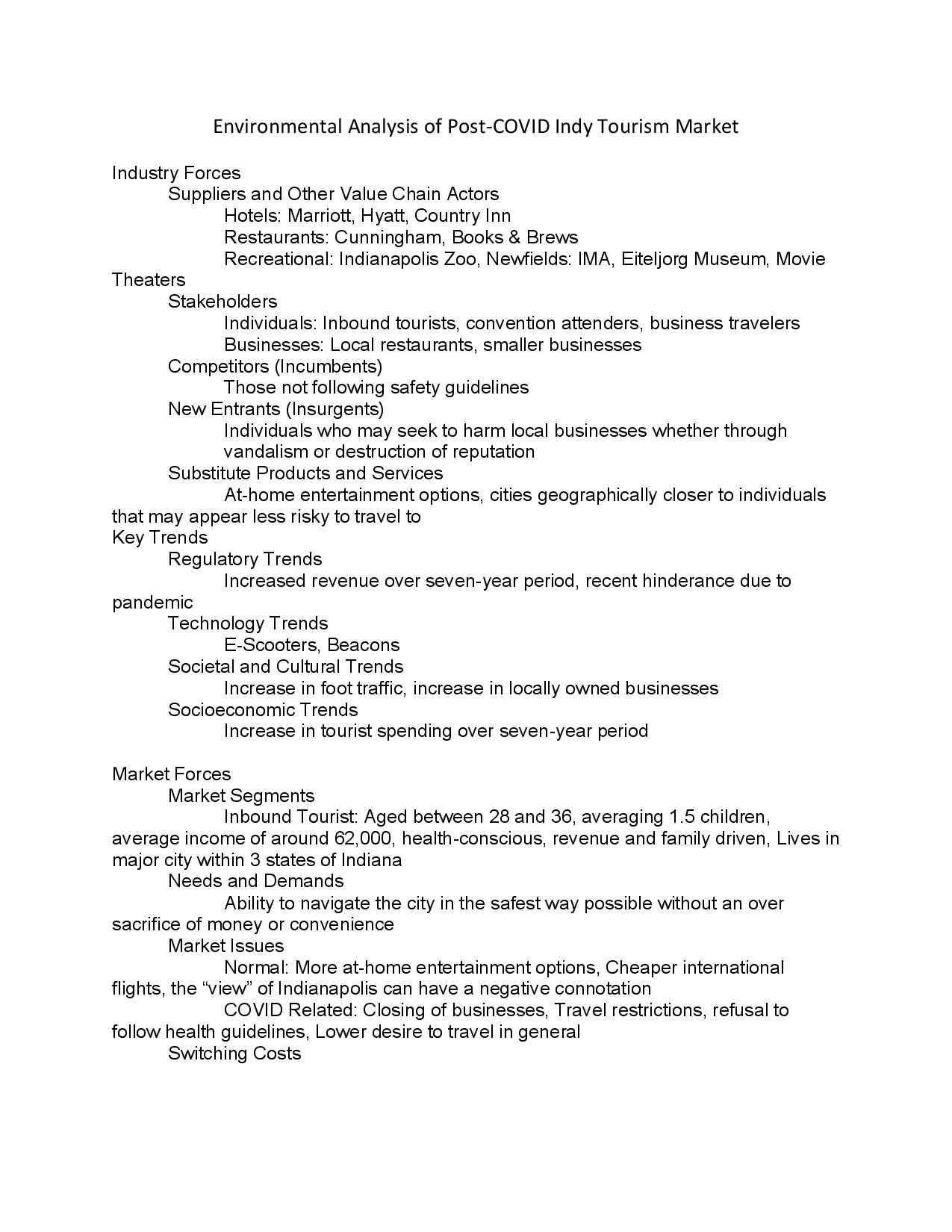
We started by reading various publications regarding the Indianapolis tourism market, specifically articles and reviews discussing the issues inbound tourists have faced when visiting our city after COVID measures had been put in place. We then gathered demographic data on the average inbound Indianapolis tourist and created a persona that we could turn to when wondering what we could do to help them. We found that one way to help would be to direct people to specific businesses and give them information regarding these specific businesses and their safety measures. We then developed a persona for the average Indianapolis business owner and tried to develop a balanced website that would benefit both sides of the tourism market.
How did your team build and iterate on the solution?
Once we had a general idea of our demographic, what we wanted our website to look like, as well as what functionality we wanted our website to have, we started building and formatting the pages as close to the designs as possible. Afterward, we started implementing the functionality of the pages, while testing the pages ourselves to make sure they worked as we intended them to. Once we were satisfied with how our website looked and its functionality, we set up user testing to get feedback from people outside our development team. To keep track of everyone's tasks and to make sure we are completing our milestones on time we used Trello and had set dates for each deliverable.
Key Metrics
IndyCate has identified 4 key metrics: -An increase in new revenue from subscribed users and business advertisements. -An average wait time on online chat kept below 15 minutes. -An increase in foot traffic in all partnered businesses. -An increase in awareness of COVID-19 business precautions by consumers.
Technical Details and Diagrams
By far the biggest tool we used when developing this project was the viewmodel JavaScript framework, Vue.js. The reason we used this was because of its ability to encapsulate parts of our page that could be reused wherever we needed, including it’s router, which made creating links to our different pages a breeze. We used this framework to make developing the UI for this application much easier and efficient, as well as to combine html with JavaScript, making our files more concise. We also used Node.js to be able to run Vue. Another great tool we used was github. Github made it much easier for us to share our code among us and see the history of our code when there were problems.
If you had another 5 weeks to work on this, what would you do next?
If we had another 5 weeks to work on IndyCate one of the first things we would do is expand the filters offered on the website. This would entail developing a bigger, more broad, database that would hold a larger range of information for each business. We would like to link this database directly to the back end of the website. We would also hope to get our website onto a quality server so that it could be made fully available to the public. As we expand the database to include more businesses, we would also love to bring some of these businesses further into the process so they can directly see the value that our website can provide for them in this often stressful time we are living in.
Checklist of Completed Items
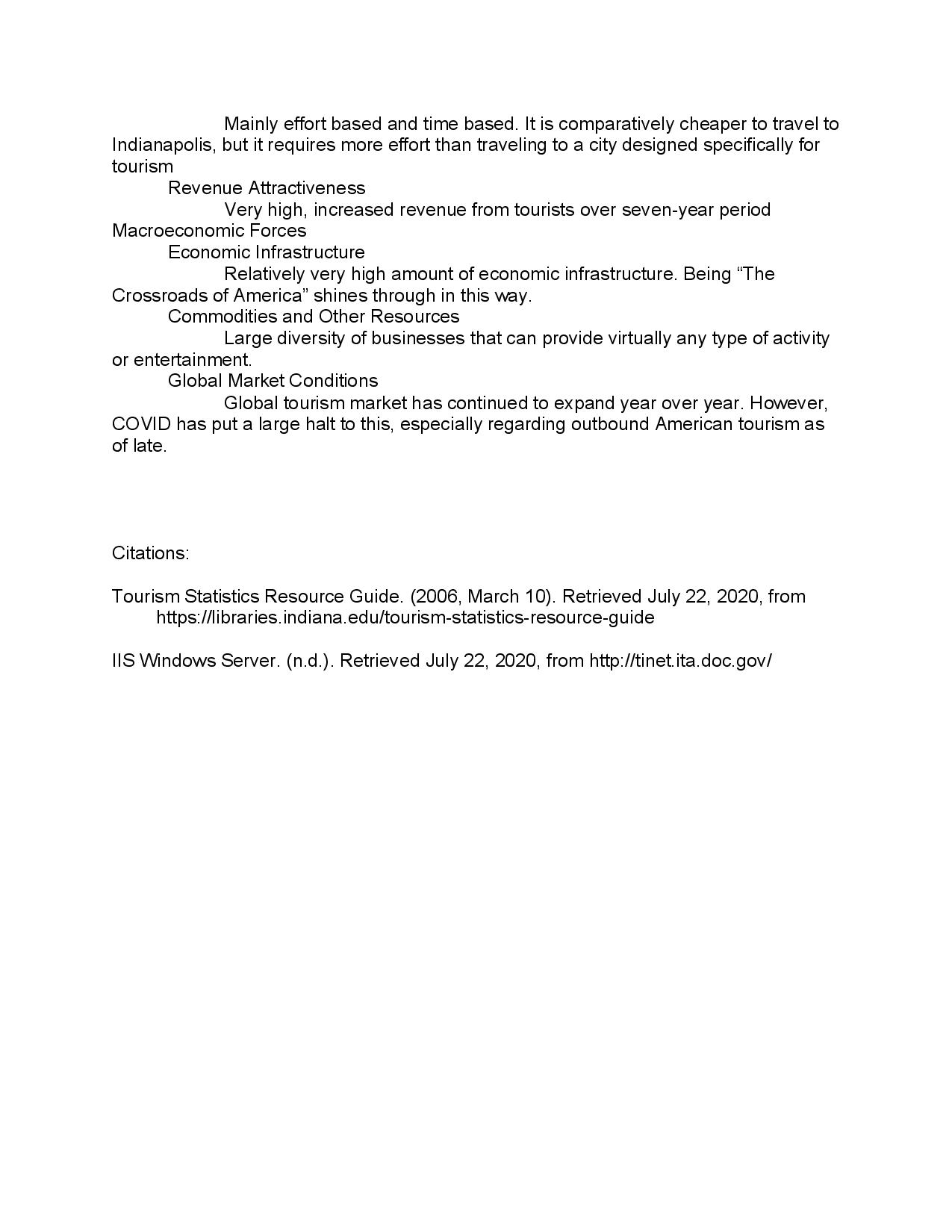
☑ Environmental Analysis ☑ Business Model Canvas ☑ Value Proposition Canvas ☑ Customer Persona(s)
Built With
- html
- javascript
- vue.js


Log in or sign up for Devpost to join the conversation.