Meet Touchpoint
Touchpoint helps hackers find a sponsor whose work fits their interests and gives recruiters a personal follow-up email with relevant job openings, ready to review.
💡 Our Inspiration
When we visited sponsor booths at Hack Western, we often had two questions before we even said hello. "What does this company work on? How does my project fit in?"
As a recruiter at a sponsor booth, you might hear about a hacker’s project and think, “Someone on our team would love to see this.” But after hundreds of conversations, it’s hard to remember who built what, which co-op role you mentioned, and whom you promised to introduce.
We built Touchpoint to help both sides find common ground at the booth and follow through afterward.
🤝 What It Does
Touchpoint is a voice-powered assistant for hackathon sponsor booths.
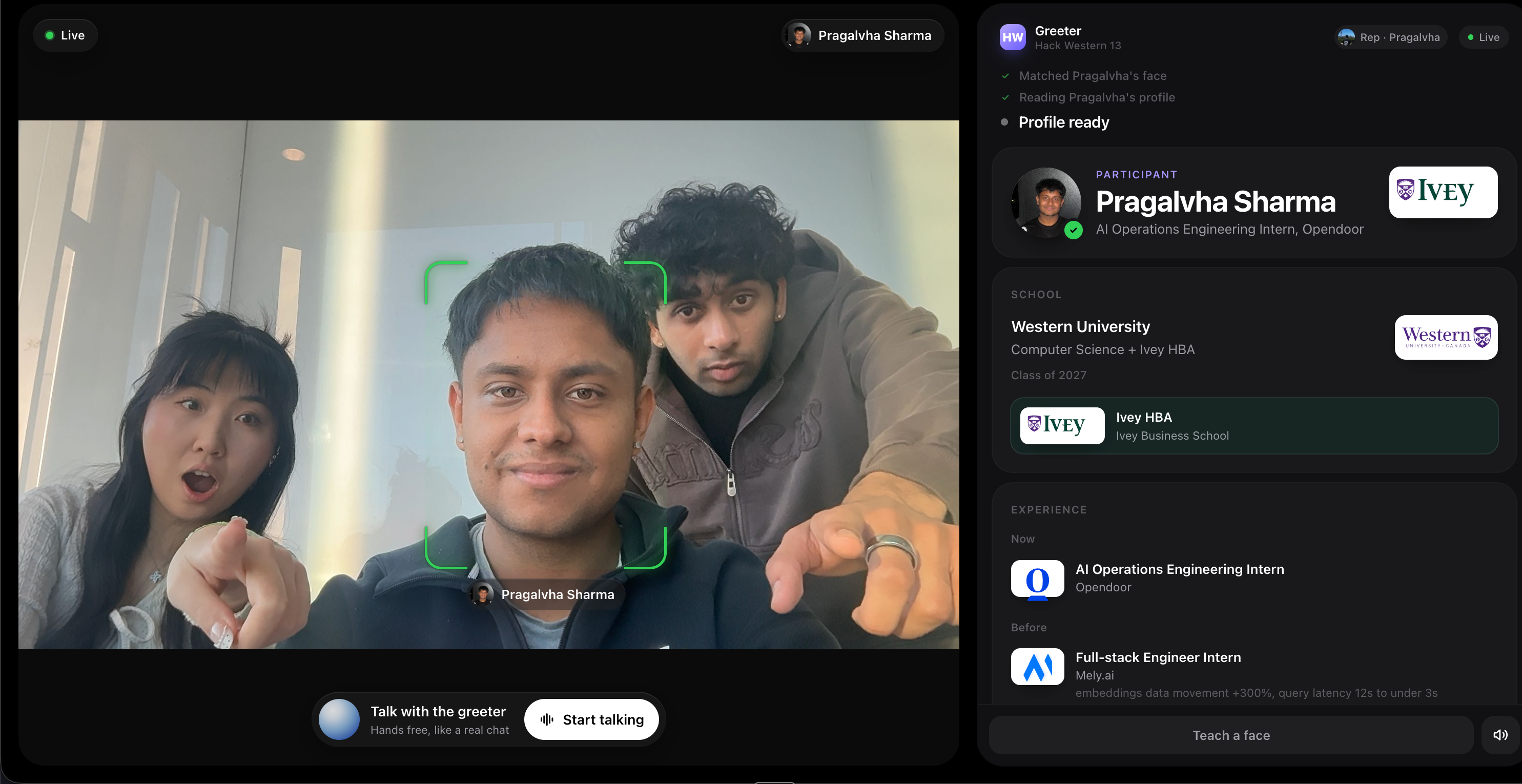
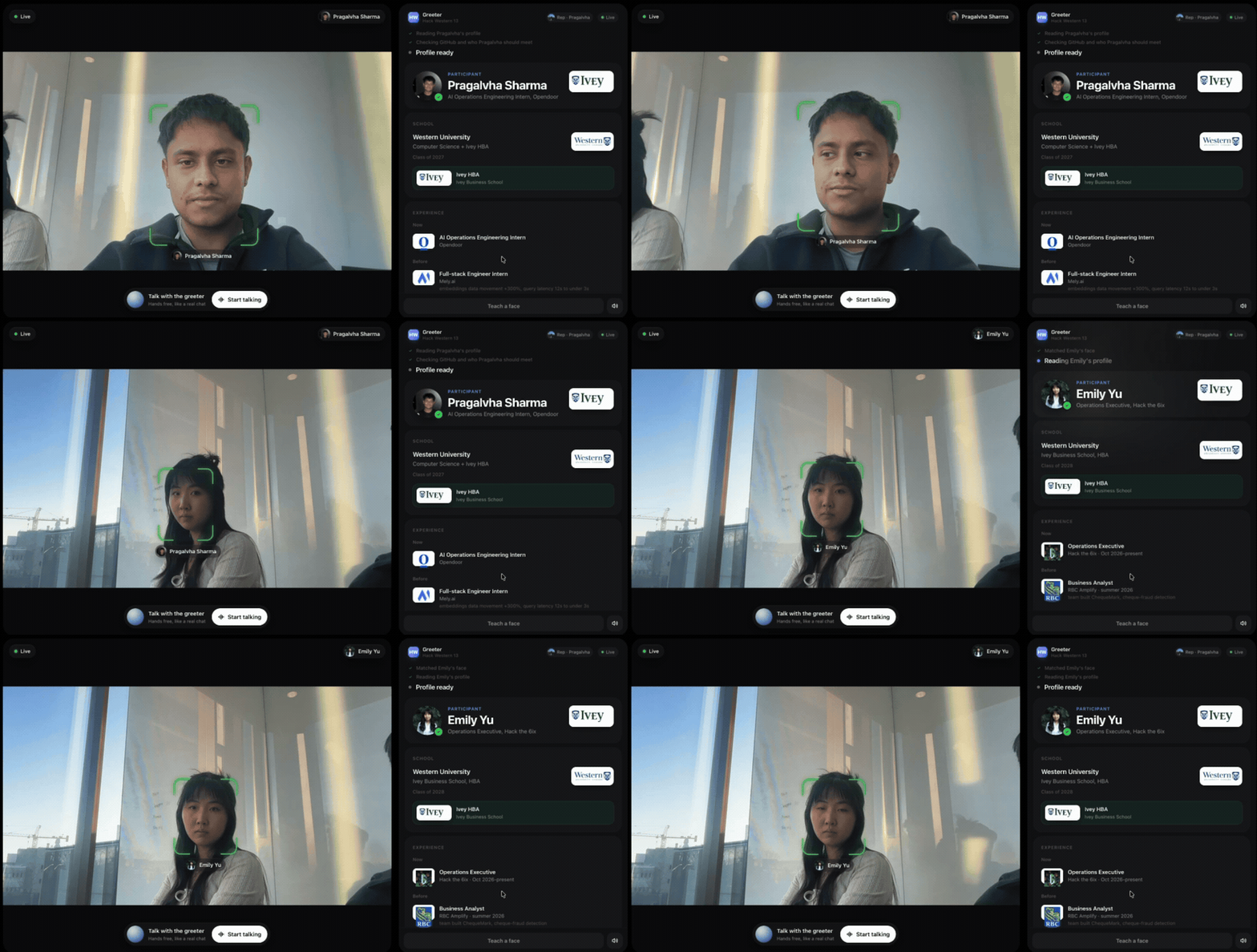
- For hackers, it helps answer “Who should I talk to?” The booth camera checks for a matching attendee profile and asks for a name if the match is uncertain. Touchpoint opens with a question about a project, asks what the hacker wants to do next, and recommends a sponsor. It explains the fit using something the hacker actually said.
- For sponsors, it remembers what mattered. Touchpoint combines details from the hacker’s profile with what it learns in conversation. The recruiter gets a short brief covering what the hacker is building, what kind of role they want, and what they asked about.
- For both, it makes the next step concrete. Before the hacker leaves, Touchpoint confirms where to send the follow-up. A TinyFish agent searches the matched sponsor’s careers site for openings. Touchpoint drafts an email that references the conversation and explains why each role fits. The recruiter reviews it on their phone or at the booth and decides whether to send it.
🛠️ How We Built It
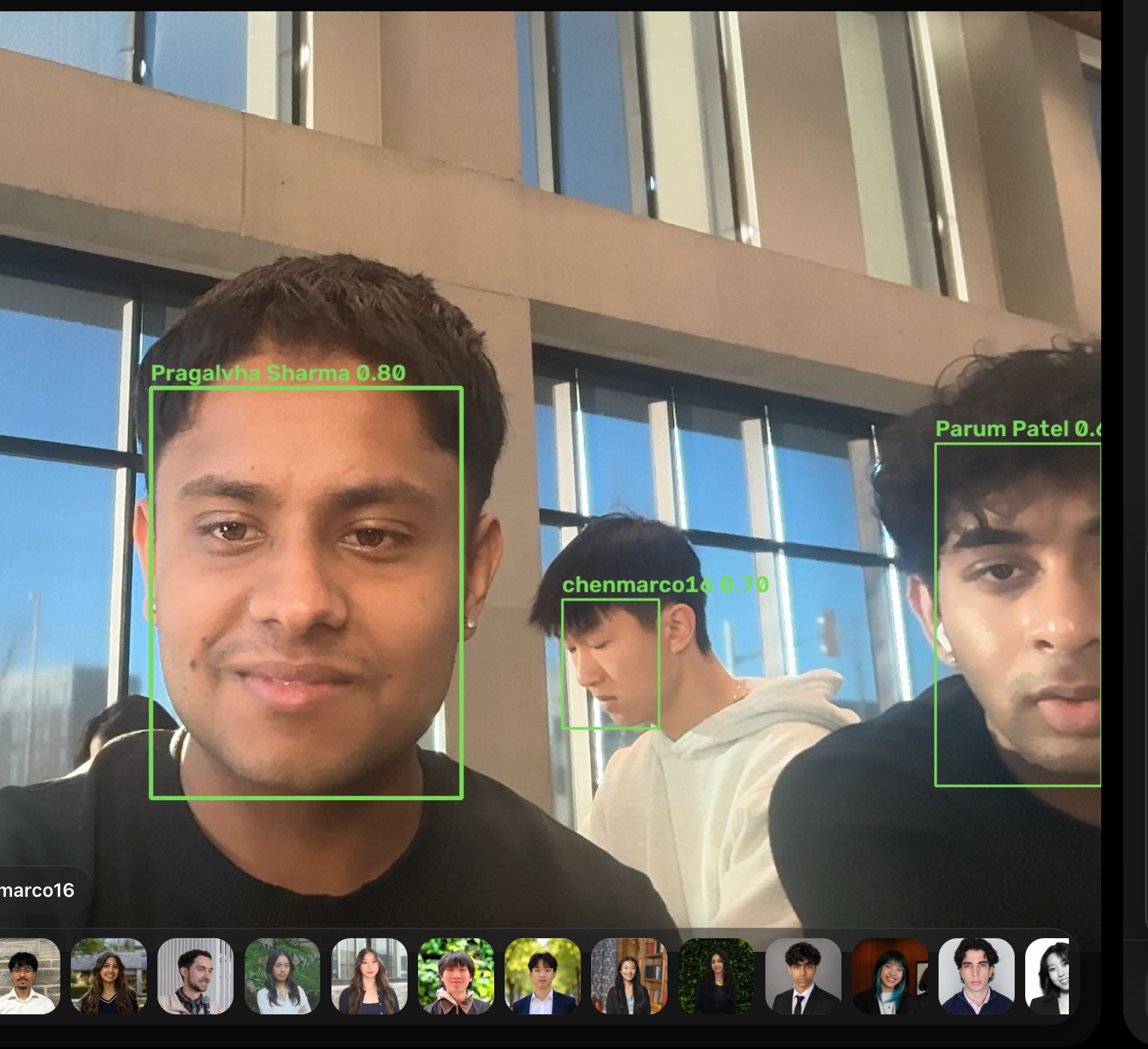
We built a directory of 391 attendees using public Slack introductions, LinkedIn profiles, and project pages. Each talking point links back to its source. OpenCV detects the face at the booth, and a SQLite lookup finds the closest profile.
We used the Gemini API to guide the conversation and update the booth screen as the hacker speaks. When someone talks about a project, for example, the screen can show its GitHub activity while they explain what they built.
For follow-ups, TinyFish searches the sponsor’s careers site. We use the returned links to draft the email. Recruiters sign in with an Auth0 passkey, review the draft, and approve it for delivery through Gmail.
🧩 Challenges We Ran Into
- Matching the right photo to each hacker. Some profile pages showed someone else’s photo in the sidebar. We caught 71 incorrect photos, changed how we selected profile images, and added a check to flag any photo linked to more than one person.
- Finding a practical use for hardware. We explored a few hardware ideas before settling on a camera at the booth. Recognizing a returning face or asking someone’s name when the match was uncertain gave the conversation a natural starting point.
- Finding real job openings quickly. Starting from a sponsor’s homepage took too long. We sent TinyFish straight to the sponsor’s careers search results and ran a backup search at the same time. Every job link in the follow-up came from one of those searches.
- Keeping the screen easy to follow. A full profile was too much to read during a conversation. We focused each screen on one thing the hacker had just mentioned, like a project they built or a team they worked on.
🎉 Accomplishments We’re Proud Of
- We built Touchpoint together and supported each other while Prag was sick.
- We organized profiles for 391 students and fixed photo-matching bugs under a tight deadline.
- TinyFish found four Scotiabank openings in two minutes during a live run.
- We tested the full flow from booth conversation to recruiter approval and email delivery.
- When the live browser timed out, our backup found openings and the approved email still went through.
📚 What We Learned
A profile helped us ask a better first question. The hacker’s answer told us what to look for next. We learned to use each for a different decision. We also learned where a recruiter’s judgment matters most. Touchpoint can find openings and write a draft, while the person sending it gets the final say on whether it’s worth sending.
🚀 What’s Next for Touchpoint
- Test Touchpoint at a career fair. We want to ask students whether the suggested roles were worth pursuing and sponsors whether the follow-ups helped them keep in touch.
- Support the full recruiting process. We’re curious how sponsors can keep recruiting personal as they meet more students. We want to carry what a student shares at the booth through follow-ups, applications, and interviews so each conversation can pick up where the last one left off.
- Try Touchpoint at club meetings. A newcomer might know what they’d love to build and still leave unsure which project to join. We’d like to help club organizers introduce them to a project lead who shares their interests.