ToqueLink — Project Story
🌟 Inspiration
In a world where digital presence is vital, many local businesses still rely on disorganized PDF files or low-quality photos sent via chat. The inspiration for ToqueLink was born from a simple question:
Why does digitalization have to be expensive and complex?
We wanted to create a bridge between local commerce and customers, using modern technology to make the process of accessing a store's catalog as simple as a single touch.
🚀 What It Does
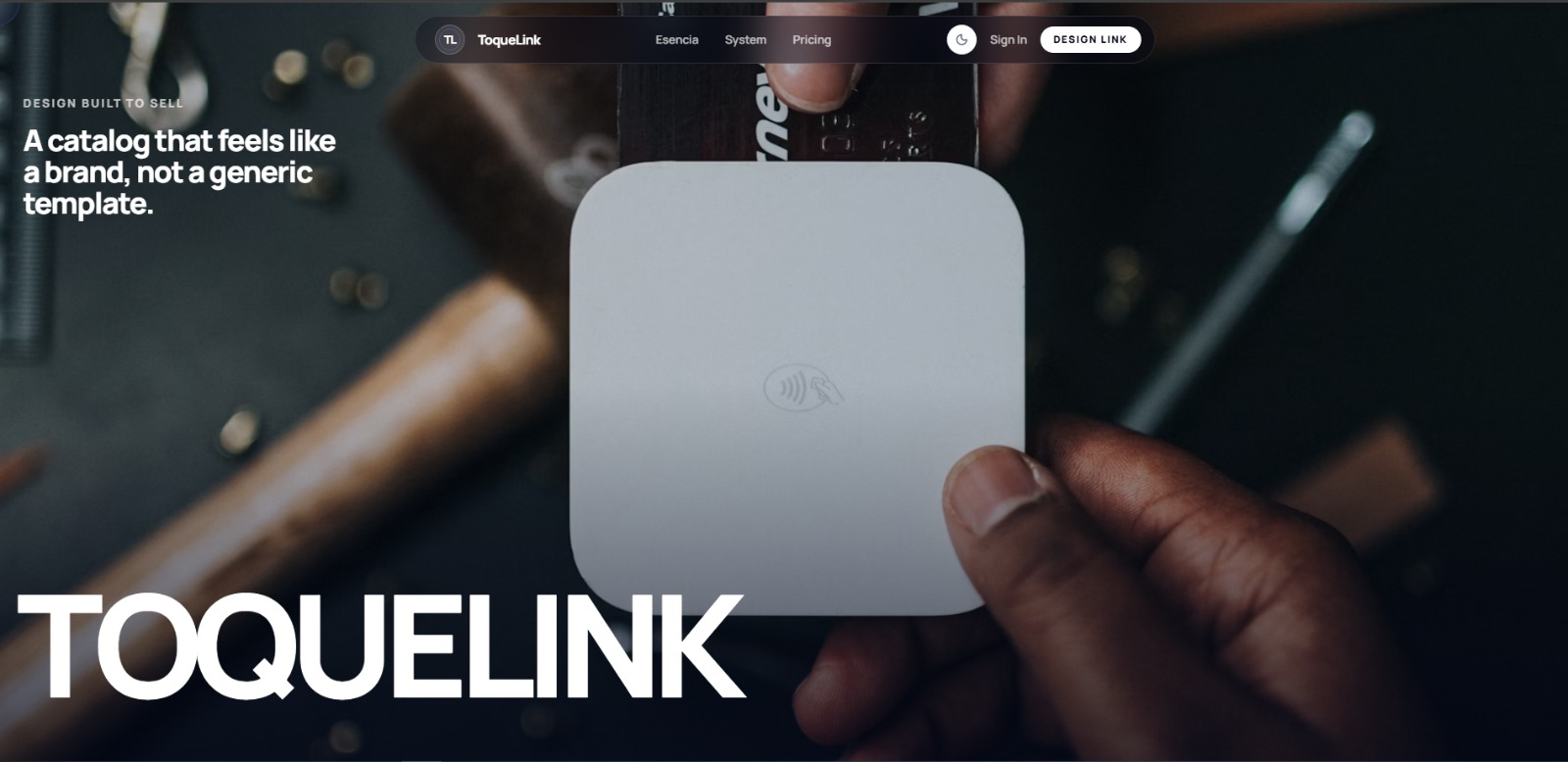
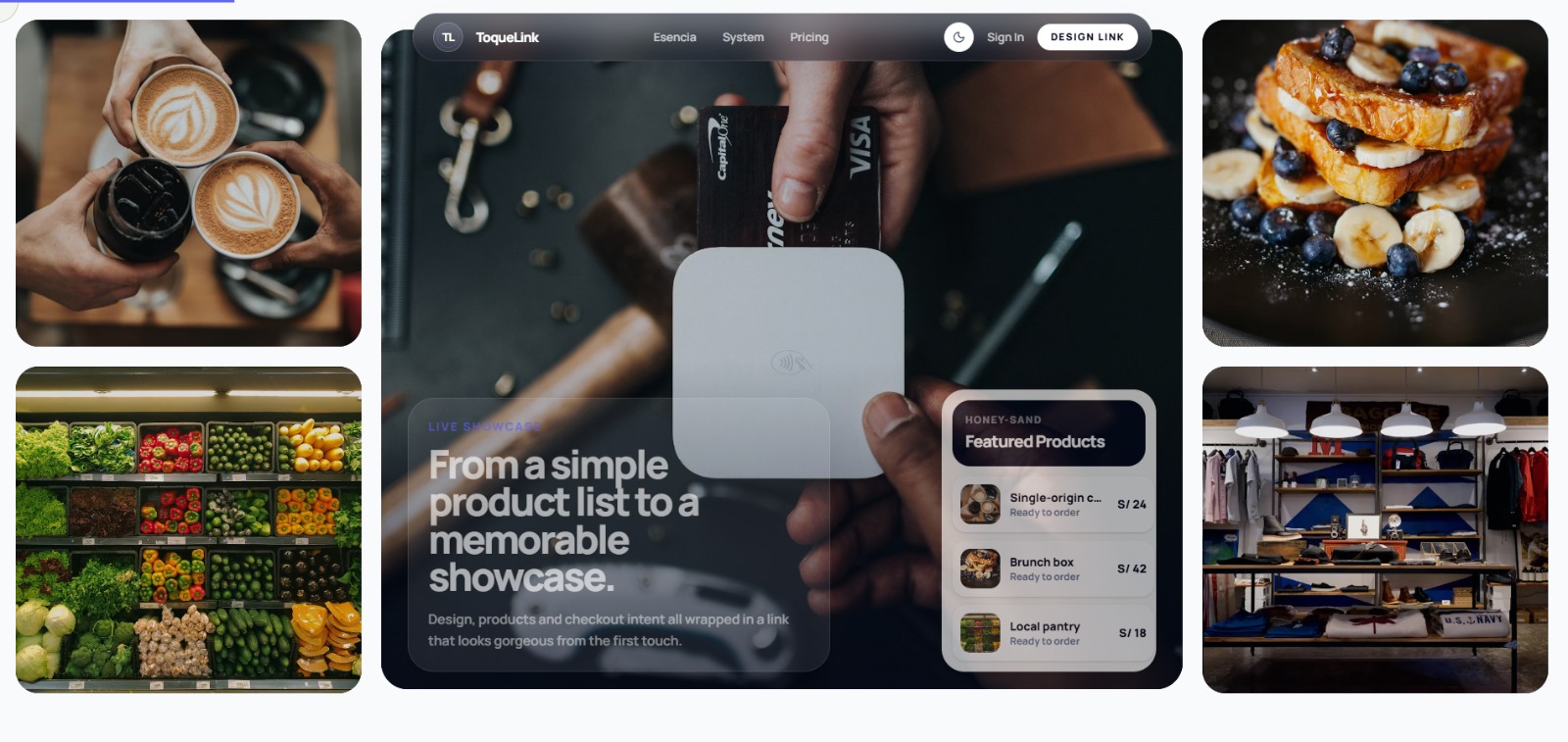
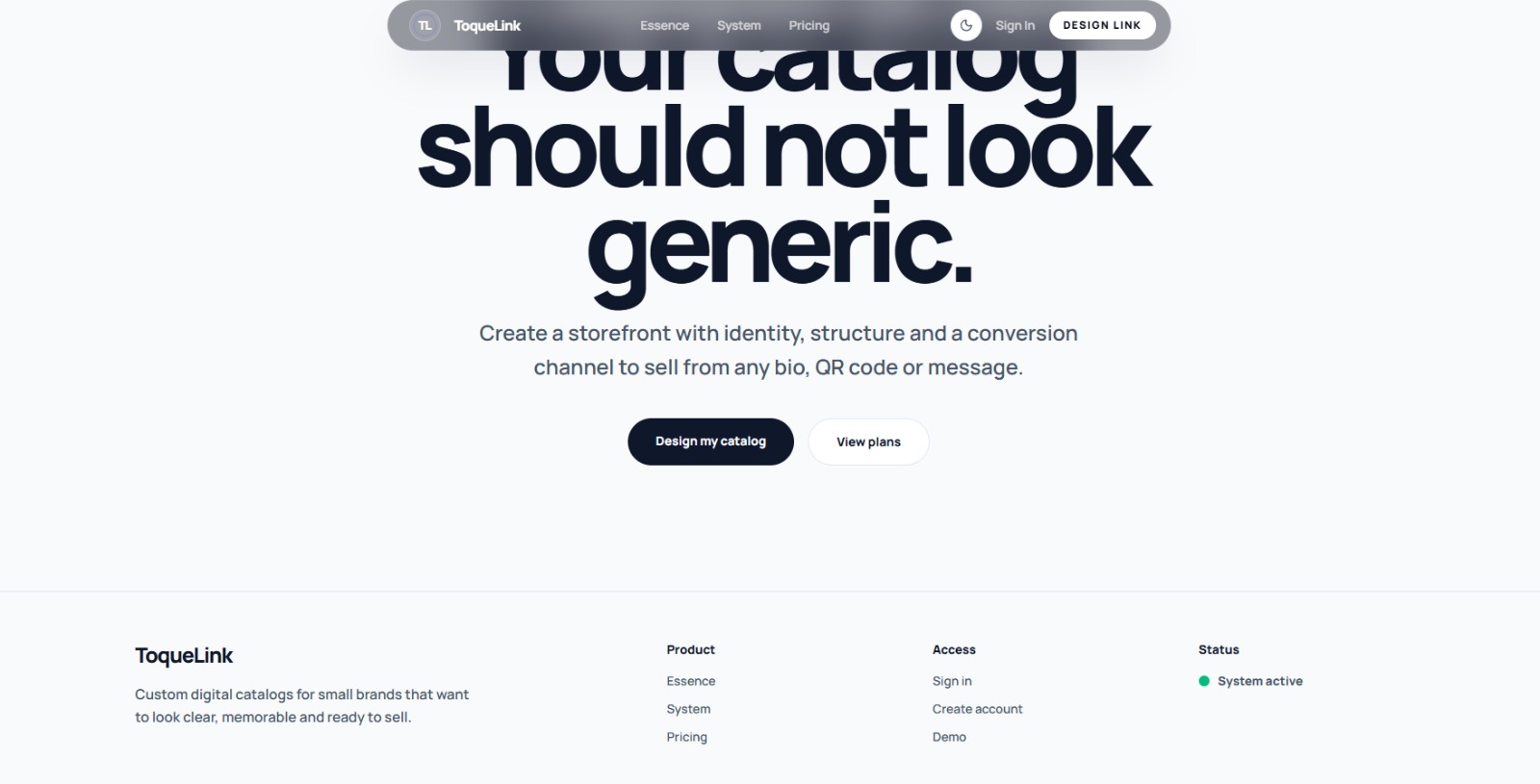
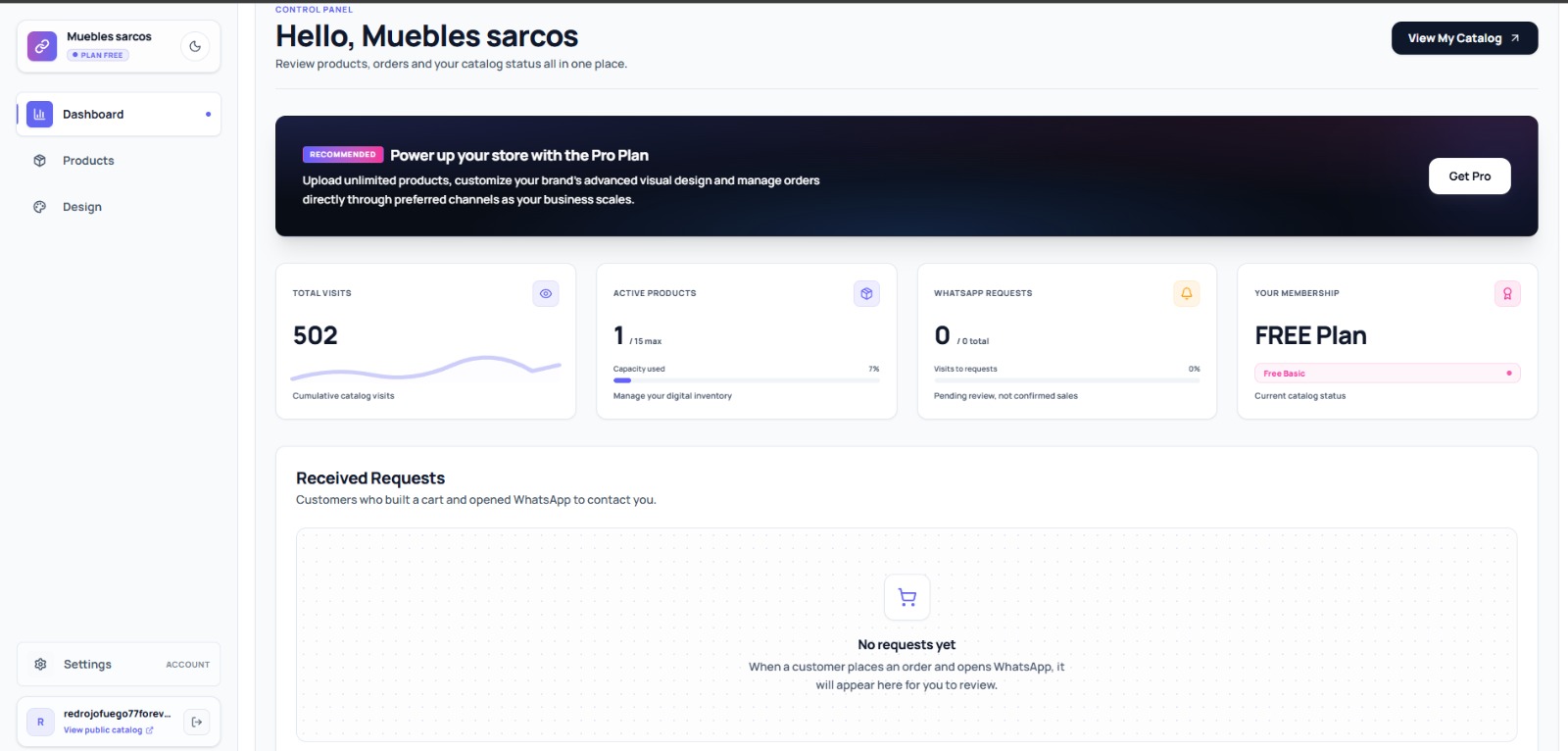
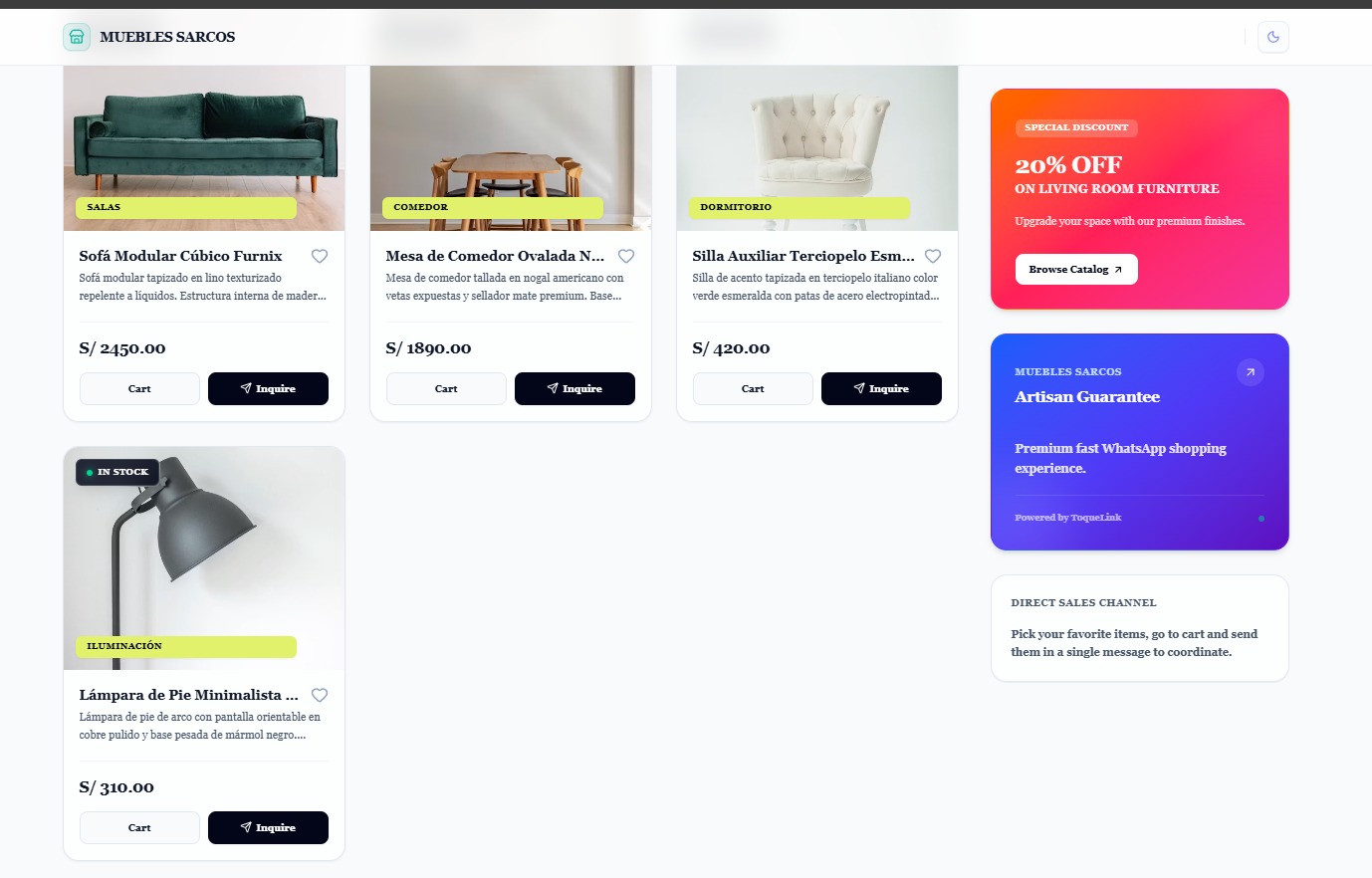
ToqueLink is a platform for digitalizing catalogs and business directories. It allows local businesses to create a professional digital storefront in minutes. Users can:
- Explore products and see updated prices
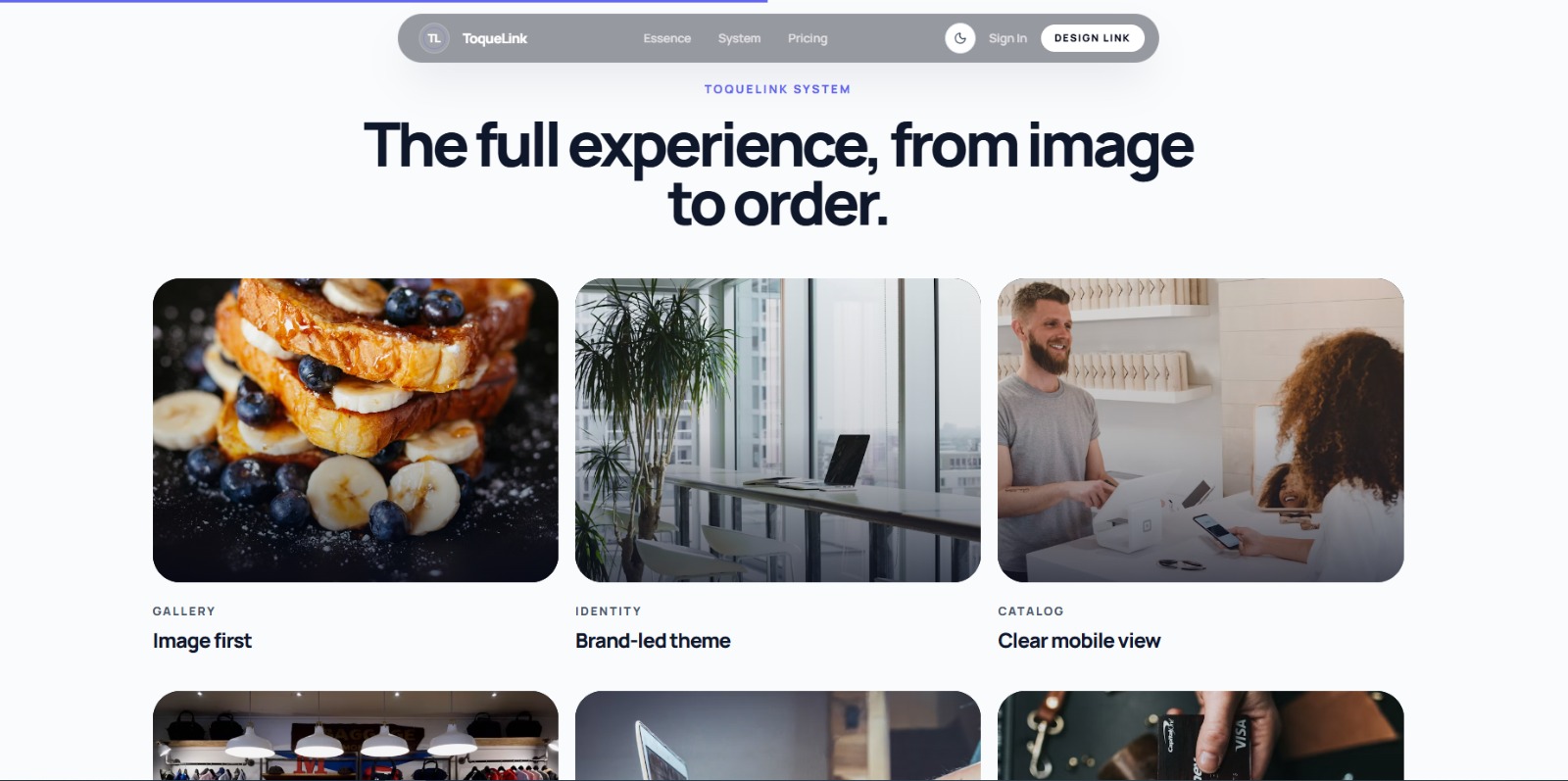
- Visualize the unique identity of each shop
- Enjoy a smooth and fast shopping experience
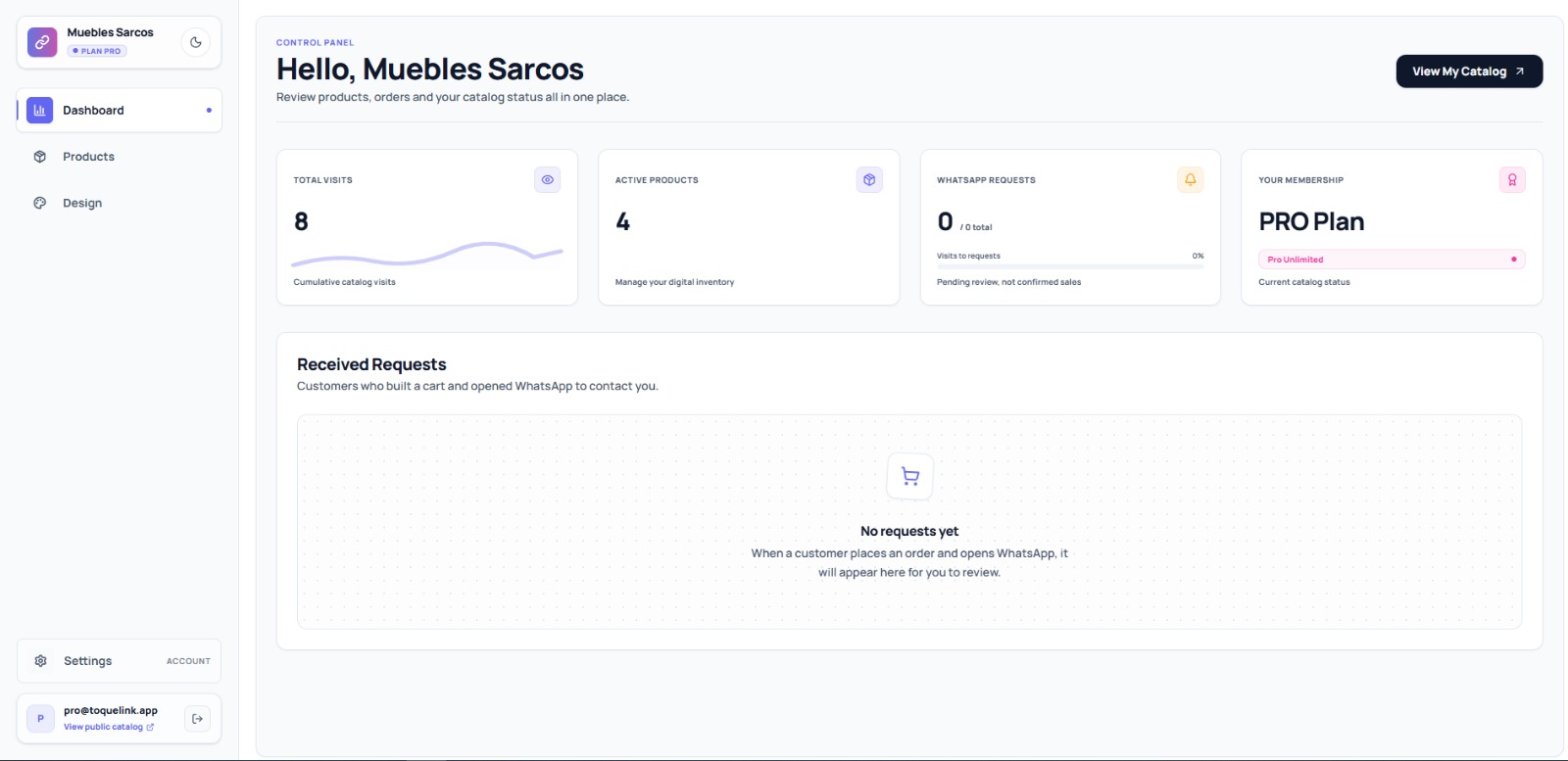
Through our system, the business owner manages their inventory and visual styles, while the customer gets a seamless browsing experience — no apps to install, no hassle.
🏗️ How We Built It
ToqueLink is built on a Cloud-Native and Serverless architecture designed to be extremely scalable and cost-effective.
| Layer | Technology |
|---|---|
| Frontend | Next.js (App Router, SSR) |
| Database | Amazon DynamoDB (Single Table Design) |
| Storage | Amazon S3 with secure access policies |
| Auth | Google OAuth via NextAuth.js |
| Deployment | Pay-as-you-go / AWS Free Tier |
- Frontend: Developed with Next.js, using the App Router for Server-Side Rendering (SSR), which guarantees optimal performance and SEO out of the box.
- Database: We use Amazon DynamoDB with a Single Table Design, allowing us to scale horizontally with latencies under $10\ \text{ms}$.
- Storage: Multimedia assets are served from Amazon S3, optimized through secure access policies.
- Authentication: Integration with Google OAuth via NextAuth.js, facilitating frictionless registration.
- Efficiency: We chose a Pay-as-you-go model, keeping operating costs near zero during the development phase.
Cost Efficiency Formula
The efficiency of our deployment can be summarized by the following optimization formula:
$$E = \frac{T}{C_{o}}$$
Where:
- $E$ represents system efficiency
- $T$ is the request throughput
- $C_{o}$ is operating costs ($C_{o} \approx 0$ within AWS free tiers)
This means that as throughput grows, efficiency scales without a proportional increase in cost — the hallmark of a well-designed serverless system.
🧱 Challenges We Ran Into
The path was not linear. Some of our biggest challenges included:
- IAM Configuration: Understanding the least privilege principle when configuring IAM roles so that the Next.js API had strict access to DynamoDB and S3, avoiding the exposure of master credentials.
- S3 CORS: We faced initial issues trying to upload images directly from the browser. Configuring CORS policies was crucial to allow communication between
localhostand AWS. - NoSQL Design: Shifting our mindset from relational tables (SQL) to a single-table design (
PK/SK) in DynamoDB was a significant learning curve to achieve efficient and cost-effective queries.
🏆 Accomplishments That We're Proud Of
- ✅ Successfully implemented a 100% Serverless architecture that allows for automatic scaling without managing servers.
- ✅ Configured a secure and professional authentication flow with Google Auth in record time.
- ✅ Created an infrastructure that, thanks to the AWS free tier, is virtually free for the initial launch.
📚 What We Learned
We learned that architectural simplicity often beats premature complexity.
Transitioning to a serverless model with DynamoDB not only made us better developers by understanding how to handle partition keys and sort keys — it also taught us the critical importance of:
- Security (IAM): Never expose more permissions than necessary.
- Environment isolation: Separating Test vs. Production from day one avoids painful migrations later.
These lessons go beyond this project; they are principles we'll carry into every system we build.
🔭 What's Next for ToqueLink
The future of ToqueLink is bright. We plan to:
- QR Code Generation — Integrate a system so that each business has its own physical QR code to display in-shop, bridging the offline and online worlds.
- Artificial Intelligence — Implement an AI assistant that automatically generates attractive and SEO-friendly product descriptions from a photo or a simple prompt.
- Analytics Dashboard — A real-time dashboard so business owners know which products are the most visited by their customers, enabling smarter inventory and marketing decisions.
Built with ❤️ for local commerce.
Built With
- cssamazon
- dynamodb
- next.js
- nextauth.js
- pnpm
- s3
- tailwind
- typescript
- vercel


Log in or sign up for Devpost to join the conversation.