Inspiration
I’ve caught myself doing this more times than I’d like to admit. I wanted to spend less time on my phone, but knowing I should stop wasn’t always enough. I needed an incentive to actually put it down. So when the AI Lodge Hackathon came along, I thought: why not build something for a problem I experience myself?
What it does
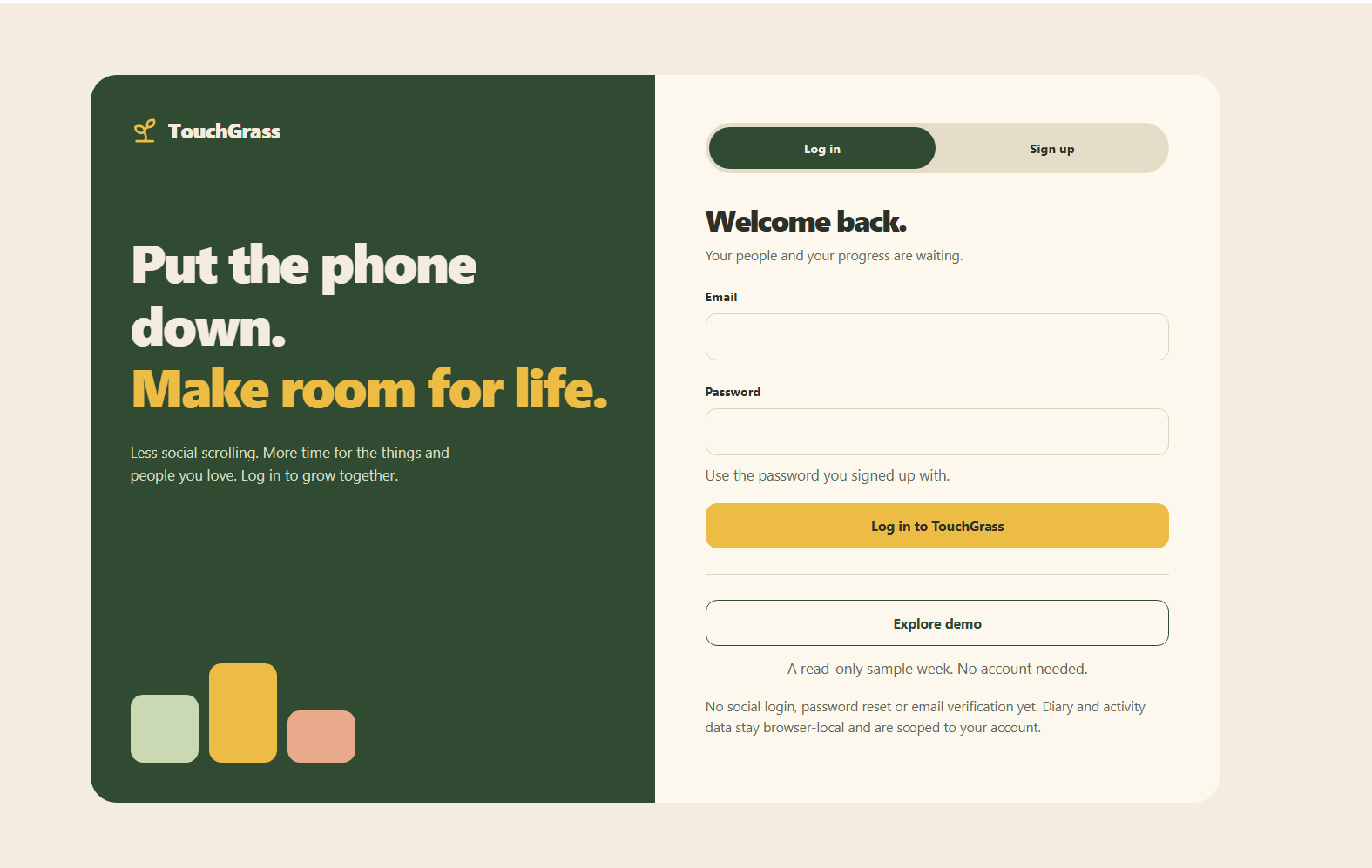
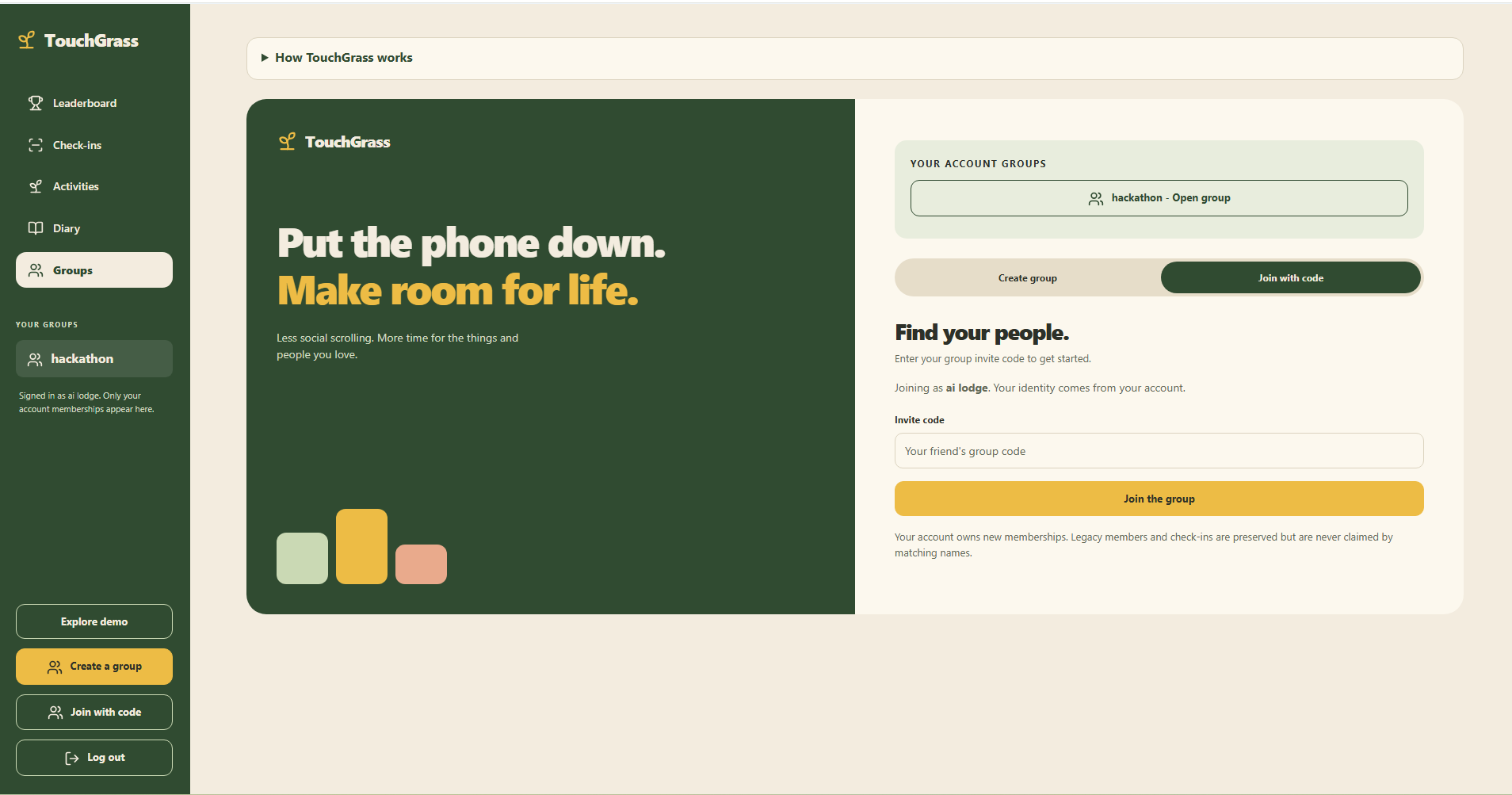
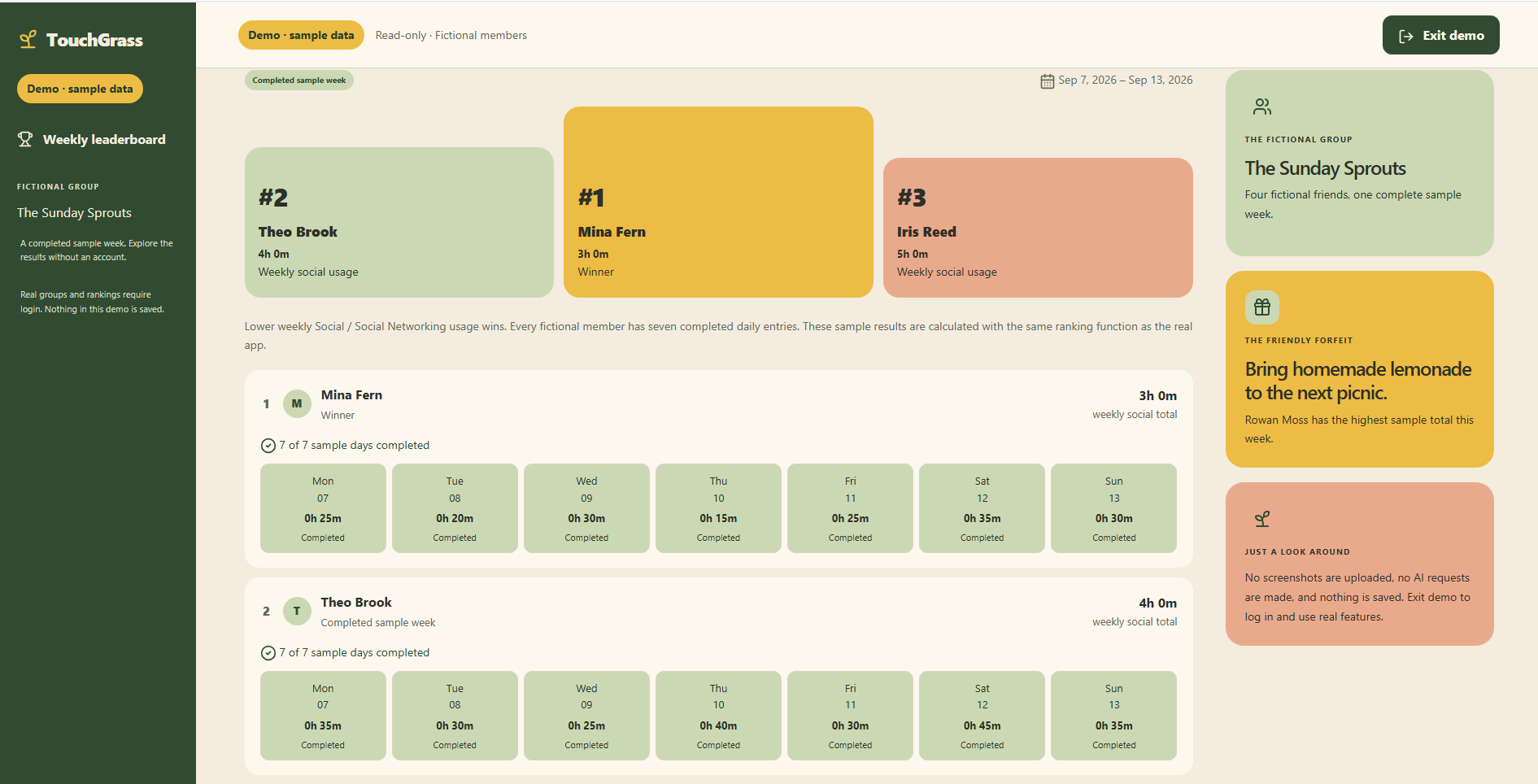
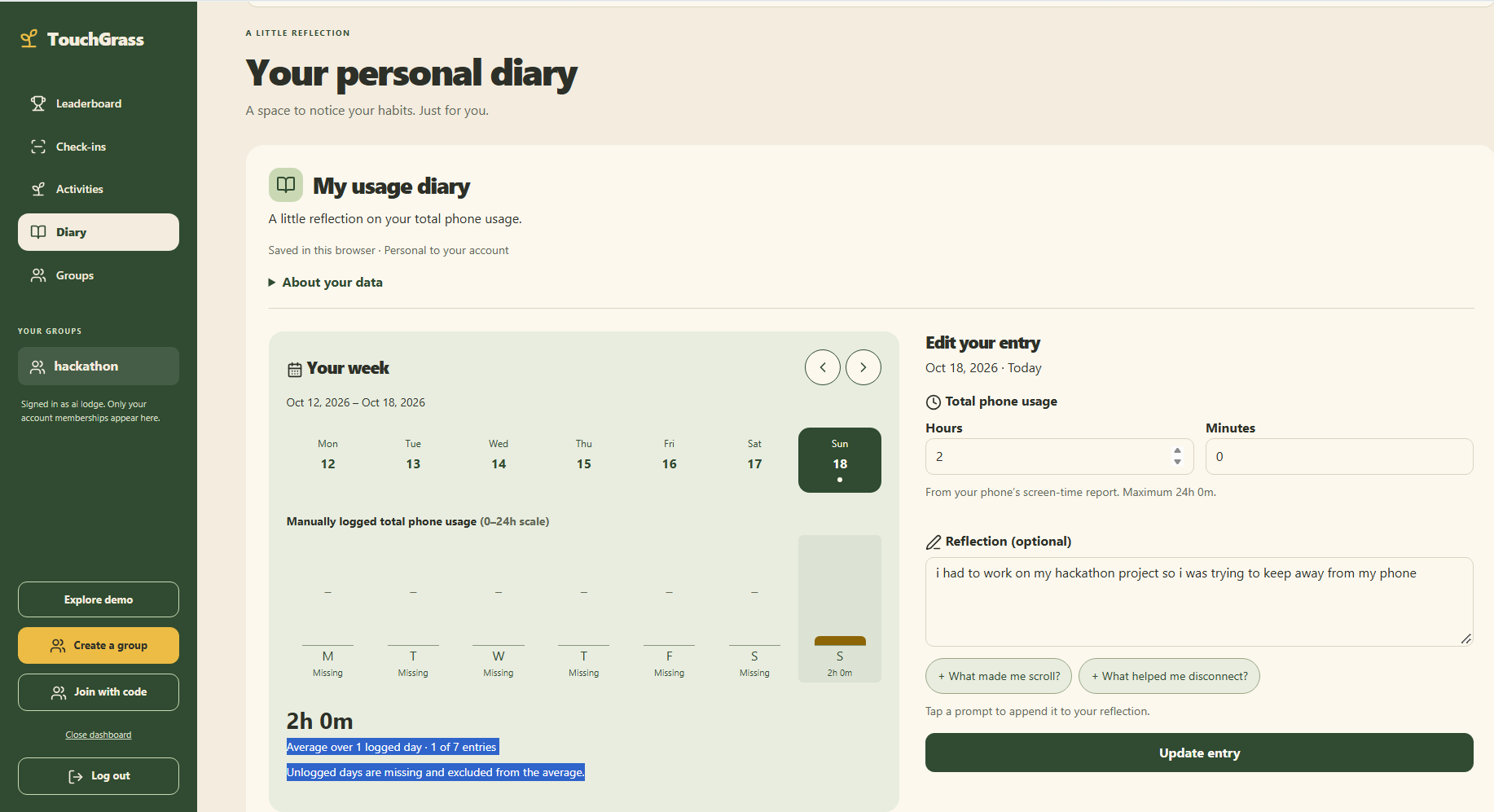
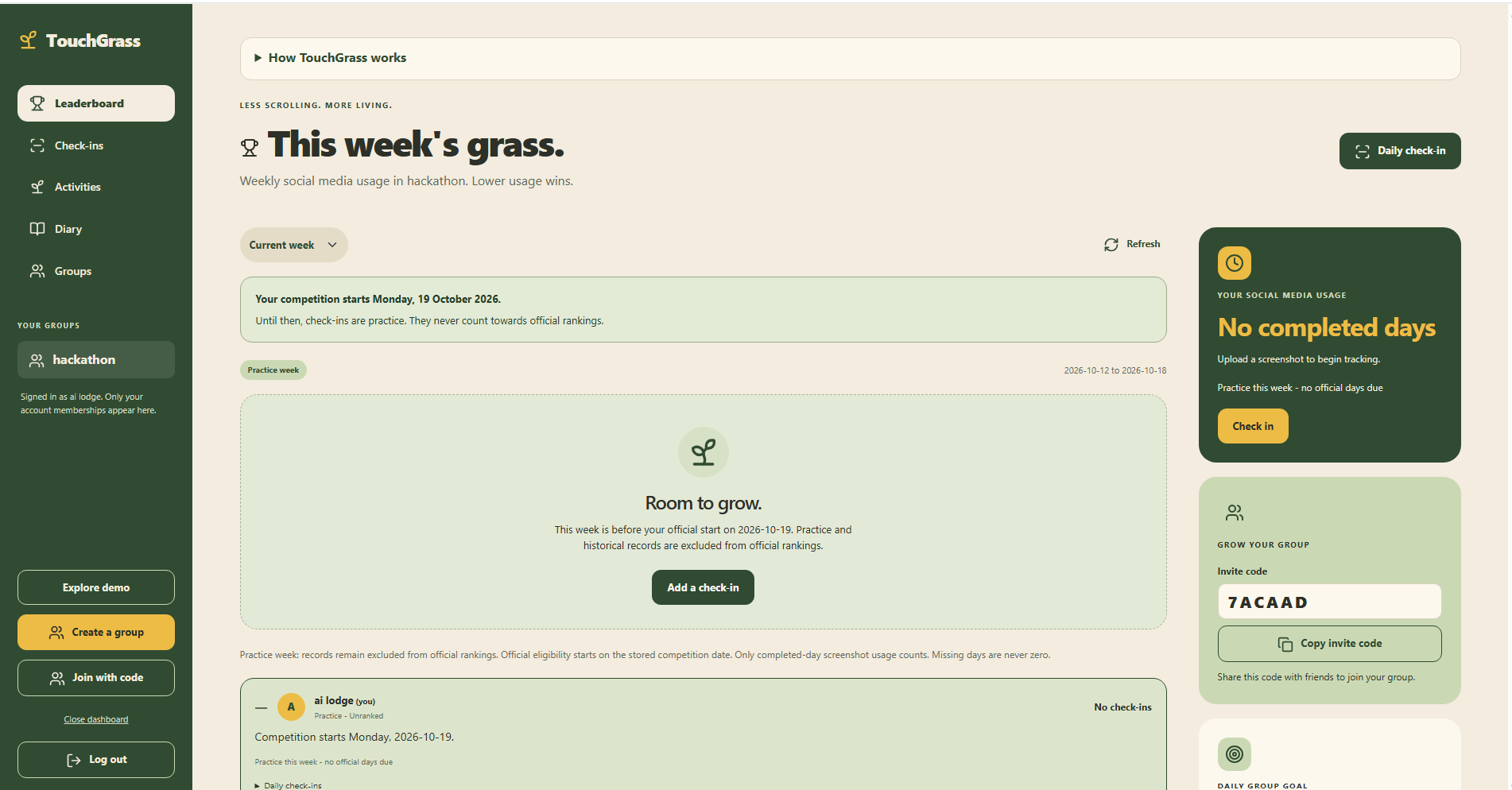
The idea is simple: create a group, invite your friends, and hold each other truly accountable. The creator sets a forfeit, so there’s a little more at stake than another screen-time reminder you can easily dismiss. Having a crazy consequence might finally convince you to close Instagram
How we built it
I built TouchGrass using Vue 3 and Vite for the frontend, Node.js and Express for the backend, and MongoDB Atlas to store data. I also used AI coding tools throughout development to help turn our ideas into working features, troubleshoot errors, and refine the interface. The frontend was deployed on Vercel and the backend on Render.
Challenges we ran into
As a beginner developer still learning, connecting the frontend, backend, and database came with plenty of unfamiliar problems. Deployment also meant figuring out build settings and environment variables. I worked through these challenges by breaking problems into smaller steps, reading errors, asking for help, and testing changes. Learning to ask questions without feeling embarrassed helped us keep moving forward.
Accomplishments that we're proud of
My proudest moments were seeing my ideas come to life with each code change. Watching a button work, a page update, and different parts of the app connect made every small improvement rewarding. Turning a personal struggle with doomscrolling into a working app that people can try was especially meaningful.
What we learned
Although I vibe coded TouchGrass, I learned a lot through the process: how different parts of a web application communicate, how data is stored, and how to deploy beyond localhost. We also learned to describe problems more clearly, test AI-generated code, and ask better questions. My biggest takeaway is that technology can help solve many everyday problems when we use it thoughtfully, and we can start building while we’re still learning.
What's next for TouchGrass
I want to make screen-time tracking more seamless, explore more ways to keep friends motivated, and improve the app through user feedback. With more time, I would focus on making the experience easier to use and understanding which incentives help people consistently spend less time scrolling.

Log in or sign up for Devpost to join the conversation.