Inspiration
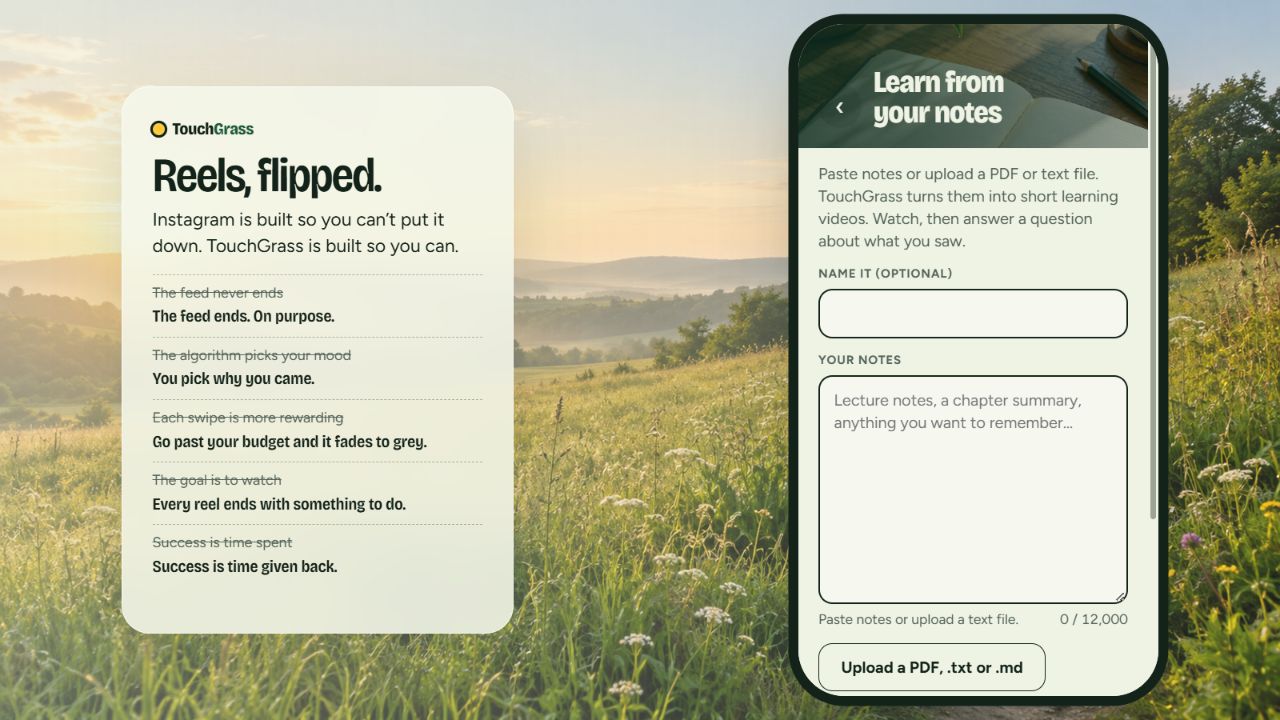
Reels are designed to keep offering one more swipe. For the Flip the Script challenge, we asked: what if a reel feed helped you leave? TouchGrass keeps the familiar format but changes the goal from time spent watching to a small action taken away from the screen.
What it does
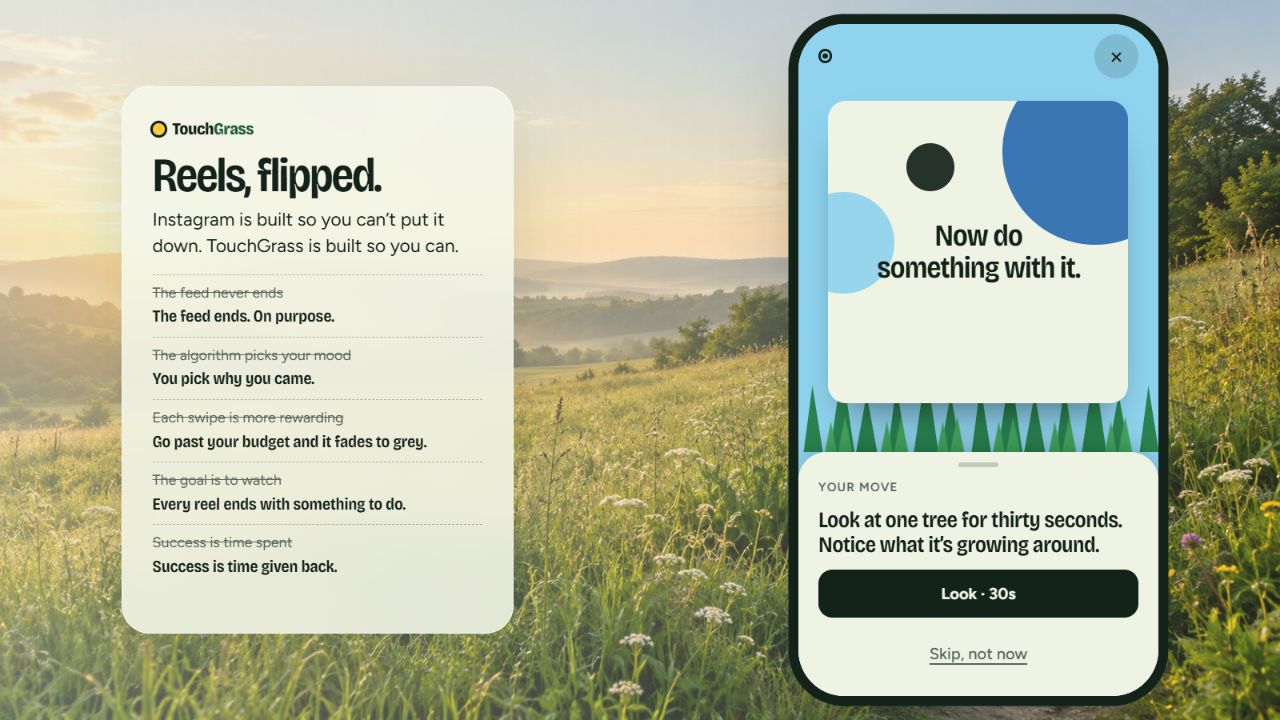
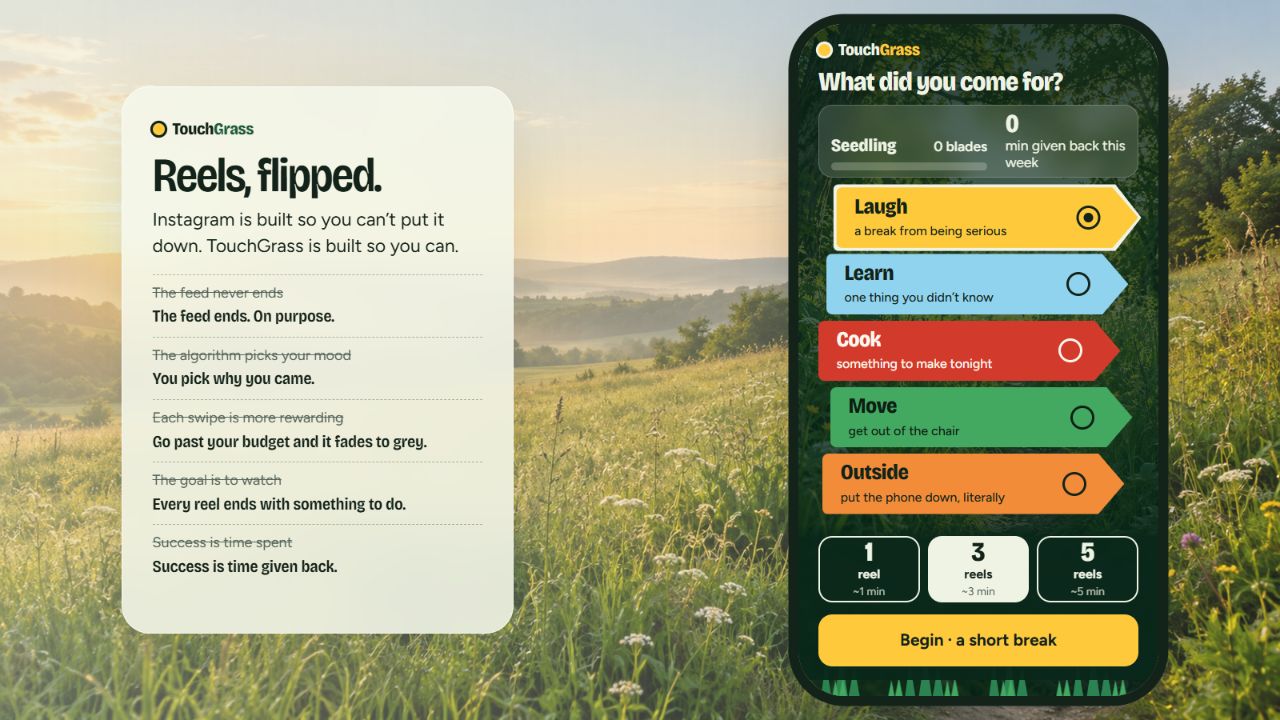
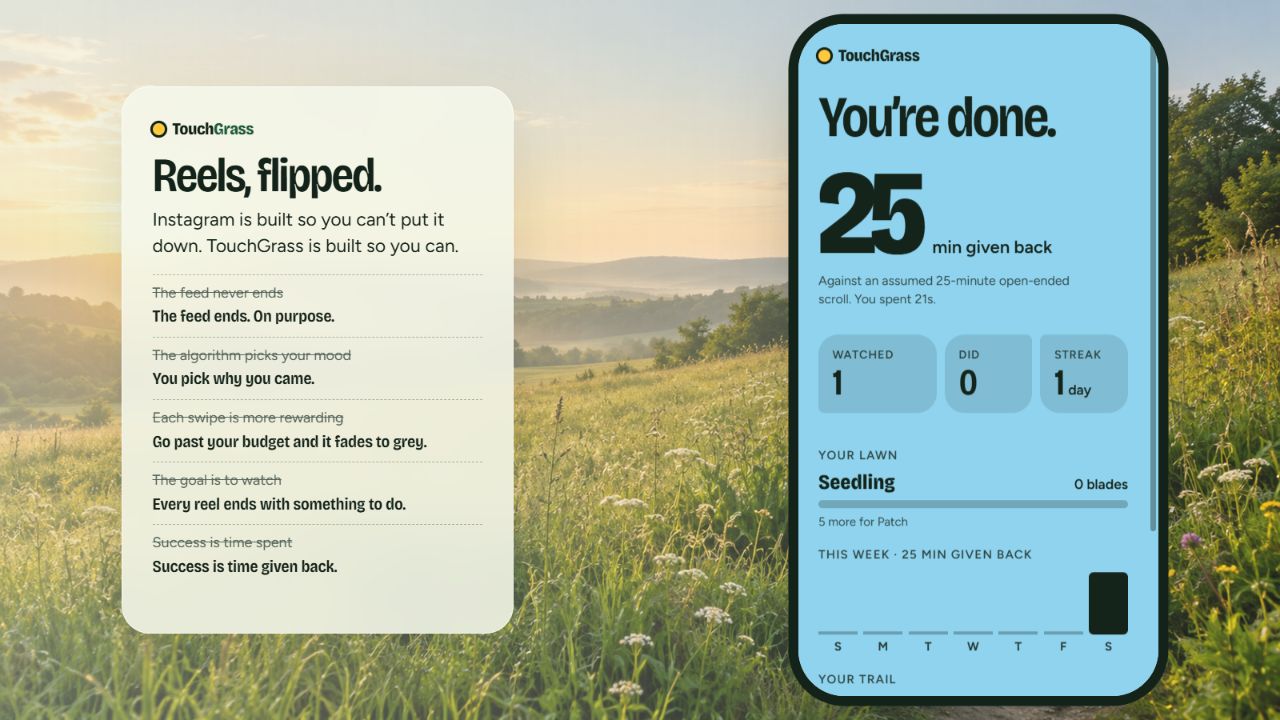
You choose why you came to watch reels: Laugh, Learn, Cook, Move, or Outside and set a limit of one, three, or five reels. Each reel ends with an action you must complete or skip before moving on. The feed then ends with a recap, an offline suggestion, and a clear record of whether you kept your limit.
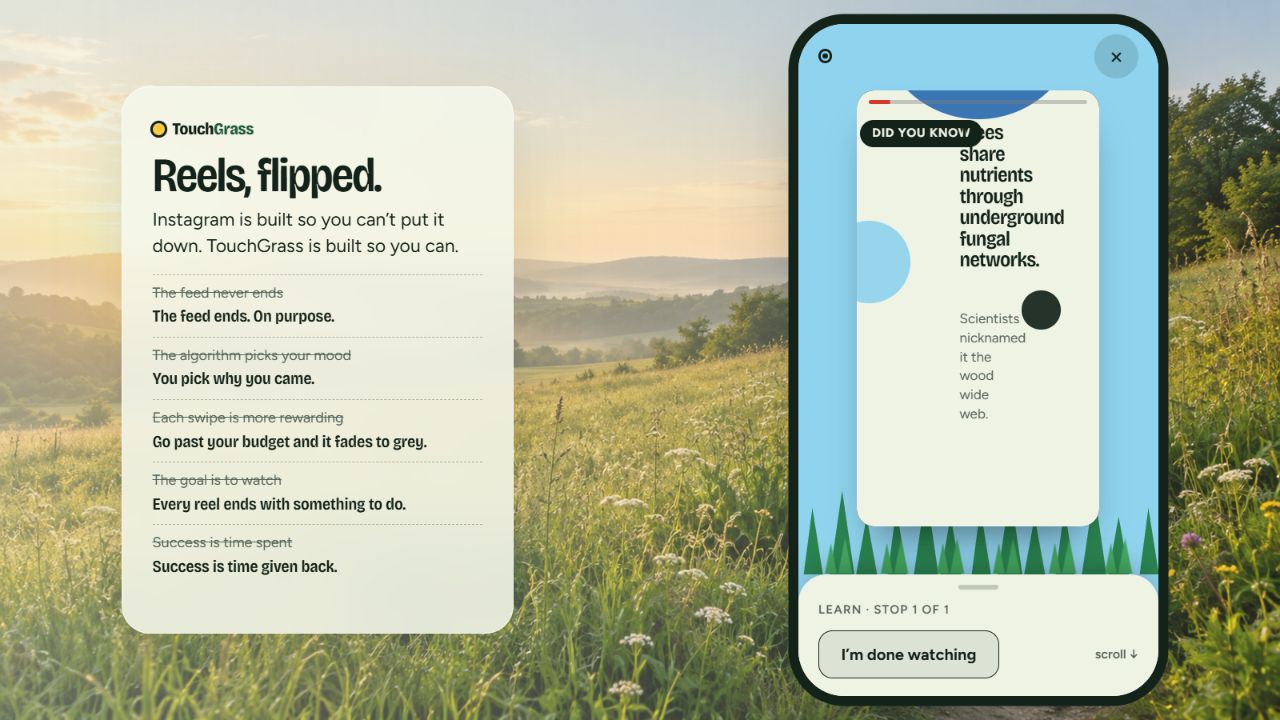
For Learn, you can paste notes or upload a PDF. TouchGrass turns the material into short, playable motion-graphic reels. After each one, you type an answer to a question; a follow-up question returns the next day to check what you remember.
How we built it
We built the interface with React, Vite, and CSS. A session reducer manages the finite feed and its watch, act, and finish stages. Browser storage keeps decks and progress on the device, while pdf.js extracts text from uploaded PDFs.
A serverless function sends cleaned notes to ELM to write Learn scripts and questions. The ELM key stays on the server, and the returned content is validated before it appears in the app. The Learn visuals play as in-app animations. AI-generated images are used for the site photography, and Codex assisted development.
Challenges we ran into
Making a familiar swipe feel deliberately finite took careful work: swipes must respond naturally, but they cannot bypass the action. We also had to handle PDFs with little usable text, protect the ELM request from unsafe or oversized input, and limit API usage.
Accomplishments that we're proud of
The core flip works: choose a limit, watch, act or skip, and reach a real ending. Learn turns a user’s own notes into animated content with written answers and later recall. The finish screen separates recorded actions from estimated time given back.
What we learned
Changing the ending changes the whole experience. A limit is more convincing when people can see it approaching and the app actually stops. We also learned to be precise about what the prototype knows: it records actions users mark done, but it cannot prove they happened away from the phone.
What's next for TouchGrass
We want to test whether people actually stop scrolling and follow through on the off-screen step. That feedback would guide better actions, stronger Learn visuals, and a more useful measure of impact.
Built With
- pdf.js
- react
- vite

Log in or sign up for Devpost to join the conversation.