-
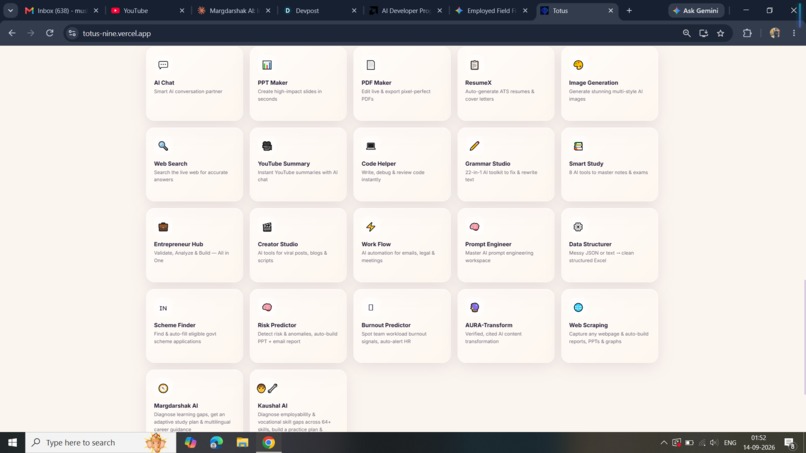
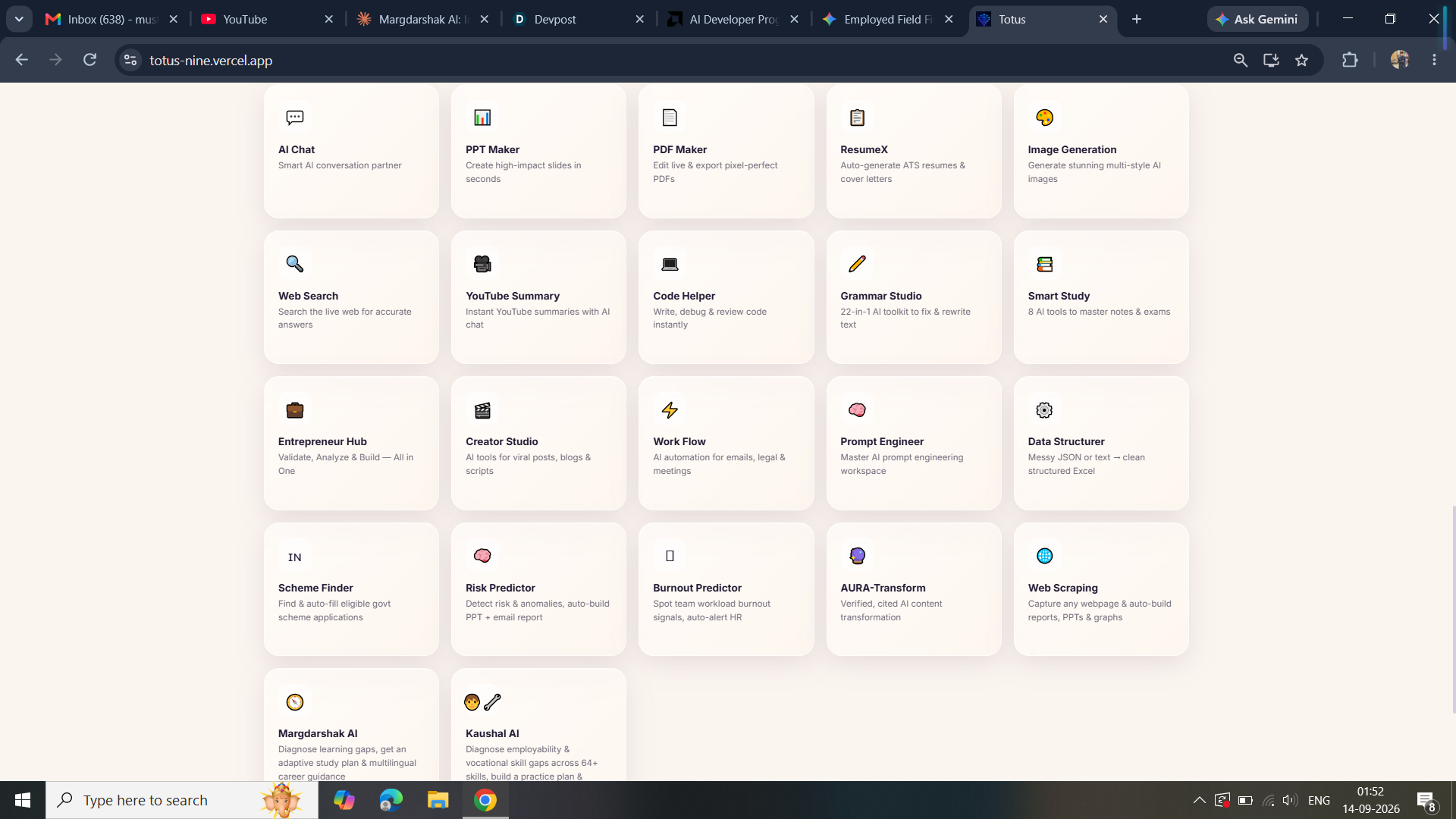
Every tool, one dashboard — from AI Chat to PPT Maker to Margdarshak AI and Kaushal AI.
-
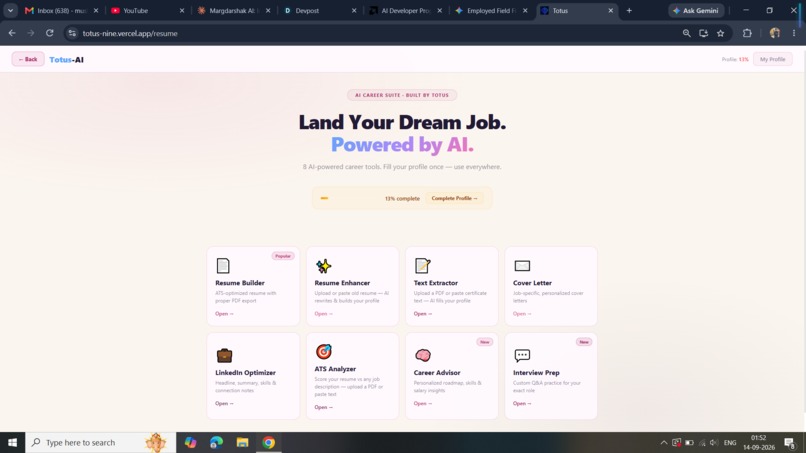
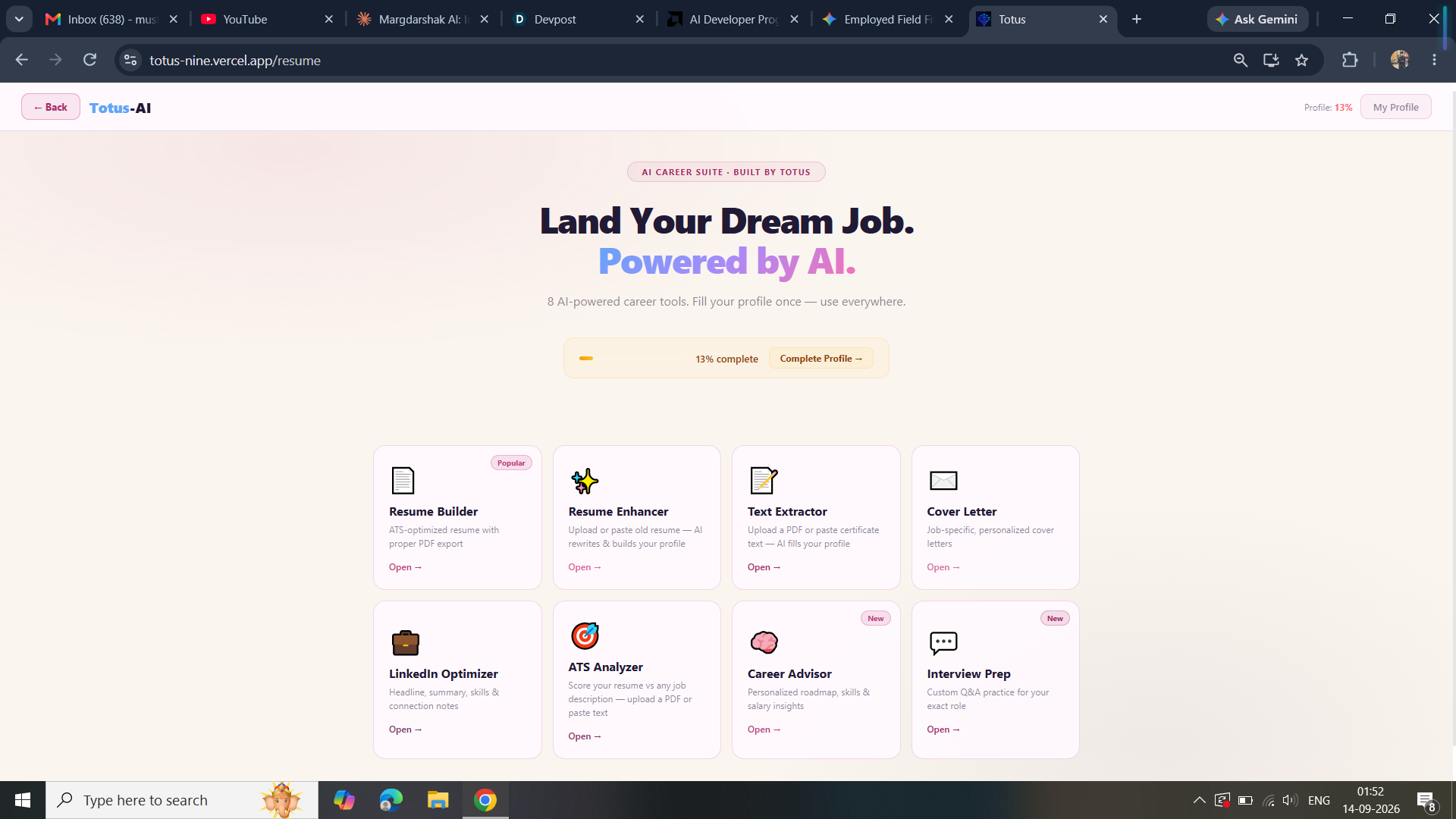
8 AI career tools — build a resume, optimize LinkedIn, and prep for interviews in one flow.
-
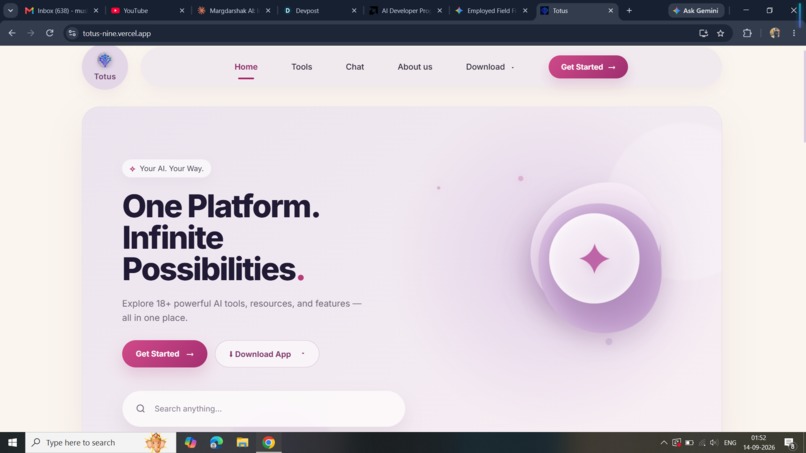
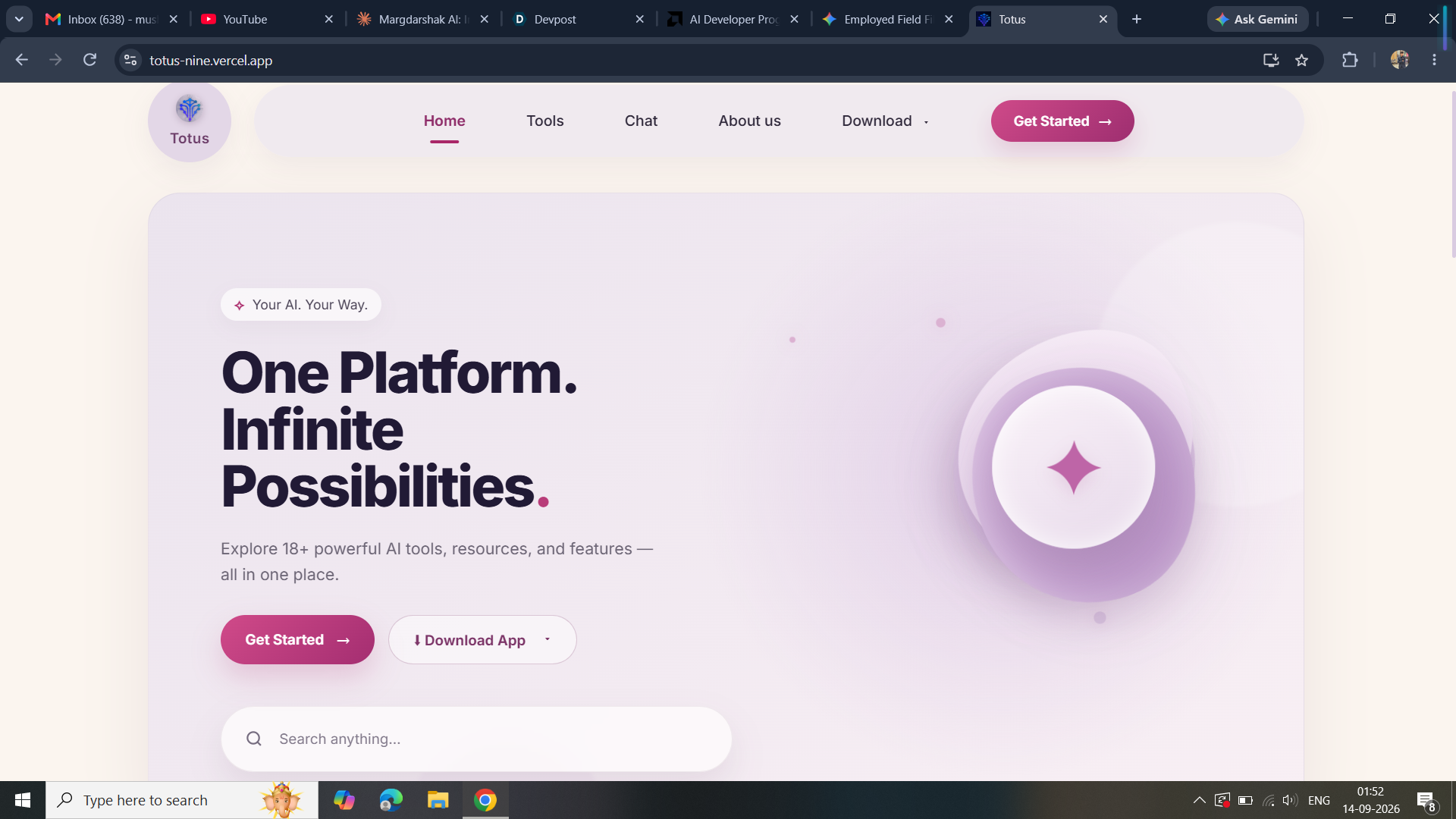
One Platform. Infinite Possibilities. — 21+ AI tools in a single, unified workspace.
-
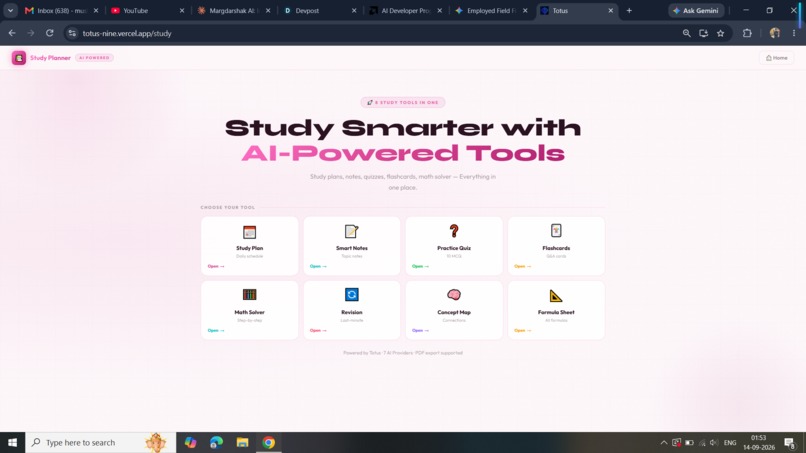
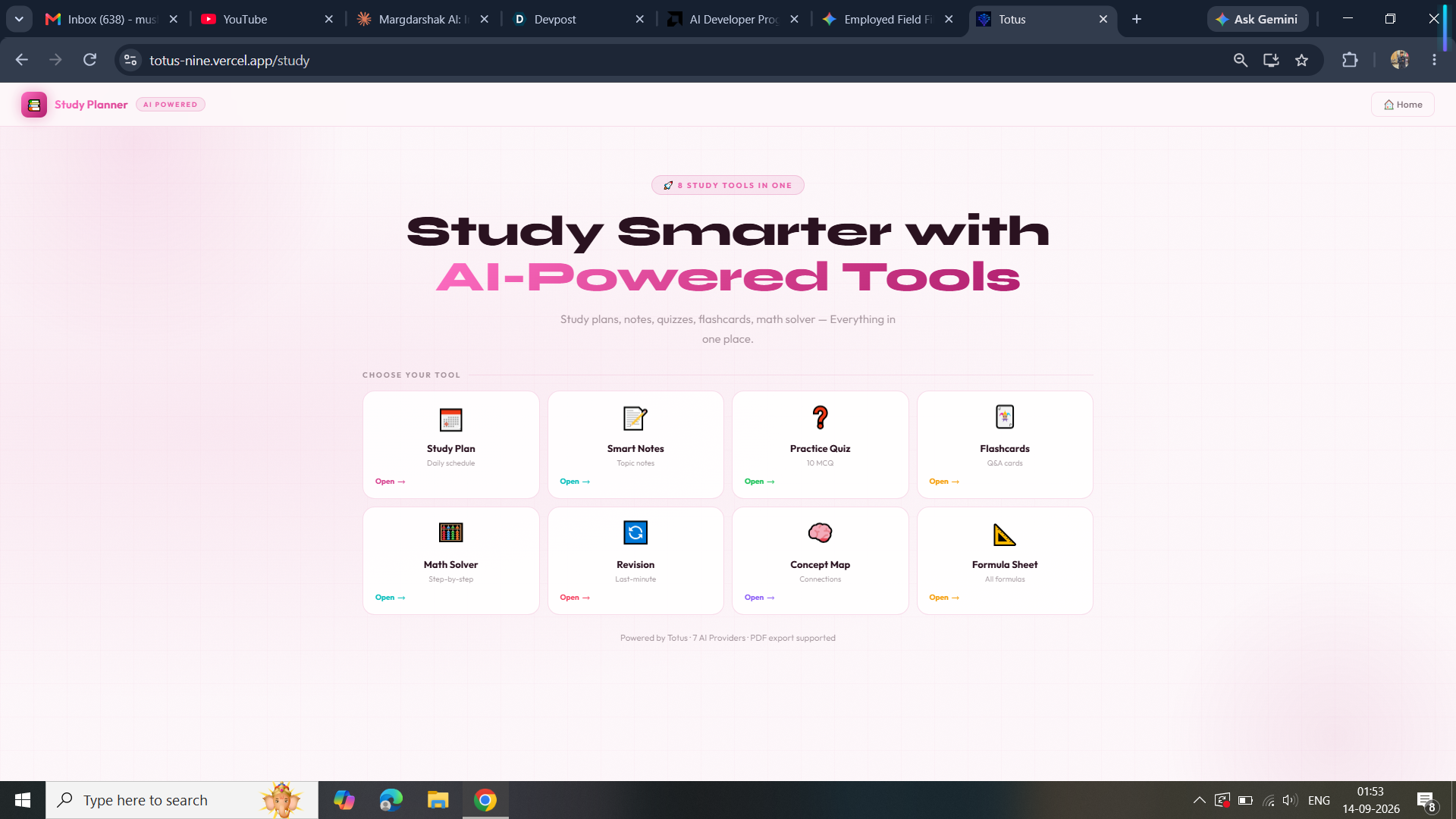
8 AI study tools — plans, notes, quizzes, flashcards, and a math solver in one place.
-
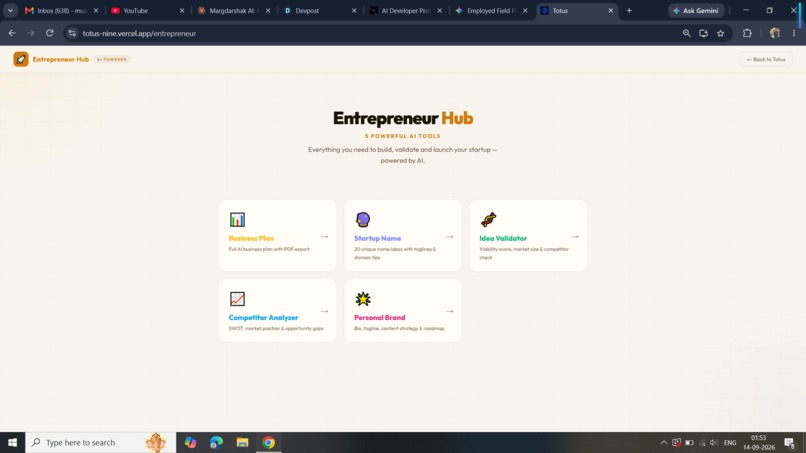
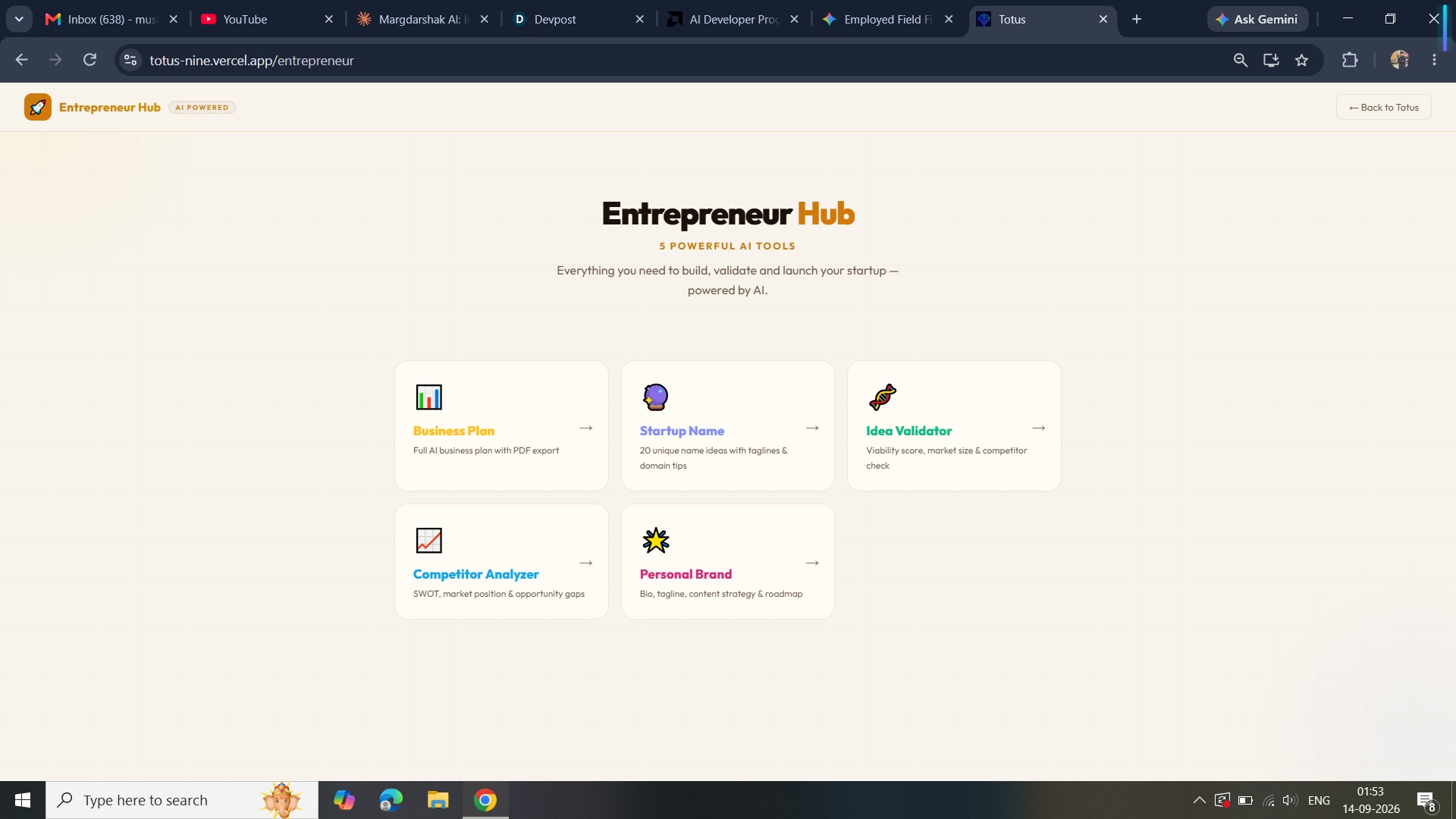
5 AI tools to validate, name, and pitch a startup idea end-to-end.
-
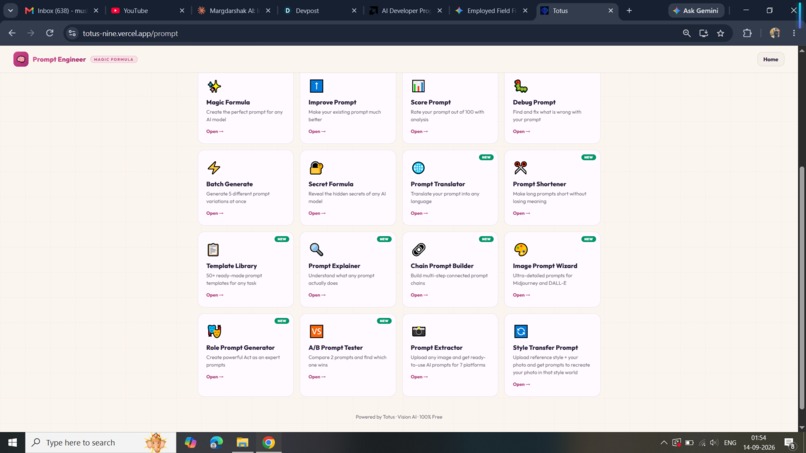
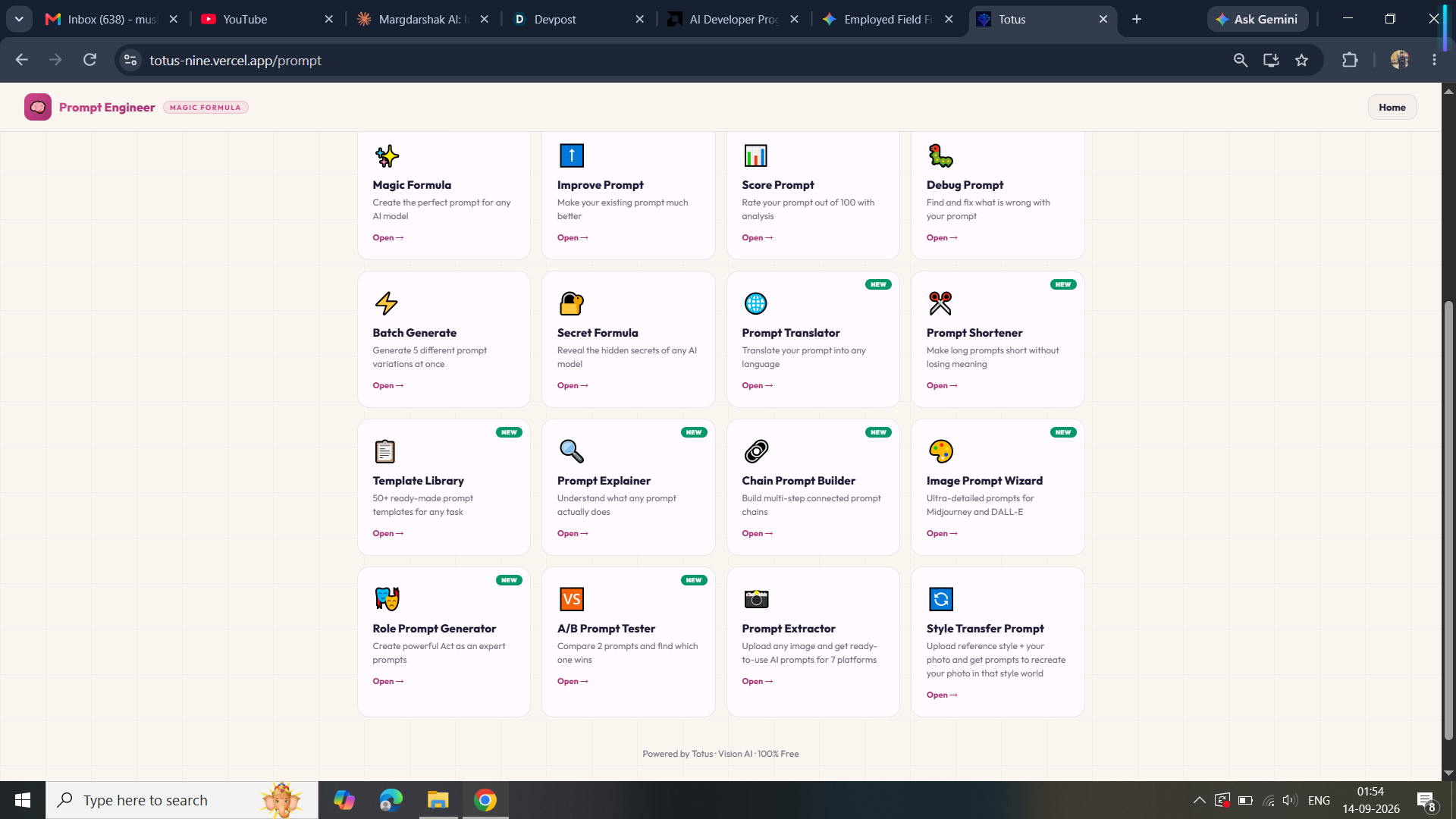
16 tools to write, score, debug, and translate the perfect AI prompt.
-
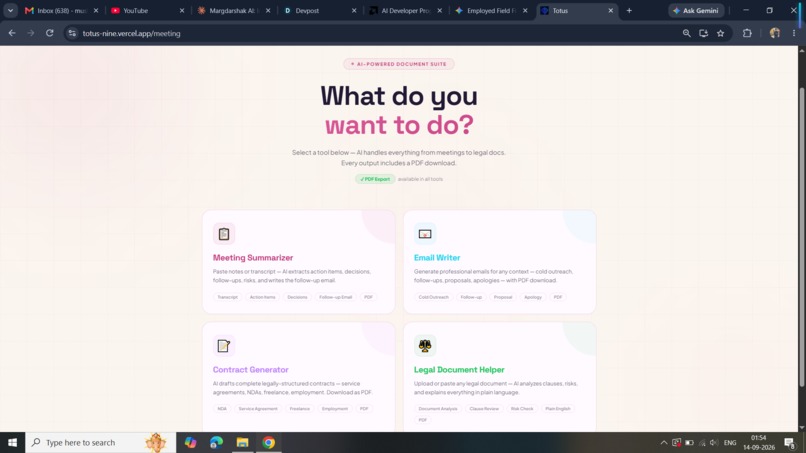
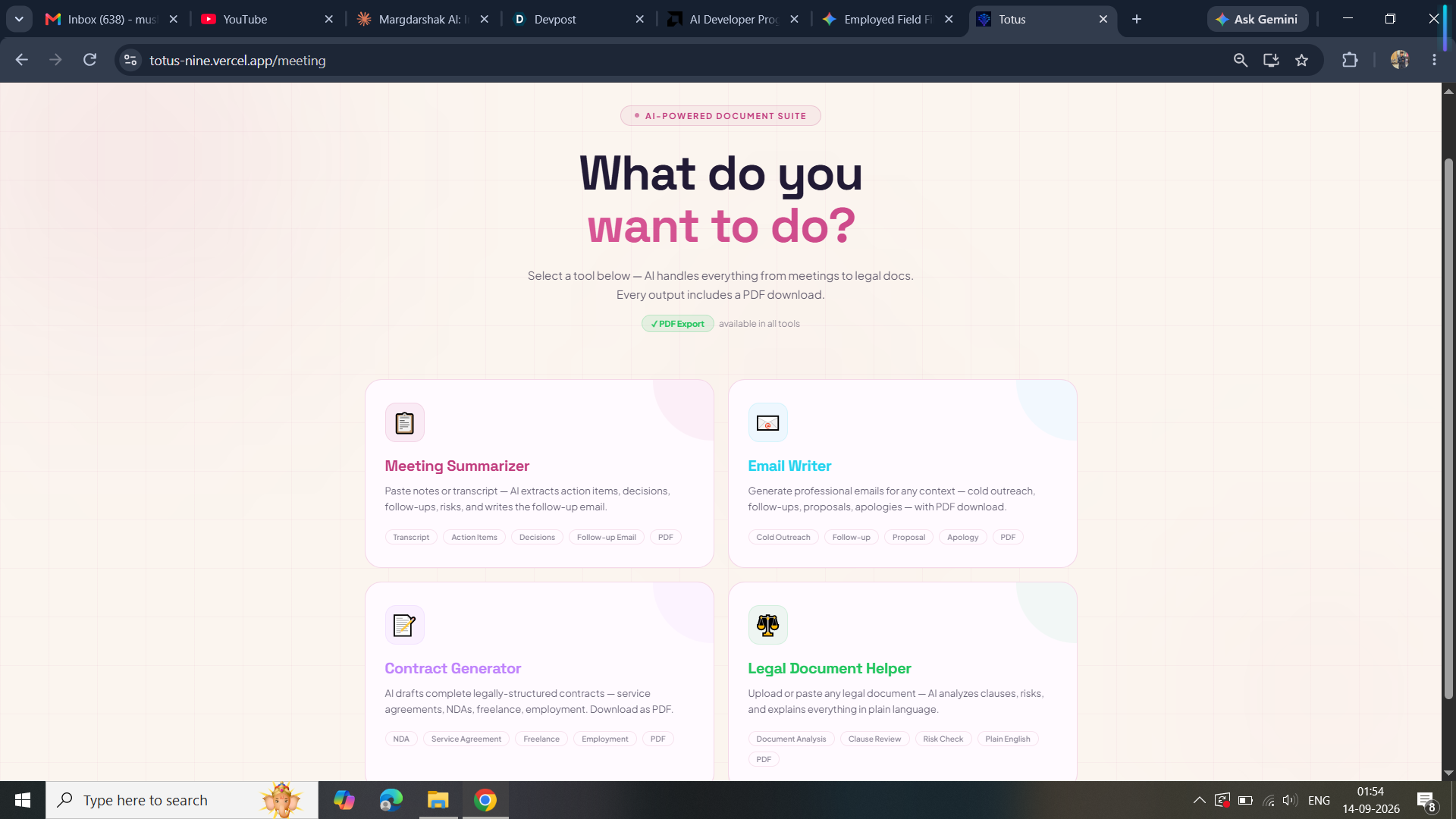
"AI-powered meetings, emails, contracts, and legal docs — every output exports to PDF.
-
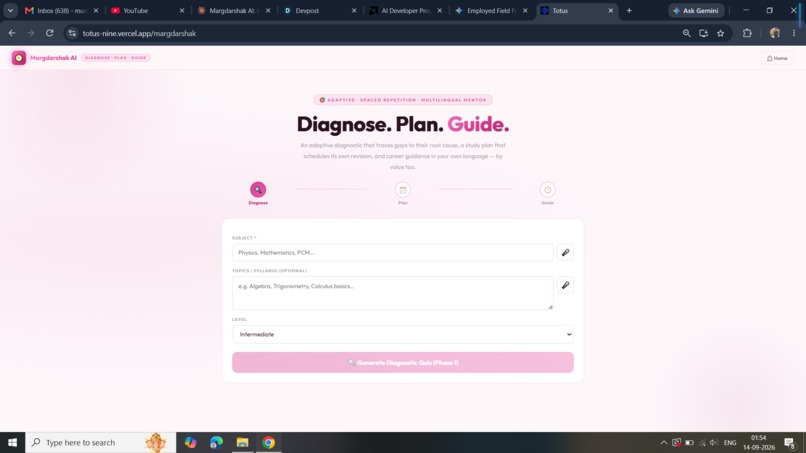
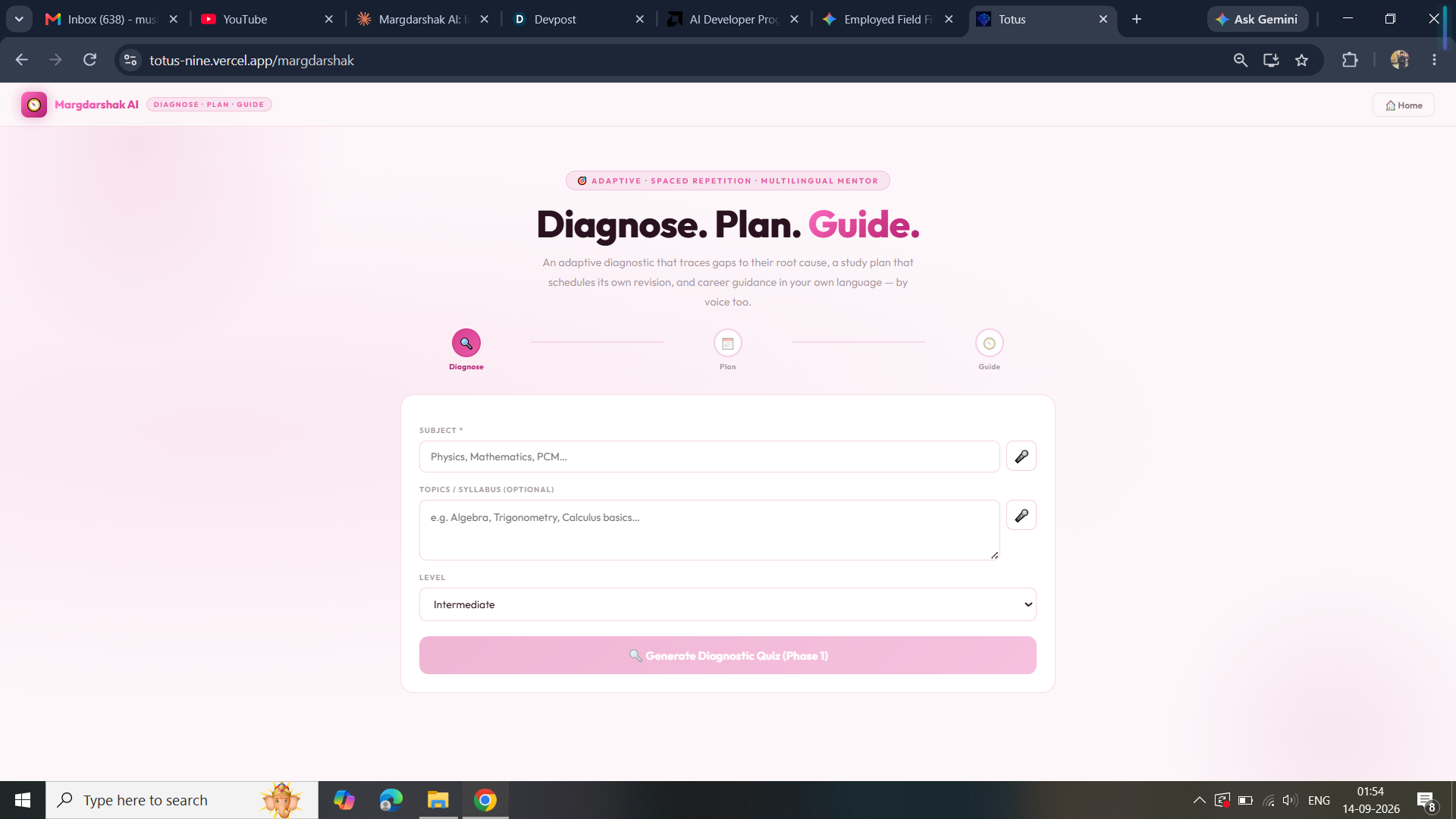
Diagnose. Plan. Guide. — an adaptive learning mentor with voice support in 10 Indian languages.
-
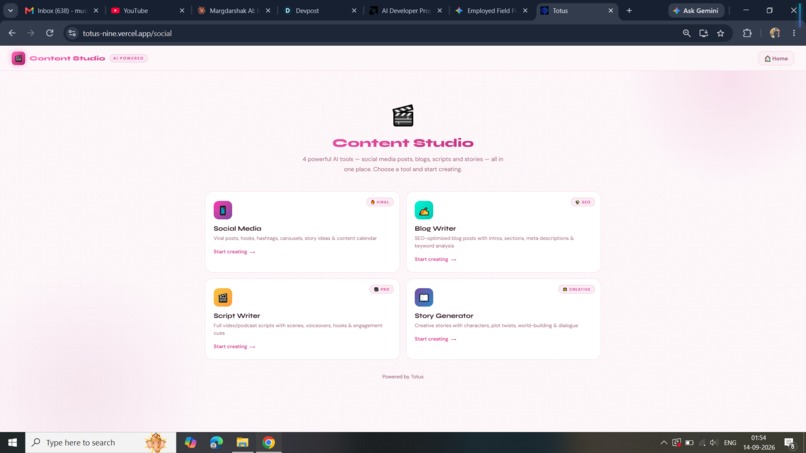
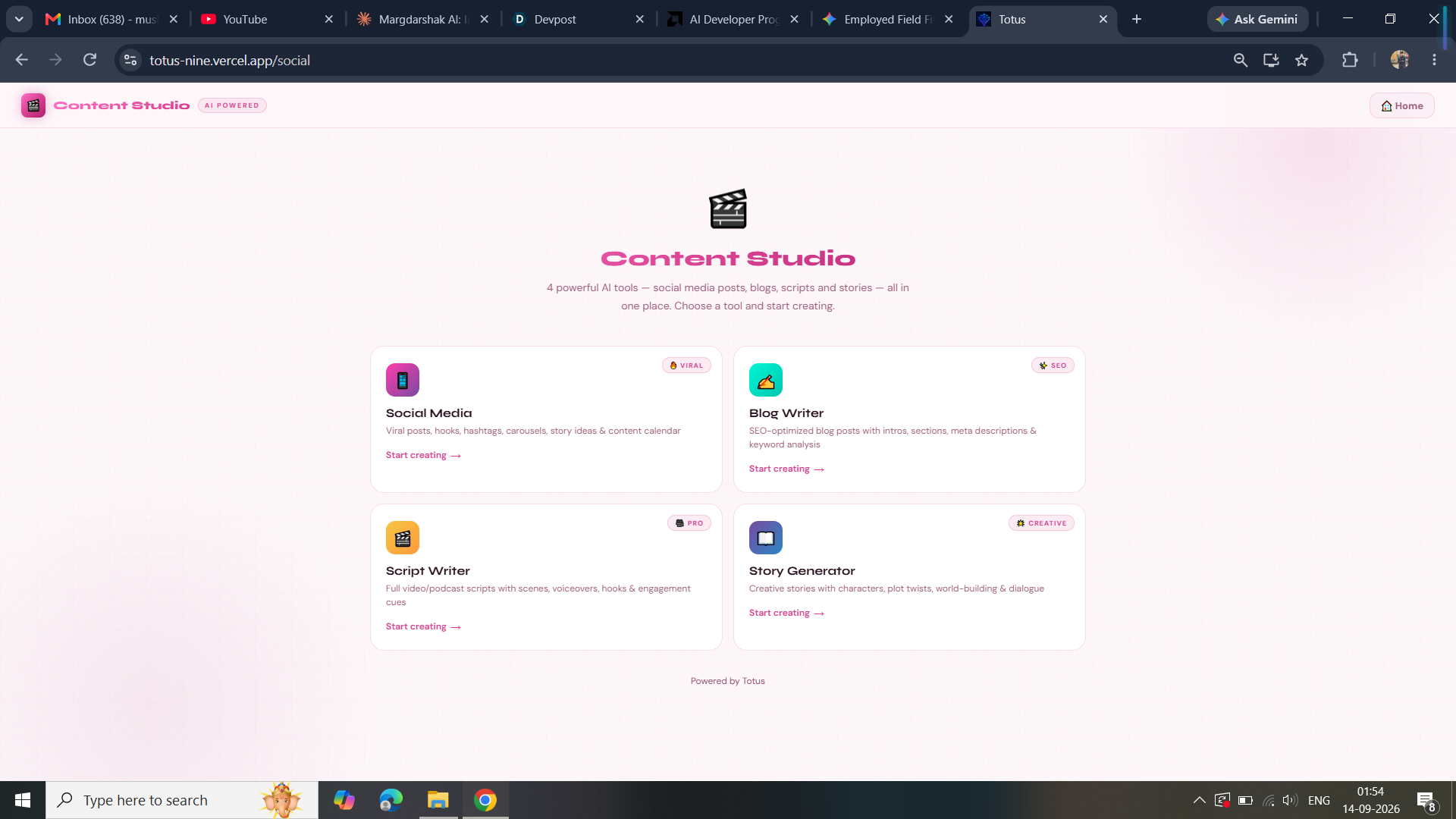
4 AI tools for creators — social posts, blogs, scripts, and stories.
-
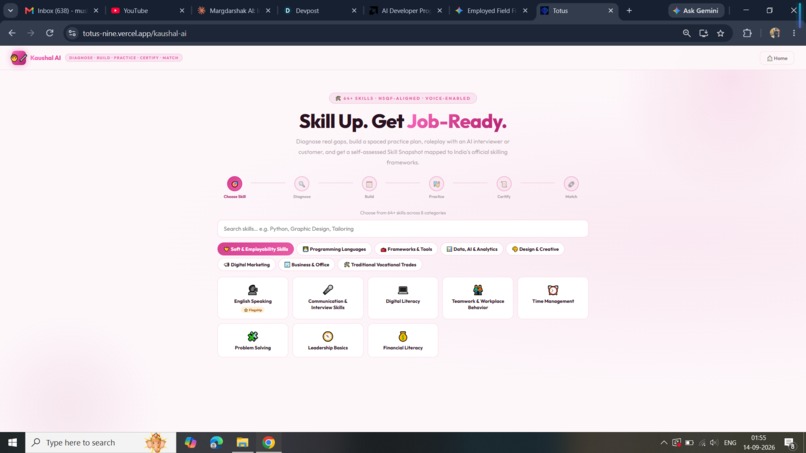
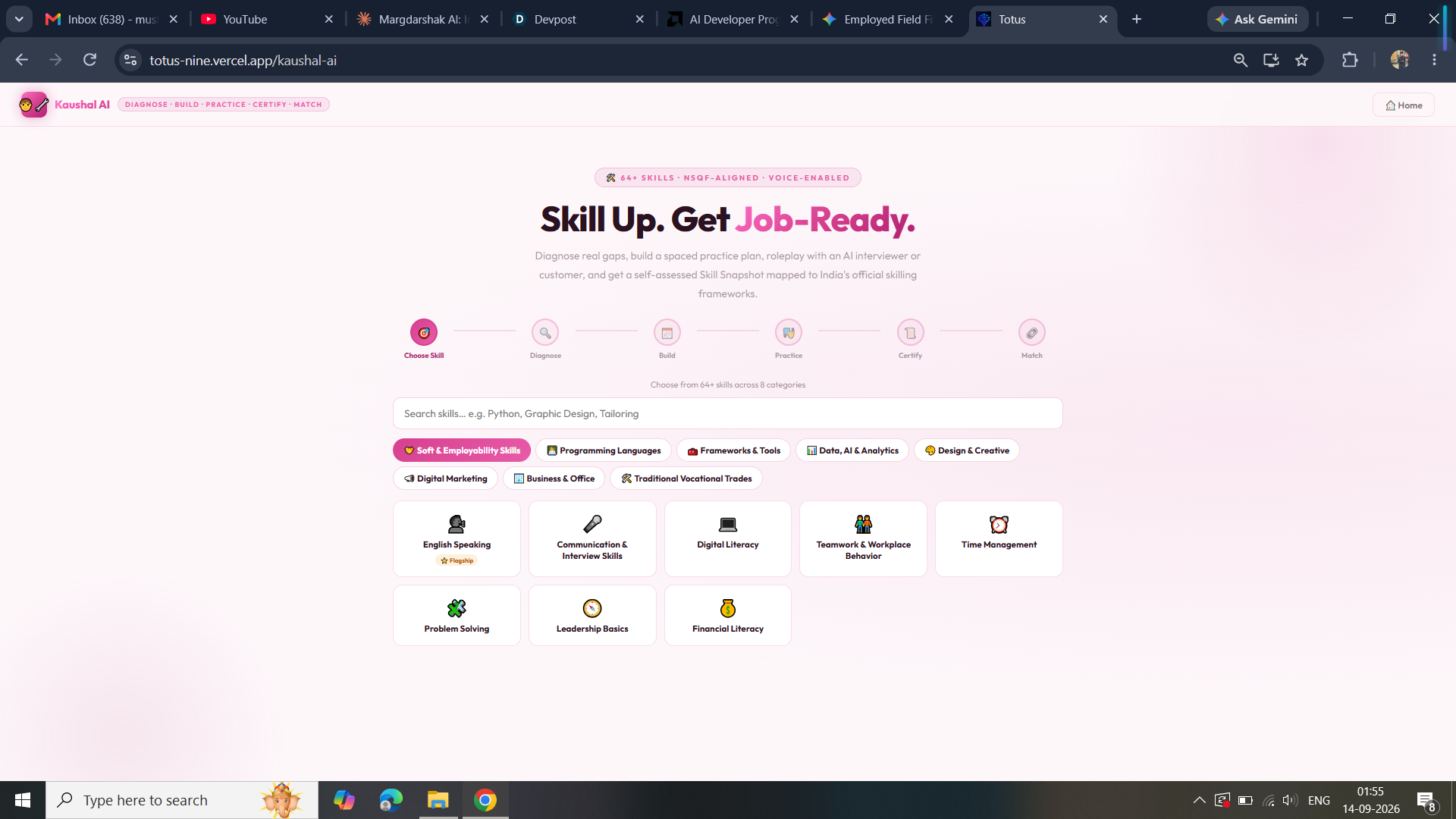
Skill Up. Get Job-Ready. — 64+ NSQF-aligned skills with AI roleplay practice.
-
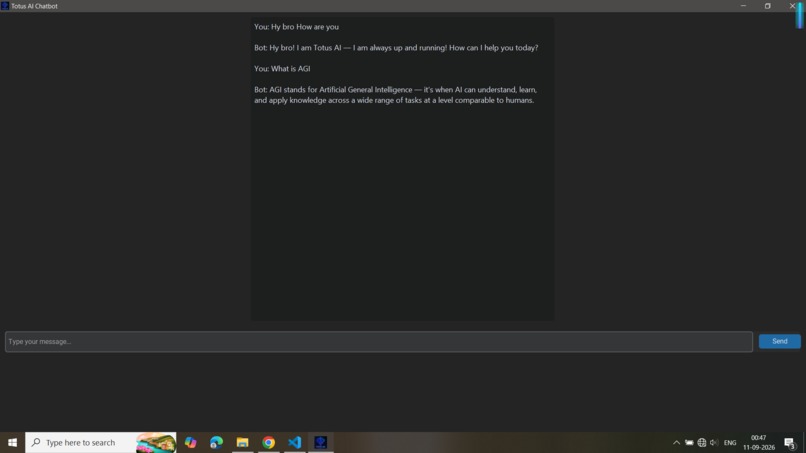
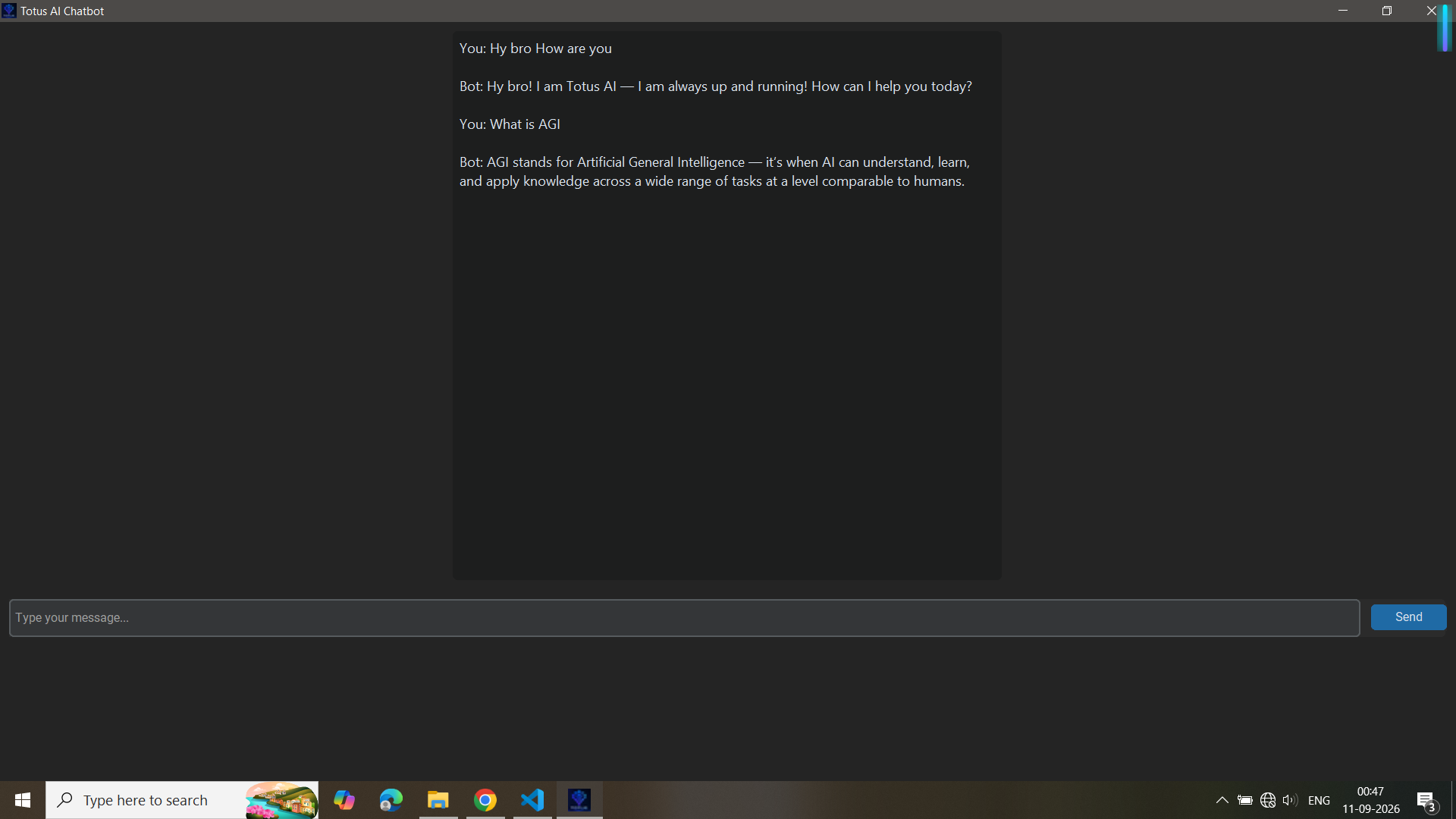
Totus AI running fully offline on a fine-tuned local model — no internet required.
-
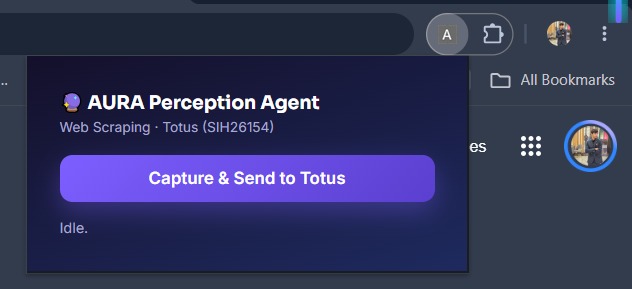
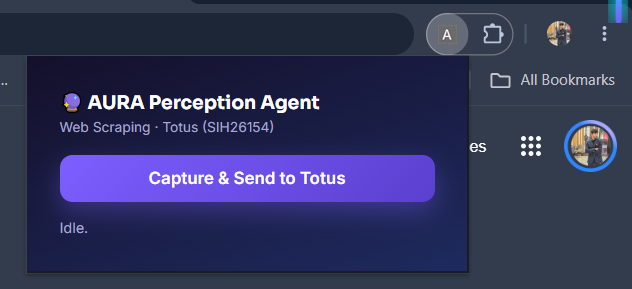
The Totus browser extension — capture any webpage and send it straight into the AI pipeline.
-
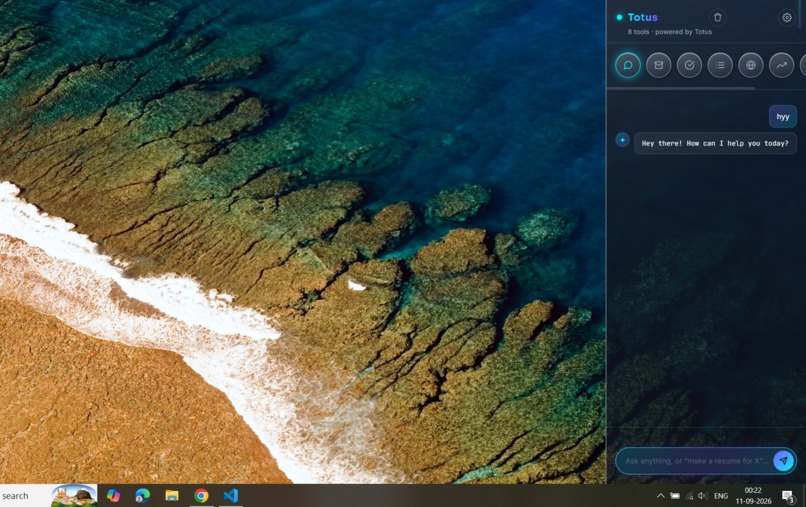
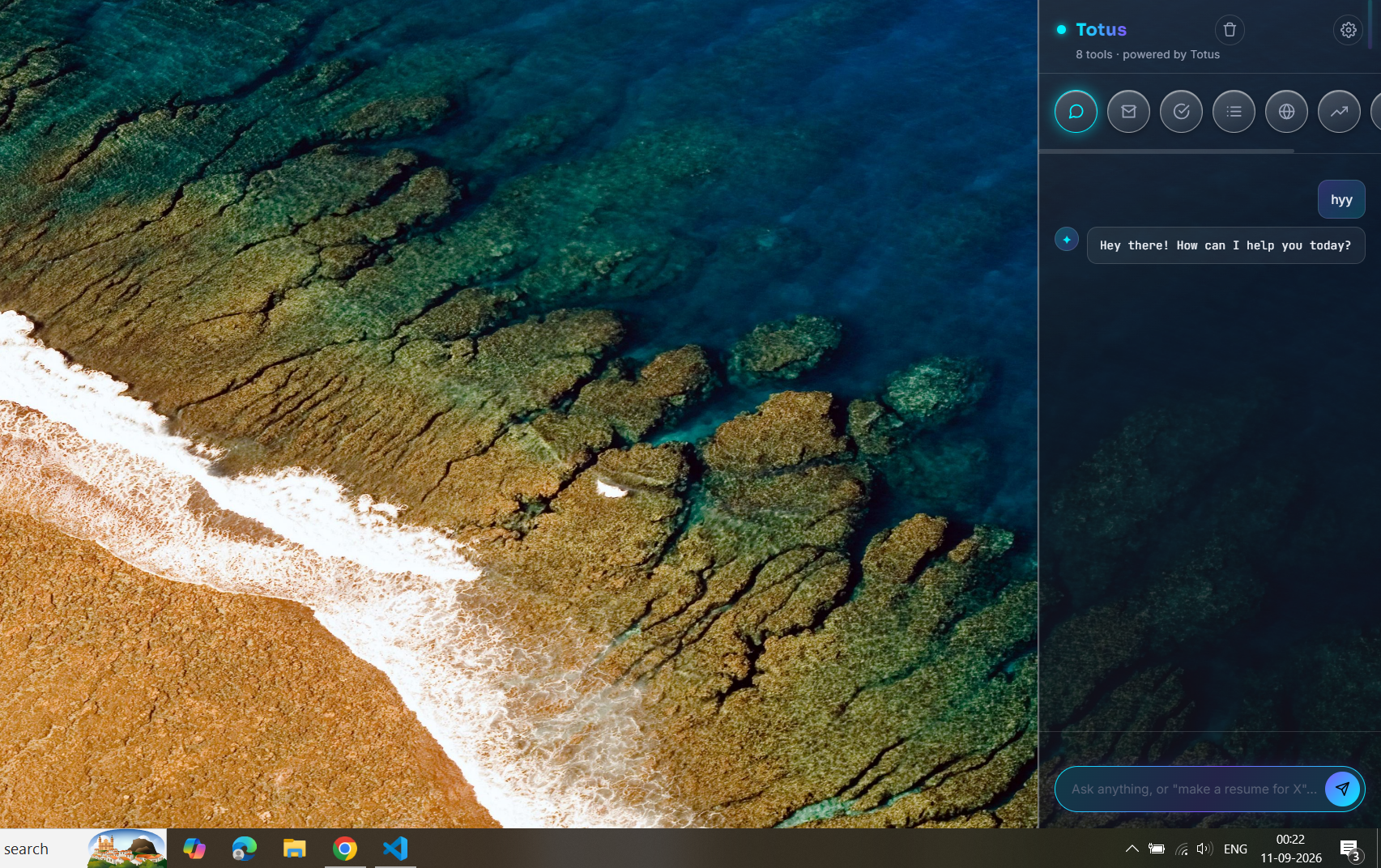
The Totus widget — drop AI assistance into any website with one click.
Inspiration
We're a solo indie developer and student, and like most students, we were drowning in subscriptions — one AI tool for essays, another for slides, another for resumes, another for coding help. Every tool was good at exactly one thing and terrible at remembering anything about us across the others.
The real spark came from watching how unevenly good AI actually reaches people. A student in Tier-1 Delhi and a student in a Tier-3 town have access to the same internet, but not the same usable AI — most tools assume fluent English, assume you already know what you're weak at, and assume a laptop with a stable connection. We wanted to build one platform that didn't make those assumptions: something that could diagnose a student's actual gaps, plan around them, and talk back in their own language — and then not stop there, but also help that same student build a resume, make a PPT, or grow a YouTube channel, all without leaving the site.
That's how Totus was born — and it kept growing until it became a 22+ tool AI ecosystem.
What it does
Totus is a single platform where a student, creator, or early founder can go from "I don't know where to start" to a finished output — without ever switching tabs:
Margdarshak AI — an adaptive, two-phase diagnostic quiz that traces a wrong answer back to the root-cause concept the student actually needs to revisit, then builds a study plan with spaced-repetition revision baked in, and delivers career guidance by voice, in 10 Indian languages (Hindi, Hinglish, Bengali, Tamil, Telugu, Marathi, Gujarati, Punjabi, Kannada, English). Kaushal AI — the employability layer: 64+ skills across soft skills, coding, design, and vocational trades, mapped to India's official NSQF framework, with AI roleplay practice (mock interviews, difficult customers) and an objectively measured English-speaking assessment (words-per-minute, filler words, CEFR level — not just an AI guess). A browser extension + embeddable widget — capture any webpage and instantly turn it into reports, PPTs, or graphs, so the AI travels with you instead of living only on one tab. An offline desktop chatbot — a local, privacy-first assistant that runs entirely on-device, no internet dependency. The rest of the ecosystem — PPT Maker, PDF Maker, ResumeX, Study Planner, Content Studio, Code Helper, Grammar Studio, Data Structurer, Scheme Finder, and more — 22 tools total, one design language, one product philosophy.
How we built it
Frontend: React, deployed on Vercel, with a hand-built liquid-glass design system iterated through several branding passes before settling on the current identity. Voice: entirely free, on-device browser APIs (Web Speech API) for speech-to-text input and text-to-speech output — no extra API cost per user, which matters when your users are price-sensitive students. Fine-tuned models: we fine-tuned Qwen3-4B and DeepSeek-R1 using PEFT/LoRA on a 650+ example custom dataset in Colab, converted them to GGUF via llama.cpp, and published them to HuggingFace. Offline chatbot: a Tauri v2 desktop app running the fine-tuned Qwen3-4B model fully locally via a llama-server sidecar — no cloud round-trip, no data leaving the device. Browser extension + widget: a lightweight capture layer that scrapes a webpage and feeds it straight into our content-transformation pipeline, so any tab becomes a source document.
Challenges we ran into
Being a team of one. Every architecture decision, every design pass, every bug — there's no one else to hand it to. Losing the desktop app entirely. A laptop reset wiped the original desktop project with no backup — no GitHub, nothing. Rebuilding it from scratch taught us to never treat "it's just a side project" as a reason to skip version control. Rebranding mid-build, more than once. The product went through a full identity change (including a 23-page file rename) while still shipping new tools — keeping momentum while the ground kept shifting under the brand was harder than any single feature. Making free voice actually feel premium. Browser speech APIs are inconsistent across devices and accents. Getting Hinglish and regional-language recognition reliable enough to trust for something as high-stakes as a diagnostic quiz took real tuning.
Accomplishments that we're proud of
Shipping a 22-tool live product, solo, not a hackathon-only prototype. Getting an offline desktop chatbot running fully on-device with a fine-tuned model — no internet required. Building a working browser extension + embeddable widget that captures any webpage and feeds it into an AI pipeline. Delivering voice input and output in 10 Indian languages, at zero marginal API cost. Fine-tuning and publishing our own models (Qwen3-4B, DeepSeek-R1) instead of only renting inference.
What we learned
That genuinely inclusive AI (regional language, voice-first, free-tier-friendly) isn't a feature you bolt on at the end — it has to shape the product from day one. We also learned a lot end-to-end about fine-tuning small models — dataset curation, LoRA training, GGUF conversion — and about how much design discipline it takes to keep a 22-tool product feeling like one product instead of 22 disconnected ones.
What's next for Totus
Our next chapter is an autonomous agent built toward AGI — not a bigger model chasing more compute, but the opposite: intelligence engineered to run on the least hardware possible while staying as close to human-level reasoning as we can get it. The goal is an agent that can take an idea from spec to shipped, working software on its own — writing the code, running its own security checks, testing itself, and even marketing what it builds — with an efficiency-first architecture that makes it deployable anywhere, not just on datacenter-scale GPUs. We believe the next real leap in AGI won't come from the model with the most parameters — it'll come from the one that does the most with the least, and that's what we're building toward.


Log in or sign up for Devpost to join the conversation.