Inspiration
The idea for Toss emerged from both environmental concerns and personal experience. Modern consumption patterns encourage individuals to purchase items that are often used only once or a few times, such as moving boxes, tools, cleaning machines, or seasonal decorations. These objects frequently spend most of their lifespan unused, occupying storage space or eventually becoming waste. This pattern contributes not only to material waste but also to the continuous demand for manufacturing new products that already exist in abundance. As an international student living in a limited space and navigating the financial constraints that often accompany temporary living situations, I have repeatedly encountered the inefficiency of this system. Purchasing items for short-term use is often impractical, yet reliable ways to borrow or share them within a community are limited. This experience highlighted an opportunity to rethink ownership by shifting the focus from individual possession to collective access.
What Toss Does
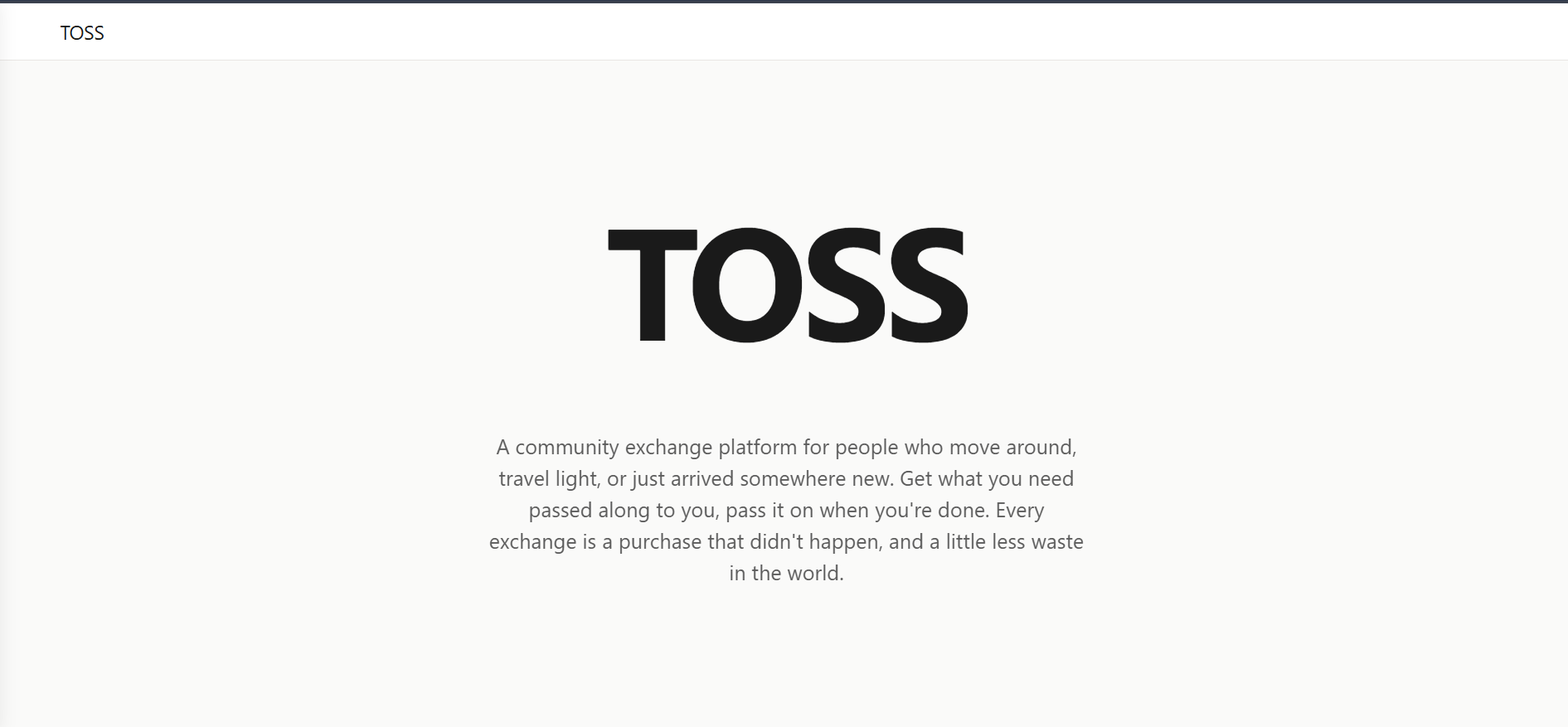
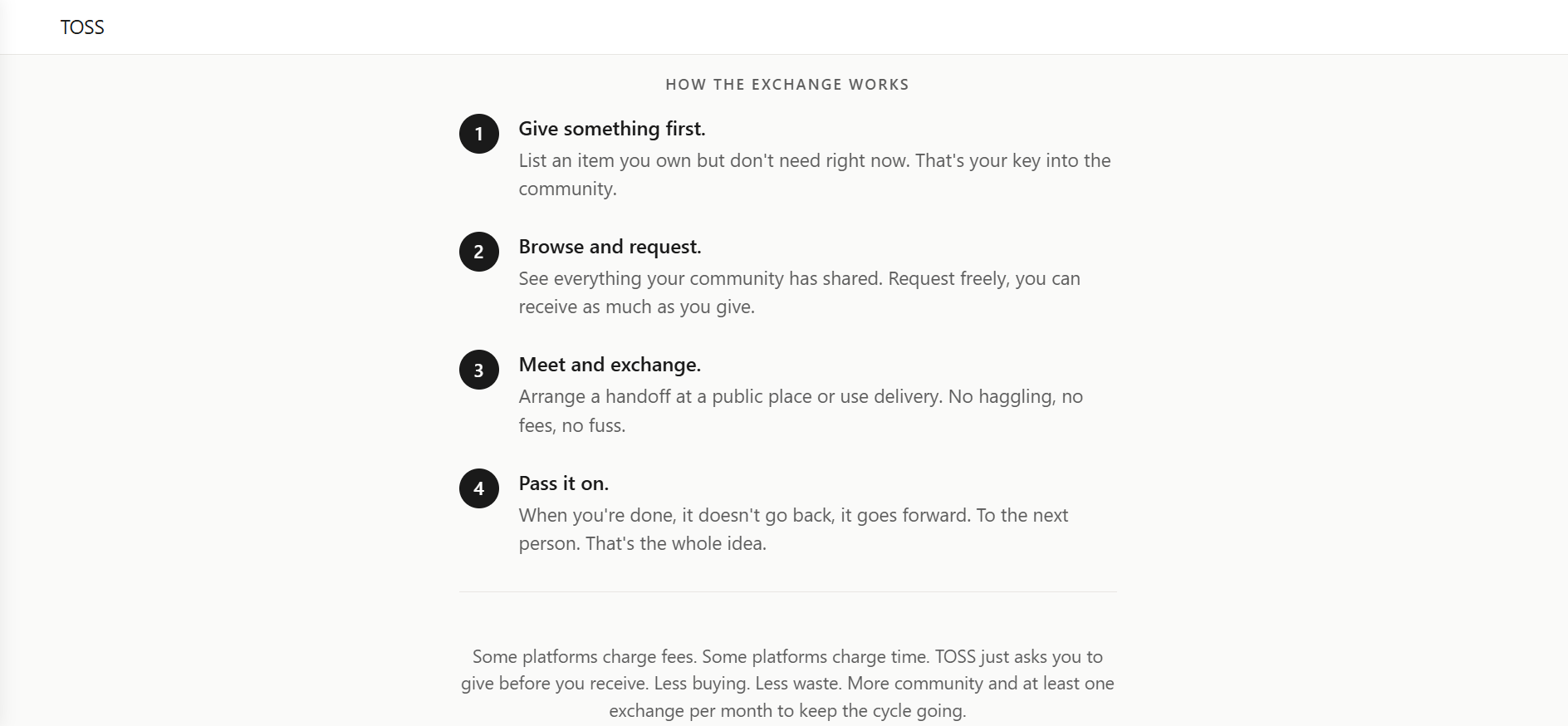
Toss is designed as a trusted community platform that enables the circulation of rarely used items through a network of users rather than through traditional ownership. Instead of encouraging individuals to buy items they will seldom use, the platform allows users to post items they are willing to share and request items they need through a wishlist system. What distinguishes Toss from simple peer-to-peer borrowing systems is its network-based exchange model. Items do not necessarily return to their original owner; rather, they continue to move through the community as different users contribute items back into the system. In this way, the platform creates a dynamic web of exchange where access replaces ownership as the primary mechanism of use.
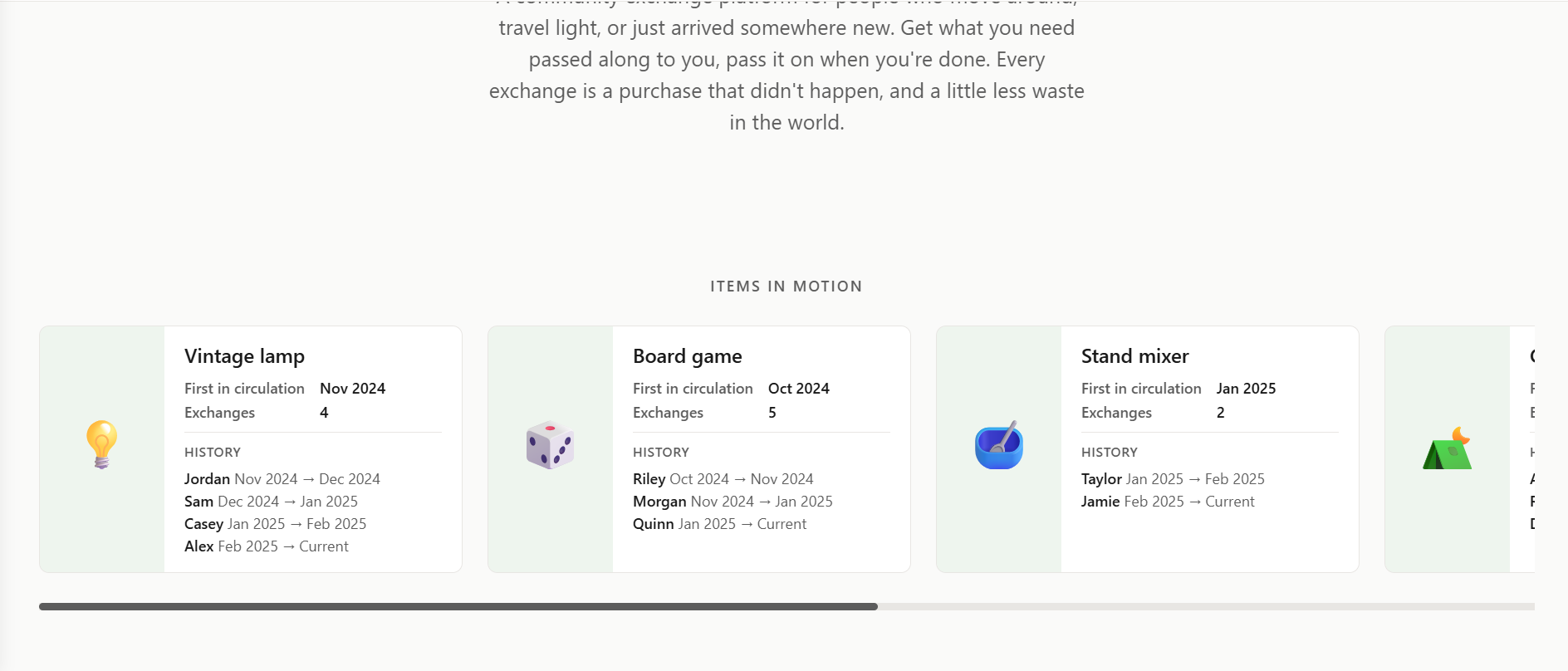
To support trust and accountability within this network, each item includes a visible history that records where it has been, how long it has been used, and which users have interacted with it. This transparency helps build confidence among participants while encouraging responsible use of shared resources. By circulating items such as tools, holiday decorations, costumes, moving boxes, or household equipment, Toss helps reduce unnecessary consumption, lower individual expenses, and alleviate the need for storage. The platform therefore functions not only as a tool for resource sharing but also as a system that promotes environmental sustainability and collective responsibility. It is particularly beneficial for students, newcomers, and renters who often face temporary living arrangements and limited space but still require access to a wide variety of practical items.
What’s Next for Toss
Looking forward, the development of Toss could expand the concept of community circles to include a wider range of local networks beyond student populations. While launching within a university community provides a strong foundation of trust and identity verification, the model could be adapted to other contexts such as apartment buildings, workplaces, studios, or neighbourhood associations. Expanding in this way would preserve the trust-based structure of the platform while allowing more communities to benefit from shared access to resources.
In addition, if the platform were to receive further funding and development support, Toss could incorporate integrated delivery services within the application itself. Rather than requiring users to coordinate meeting locations, the platform could facilitate item transportation through a dedicated delivery system, reducing logistical barriers and making participation more convenient. Strengthening identity verification mechanisms would also be an important step in the platform’s evolution, ensuring that participants remain accountable and that exchanges occur within a secure and trustworthy environment. Through these developments, Toss could gradually evolve from a localized sharing initiative into a scalable system that reimagines how communities access and circulate everyday resources.

Log in or sign up for Devpost to join the conversation.