Inspiration
People don’t read Terms of Service—not because they don’t care, but because they can’t understand them. These documents hide critical details about data usage, tracking, and user rights. We wanted to make that invisible risk visible.
What it does
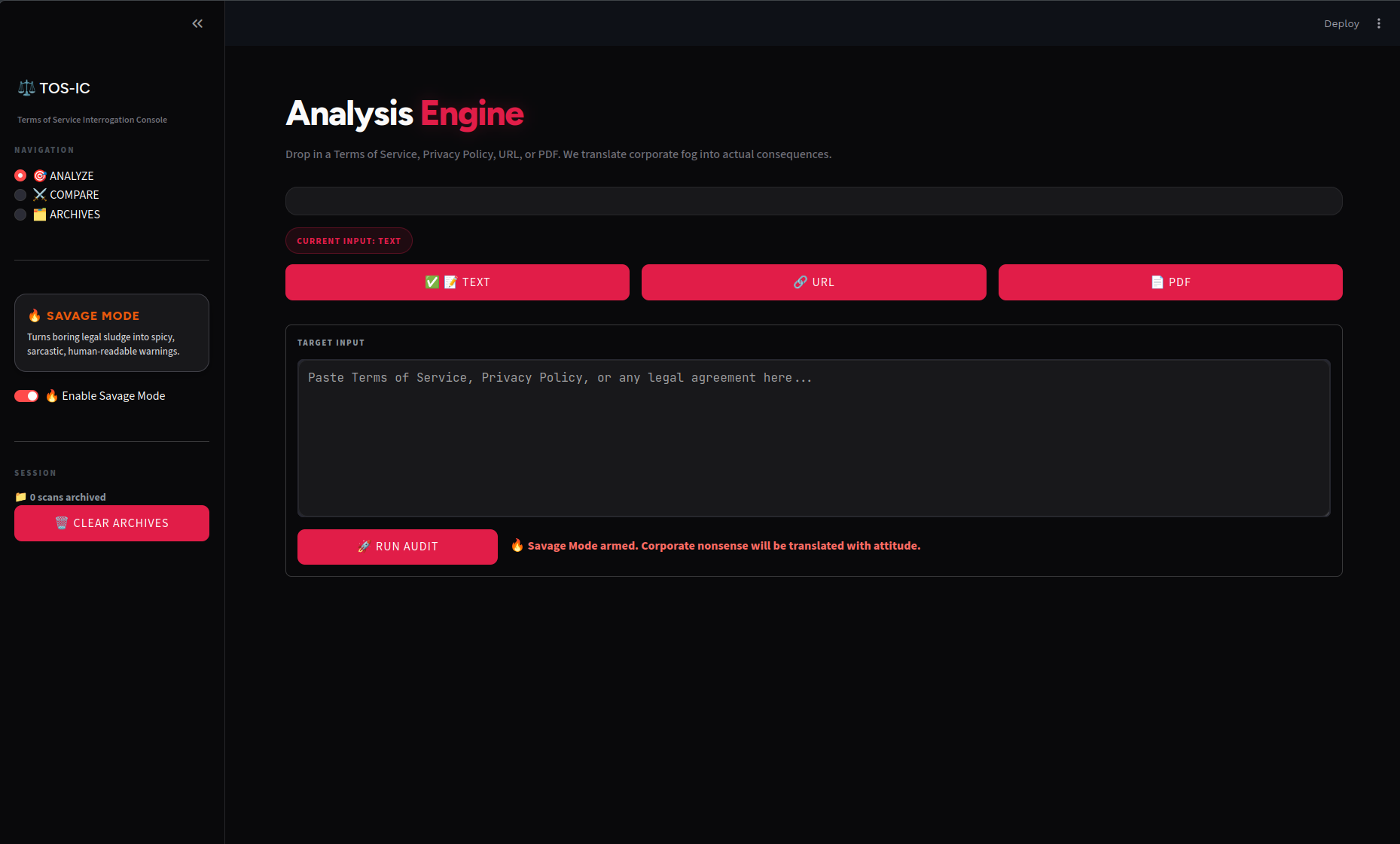
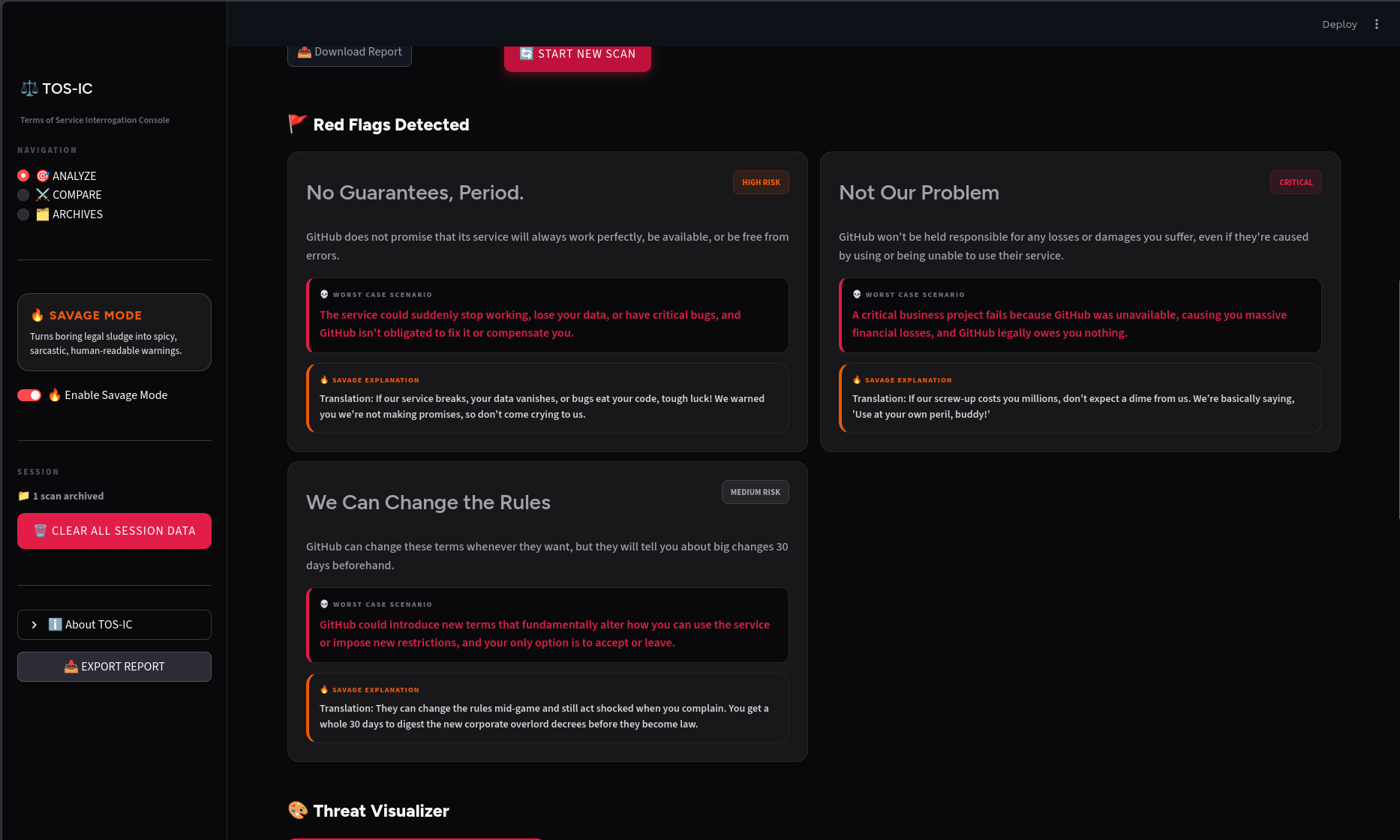
TOS-ic analyzes Terms of Service using AI and converts them into:
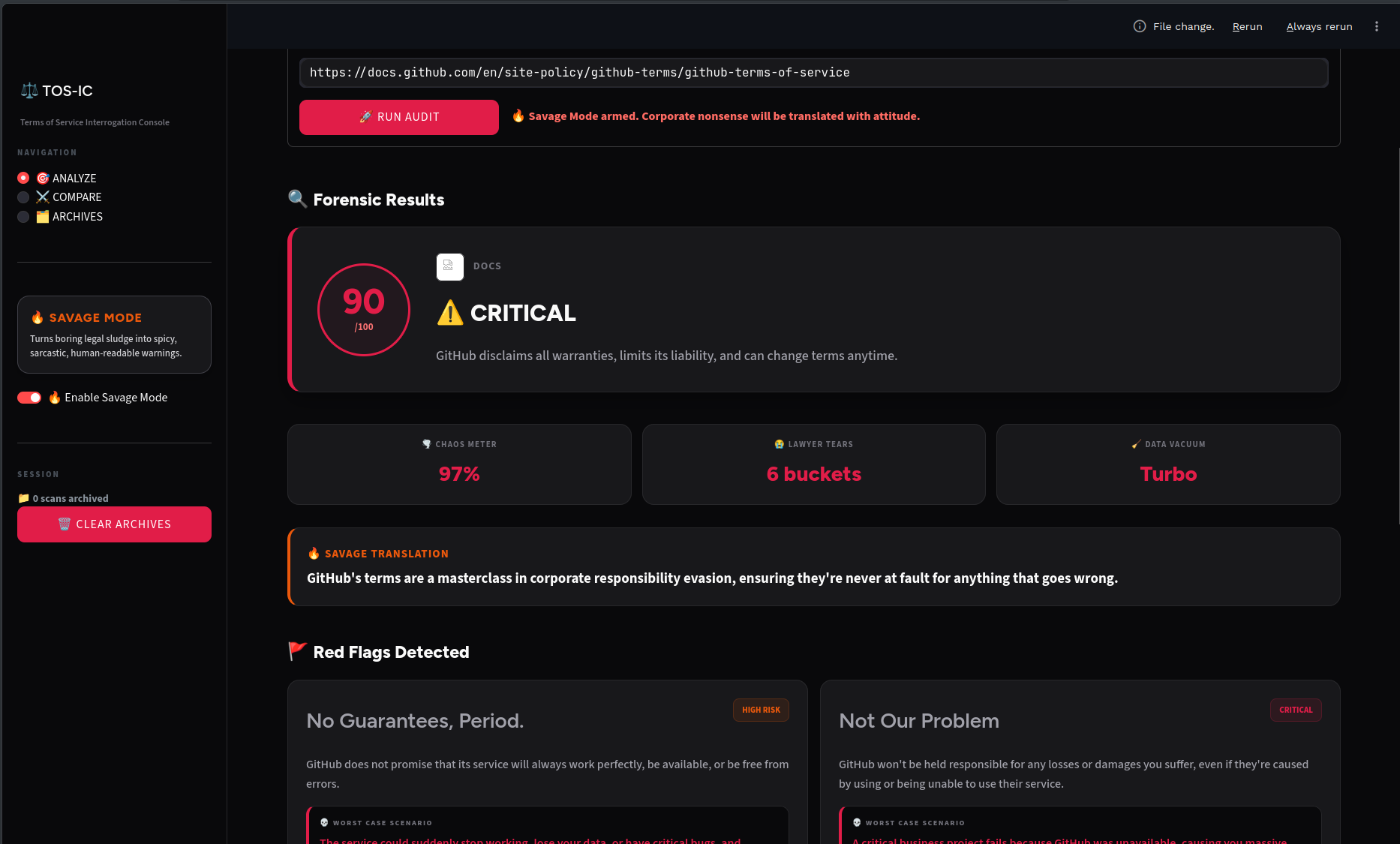
- A clear Risk Score (0–100)
- Simple summary of what you agreed to
- Key red flags explained in plain English
- Real-world worst-case scenarios
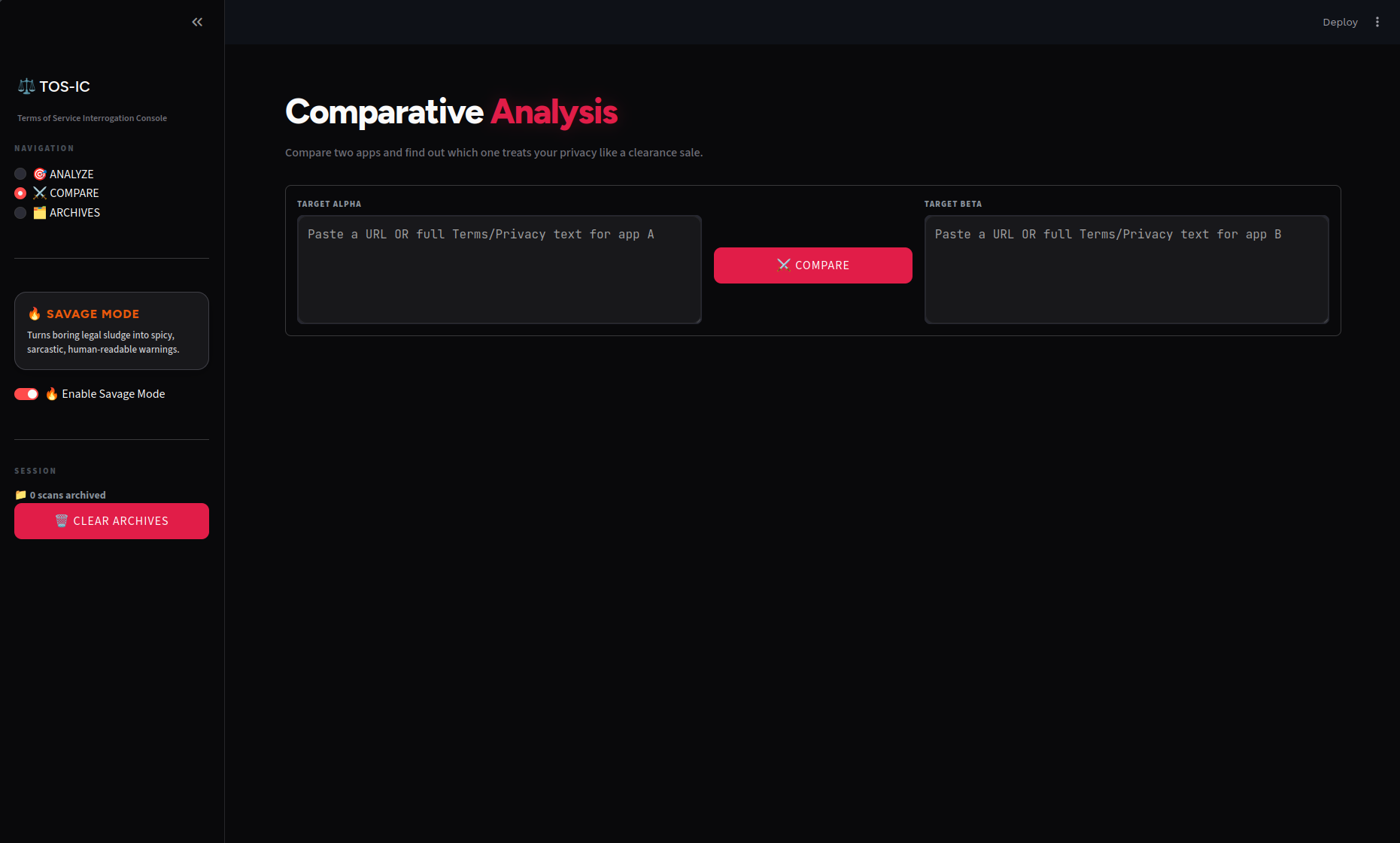
- ⚔️ Side-by-side comparison of two platforms
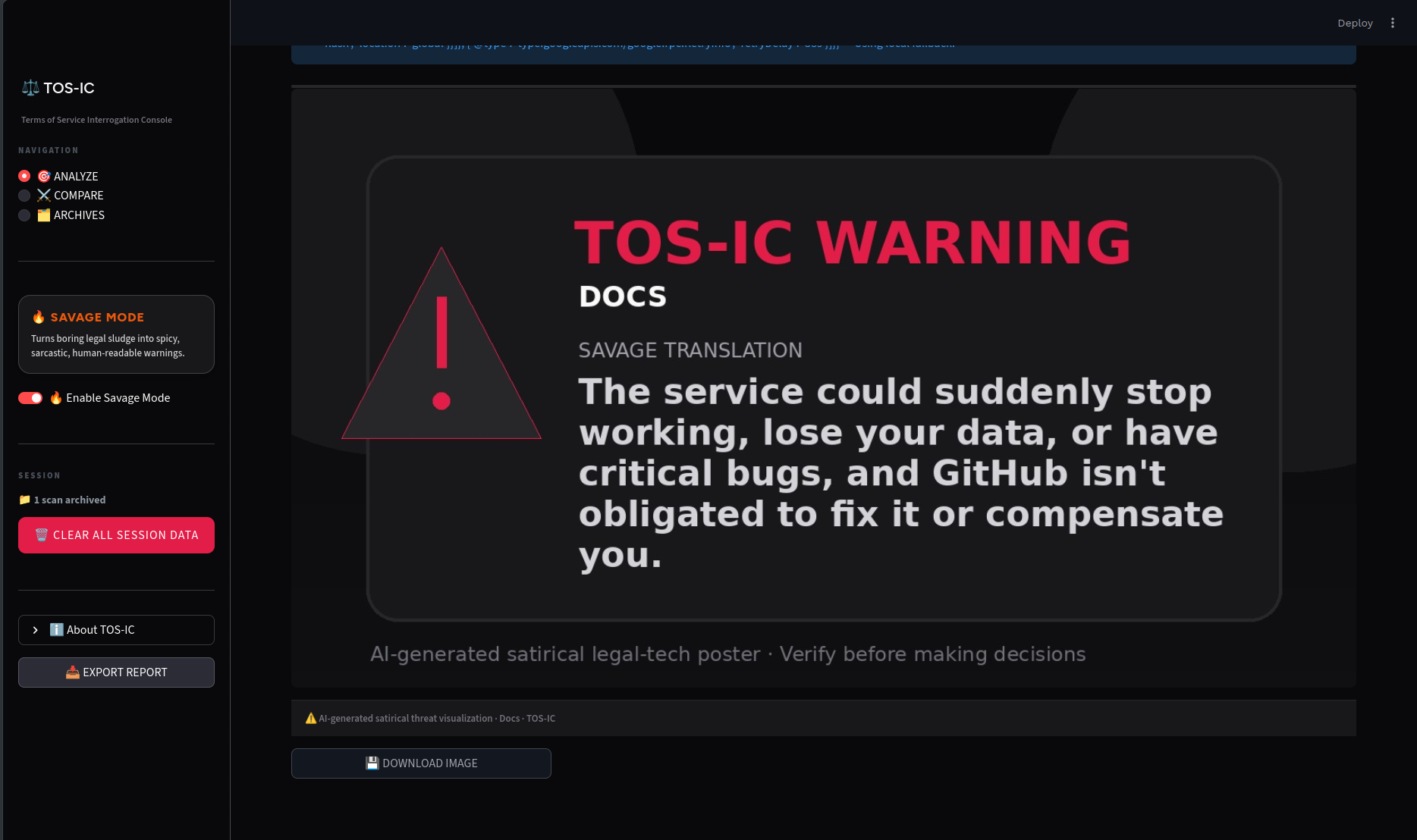
- 🎨 Visual memes to make risks instantly understandable
How we built it
We used Streamlit for the frontend and Google Gemini API for legal text analysis.
Input is supported via text, PDF, or URL, processed using BeautifulSoup and PyPDF.
We designed structured prompts to force clean JSON outputs, which are then rendered into a visual dashboard with custom CSS.
Challenges we ran into
- AI responses were too long and inconsistent
- Legal jargon made outputs hard to understand
- JSON formatting often broke
- Streamlit UI limitations for advanced design
Accomplishments that we're proud of
- Converting complex legal language into clear, actionable insights
- Building a compare mode that highlights risk differences instantly
- Creating a meme generator to visualize worst-case scenarios
- Designing a UI that feels interactive despite Streamlit constraints
What we learned
- Prompt engineering is critical for controlling AI behavior
- Simplicity in UX is more powerful than adding features
- Structured outputs (JSON) make AI far more reliable
- Presentation matters as much as functionality
What's next for TOS-ic
- Browser extension for real-time TOS warnings
- Risk history tracking for users
- Community-driven database of risky platforms
- More accurate and specialized legal analysis models



Log in or sign up for Devpost to join the conversation.