-
-
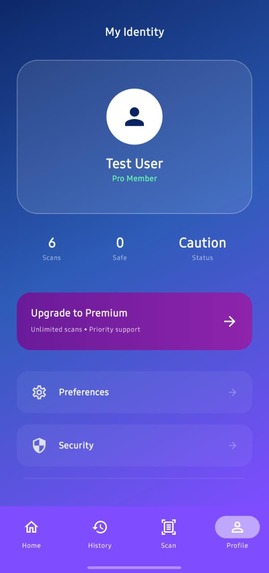
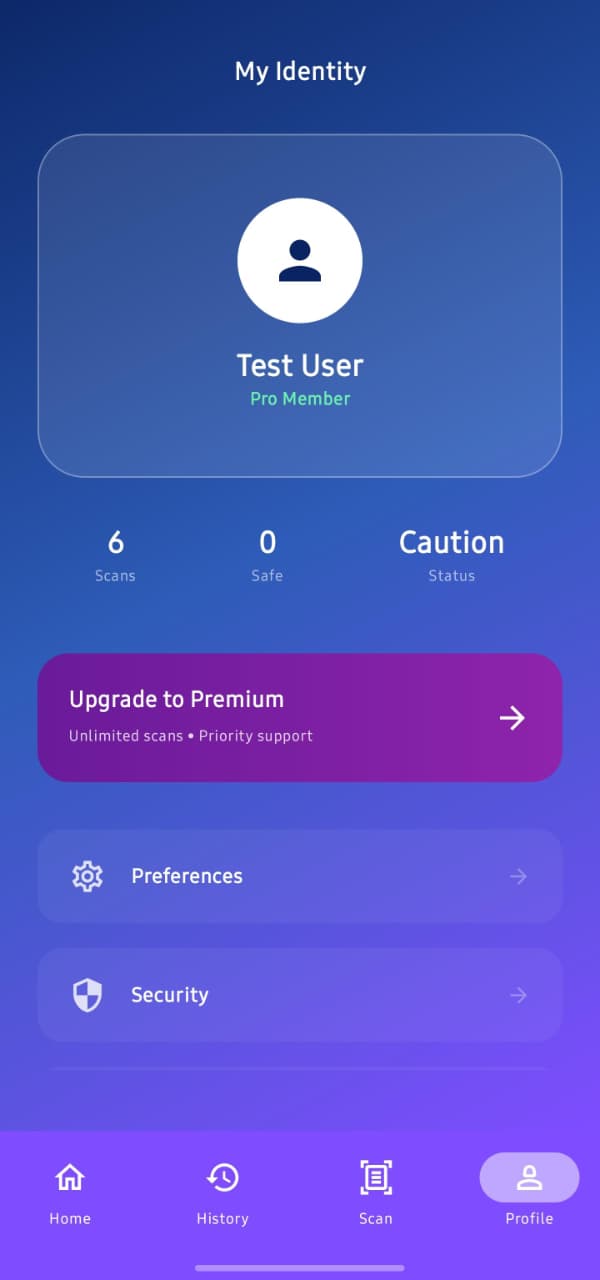
Profile Screen
-
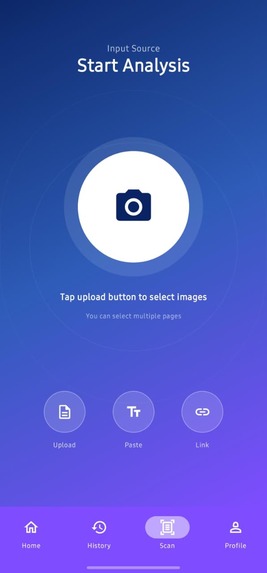
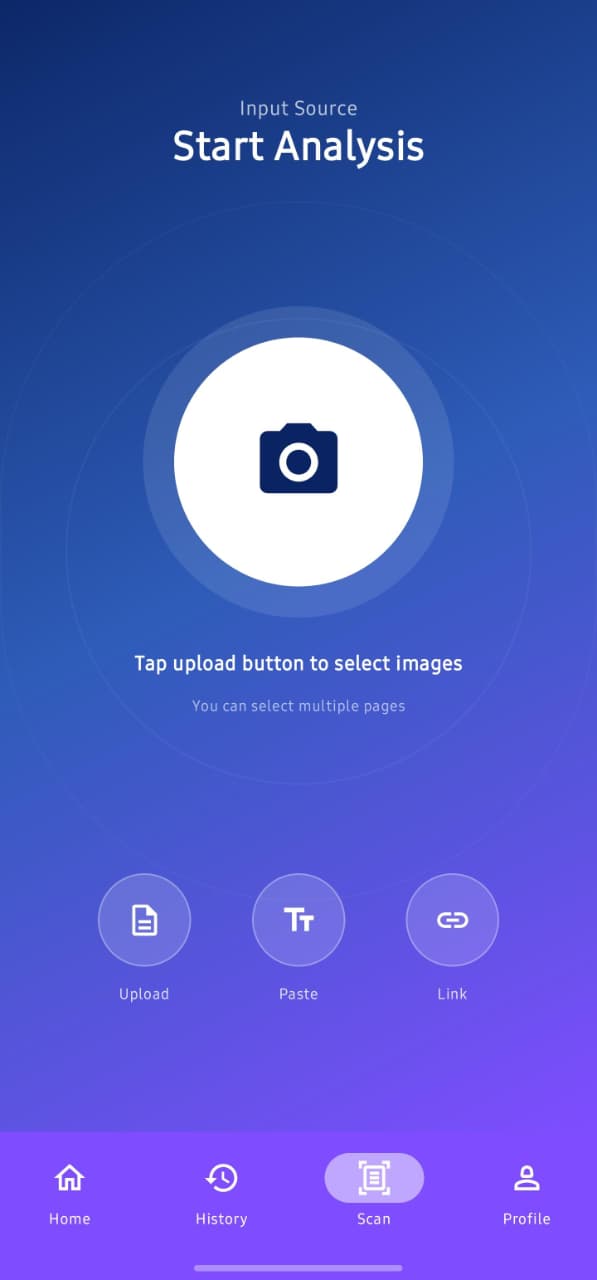
Scanning Options
-
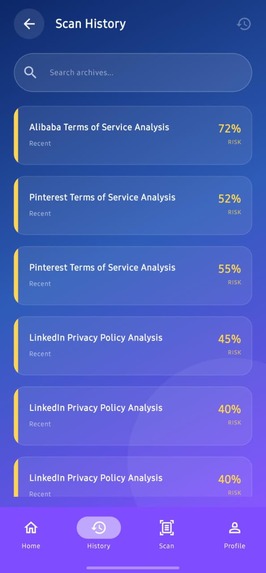
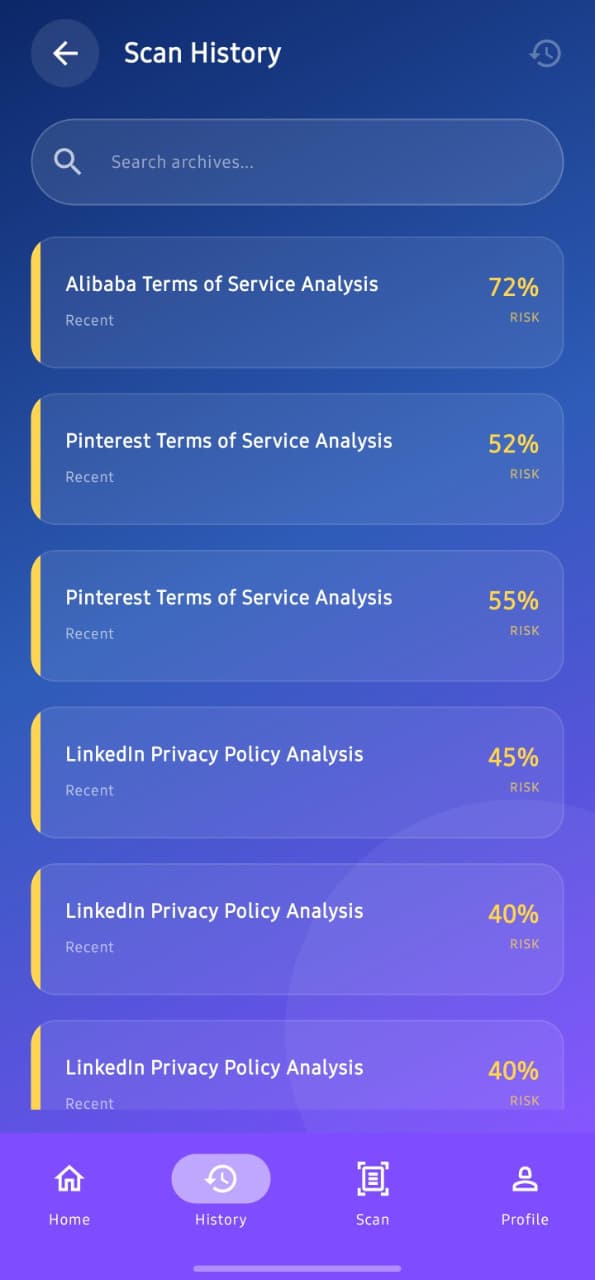
Recent Scans Screen
-
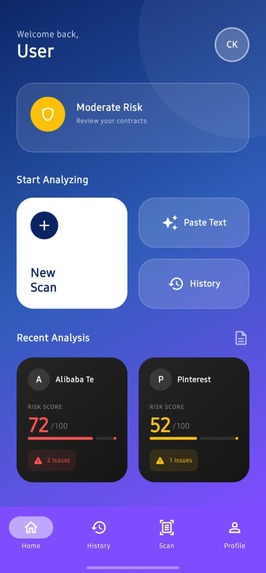
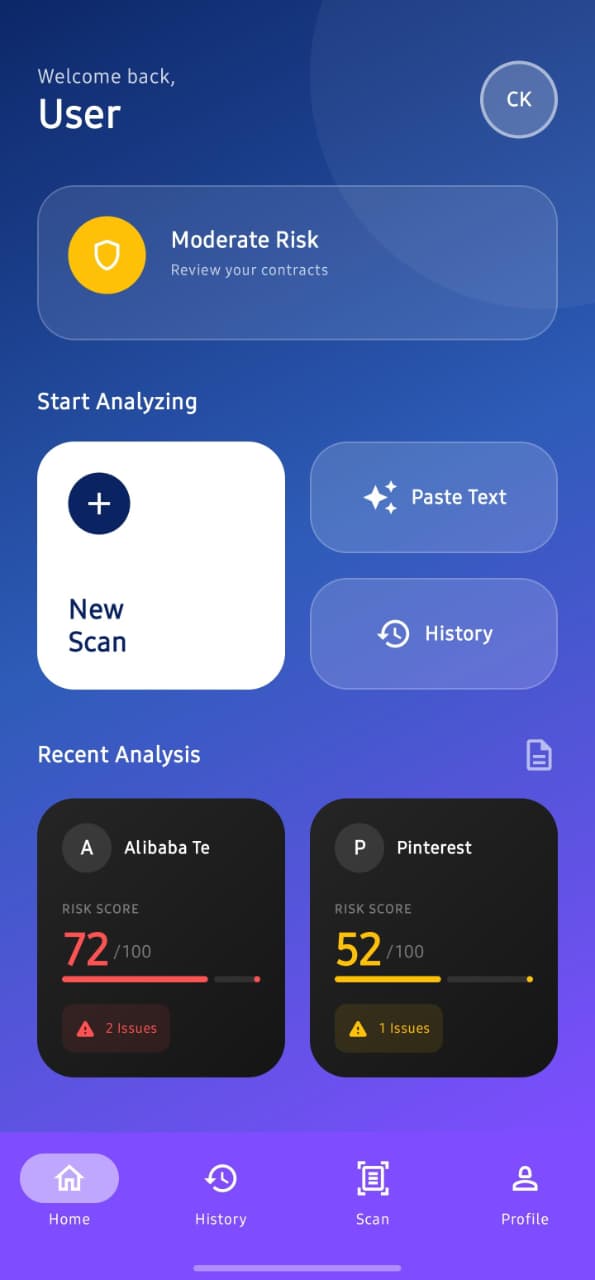
HomeScreen
Inspiration
The inspiration for this project came from a personal experience that made me question how much we really understand when we accept Terms and Conditions.
While registering on a job search platform (which I prefer not to disclose), I later discovered that my profile picture had appeared publicly on Google search results. I was surprised because I did not consciously remember agreeing to have my personal image made publicly accessible.
After reviewing the platform’s Terms and Conditions, I realized that the permission was included in the agreement — hidden inside long and complex legal text that most users, including myself, rarely read in full. This experience highlighted a common problem: users often give meaningful consent without truly understanding the consequences.
That moment inspired me to build a tool that helps people understand what they are actually agreeing to.
What it does
TOS.ai helps users understand Terms and Conditions by translating complex legal language into clear, human-readable explanations.
Instead of providing long summaries, the app focuses on:
- Highlighting high-risk clauses
- Explaining real-world consequences of agreements
- Making hidden permissions and limitations visible
The goal is to support informed decision-making, not to provide legal advice.
How we built it
The project was built using a simple but effective pipeline:
- Users paste Terms and Conditions text into the app.
- The text is sent to the Gemini API with a structured prompt.
- Gemini analyzes the document using long-context reasoning.
- The response is structured into risks, red flags, and plain-language explanations.
- Results are presented in a clean, card-based interface focused on clarity.
Gemini is used specifically for its ability to understand complex language and reason about consequences, rather than just summarizing text.
Challenges we ran into
One of the main challenges was controlling the quality of AI output. Early responses were too general and did not clearly explain consequences. This was solved by refining prompts to ask for specific risks, permissions, and outcomes.
Another challenge was ensuring the project remained ethical and responsible. Since legal documents are sensitive, the app avoids giving legal advice and instead focuses on awareness and understanding.
Balancing simplicity with usefulness was also challenging, as the app needed to deliver meaningful insights without overwhelming users.
Accomplishments that we're proud of
- Turning a real personal privacy issue into a functional AI-powered solution
- Successfully using Gemini to reason over long, complex legal documents
- Designing an interface that makes difficult information easy to understand
- Building a complete, demo-ready project within hackathon constraints
What we learned
Through this project, we learned that:
- Most consent issues come from lack of clarity, not lack of choice
- Large language models can be powerful tools for interpreting complex documents when prompted correctly
- Clear UX design is critical when presenting sensitive or important information
- Responsible AI design requires transparency and clear limitations
What's next for TOS.ai
Future improvements for TOS.ai include:
- Support for PDFs and screenshots using image understanding
- Clause-level highlighting with direct references to the source text
- Custom risk profiles based on user preferences
- Localization and support for multiple languages
The long-term goal is to help users make more informed decisions before clicking “I agree.”


Log in or sign up for Devpost to join the conversation.