-
-
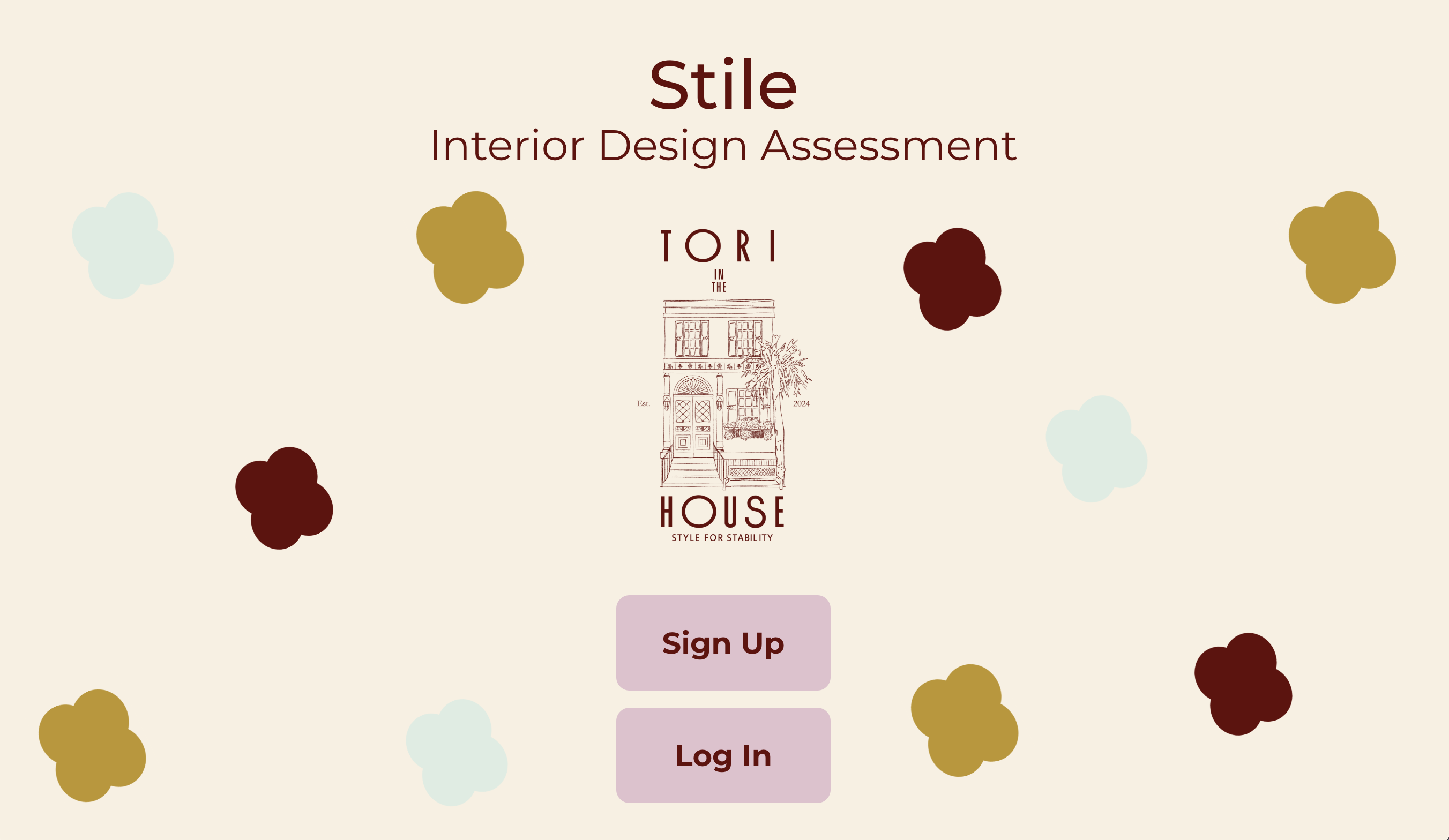
Landing Page
-
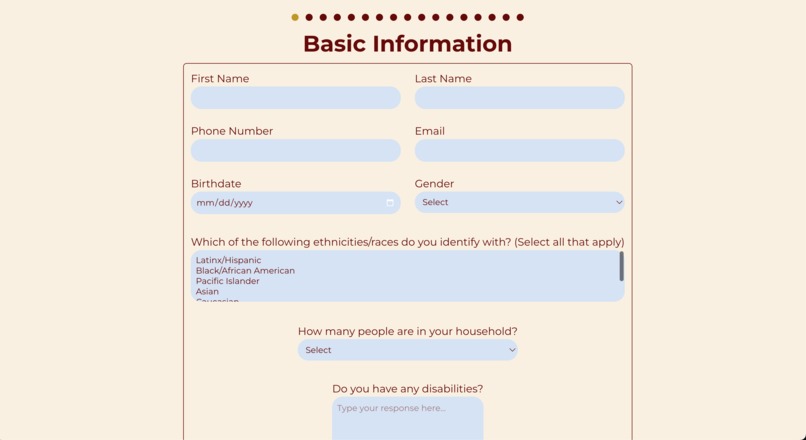
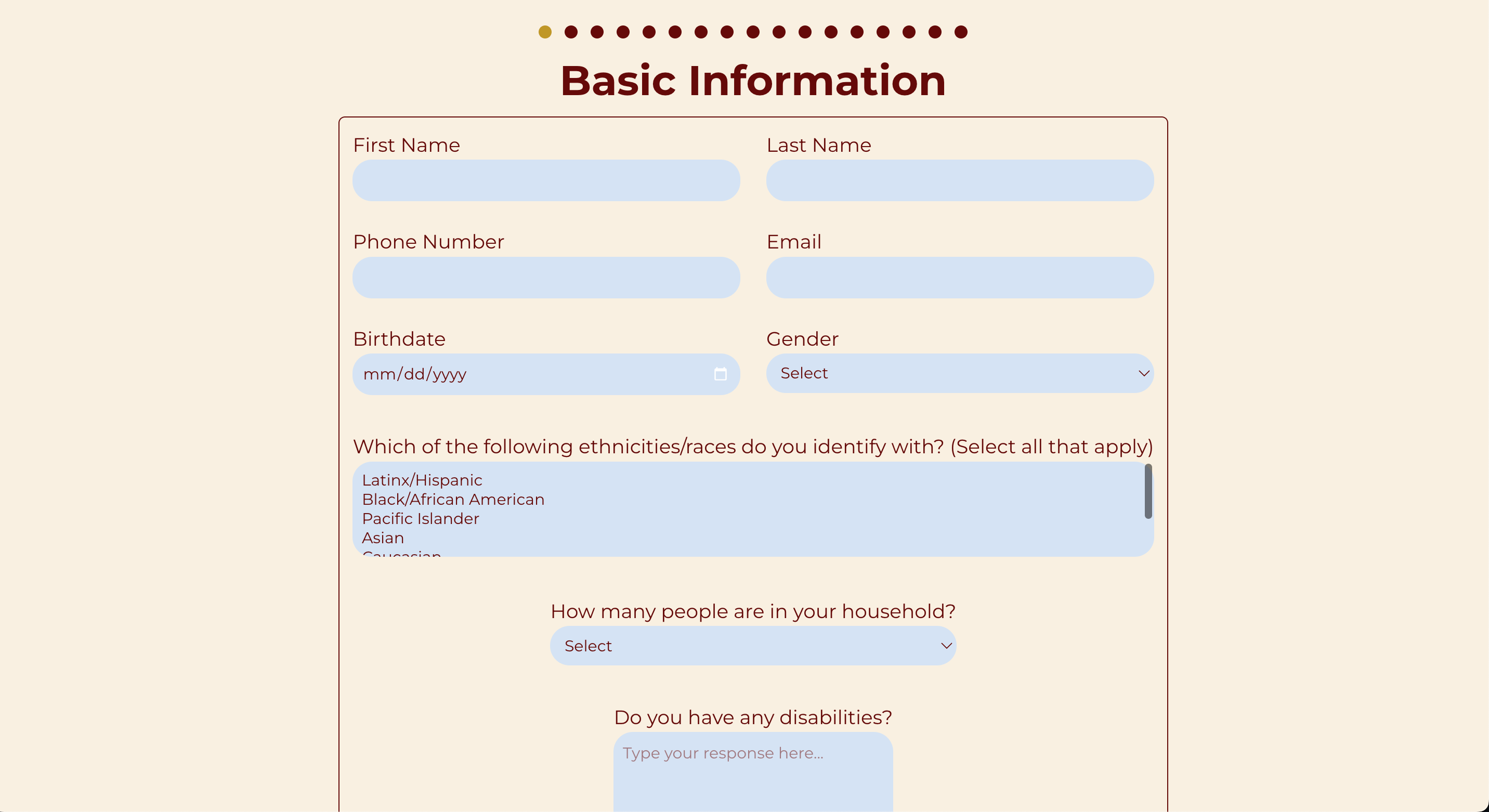
Basic Info
-
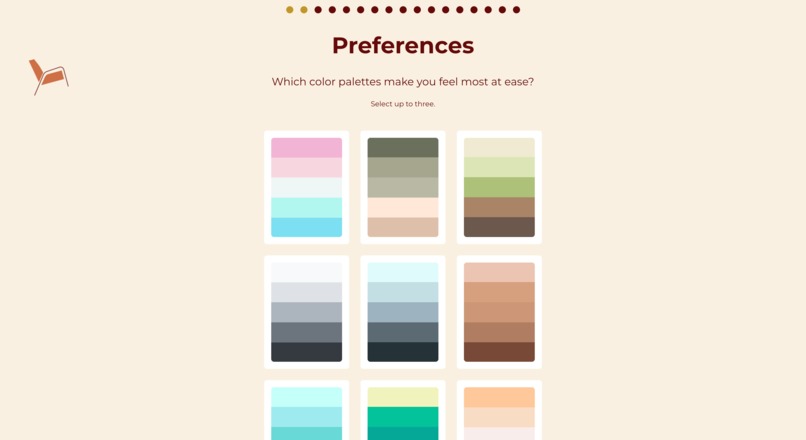
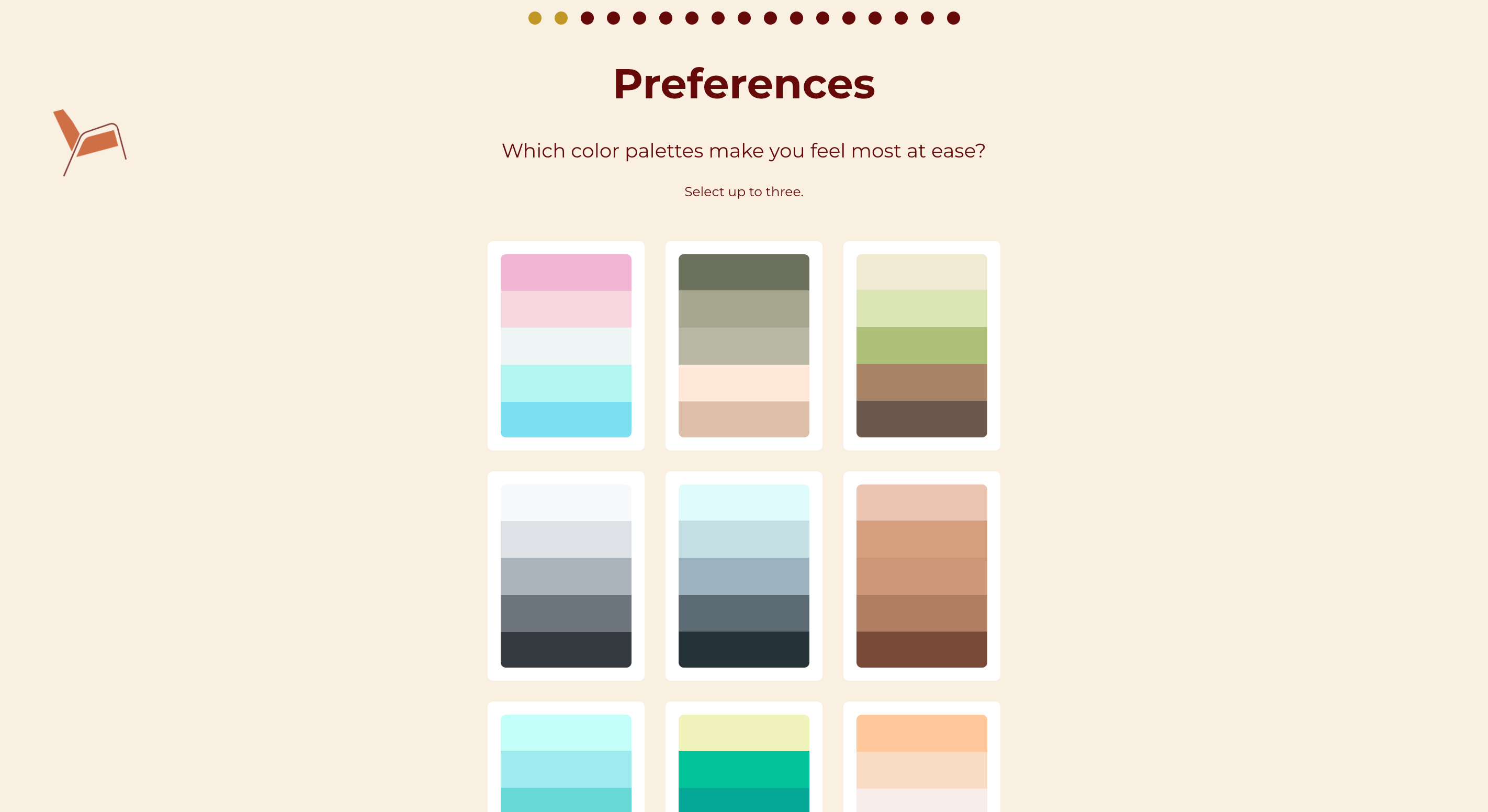
Color Palette Question
-
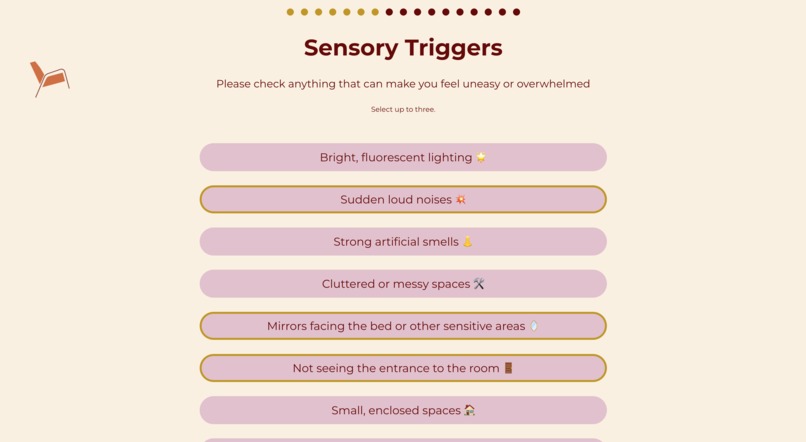
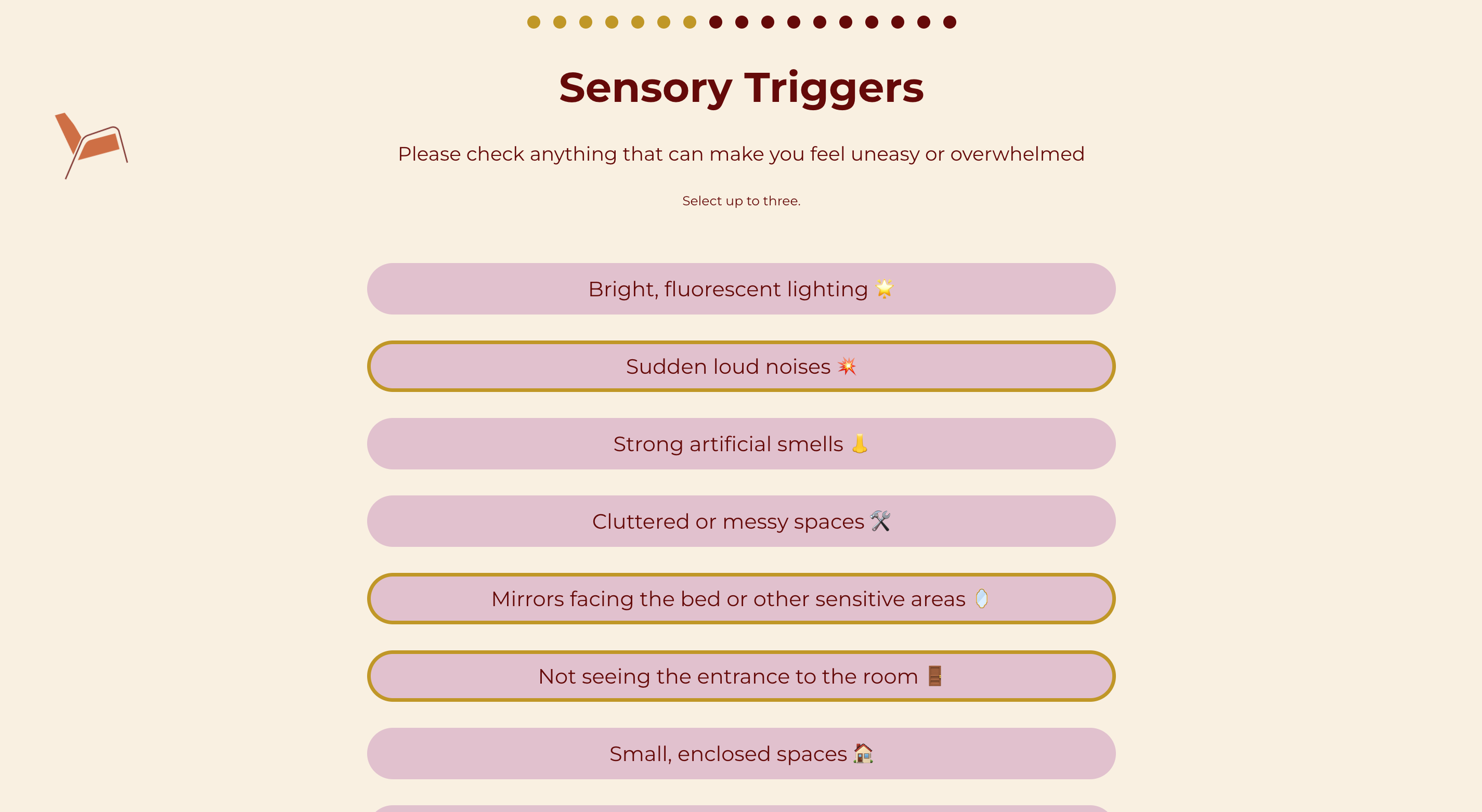
Sensory Triggers
-
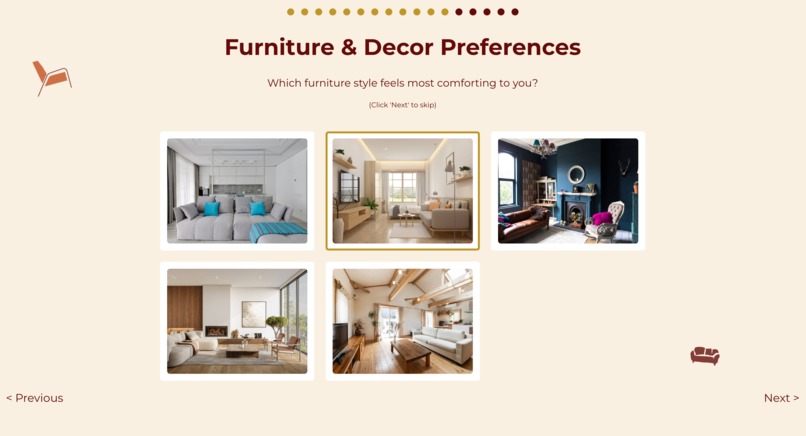
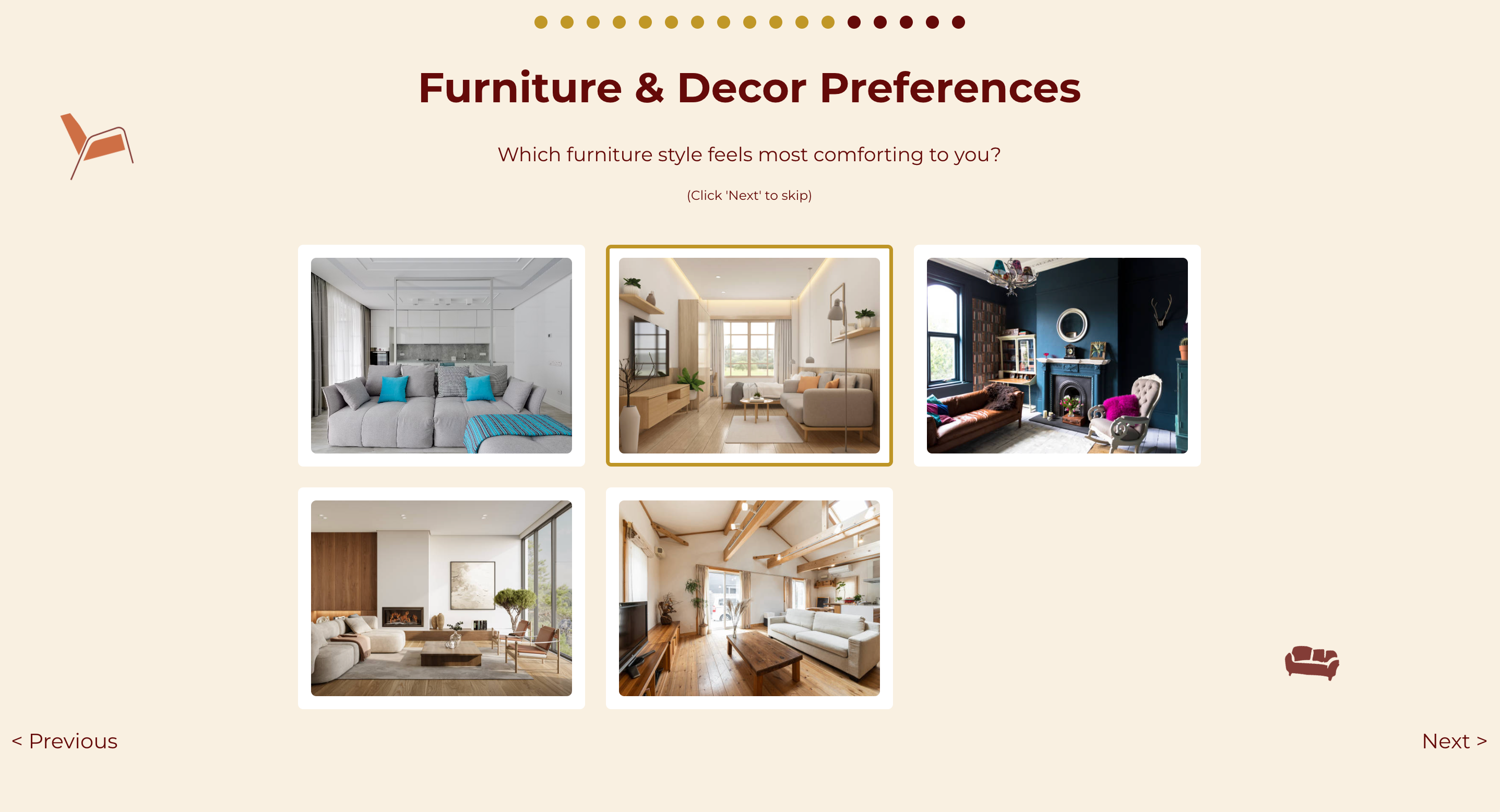
Furniture and Decor Prefernces
-
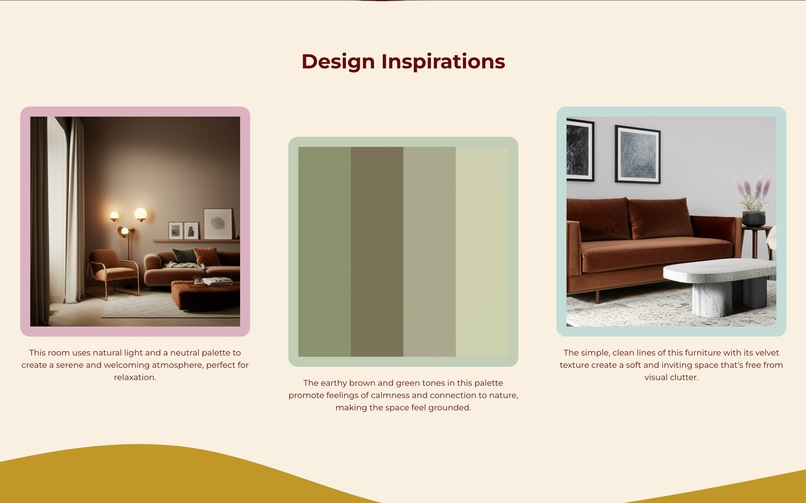
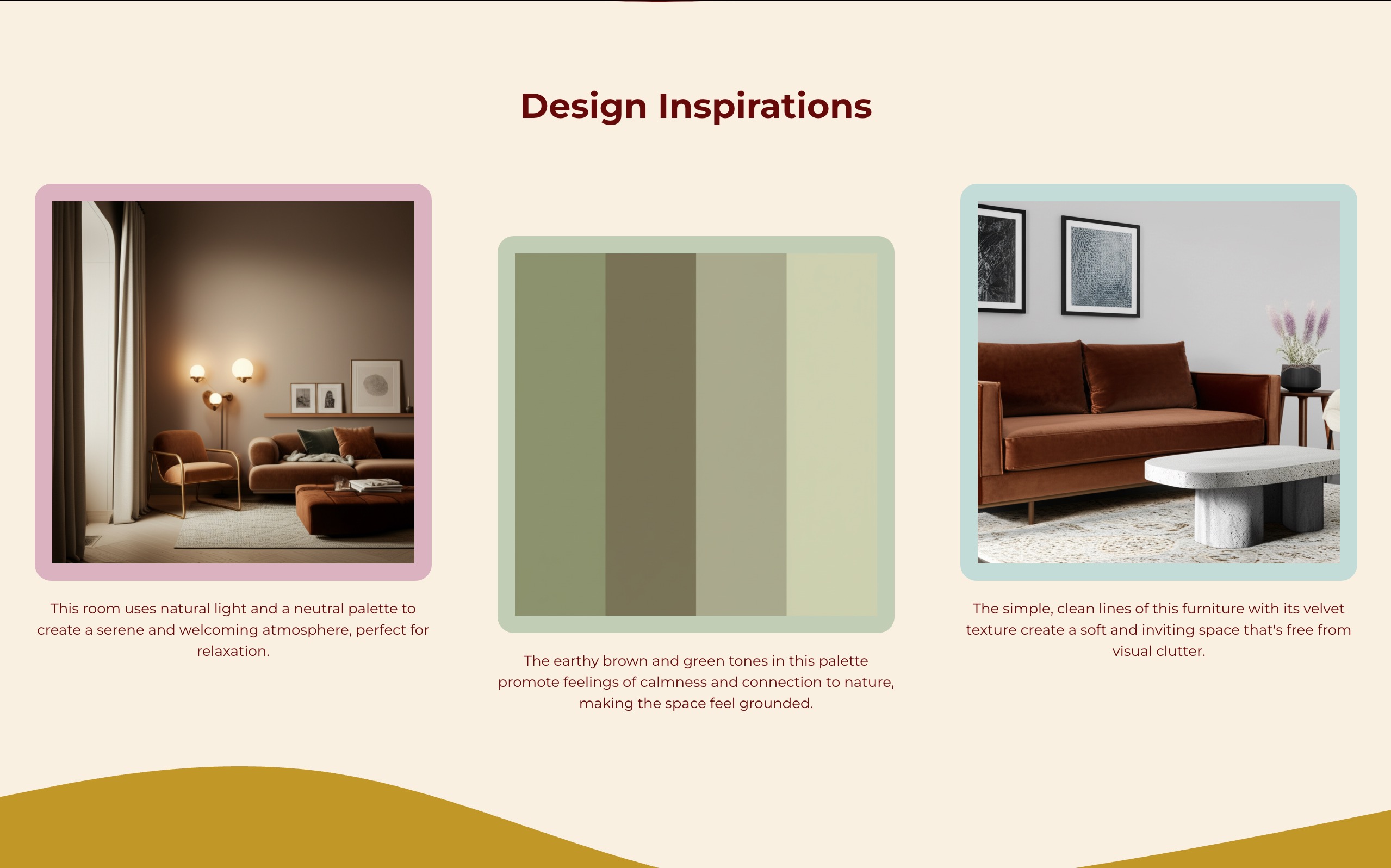
Results
-

Results

Introduction
Introducing Stile: Your Personalized Interior Design Quiz
Just as a stile serves as a gateway, Stile guides you through the journey of turning a space into a home. Whether you're just moving in or looking to refresh your surroundings, our quiz helps you discover the design style that feels right—for your space and your story.
What it does
Our trauma-informed interior design quiz gathers comprehensive input regarding style preferences, accessibility needs, and emotional triggers and generates personalized interior design information with the help of AI. We address the problem of other conventional style assessments, which are not trauma-informed and fail to gather the depth of detail of each client. Our personalized quiz uses AI to summarize each individual's response and generate images of interior designs, color palettes, and suggested furniture all tailors to each unique client.
How we built it
• Framework: We used React and Vite for an engaging UI/UX experience on the front end.
• Backend: On the backend, we used Express which allowed us to harness the Gemini API.
• AI: We used Gemini 2.0 Flash which supports both text and image generation.
• Database/Authentication: We used Firebase to implement authentication and securely store user data.
User Flow
Our landing page allows users to either sign up for new clients, or log in for returning clients. New users will be able to create their account with their email and password. Once creating an account, they will be navigated directly to take the style assessment. Once returning users log in, they will be navigated to their summary page of their previous style assessment results, where they also have the option to retake the assessment. The style assessment is broken down into 5 main parts. We initially collect the user's basic information in a simple form-like interface. To account for a variety of conditions, including every user's various lived experiences, we have the following 4 sections:
- Material preferences: Color, texture, and scent can impact mood
- Sensory triggers: Avoiding triggering environments provides a sense of ease
- Safety and layout: Intentional spatial planning to consider security
- Style preferences: Personalized style recommendations that feel like home Through a series of 16 multi-input questions, we prompt Gemini to generate a summary of the user's interior design preferences to reflect their identity. We also generate three distinct images: an interior design, suggested color palette, and recommended furniture.
Accessibility
We made our platform extremely easy and accessible for any client. Taking in consideration Tori in the House's current JotForm questions, we only collected personal information that was already being taken into consideration with the current JotForm format. Instead of creating our style assessment as a scrolling form, which could come off as overwhelming and distracting, we made each question its own page. We used large fonts and visual elements to make the style assessment engaging yet relevant. Our platform also reflects the theme used in the official website for Tori in the House with its minimalistic design and color scheme. We tailored the platform to be iPad-friendly, making the UI compatible horizontally with large fonts and images.
Challenges
As most of our team members had experience focused on frontend, we ran into some challenges with configuring the backend to the frontend. We had initially intended to use MongoDB but eventually settled with Firebase for its customizability and scalability. We also figured that Firebase was a better option for the large JSON files we were storing and easy user authentication. We also faced difficulties with correctly prompting Gemini. Given how recently the Gemini 2.0 Flash native image generation model, there weren't many developer tools to help us build with the most up-to-date tools. We were able to go around this by directly referencing Google's Developer Docs.
Future Improvements
In the future, we hope to improve our platform by placing a bigger emphasis on user authentication and allow clients to access their results from any device. We intend to do this by enabling Google log in, which makes it extremely convenient and reliable to sign in without having to create a separate username or password.


Log in or sign up for Devpost to join the conversation.