-
-
-
Introduction & Motivation
-
Proposal
-
Whole process diagram
-
LLM & AI frameworks
-
Conclusion and future
Inspiration
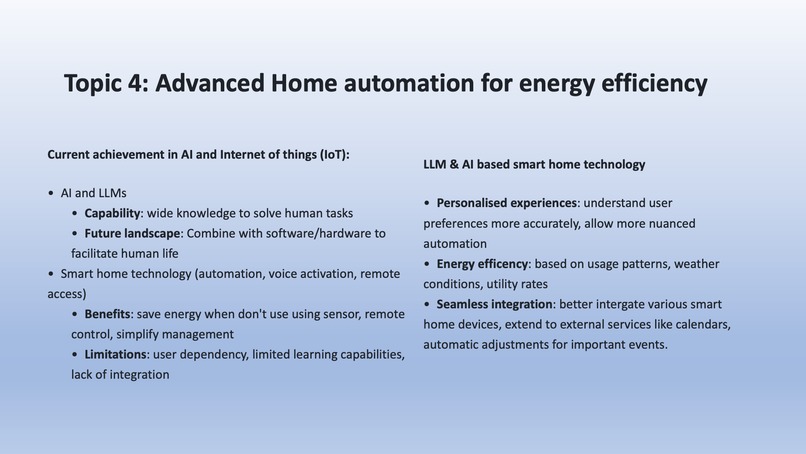
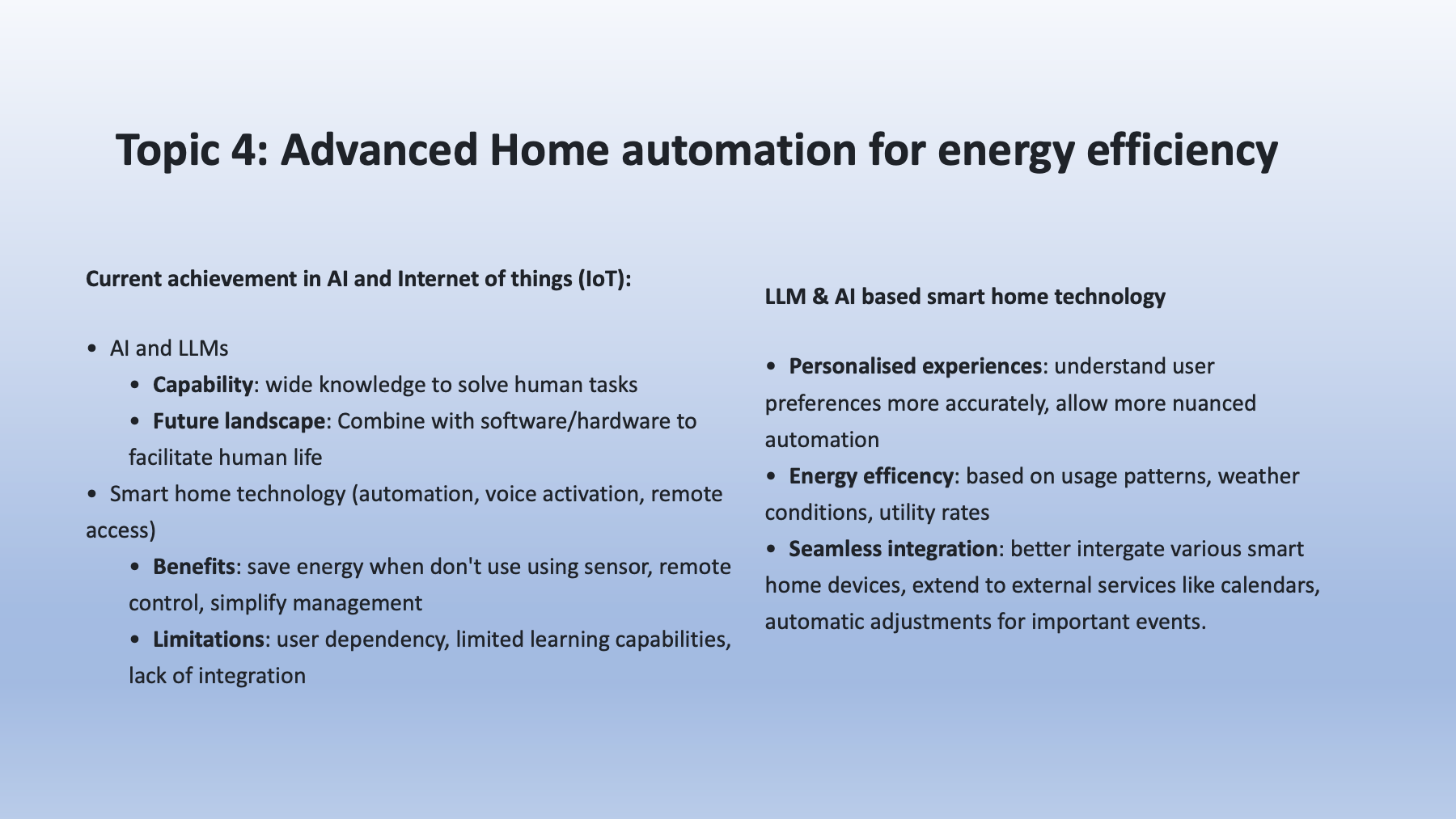
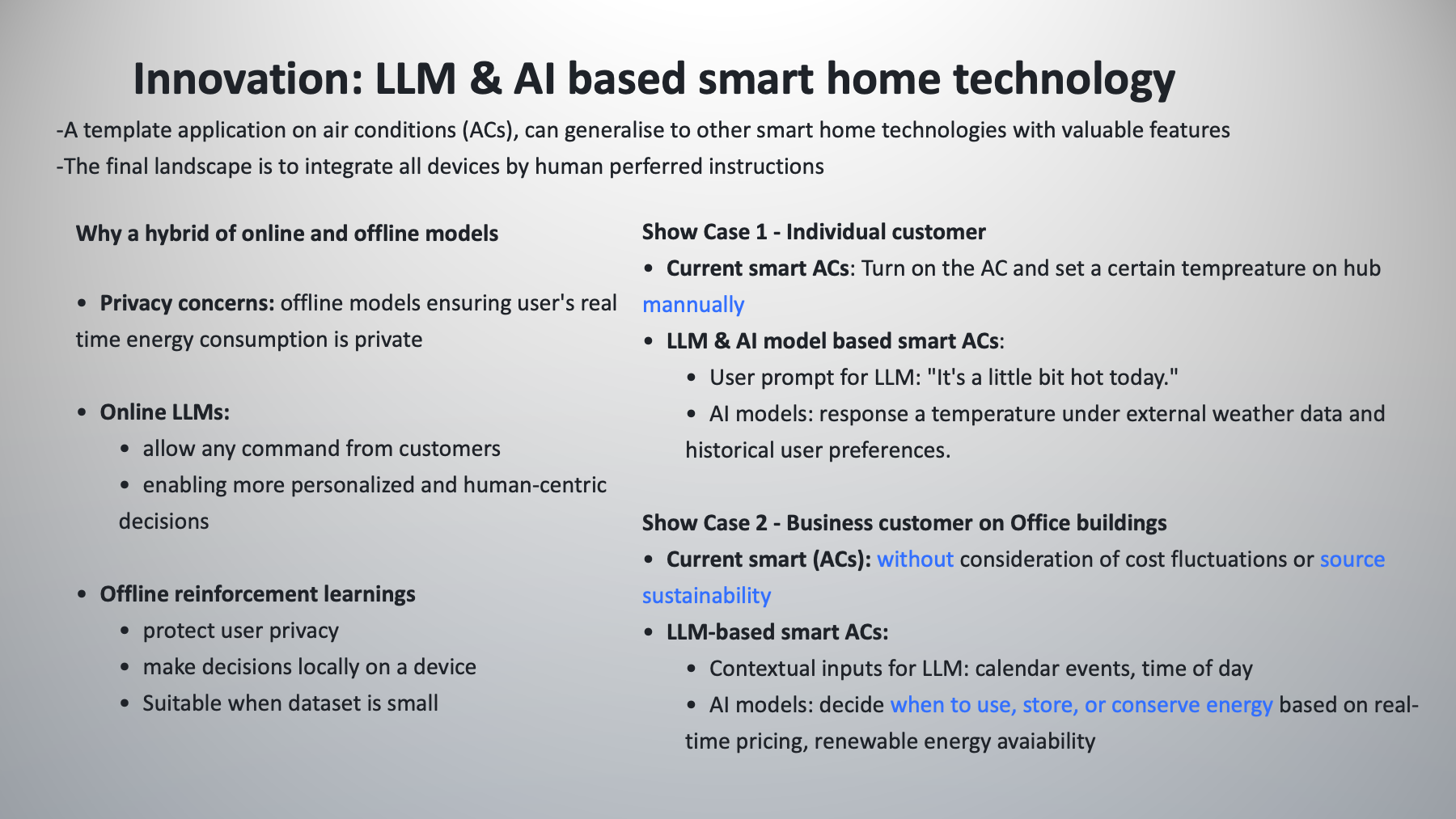
The increasing demand for energy-efficient solutions, combined with the rise of AI and smart home technologies, inspired us to explore how advanced LLM (Large Language Model) and Reinforcement learning-based automation could bring more intelligent and personalised solutions to home energy management. By leveraging AI's potential to learn user preferences and adapt over time, we envisioned a more user-friendly smart devices to improve energy efficiency in both private homes and business environments.
What it does
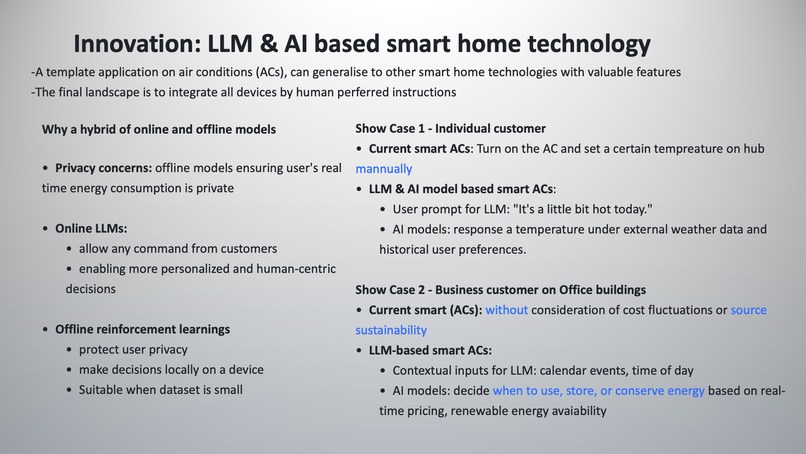
Our solution utilises LLMs and AI to automate smart home devices in a personalised manner, focusing on energy efficiency and privacy concerns of customers. Solving the problem of current smart air conditions cannot consider the cost fluctuations, source sustainability, and external weather conditions to save energy and decrease electronic bills.
How we built it
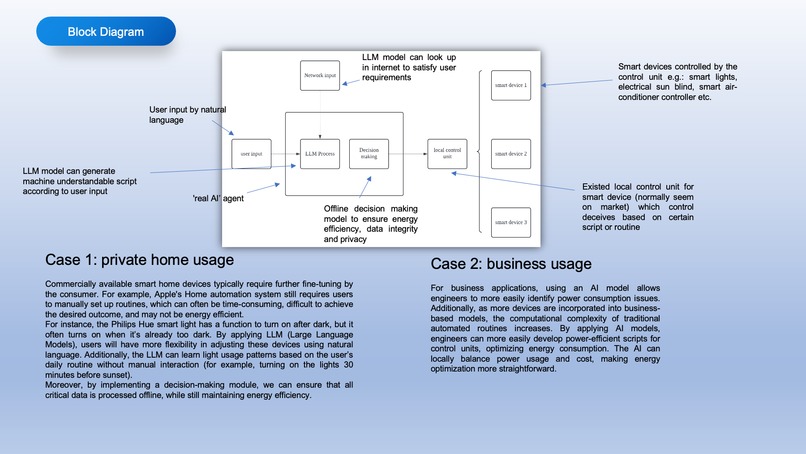
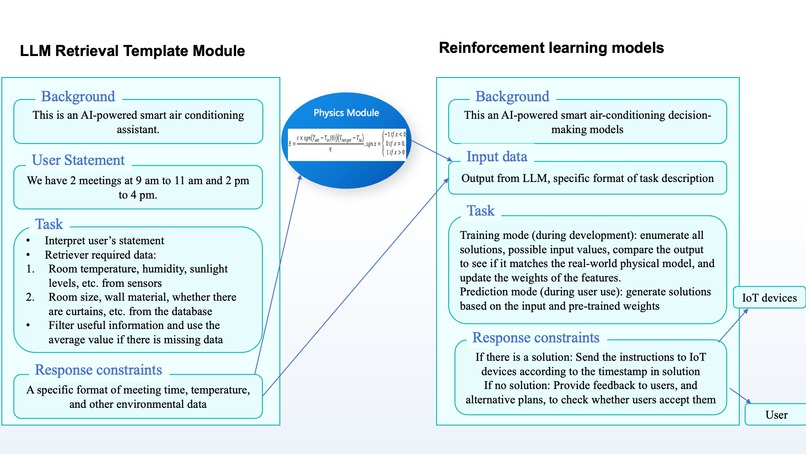
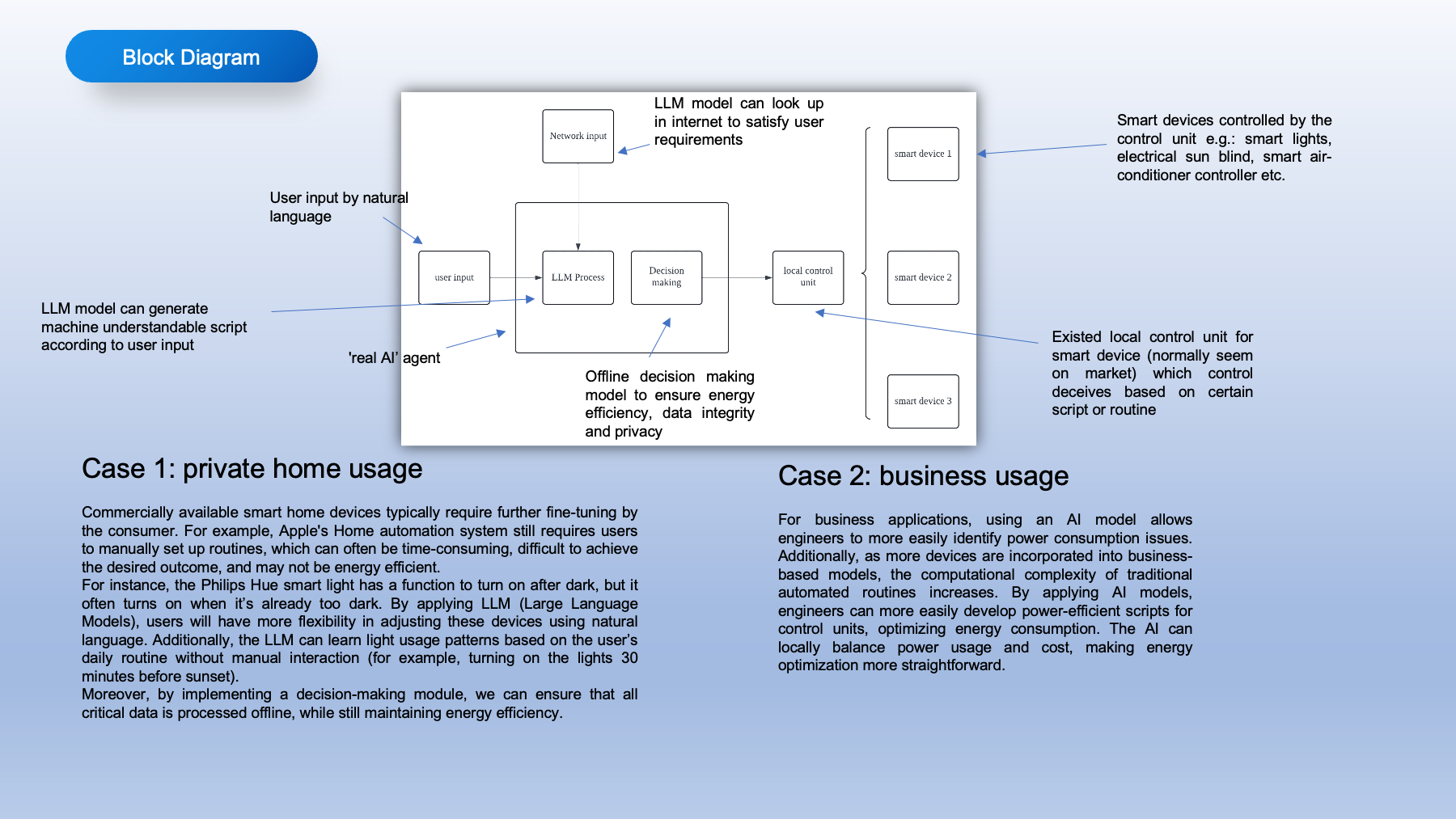
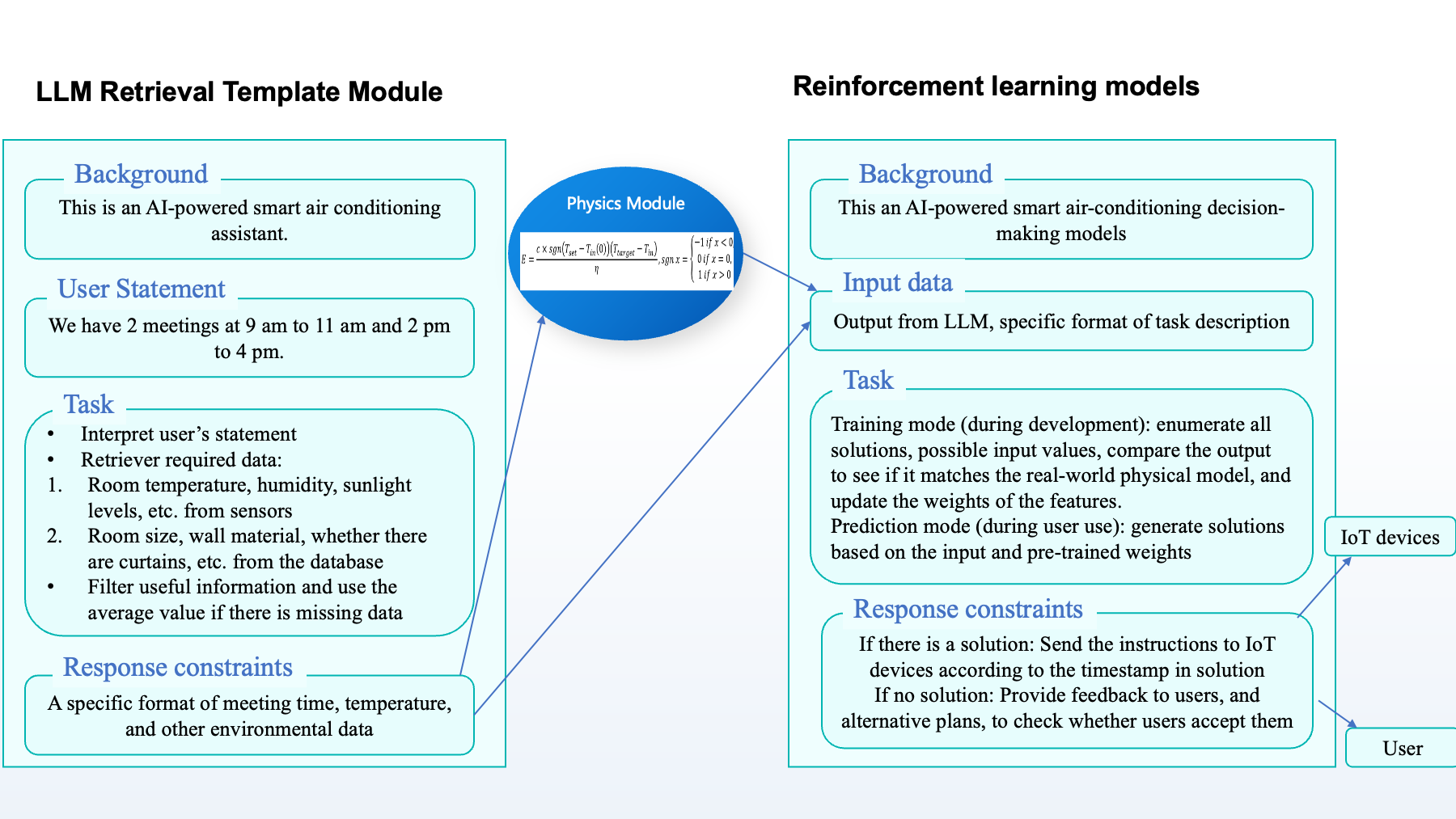
We designed a hybrid online and offline architecture to better integrate customer needs, energy efficiency and privacy. Firstly, LLMs gather user inputs, user behaviour patterns, external conditions such as weather, utility rates, and calendar/meeting events. Then, reinforcement learning models are used combined with physical framework to make decisions about when to turn of/on the air condition offline, ensuring privacy and energy efficiency. By incorporating reinforcement learning models locally on devices, we were able to make decisions offline while maintaining privacy and energy efficiency.
Challenges we ran into
One of the main challenges we faced was integrating our physical energy models into reinforcement learning (RL)model. The difficulty presents when the features in RL models are designed carefully, better with enough domain knowledge about aspects of influencing energy costs. Because RL models not only need a clear goal of the target energy efficiency, but also need to consider the algorithm with heuristic functions of using the existing features to reach the goal. However, if time is enough, we can have the confidence that our models can be successful with enough features
Accomplishments that we're proud of
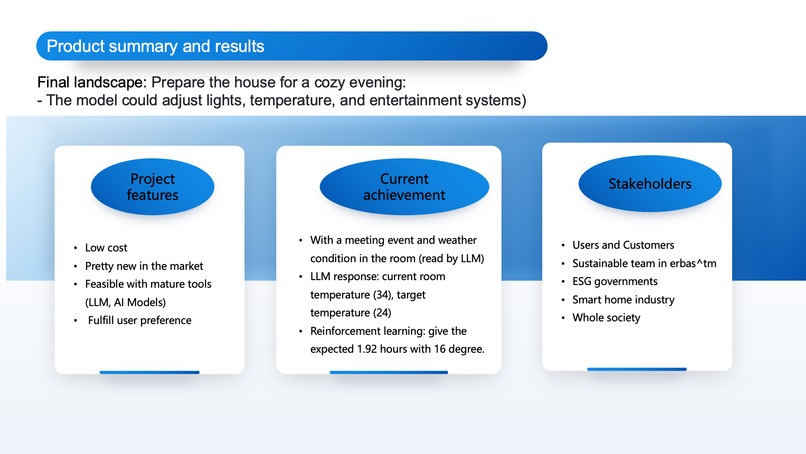
Considering that current smart home technology isn’t ‘smart’ enough, this project is entirely new, unavailable on the market, and meets market demands. With the development of LLM, it will eventually lead to smoother communication between humans and machines while fulfilling market needs. We successfully integrated LLM to understand user requirements, used offline RL (reinforcement learning) to protect user privacy, and built a physical model to ensure energy efficiency.
What we learned
- Energy Efficiency Optimisation: Through this project, we understood how AI could significantly optimise energy usage. By using real-time data such as weather patterns, utility rates, and user habits, we could automate energy-saving decisions effectively.
- Potential of LLMs in Human-Machine Interaction: LLMs have the potential to revolutionise the way humans interact with machines. We saw how they can facilitate more natural and intuitive communication, making smart home technology more accessible to users who are not tech-savvy.
What's next for LLM & AI-based Smart Home Automation
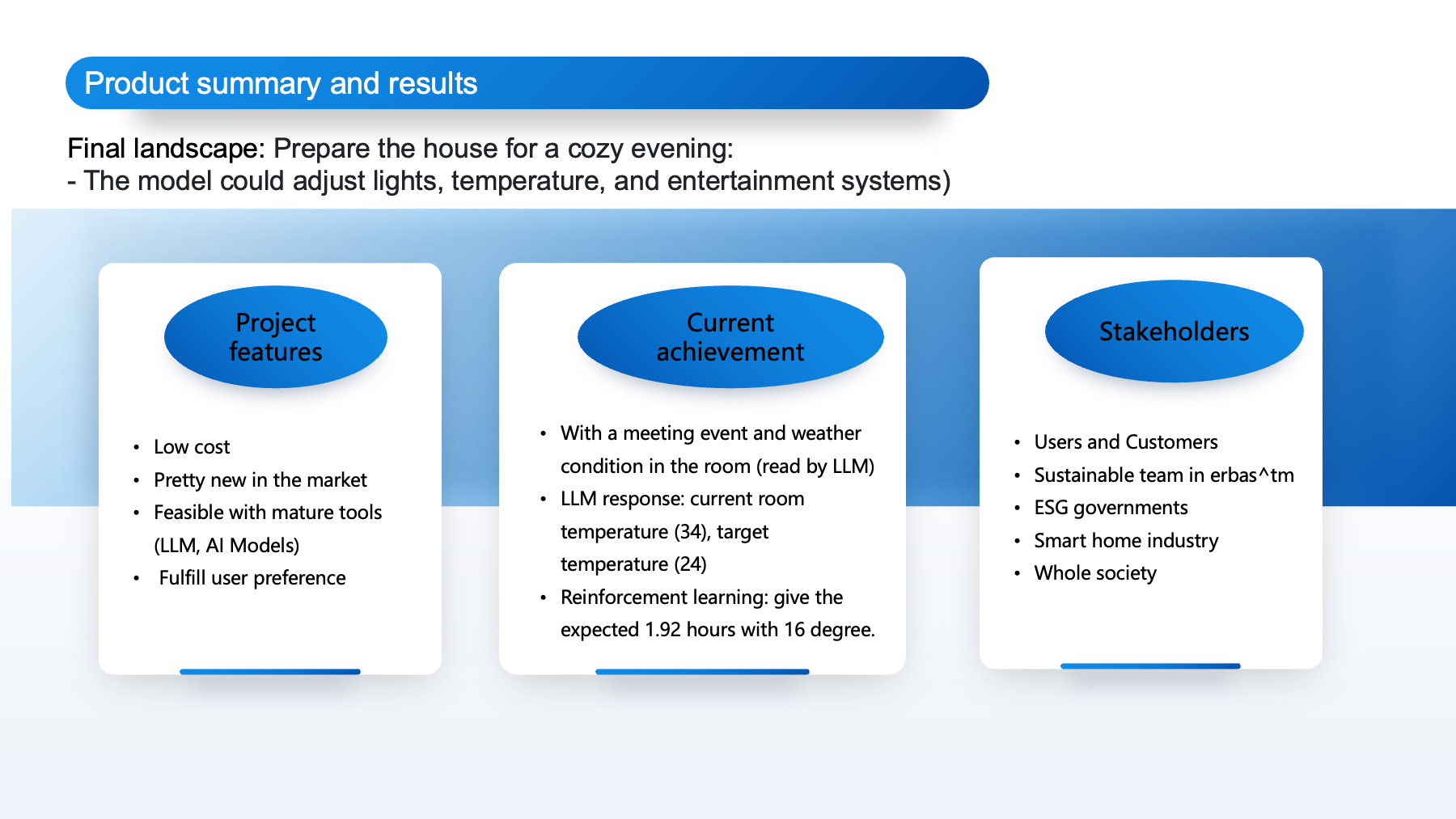
Our next steps include expanding the system's capabilities to support more smart home devices and extending the AI's learning abilities to provide even more personalised experiences. We aim to incorporate additional data sources such as calendars and external services for better event-driven automation. Additionally, we are working on improving energy efficiency optimisation by collaborating with energy providers and integrating renewable energy solutions. Furthermore, we will focus on seamless integration of various smart home devices. For example, a single instruction of "Prepare the house for a cozy evening" could adjust lights, temperature, and entertainment systems together.


Log in or sign up for Devpost to join the conversation.