Inspiration
Medical students have to learn how to talk to patients, not just what to ask. Today, this means relying on professional actors who simulate patients. But with only a limited number of actors available for hundreds of students, opportunities to practice are scarce, expensive, and difficult to schedule.
We wanted to give every student a patient they can talk to anywhere, anytime, one who feels like a real person and not like a questionnaire. Moreover, the students get real-time feedback for each conversation and learn at which point they made a mistake.
Our features
Virtual Interview Patient (VIP) lets a student interview a simulated patient in the browser:
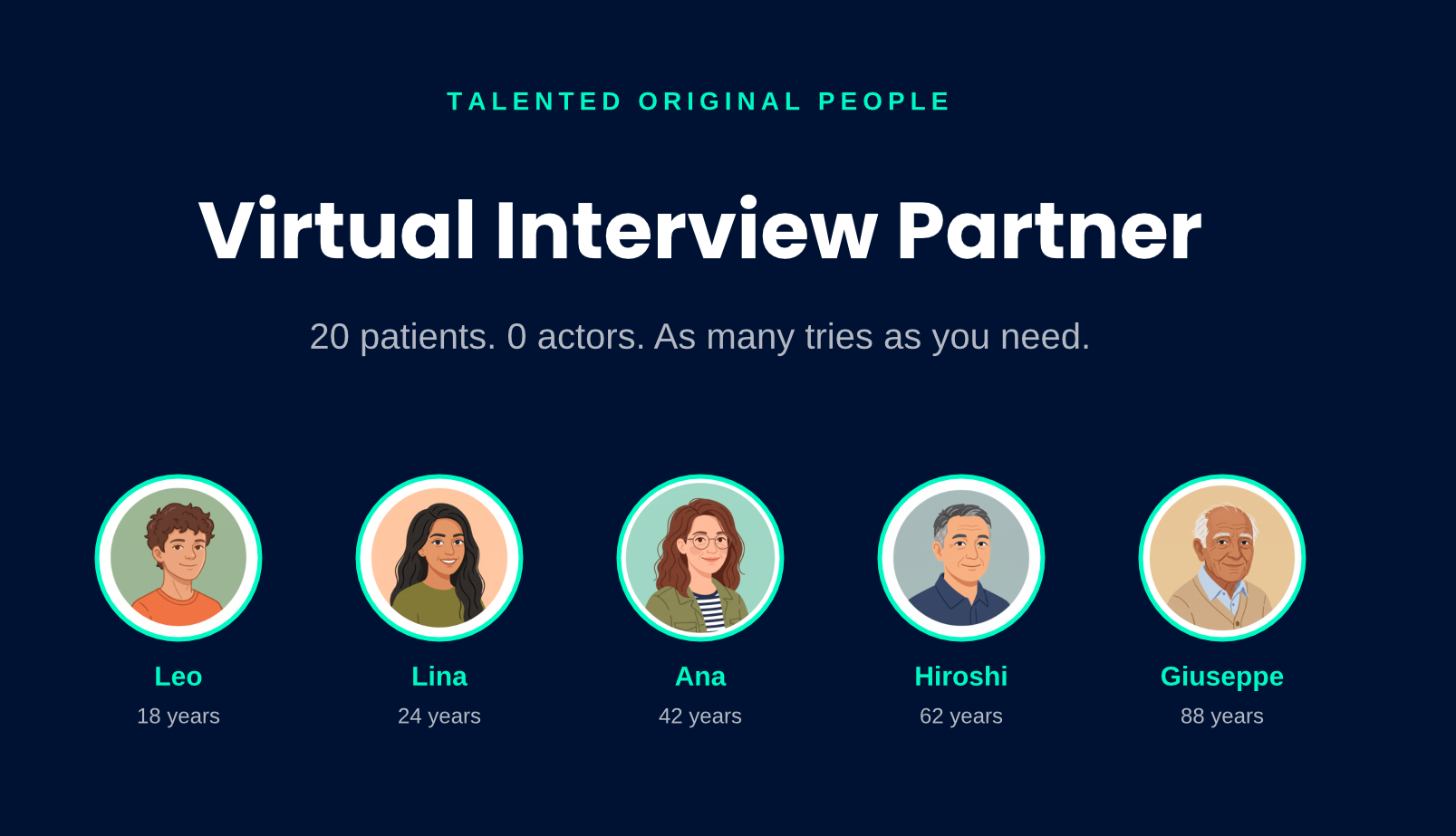
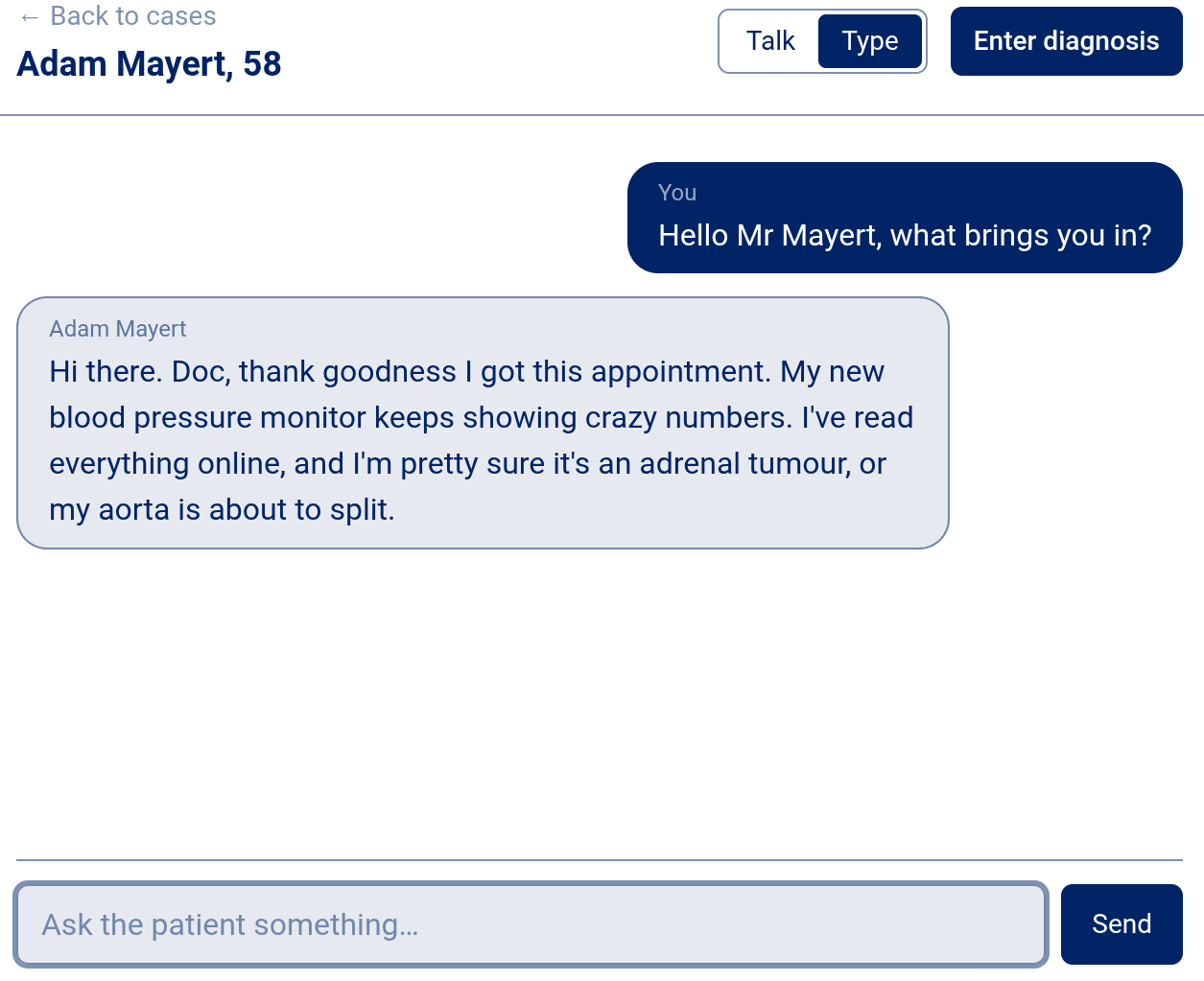
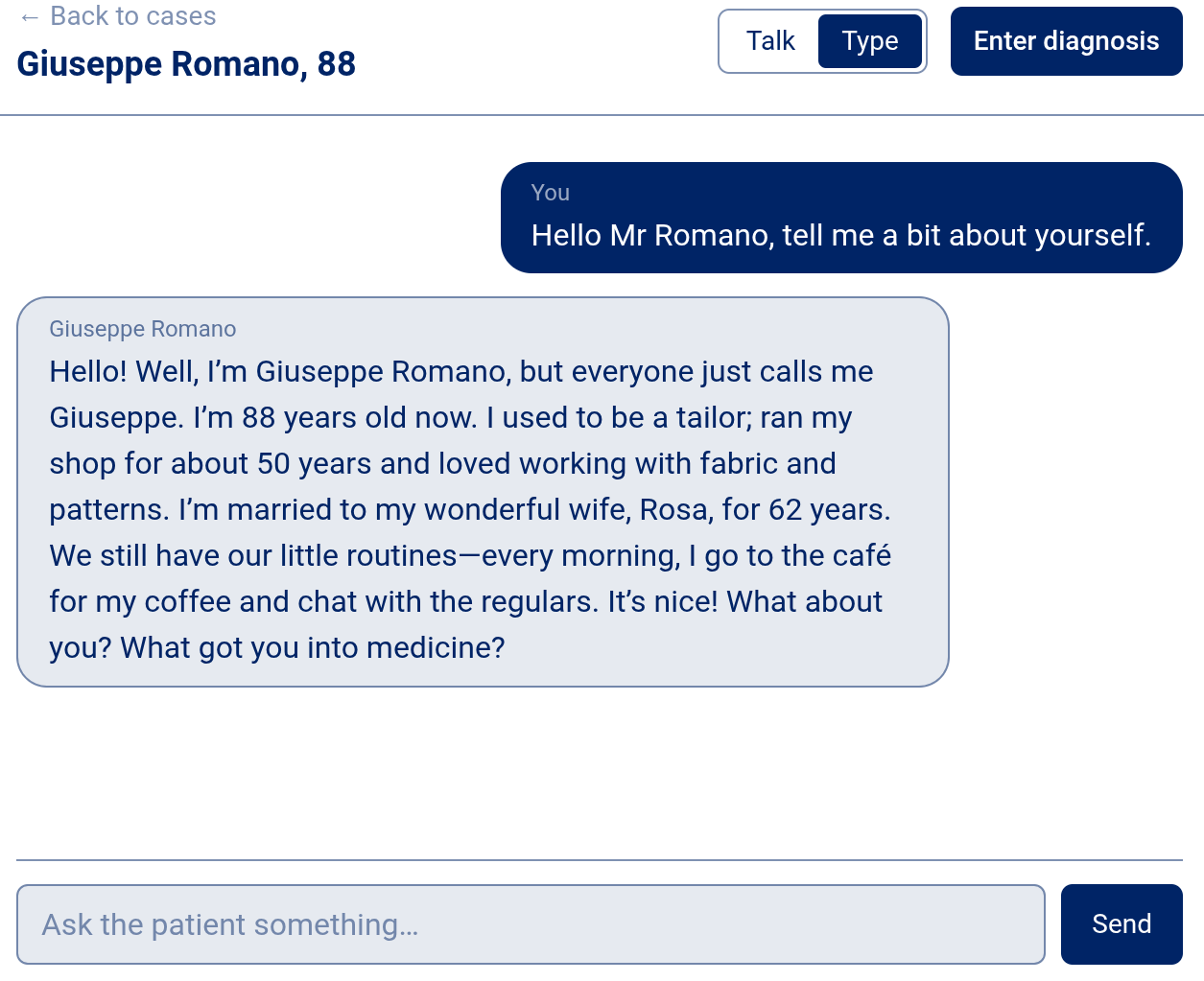
- Choose a patient. Each case has its own person, life story and personality (anxious, chatty or someone who already diagnosed himself with google).
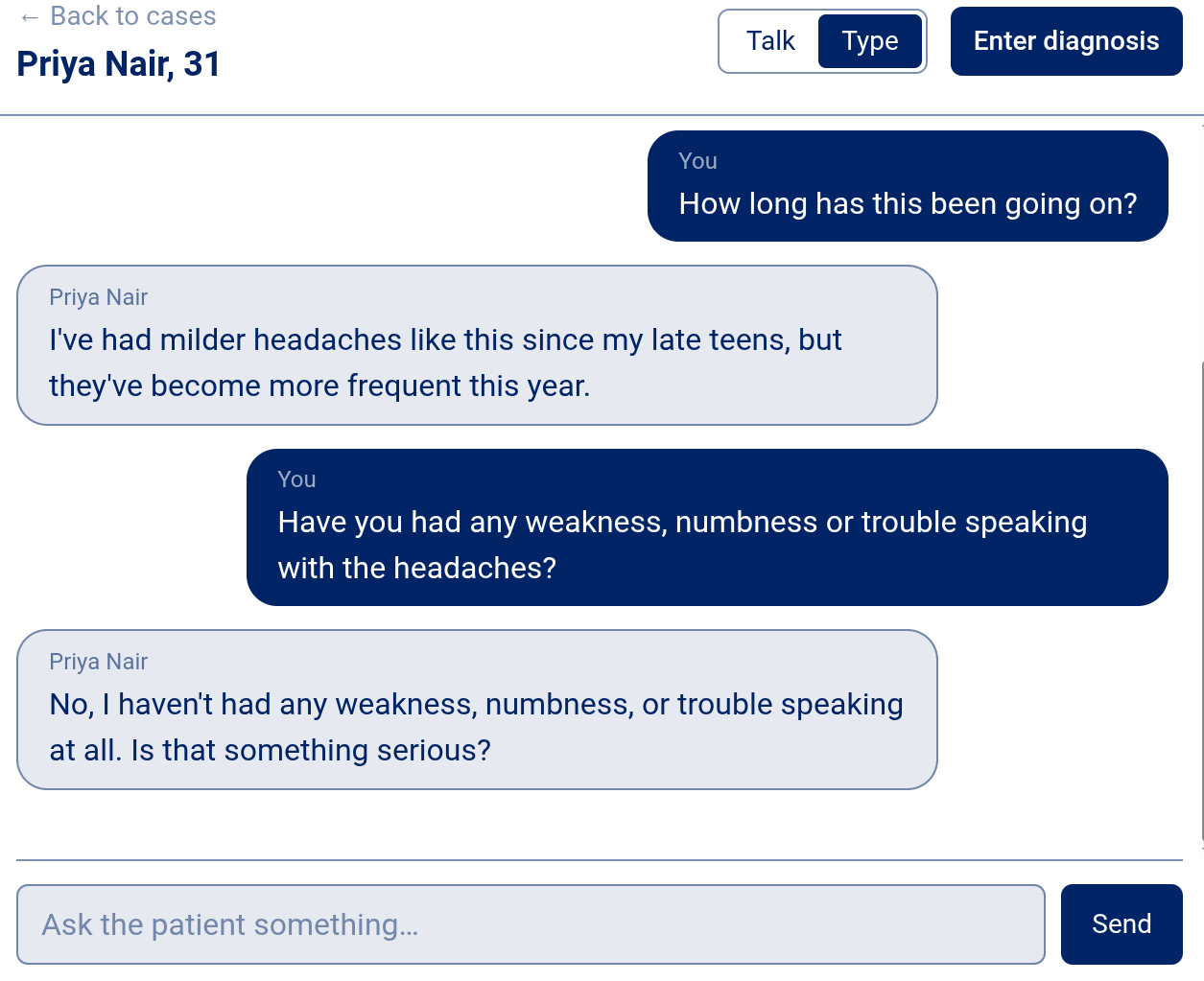
- Interview them. The patient answers in short, natural sentences, in real time. Facts come out only when the student asks the correct questions.
- Talk or type. Depending on where you are or how you feel like you can choose if you prefer talking to the patient in a normal conversation or rather practice by texting this time.
- Make the diagnosis. The student picks a diagnosis and learns right away if it was correct.
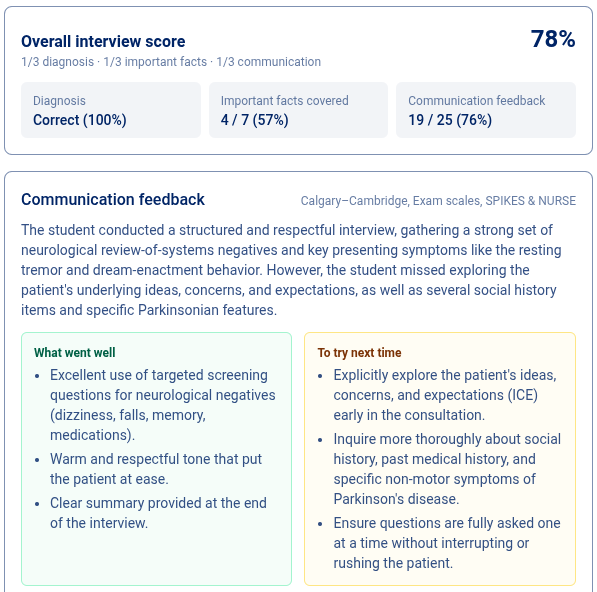
- Get detailed feedback. The student receives an overall score made of three parts: the diagnosis, how much of the patient's history they uncovered, and their communication skills, with strengths and things to improve.
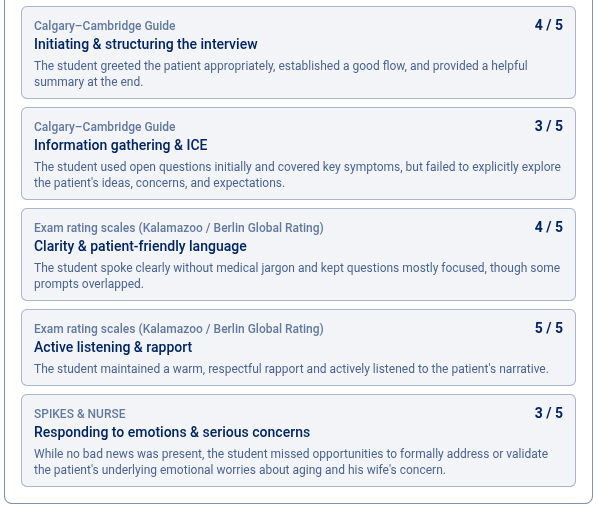
- Get detailed feedback. Students receive an overall score covering diagnosis, how much of the patient's history they uncovered, and communication skills, assessed using the Calgary–Cambridge Guide, exam rating scales, SPIKES, and NURSE, alongside individual strengths and areas for improvement.
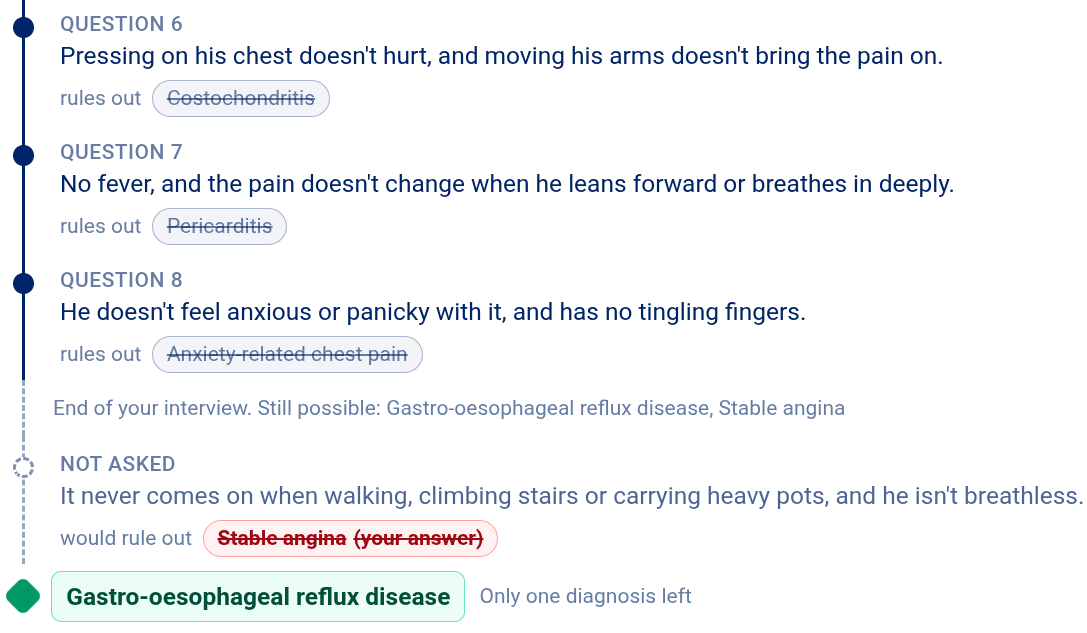
- See the diagnostic path. A tree shows which questions ruled out which diagnoses, which questions the student asked, and which ones they missed.
How we built it
- Frontend: Next.js (App Router), TypeScript, Tailwind CSS and shadcn/ui. We styled it in Avelios' colors.
- AI: Google's Gemini model and Open AI's GPT Live through the Vercel AI SDK. All AI calls run on the server, so the API key never reaches the browser.
- Case cards: Every patient is a JSON "case card" (demographics, symptoms, history, life story, true diagnosis). Together with a fixed set of behavior rules, it is turned into the system prompt.
- Synthea: Medically correct fictional patient data.
Challenges we ran into
- Limited API budget. To keep costs down during development, we used a more affordable model and limited response lengths. However, this introduced too much latency in the text-to-speech feature.
- Synthea patient records. Building the patients record through Synthea's data required more effort than expected.
Built With
- next.js
- open-ai-api
- synthea
- tailwind
- typescript
