-
-
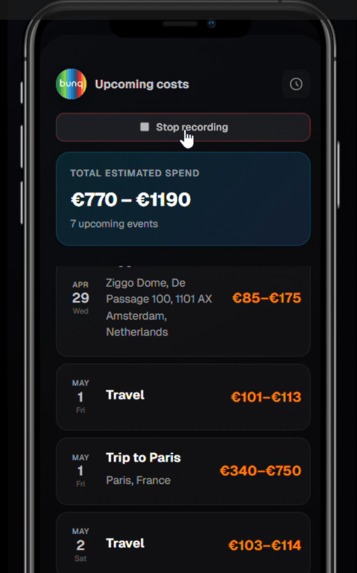
Event cost estimates
-
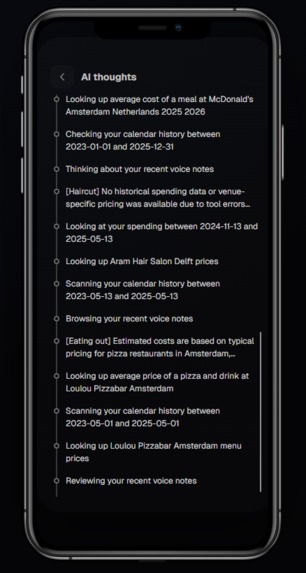
Explainable AI reasoning
-
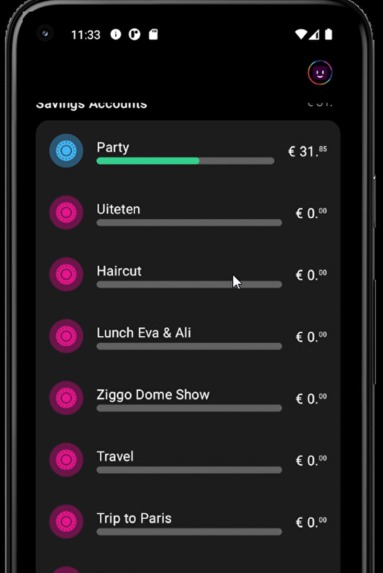
Bunq saving goals
-
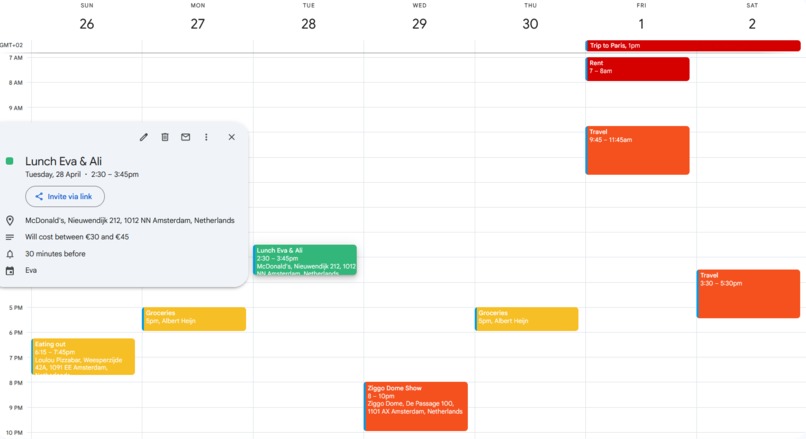
Calendar Sync
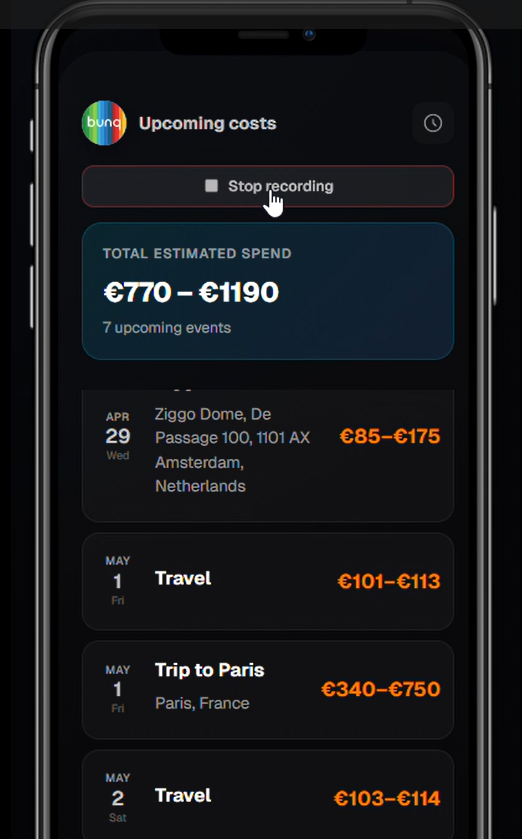
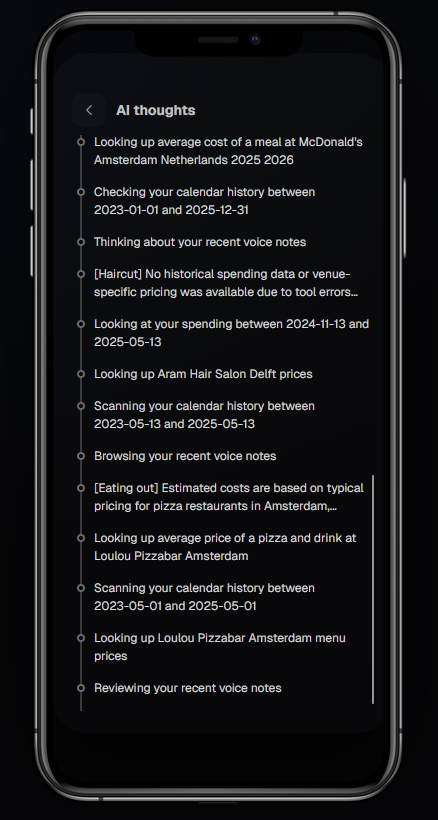
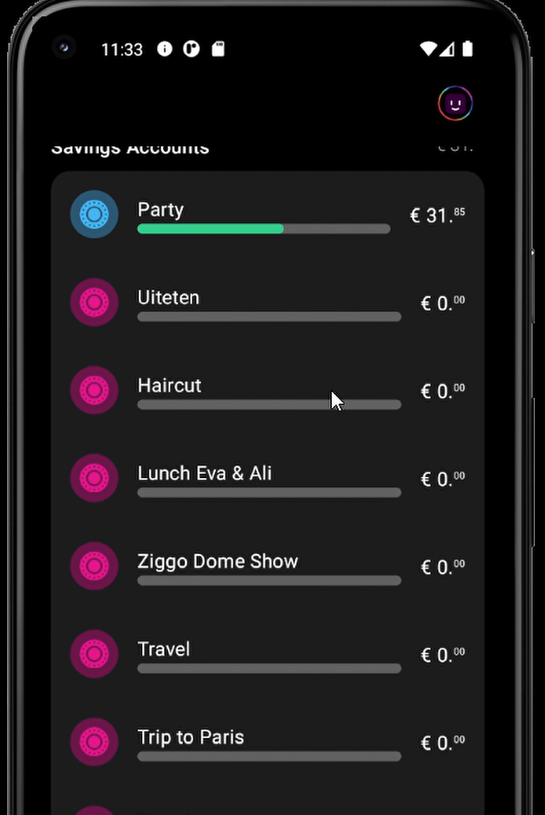

Project Description
bunqAhead is a multimodal AI banking application built for bunq Hackathon 7.0.
The goal of bunqAhead is to keep a user's calendar and money in sync. Many future expenses are already visible before they happen, but they are usually hidden inside calendar events rather than reflected in the user's banking behaviour. A dinner, trip, concert, sports activity, birthday or weekend plan may already be scheduled, but the user often only reacts financially after the money has already been spent.
bunqAhead solves this by analysing upcoming Google Calendar events, estimating their likely costs and preparing the user in advance through bunq saving goals or dedicated saving accounts.
Problem
People often forget to financially prepare for upcoming events. Calendar apps know what the user is planning, and banking apps know how the user usually spends money, but these two sources are normally disconnected.
This creates a gap:
- Future plans are visible in the calendar.
- Past spending behaviour is visible in the banking app.
- The user still has to manually estimate future costs.
- Unexpected expenses can appear even when the event was planned days or weeks in advance.
bunqAhead closes this gap by turning future calendar events into proactive financial preparation.
Proposed Solution
bunqAhead connects to the user's Google Calendar and fetches upcoming events. For each event, the system combines:
- The event title
- The event date and time
- The event location
- Relevant bunq transaction history
- Web image/text search context
- Optional audio context provided by the user
Using this information, bunqAhead estimates how much the event is likely to cost. For example, an event such as:
Dinner with Eva in Amsterdam
could involve travel, restaurant costs, drinks, and previous similar spending patterns.
After estimating the cost, bunqAhead takes action in two places:
Google Calendar update
The original calendar event is updated with a colour and a description explaining the expected cost.bunq saving preparation
A bunq saving goal for a new savings account is created for the event, average of the predicted cost as the target amount.
This helps the user prepare financially before the event happens, instead of only noticing the expense afterwards.
How AI Is Used
AI is used to estimate the financial impact of future events.
Instead of relying only on fixed categories or manual budgeting rules, bunqAhead uses AI to interpret the full context of an event. The AI analyses the meaning of the calendar event and combines it with transaction history, web information and user-provided context.
The AI can reason about questions such as:
- What type of event is this?
- Is travel likely to be needed?
- Is food, transport, accommodation, a ticket, or a gift involved?
- Has the user done something similar before?
- What was the average cost of similar past activities?
- Did the user provide extra context through audio?
- What would be a realistic saving target?
The result is a personalised event-based cost estimate.
Multimodal Integration
bunqAhead integrates a non-text modality through audio input and web image search.
Users can add extra context from past and future events by speaking naturally. For example:
For this event I will probably take the train, buy dinner, and bring a small gift.
This spoken input is processed and converted into additional context for the AI model. The audio context is then combined with the written calendar event, bunq transaction history, and image web search results.
Example Flow
- The user connects Google Calendar and bunq.
- bunqAhead fetches upcoming calendar events.
- The app analyses each event using AI.
- Past bunq transactions are used to identify similar spending patterns.
- Web search provides extra price context when useful.
- The user can add extra information through audio.
- The AI estimates the likely cost of the event.
- The Google Calendar event is updated with a colour and cost description.
- A bunq saving goal or dedicated saving account is created for the estimated amount.
- The user is financially prepared before the event happens.
Example
Calendar Event
Dinner with Eva in Amsterdam
Friday, 20:00
Amsterdam
AI Reasoning
Likely expenses:
- Dinner in Amsterdam
- Drinks with Eva
Estimated Cost
€35-€45
Result
Google Calendar:
Event colour updated.
Description added: "Will cost between €35 and €45"

bunq:
Saving goal created for €40.
APIs and Technologies Used
- Google Calendar API for fetching and updating future events
- bunq API for accessing financial context and preparing saving goals or accounts
- AI model for contextual cost estimation
- Image web search for additional price context
- Audio input for multimodal user context
Built With
- agent-development-kit
- bunq
- claude
- claude-vision-api
- copilot
- gemini
- neon
- nextjs
- typescript
- vercel
- vision
- vscode


Log in or sign up for Devpost to join the conversation.