-
-
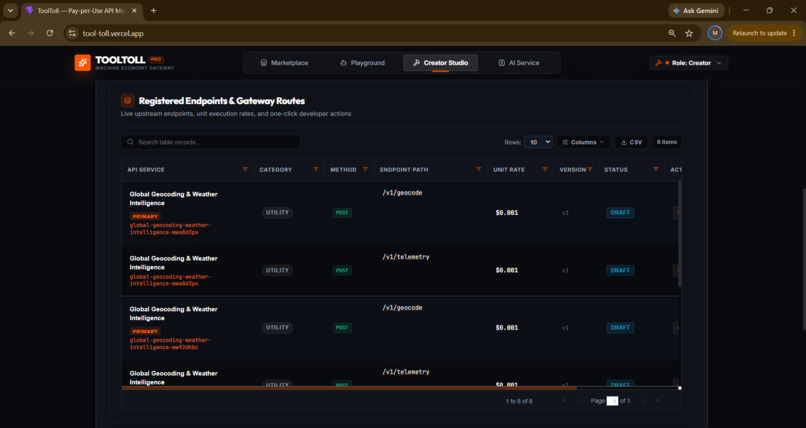
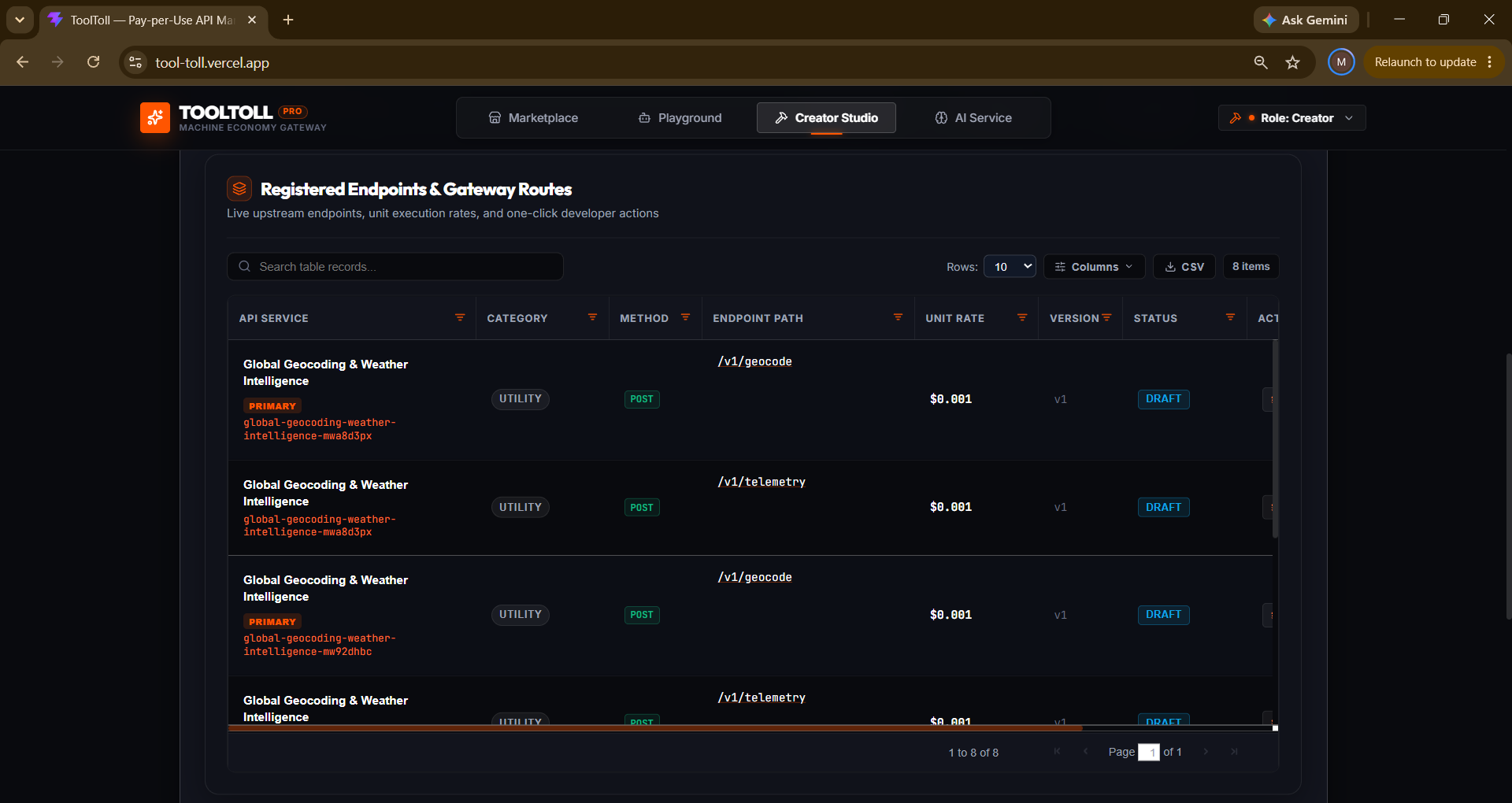
Registered API's
-
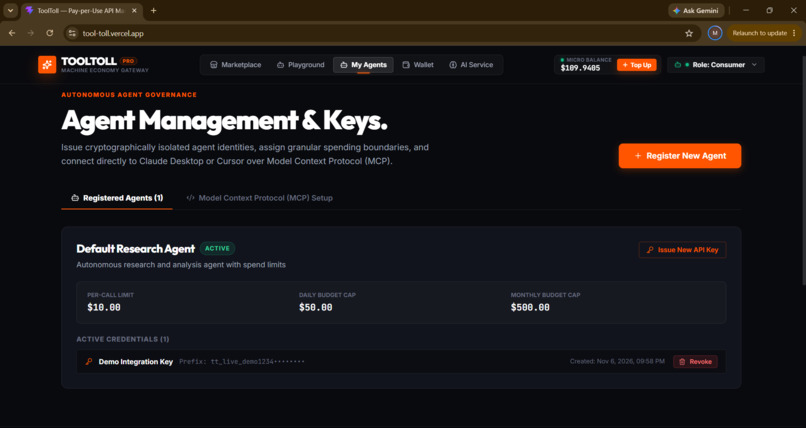
AI agents
-
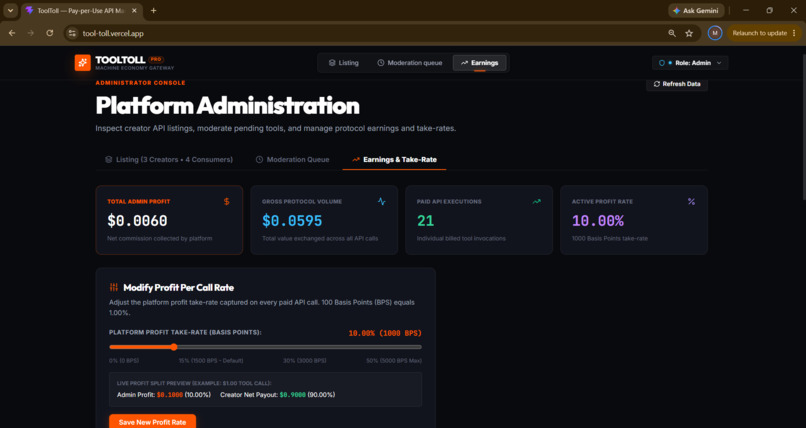
Admin Earning
-
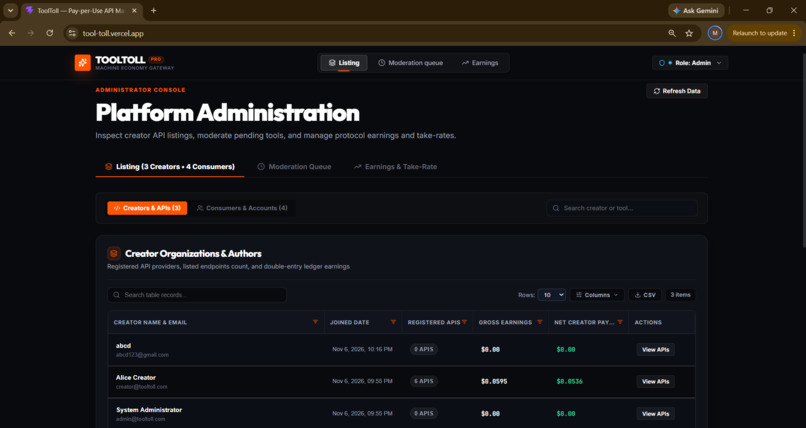
Admin Dashboard
-
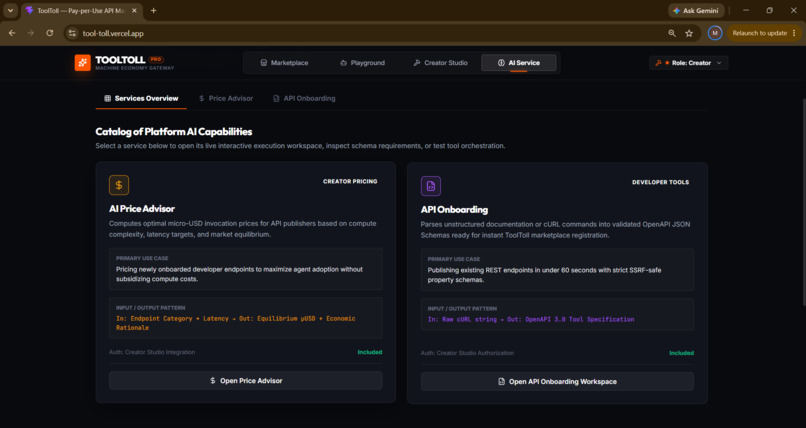
AI services for Creators
-
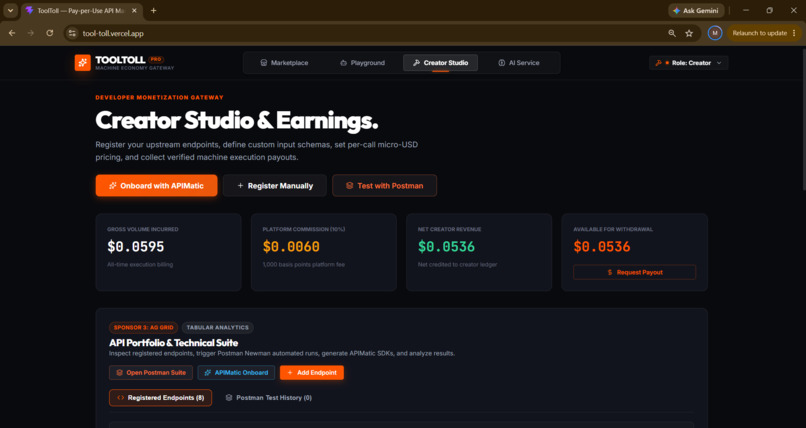
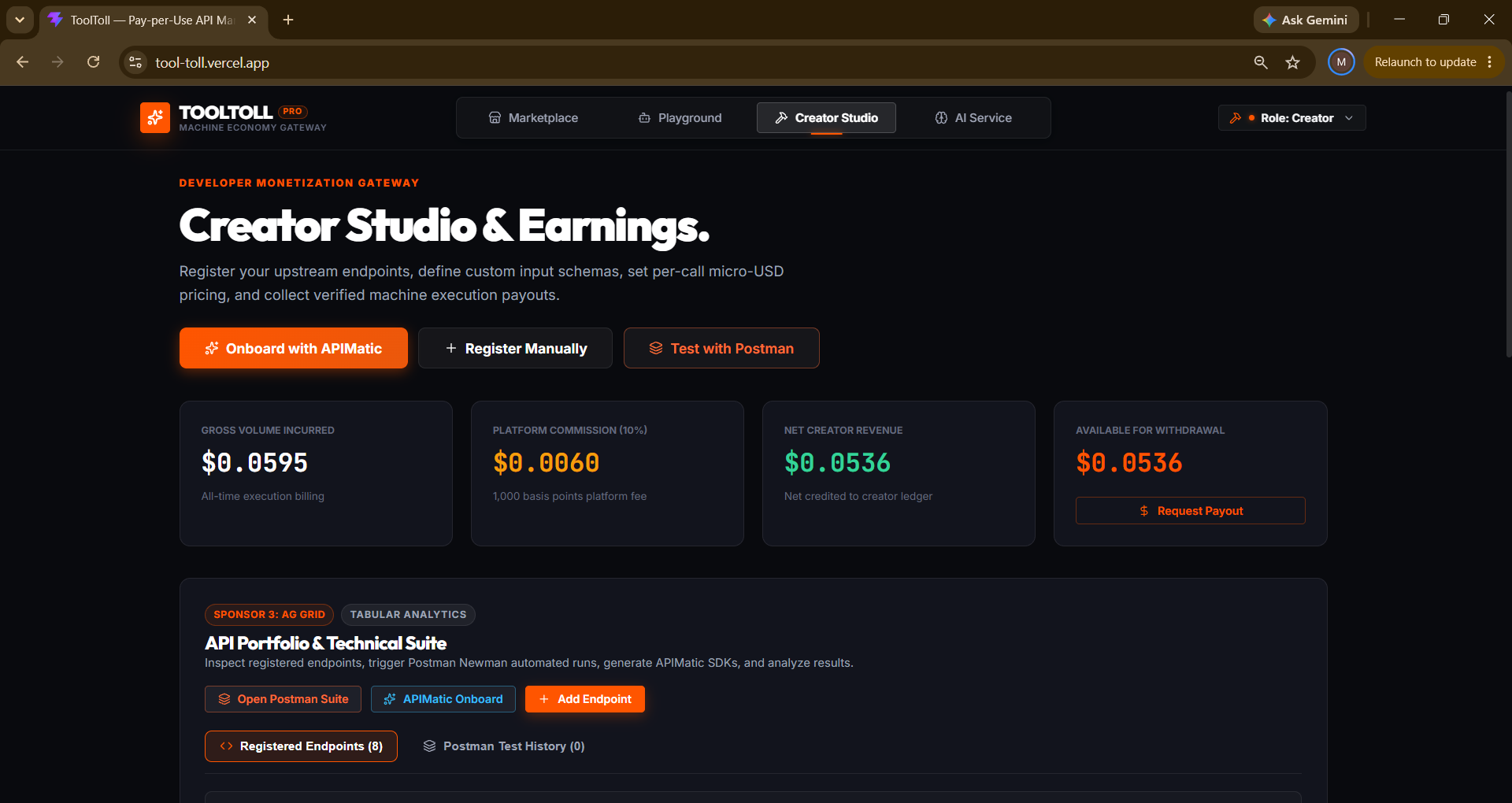
Creator Studio
-
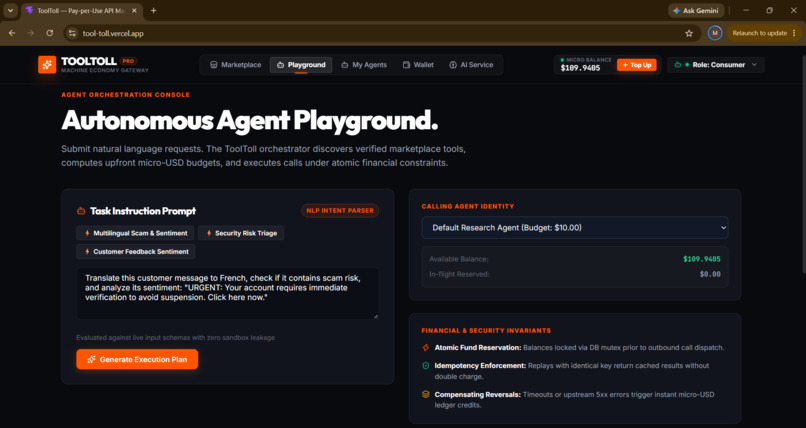
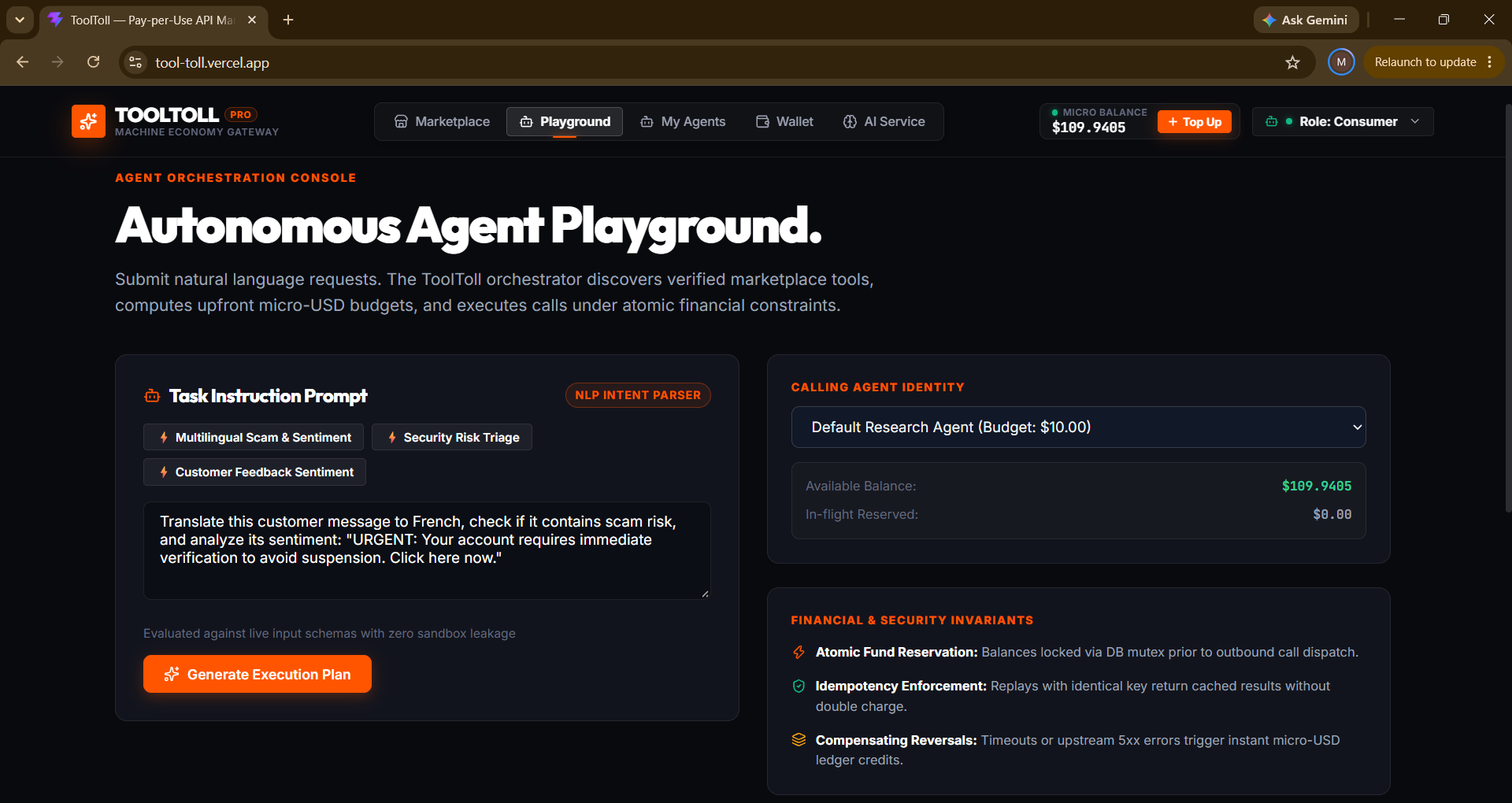
Playground
-
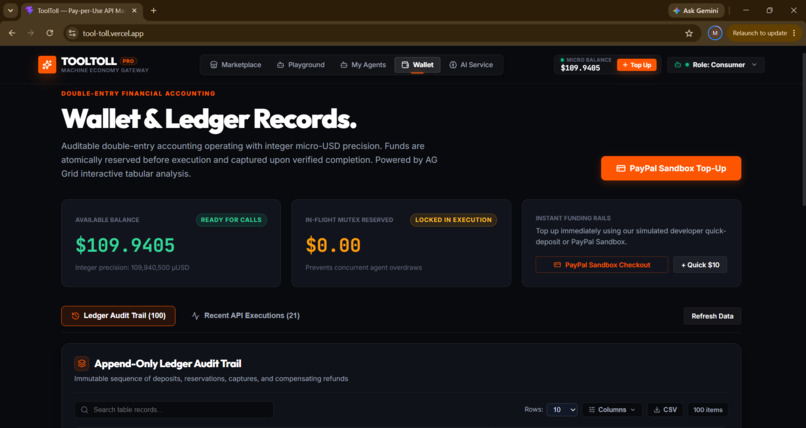
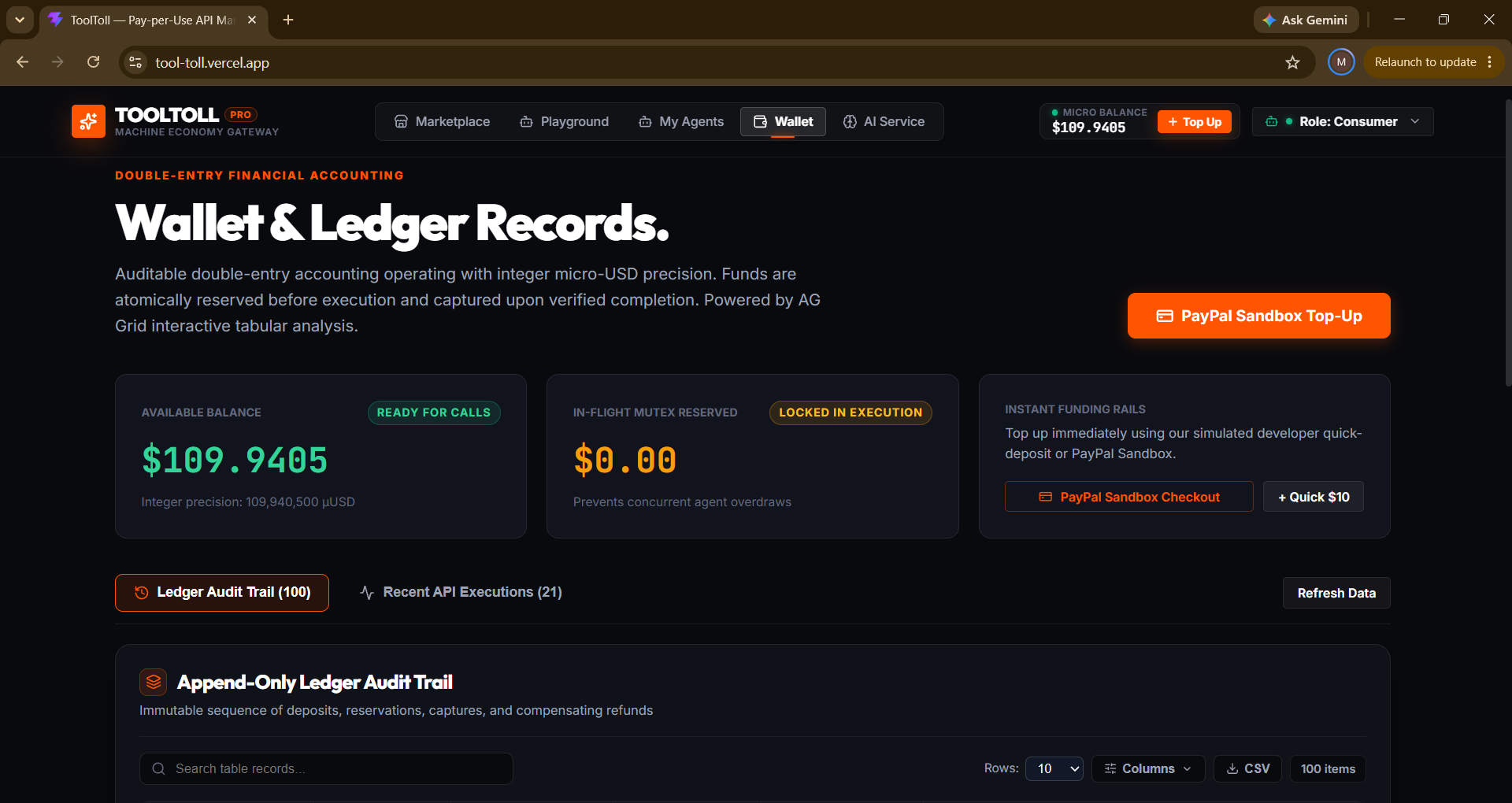
Wallet
-
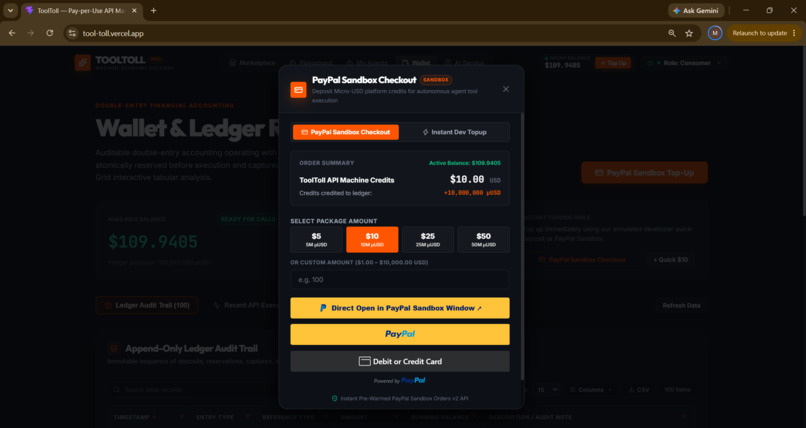
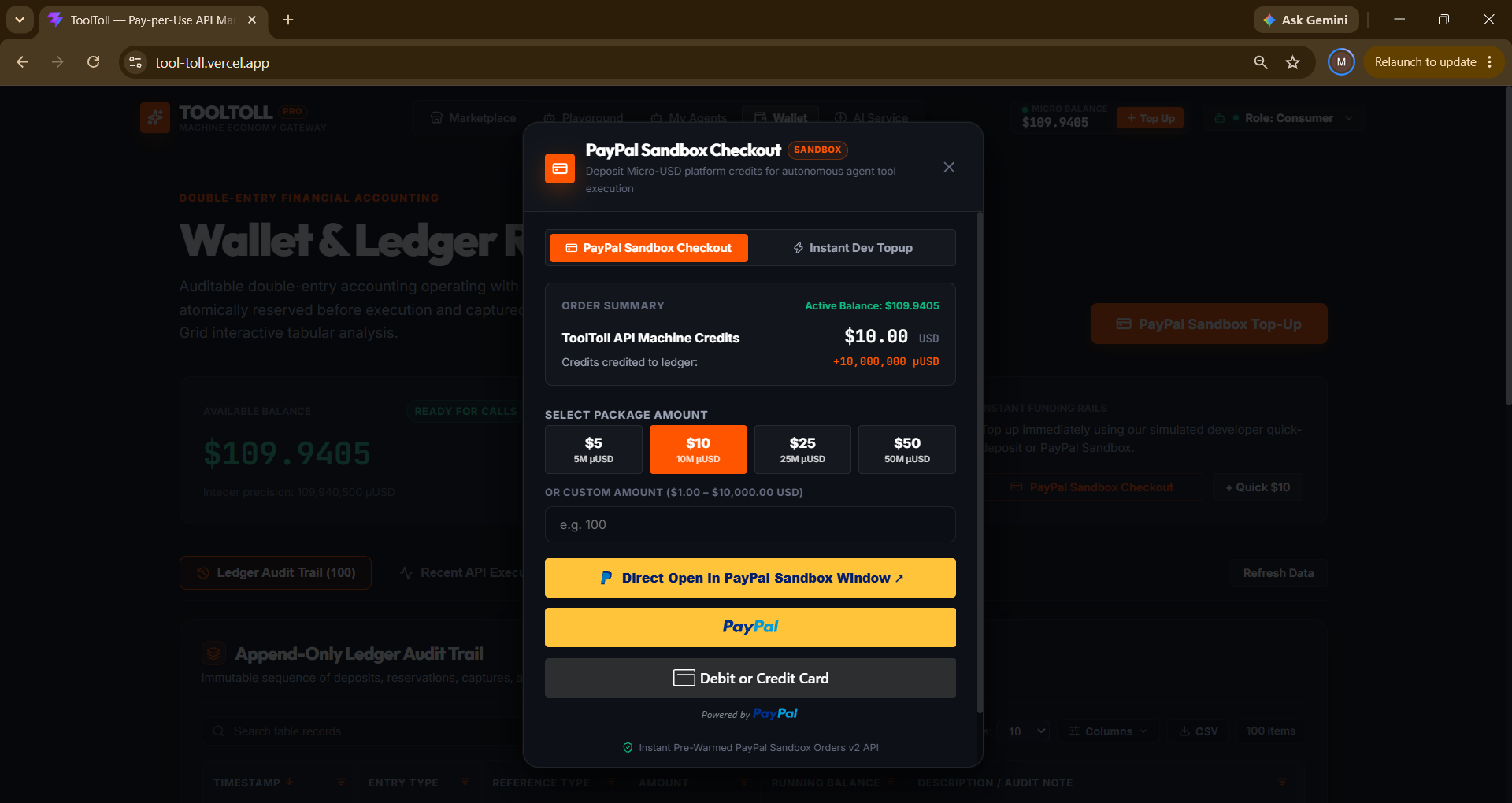
PayPal SandBox Integration
-
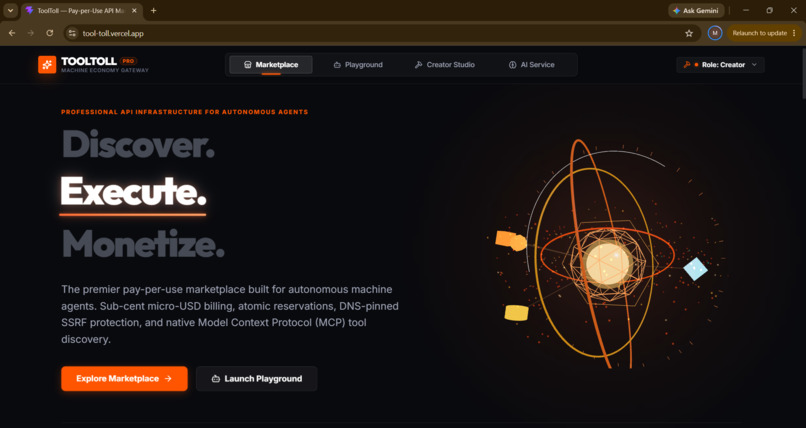
Dashboard
-
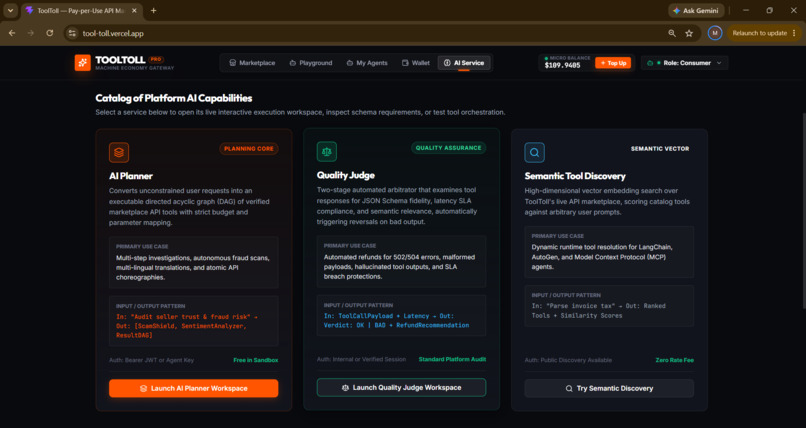
AI services for consumers
Inspiration
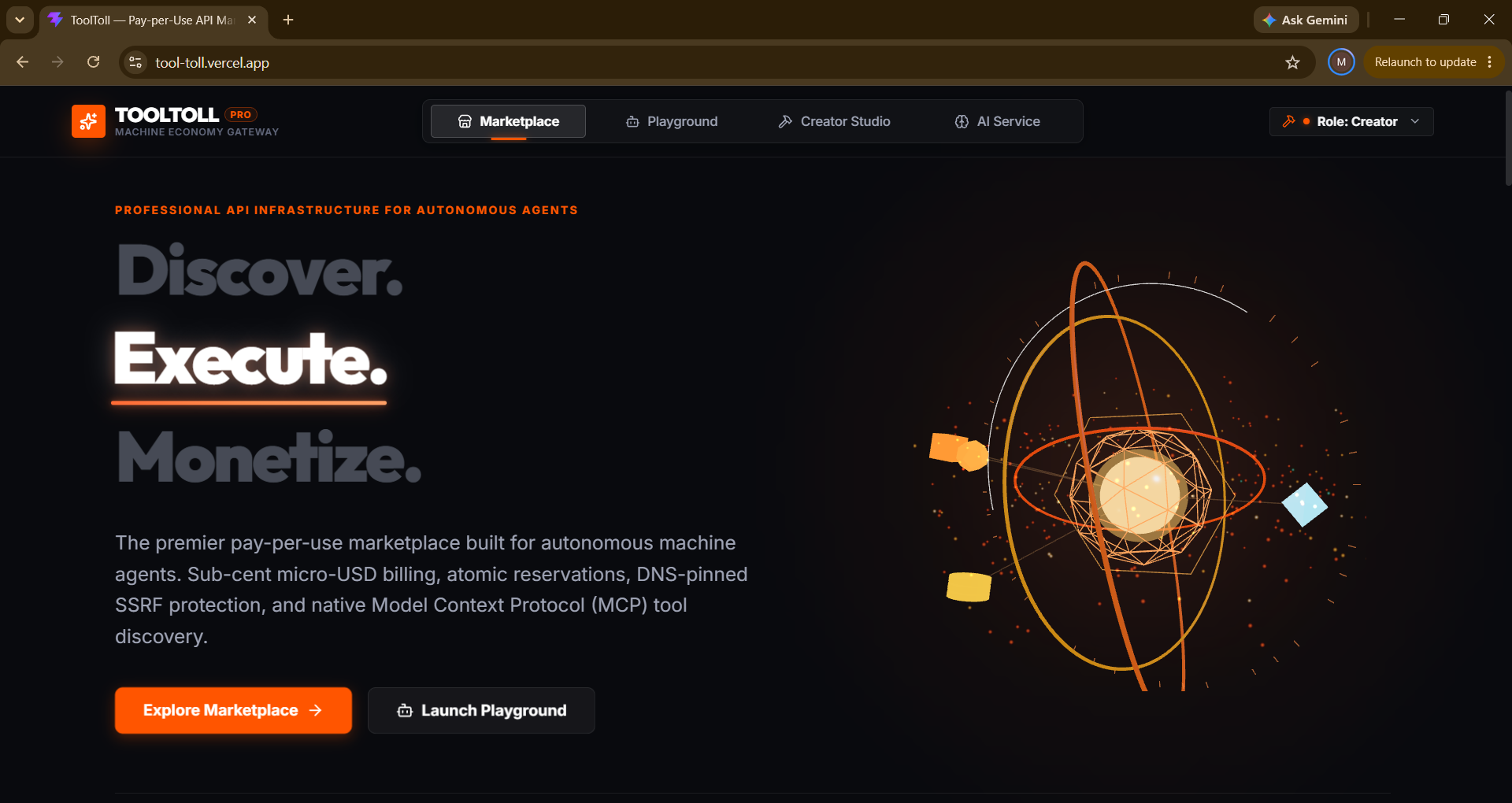
The inspiration behind ToolToll came from a problem we noticed in the API ecosystem: discovering, integrating, and monetizing APIs can be complicated, especially when building AI-powered applications that depend on multiple external tools.
Many API services rely on fixed subscription models, even when developers only need occasional access. At the same time, AI agents need a reliable way to discover suitable APIs, plan their usage, and execute tasks efficiently.
We wanted to build a platform that connects API consumers, API creators, and administrators in one ecosystem, while introducing a more flexible, pay-per-use approach to API access.
This idea became ToolToll — an AI-powered API marketplace where agents can discover and execute tools, creators can monetize their APIs, and consumers can pay based on usage.
What We Built
ToolToll brings together three main user roles:
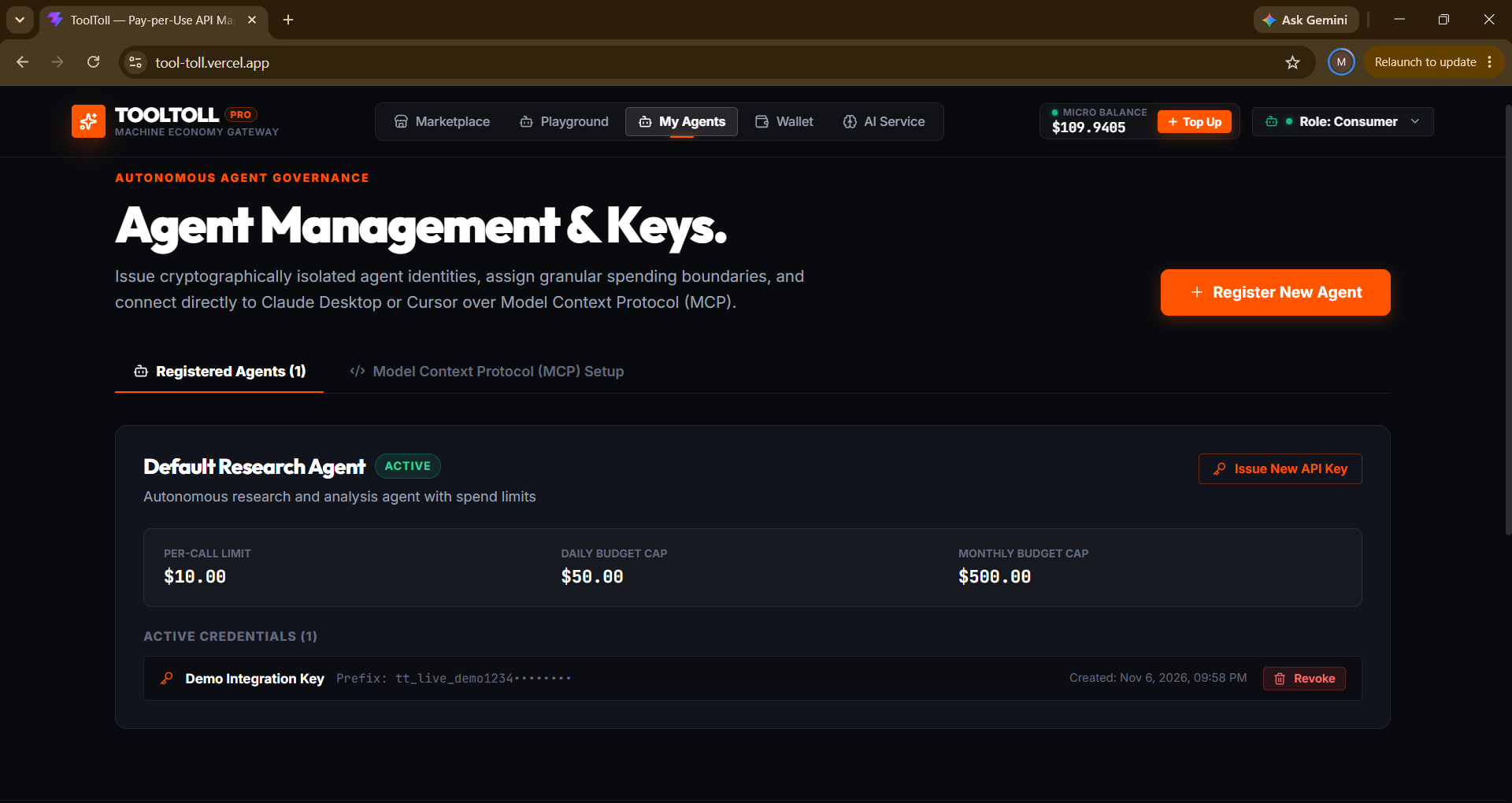
- Consumers: Discover marketplace APIs, manage wallets, create AI agents, and access tools through usage-based billing.
- Creators: Publish APIs, configure pricing, and monitor API usage and earnings.
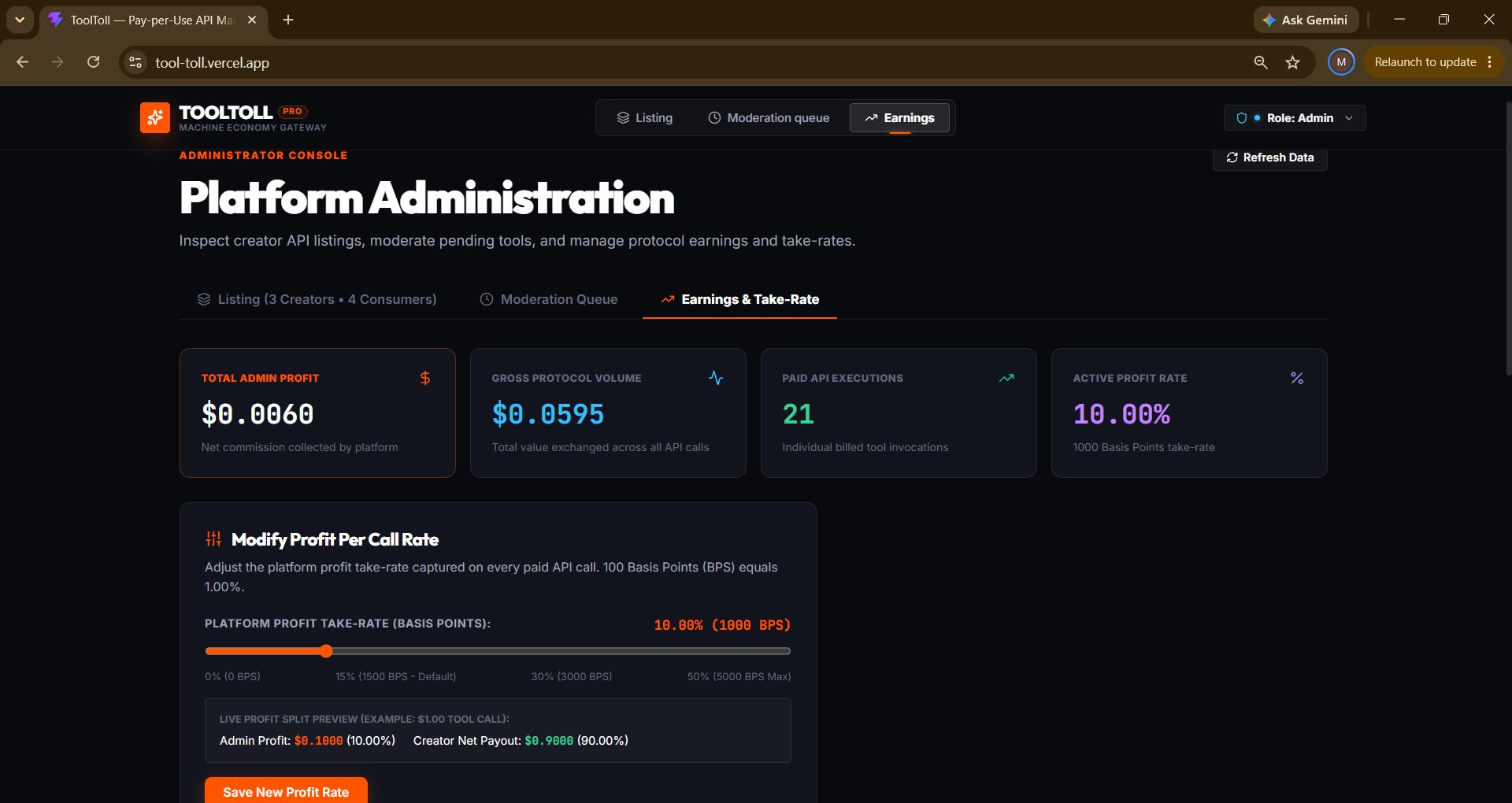
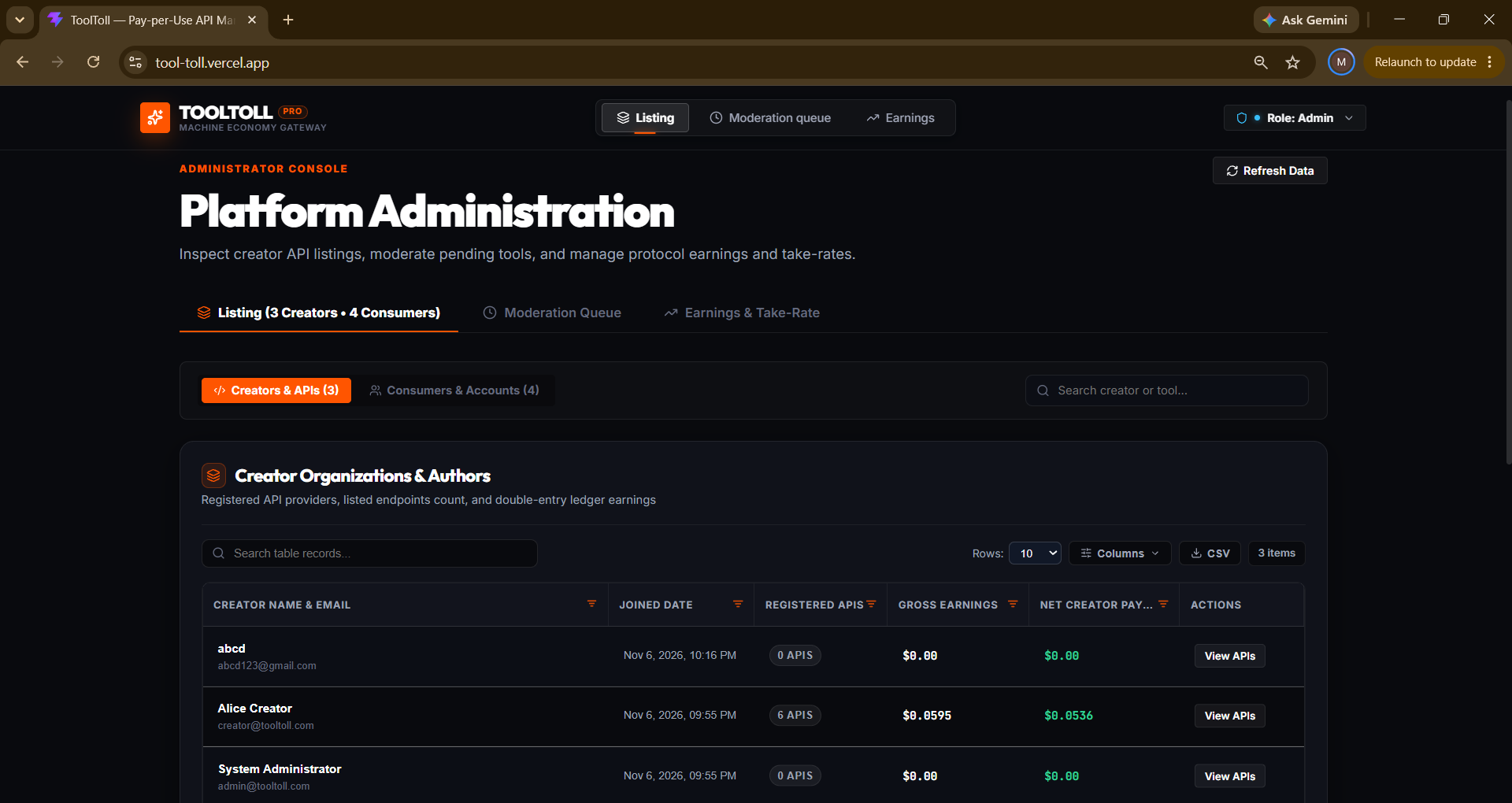
- Administrators: Manage marketplace operations and oversee platform activity.
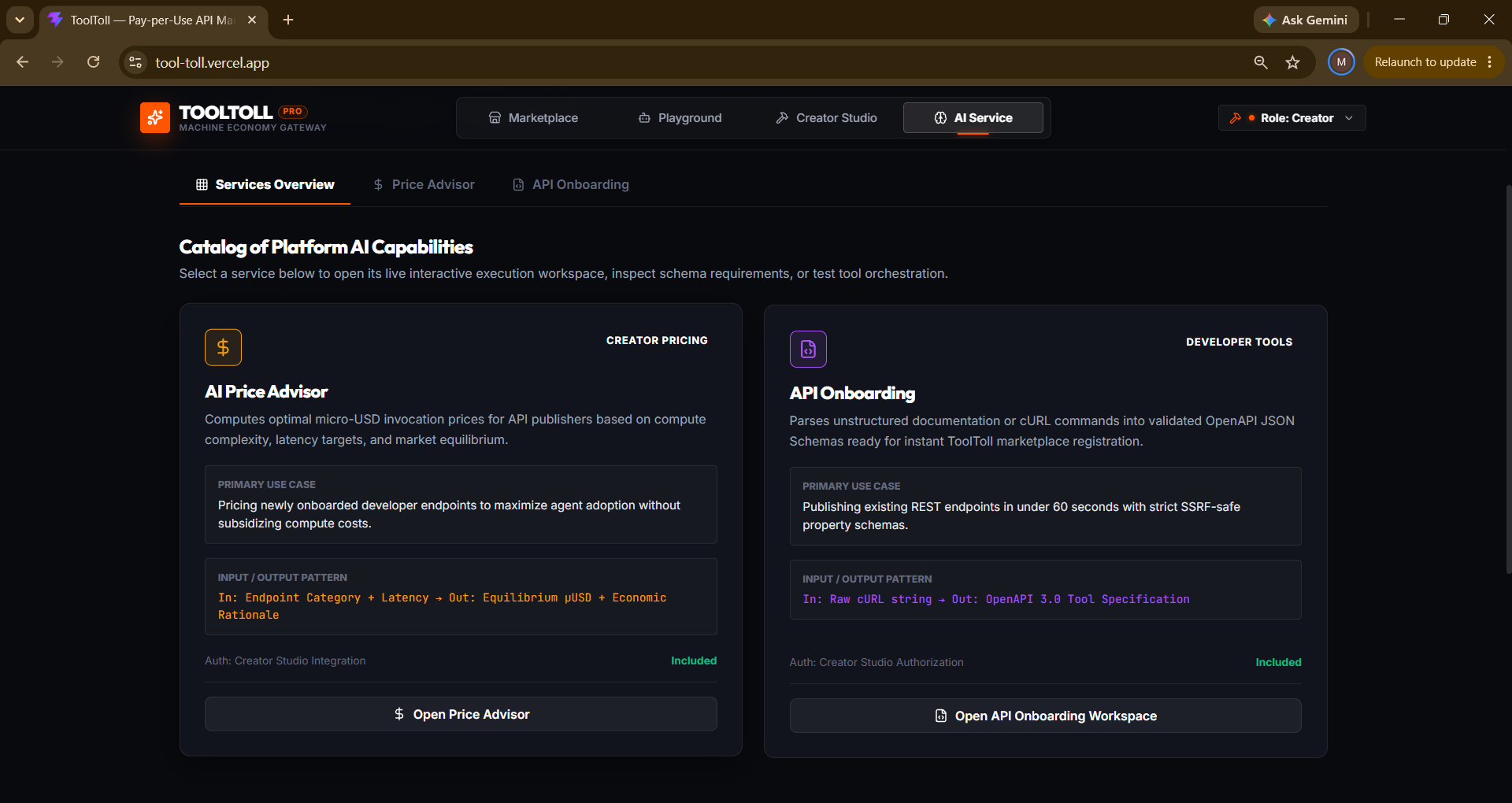
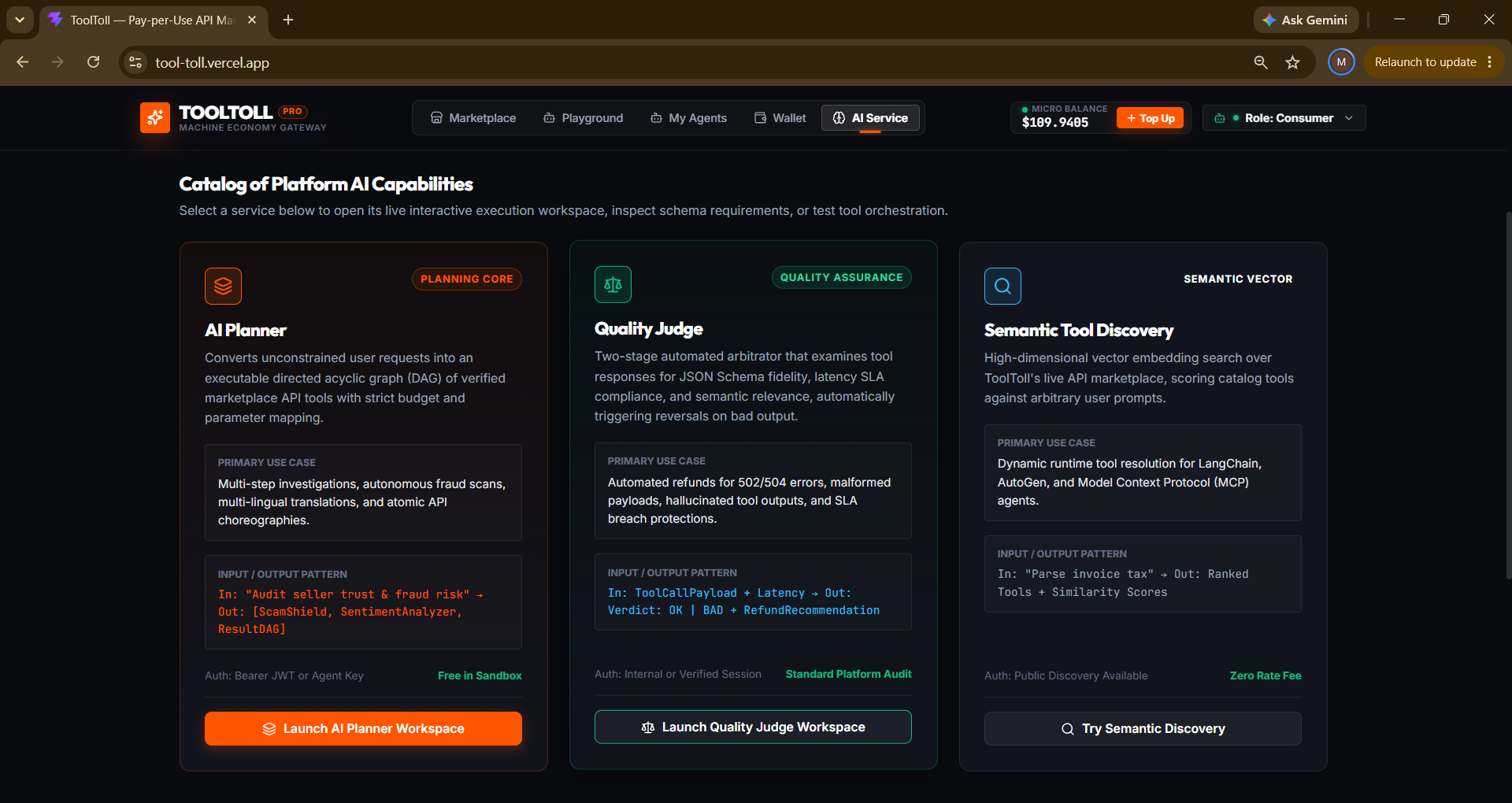
Our AI service, powered by Groq and Anthropic Claude, supports natural-language tool discovery, intelligent agent planning, quality evaluation, price recommendations, and API onboarding.
We also integrated PayPal Sandbox to demonstrate wallet funding and payment workflows, alongside an internal billing ledger for tracking API usage.
How We Built It
We developed ToolToll using a modular architecture, with a main marketplace backend and a dedicated AI service.
The AI service uses Groq and Claude models to power intelligent discovery and agent workflows. It can identify relevant marketplace tools, generate structured execution plans, validate parameters, and evaluate results.
The main backend handles marketplace operations, user roles, API execution, wallet management, and usage-based billing.
We incorporated several developer technologies to strengthen the platform:
- PayPal: Sandbox payment integration for wallet funding.
- Groq and Anthropic Claude: AI-powered discovery, planning, and evaluation.
- AG Grid: Structured and interactive data presentation in dashboards.
- APIMatic: API specification processing and developer onboarding.
- Postman: API testing and validation.
By combining these technologies, we aimed to create a platform where AI-driven API discovery and usage-based monetization work together.
Challenges We Faced
One of our biggest challenges was bringing multiple independent components into a single working ecosystem.
Integrating AI-powered workflows with the marketplace backend required careful handling of API communication, structured responses, parameter validation, and execution dependencies.
Another challenge was designing a usage-based billing model that connects consumer wallet balances, API consumption, and creator monetization while maintaining clear transaction records.
Integrating PayPal Sandbox also required us to distinguish payment processing from our platform's internal usage accounting.
We additionally worked on supporting different user roles, securing API onboarding workflows, and making the platform manageable through dedicated dashboards.
What We Learned
Building ToolToll taught us how to design and connect modular services, integrate AI models into practical applications, and work with payment APIs and developer tools.
We gained experience in API specification handling, structured AI outputs, backend integration, testing, and designing systems around multiple user roles.
Most importantly, we learned that building an AI-powered platform is not just about connecting a language model. It requires reliable execution, validation, security, transparent billing, and a useful experience for every participant.
What's Next
We envision ToolToll evolving into a broader marketplace for AI agents and API creators, where discovering, accessing, and monetizing digital capabilities becomes simpler and more flexible.
ToolToll — Discover. Execute. Pay only for what you use.
