-
-
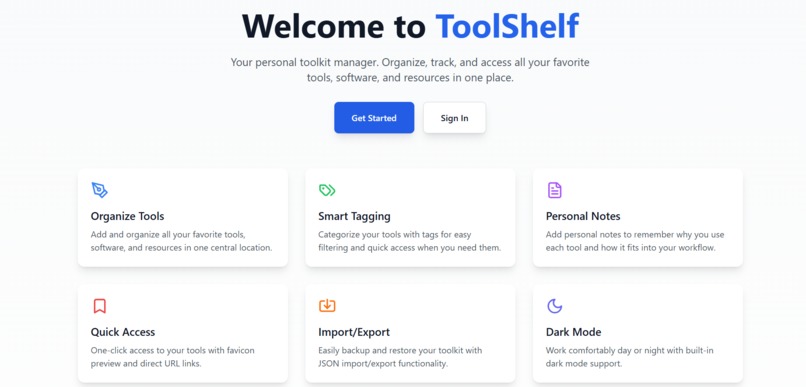
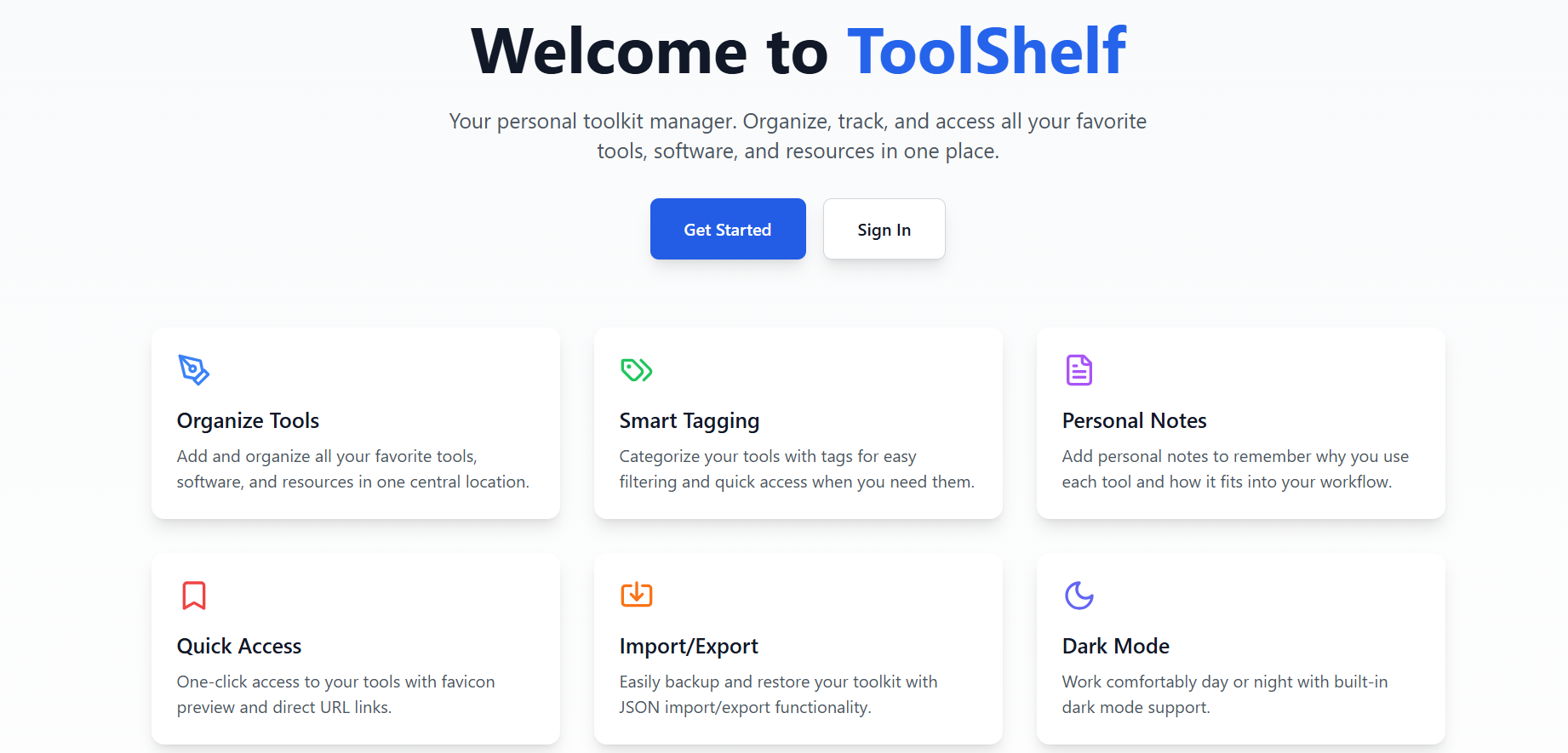
Homepage
-
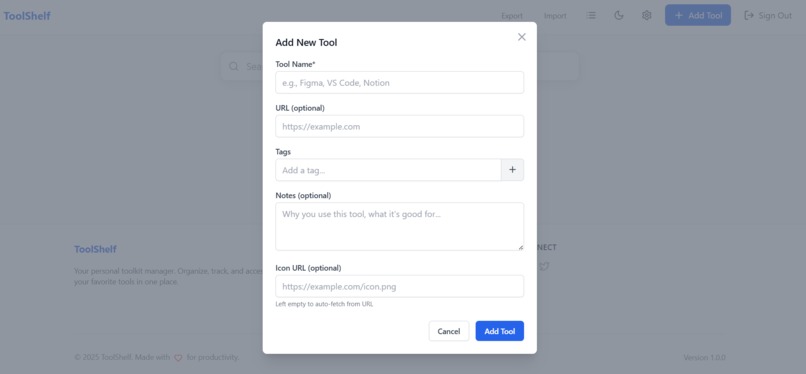
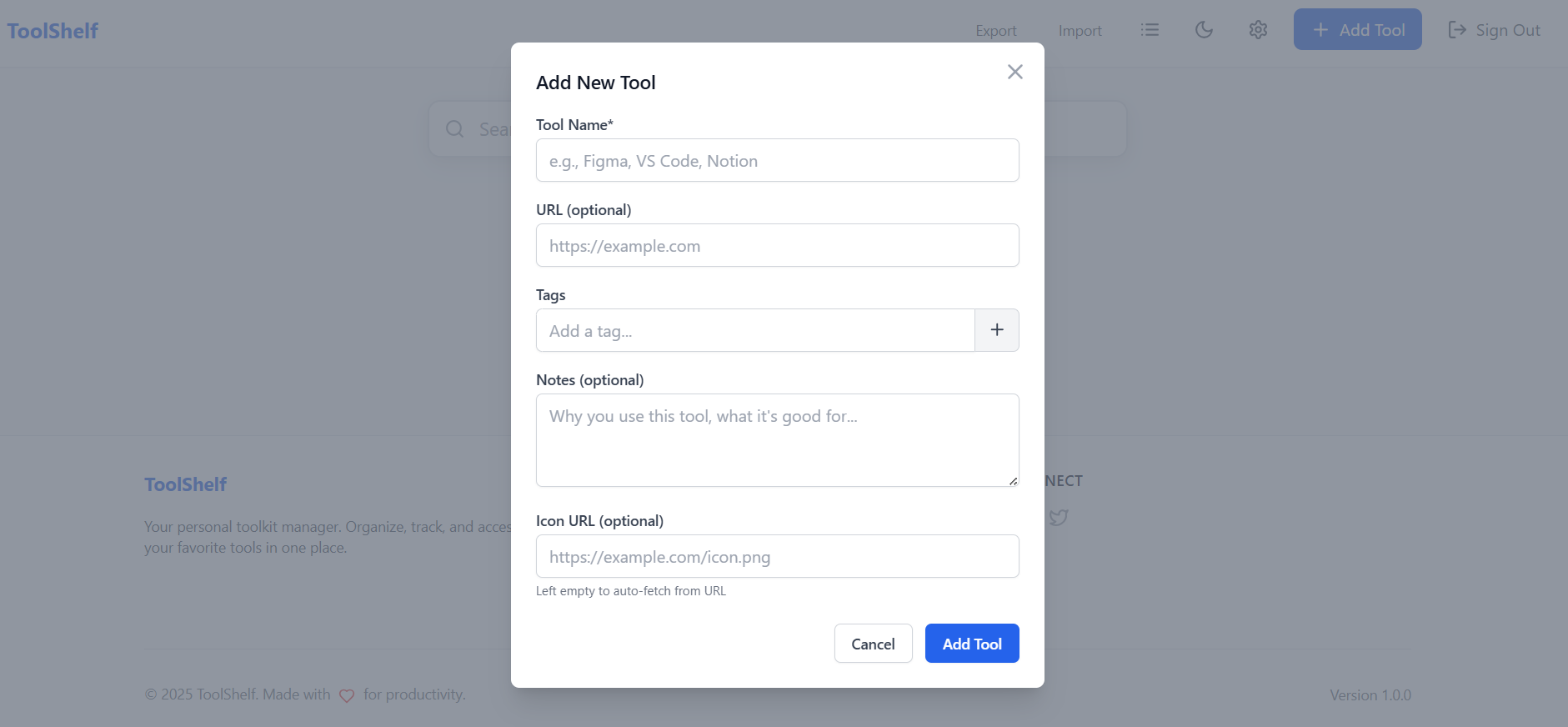
Adding Tools
-
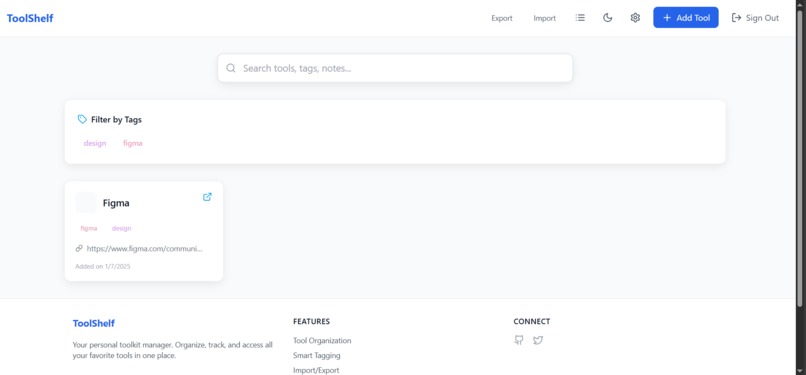
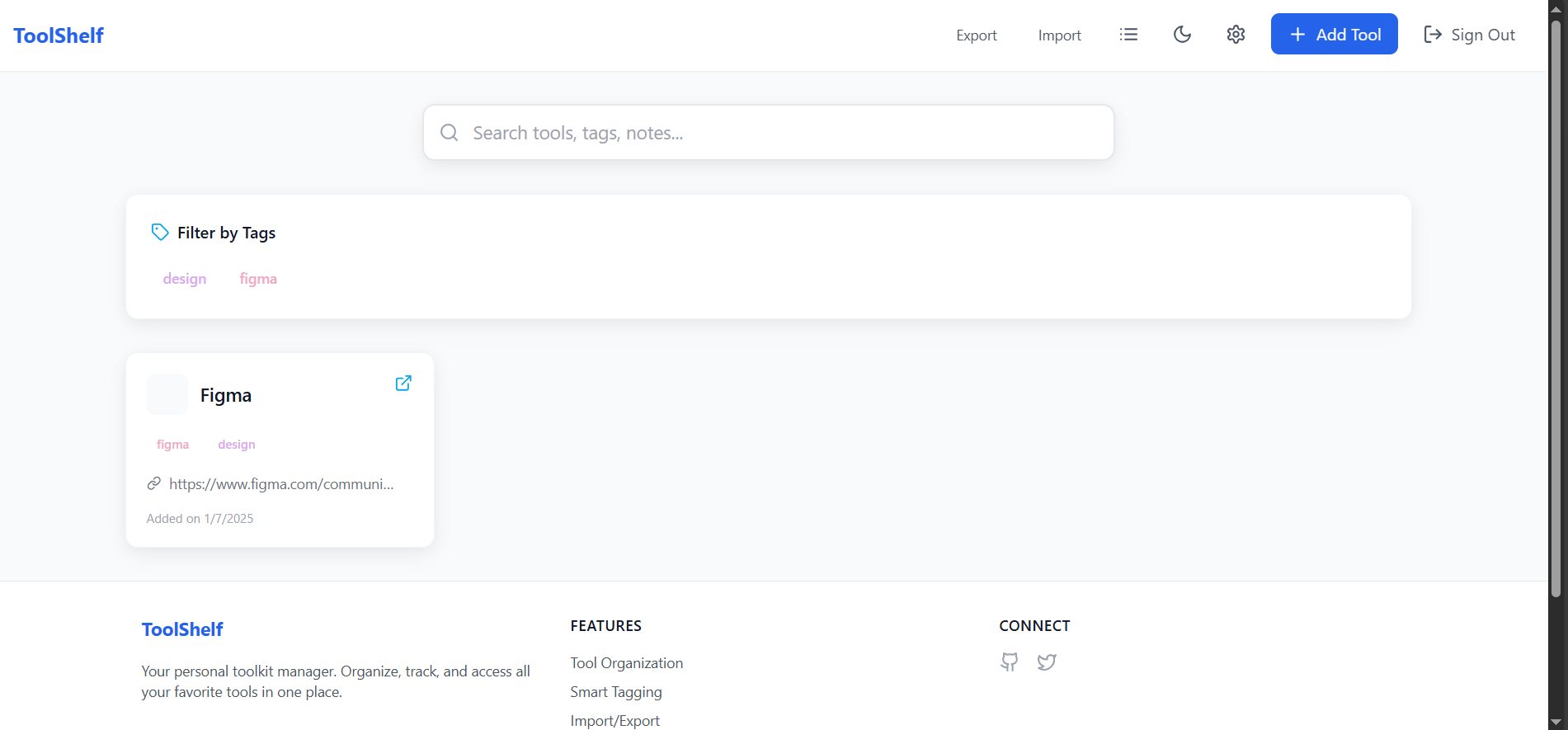
Added Tools
-
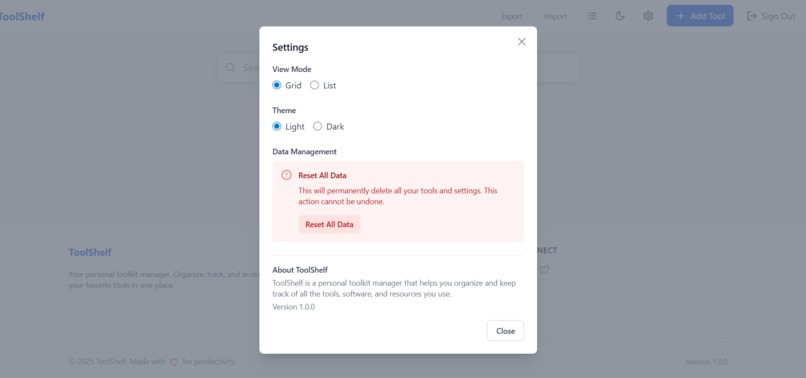
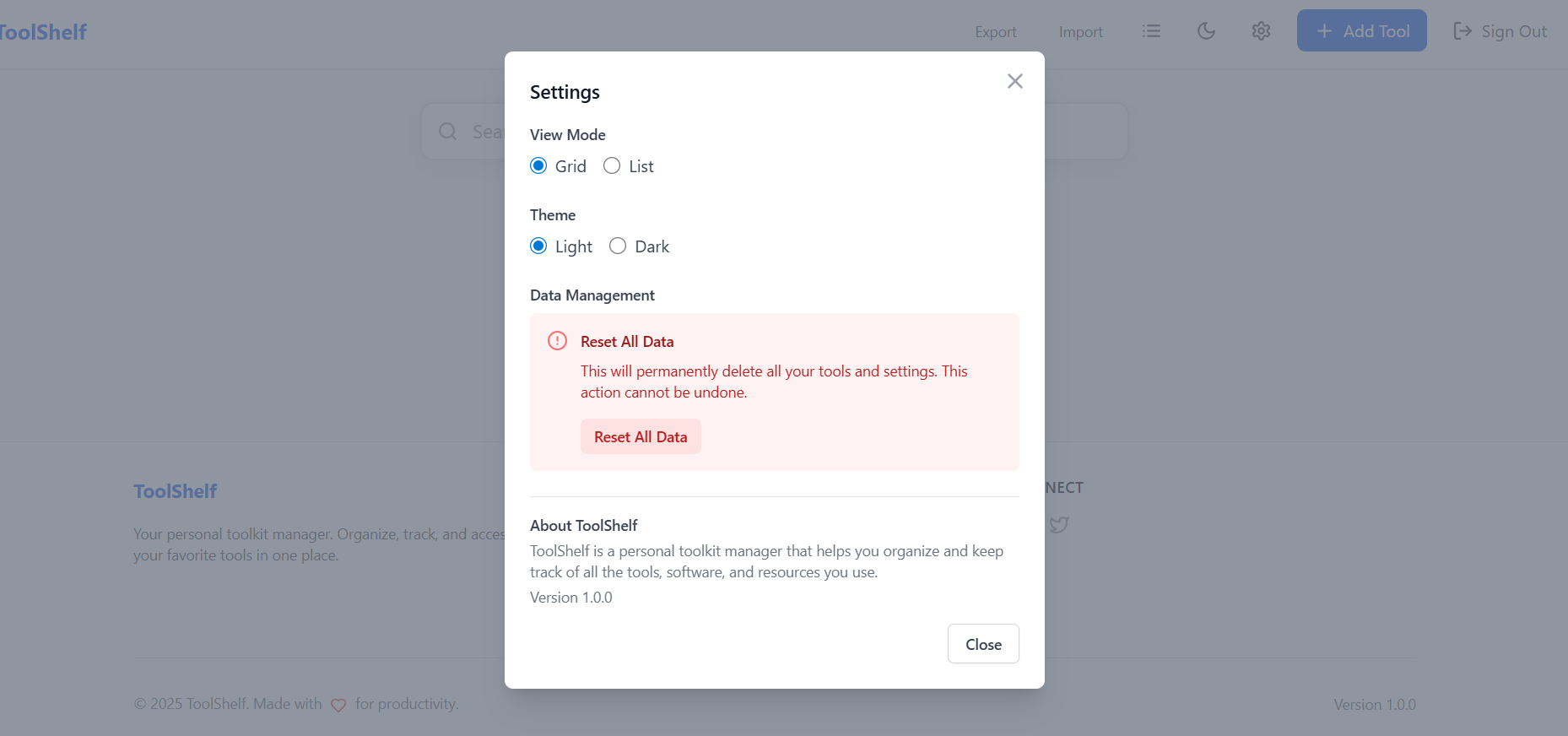
Settings
Inspiration
As developers, we constantly discover tools, libraries, and platforms that enhance our workflow — but keeping track of them all becomes a mess. Bookmarks get lost, notes get scattered, and we forget why we even saved some links. ToolShelf was born out of the need for a personal, searchable, and organized hub where all our favorite tools live — complete with notes, tags, and quick access.
What it does
ToolShelf is your personal toolkit manager. It allows users to:
Add and organize tools, software, and resources
Use smart tags for fast filtering and categorization
Attach personal notes to remember why or how you use each tool
Launch tools instantly via favicon previews and direct links
Import/export your toolkit for backup or sharing
Toggle dark mode for comfortable browsing day or night
All of this is synced across devices — so your toolkit is always with you.
How we built it
ToolShelf was built using:
React (TypeScript) – for the frontend architecture
Tailwind CSS – for clean, responsive styling with dark mode support
Supabase – for authentication and secure cloud-based data storage
Vite – for lightning-fast development and build process
The app is fully responsive and works seamlessly across desktop and mobile.
Challenges we ran into
Multi-language support: We attempted to implement language switching, but faced issues where only partial translations appeared. Despite several approaches, we couldn’t get full localization working and eventually had to leave it out.
Tag filtering UX: Designing a tagging system that feels both powerful and intuitive was harder than expected. We iterated a few times to get it right.
Auth flow edge cases: Handling sign-out behavior and redirect logic with Supabase needed extra attention to avoid broken flows.
Accomplishments that we're proud of
We shipped a full-stack, production-ready app in record time
Created a real solution for an everyday problem developers face
Got great feedback on UI/UX and usefulness from early testers
Successfully implemented import/export functionality with clean JSON structure
What we learned
How to integrate Supabase end-to-end for auth and data
Importance of user-centered design — building an interface that feels natural and frictionless
Lessons in language localization pitfalls and how to approach them better next time
How small tools can have a big impact when they're simple and useful
What's next for ToolShelf
Fixing and expanding language support for international users
AI-based tool suggestions based on your tags and notes
PWA support for native-like experience on mobile
Tool usage history/log to see when and how often a tool was used
Public sharing — allow users to share curated toolkits with others
ToolShelf is just getting started — we’re building this for developers who want clarity, not clutter.
Built With
- react
- supabase-(auth-+-database-+-storage)
- tailwind-css
- typescript
- vite


Log in or sign up for Devpost to join the conversation.