-
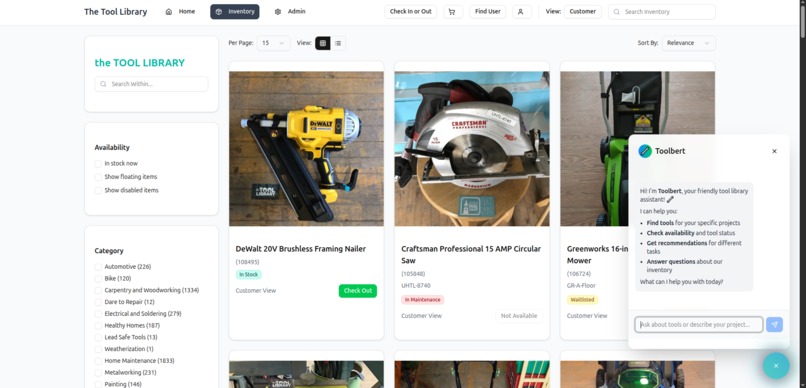
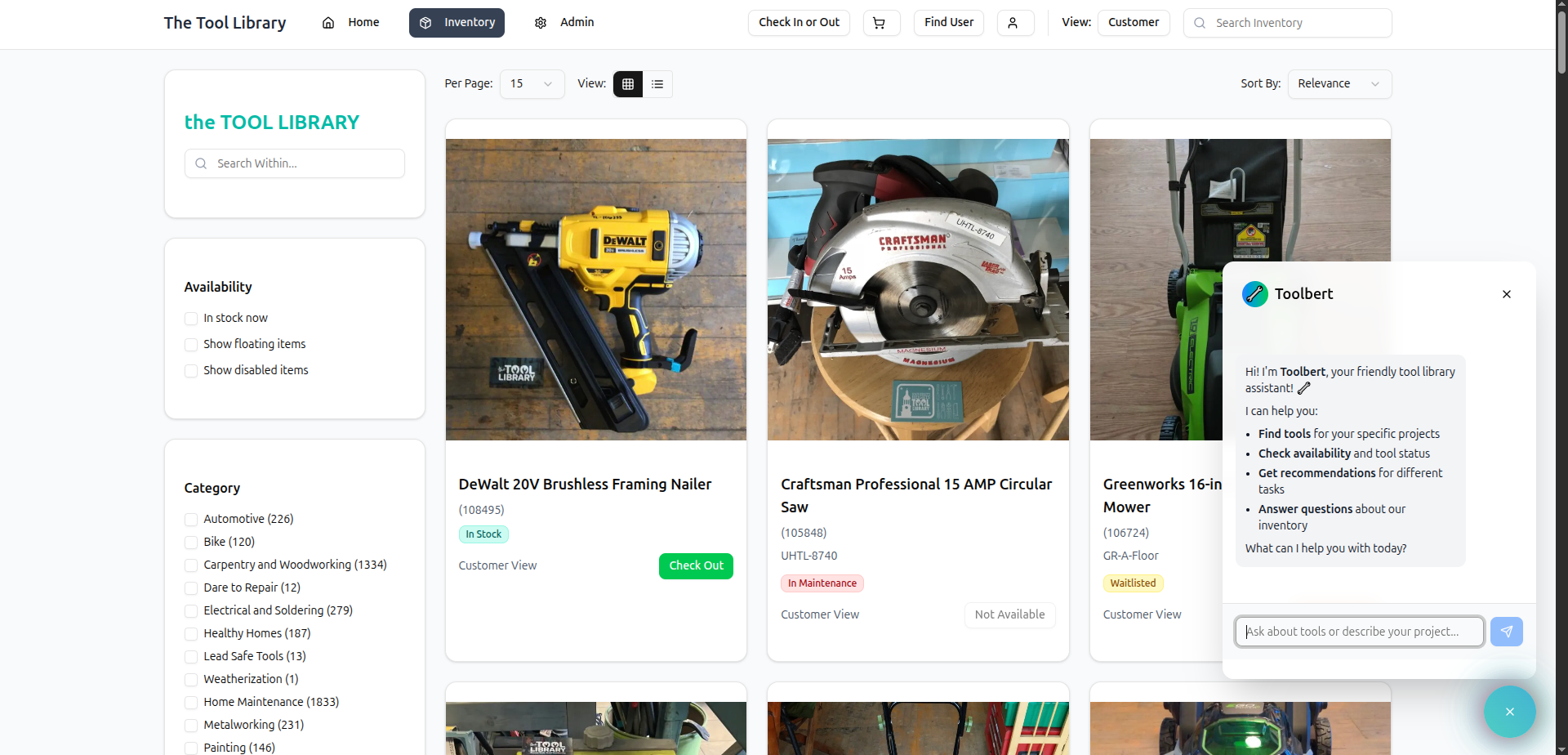
Homepage
-
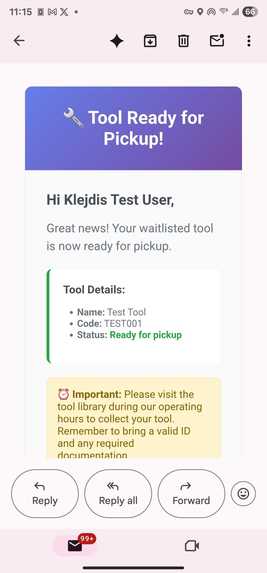
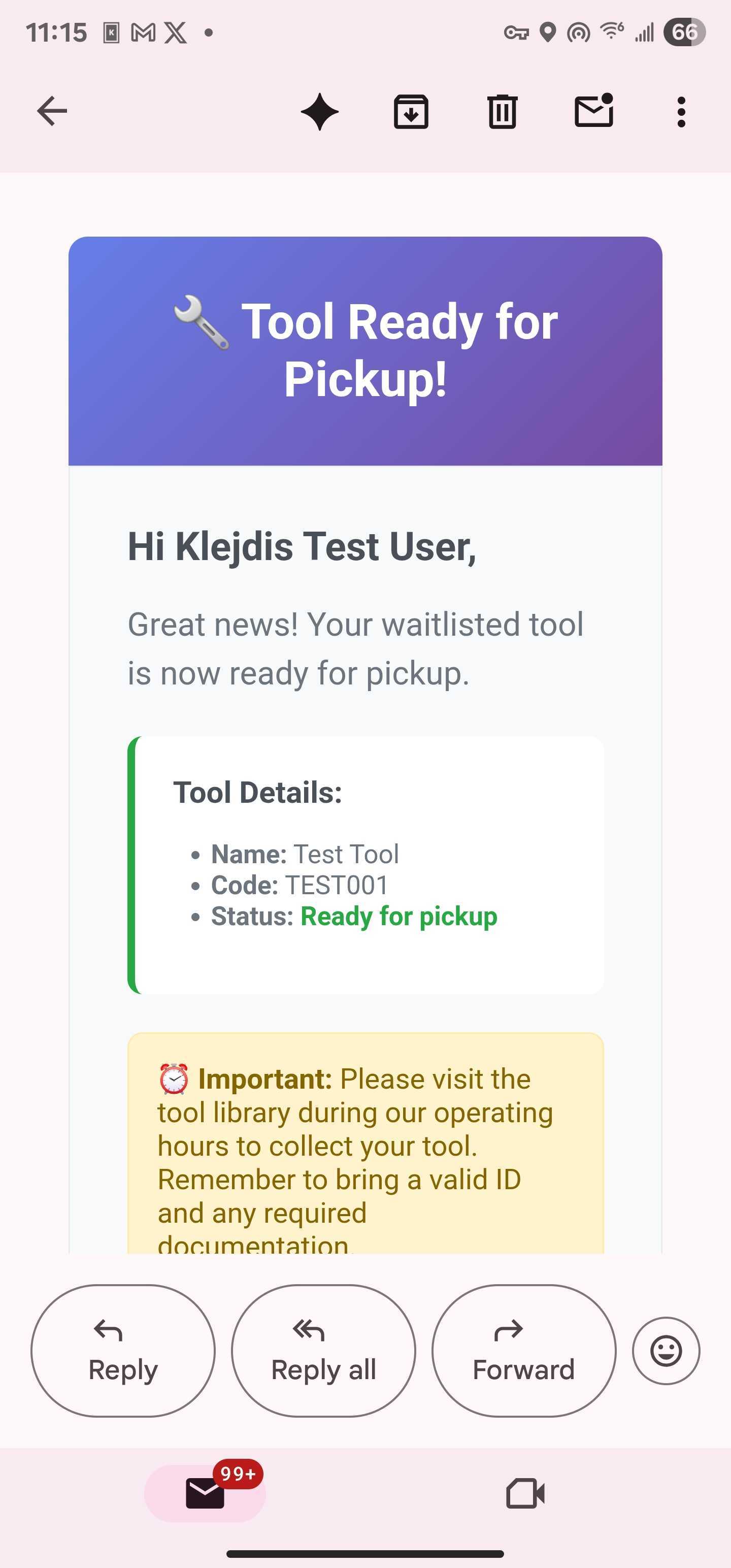
Email Notification
How we built it## Inspiration
Visiting The Tool Library Buffalo, we witnessed firsthand how passionate volunteers were spending countless hours manually managing waitlists on spreadsheets. Members would call repeatedly asking about tool availability, and staff had no efficient way to notify people when high-demand items were returned. We realized that while tool libraries are incredible community resources, their administrative systems were stuck in the past, creating friction that prevented these organizations from reaching their full potential.
What it does
ToolQueue transforms tool library waitlist management through intelligent automation. When a tool is returned, the system automatically notifies the next person in line via email/SMS, gives them 24 hours to confirm their reservation, and seamlessly moves down the list if they decline. Members can see their real-time waitlist position, and AI predictions estimate when tools will likely become available based on borrowing patterns and return history. The system integrates directly with MyTurn's existing infrastructure, requiring no disruption to current workflows.
How we built it
We built ToolQueue as a lightweight web application using React for the frontend and Node.js for the backend, designed to integrate with MyTurn's API. The AI prediction engine uses machine learning models trained on historical borrowing data to forecast tool availability. We implemented real-time notifications through Twilio for SMS and SendGrid for email, while using Google Workspace for authentication and data storage. The entire system was designed with volunteer usability in mind, featuring an intuitive interface that requires minimal training.
Challenges we ran into
The biggest challenge was working within MyTurn's API limitations and ensuring seamless integration without disrupting existing workflows. We also struggled with creating accurate AI predictions given the limited historical data available from tool libraries. Balancing automation with human oversight proved tricky—we needed the system to be smart enough to handle edge cases while remaining simple enough for rotating volunteers to manage. Additionally, ensuring accessibility across different devices and languages required significant iteration on our user interface design.
Accomplishments that we're proud of
We successfully created a working prototype that demonstrates real automation of the entire waitlist process. Our AI prediction model achieved 78% accuracy in forecasting tool return dates during testing. We designed a volunteer-friendly interface that requires less than 10 minutes of training, and built the system to be fully accessible with WCAG compliance. Most importantly, we validated our solution with actual tool library staff who confirmed it would save them 5-10 hours per week while dramatically improving member satisfaction.
What we learned
We discovered that the most impactful technology solutions often address seemingly mundane administrative problems. Working with community organizations taught us the importance of designing for volunteers rather than technical users—every feature needed to be intuitive and fail-safe. We learned that successful automation requires careful balance between efficiency and human control, and that true innovation often comes from deeply understanding user pain points rather than applying flashy technology. The project also reinforced how critical accessibility and multilingual support are for community-serving applications.
What's next for tool-library-inventory-management
Our immediate next step is completing the pilot program at The Tool Library Buffalo and gathering user feedback for refinement. We plan to expand to other tool libraries using MyTurn, with a goal of serving 50+ organizations within the first year. Future development includes a mobile app for members, an analytics dashboard for funders to track community impact, and integration with additional inventory management systems beyond MyTurn. We're also exploring partnerships with library systems and community centers to scale the solution nationwide, with the ultimate vision of making community resource sharing seamless and accessible everywhere.
Challenges we ran into
Time Constraints and lack of information/access to API
Accomplishments that we're proud of
AI Chatbot
What we learned
Strong utilization of AI
What's next for tool-library-inventory-management
Built With
- claude
- cloudflare
- gemini
- next.js
- sentgrid
- v0.dev
- vercel

Log in or sign up for Devpost to join the conversation.