-
-
Loading Screen.
-
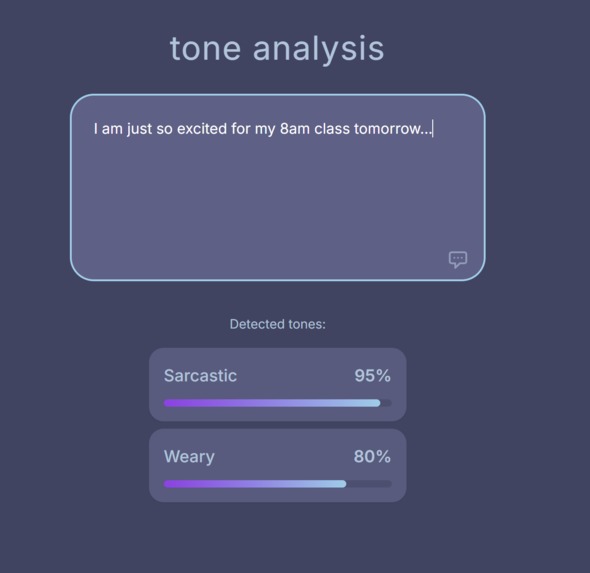
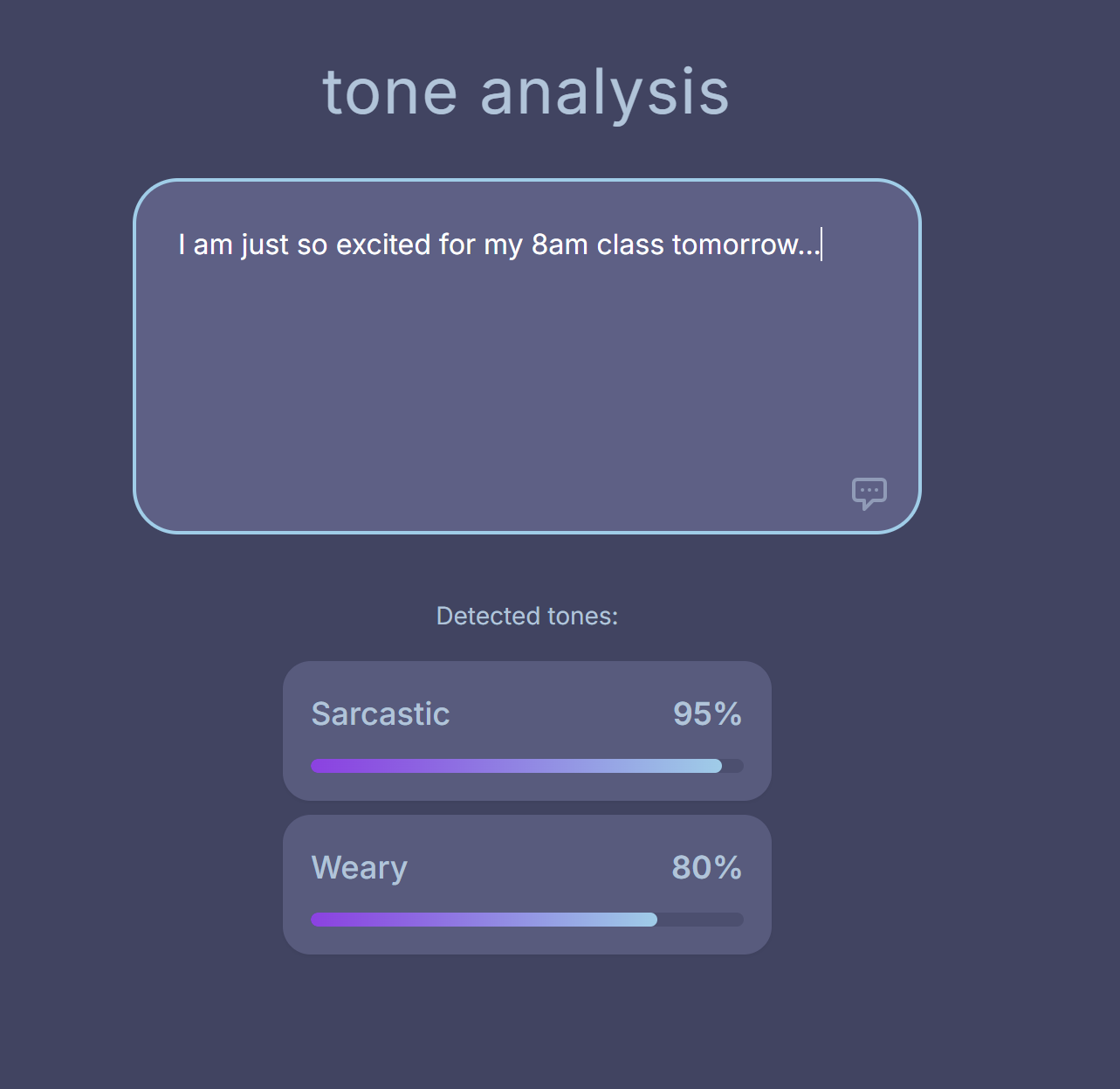
Tone checker.
-
Logo and Loading Screen.
-
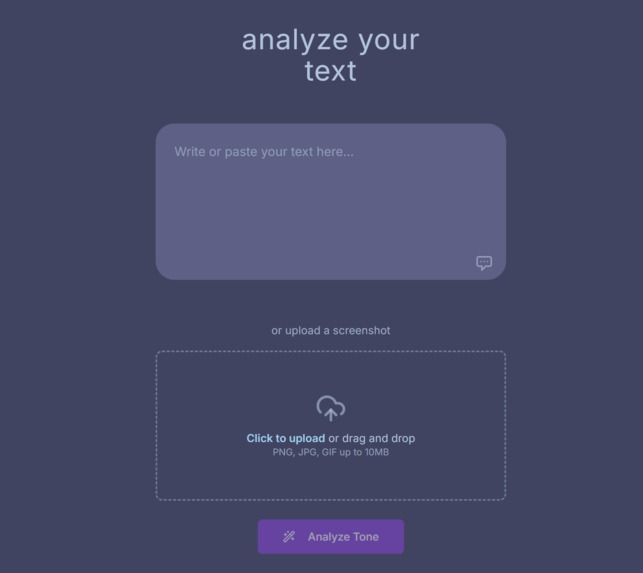
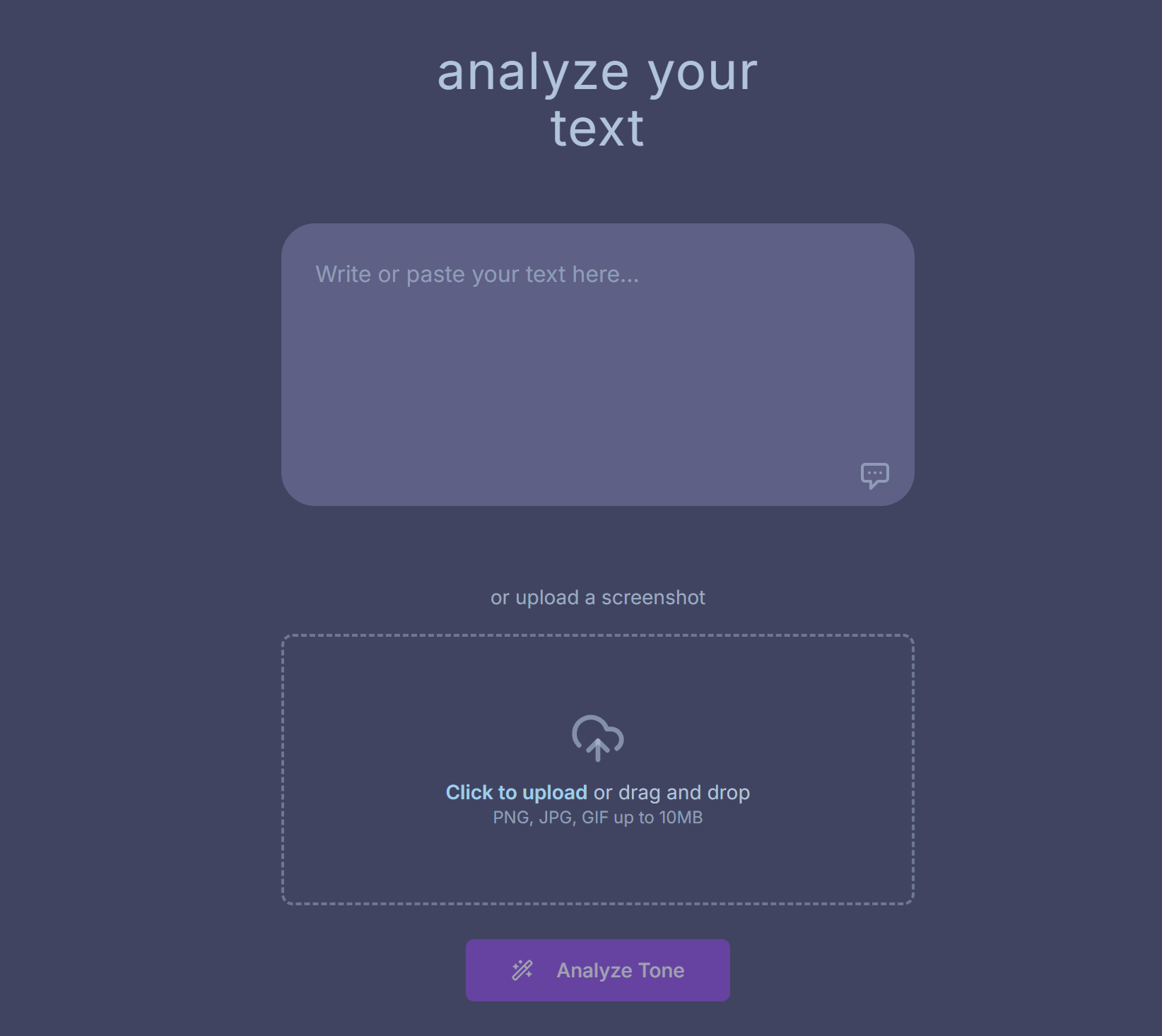
Main page.
-
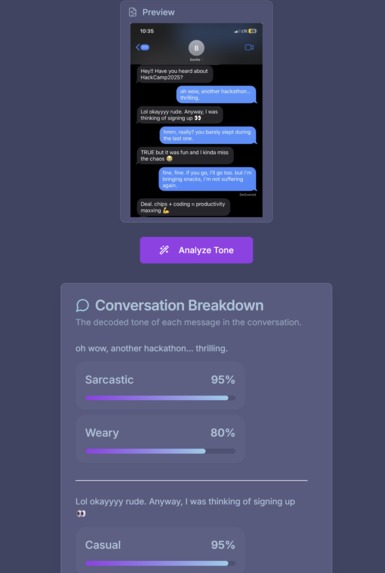
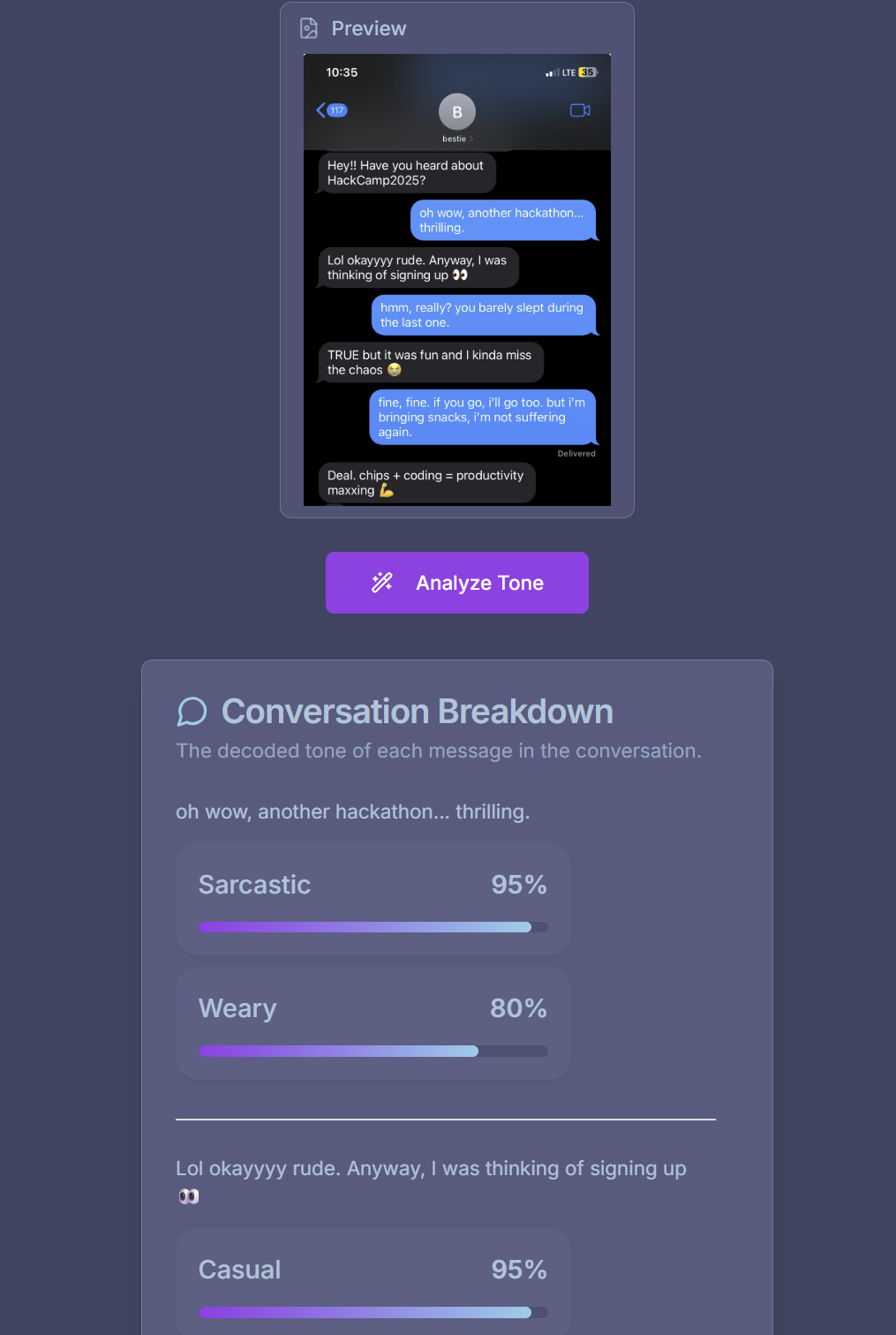
Conversation Analysis.
Inspiration
Our inspiration came from the experiences of neurodivergent individuals who often struggle to interpret the emotional tone of text-based communication. Misreading tone can lead to misunderstandings, anxiety, or unnecessary conflict, so we wanted to create a tool that makes digital communication more accessible and supportive. By building something that helps users better understand how their messages may be perceived, we hoped to reduce communication barriers and bring more clarity and confidence to everyday interactions.
What it does
ToneLens allows users to analyze the tone of text in two ways: by typing or pasting a message directly into the app, or by uploading a screenshot of a text conversation. Our app processes the content and displays a clear, message-by-message evaluation of emotional tone, intent, and shifts in sentiment over time. This gives users a detailed view of how the conversation flows and helps them understand how their words—or someone else’s—might come across.
How we built it
We built ToneLens using TypeScript and React.js for a clean, responsive, and accessible frontend. For AI processing, we integrated Google’s Gemini model, leveraging both its natural language capabilities and its computer vision features. The model allows us to parse text from screenshots accurately and evaluate emotional tone with nuanced, context-aware outputs. Together, these technologies enabled us to create a seamless, fast, and intuitive user experience.
Challenges we ran into
One of our biggest challenges was figuring out how to connect a powerful backend to a frontend that remained simple, intuitive, and non-overwhelming. Striking the right balance between functionality and usability took multiple iterations. We also had to tune our prompts and API interactions carefully to ensure reliable tone detection from multiple input formats, especially when dealing with images and multi-message conversations.
Accomplishments that we're proud of
We’re proud of successfully integrating an advanced AI API into a polished, user-friendly interface. Another major accomplishment was constructing prompts that guide the model effectively and consistently in interpreting tone. And, of course, delivering a fully functional, refined product in such a short timeframe is something we’re all very proud of.
What we learned
Throughout this project, we gained valuable experience in web design, full-stack integration, and prompt engineering. We also learned a lot about effective teamwork—communicating clearly, working through unexpected issues, and staying persistent even when things didn’t go as planned. The project pushed us to grow technically and collaboratively.
What's next for ToneLens
Next, we plan to make ToneLens even smarter by dynamically switching between AI models depending on the task—whether it’s analyzing long conversations, handling screenshots, or detecting subtle emotional cues. We also want to bring ToneLens to more people by developing a mobile app for both iOS and Android, making tone analysis accessible on the go.

Log in or sign up for Devpost to join the conversation.