-
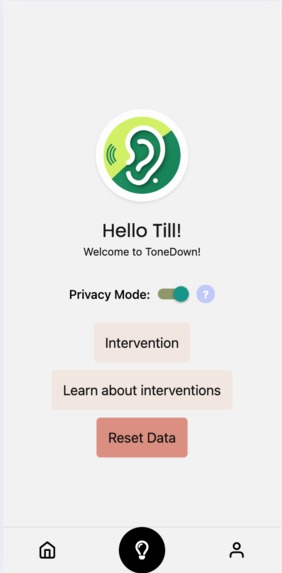
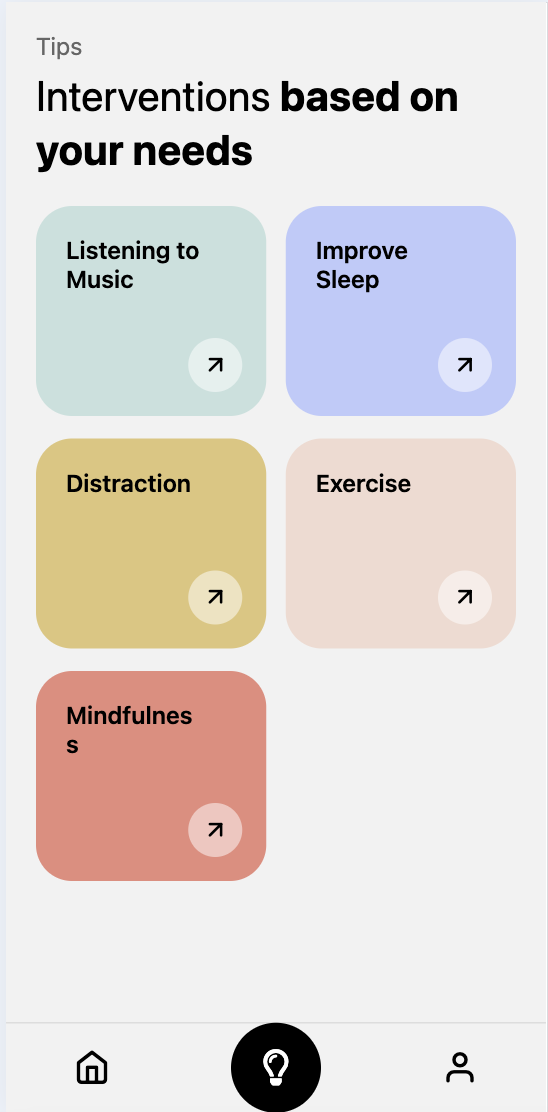
Home Page
-
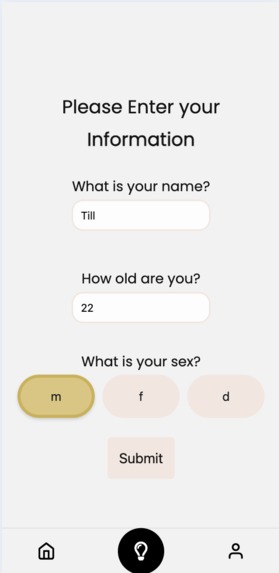
Start Page
-
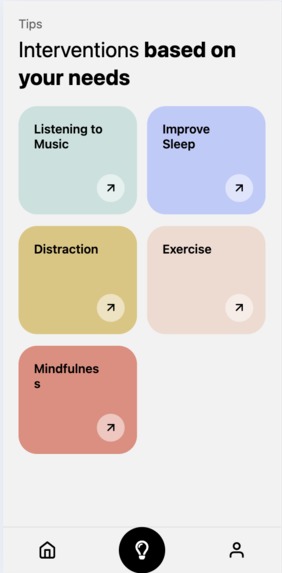
Interventions Info Page
-
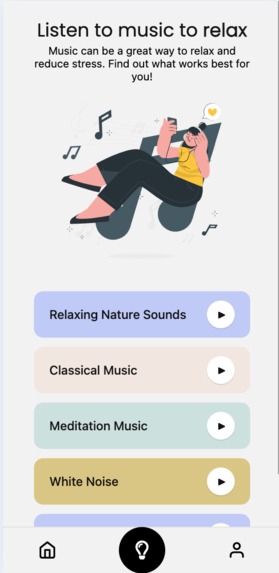
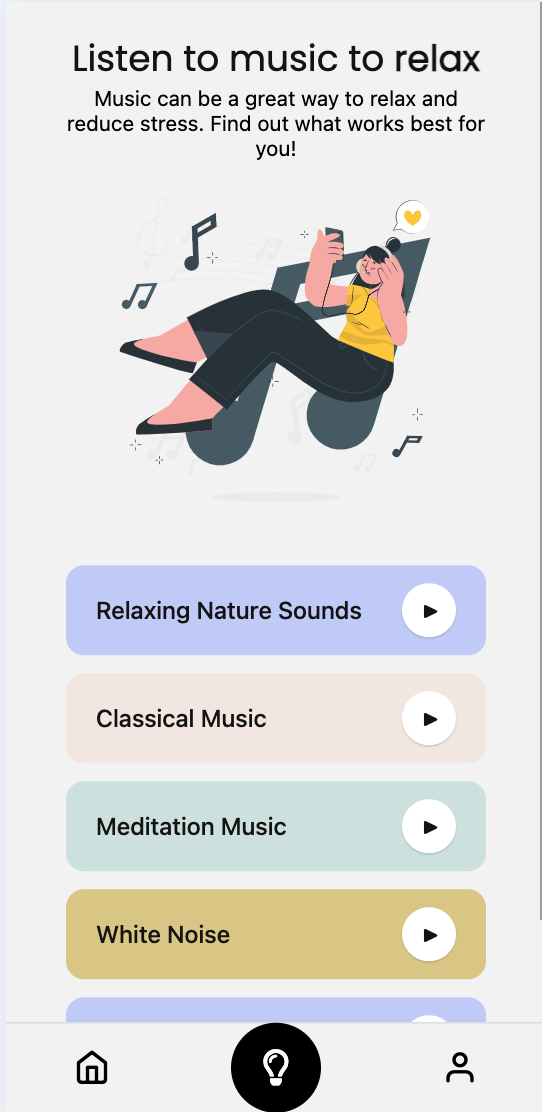
Intervention Info
-
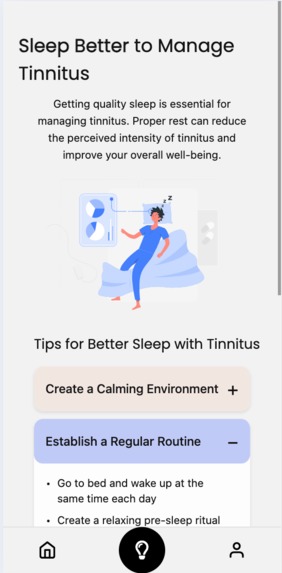
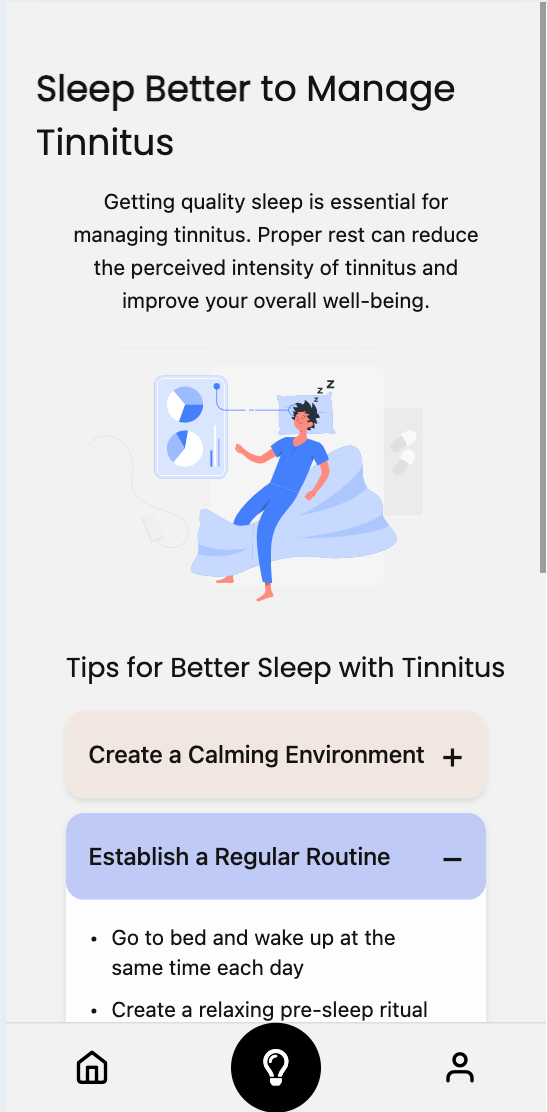
Intervention Info 2
-
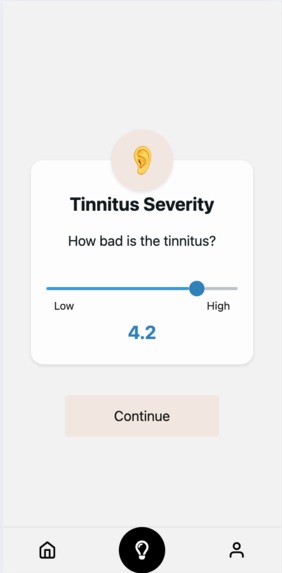
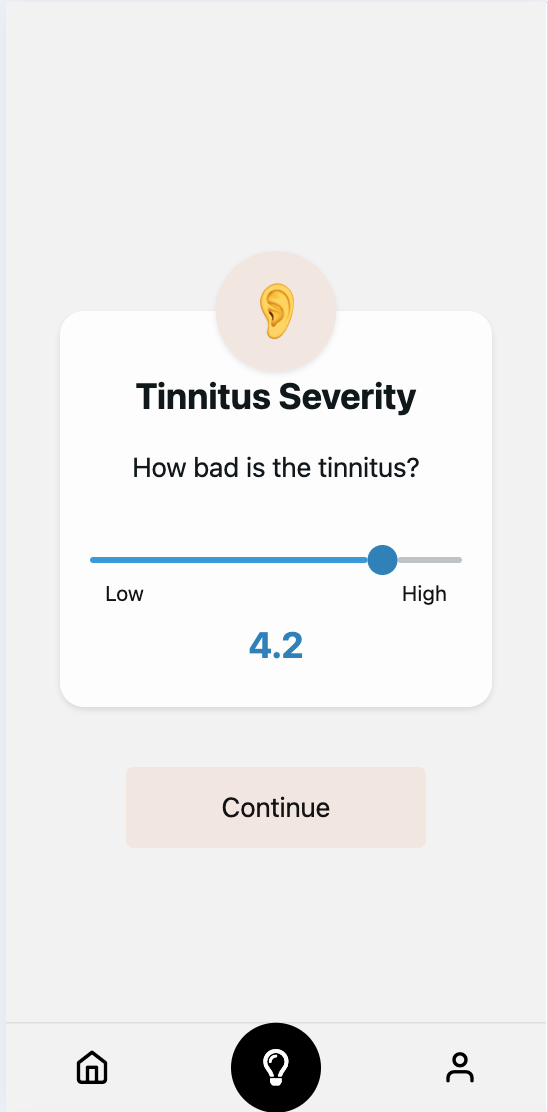
Tinnitus Severity
-
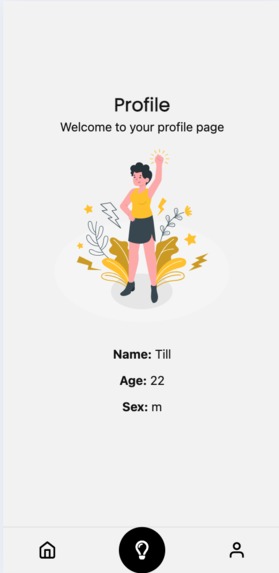
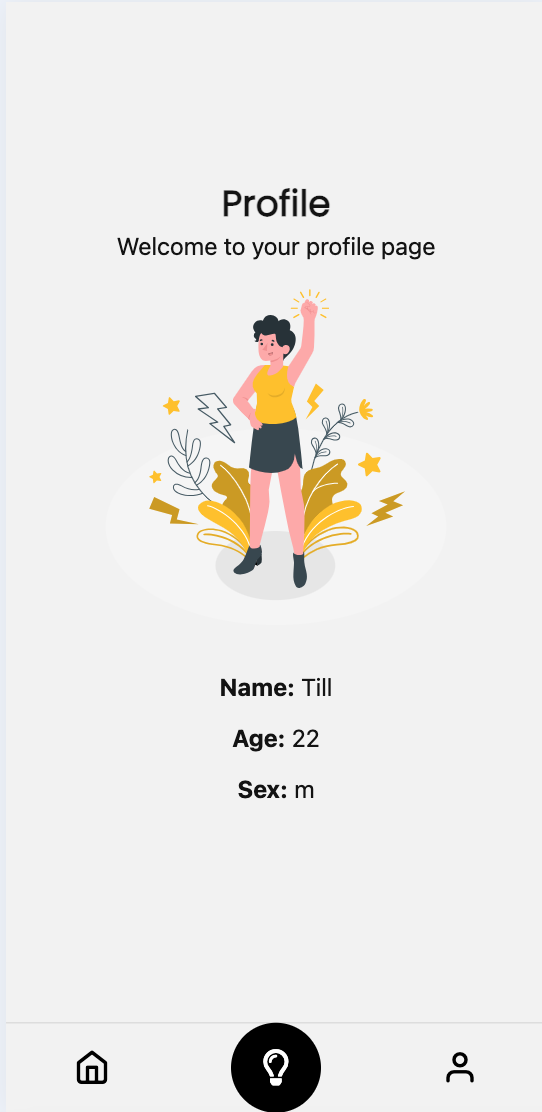
Profile Page
-
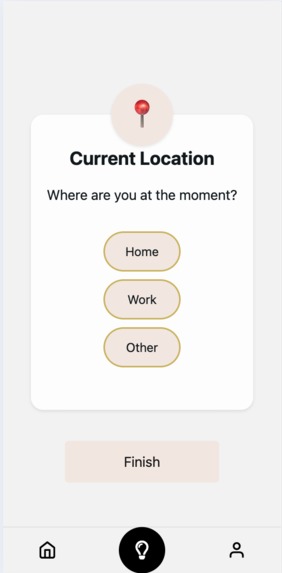
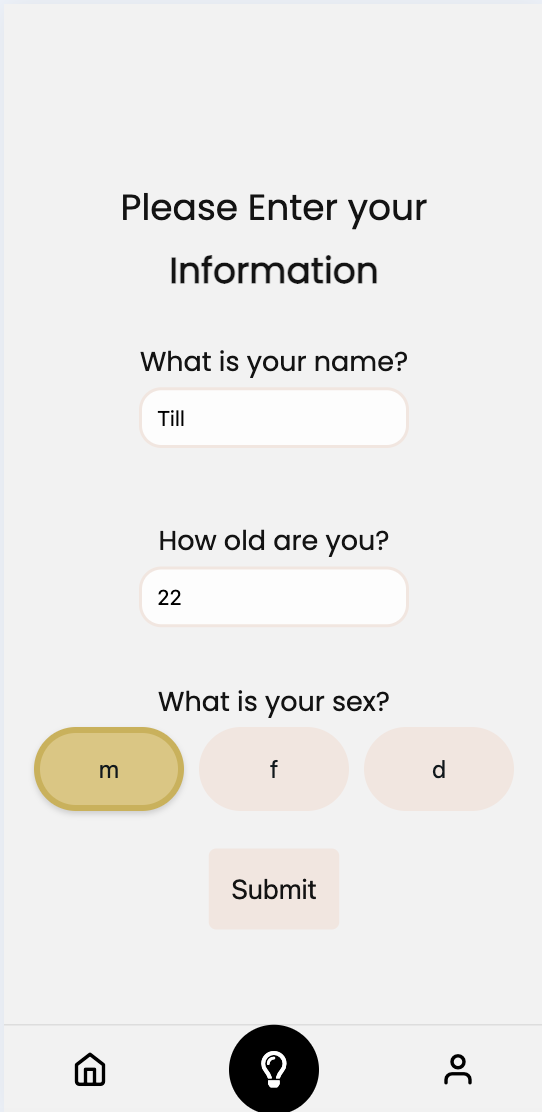
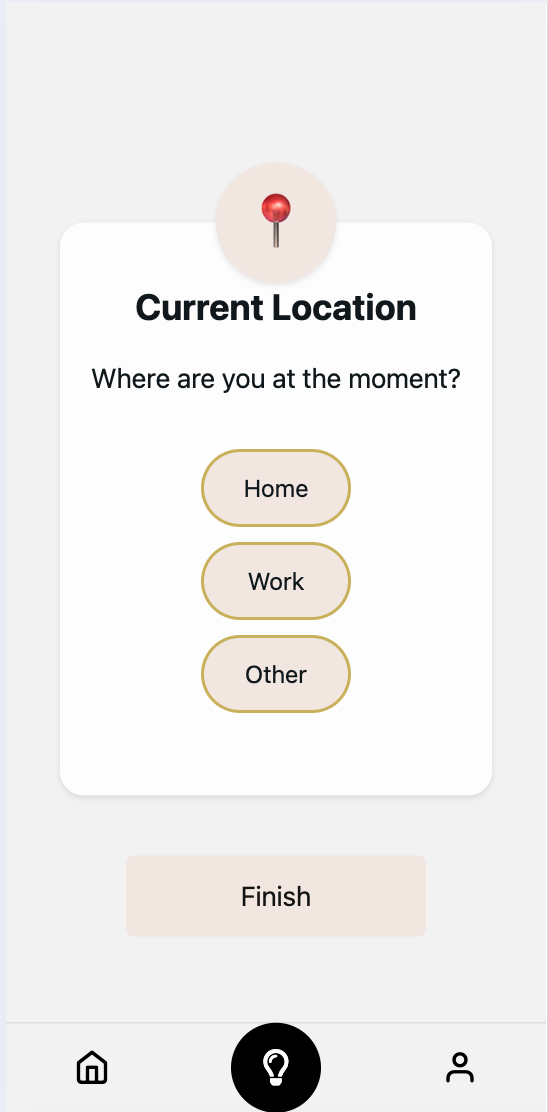
Example Question
-
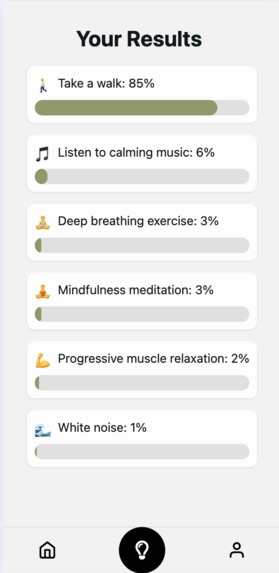
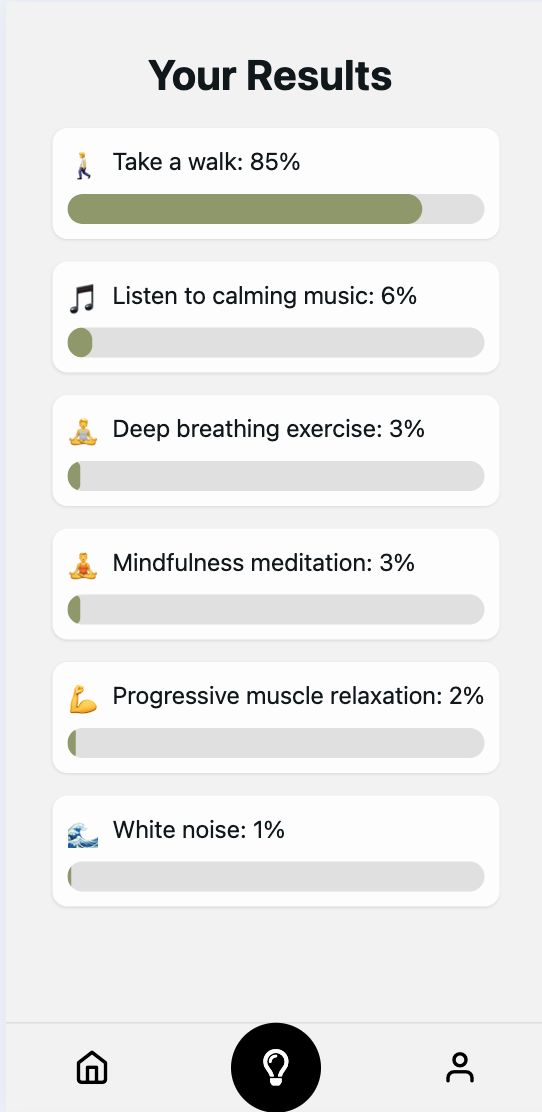
Model Predictions (probability of being the optimal intervention)
-
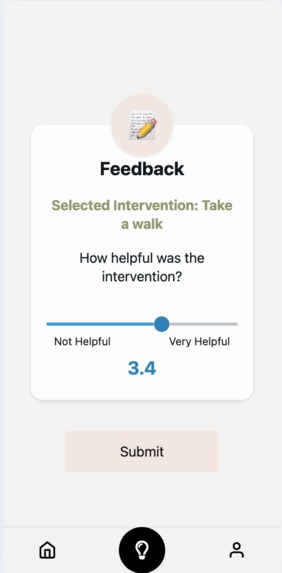
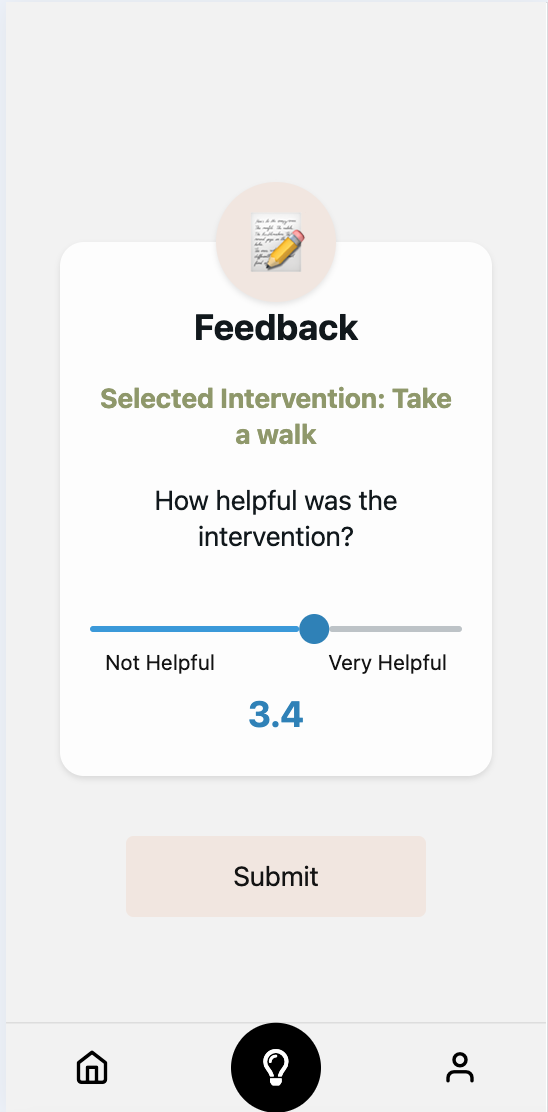
User Feedback
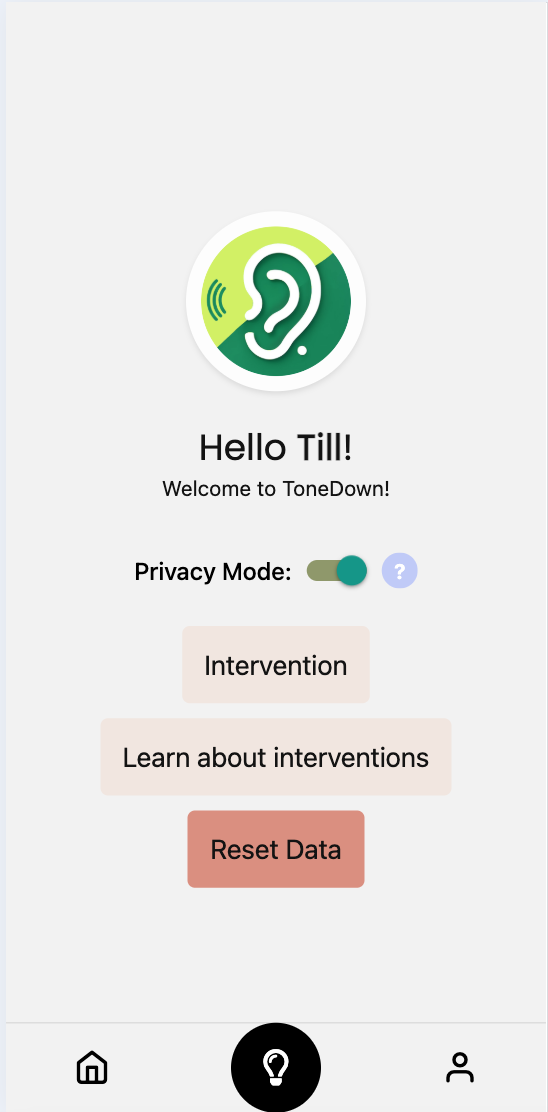
Please visit our YouTube Video to get a quick summary of our app! :)
Inspiration
Tinnitus affects millions worldwide and currently has no cure. Various interventions exist, but their effectiveness varies significantly from person to person and depends heavily on the person and their specific situation. Patients often struggle to quickly identify the intervention that works best for them at the exact moment they hear the tinnitus.
What it does
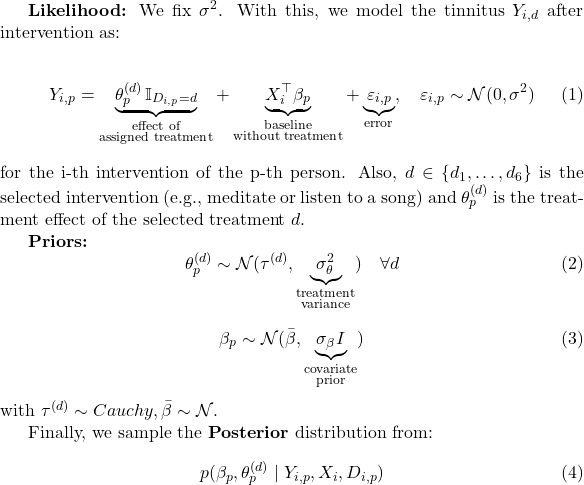
Tone-Down is a personalized solution designed to help patients regain control over their life, empowering them to regain better sleep, as well as concentration for everyday tasks. Our app quickly collects rich contextual information from you - such as your current location (home, work, other), stress levels, and medication intake - through a concise, user-friendly questionnaire. To decide for the collected predictors and questions, we looked at several medical studies, sorted their covariates and filtered them by which ones we can collect from the user without any specialized devices (such as EEG). Using two custom designed Bayesian learning algorithms for the Tinnitus prediction task, Tone-Down then intelligently recommends the most suitable intervention tailored specifically to the patients profile and situation.
How we built it
We developed an intuitive, easy-to-use application accessible easily to all generations, including elderly people who are the demographic most affected by tinnitus. The interface prompts the user with an initial questionaire with questions about their current situation. We use React-Native with Typescript for the frontend, and Python combined with our Bayesian adaptive learning algorithm implemented with PyStan on the backend.
TLDR:
- React Native
- Typescript
- PyStan
Our Bayesian model:
Challenges we ran into
We did have very limited data with tuples of treatments/ interventions and their effect. There was one dataset for EEG data, but we decided to focus on do-it-at-home solutions without expensive equipment. Sleep.
Accomplishments that we're proud of
- Built a working app with fully functional and beautiful frontend
- Build two working Bayesian algorithms (that can learn near-optimally) and developing the math for it
- Super efficient division of labour
- Using well researched interventions and predictors
What we learned
- Frontend takes time
- How important it is to prepare the presentation early
- Supporting each other & dividing tasks according to each members strengths is really important
What's next for Tone-Down
- Integrating additional sensors and wearable devices for passive data collection
- Making the Bayesian algorithms even faster and developing them further
- Incorporating patient/ researcher feedback
Attribution Note: We used illustrations from StorySet.
Built With
- pystan
- react-native
- typescript

Log in or sign up for Devpost to join the conversation.