-
Logo
-
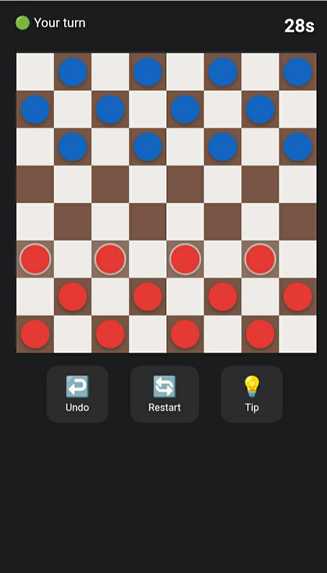
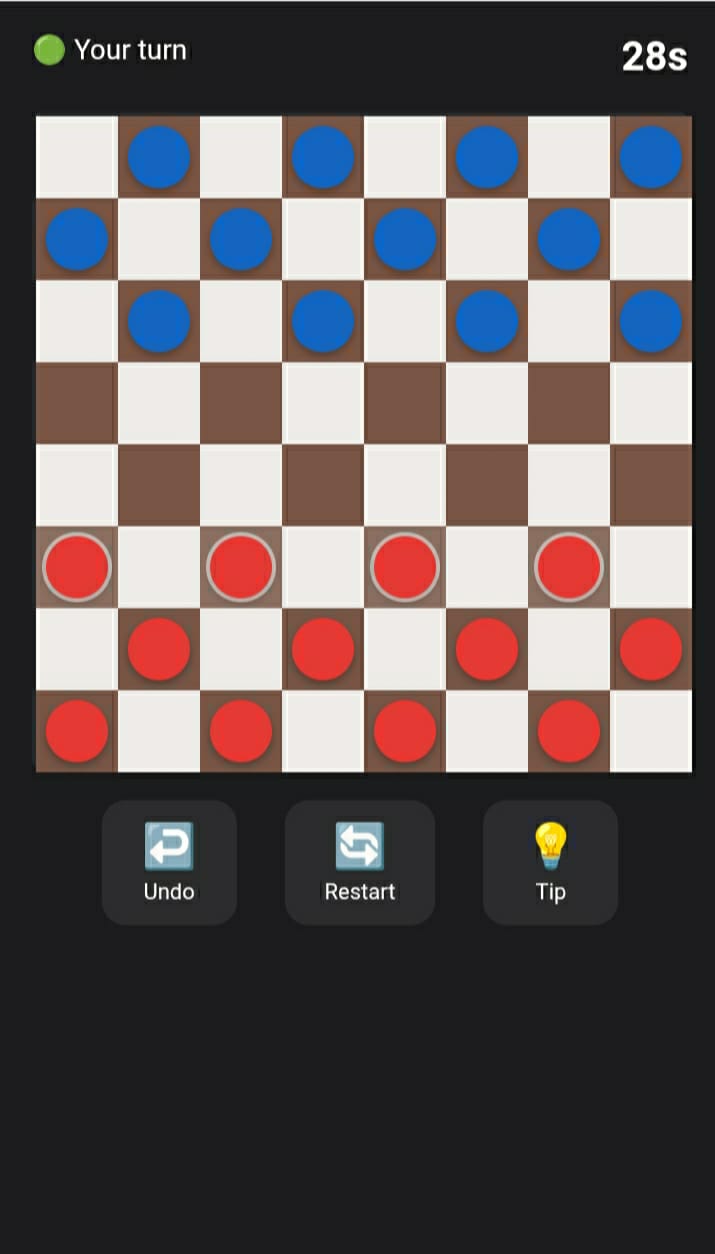
Board
-
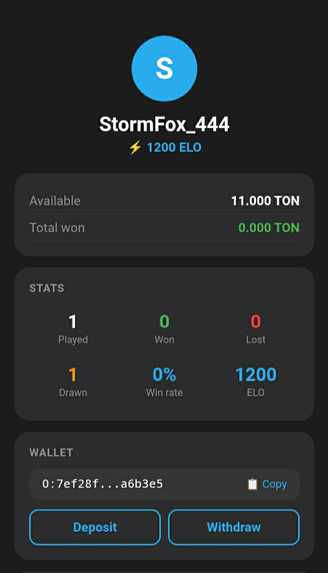
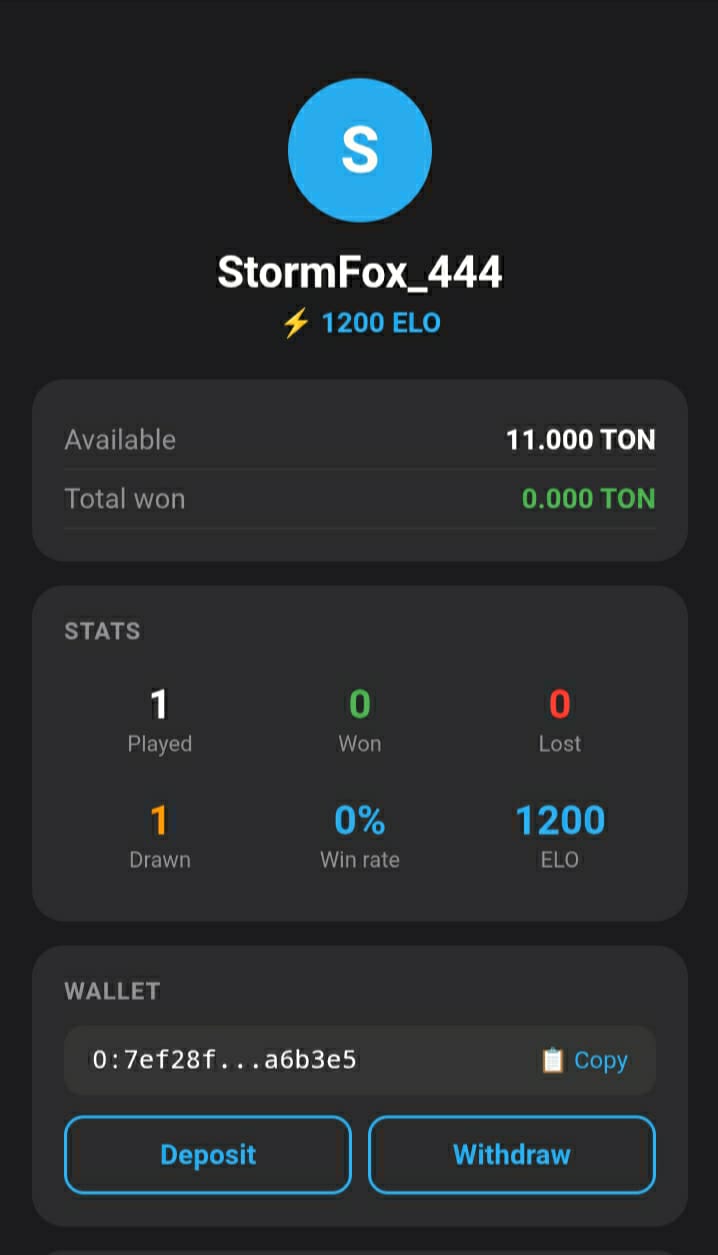
Profile
-
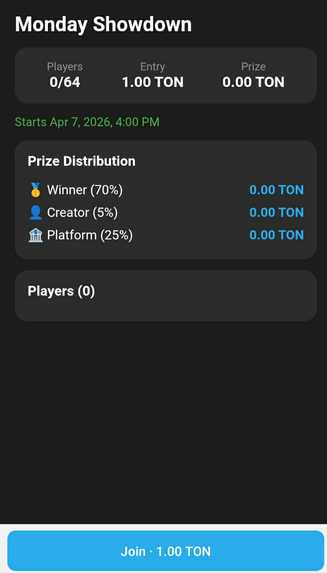
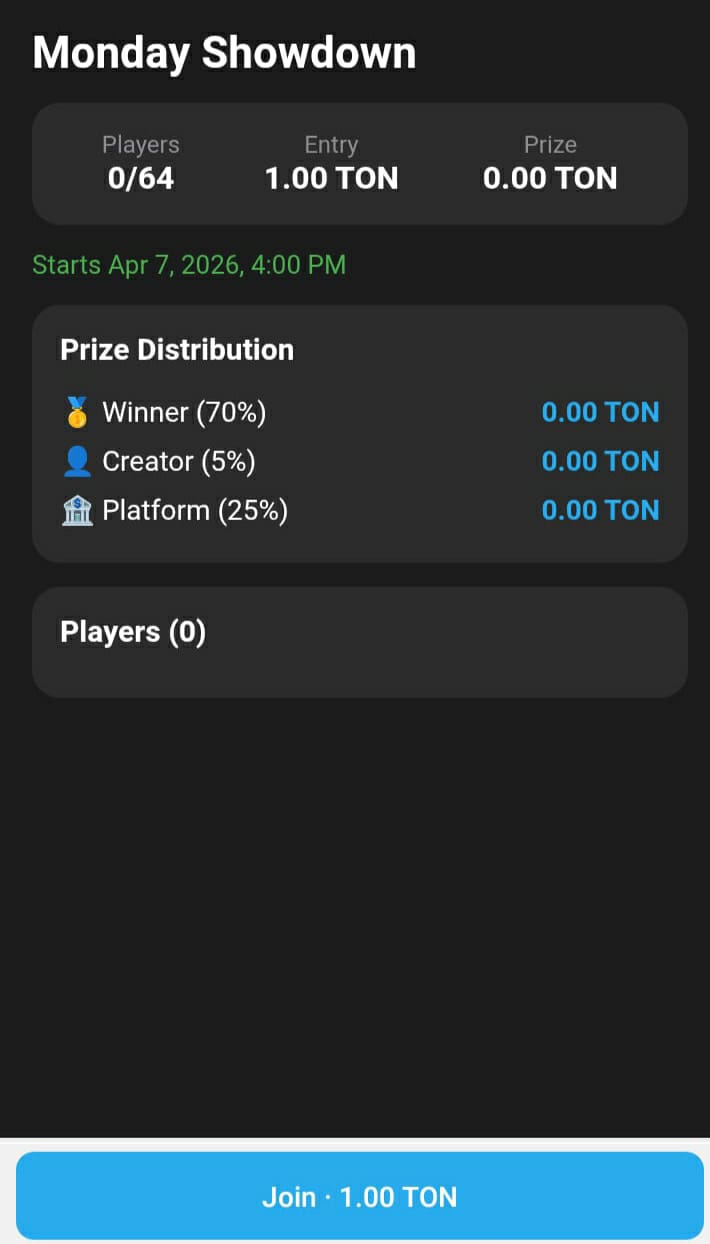
Tournament Join page

TonCheckers
Inspiration
Competitive online gaming has grown rapidly, but blockchain gaming still suffers from high barriers to entry, poor user experience, and complicated wallet interactions. We wanted to build a platform where anyone could enjoy a classic game of checkers while benefiting from transparent prize pools, secure custodial wallets, and blockchain-powered tournaments—all without needing deep crypto knowledge.
TonCheckers combines the familiarity of a timeless board game with the transparency and efficiency of the TON blockchain, making Web3 gaming accessible to everyone.
What it does
TonCheckers is a competitive multiplayer checkers platform built for the TON blockchain.
Players can:
- Create and join real-money matches using TON.
- Participate in tournaments with automated prize distribution.
- Deposit and withdraw TON through a secure custodial wallet.
- Track match history, rankings, and player statistics.
- Enjoy real-time multiplayer gameplay with intelligent matchmaking.
- Access the platform through a responsive web application designed for both desktop and mobile users.
The platform manages player balances securely while providing a seamless gaming experience that feels familiar even to users who have never interacted with blockchain before.
How we built it
The platform was built using a modern full-stack architecture.
Frontend
- React
- TypeScript
- Vite
- Tailwind CSS
Backend
- Node.js
- Express.js
- PostgreSQL
- Redis
- WebSockets for real-time gameplay
Blockchain
- TON Blockchain
- TON Connect
- Custodial treasury architecture
- Secure wallet management
Infrastructure
- Railway
- Cloudflare Pages
- Docker
- GitHub
The backend is organized into modular services handling authentication, gameplay, matchmaking, wallet operations, tournaments, analytics, treasury management, and notifications.
Challenges we ran into
Building a real-time multiplayer blockchain game introduced several technical challenges.
- Synchronizing game state between two players with minimal latency.
- Managing secure custodial wallets while maintaining a simple user experience.
- Preventing duplicate game events and ensuring reliable WebSocket communication.
- Designing scalable matchmaking for concurrent players.
- Balancing blockchain security with the speed expected from online gaming.
- Building an architecture that can support future tournaments, leaderboards, and additional games.
Accomplishments that we're proud of
- Built a fully functional multiplayer checkers platform.
- Successfully integrated TON blockchain payments.
- Developed a secure custodial wallet system for deposits and withdrawals.
- Implemented real-time gameplay using WebSockets.
- Designed a scalable backend architecture ready for future expansion.
- Delivered a polished responsive web application with a clean user experience.
- Created a foundation that can evolve into a complete blockchain gaming ecosystem.
What we learned
This project reinforced several important engineering lessons.
- Real-time multiplayer systems require careful synchronization and state management.
- Security must be considered from the beginning when handling digital assets.
- Blockchain technology should improve the user experience rather than complicate it.
- Modular architectures make large applications easier to develop, test, and scale.
- Building production-ready software requires balancing performance, usability, and maintainability.
What's next for TonCheckers
TonCheckers is just the beginning.
Our roadmap includes:
- AI-powered matchmaking and player analytics.
- Community tournaments with automated prize distribution.
- Additional strategy board games built on the same platform.
- NFT achievements and player collectibles.
- Spectator mode and game replay system.
- Public APIs for developers and tournament organizers.
- Scaling the platform into a complete Web3 gaming ecosystem powered by the TON blockchain.


Log in or sign up for Devpost to join the conversation.