
Inspiration
Most to-do apps show a deadline as a date. You read it, do the math, and forget it. I wanted a deadline you can feel.
The Costume Contest asks for spooky design elements that enhance the app's function, so I made one rule: every scary thing must help you manage your tasks. I chose Japanese horror because it is quiet. Nothing jumps at you; something just moves at the edge of the screen. That suits an app you open every day.
What it does
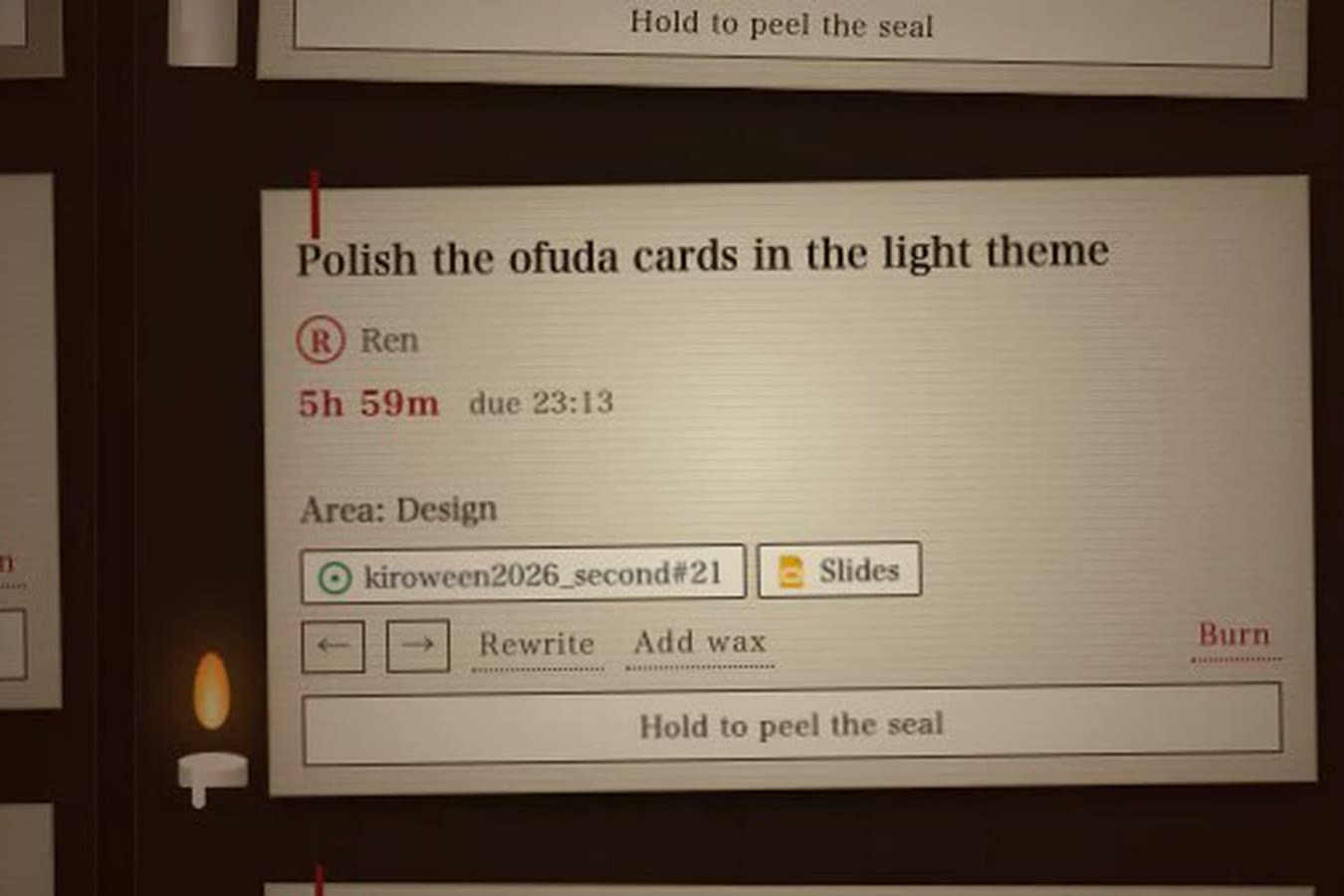
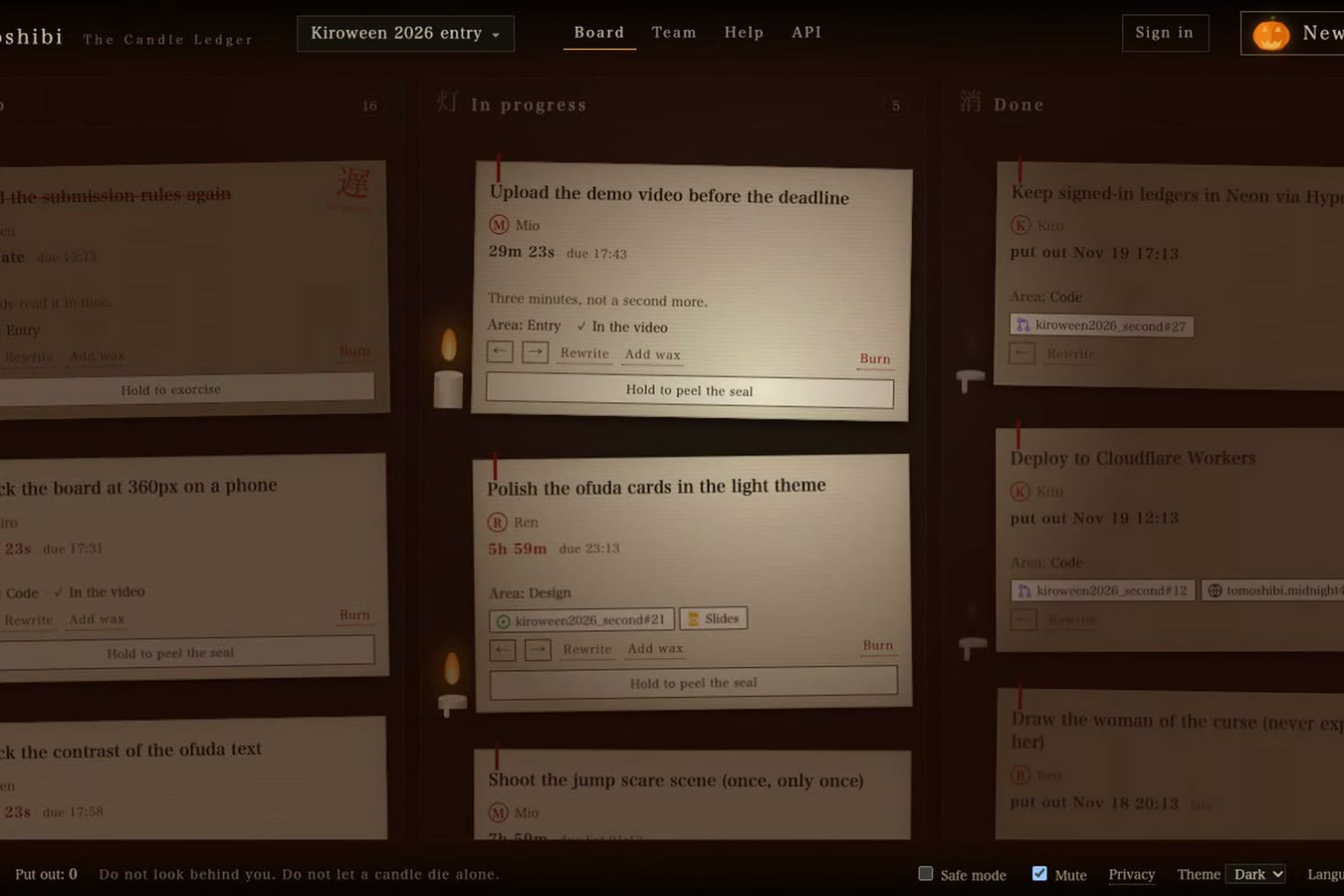
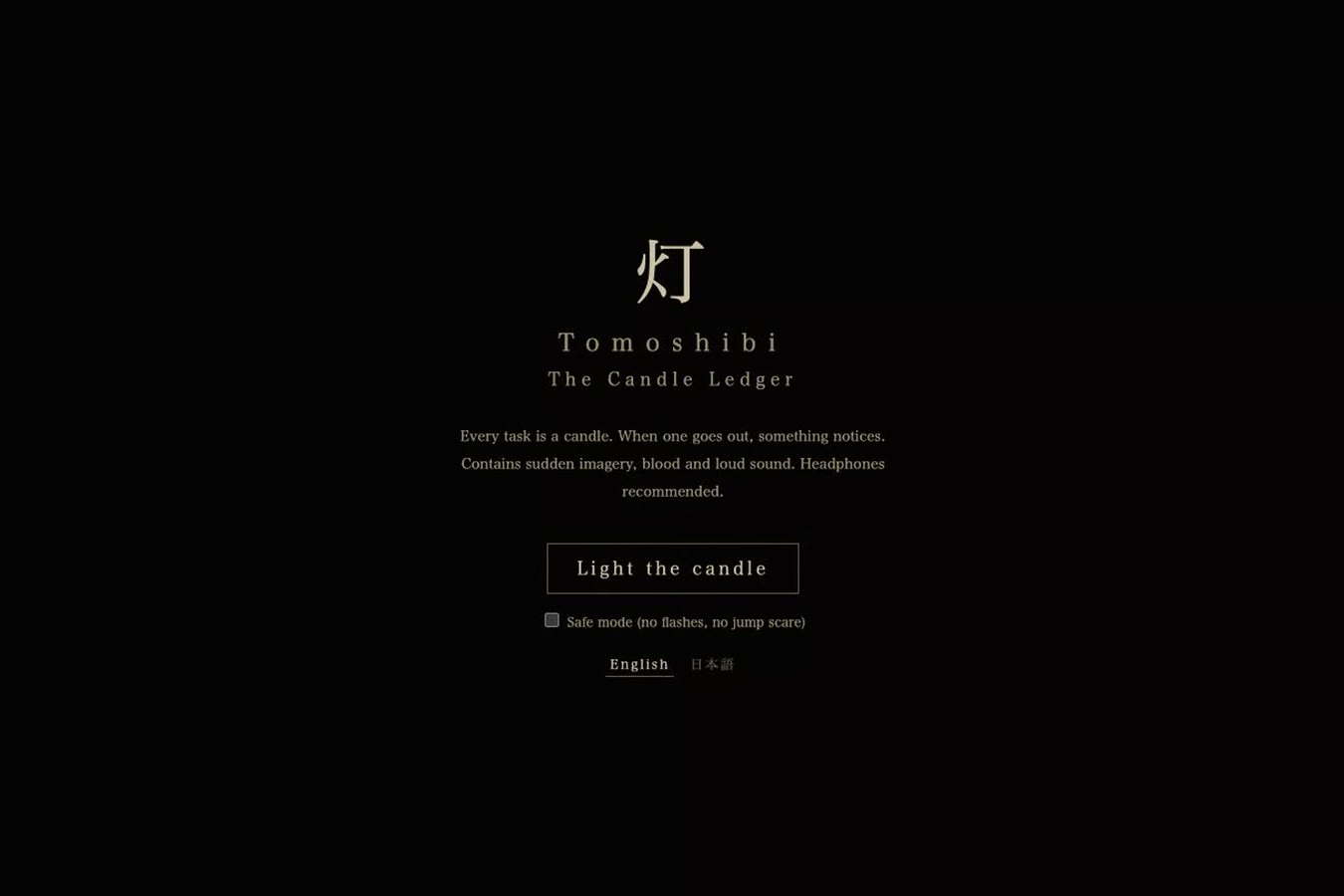
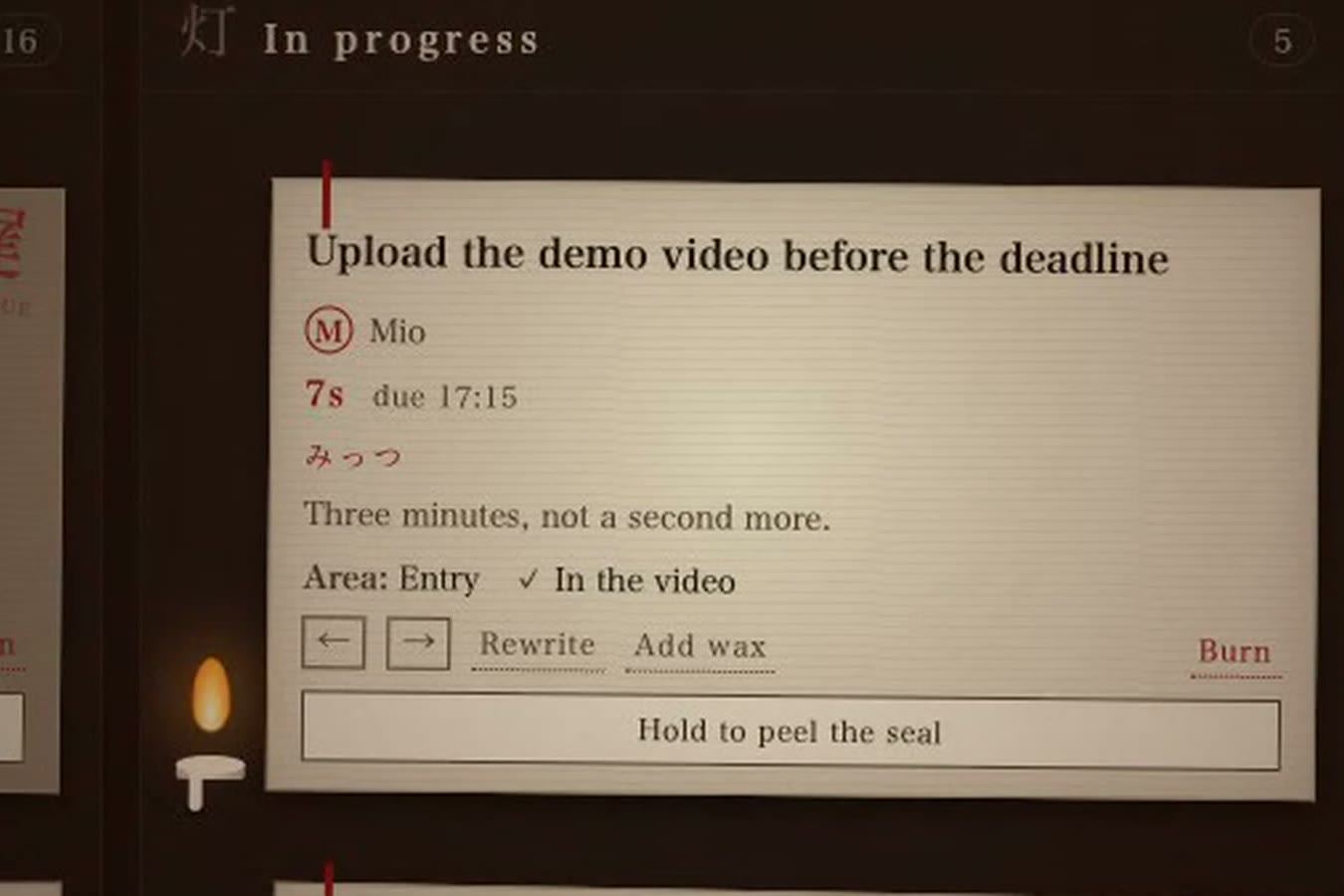
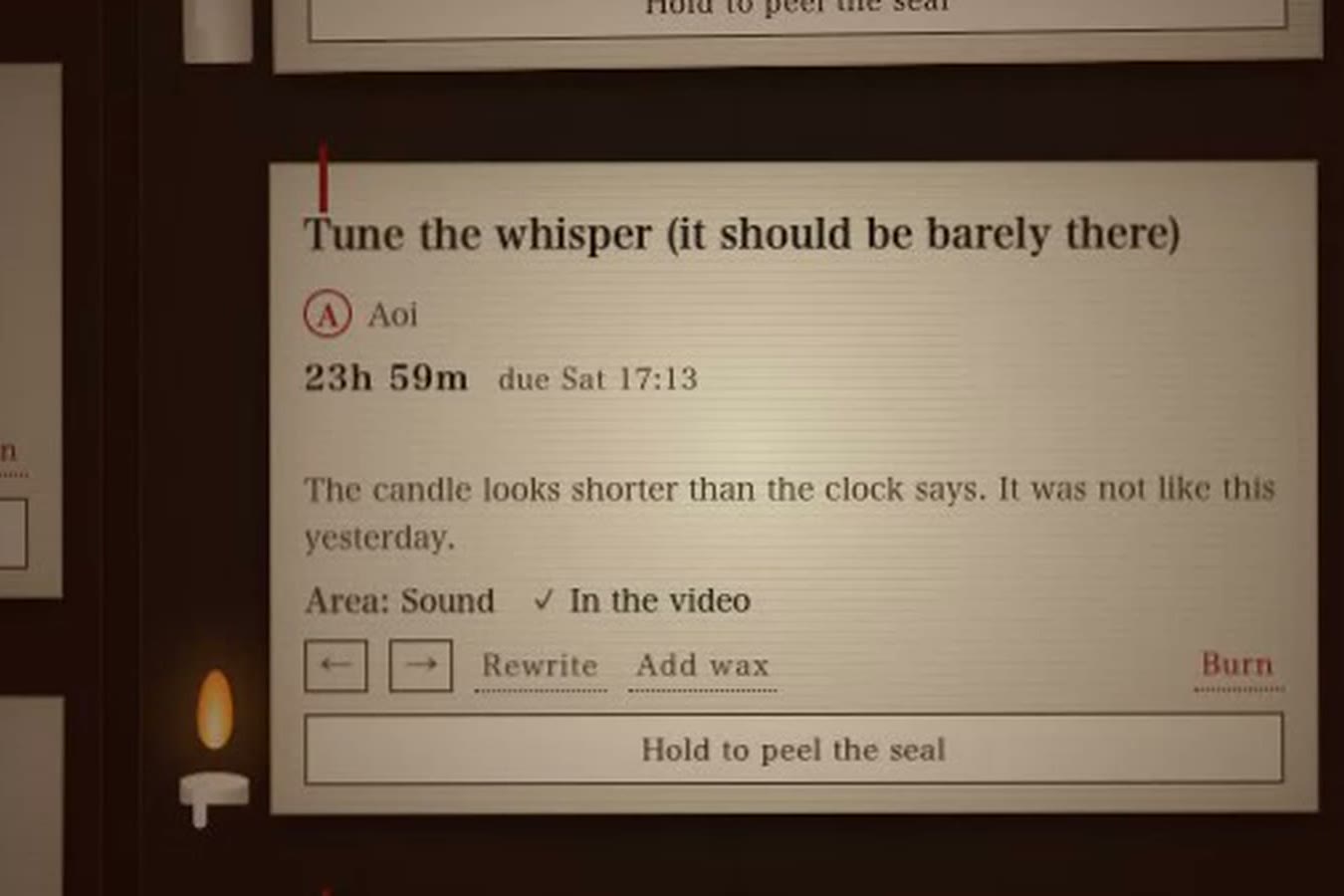
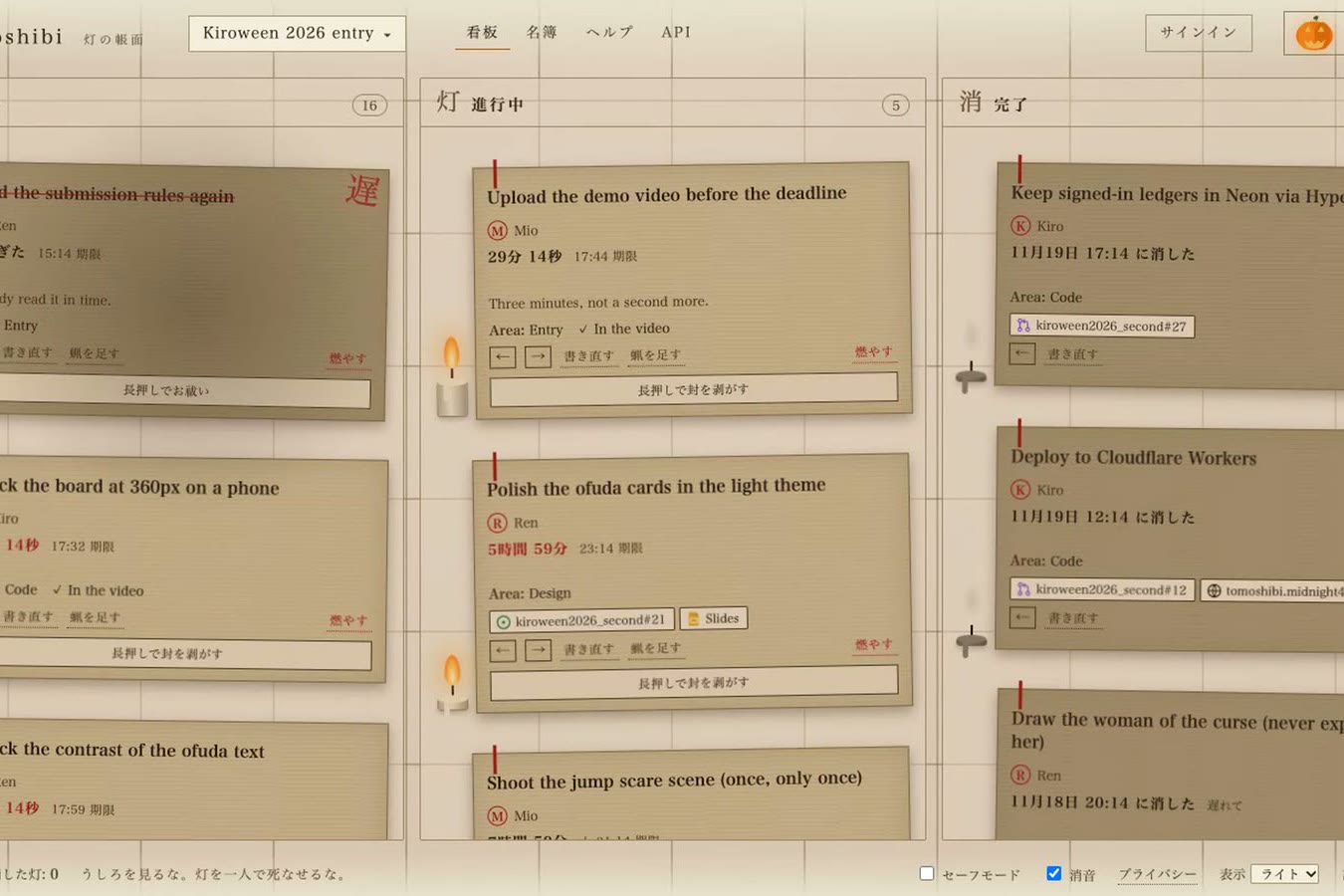
灯 Tomoshibi ("a small light") shows every deadline as a candle. The candle is full when the task is created and burns down as the deadline gets closer, so you can see what is urgent without reading a date.
| Japanese element | Meaning in Japan | What it does in the app |
|---|---|---|
| Ofuda (御札) | A paper talisman that seals evil away | Each task. Press and hold to peel the seal and finish it, so nothing is completed by accident. |
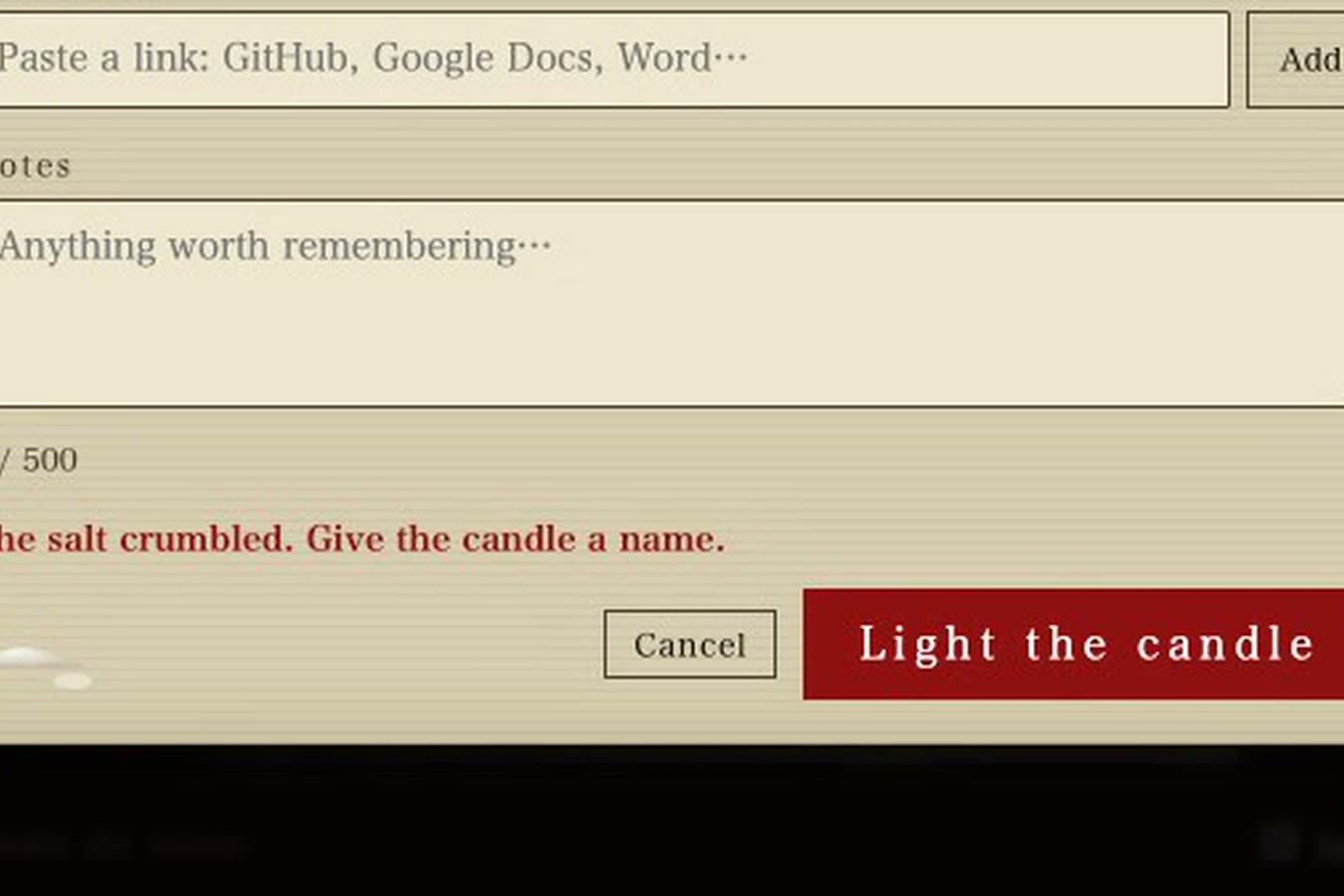
| Mori-shio (盛り塩) | A cone of salt that keeps unwanted things out | Form validation. Leave the title empty and the salt crumbles. |
| Kehai (気配) | Feeling a presence you cannot see | Rare, quiet signs (a passing shadow, a shifted card) that keep the board alive. |
| Kazoe-uta (数え歌) | A children's counting song | Counts down the last ten seconds of a candle. |
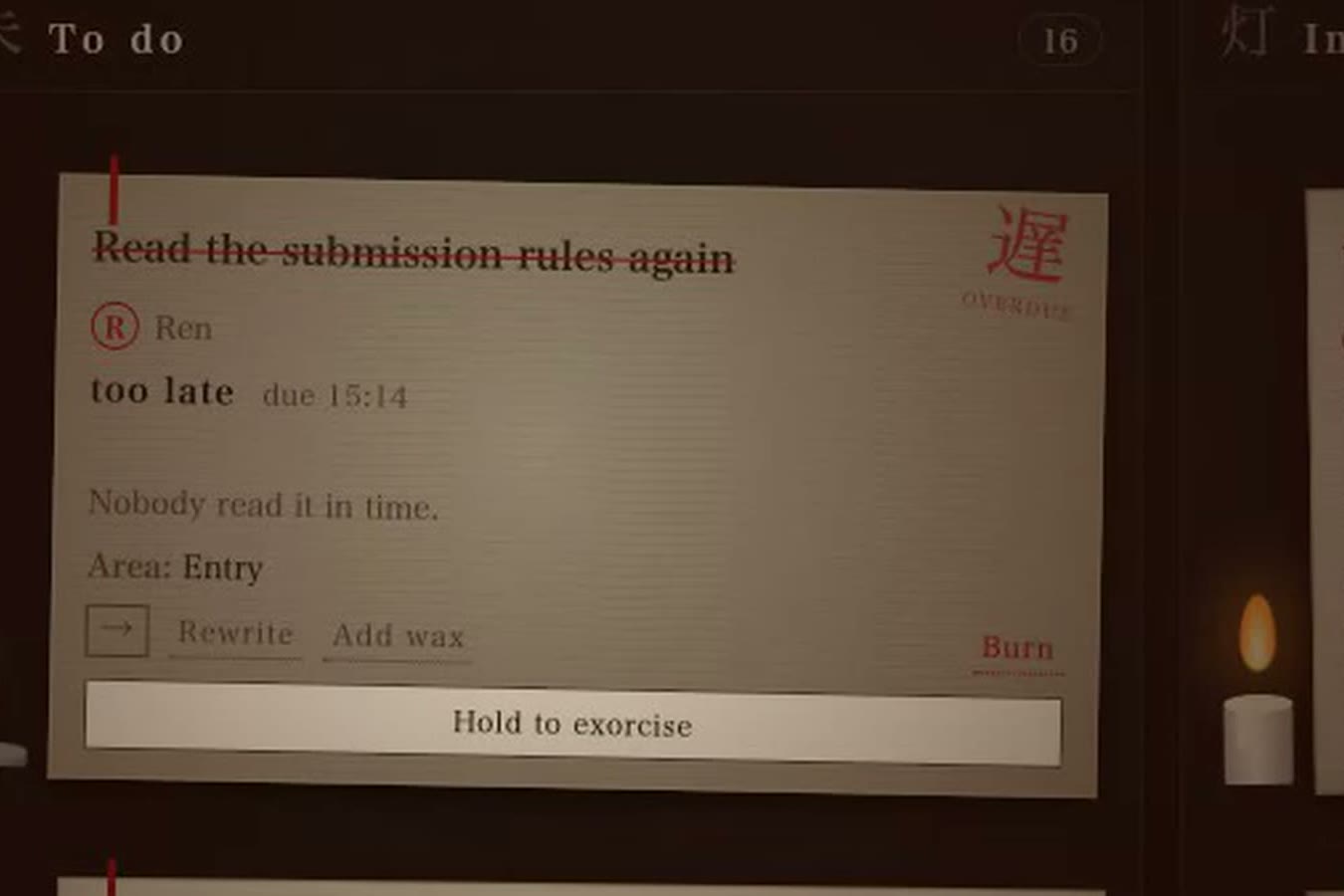
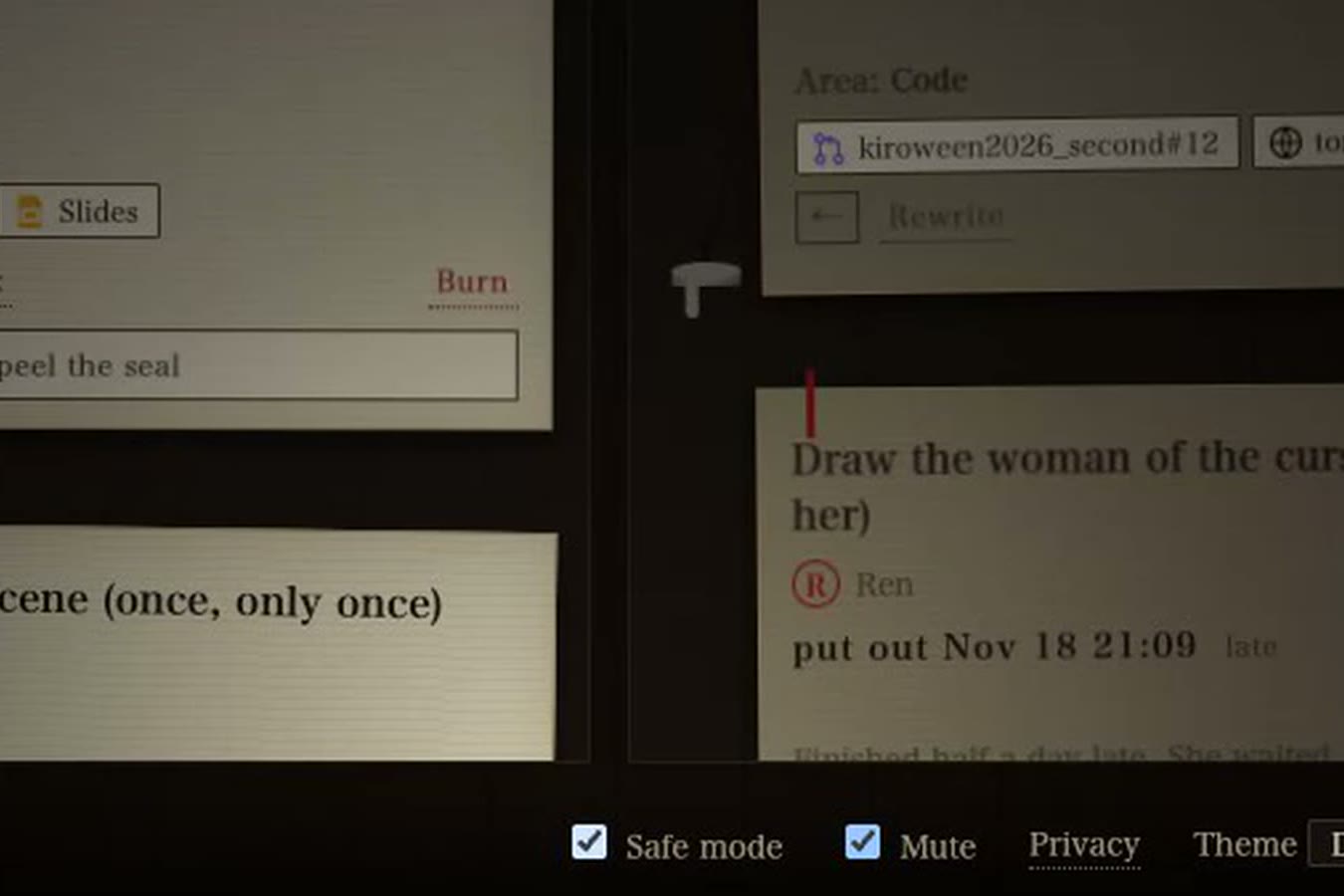
| 遅 (oso) | "Late", as a red seal | Marks an overdue task. The English UI adds "overdue". |
After a missed deadline, the nearest candle looks shorter than its clock says: something has been eating the wax, so the next task feels urgent. It is only visual; the real deadline never changes.
There is one jump scare, and only one: when a candle burns out. Each task can trigger it only once. Safe mode turns off flashes, figures and the woman, and shows the same information with text and color. Mute loses no information, and prefers-reduced-motion is respected.
Under the costume, it is a full task manager: a three-column board with drag and drop, multiple projects with custom fields, a team roster with roles, links to GitHub and Google Docs, undo, keyboard shortcuts, English and Japanese, light and dark themes, a 360px phone layout, PWA, optional sign-in with sync across devices, and a public REST API with API keys. Guests can use every feature without an account.
How I built it
- Front end: Vite and strict TypeScript, no framework. DOM, CSS and Canvas. Every sound is generated with Web Audio; there are no audio files and no external images.
- Back end: Cloudflare Workers serve the app and the API. Signed-in users' data is stored in Neon Postgres through Hyperdrive. Clerk handles optional sign-in and API keys.
How I used Kiro
- Steering (
.kiro/steering/):product.md,tech.mdandstructure.mdare always included.horror-design.mdis included only when an effect file is open (fileMatchon the curse, presence, audio and style files) and lists eight checks for any new effect: which function it helps, Safe mode, Mute, readability in both themes, and the docs. - Specs (
.kiro/specs/):expiry-cursewas written after the code, and its EARS acceptance criteria exposed gaps (the curse must wait while you drag or type, and must never changedue).kamikakushi-404is a spec written before the code, for a "spirited away" 404 page. - Hooks (
.kiro/hooks/): build on save, i18n parity between English and Japanese, a Safe mode guard on every effect file, and a manual docs sync that fixes the docs to match the code. - Kiro CLI: moved deployment to Cloudflare's
cfCLI and set up Neon. - Review: Kiro reviewed each draft of the demo video. It found that the curse ran too long, the board scenes looked alike, the opening was flat and the ending showed nothing, and each note became a fix.
Challenges I ran into
- Keeping it usable. A horror UI is easy to overdo. Body text and buttons must stay readable in both themes, and no effect may move a card while you drag it or type.
- Never lying about data. Punishments change only how a candle looks (
penalty), never the real deadline. - Explaining Japanese folklore to judges abroad without explaining the ghost. The customs (ofuda, mori-shio) are explained in one English sentence each; the woman is never explained.
Accomplishments that I'm proud of
- Every effect is tied to a function, and every effect has a Safe mode behavior.
- The quiet ideas, the eaten wax and the counting song, are my favorite parts.
What I learned
- Constraints make horror better. "Only one jump scare" forced quieter, stronger ideas.
- Rules work best where the agent reads them:
fileMatchsteering and on-save hooks bring the rules up at the moment they matter. - Specs are useful even after the code: writing EARS criteria for an existing feature found unhandled edge cases.
What's next for Tomoshibi
- The kamikakushi ("spirited away") 404 page from its spec.
- Passing a curse on: turn a task into a share link, so someone else has to deal with it.
- A progress view of a thousand torii gates, and lantern loading screens.
Built With
- canvas
- clerk
- cloudflare-workers
- hyperdrive
- kiro
- neon
- postgresql
- pwa
- typescript
- vite
- web-audio-api
