India produces tomatoes across many regions, but food-processing industries are concentrated in selected locations. Moving fresh tomatoes over long distances creates challenges involving transportation, temperature, storage and time. By the time some produce reaches its destination, its quality may have declined, resulting in avoidable waste and financial losses.
TOMORROW is a proposed decentralised tomato processing model that aims to address this problem by bringing the first stage of processing closer to farmers.
The Inspiration
The idea behind TOMORROW started with a simple question: Why do we transport highly perishable tomatoes over long distances when we could process them closer to where they are grown?
Farmers are spread across different regions, while processing industries cannot be established everywhere. Seasonal production, transportation delays and changing temperatures can make the existing supply chain difficult to manage.
We saw an opportunity to redesign this process. Instead of transporting all tomatoes in their fresh form to distant factories, nearby processing centres could convert them into tomato pulp. Properly preserved pulp could then be transported to established industries for further processing into ketchup, sauces, purée and other products.
The Problem
The current supply chain creates challenges for both farmers and food-processing industries.
- For farmers: Limited nearby processing facilities can leave farmers dependent on distant buyers. Delays and excess supply can reduce the value of their harvest.
- For industries: Factories need a reliable supply of suitable tomatoes, but seasonal availability, transportation delays and quality variations can make procurement difficult.
- For transportation: Fresh tomatoes are perishable and require careful handling. Long journeys can increase the risk of damage and spoilage.
These problems highlight the need for a supply chain that better connects agricultural production with industrial demand.
Our Solution
TOMORROW proposes a network of small processing centres near tomato-growing clusters.
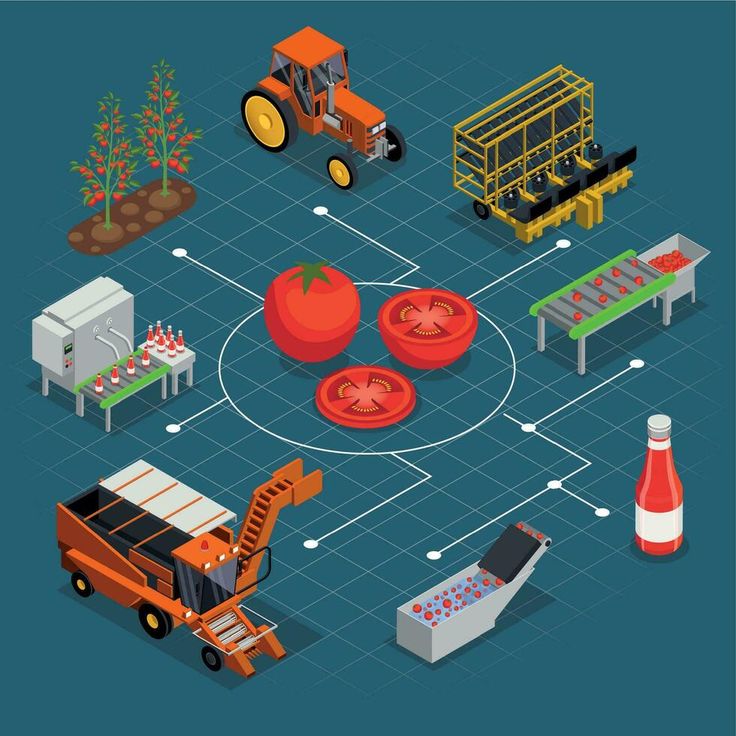
The process has four main stages:
1. Local collection
Farmers bring their harvested tomatoes to nearby processing centres, where the produce is weighed, inspected and graded.
2. Primary processing
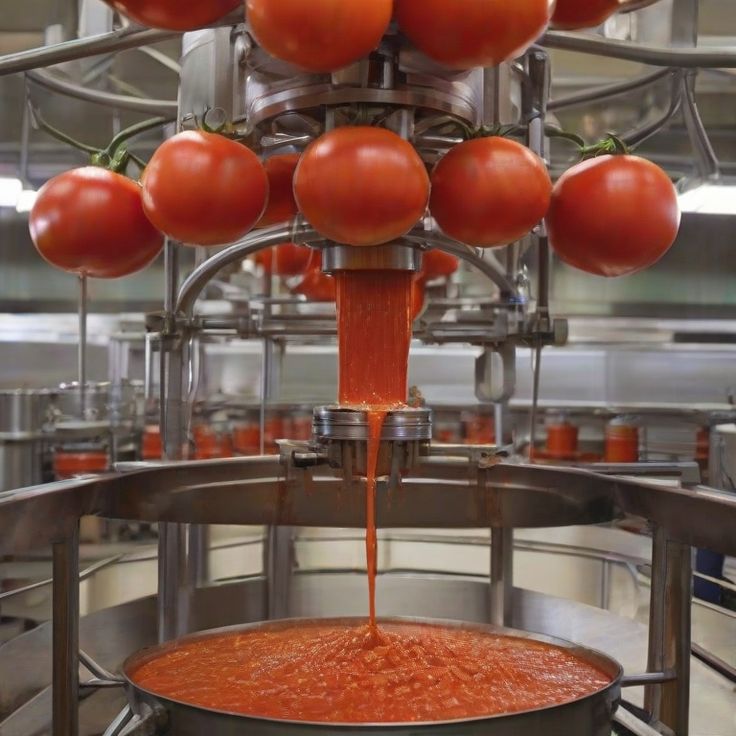
Suitable tomatoes are washed, sorted and converted into pulp using food-grade processing equipment.
3. Preservation and transportation
The pulp undergoes appropriate, validated preservation and packaging processes. It is then transported to food-processing industries under the required storage conditions.
4. Industrial processing
Factories use the pulp as an intermediate ingredient to produce ketchup, sauces, purée and other tomato-based products. They remain responsible for final formulation, quality checks, packaging and distribution.
This arrangement aims to reduce the need to transport all fresh tomatoes over long distances before processing.
What Makes TOMORROW Different?
The central idea is to change where processing begins, not to replace existing food factories.
TOMORROW combines three elements:
- Decentralised processing: Small centres serve nearby farming communities.
- A redesigned supply chain: Properly preserved pulp is transported instead of all the fresh produce.
- Industrial partnerships: Existing factories can focus on producing and distributing finished products while sourcing intermediate pulp from multiple locations.
The model could be expanded gradually, depending on regional production, demand and commercial feasibility.
How We Plan to Implement It
The first step would be to identify a tomato-growing cluster with sufficient production and access to potential industrial buyers.
A small processing centre could then be established with suitable equipment, food-safety controls and trained operators. A limited pilot would process a controlled quantity of tomatoes and deliver the resulting pulp to a partner factory.
The pilot would evaluate processing costs, product quality, transportation requirements, farmer payments and factory acceptance. Its results would help determine whether the model should be expanded.
Challenges and Considerations
Several important challenges need to be addressed before implementation.
- Food safety: Tomato pulp must be processed and preserved correctly. Its storage life cannot be assumed without validated procedures.
- Initial investment: Equipment, facilities, packaging and utilities require funding.
- Seasonal production: Processing centres must manage fluctuations in tomato availability.
- Transportation: Preserved pulp still requires suitable packaging and storage conditions.
- Commercial feasibility: Processing costs and procurement prices must make the model viable for both farmers and industrial buyers.
These challenges make pilot testing and partnerships with food-processing specialists essential.
Expected Impact
TOMORROW aims to create value throughout the tomato supply chain.
For farmers, it could offer additional nearby buyers and reduce some losses associated with transporting fresh produce. For industries, it could provide another source of processed tomato pulp and greater flexibility in procurement.
The model could also create local employment in processing, quality control, equipment maintenance and logistics.
Its environmental benefits would depend on the energy, water, packaging and transportation required by the processing centres. These factors would be measured as part of the pilot.
What We Learned and What Comes Next
Developing TOMORROW as a concept highlighted the importance of looking beyond the product itself and examining the entire supply chain. A solution that appears simple at first can involve complex questions about food safety, logistics, costs, infrastructure and cooperation between different stakeholders.
The next step is to validate the concept through a small pilot, compare it with the existing supply chain and identify the conditions under which it can be commercially viable.
TOMORROW is a proposed supply-chain innovation, not an already operating processing network. Its effectiveness will depend on the results of real-world testing.
Our Vision
We believe that improving agriculture does not always require producing more. Sometimes, it requires finding better ways to handle what is already being produced.
TOMORROW envisions a supply chain in which farmers have better access to processing opportunities and industries can source suitable intermediate products from closer to where crops are grown.
TOMORROW: Process closer to the farm. Deliver value further down the chain.
Built With
- agricultural
- agritech
- decentralised-processing
- food-preservation
- food-processing
- logistics
- supply-chain-innovation
- sustainability

Log in or sign up for Devpost to join the conversation.