Inspiration
Vehicle transport involves more than moving a car from one location to another. Customers often need to understand changing prices, compare options, confirm a quote, ask questions, and decide whether they are ready to move forward.
That decision point is where delays and confusion can happen.
I wanted to explore whether an AI phone agent could make that part of the process clearer while still keeping important business rules under application control.
That became Tomorrow Is Calling — an AI-assisted vehicle transport workflow built around a simple idea: let the AI handle the conversation, let the application enforce the rules, and keep humans available for exceptions.
What it does
Tomorrow Is Calling is an AI-assisted vehicle transport system that uses a phone agent to present confirmed transport quotes and capture clear customer decisions.
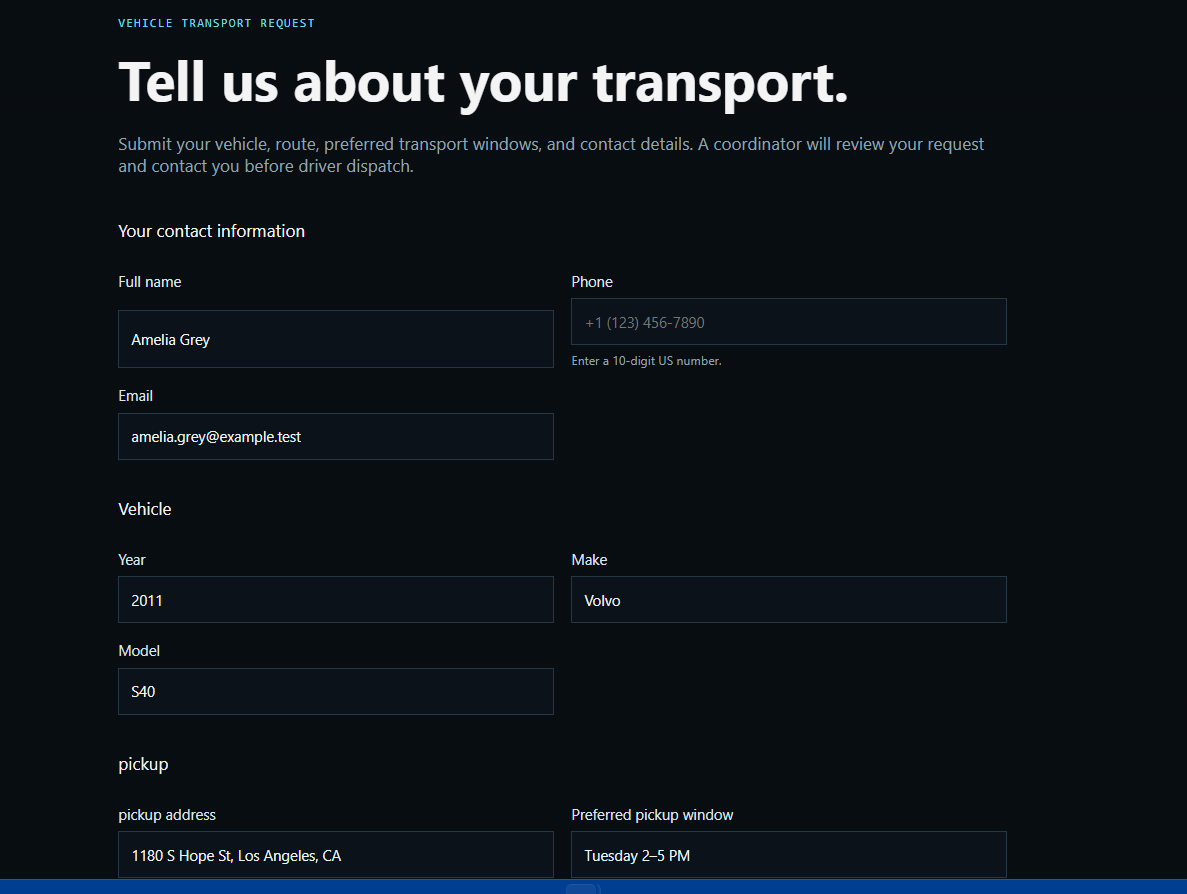
A customer begins by submitting their vehicle, pickup and delivery locations, preferred transport windows, and contact information.
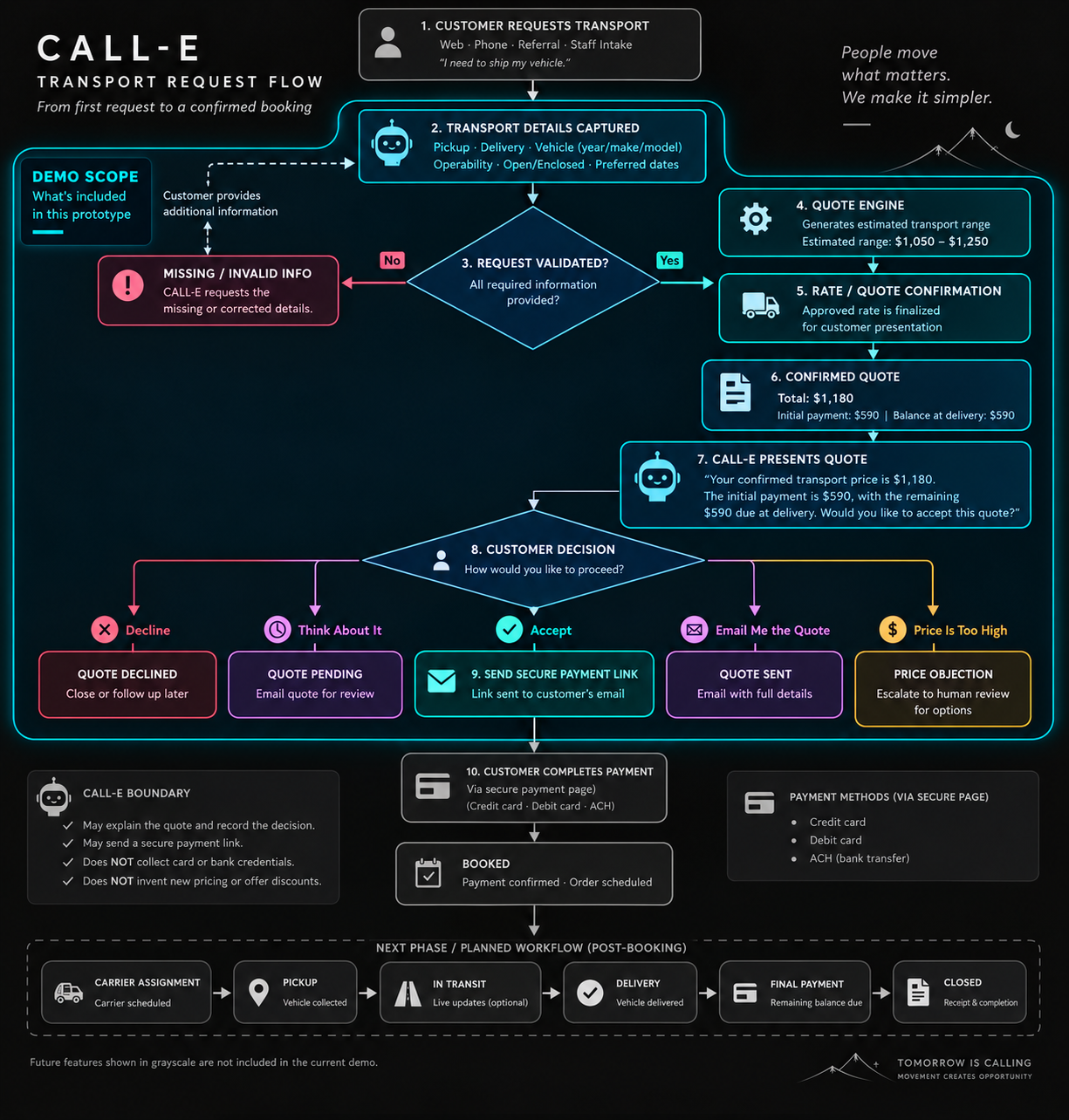
Once a quote has been confirmed, CALL-E can place an outbound phone call to the customer. The agent verifies that it is speaking with the correct person before discussing private transport or pricing information.
CALL-E then presents:
- The customer’s vehicle and route
- The earlier estimated price range
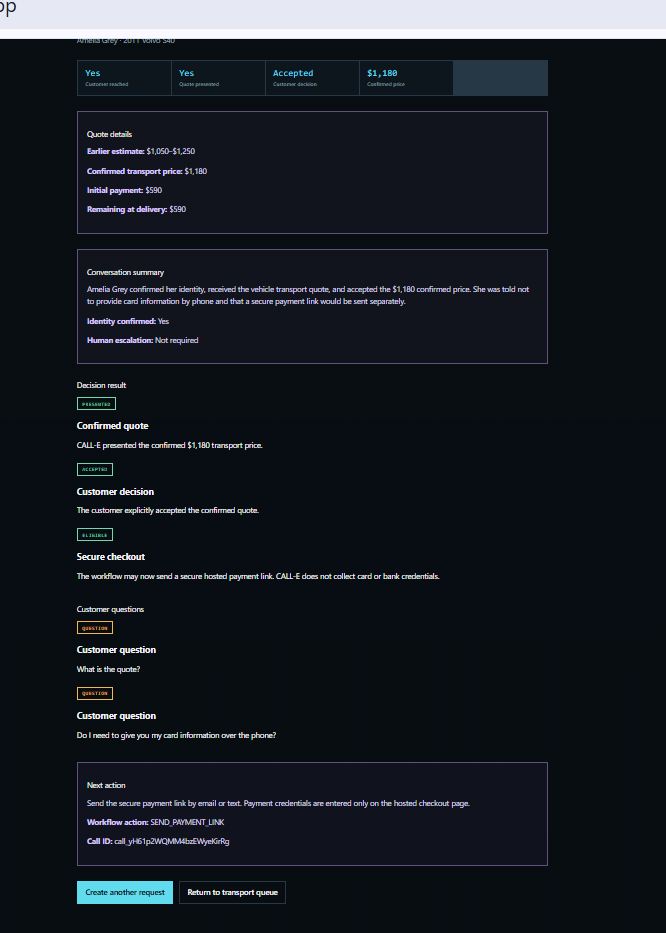
- The confirmed transport price
- The initial payment
- The remaining balance
- The available next steps
The customer can accept the quote, decline it, request time to think, ask for the quote by email, or raise a price objection.
An accepted quote does not mean CALL-E collects payment information. Instead, the application can move the request toward a secure hosted payment link where the customer completes payment separately.
If the customer objects to the price or asks for a discount, CALL-E records the concern and routes it for human review rather than inventing a new price.
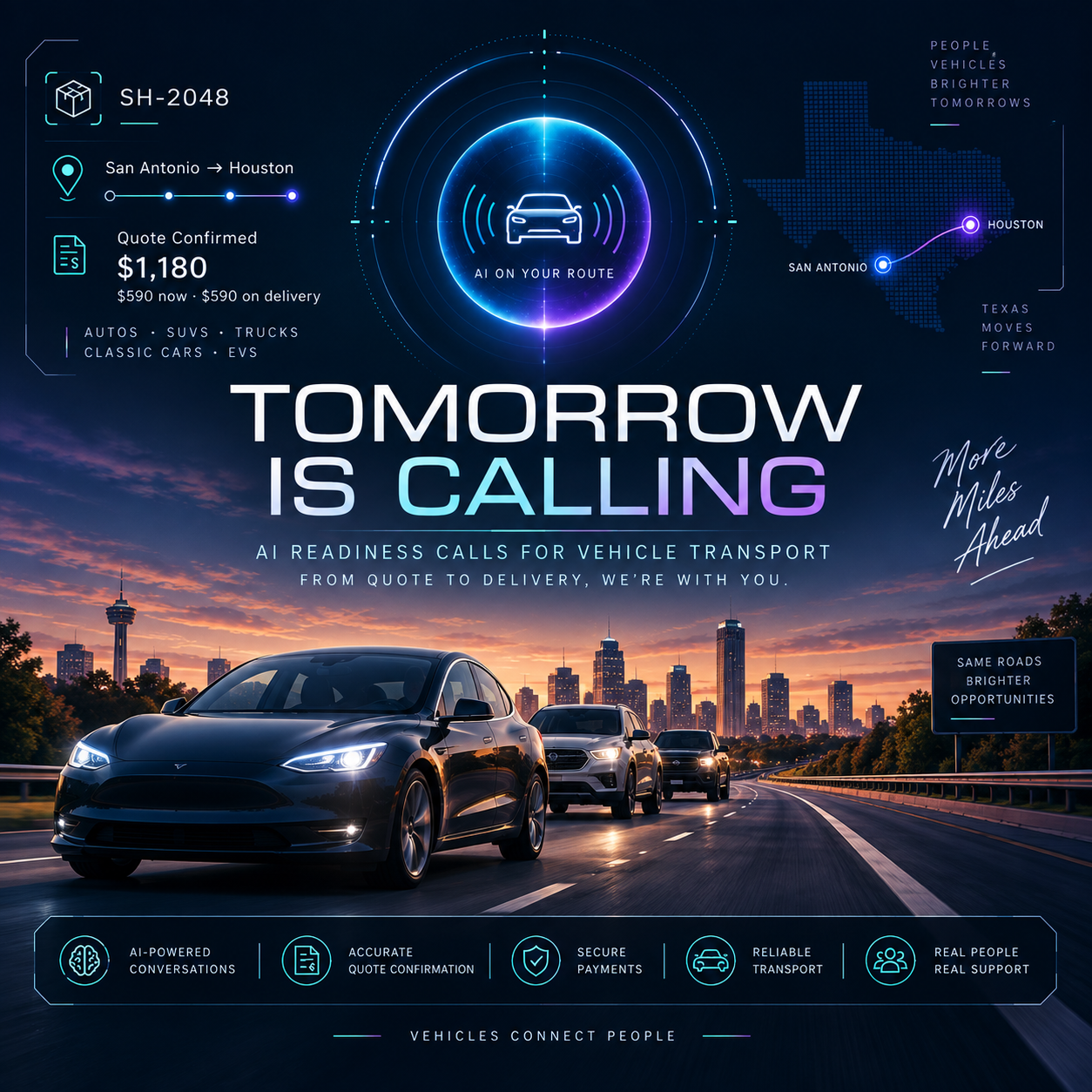
The current demo uses a confirmed transport price of $1,180, with a demo-selected $590 initial payment and $590 remaining at delivery.
How we built it
I built the frontend with React, TypeScript, and Vite, using a responsive component-based architecture.
The application follows an end-to-end vehicle transport workflow:
- Customer submits a transport request.
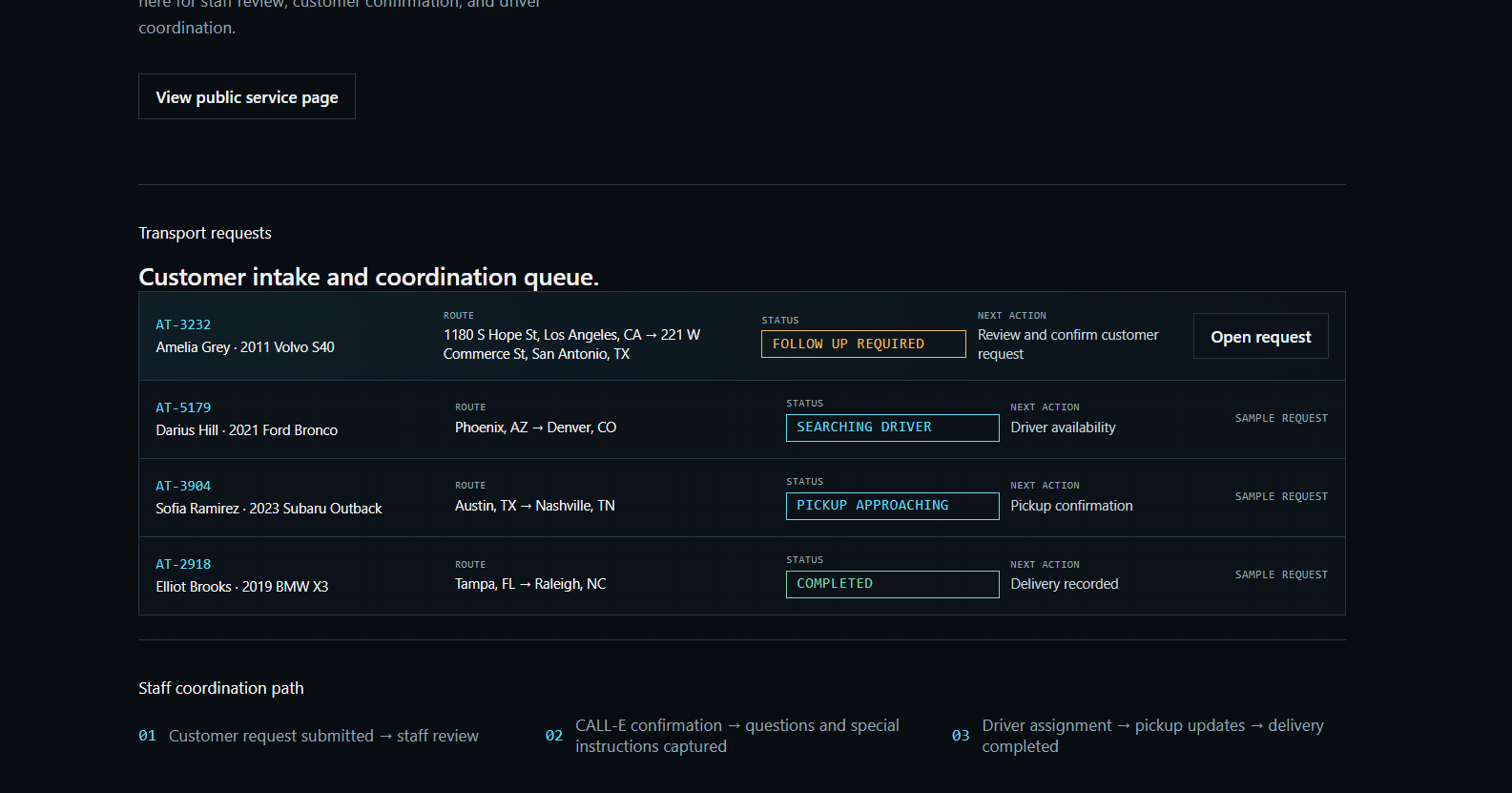
- Staff reviews the request.
- The system prepares a confirmed quote.
- Staff reviews the planned CALL-E conversation.
- CALL-E places an outbound call.
- The customer receives and responds to the confirmed quote.
- CALL-E returns a structured decision result.
- The application determines the next action.
- Accepted requests can move toward secure payment and booking.
I created reusable components for transport requests, quote summaries, workflow status, call monitoring, customer decisions, and structured outcome reporting.
The call monitor is designed as an operations interface rather than a simulated phone. The real conversation happens on the customer’s phone, while the browser communicates the call lifecycle and resulting structured data.
I also built a small Node.js backend that acts as the secure boundary between the browser and CALL-E. API credentials remain server-side, while the backend creates outbound calls and retrieves their results.
The CALL-E task is generated from the transport request and confirmed quote. Structured output records information such as:
- Whether the customer was reached
- Whether identity was confirmed
- Whether the quote was presented
- The customer’s quote decision
- The recommended next action
- Whether human review is needed
- Customer questions
- Price objections
- Competitor pricing mentioned during the conversation
Challenges we ran into
One of the biggest challenges was determining exactly what the AI should be allowed to do.
An AI phone agent can make the experience conversational, but pricing, payment, and authorization require stronger boundaries.
I deliberately separated conversation authority from business authority.
CALL-E can present an approved price, explain the provided payment structure, record a customer’s decision, and collect non-sensitive questions or objections.
CALL-E cannot invent a new price, authorize a discount, negotiate below an approved rate, collect card or banking credentials, or charge the customer.
Another challenge was maintaining privacy during an outbound call. CALL-E verifies that it is speaking with the intended customer before revealing vehicle, route, scheduling, or pricing information.
I also spent time making the demo feel complete without pretending unsupported functionality already existed. Secure payment is represented as the next workflow step rather than placing payment credentials inside the voice conversation.
Accomplishments that we're proud of
I am especially proud that Tomorrow Is Calling evolved from a broad logistics concept into a much more focused decision workflow.
The AI phone call now has a concrete purpose:
Turn a confirmed transport quote into a clear customer decision.
The prototype includes more than a standalone voice-agent demonstration. It includes:
- A public vehicle transport request flow
- A staff operations queue
- Structured quote data
- Confirmed pricing
- Identity-aware outbound calling
- Quote acceptance and rejection states
- Price-objection handling
- Structured CALL-E results
- Human escalation paths
- Secure-payment boundaries
- Responsive user interfaces
I’m also proud of keeping quote acceptance separate from payment authorization.
A customer saying “yes” to the transport quote does not expose financial credentials to the AI agent. Instead, acceptance enables the next controlled step: sending a secure hosted payment link.
What we learned
The biggest lesson was that conversational AI becomes much more useful when it is connected to a clearly defined business decision.
“Call the customer” is too broad.
“Present this approved quote and determine what the customer wants to do next” creates a much stronger system boundary.
I also learned that AI agents work best when they do not control every part of the workflow.
The application should still own deterministic rules such as pricing, payment status, authorization, and allowed state transitions. The AI handles the flexible conversation around those rules.
Another important lesson was that voice interfaces still require traditional UX principles. Customers need clear identification, privacy protection, understandable pricing, consent, safe escalation, and an obvious next step after the conversation.
Finally, structured AI output is what makes the conversation useful to the rest of the application. Instead of returning only a transcript, CALL-E returns machine-readable decisions that can drive the workflow forward.
What's next for Tomorrow Is Calling
The next step is connecting accepted quotes to a real hosted payment provider so the application can generate secure checkout links and automatically update payment and booking status.
I also want to expand the quote engine so estimated pricing can respond to variables such as route, vehicle type, transport method, operability, dates, and carrier availability.
Future versions could support:
- SMS and email quote delivery
- Automatic secure payment links
- Carrier assignment
- Pickup and delivery updates
- Remaining-balance collection
- Automated receipts
- CRM integration
- Scheduled follow-up calls
- Configurable pricing rules
- Human approval thresholds for discounts or exceptions
- Searchable transport histories
- Analytics for quote acceptance and objections
The larger vision is for Tomorrow Is Calling to become a conversational coordination layer for vehicle transport.
CALL-E handles the conversation.
The application owns the rules.
Humans remain available for exceptions.
Built With
- call-e
- conversational-ai
- javascript
- node.js
- react
- responsive-design
- rest-api
- typescript
- vite
- voice-ai

Log in or sign up for Devpost to join the conversation.