-
-
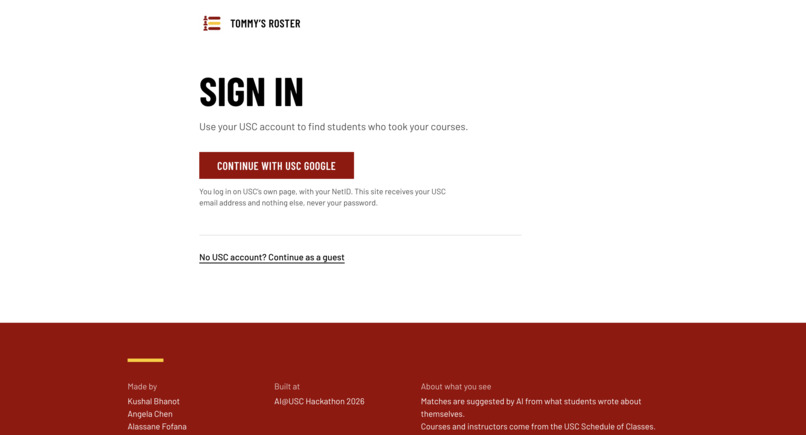
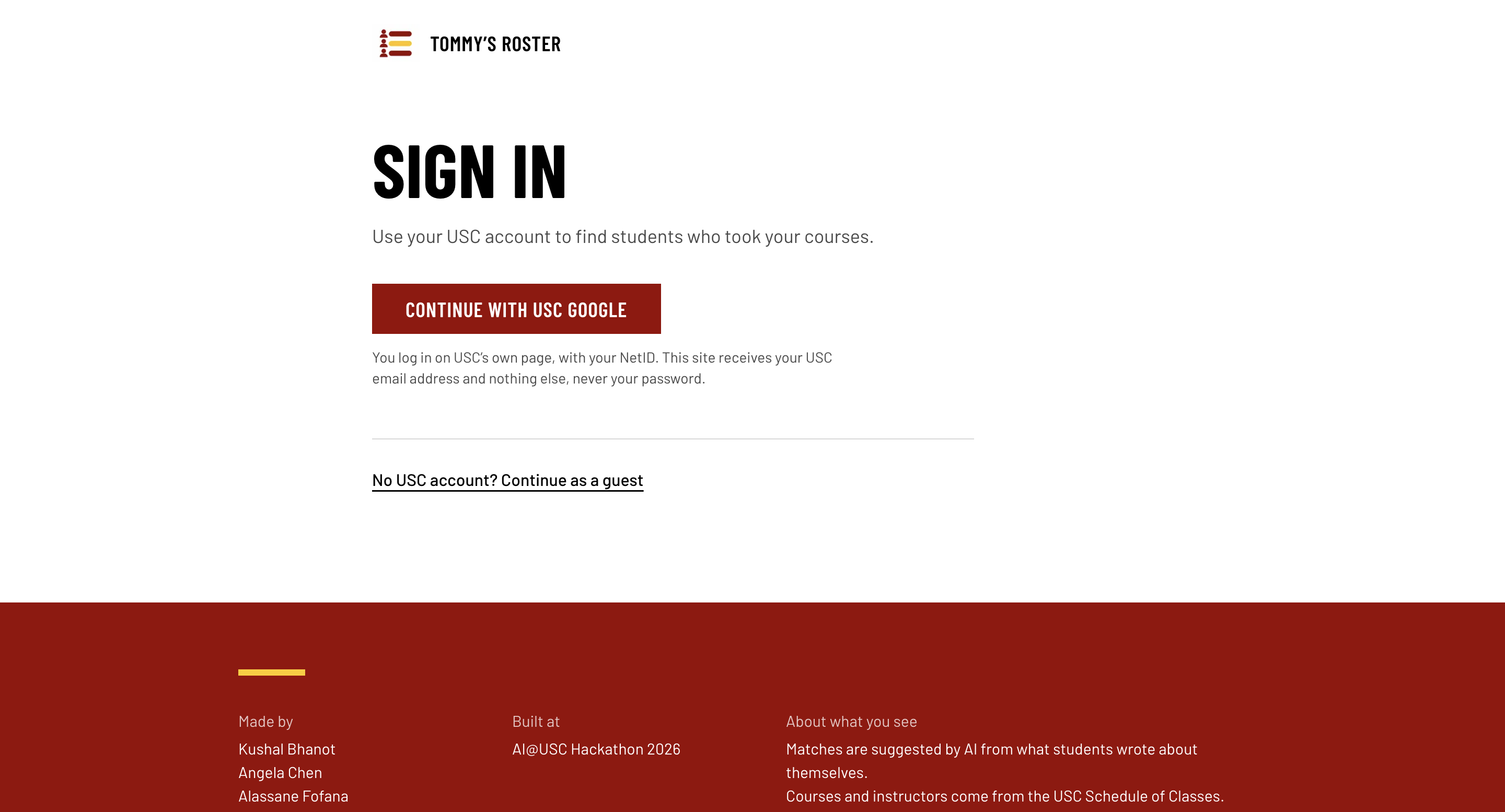
Sign In Page
-
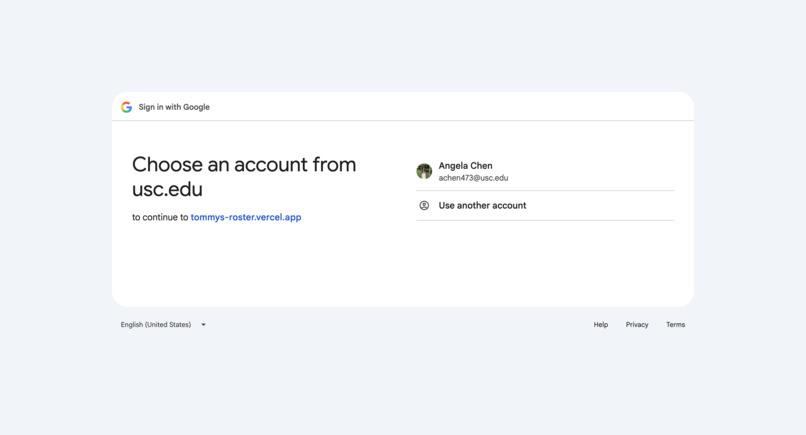
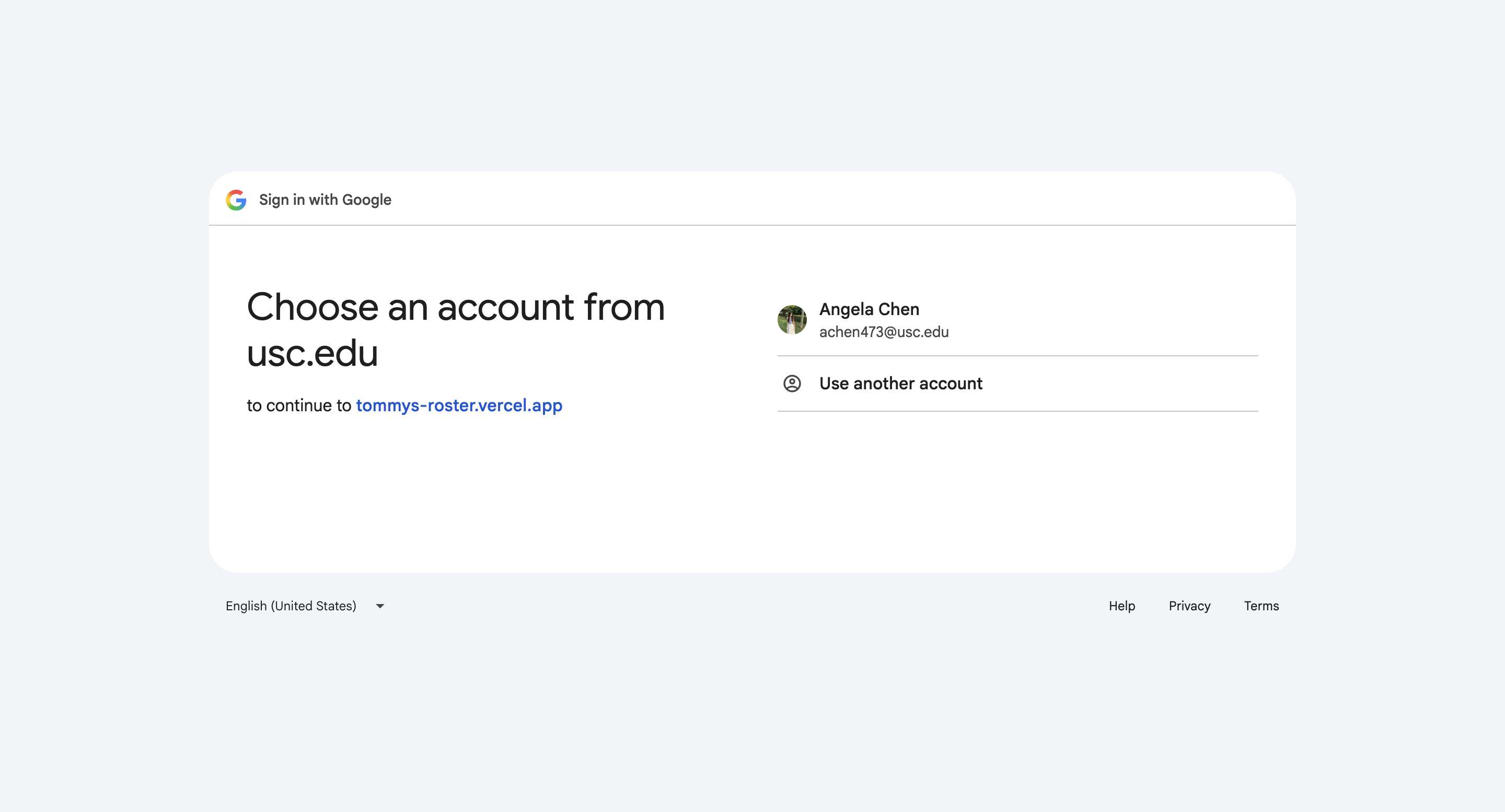
SSO USC Google Login Only
-
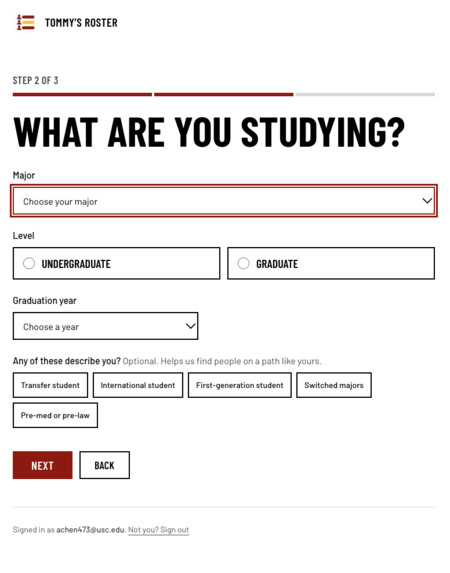
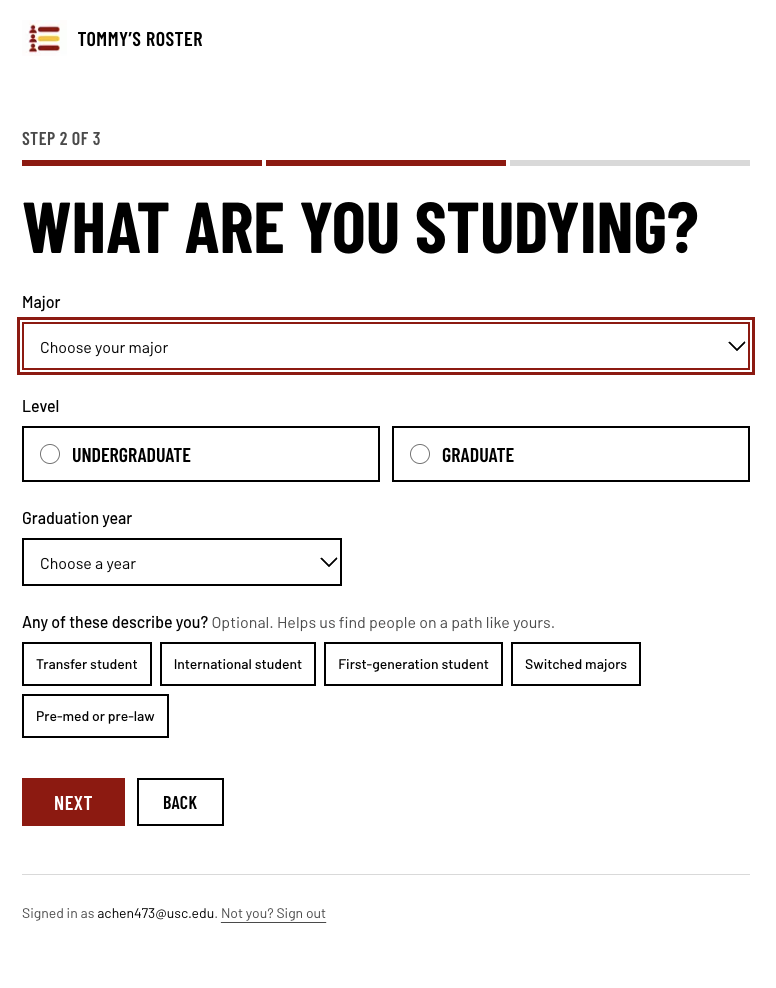
Onboarding Page Step 2
-
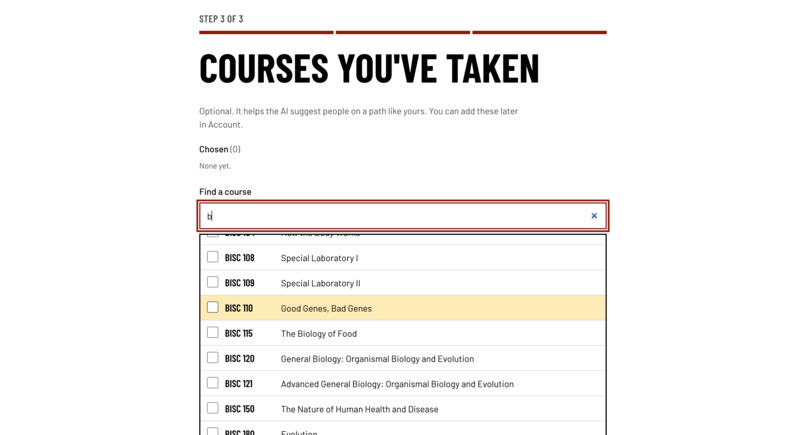
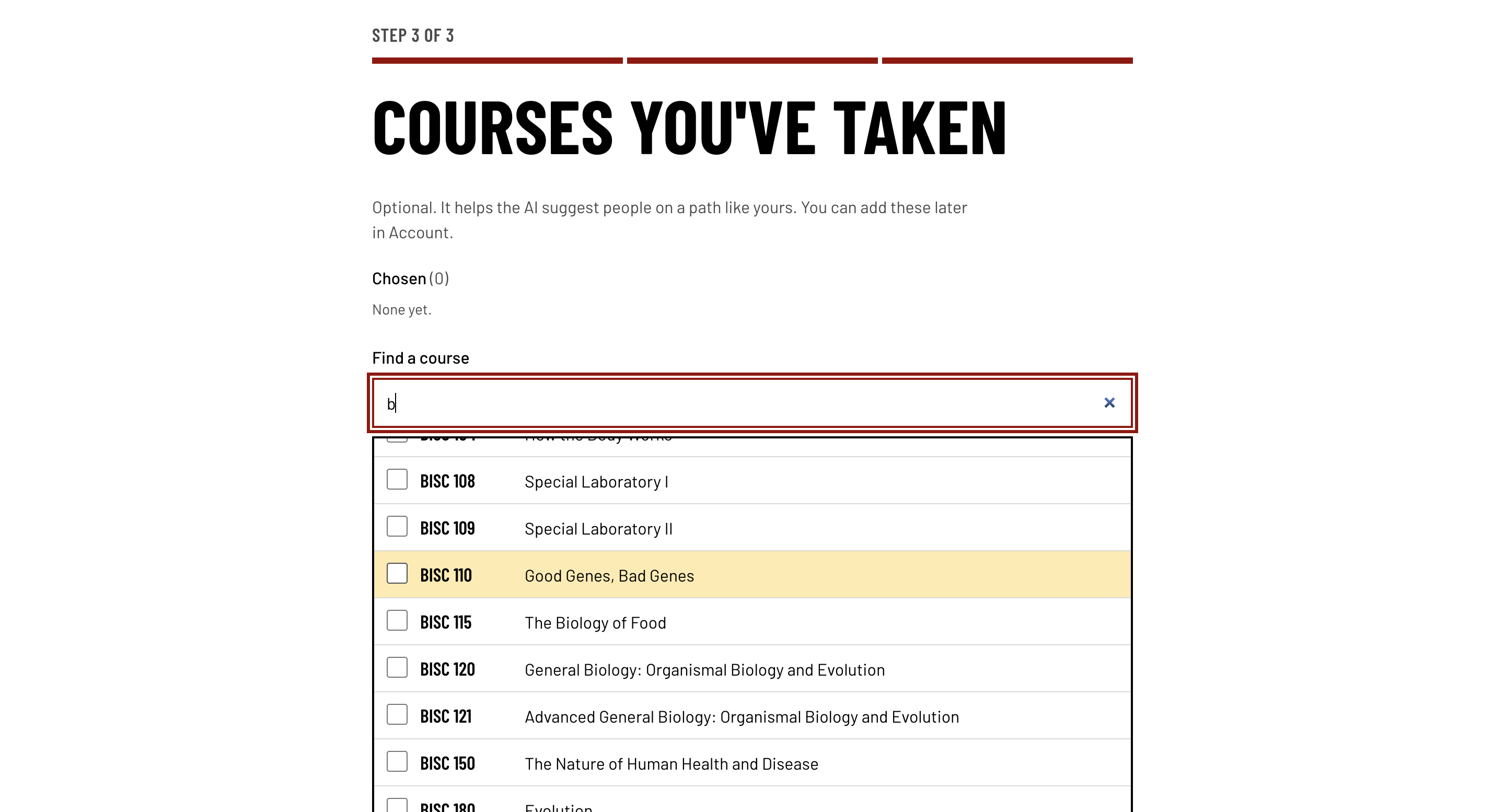
Onboarding Page Step 3
-
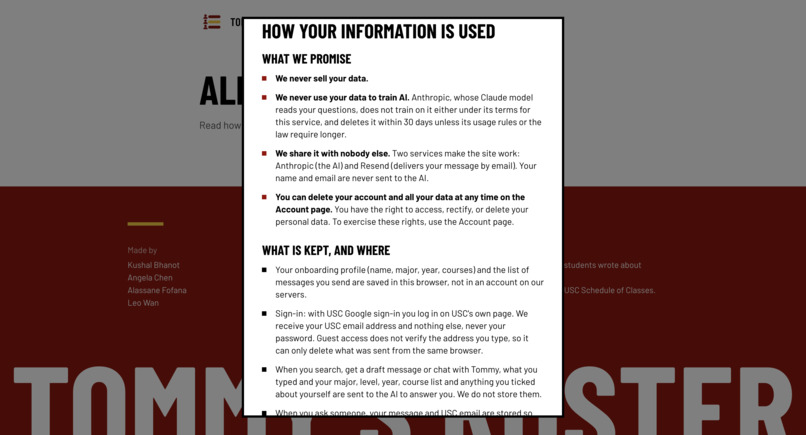
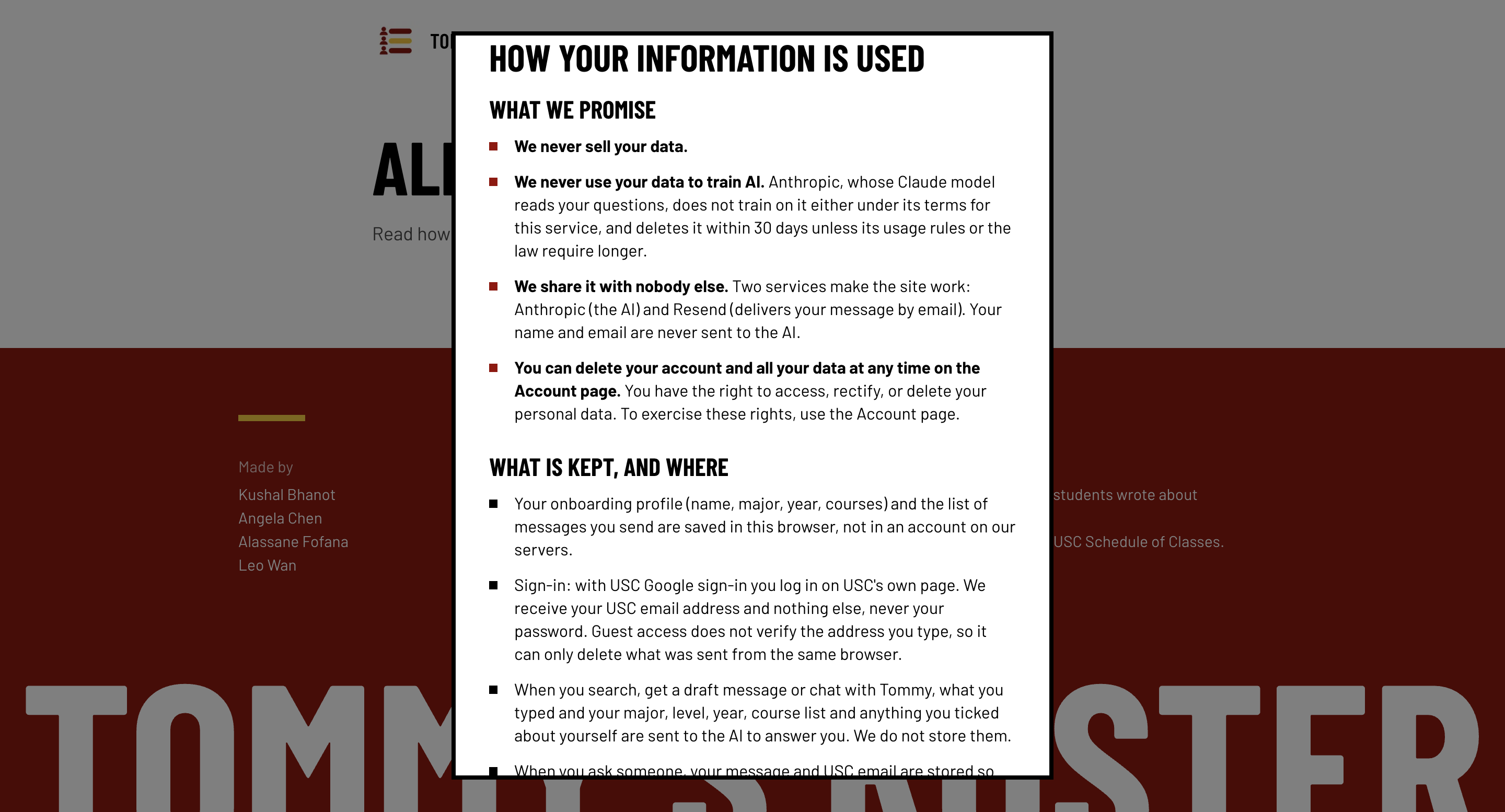
Privacy/Data/Secure Notice
-
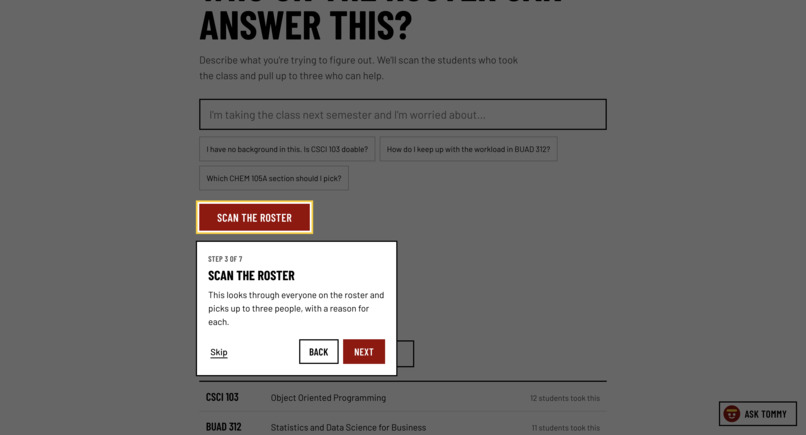
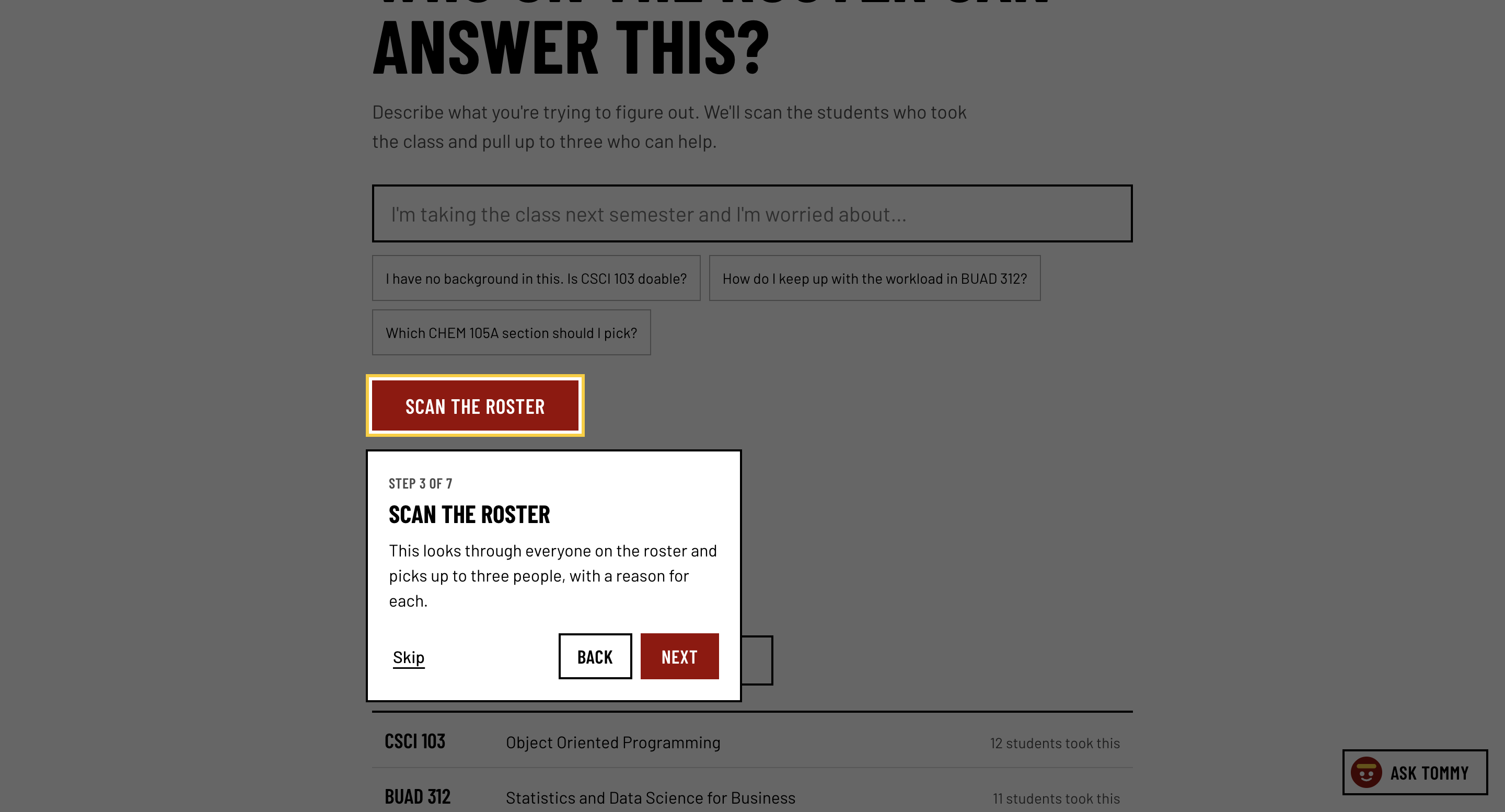
Homepage Tutorial Walkthrough
-
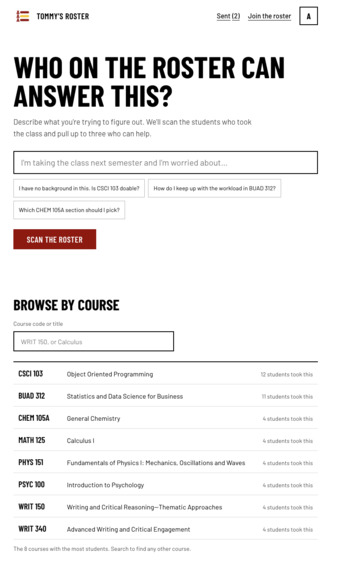
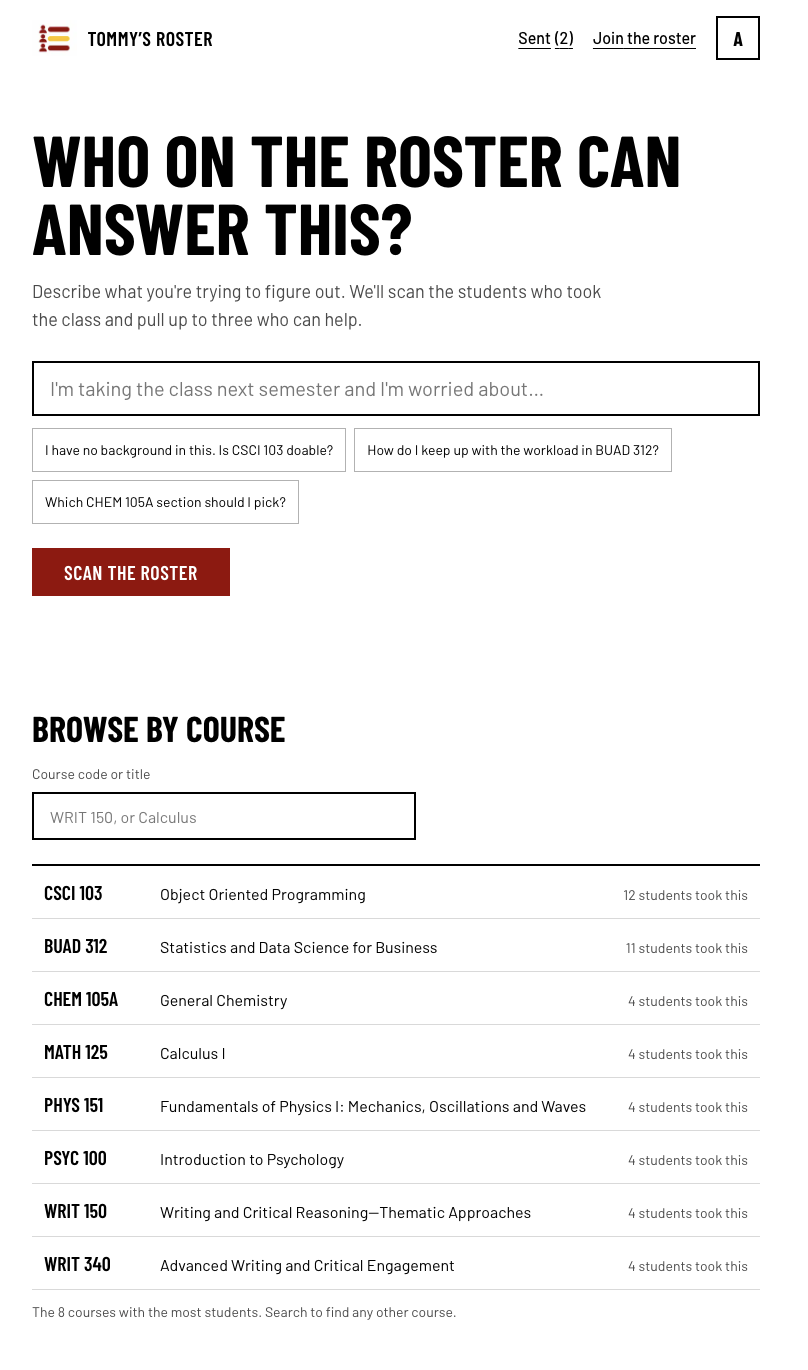
Homepage
-
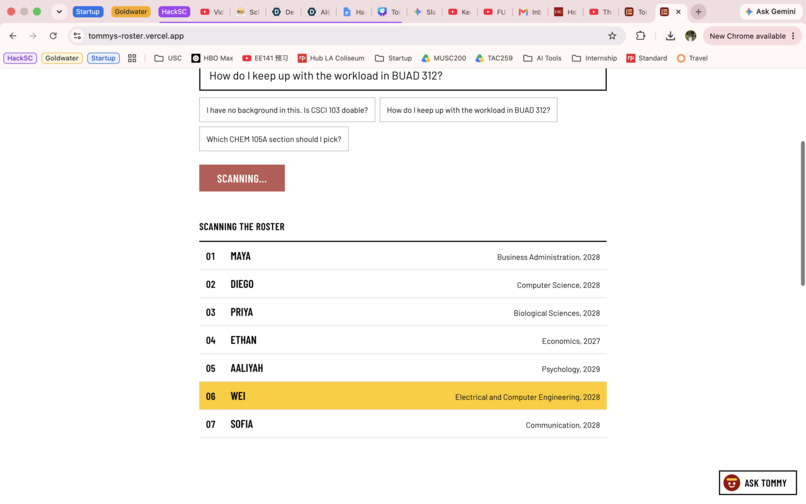
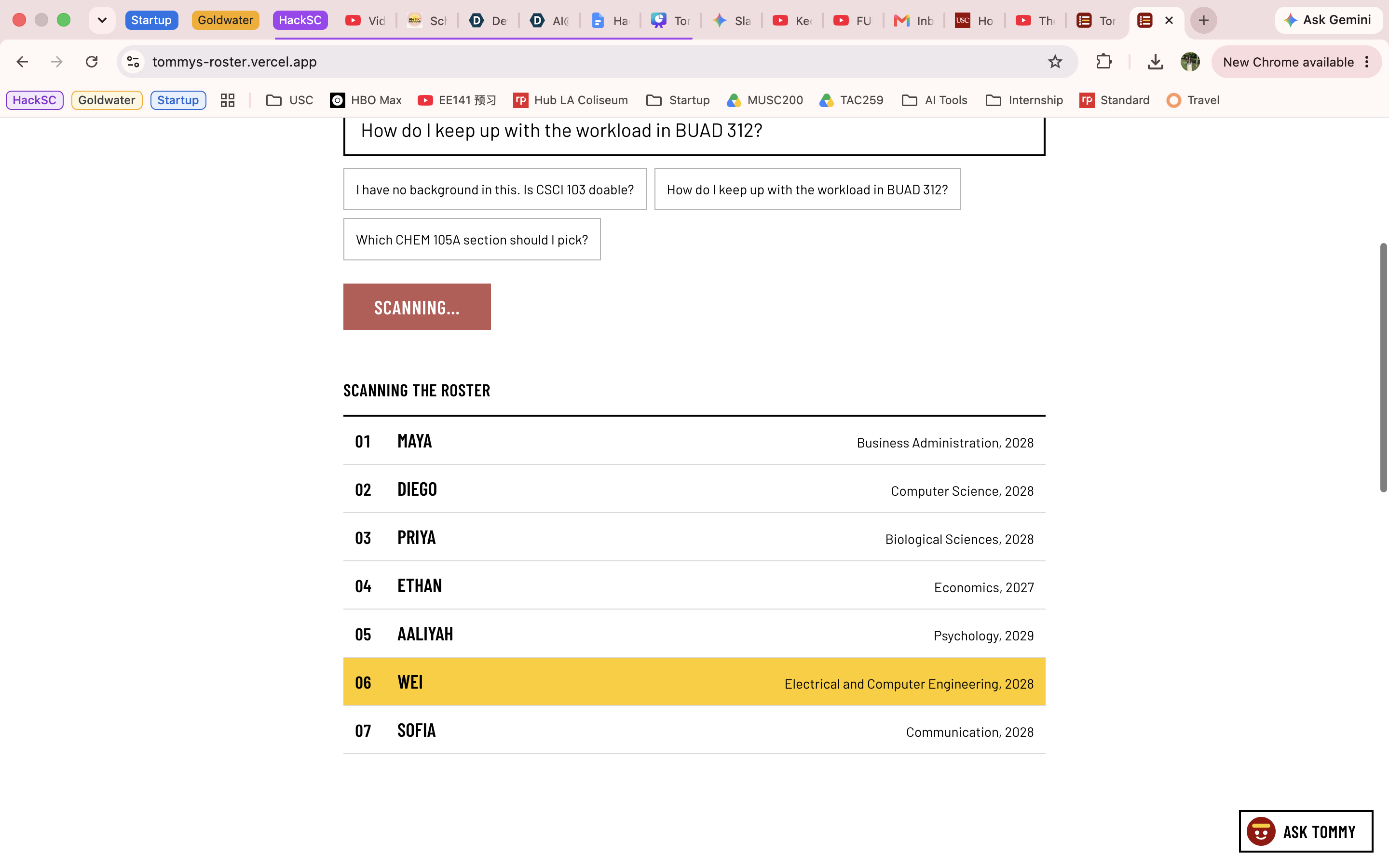
Scanning for Matching Students
-
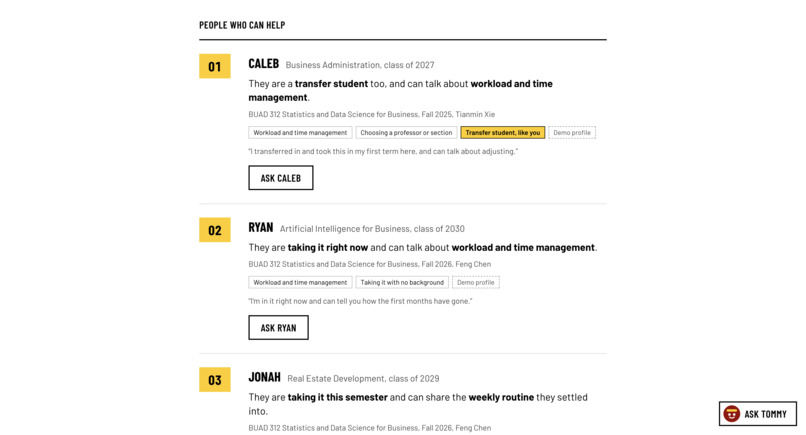
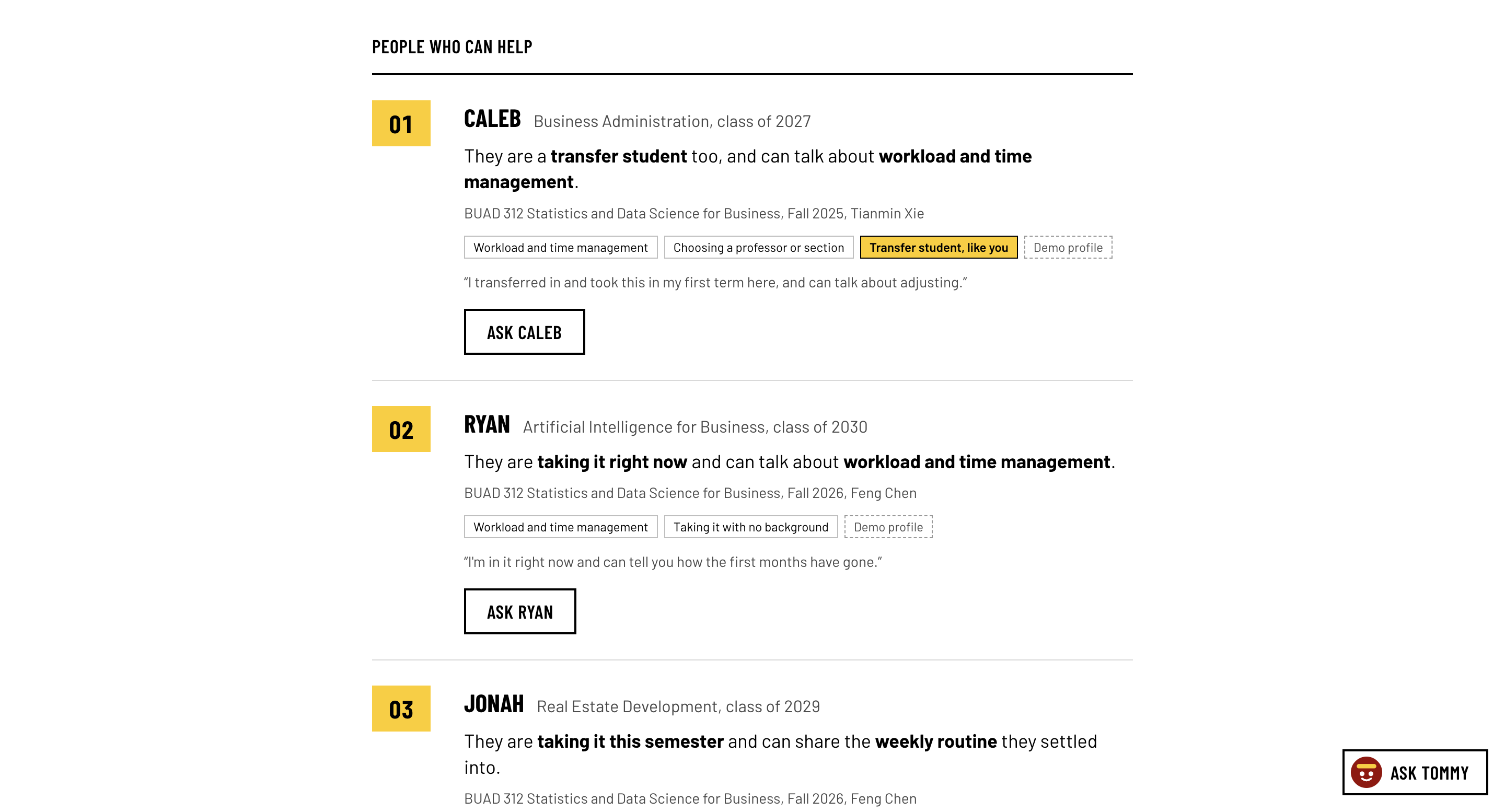
Scanned Results
-
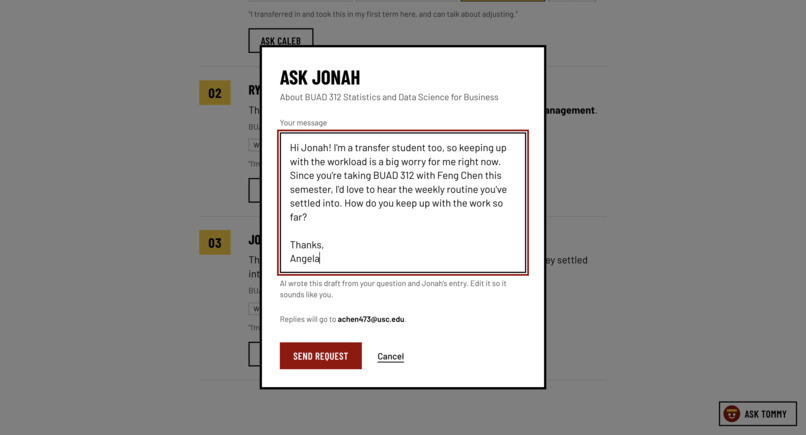
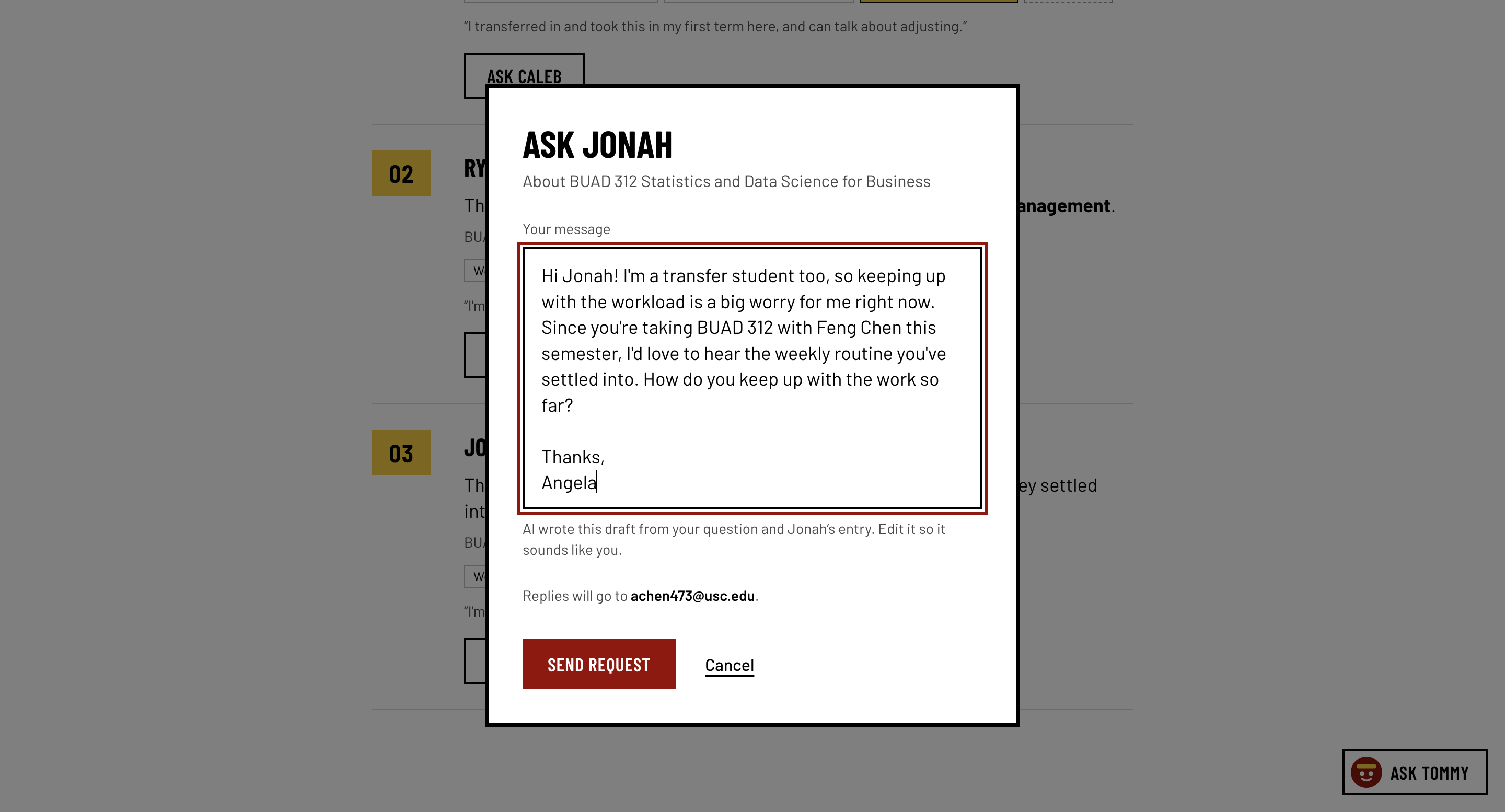
Reach Out Page & AI Automated Prompt
-
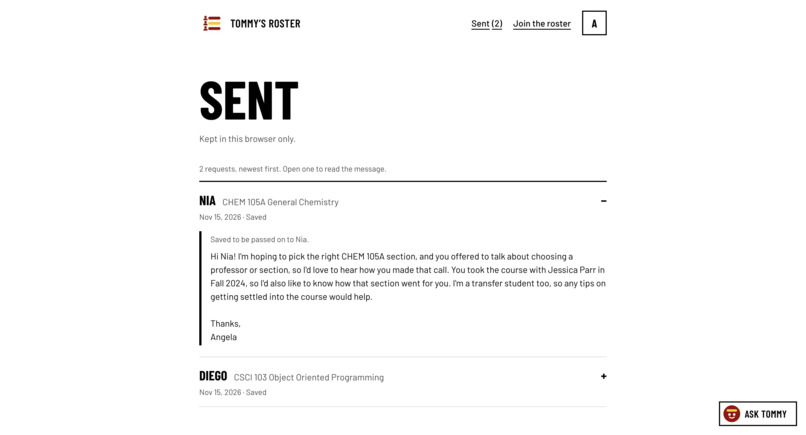
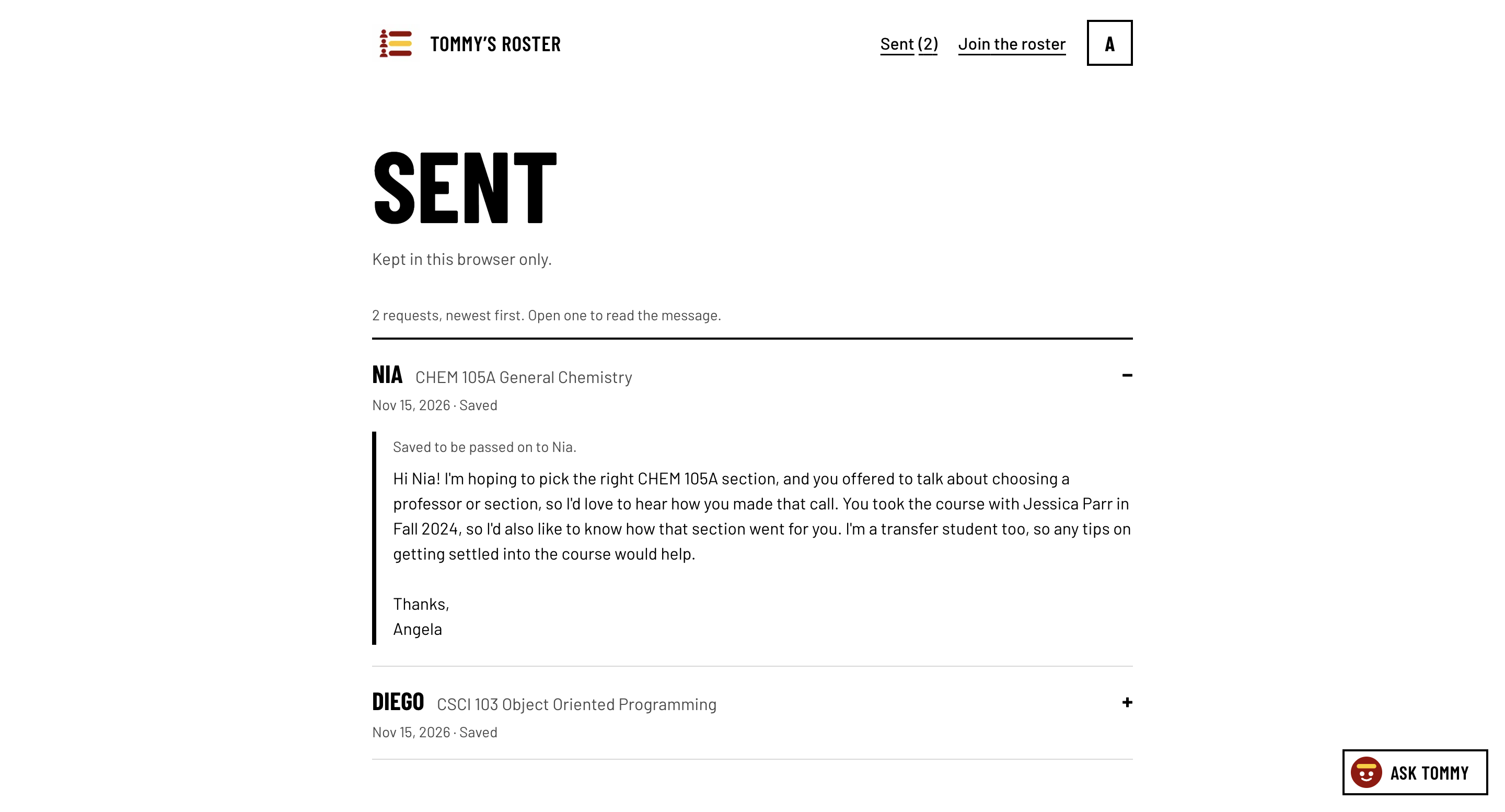
Sent History
-
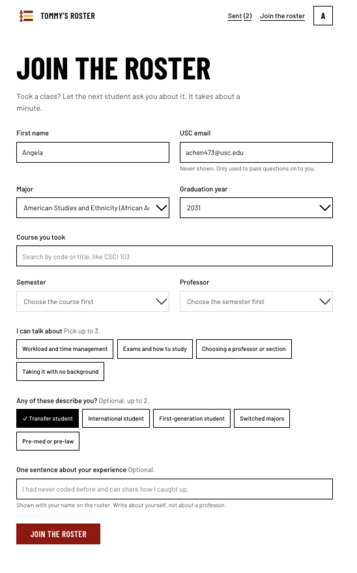
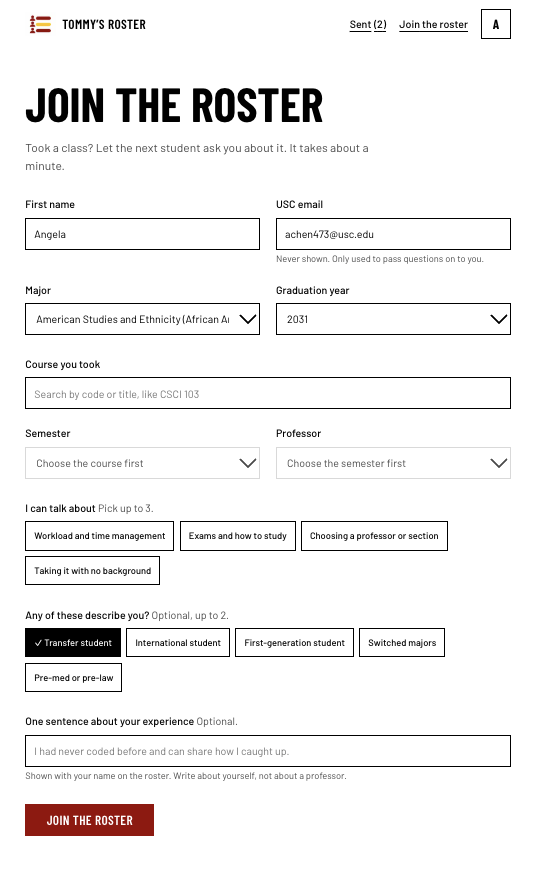
Join a Roster Yourself
-
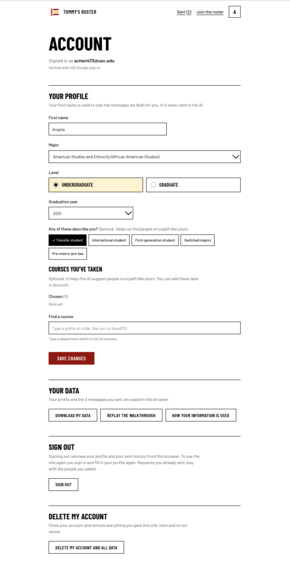
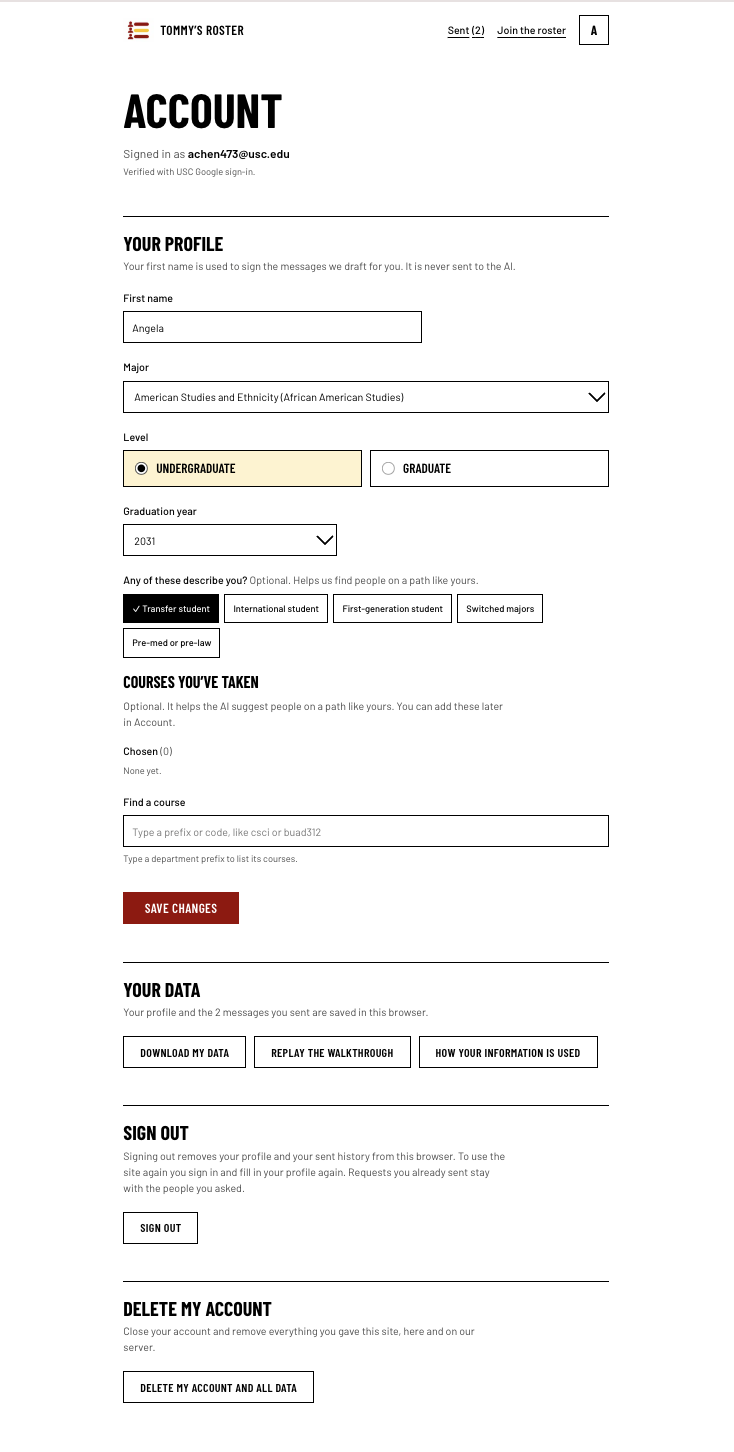
Account Page
-
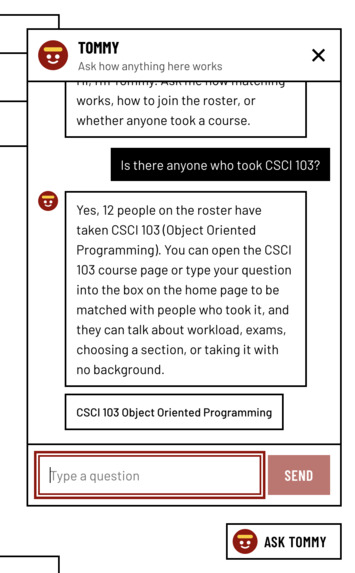
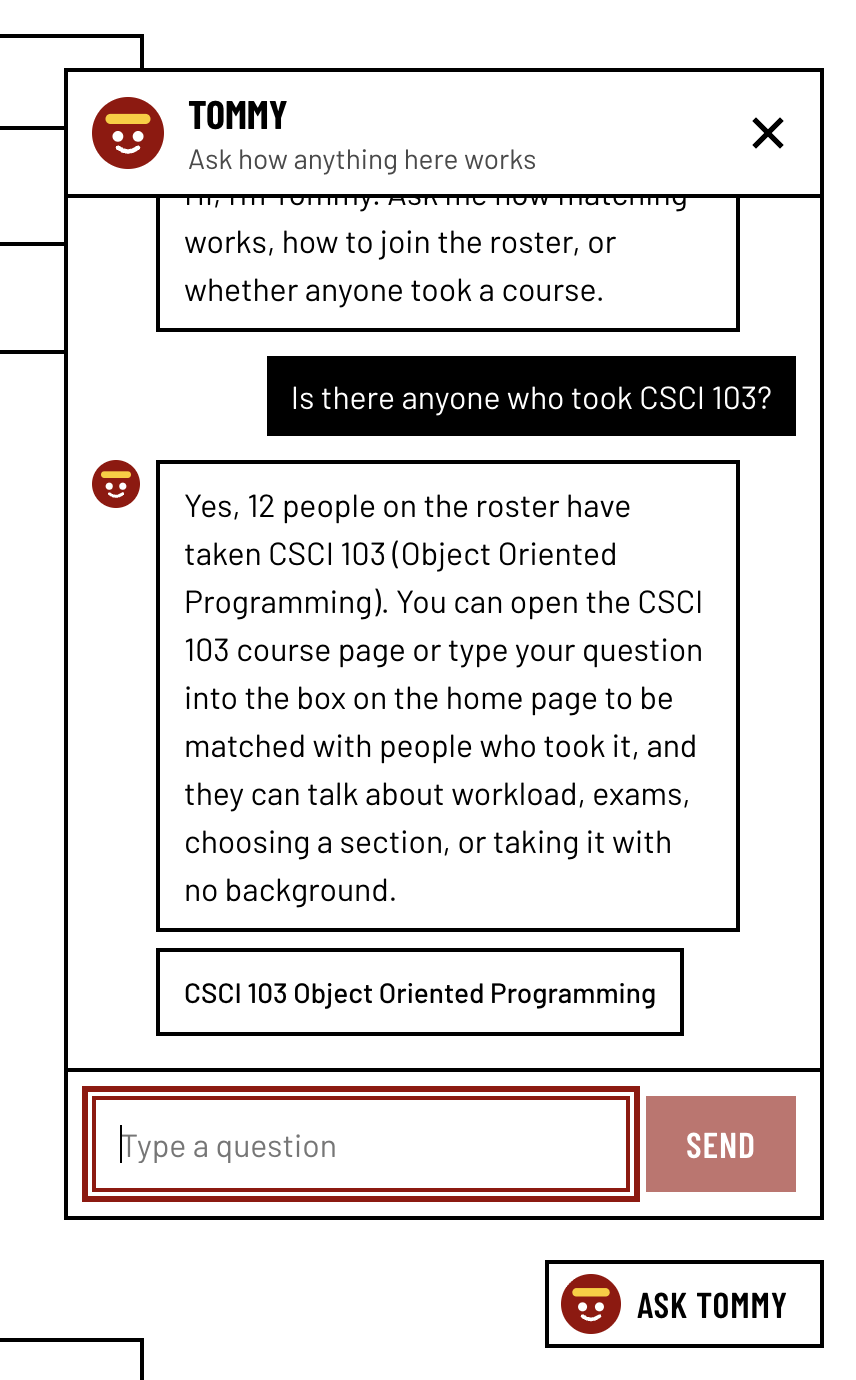
Tommy Chatbot
Inspiration and The Problem
USC students make choices about courses that affect their degree program, but they have very little to guide them: a course description, the instructor's name, and a few online reviews. The most popular choice, RateMyProfessors, is a star rating from an anonymous stranger, with no context and no way to ask a follow-up question. It may even be empty for smaller classes, it can be biased, and it is sometimes written by the instructors themselves.
Students are left with unanswered questions, for example:
- How many hours per week does the class require?
- How to best prepare for the course topics?
- Is the class material helpful?
- Can I balance it with my other classes?
We interviewed 30 USC students, and 25 of them said it was difficult to get specific information about a class. Students deserve a real conversation, not a star rating.
What it does
Tommy's Roster turns unverifiable opinions into people students can actually reach. Students search for classes the same way they do on web registration. Under each class, they see a list of opted-in students who have taken it, including their major/minor, the professor they had, and their grade level. There are no ratings, just people.
A student can look for a peer in the same year or major, press "Ask [Name]," and send an automated intro email with the questions you want answered. Our AI matching goes beyond keywords and considers background details you choose to share, like being first-gen or international, so you meet people on a similar path. Contact information is never shown on the roster, and the recipient decides whether to reply. Tommy's Roster also helps students who are passionate about a subject find peers who share that interest.
Privacy and trust: Tommy's Roster includes personal information, so we built it around consent. Joining a roster is opt-in, students choose exactly which details they share (including their grade level), and only Google sign-ins from usc.edu accounts can access the platform (a demo sign-in is available for judges). The "Ask" button prevents spam and keeps students' emails private unless they choose to respond.
How we built it
We started with real evidence: interviews at Leavey Library, then with random students walking through campus to get a more varied sample.
For the interface, we designed the screens ourselves in Figma, then gave those designs to AI tools as a reference. We improved our prompts, generated multiple versions of each page, and A/B tested them to choose the best one.
Tech stack
- Frontend and API: Next.js 16 (App Router), React 19, TypeScript, and Tailwind CSS. The API runs as Next.js route handlers in the same app.
- Sign-in: Google sign-in restricted to usc.edu accounts, so passwords are handled by Google's login page and never by us. A demo sign-in is available for judges without a USC account.
- AI: Claude API (
claude-haiku-5-5) for matching, message drafts, and the helper. - Email: Resend sends the automated "Ask" email.
- Hosting: Vercel.
- Data: 1,595 courses across five semesters come from USC's public Schedule of Classes, so no class information is typed by hand. For this prototype, the roster is stored as data files, each student's profile and sent history stay in their own browser, and sign-ups and requests are held on the server. A database is the first step after the hackathon.
AI features
- Peer matching. Describe what you're trying to figure out in your own words, and the AI picks up to three students who took that course, with a one-sentence reason for each. It goes beyond keywords: it also relates you personally to past students, using your major, level, year, courses taken, and background traits you choose to add, like being a first-gen or international student, so you're matched with people who've walked a similar path. Later, you can add more details in your profile so the suggestions get even more personalized. Every person and course in the answer is checked in code against the roster and the USC catalog before it is shown, and the AI only sees what each student chose to share. If it can't read the question or nobody on the roster took the course, it says so instead of guessing.
- A first message written for that person. When you press Ask, the AI drafts a message from your question and what that student chose to share. It appears as a grey suggestion you accept with Tab or type over.
- Tommy, our helper. It answers how the site works and whether anyone took a course, using tool lookups instead of guessing.
All three features use only what students have chosen to share. Roster names and emails are never sent to the AI. Anything you type into a question box is sent as written, so we ask people not to include contact details.
Challenges we ran into
Choosing the right problem. We had many options and needed one that met the judging criteria: a real issue for USC students, an appropriate use of AI, and something that could actually be implemented. That led us to ask why Student Government should be involved instead of this being a student-built app. Our answer: Tommy's Roster is a system of trust and scale. It needs verified USC accounts, a link to the course catalog, and the credibility to get students to sign up.
Getting real evidence. We didn't want to rely on assumptions, so we went out and talked to students ourselves, including people who weren't already studying in the library.
Front-end design. When we first brainstormed the interface with AI tools, it looked boring and "AI-generated." We solved it in two ways: designing in Figma first and feeding those designs to AI, and improving our prompts with multiple versions and A/B testing.
Accomplishments that we're proud of
- Talking to 30 USC students to validate the problem before building.
- Designing a privacy-first product: opt-in profiles, usc.edu-only sign-in, and no public contact info.
- Turning a generic AI-generated look into a distinct, intentional design through Figma and A/B testing.
- Building a working prototype and pitch in two days.
- Working as a cross-disciplinary team across Marshall, Viterbi, and Iovine and Young Academy.
What we learned
- Slow down to understand the problem. For a few of us, this was the longest hackathon yet, and it taught us to spend more time understanding different problems instead of rushing to build.
- Know each person's strengths. Finding each teammate's specialty and best qualities helped us cooperate better and divide the work well.
- Communication matters most. Clear, constant communication kept the team aligned under time pressure.
- Design the problem before the tool. AI worked best when we gave it our own designs and clear direction, not a blank prompt.
What's next for Tommy's Roster
- Add a database so profiles and requests persist across devices.
- Pilot with one school next semester.
- Move to USC's official login and course catalog with Student Government.
- Add moderation and reporting for messages.
- Expand our survey to verify demand across different majors.
- Deeper personalization: let students add more to their profiles so AI suggestions fit them even better.
Our vision is for Student Government and USC departments to adopt Tommy's Roster. Beyond classes, the same approach can connect students by major, advisor, research lab, and study groups. Any university with student logins and a course catalog can use it. It could reach roughly 47,000 USC undergraduate and graduate students.
Built With
- canva
- chatgpt
- claude-design
- claudecode
- codex
- entrepreneurial-mindset
- figma
- github
- google-antigravity
- google-docs
- love
- replit
- research
