Inspiration
Tomcat 360 began with a simple idea: what if you could sit in a fighter cockpit, reach out for the controls, and fly through a vast landscape using your own hands?
I was inspired by the sense of presence in flight simulators and by how VR can make the cockpit feel like a place you occupy. I wanted to bring that experience to Meta Quest in a form that is easy to access and enjoyable even if you are new to flight games.
What it does
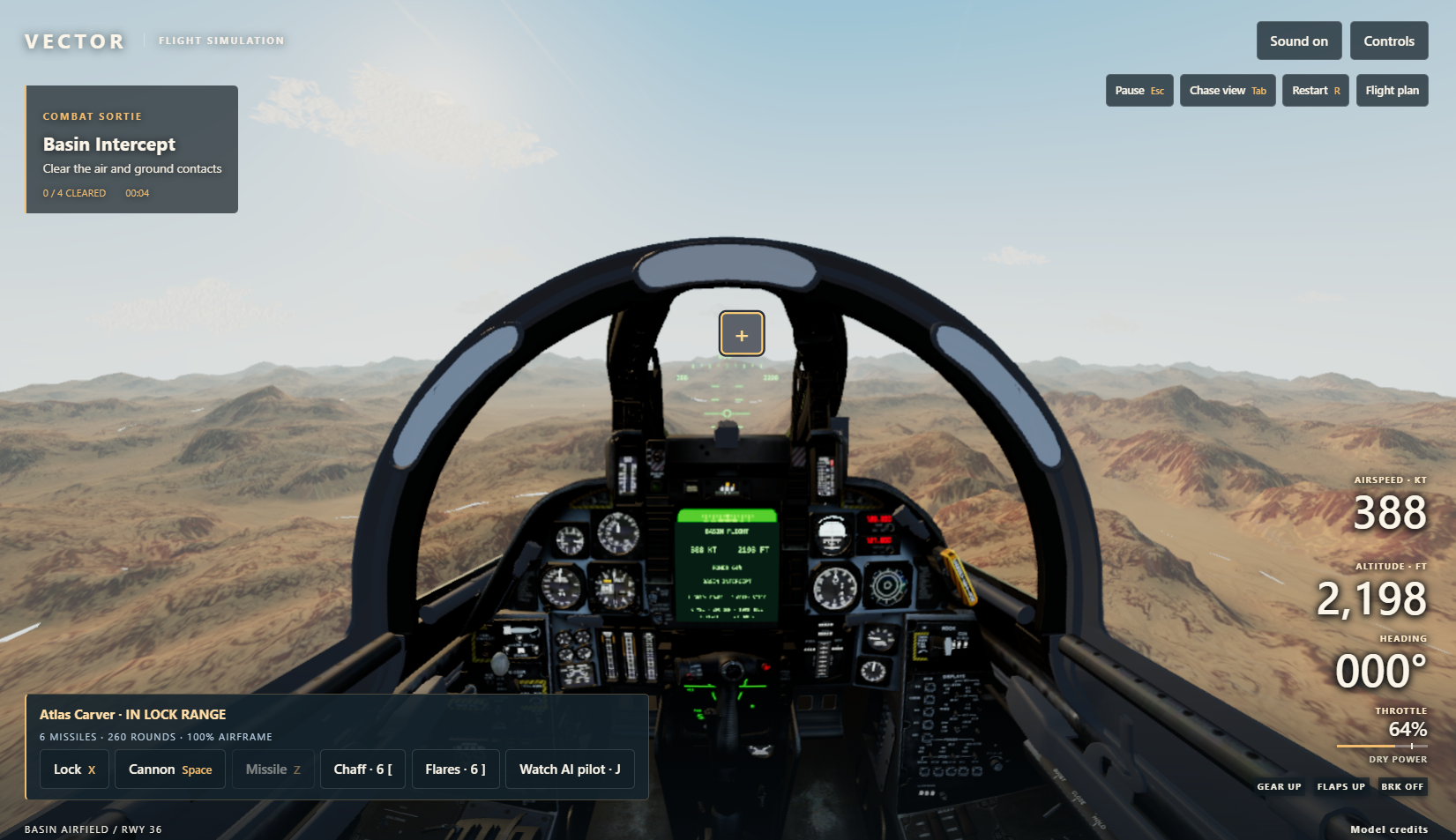
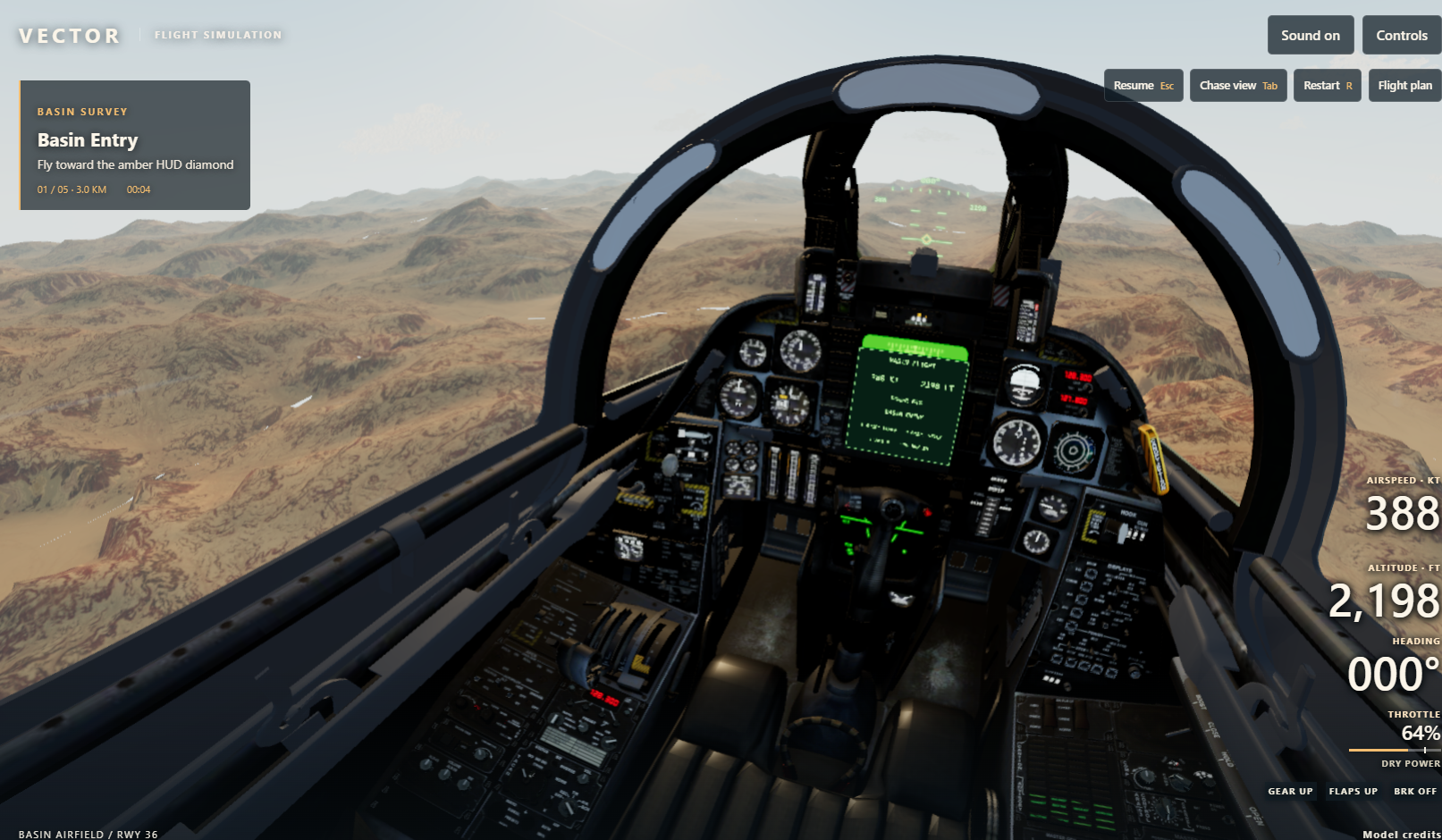
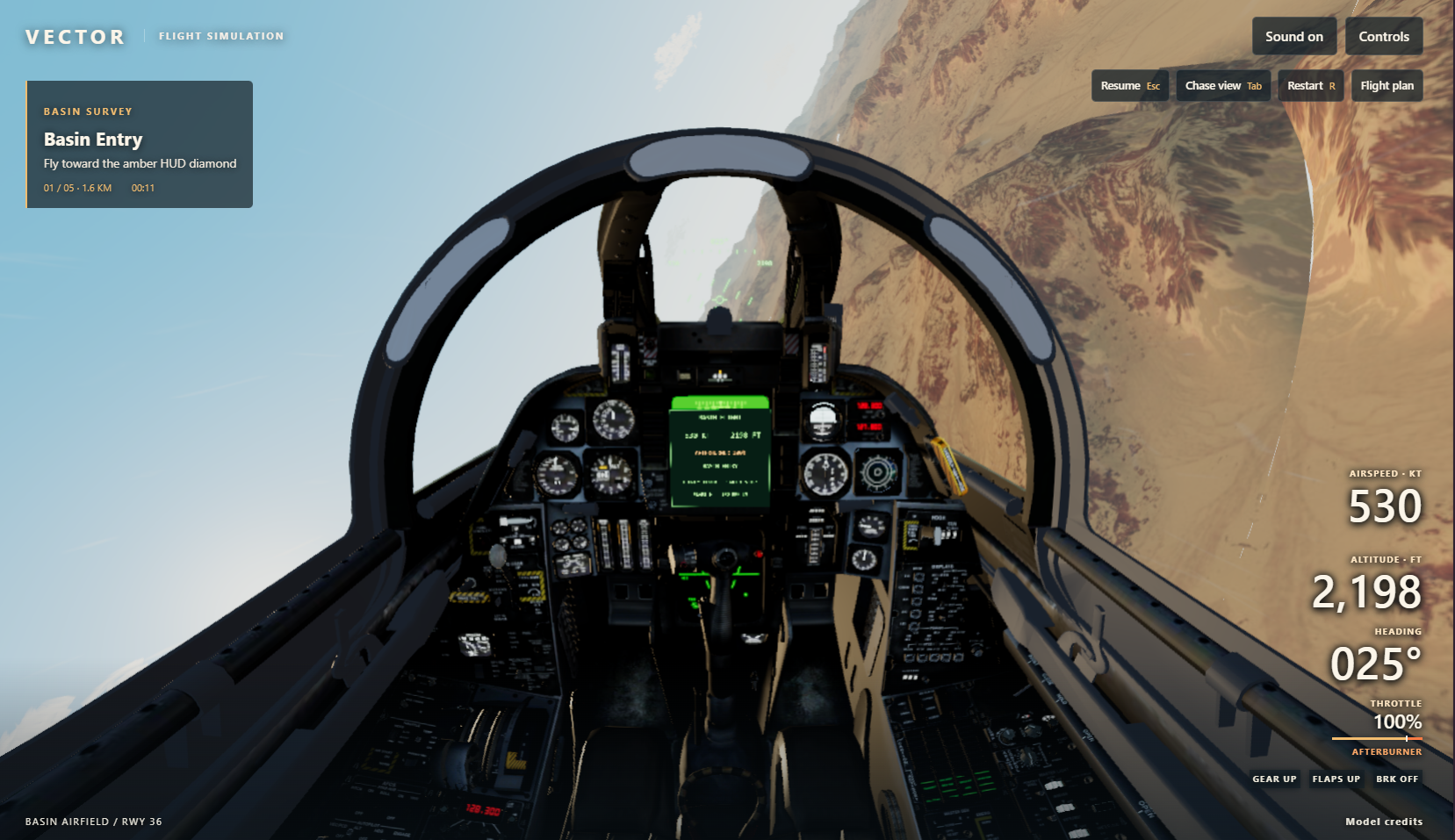
Tomcat 360 puts you in the front seat of an F-14-inspired cockpit over a desert basin. On a Meta Quest headset, you can open the game in Quest Browser, enter immersive VR, and use hand tracking to pinch and move the throttle and joystick.
You can explore the terrain, practice takeoff and landing, or fly a combat mission against computer-controlled aircraft and a ground launcher. In combat, you can lock targets within range, fire missiles and cannon rounds, and respond to threats with chaff and flares.
The project also offers desktop controls and a phone camera mode for experimenting with hand interactions.
How I built it
I built Tomcat 360 with Three.js and WebXR, using supplied 3D aircraft, terrain, and environmental models. I added flight dynamics, cockpit instruments, missions, enemy behavior, target locking, countermeasures, and audio and visual effects.
For Meta Quest, I designed a seated cockpit with hand-operated controls and menus. Players can launch the experience from a link in Quest Browser without installing an app.
Challenges I ran into
Making the aircraft feel convincing took several iterations. Thrust needed to follow the aircraft’s nose as it pitched and banked, while the flight path retained momentum and turned smoothly. I also worked on making the throttle, joystick, and cockpit menu reachable and usable with hand tracking.
Another challenge was finding ways to develop and demonstrate hand interaction without a headset available. I used a WebXR emulator to exercise the controls and added a camera-based mode for experimenting with hand movement on a phone.
Accomplishments I'm proud of
I brought the cockpit, flight model, hand controls, terrain, and combat missions together in one playable experience. I’m especially proud that the throttle and joystick can be operated independently, giving players a more physical connection to the aircraft.
What I learned
I learned how much the feeling of flight depends on small details working together: the position of the cockpit, the movement of the horizon, engine sound, acceleration, and clear feedback when a control is grabbed or a target is locked. I also learned how important seated reach and tracking-loss behavior are when designing for hands.
What's next for Tomcat 360
My next priority is testing on a physical Meta Quest headset and refining hand placement, comfort, and performance based on that experience. I also want to expand the missions, improve enemy behavior, and add more ways to explore the world.
