-
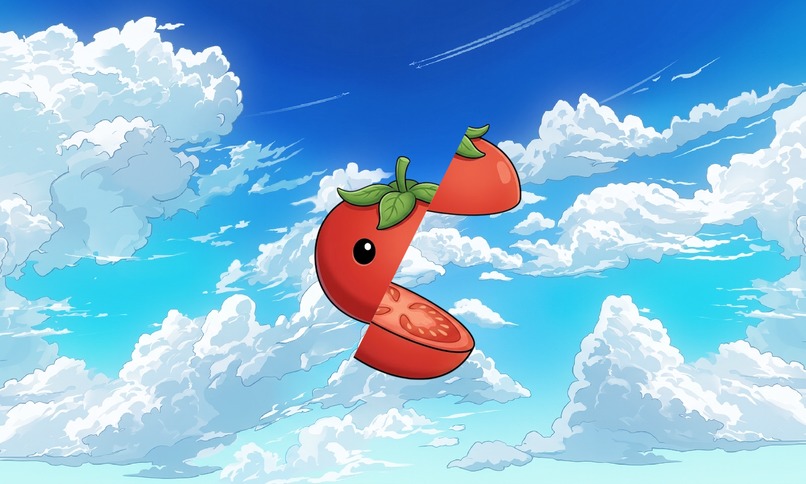
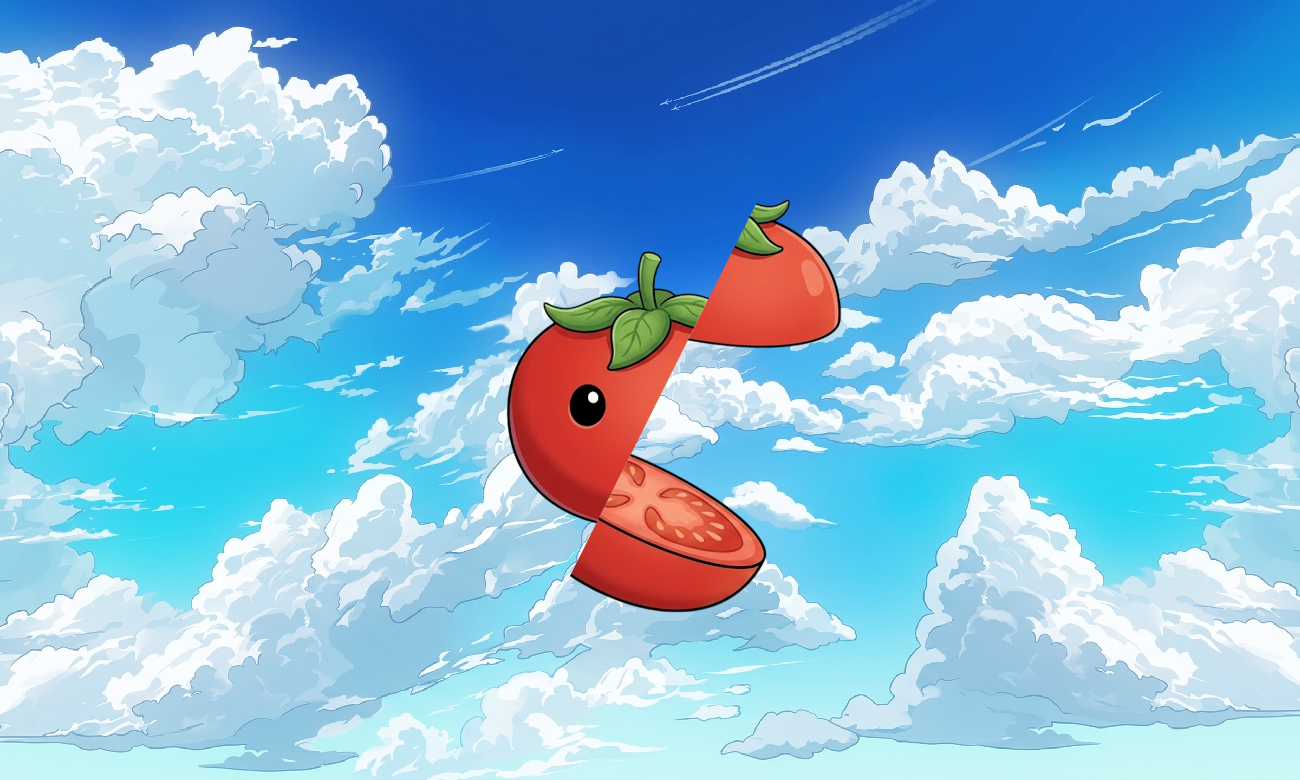
The cut that starts it all.
-
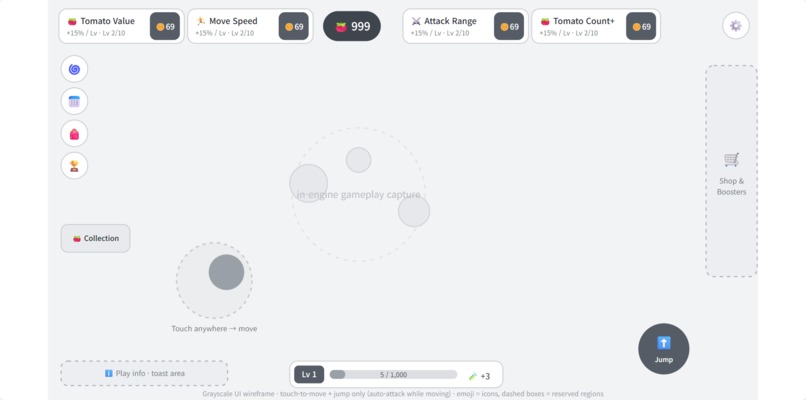
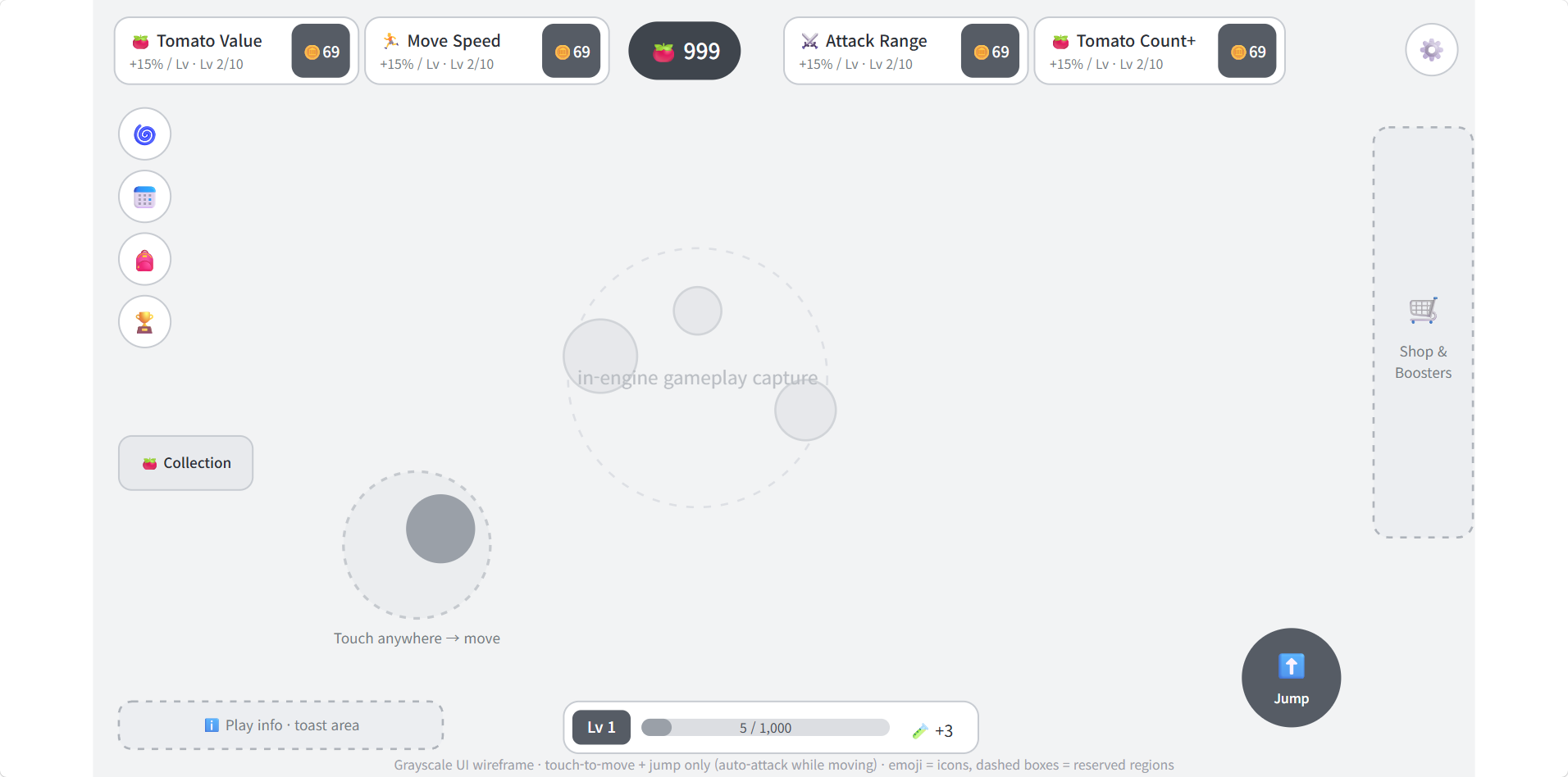
One screen holds the whole loop — touch to move, auto-slice tomatoes, upgrade in-run, bank a multiplier at rebirth.
-
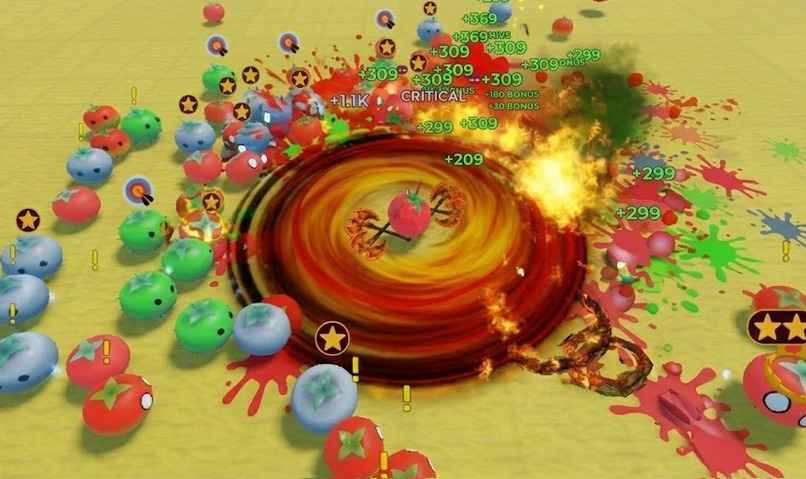
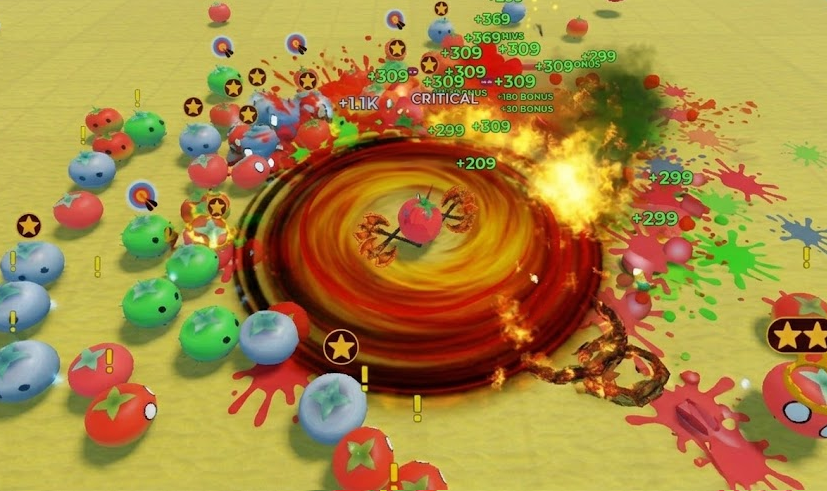
The Whirlwind signature — one spin clears a whole field of tomatoes into a coin eruption.
-
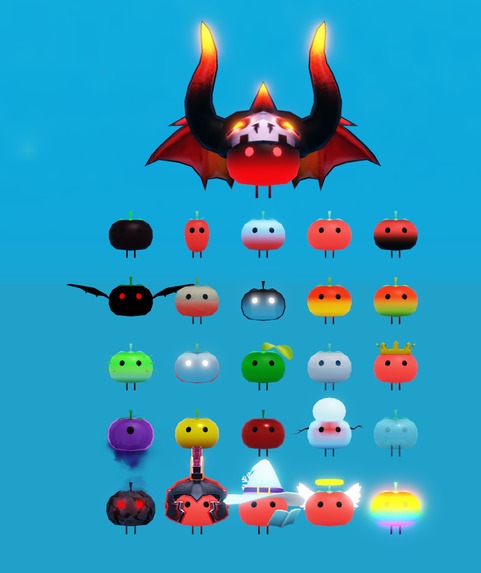
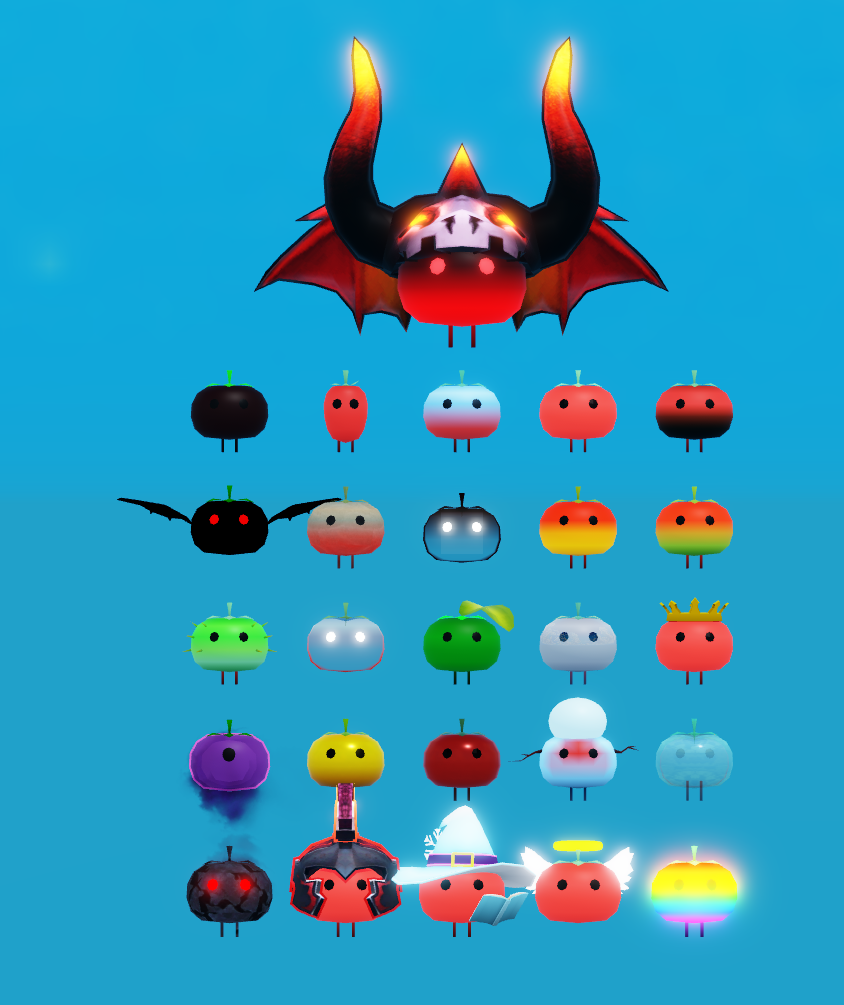
The enemy is the collectible — 25+ species across five grades, plus bosses and one Unique per island.
-
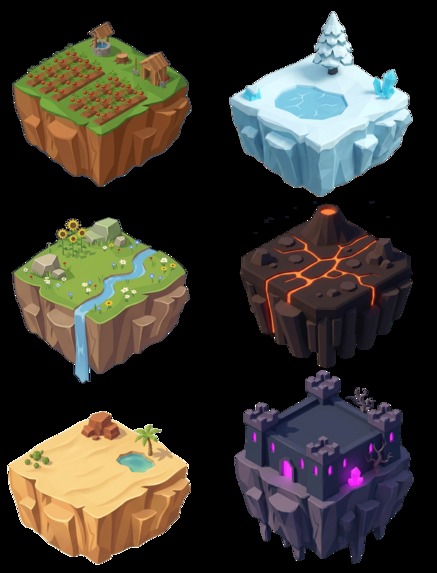
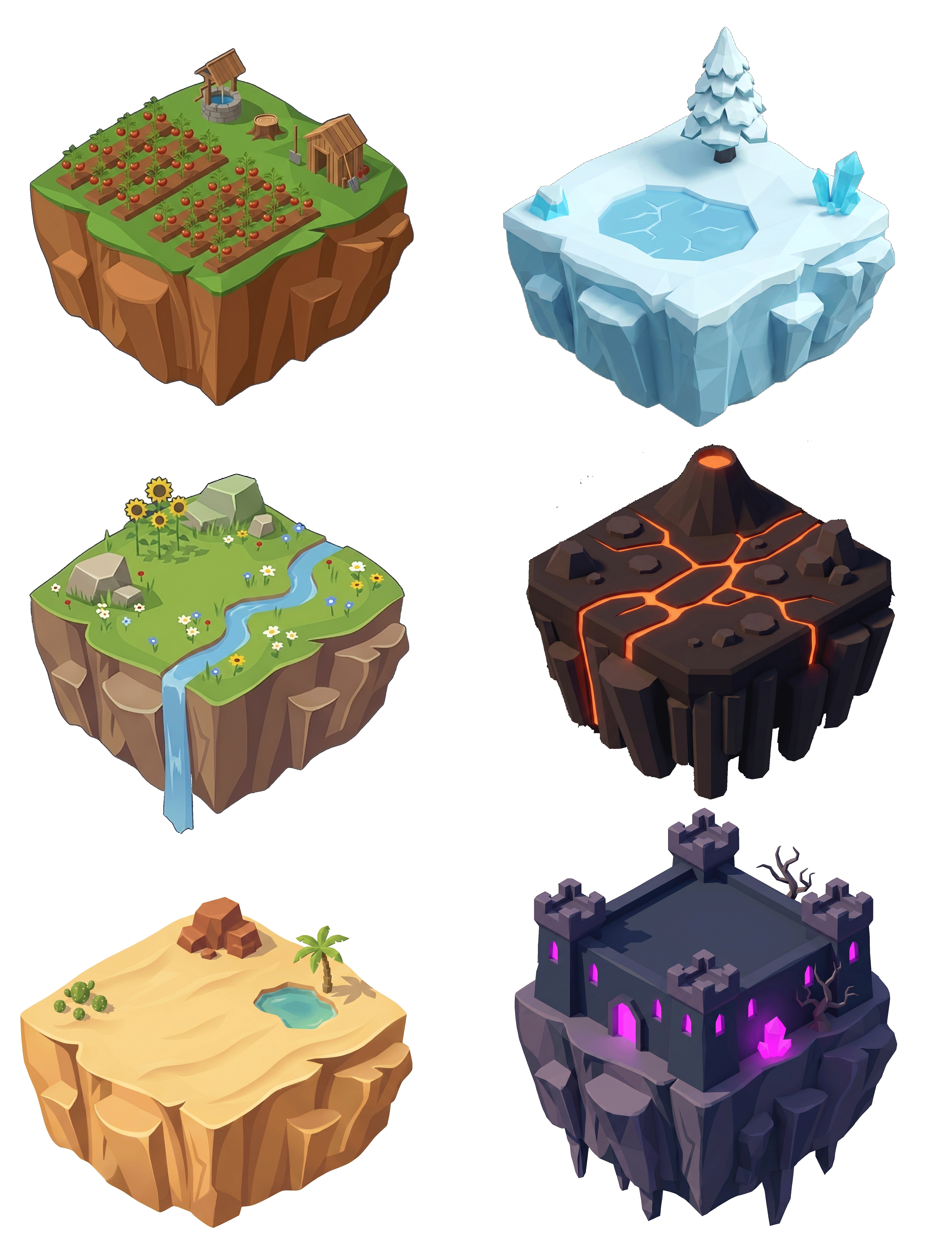
Six islands, one grammar in new keys — warm farms to volcanic dark. The world is visible from day one and grows in plain sight.
-
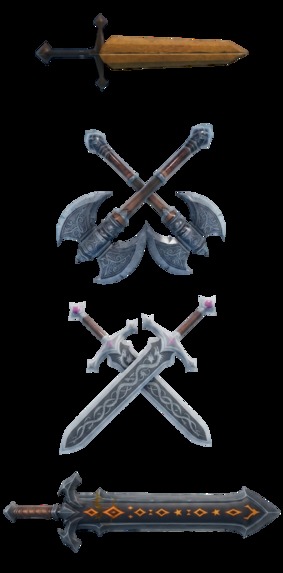
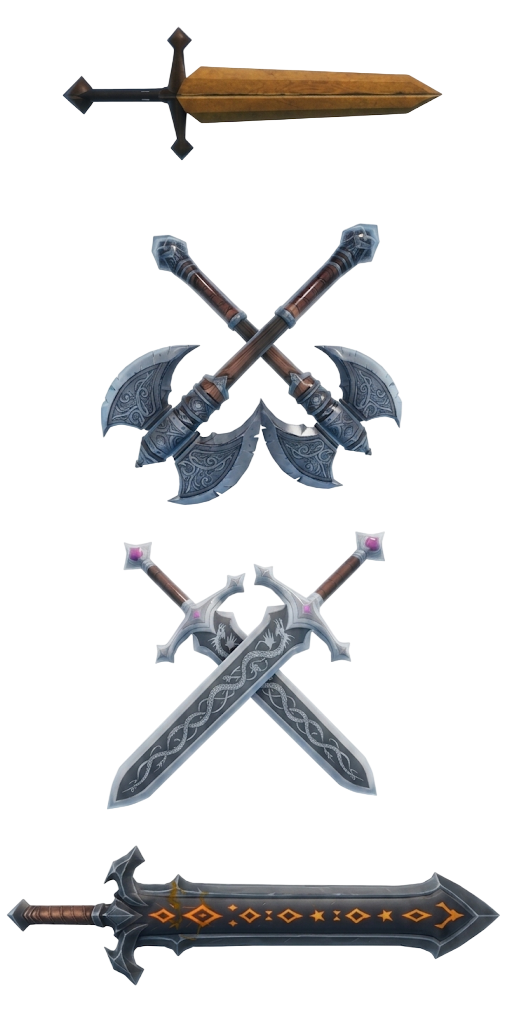
The weapon evolves with every rebirth — wooden sword, to dual axes, to a screen-clearing greatsword.
Inspiration
We set out to bridge two audiences who rarely share a game: players who grew up on the screen-clearing power fantasy of 2000s action-RPGs — now older and short on time — and today's younger players who love cute characters and collecting. Hardcore ARPGs are too demanding for a commute; pure idle games are too passive. The gap none of them fill is the active combat feel of an action-RPG inside the collect-and-compound structure of a simulator, in sessions short enough for a break.
The spark was one inversion: make the enemy and the collectible the same creature. A tomato notices you, startles, and flees; you chase it down and burst it for currency — and the very same species is one you want to collect. It bursts red, so a swept screen lands with the punch of ARPG carnage while staying completely bloodless: juice and ketchup, not gore. A potato or a slime could never carry that charge.
What it does
Tomato Splat is a simulation of harvesting, investing, and optimization wearing the costume of a power fantasy. You slice an endless horde of tomatoes into currency, spend it on upgrades that make the next slice faster and wider, and periodically Rebirth — a full reset that leaves a permanent multiplier behind, so each cycle runs faster than the last and reaches the signature Whirlwind (one spin that bursts a whole screen into juice) sooner.
There is no health system. The genre's tension — resource management — moves from will I survive? to what do I grow, and when?, so death becomes inefficiency. The sharpest decision is the collection trade-off: collecting a tomato costs immediate rebirth progress but buys a permanent multiplier, and rarer species appear only deep into a run — so the collector and the optimizer pull in opposite directions, and you choose.
How we built it
The design answers a known failure mode rather than guessing: this genre earns a strong first impression easily but struggles to sustain depth, so sessions thin out before the deeper systems land. We compressed the early curve — a first Rebirth within minutes, an early taste of the Whirlwind, a new region opening inside the first session — and built a depth architecture where each mode justifies the others: the main loop funds an Endless farm, the farm yields the weapons that gate harder challenges, and those challenges break growth ceilings back in the main loop. One discipline runs throughout: validate the core first, then layer depth. The principle is already proven in miniature inside the core, where the collection trade-off is a working version of the same invest-to-accelerate loop the full architecture scales up.
Challenges we ran into
The hardest question is the central hypothesis: does the enemy-as-collectible actually change behavior — do players come to care about the collection, or only optimize rebirth and watch numbers climb? We treat it as the thing to test first, measured as collection-pursuit rate, and scoped the MVP (five species, three active slots, the rebirth-versus-collection trade-off) so it can be measured before the deeper systems exist. The other challenge was serving two audiences in one loop without splitting into two games — solved by making power come from active play (movement, timing, resource choices) instead of punishing difficulty or a long grind, so casual and dedicated players meet inside the same loop.
Accomplishments that we're proud of
A coherent depth architecture stacked on a validated core: three pillars — an always-on main loop, a cosmetic-only Training Camp for onboarding, and an Endless Mode farm — tied into one lifecycle, with a genuine two-way dependency between the main loop and Endless that is load-bearing, not decorative. And the emotional turn itself: a seamless loop where the same mass-clearing act that defeats a tomato also logs its collection entry — removing busywork while keeping the meaningful choice.
What we learned
That the strongest mobile hook isn't a clever genre mashup but a tightly paced funnel that respects a player's first fifteen minutes. Distilling each genre to its single most addictive element — the rush of clearing a screen, the pull of compounding growth — beats stacking two genres' full depth. And that an enemy worth caring about does more for retention than any number: the chase builds attachment, and the sweep pays it off.
What's next for Tomato Splat — An Action-Incremental Simulator
A co-op Raid — the multiplayer surface of Endless Mode, since friends are the strongest retention cohort. An auxiliary skill tree (Meteor, Lightning Chain) on top of the core Whirlwind, Flying Blade, and Harpoon. And more content and meta: additional islands and tomato species, seasons, leaderboards, and guilds. What's cut and what's kept is deliberate — validate the core first, then layer the depth.
Built With
- 3dsmax
- ai
- gamedesign
- metahorizon
- mobile
- photoshop


Log in or sign up for Devpost to join the conversation.