-
-
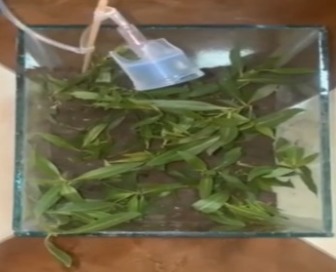
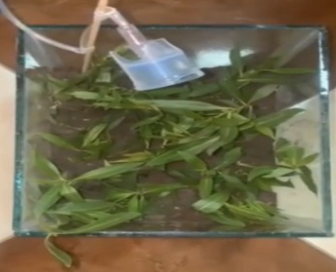
prototype
Inspiration The world is going through several challenges, which makes it our duty in this project to
To work to solve it some of these problems, such as: increasing the agricultural bases of Egypt and improving the scientific and technological environment for all. This solution will help to solve the problem of early blight on tomato plants. This disease causes huge damage to the leaves of the tomato plant and can affect the tomato crop.
What it does The project solves this problem by detecting this disease through the mobile application, it is used to detect the presence of disease and send a signal to a water pump system that sprays a fungicide to treat and control. After prolonged work on this project, an agriculture feedback control system successfully achieved the desired goal which is detecting the disease and treating it with the fungicide with an efficiency of 90%.
How we built it The second part of the system includes the connection between the firebase and the Arduino IDE (which is connected to the water pump (The water pump is connected to the relay by specific connections and to the Breadboard and to esp32)). This connection will be made with ESP32. The connections between the esp32 and the breadboard and the water pump have been done by using jumper wires. Then the esp32 is connected to Firebase by writing some specific codes on the Arduino IDE program. In this way, the firebase is connected to Arduino IDE through esp32. The mobile application is programmed such as when the disease is classified, the classification output will be sent to the firebase automatically. Then due to the connection between the Arduino IDE and Firebase, the output will be sent from the Firebase to the serial monitor of the Arduino IDE . A condition has been written on the Arduino IDE and it states that if the sent output on the serial monitor in early blight, the water pump will take the signal to operate and spray the fungicide. And if the sent output on the serial monitor is anything other than the early blight, it will not operate.
Challenges we ran into 1- Achieving the targeted efficiency of the system (90%) 2- Calculating the amount of fungicide (Bonide Liquid Copper Fungicide) according to how many the system detects the presence of the illness. 3- Increasing the efficiency of the tomato crop (Preserving a large part of the crop rather than destroying it by the disease).
Accomplishments that we're proud of The design requirements: The system meets the design requirements successfully which are: 1- Achieving the targeted efficiency of the system (90%) 2- Calculating the amount of fungicide (Bonide Liquid Copper Fungicide) according to how many the system detects the presence of the illness. 3- Increasing the efficiency of the tomato crop (Preserving a large part of the crop rather than destroying it by the disease). The efficiency of the system: The efficiency of the system was determined according to the efficiency of the mobile application because it is the main part by which the presence of the disease will be determined, and after that, the pump will operate. The efficiency of the mobile application will be calculated by dividing the number of images that have been correctly classified by the total number of images that have been entered: 𝑒𝑓𝑓𝑖𝑐𝑖𝑒𝑛𝑐𝑦 𝑜𝑓 𝑡ℎ𝑒 𝑎𝑝𝑝𝑙𝑖𝑐𝑎𝑡𝑖𝑜𝑛 = number of images that correctly classified / total images that have been entered to the application × 100 =𝑥 = 9/ 10 × 100 = 90% Bonide Liquid Copper Fungicide effectively controls fungal diseases such as early blight. Also, it does not have a harmful effect on healthy leaves, on the contrary, it gives them immunity from infection from disease.
What we learned The programming languages that the system is written with: 1- python This is the language that all the processes (processing –creation- training- testing) of creating a Machine Learning Model are written in. 2- Java This is the language the creation of the mobile application is made with. 3-C++ language This is the language that the codes and conditions are written in at the Arduino IDE.
What's next for TOMATO DISEASES DETECTION Some suggestions provided to people who are interested in completing and developing this project: 1-Provided the prototype with a camera sensor to be able to take images on its own instead of taking them with the camera of the mobile and this will make the system fully automated. 2-Put the camera sensor on rotatory stands to cover the crop completely. 3-Put many water pumps in the system each one specific for the detected pesticide for each disease because there are many diseases that face the tomato crop
Our accomplishments: we took second place in isef nationally global finalist in sic


Log in or sign up for Devpost to join the conversation.