-
-
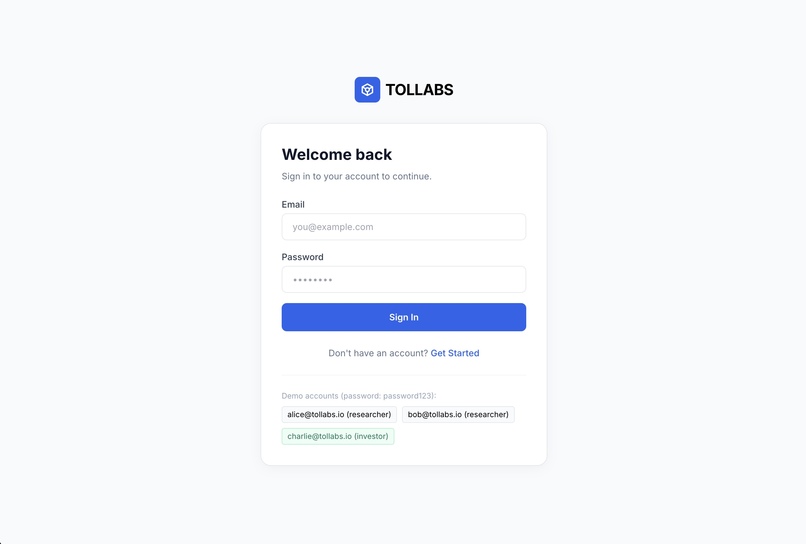
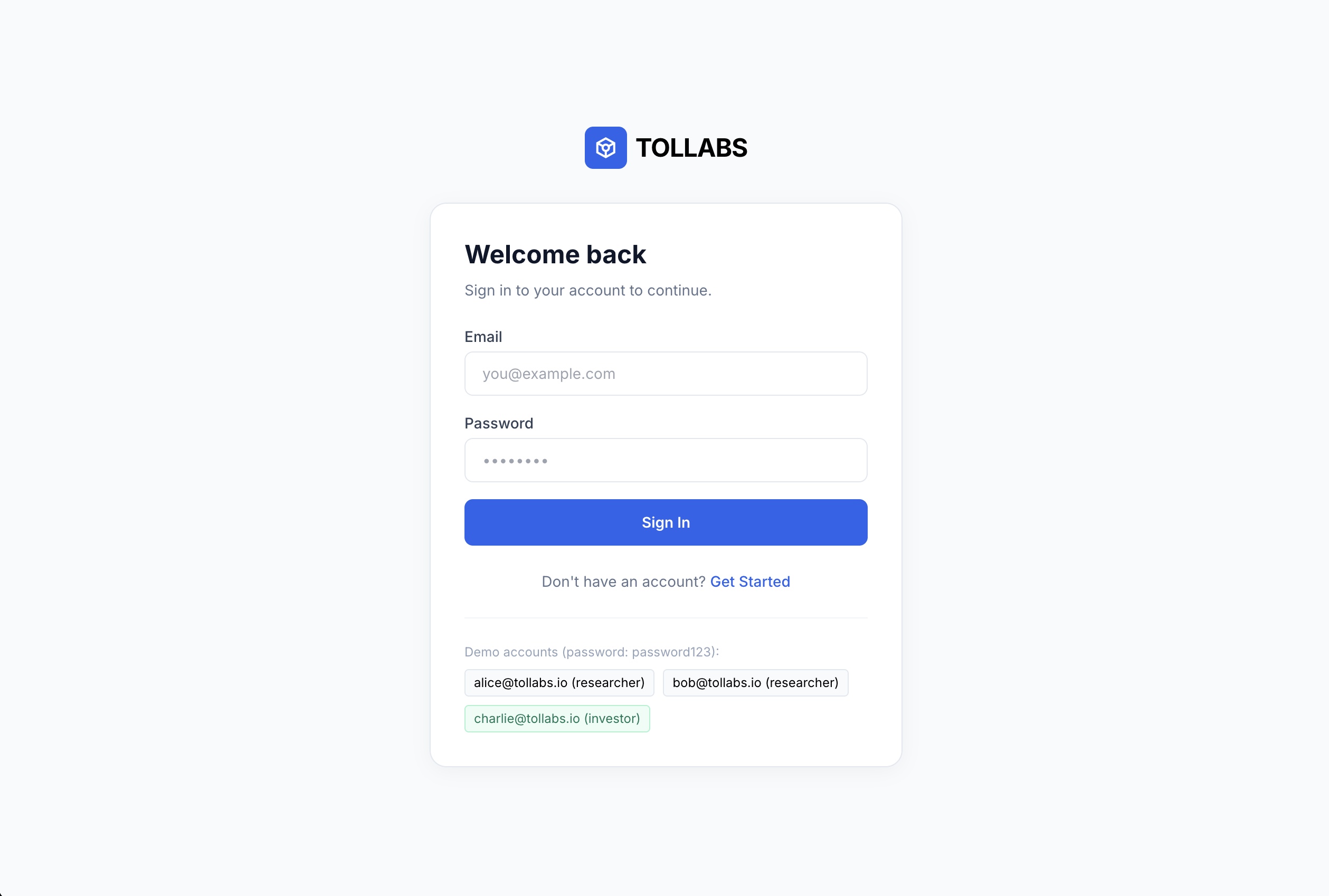
Login
-
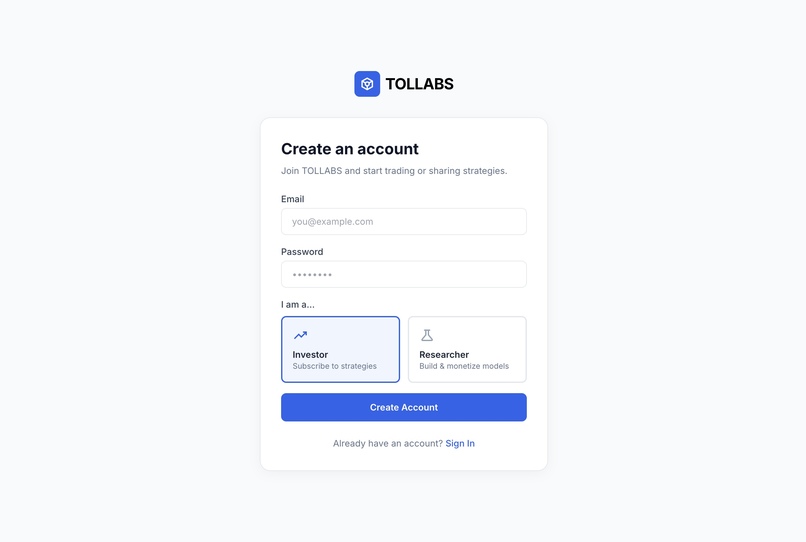
Create account
-
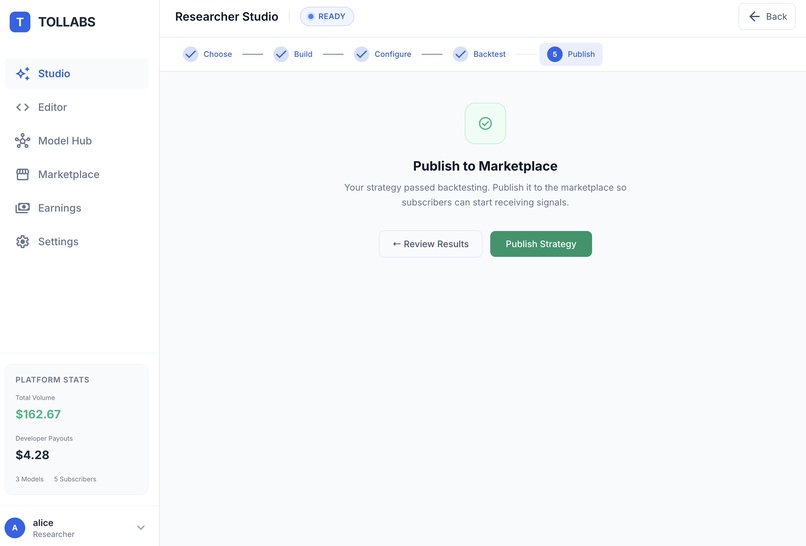
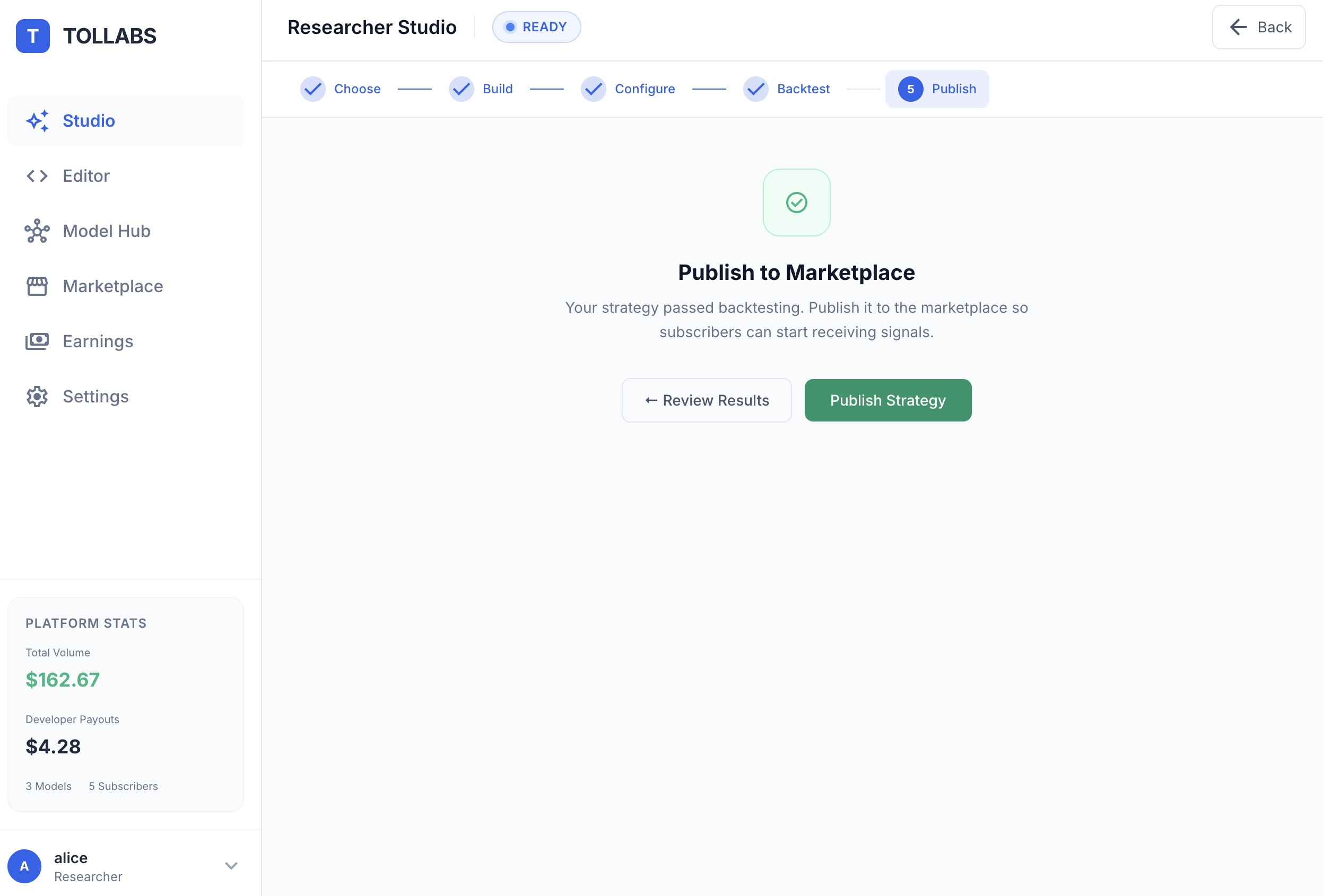
Publishing market place
-
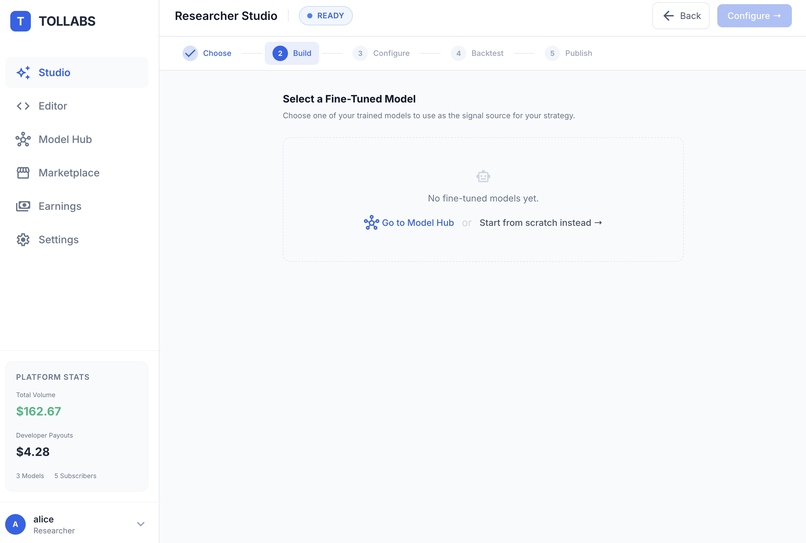
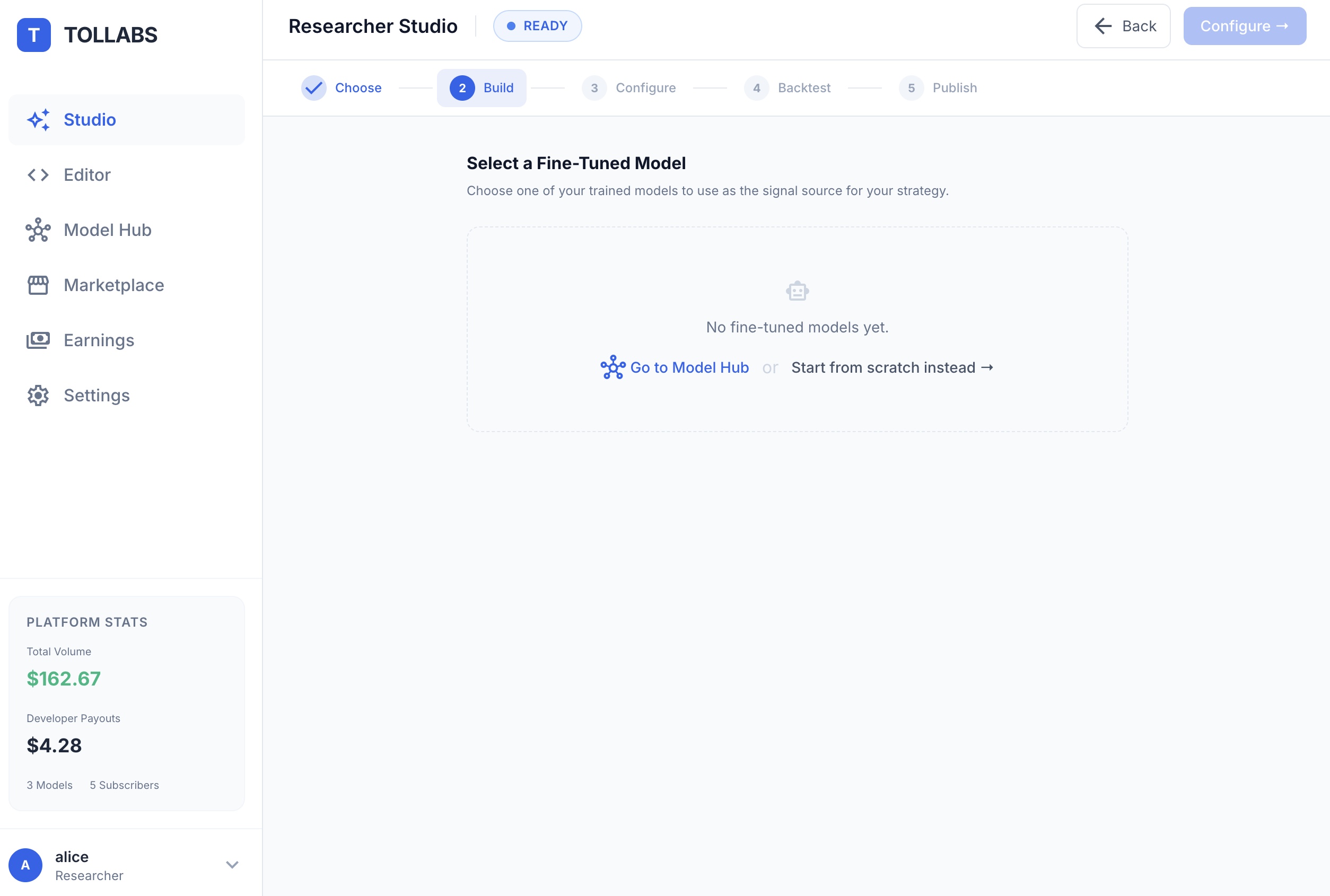
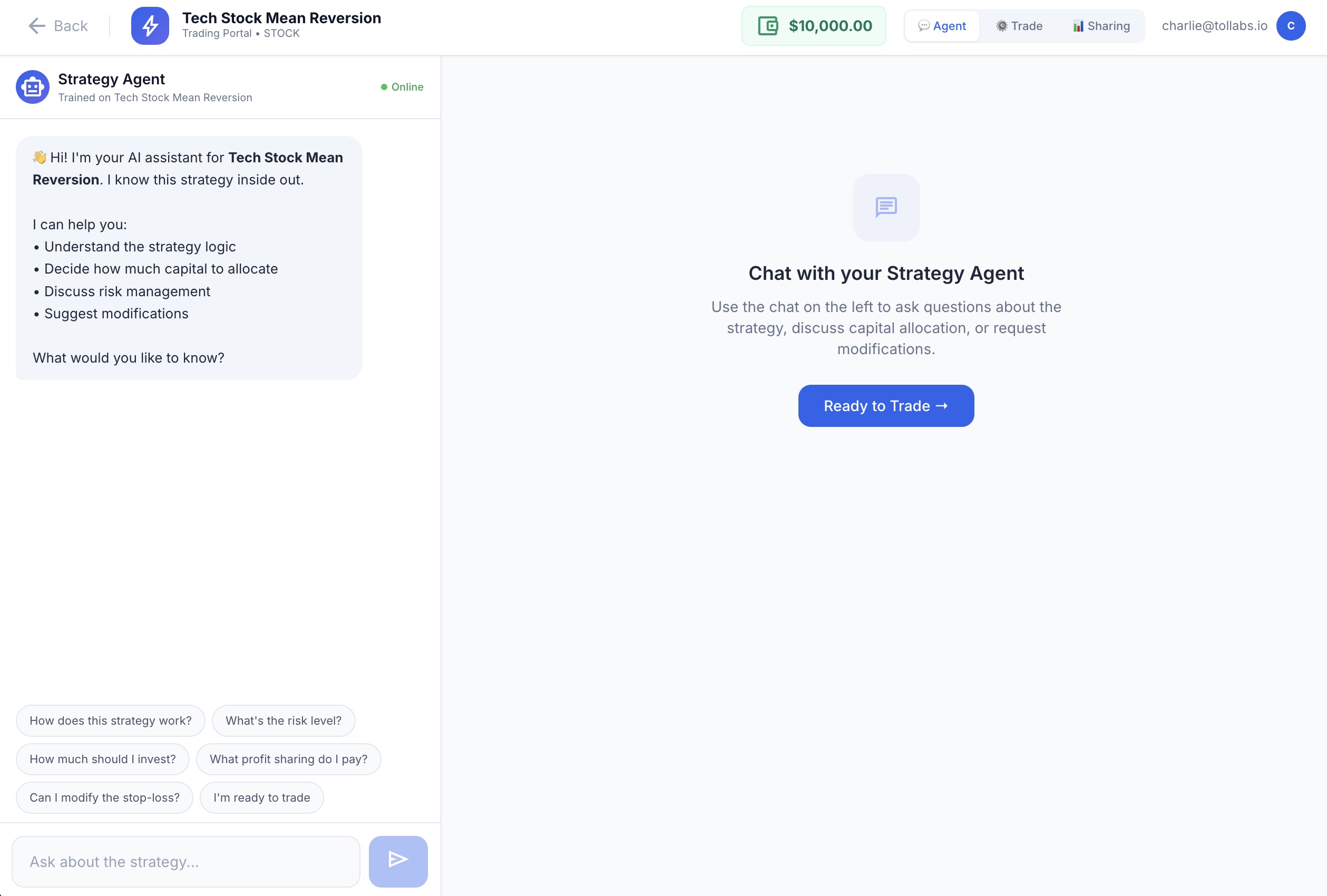
Choosing a fine-tuned model
-
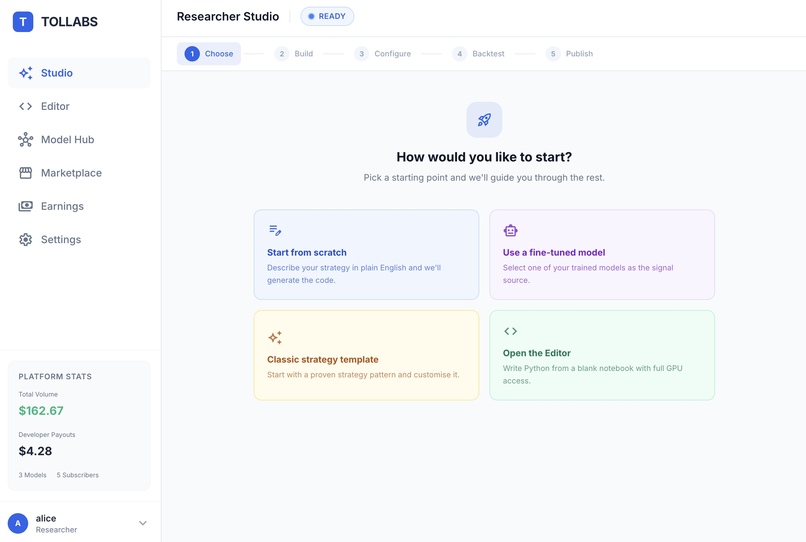
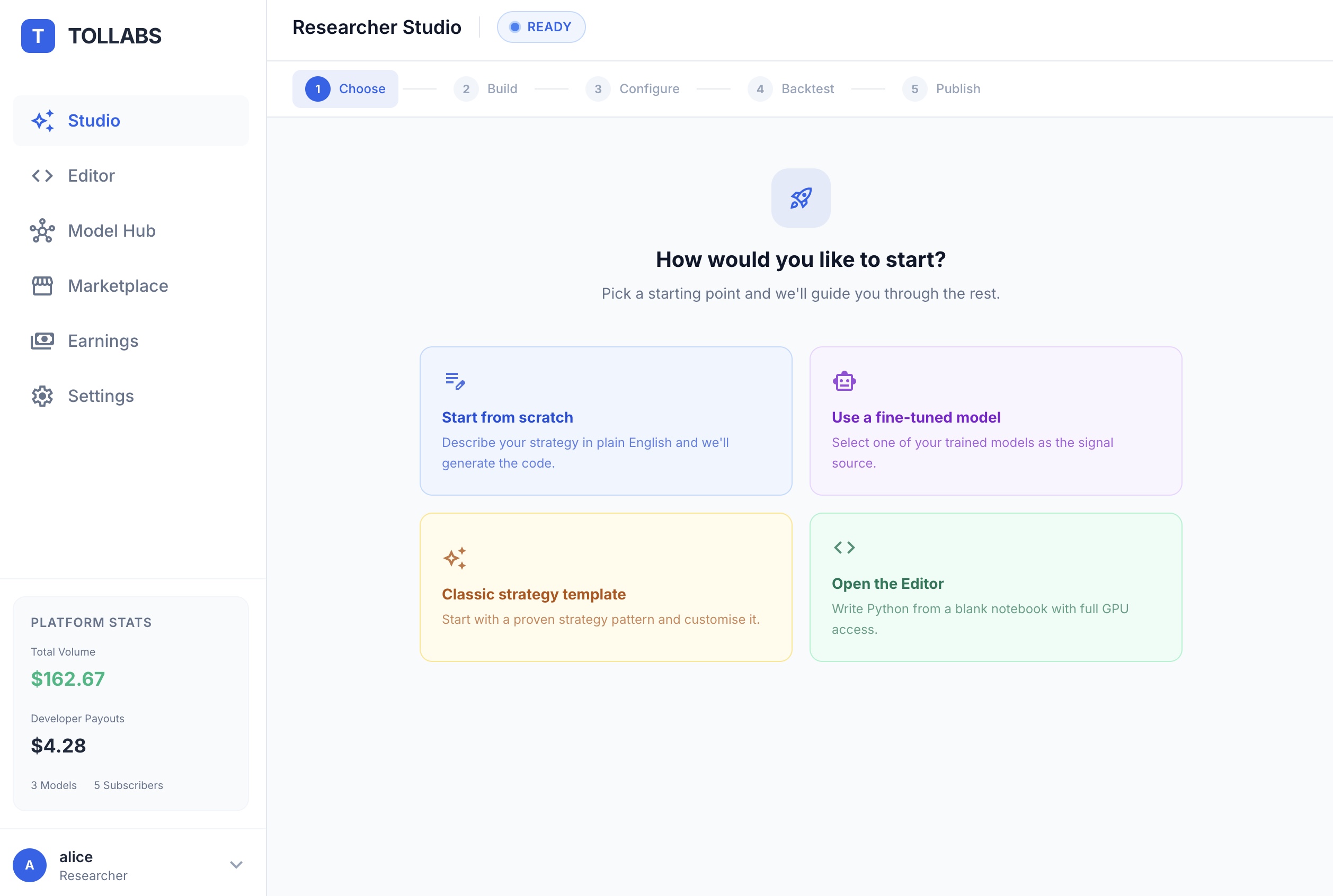
Choose strategy
-
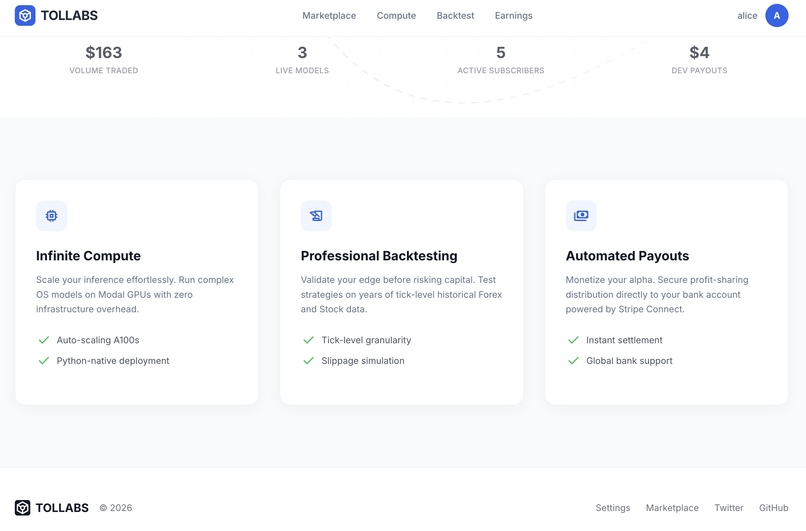
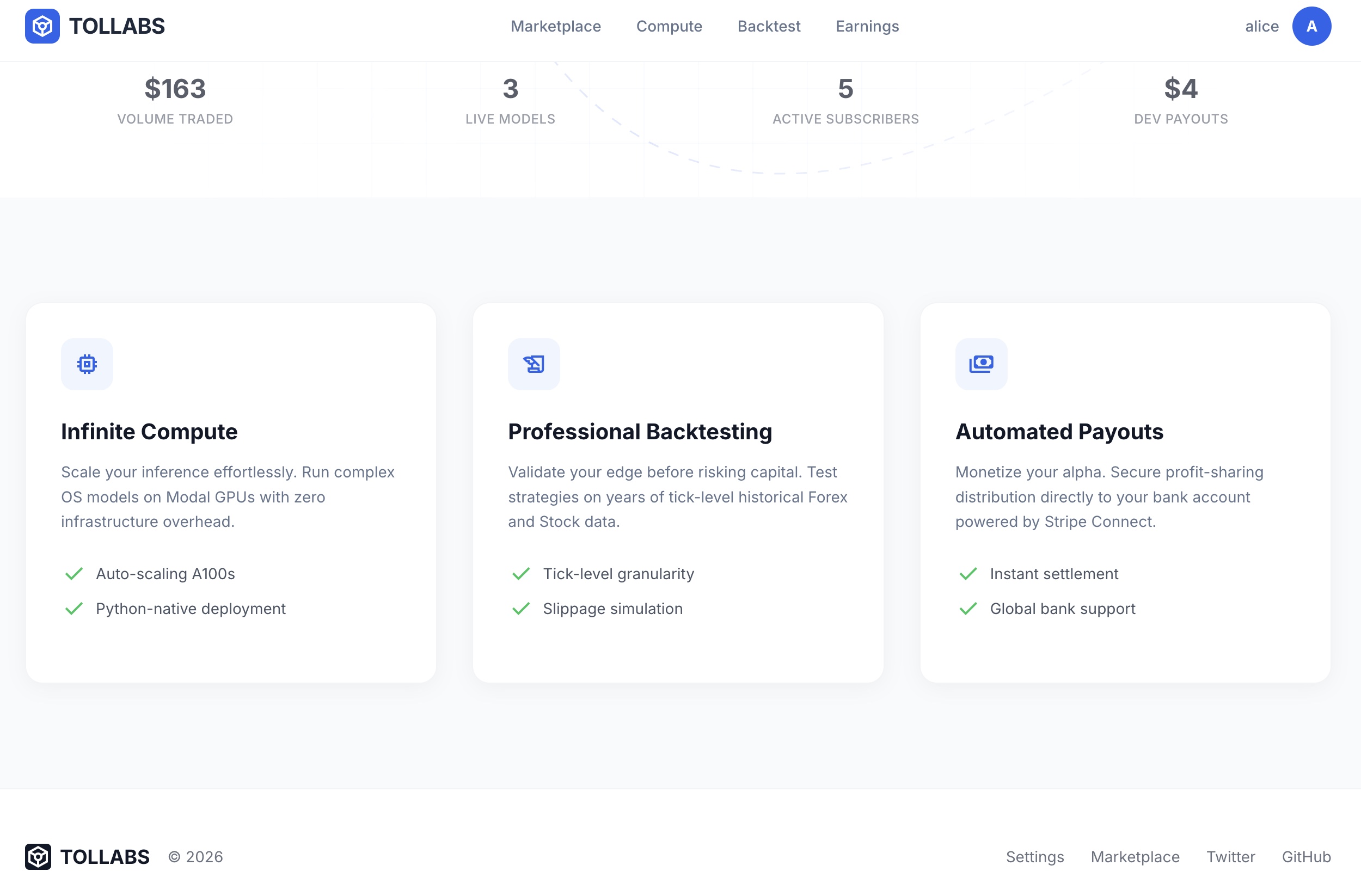
Homepage v2
-
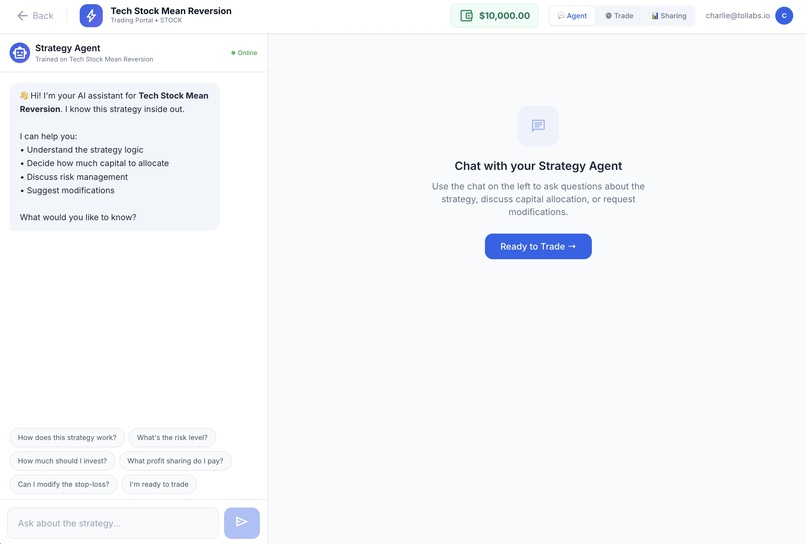
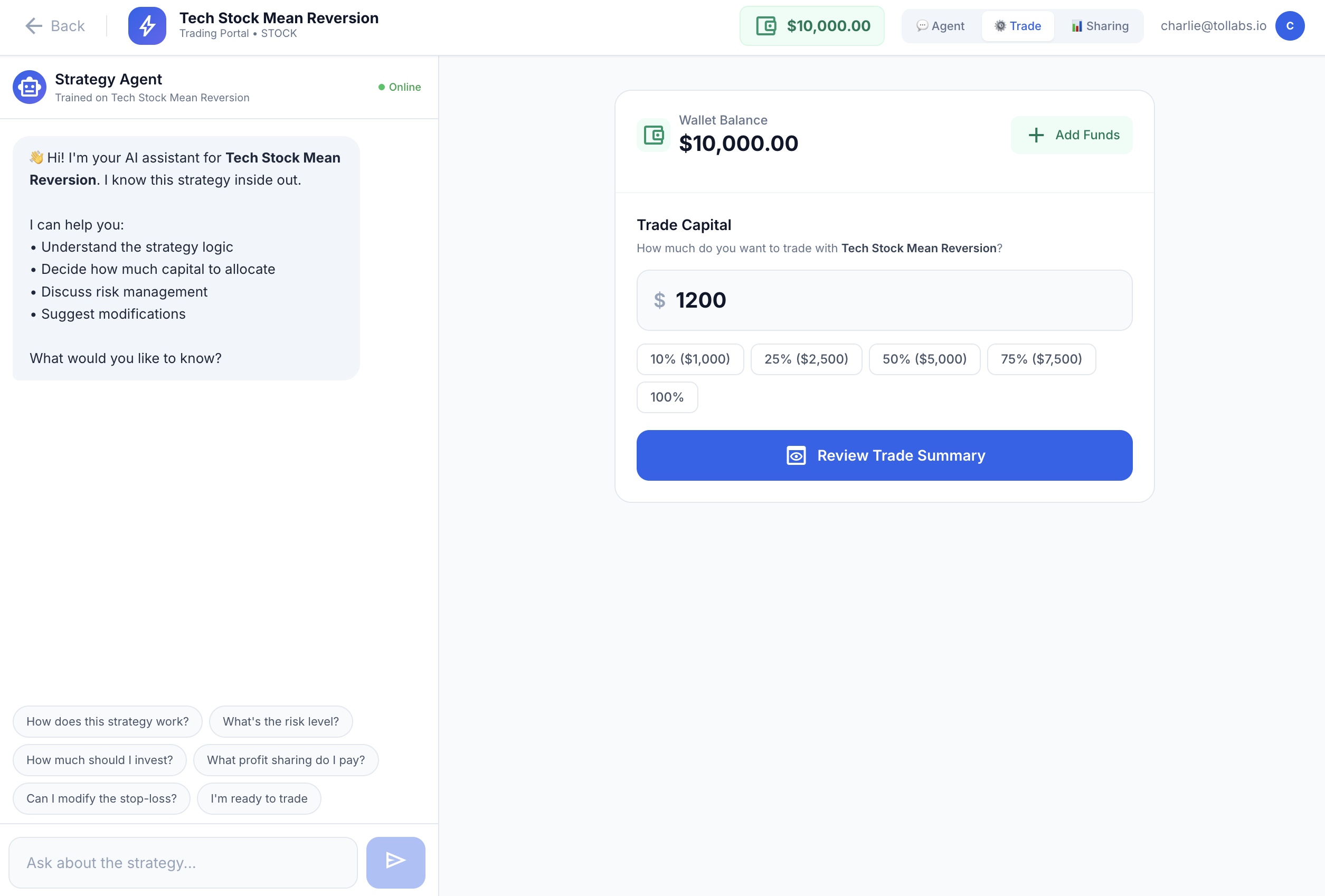
Trading dashboard
-
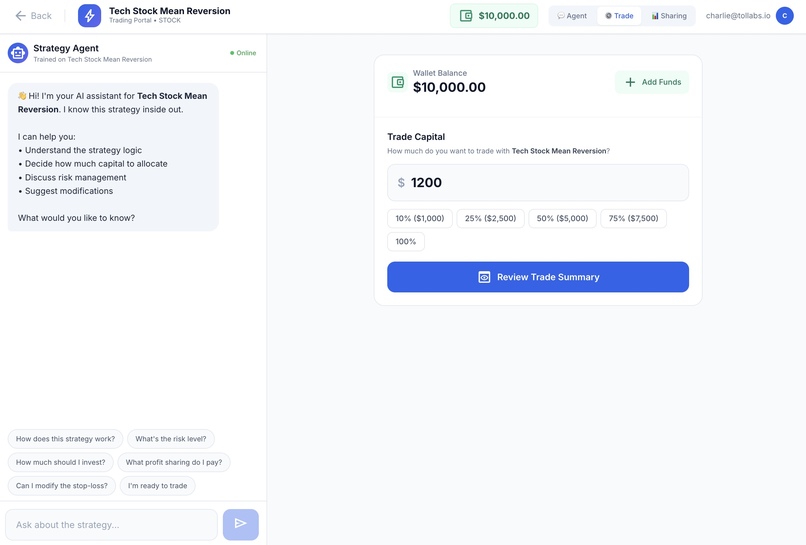
Adding funds
-
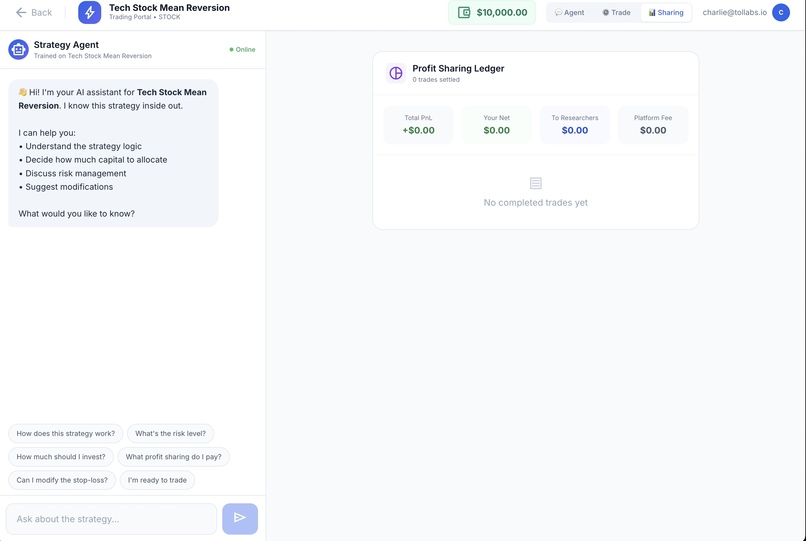
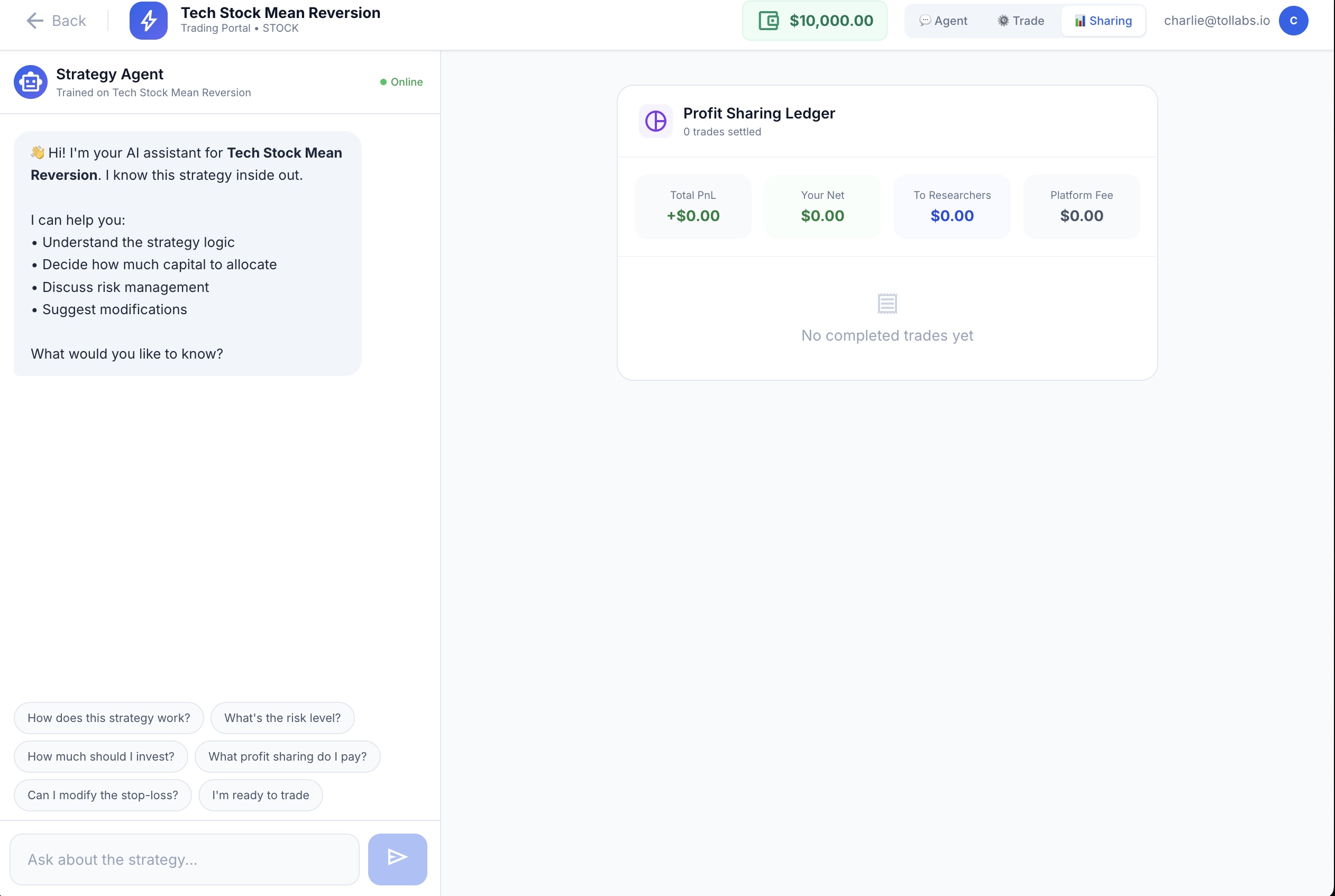
Profit
-
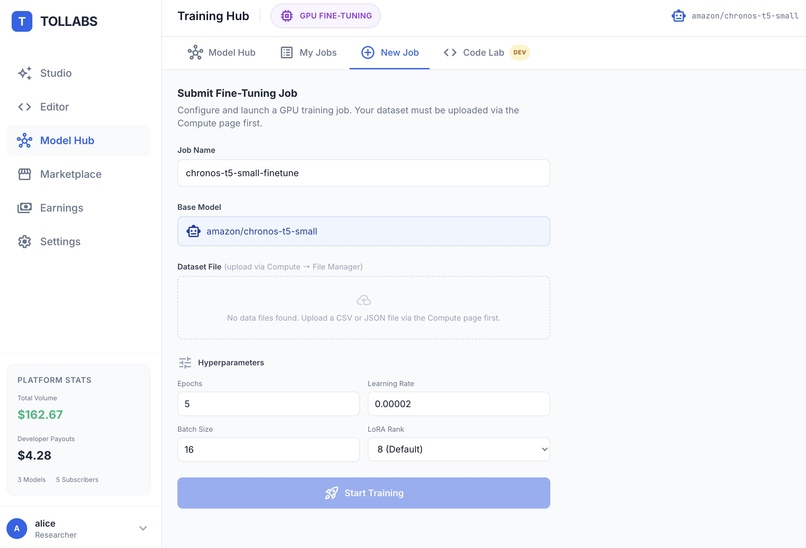
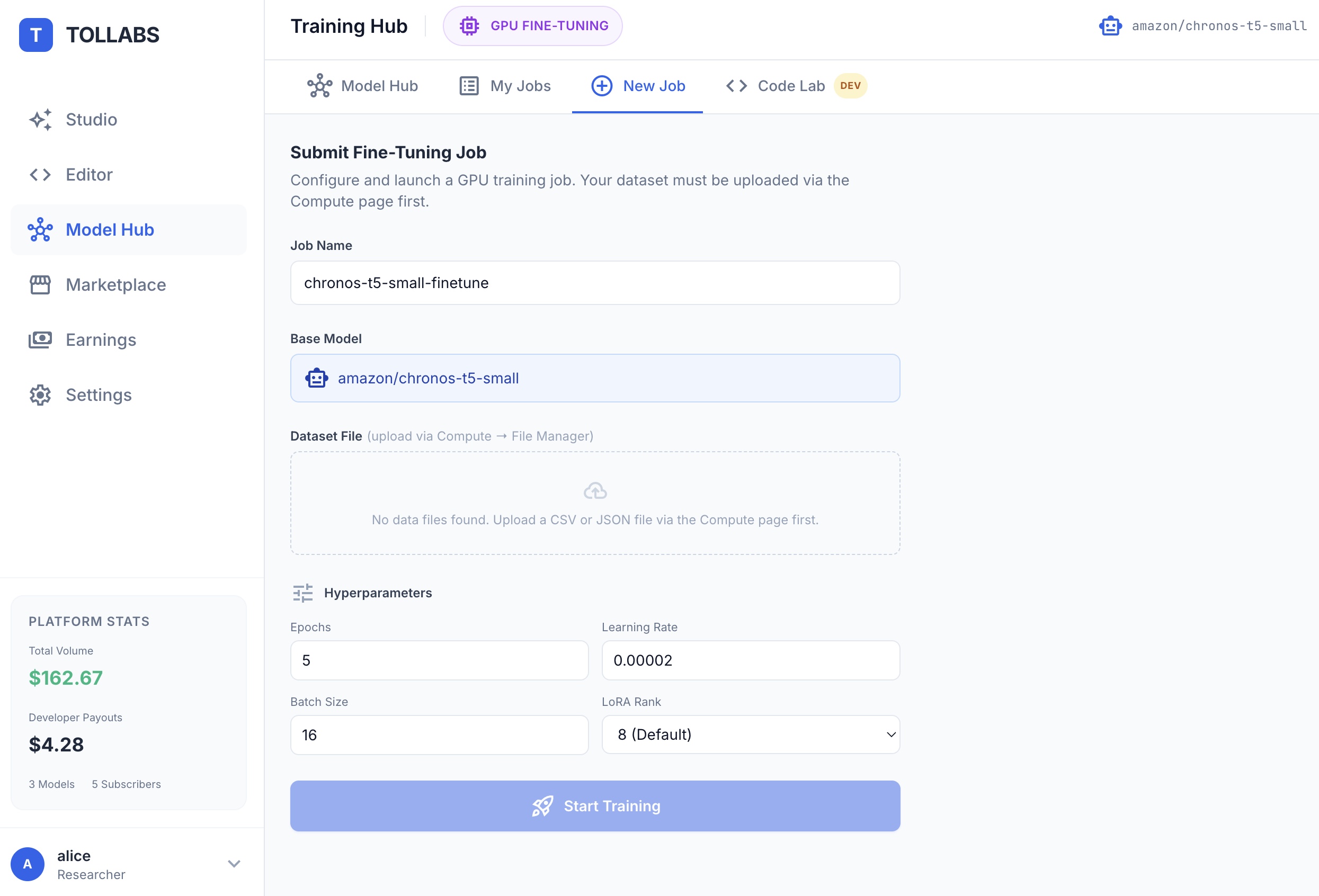
Fine tuning a model
-
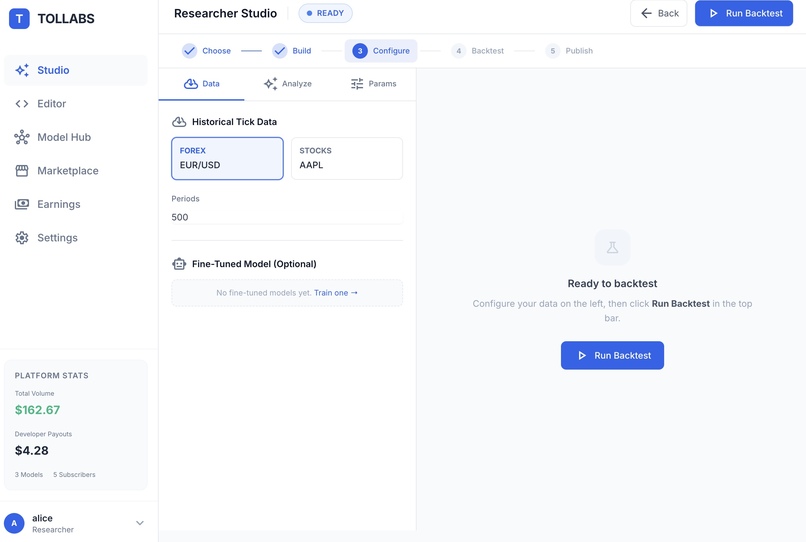
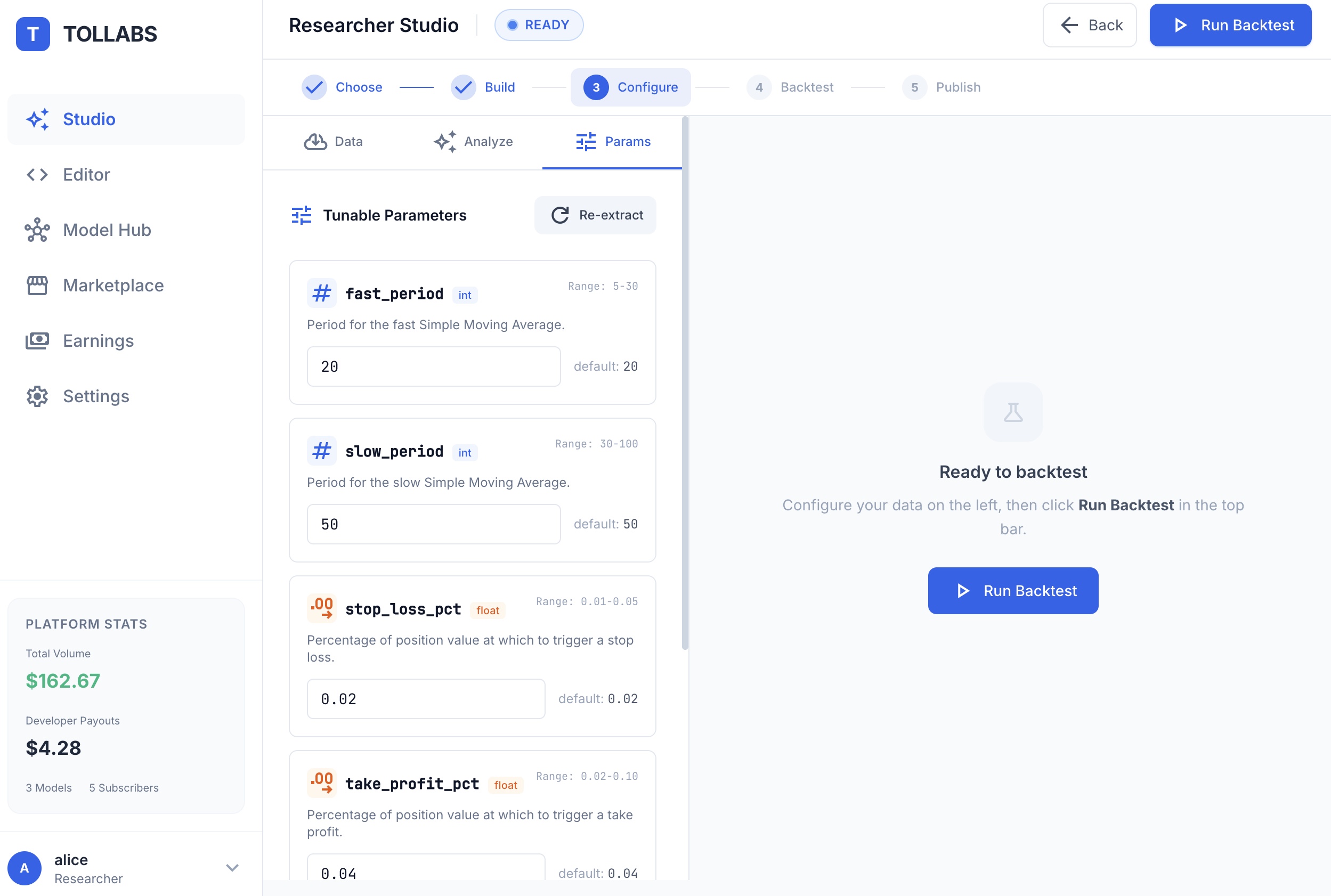
Configure model
-
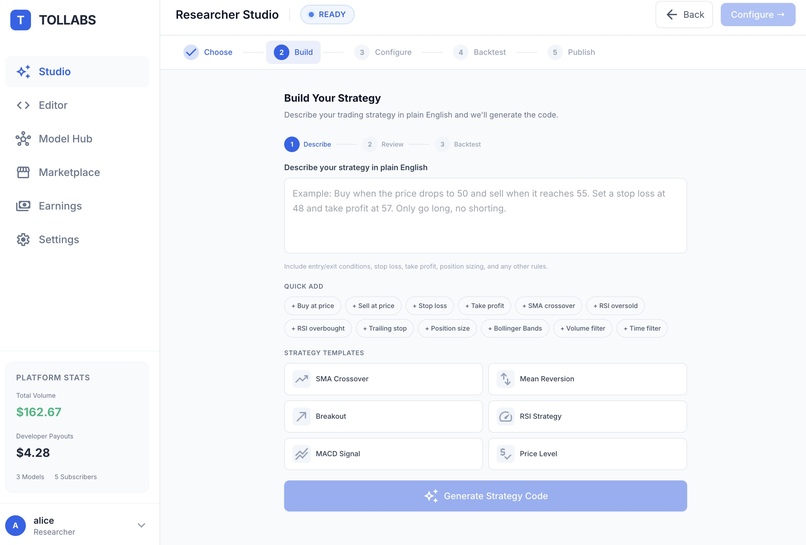
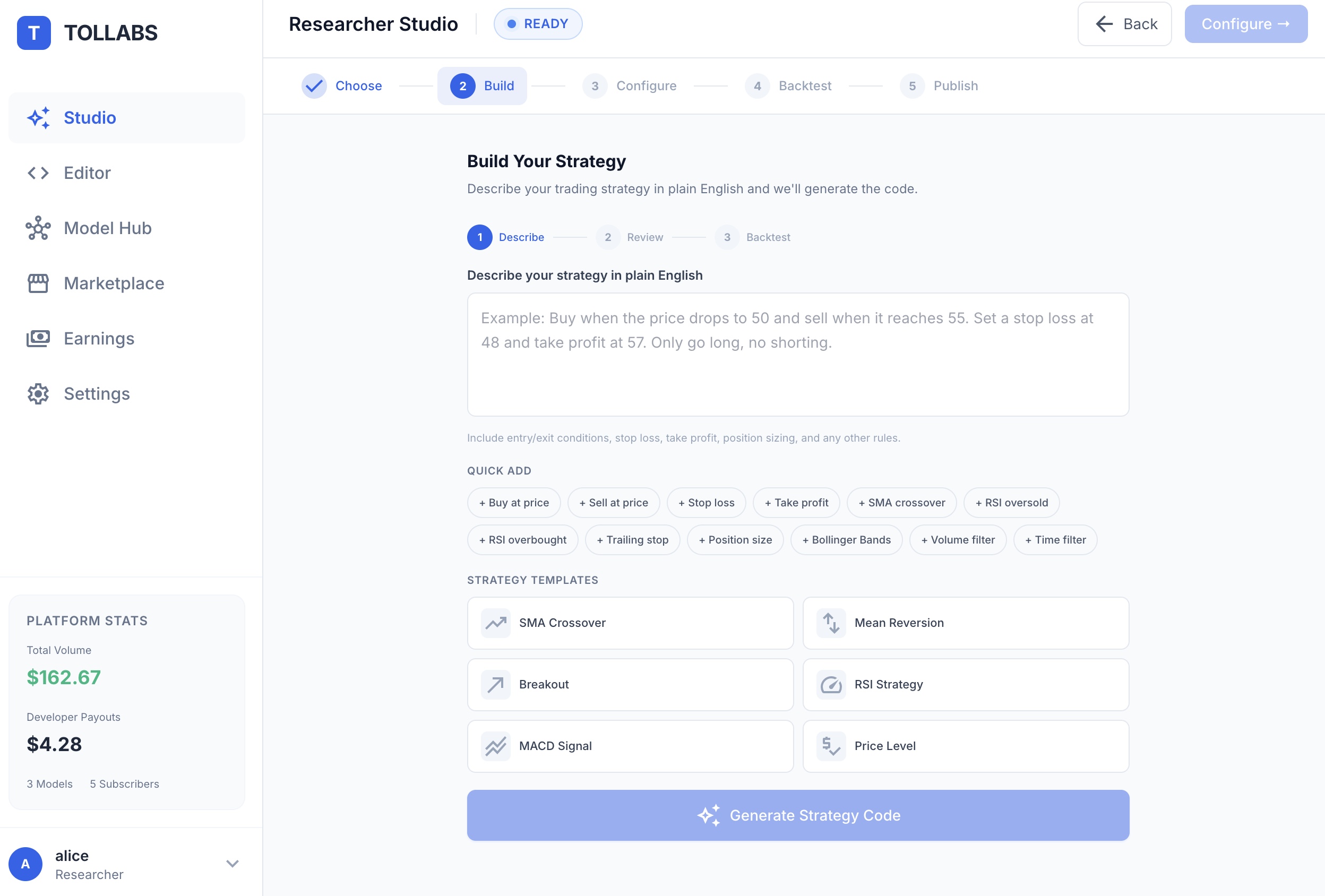
Building strategy
-
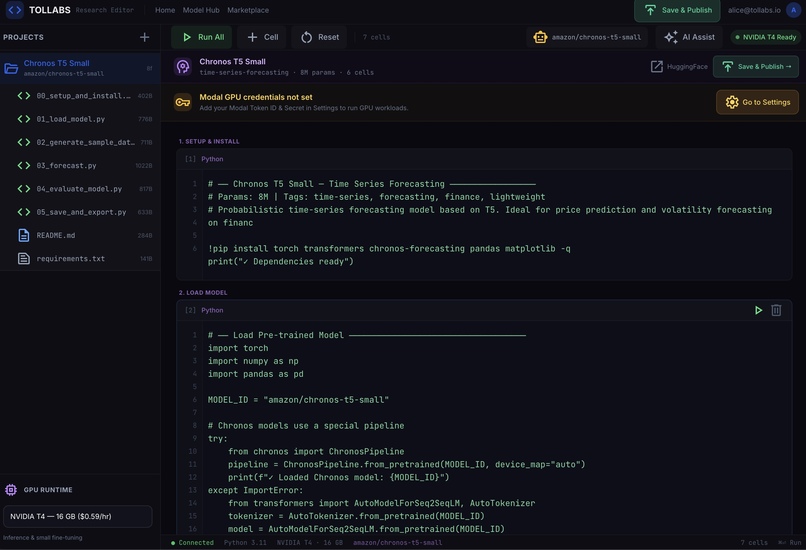
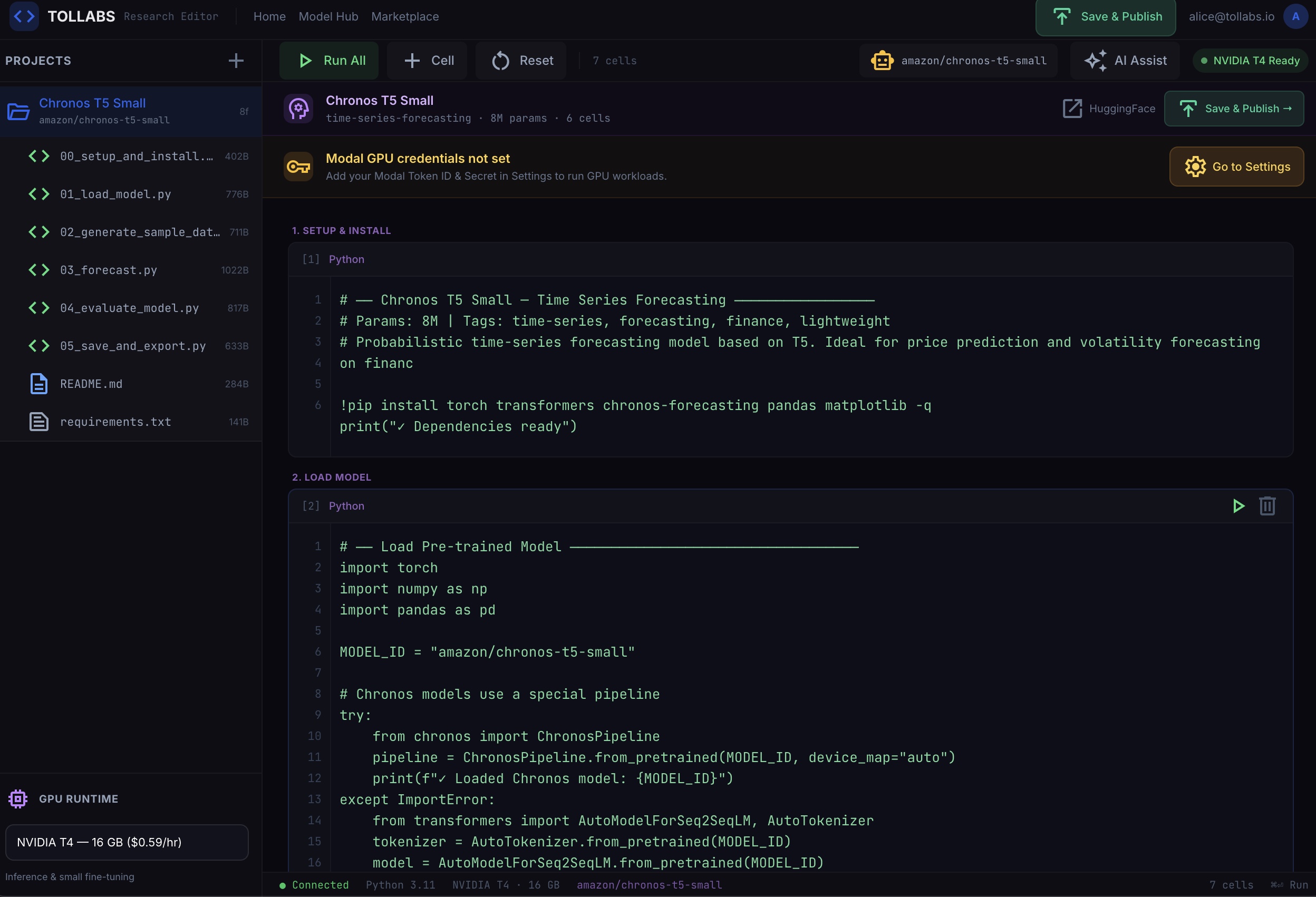
Coding Agent
-
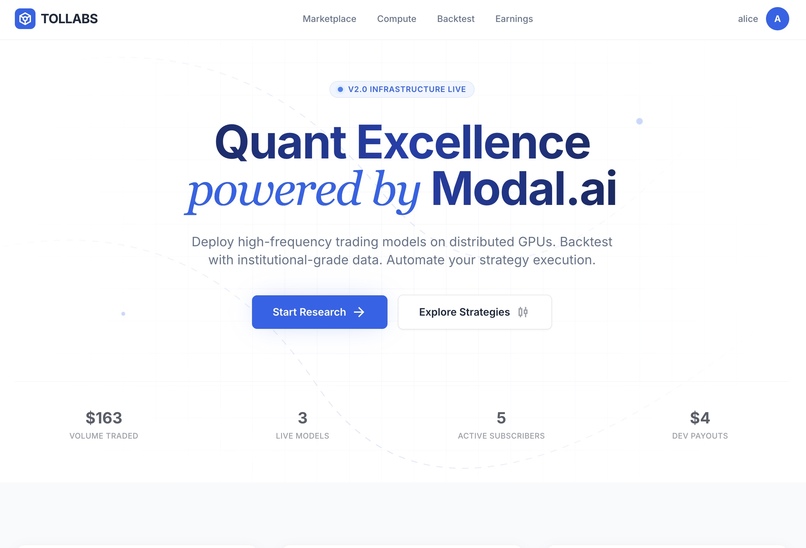
Homepage
-
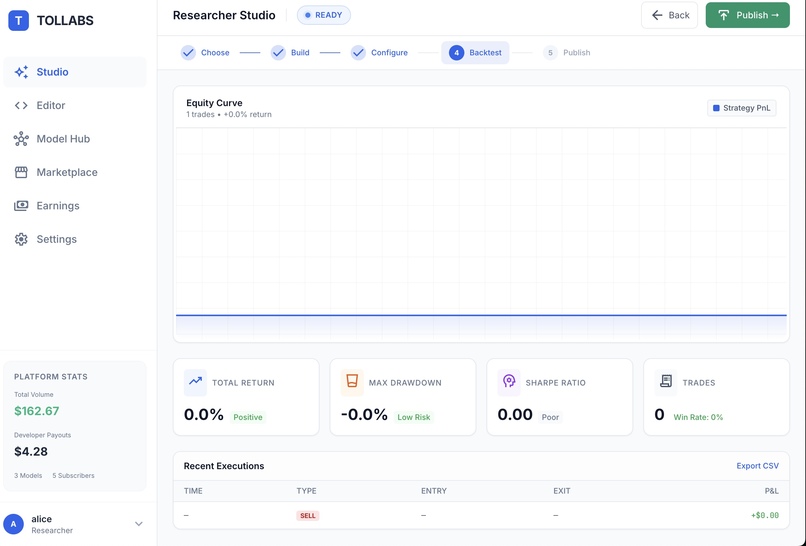
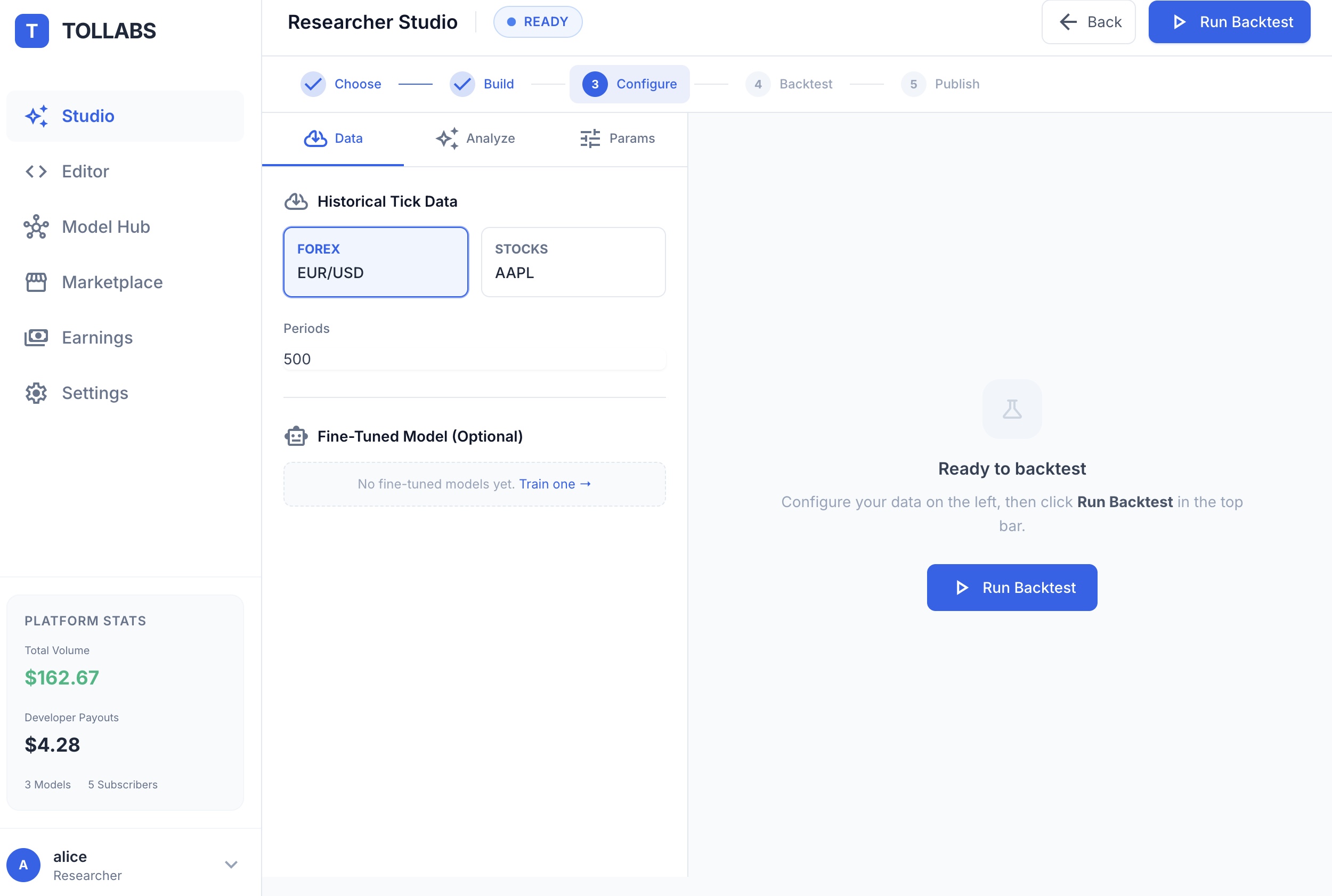
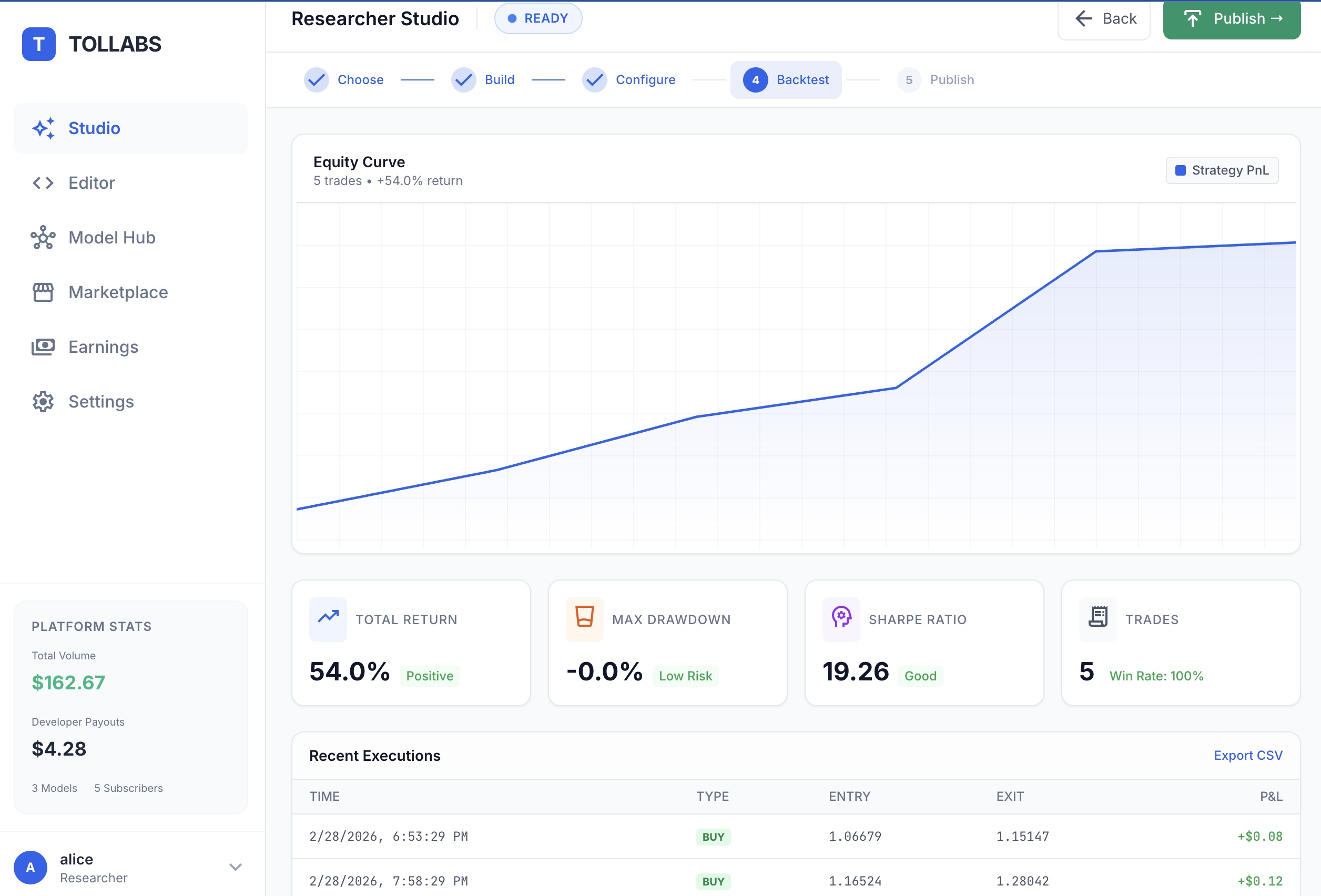
Backtesting
-
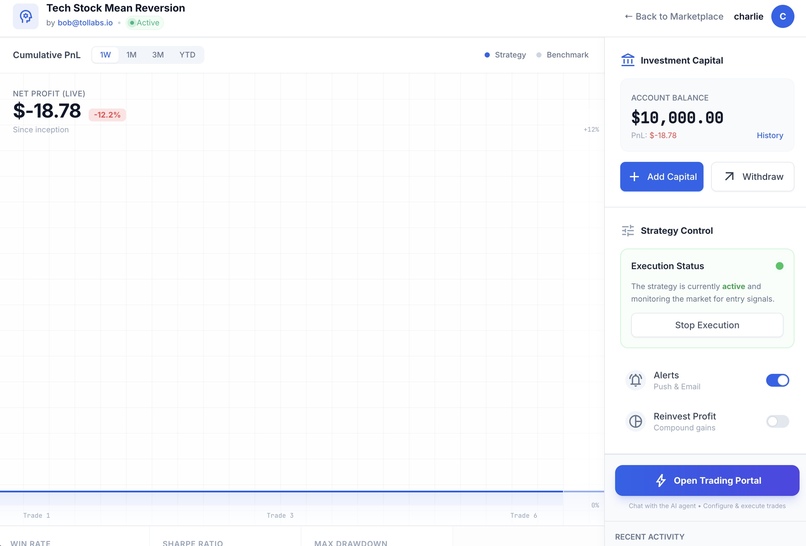
Testing a strategy
-
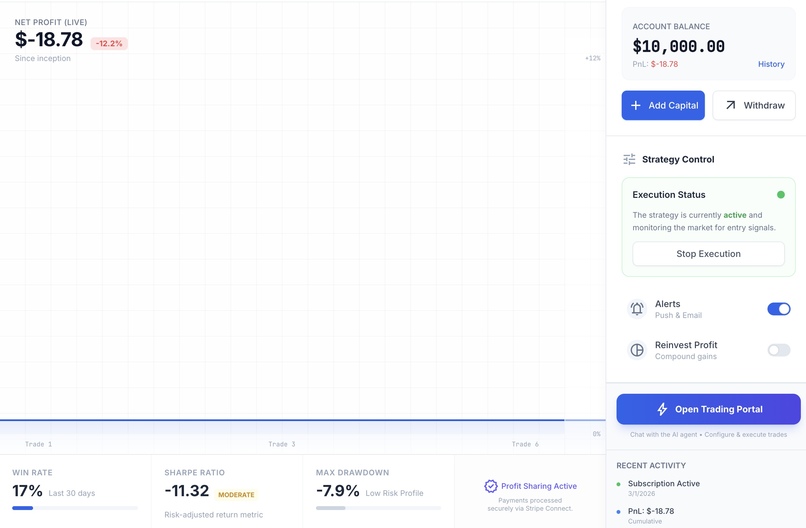
Testing a strategy v2
-
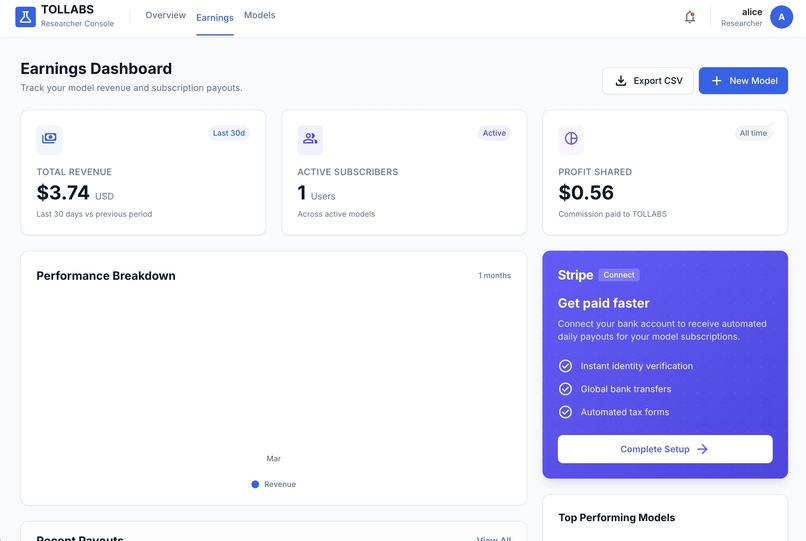
user dashboard
-
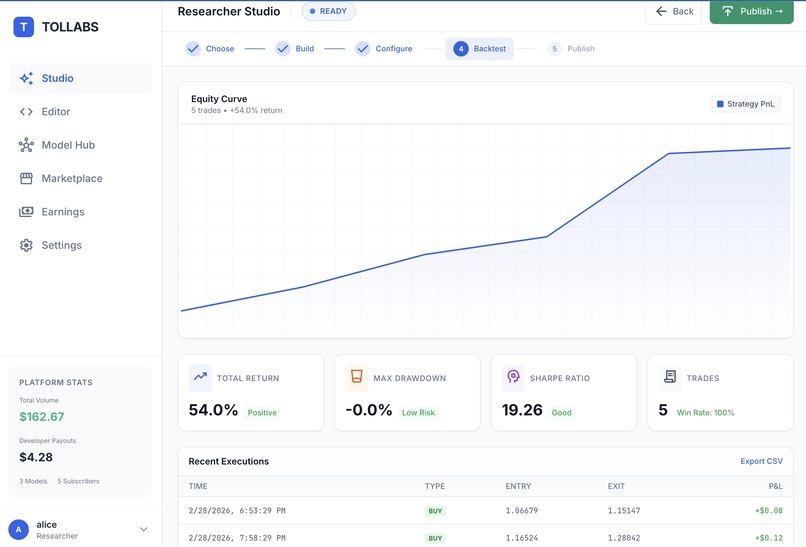
Backtesting models
-
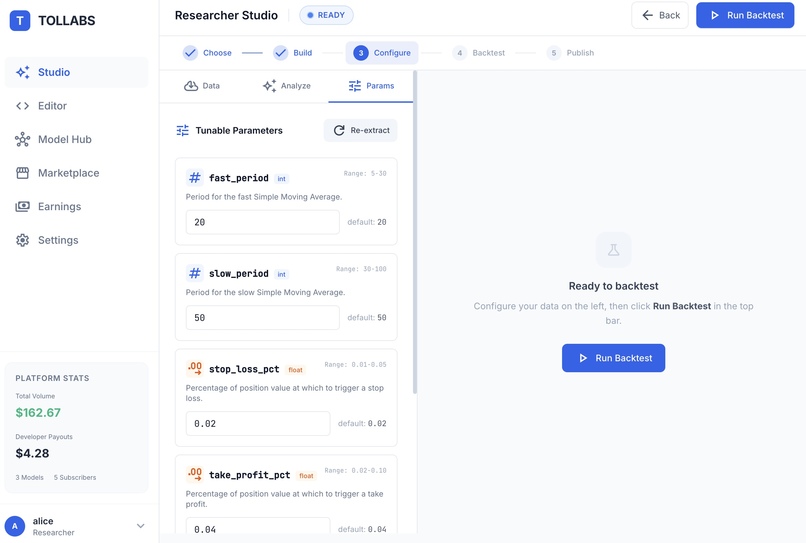
Update model parameters

Inspiration
I kept seeing the smartest students at Caltech, people who genuinely love physics and math, ditch their research to go work at hedge funds. When someone who could be working on
∇ × E = − ∂B / ∂t
decides that optimizing a Sharpe ratio at Citadel pays better, the world loses something.
What if they didn't have to choose? What if building trading strategies could be a side hustle instead of a full-time career they abandon their real passion for?
Meanwhile, regular people who want to invest are stuck picking stocks from Reddit threads or betting on Kalshi and Polymarket, while the AI-driven strategies that actually work are locked inside firms like Jane Street and Two Sigma. With Modal.com making GPUs cheap and accessible (an H100 for under $5/hour, billed per second, zero infrastructure), the timing finally makes sense to build a platform that connects both sides.
What it does
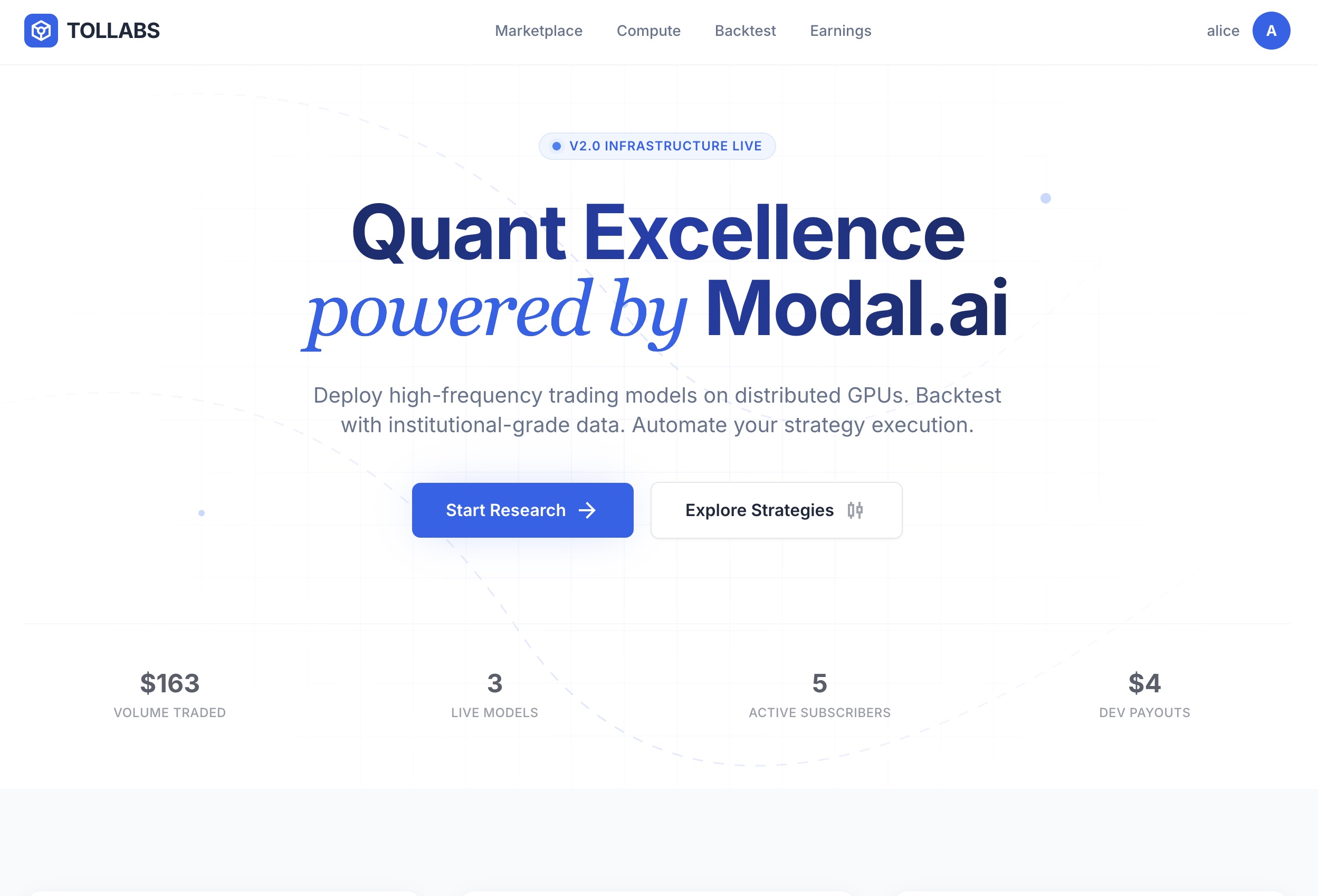
Think of it like Steam, but for trading strategies.
Researchers get a cloud IDE backed by Modal.com GPUs (T4 at $0.59/hr up to H100 at $4.76/hr). They fine-tune AI models in the browser, backtest against real market data, and publish to a marketplace. The compute goes both ways too: a physics student could train a trading model on Monday, then run Monte Carlo simulations for their thesis on Tuesday using the same GPU workspace. If their strategy earns money on the marketplace, it effectively subsidizes their research compute. Build strategies, earn passive income, reinvest the compute into research that matters.
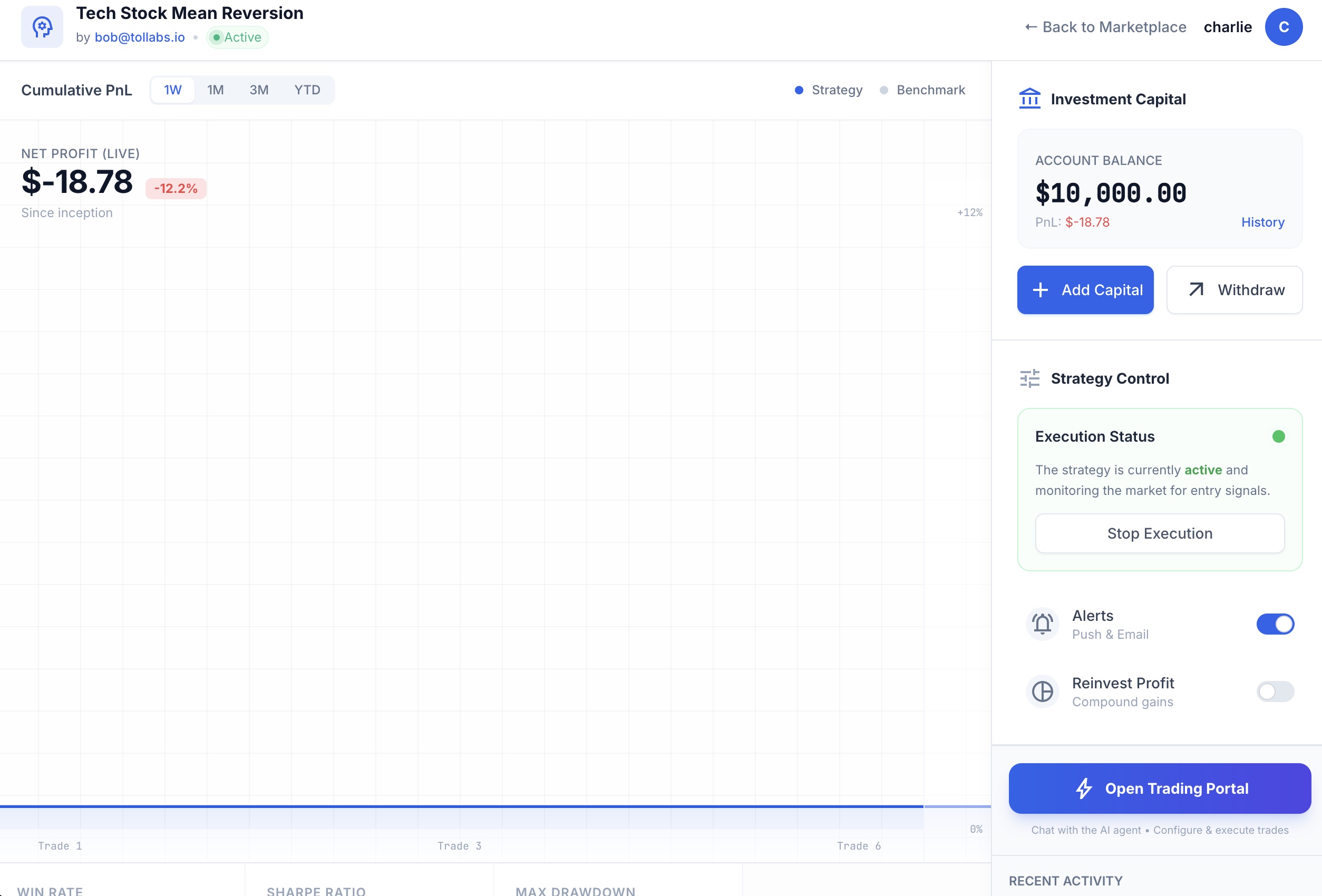
Traders browse the marketplace, subscribe to strategies, and deploy them live. No quant degree needed.
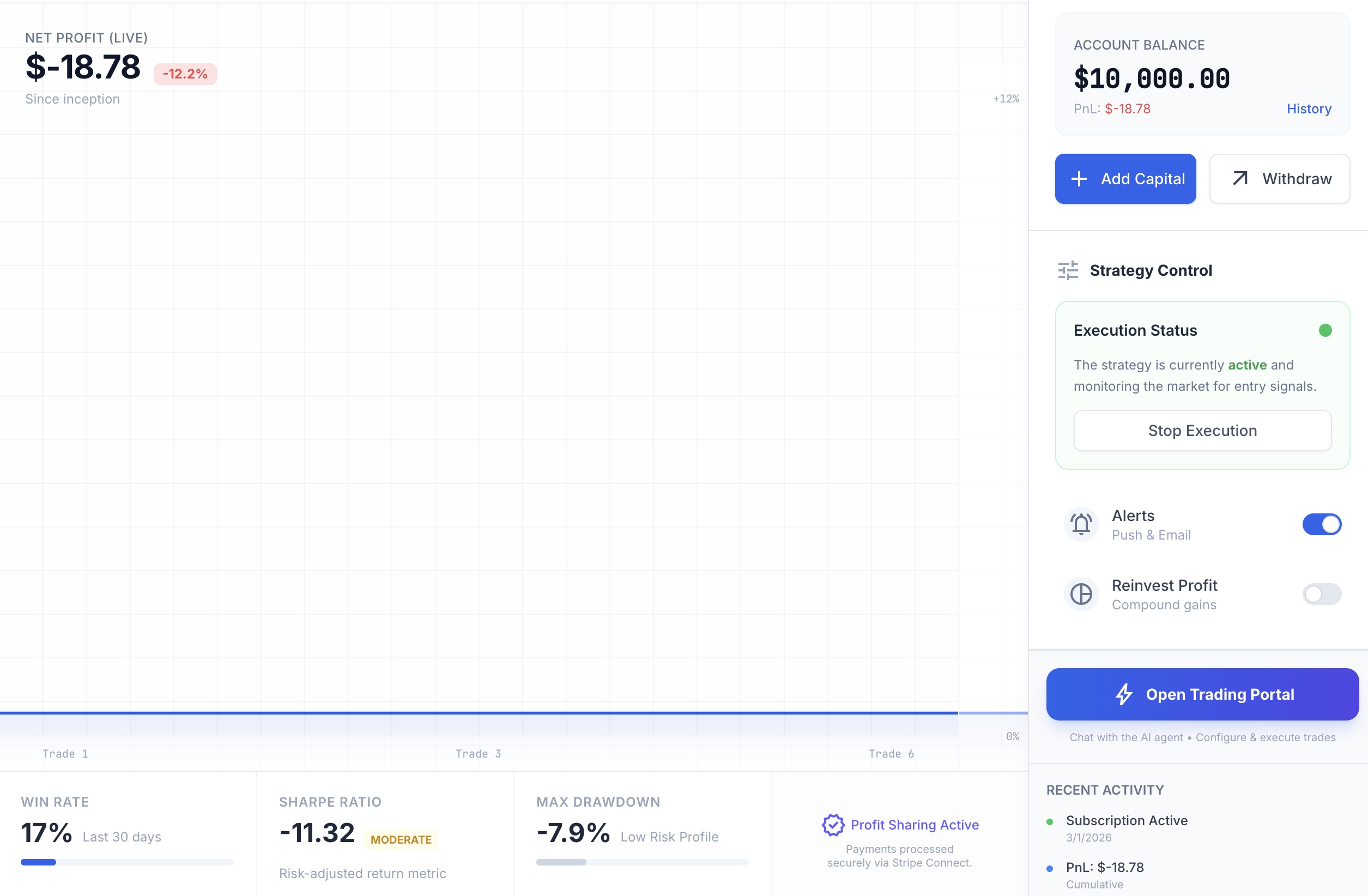
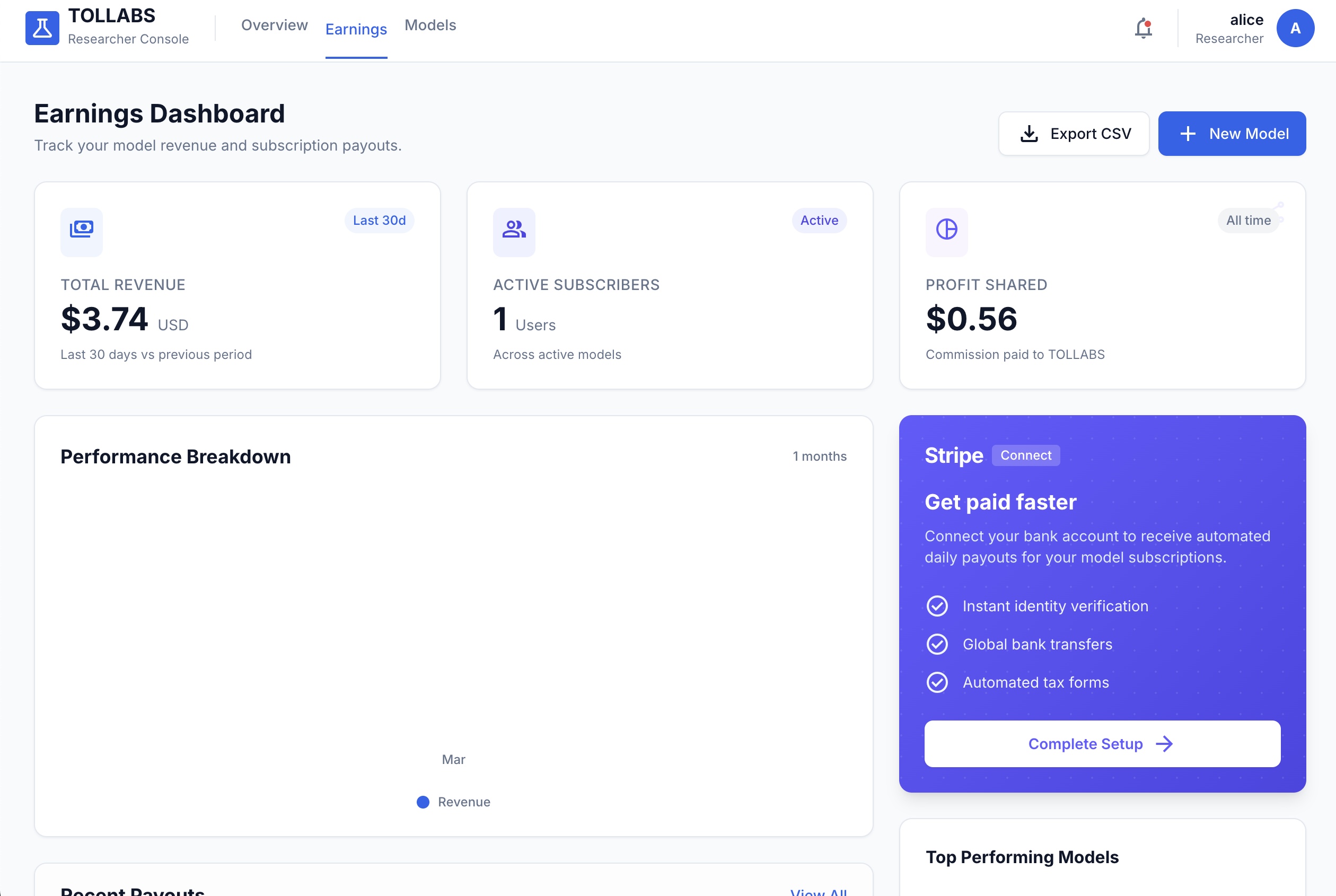
Profits split automatically: Profit Split = P_total × { r_researcher (creator’s share, e.g. 20%) r_platform (TOLLABS commission, 2%) 1 − r_researcher − r_platform (trader keeps the rest) }
How we built it
Backend: FastAPI + SQLAlchemy handling auth, marketplace, subscriptions, trading engine, and a transaction-based profit ledger. JWT tokens with role-based routing (researcher vs investor).
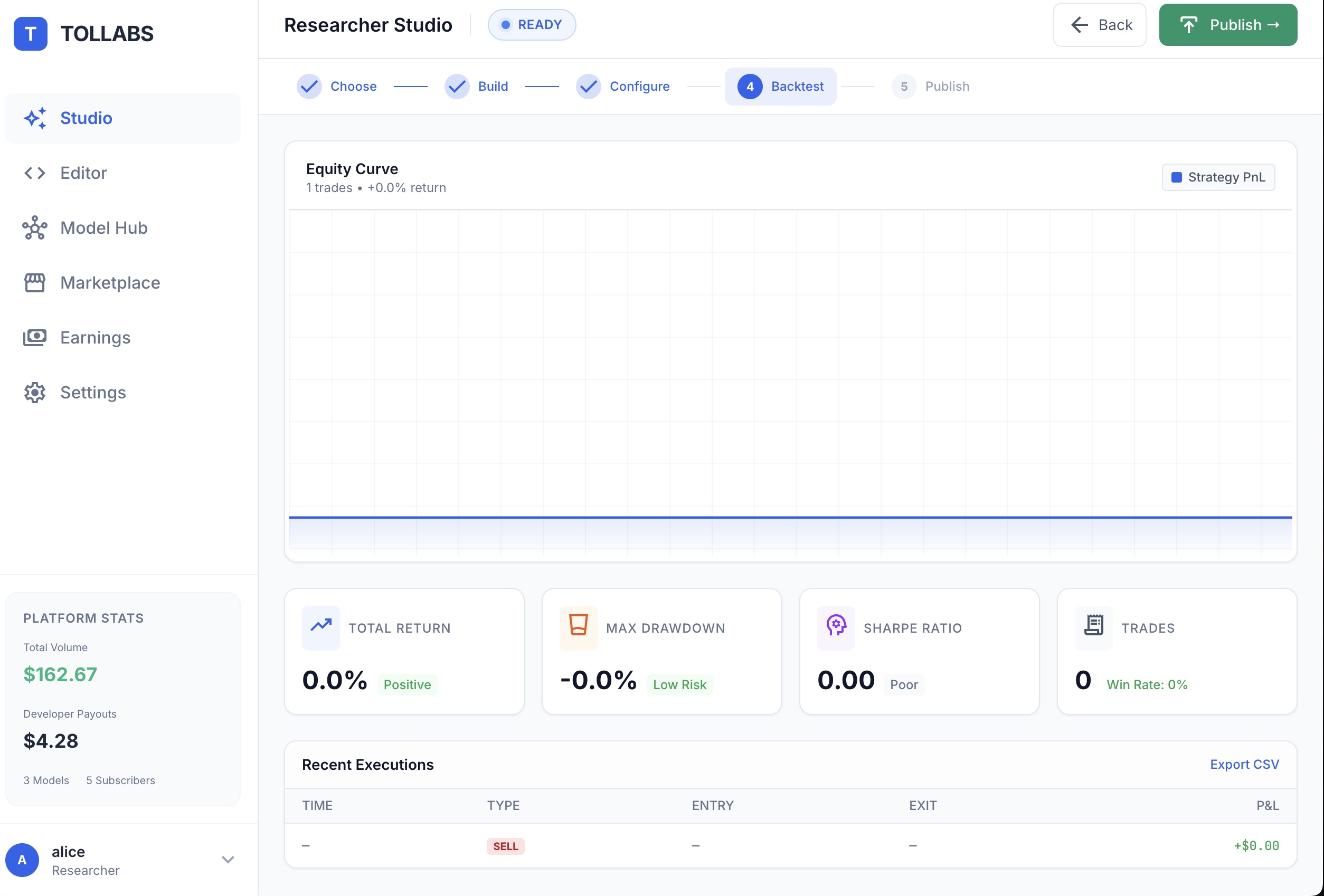
Frontend: Next.js 14 + TypeScript + Tailwind. Researchers get a Studio wizard (build, configure, backtest, publish) and a Jupyter-style cloud IDE that dispatches GPU jobs to Modal.com. An AI assistant (Google Gemini) generates strategy code from plain English. Traders get a portfolio dashboard with trade history and profit-sharing breakdowns.
Modal.com integration: Each researcher connects their own Modal token. When they hit "Run," the platform dispatches to Modal's serverless GPUs. Modal handles container orchestration, scheduling, and auto-scaling. Per-second billing means a 30-second fine-tuning job costs pennies.
Infrastructure: Dockerized (backend + frontend containers) with persistent volumes for the database and workspaces.
Challenges we ran into
Per-user Modal credentials required securely scoping tokens per account, validating before every GPU dispatch, and handling expired tokens without leaking credentials across users.
Building a browser-based code IDE that actually executes Python was harder than expected. Getting persistent sessions, stdout/stderr capture, working directory scoping, and variable state across cells to behave like a real Jupyter notebook took significant effort and may still have edge-case bugs.
Condensing the research workflow into simple steps. The full quant pipeline (data loading, model selection, fine-tuning, backtesting, publishing) is inherently complex. Designing a 5-step Studio wizard that guides researchers through it without oversimplifying or hiding important config took a lot of iteration on the UX.
Accomplishments that we're proud of
Letting any student fine-tune AI on an H100 from their browser. Building a full marketplace, trading engine, and cloud GPU IDE into one cohesive platform.
Designing an automated, atomic profit-sharing ledger that scales across multiple subscribers per strategy.
Making it possible for research compute to be self-funded through trading strategy revenue.
Two years ago, letting any student fine-tune AI on an H100 from their browser would have cost millions in infrastructure. Now it's an API call.
What we learned
Modal.com is why this project works. Two years ago, letting any student fine-tune AI on an H100 from their browser would have cost millions in infrastructure. Now it's an API call. The shift from "compute is scarce" to "compute is pay-per-second" makes the whole thing viable.
The best way to keep smart people in research is to remove the financial pressure that pushes them out. If the same platform that earns you trading income also gives you a GPU workspace for your actual research, the incentives finally line up.
What's next for Tollabs
Real brokerage integration (Alpaca, Interactive Brokers) for live trading Stripe payments replacing the mock wallet Strategy ratings, reviews, and leaderboards Expanding into crypto, options, and futures A "Research Workspace" mode with templates for physics simulations and ML experiments, so researchers can use their Modal compute for anything.
Built With
- gemini
- modal
- next
- python
- render
- typescript
- vercel

Log in or sign up for Devpost to join the conversation.