Inspiration
Artificial Intelligence is rapidly becoming part of every modern application, but developers still struggle to answer simple questions about their AI systems. Which model is driving costs? Why did latency suddenly increase? Which endpoints consume the most tokens? Existing monitoring tools often provide raw metrics without explaining what they mean or how developers should act on them.
We built TokenWatcher to bridge that gap. Our vision is to transform AI observability from passive dashboards into an intelligent platform that helps developers monitor, understand, optimize, and govern AI applications through real-time telemetry and actionable insights.
What it does
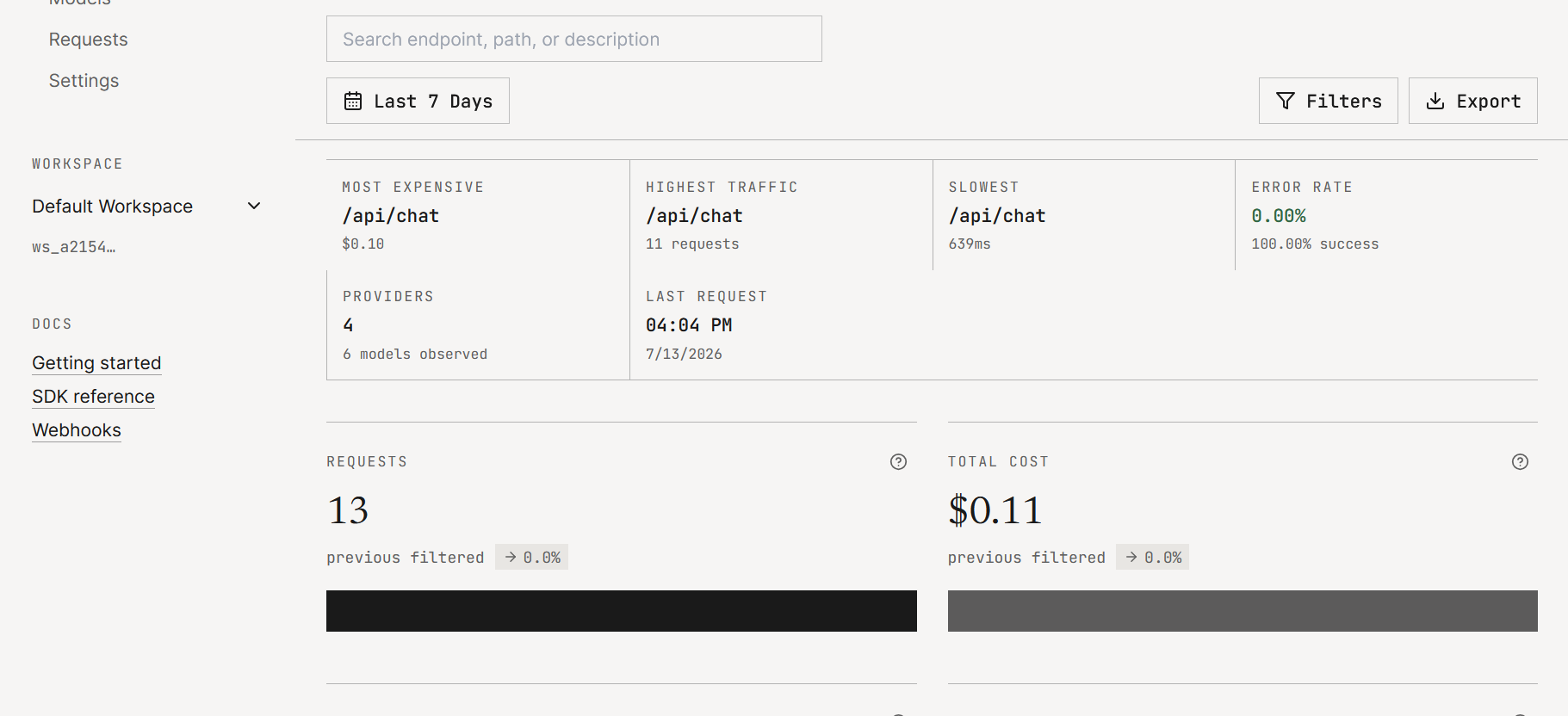
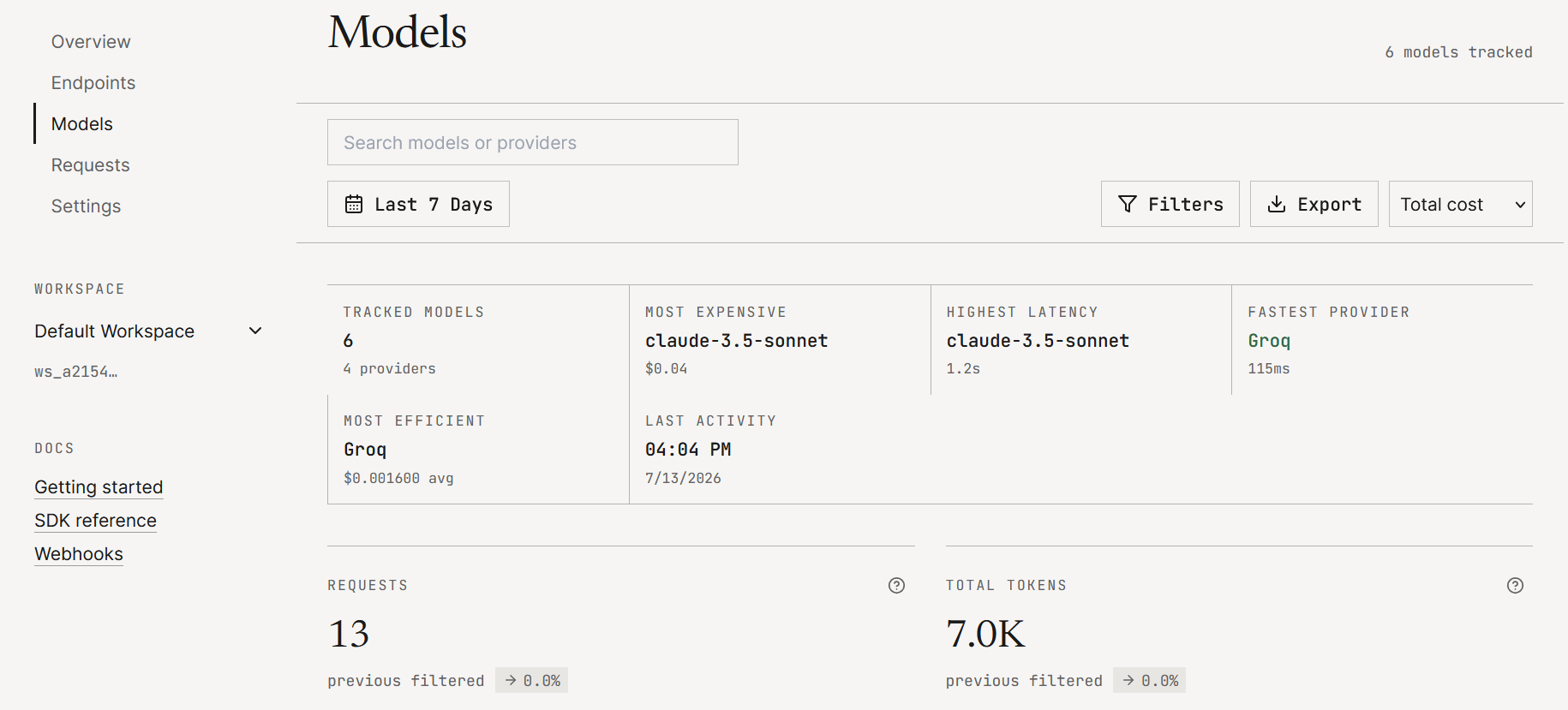
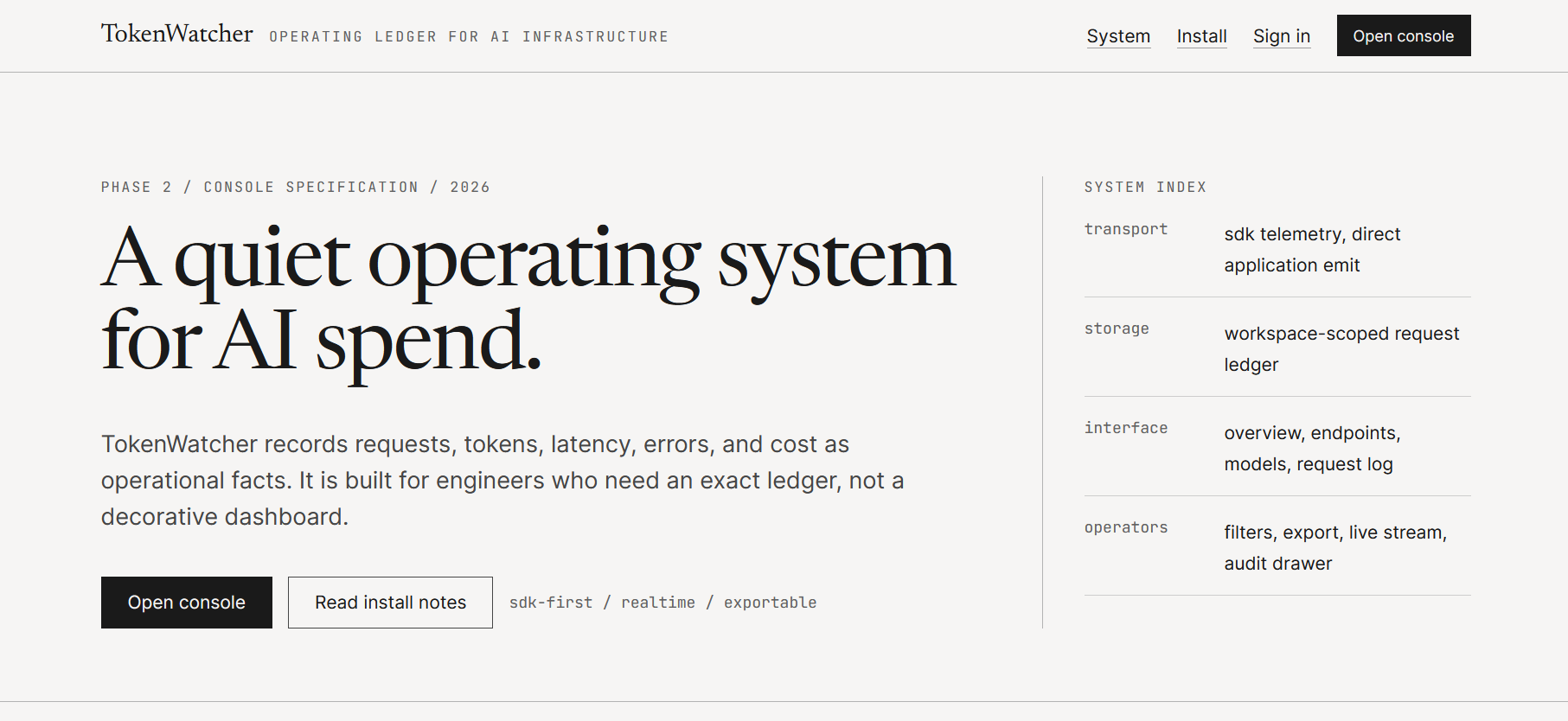
TokenWatcher is an open-source AI infrastructure intelligence platform that provides complete visibility into LLM-powered applications.
Key capabilities include:
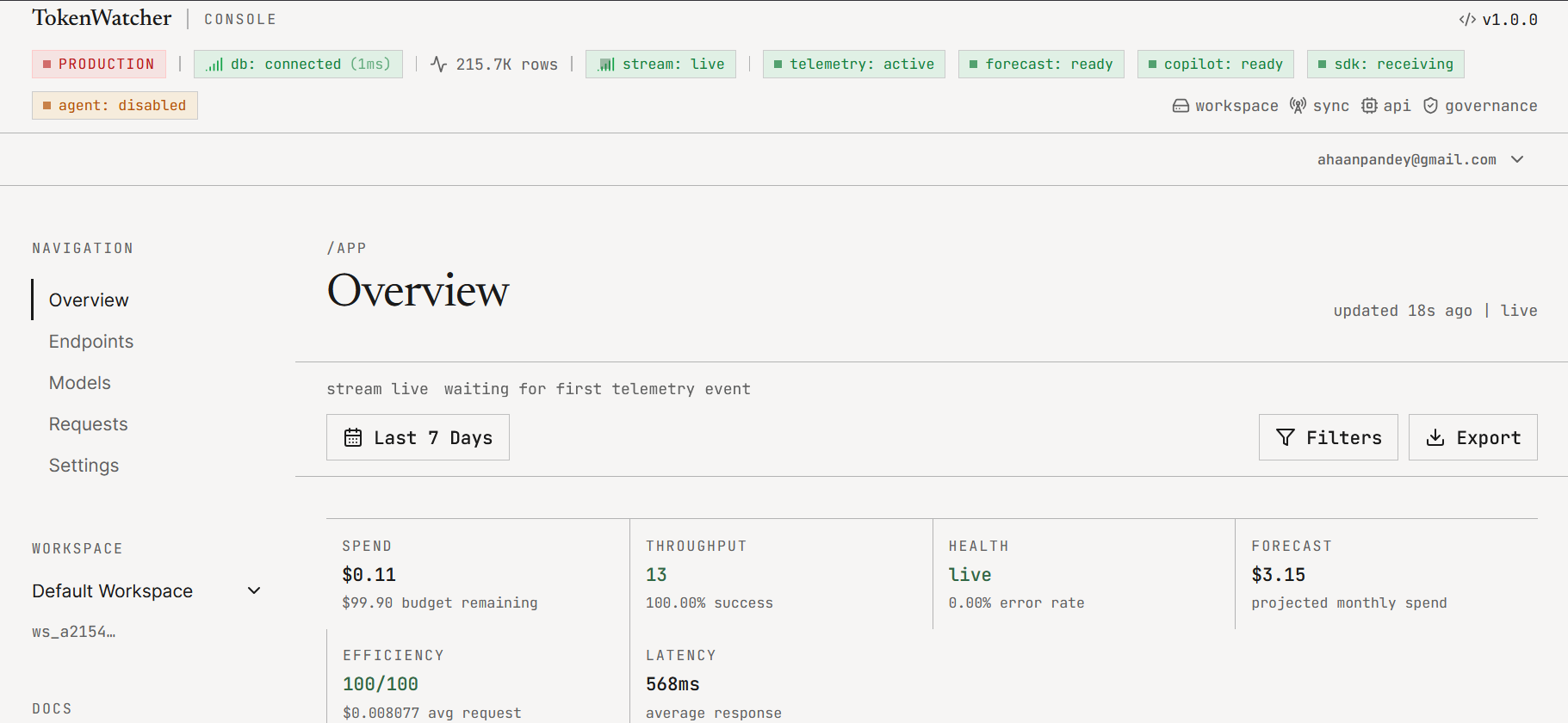
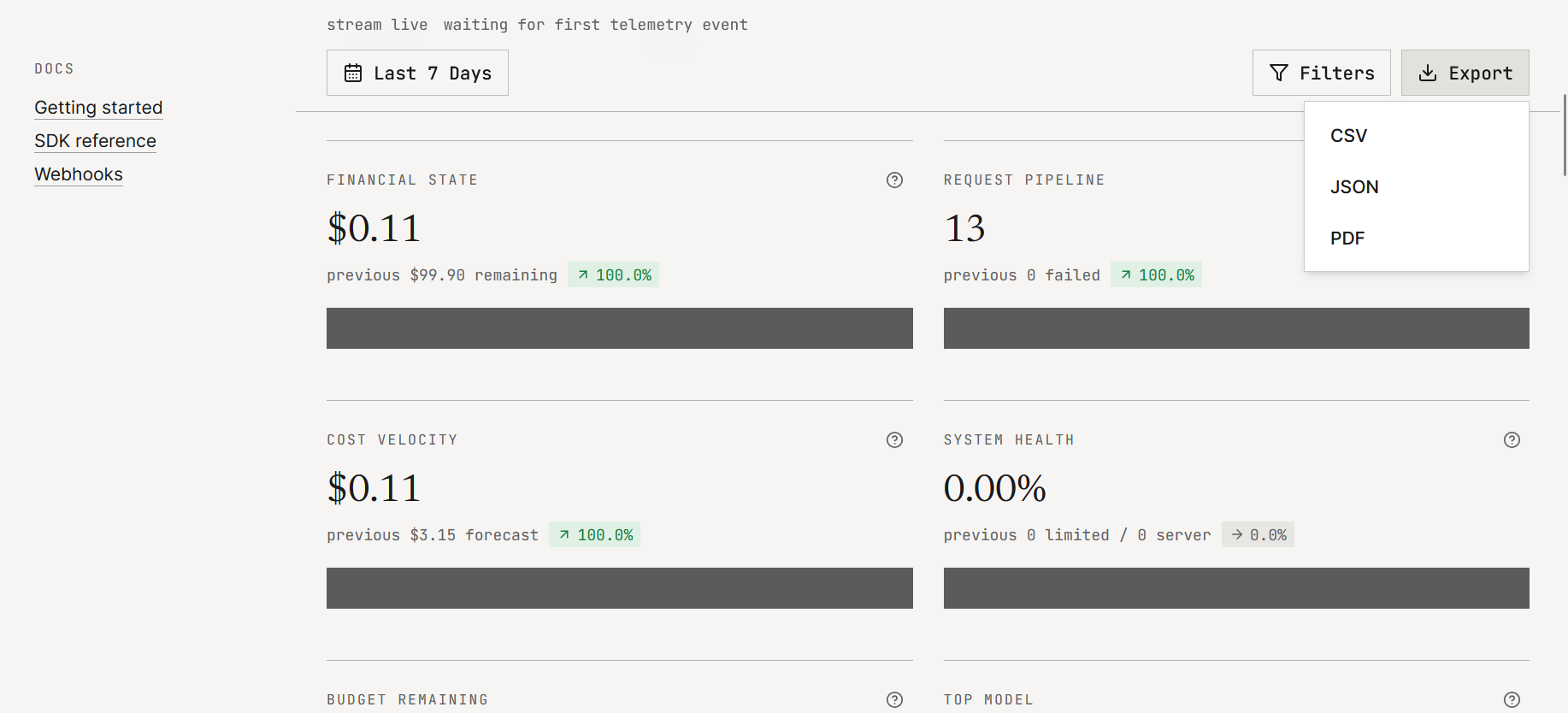
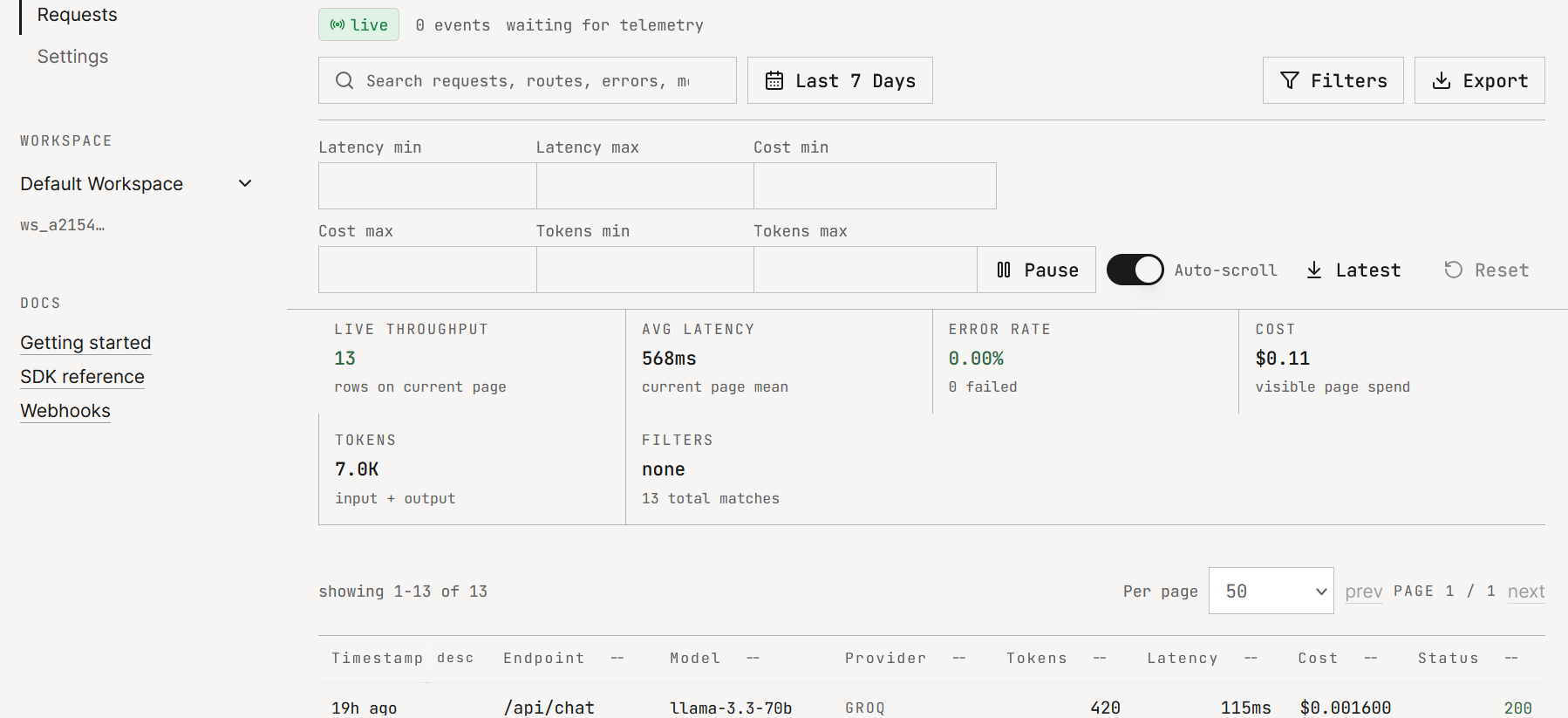
- 📊 Real-time telemetry for AI requests, latency, token usage, and API costs.
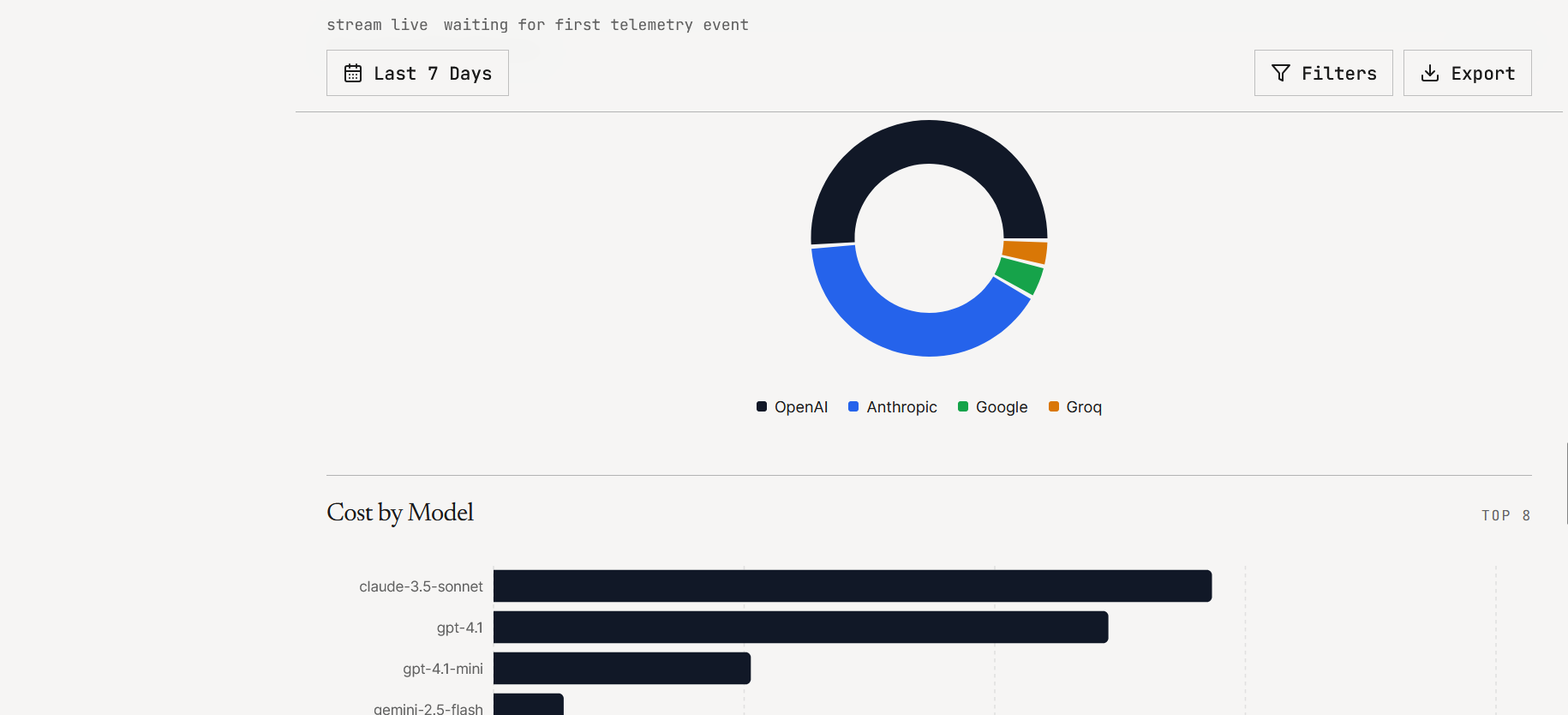
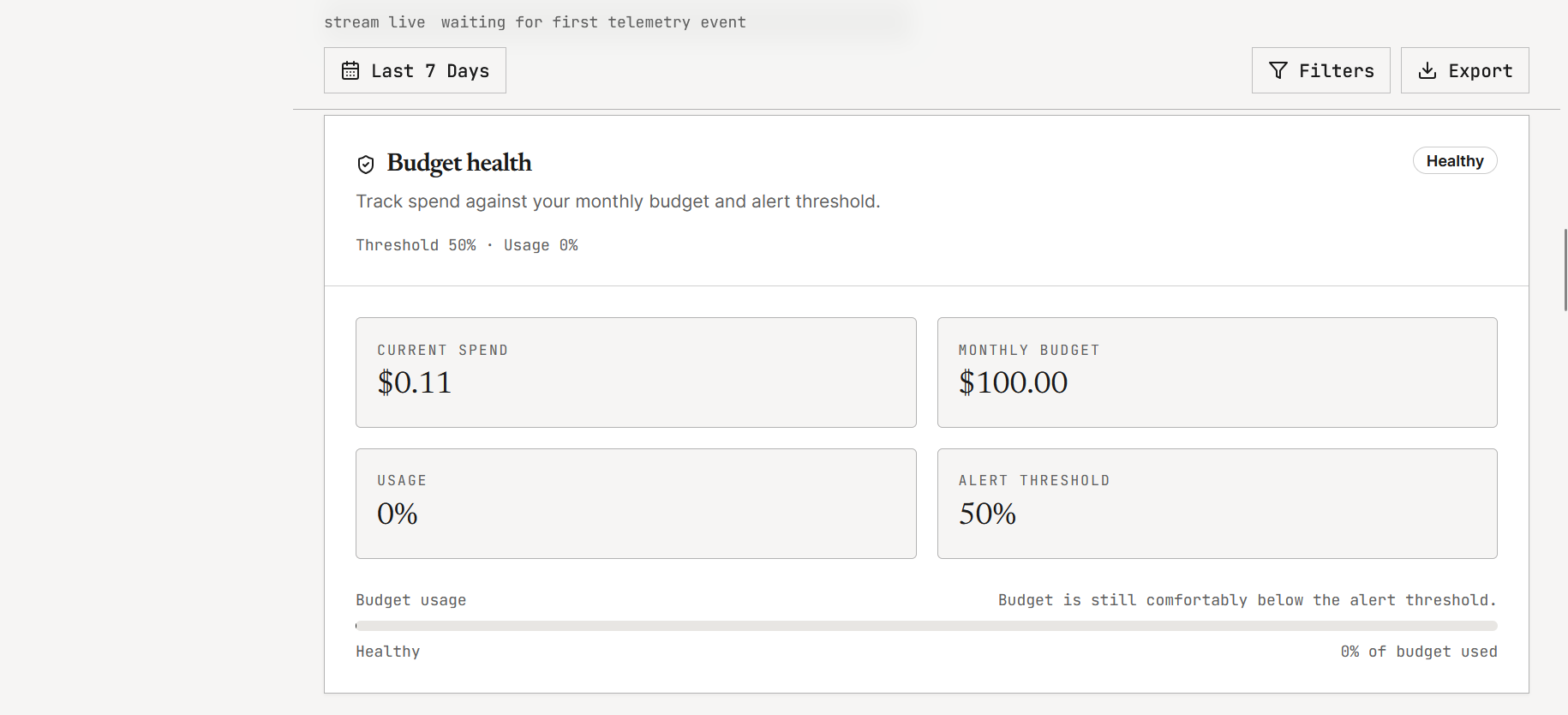
- 📈 Interactive dashboards with analytics across providers, models, endpoints, and workspaces.
- 🤖 AI-generated insights, anomaly detection, and cost optimization recommendations.
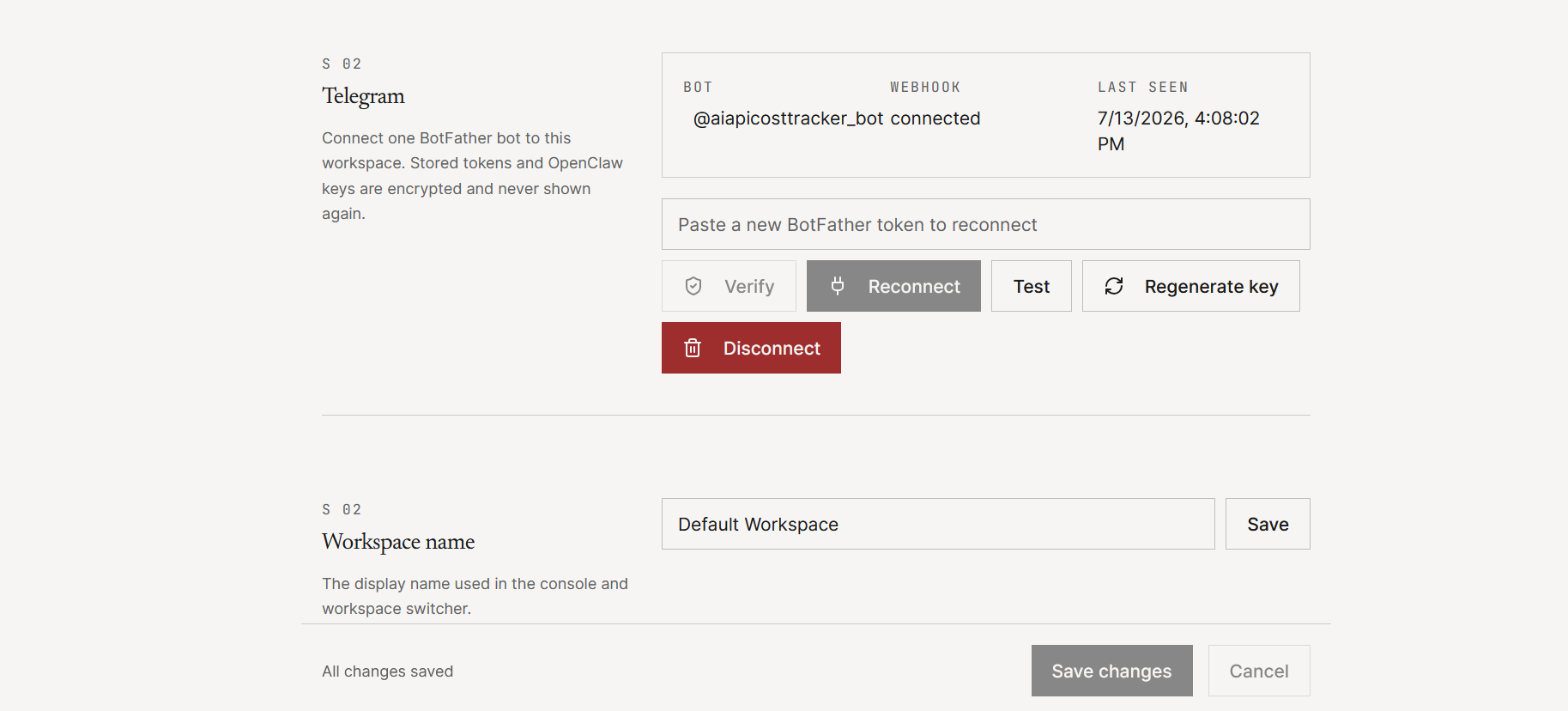
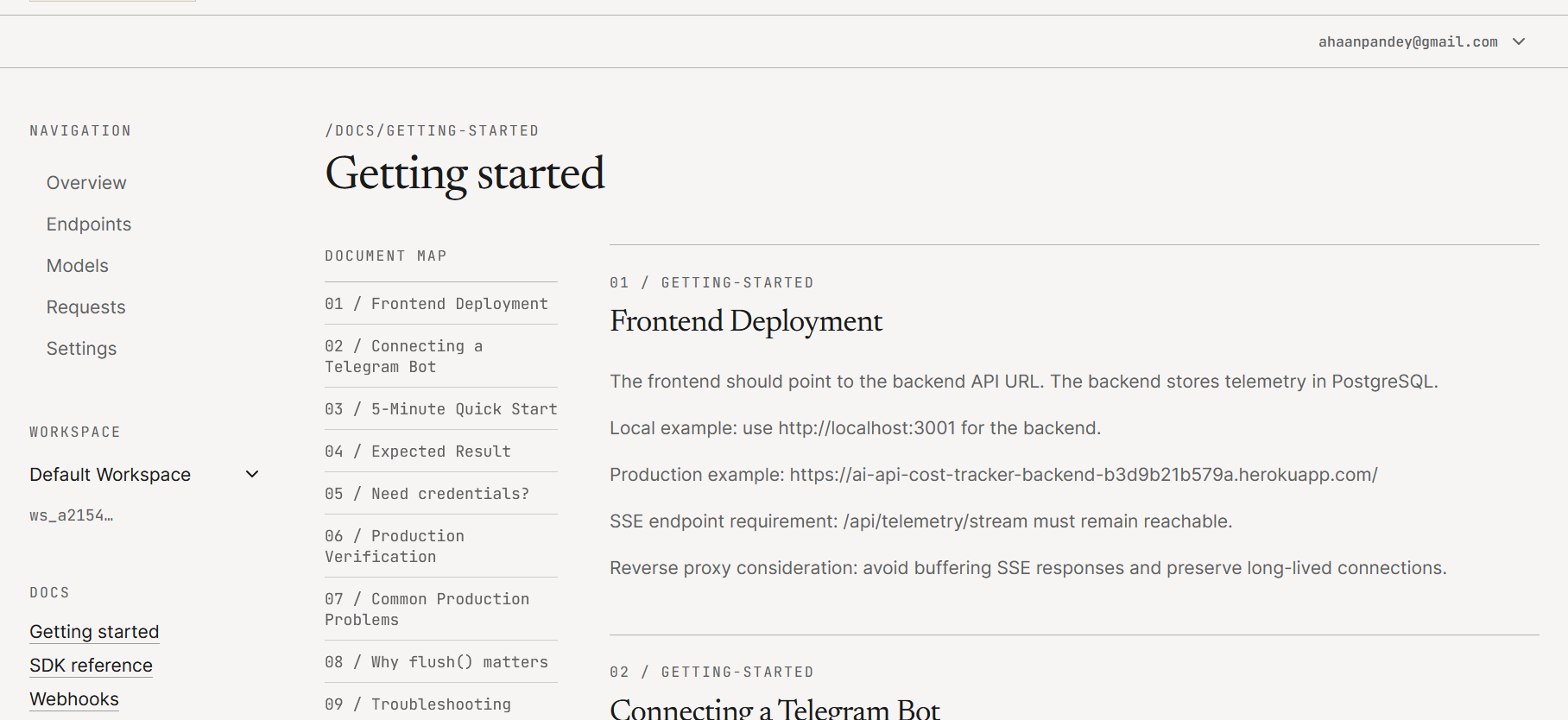
- 📱 Telegram integration for reports and operational notifications.
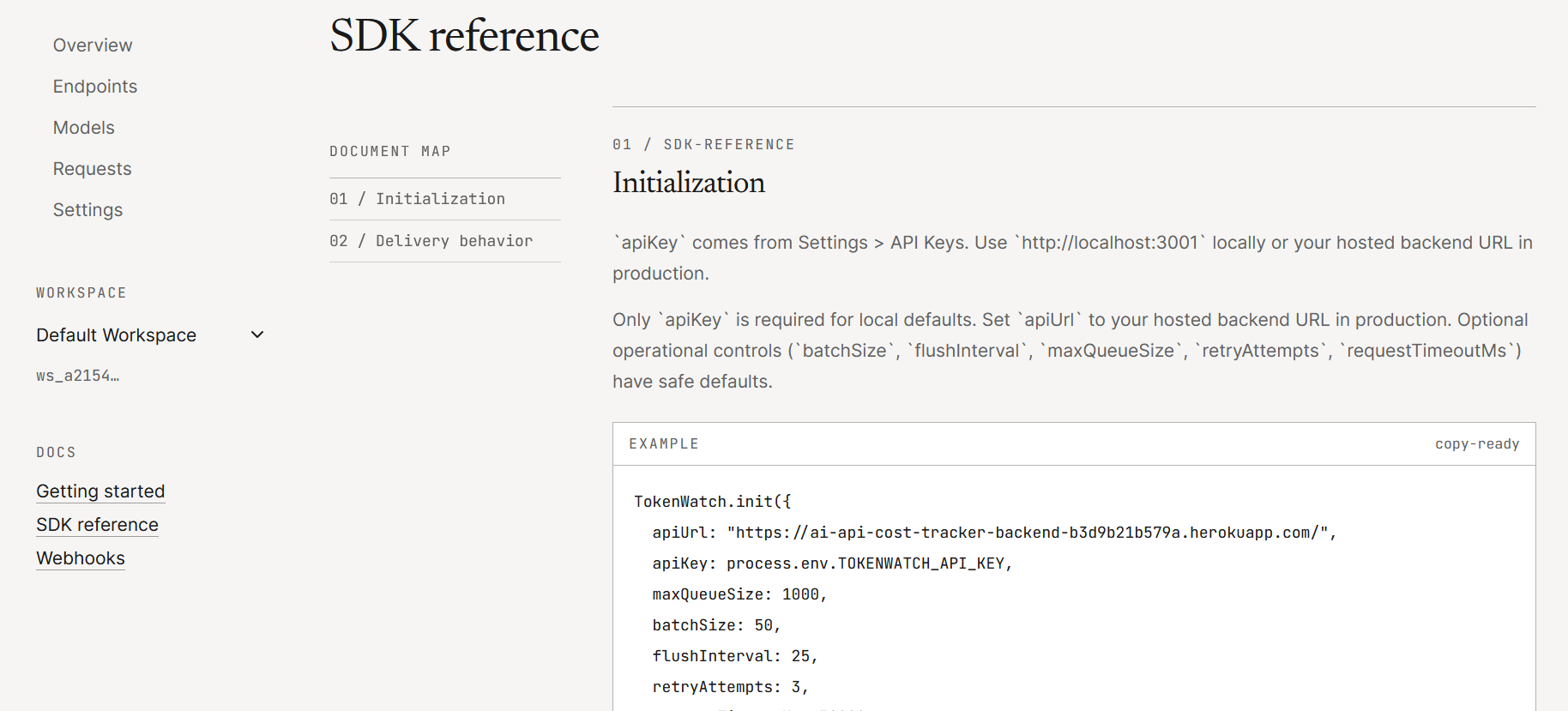
- ⚡ Lightweight TypeScript SDK with batching, retries, and graceful shutdown support.
- 🔐 Secure multi-workspace architecture with API key management and role isolation.
Rather than simply collecting telemetry, TokenWatcher transforms operational data into actionable intelligence that helps teams improve reliability, reduce costs, and scale AI applications confidently.
How we built it
TokenWatcher was designed as a modular, production-ready platform.
Backend
- Node.js
- Express
- TypeScript
- PostgreSQL
Frontend
- React
- Vite
- React Query
- Tailwind CSS
- shadcn/ui
Telemetry SDK
- TypeScript
- Automatic instrumentation
- Request batching
- Retry logic
- Graceful shutdown flushing
Platform Components
- Server-Sent Events for live dashboards
- AI-powered analytics engine
- Forecasting and anomaly detection
- Workspace authentication
- Telegram integration through OpenClaw
Telemetry is collected by the SDK, securely processed by the backend, analyzed through the intelligence engine, and presented through dashboards and conversational interfaces.
Challenges we ran into
Building TokenWatcher required solving several engineering challenges beyond a typical web application.
Designing a lightweight telemetry SDK that reliably batches requests, retries failed uploads, and flushes data during application shutdown while minimizing overhead was one of our biggest challenges.
We also implemented secure workspace isolation, real-time streaming with Server-Sent Events, AI-powered forecasting, and conversational access through Telegram while ensuring the platform remained scalable, modular, and production-ready.
Accomplishments that we're proud of
- Built a complete AI infrastructure platform instead of a simple prototype.
- Designed a reusable telemetry SDK that can integrate into AI applications with minimal effort.
- Implemented real-time analytics and dashboards powered by live telemetry.
- Added AI-generated recommendations, forecasting, and anomaly detection.
- Successfully integrated Telegram to make infrastructure insights accessible through natural conversations.
- Created a scalable architecture that can continue evolving into a full AI operations platform.
What we learned
Building TokenWatcher taught us that observability is no longer just about collecting logs—it is about helping developers make better decisions.
We learned how to build reliable telemetry systems, scalable backend architectures, developer-friendly SDKs, and AI-powered analytics while balancing performance, usability, and maintainability across the entire platform.
Most importantly, we learned that developer tools create the greatest impact when they reduce complexity instead of adding more dashboards.
What's next for TokenWatcher
Our long-term vision is to make TokenWatcher the intelligence layer for modern AI infrastructure.
Our roadmap includes:
- Support for additional AI providers and model ecosystems.
- Advanced anomaly detection and predictive analytics.
- AI-powered root cause analysis and automated optimization workflows.
- SDKs for multiple programming languages beyond TypeScript.
- Enterprise collaboration, governance, and compliance features.
- Cloud-native deployment with Docker and Kubernetes support.
- Deeper integrations with AI frameworks, orchestration platforms, and developer tools.
Ultimately, we want TokenWatcher to evolve from an observability platform into an autonomous AI operations assistant that helps organizations monitor, optimize, and govern every AI request from development to production.
Built With
- ai
- backend
- express.js
- frontend
- node.js
- postgresql
- react.js
- sdk
- telegram

Log in or sign up for Devpost to join the conversation.