-
-
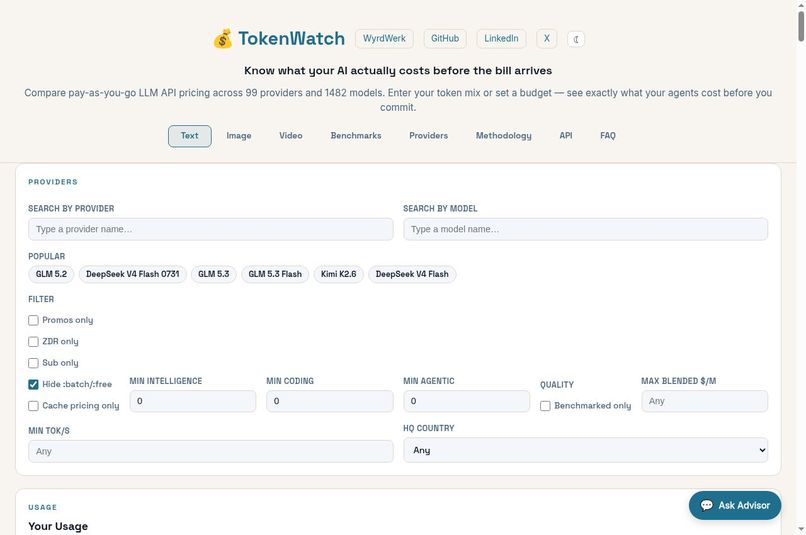
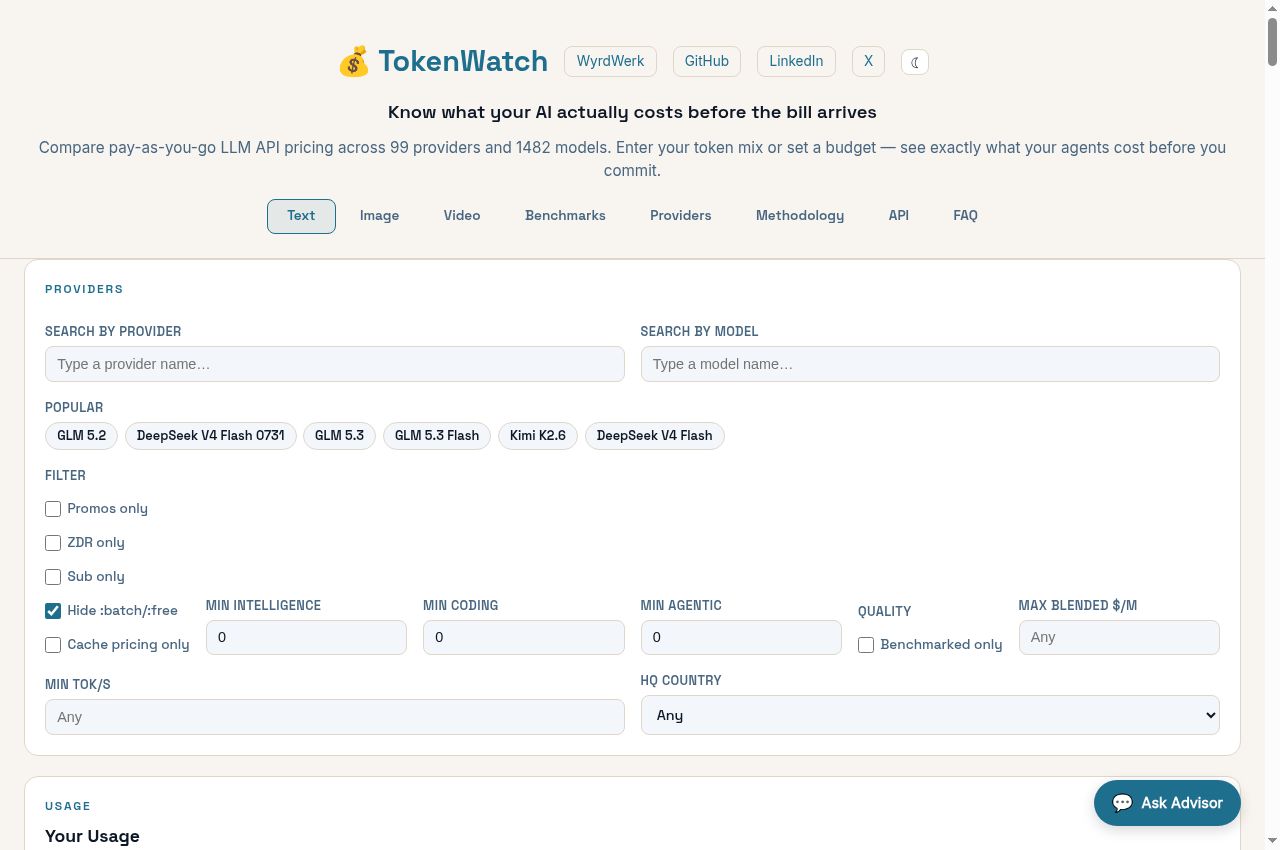
Demonstrates product completeness, scale (1,480+ models, 99 providers), and the live interactive calculator.
-
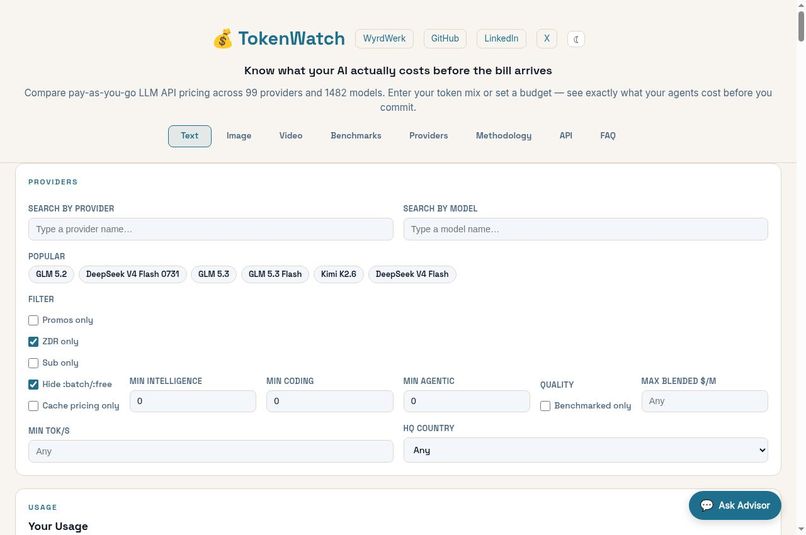
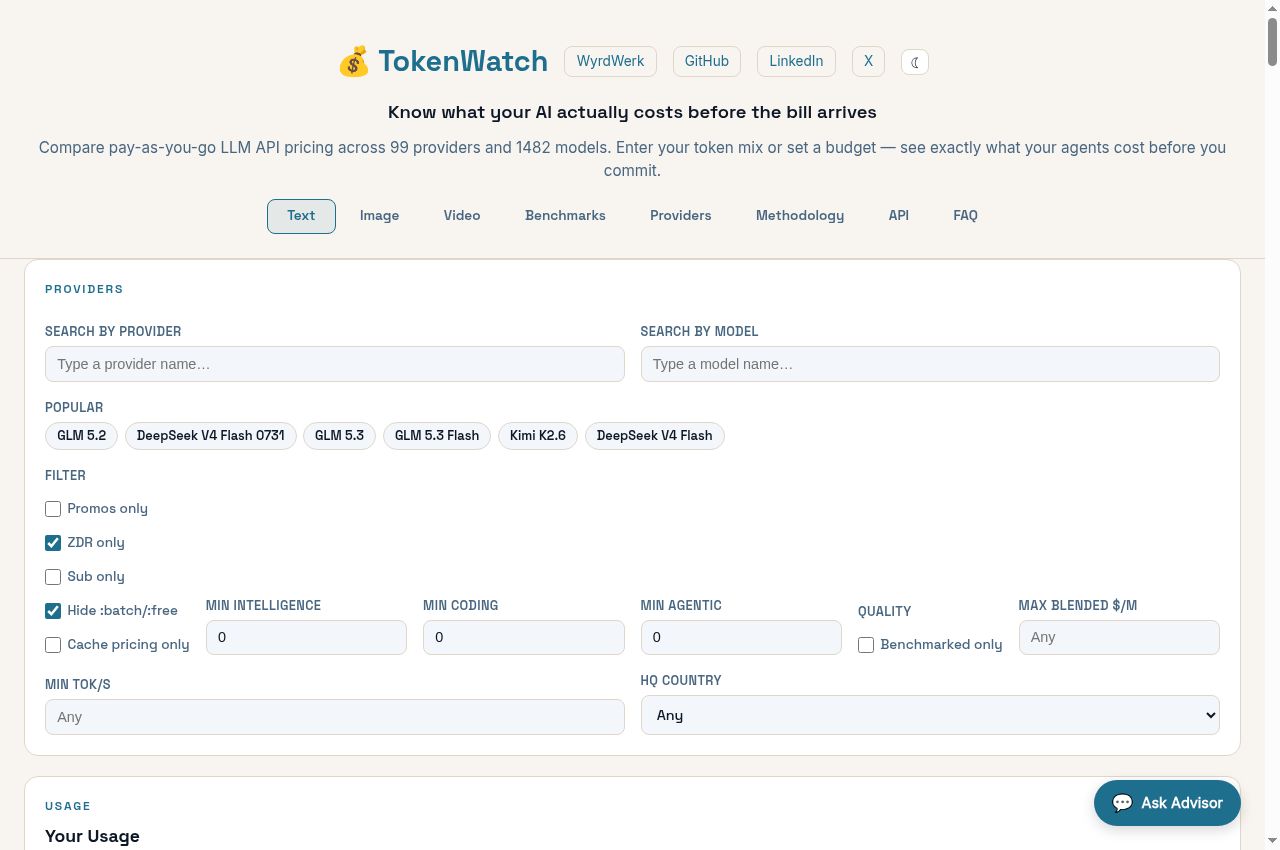
Demonstrates real-time state manipulation (Monthly mode, 10/80/10 token mix, Zero Data Retention filter).
-
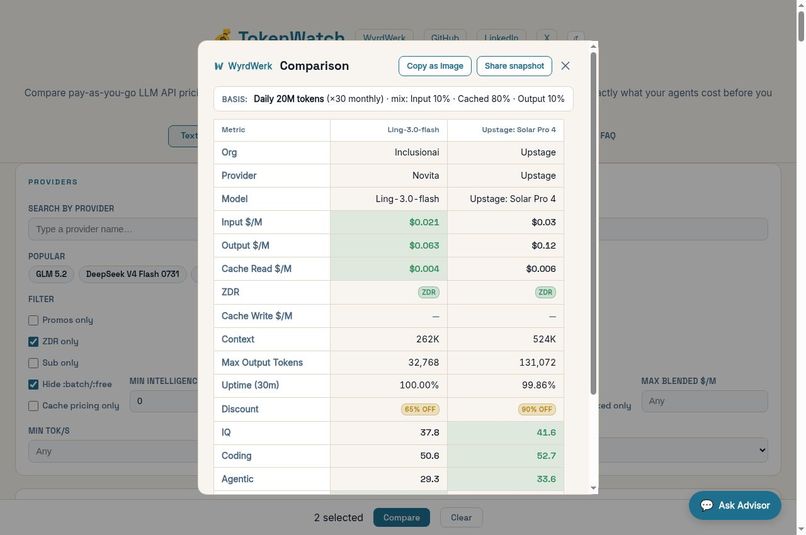
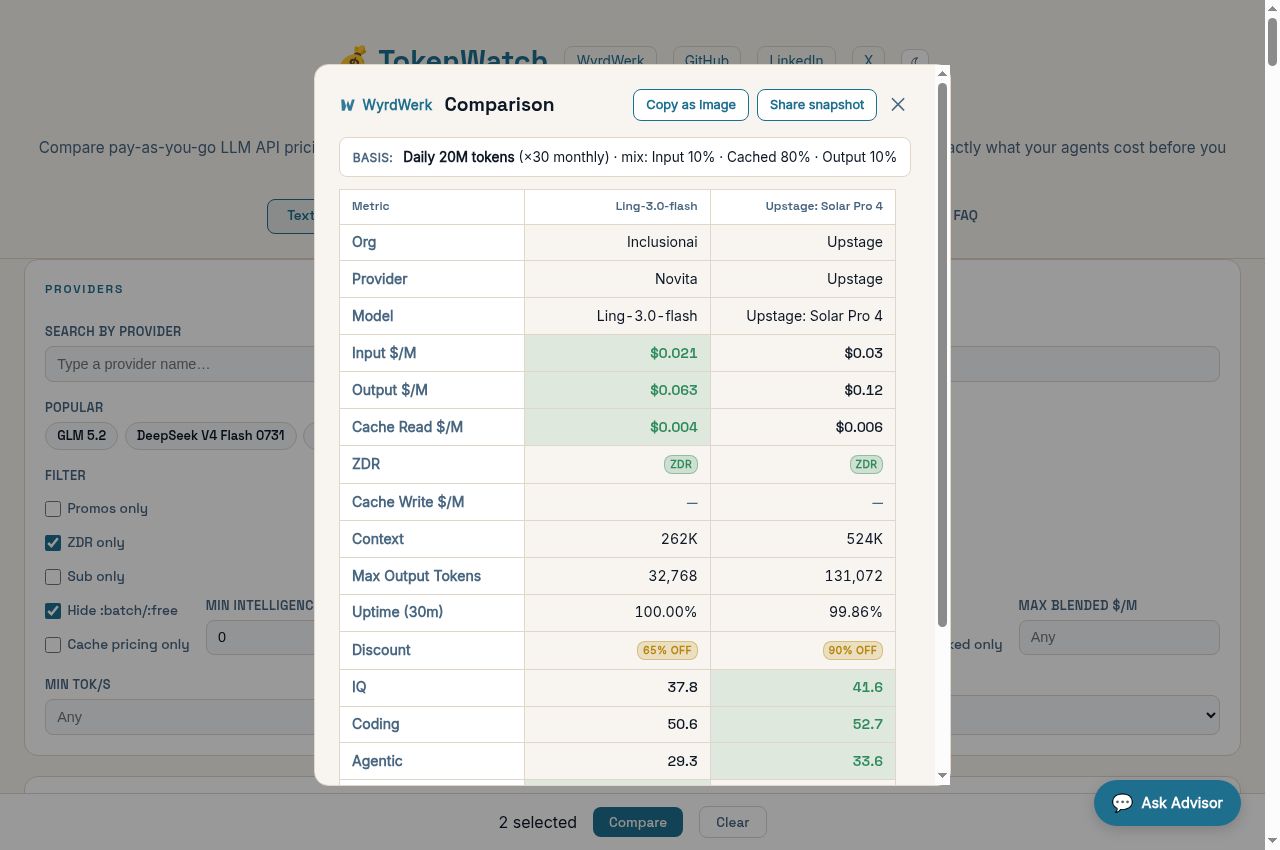
Demonstrates collaborative decision-making, comparing shortlisted offerings with the "Copy as image" feature.
-
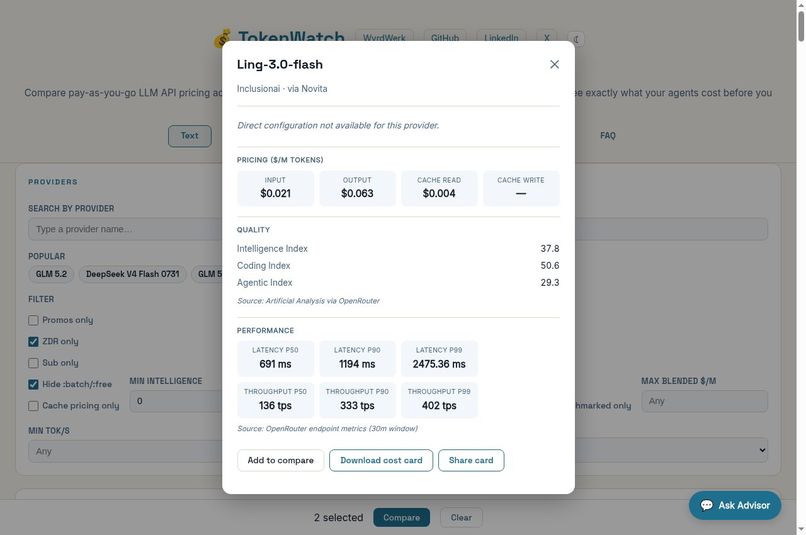
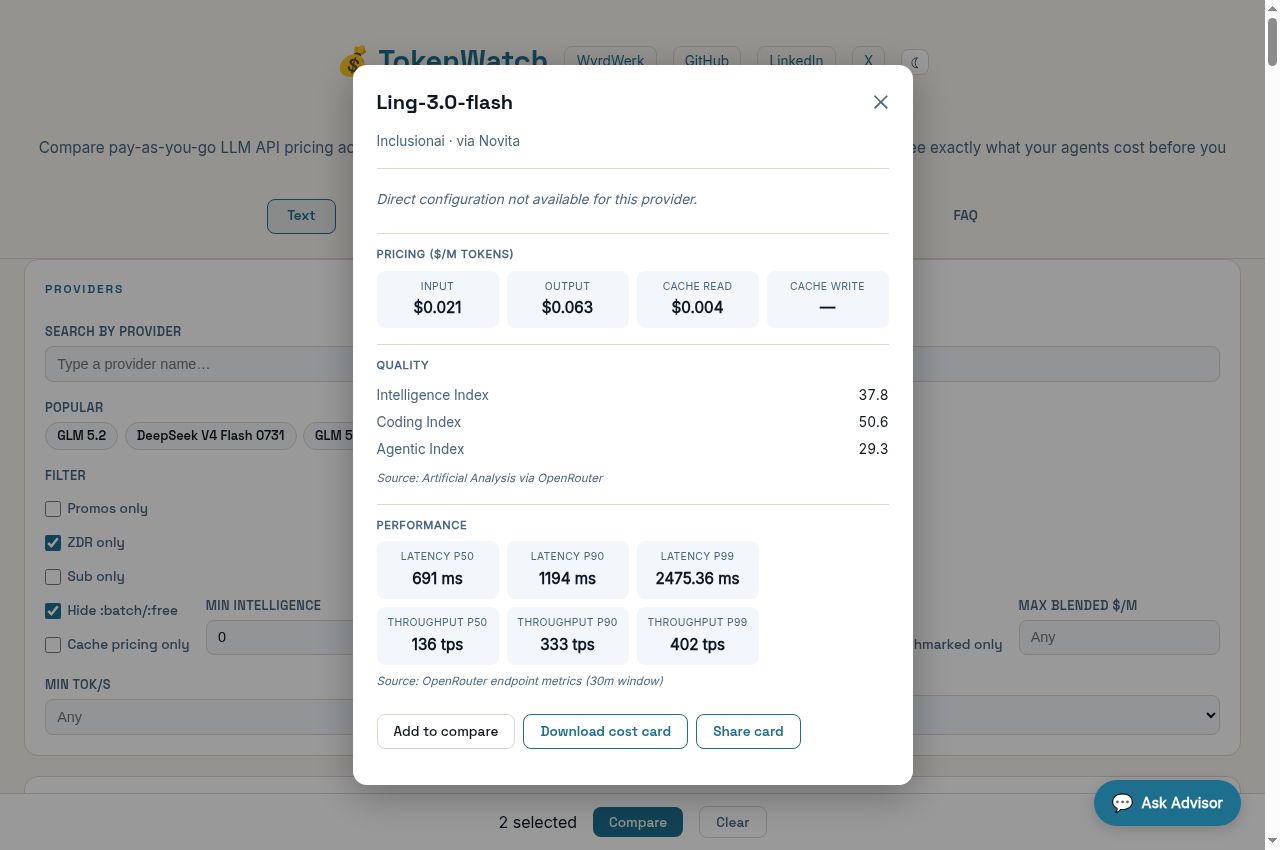
Demonstrates rich data integration: unit pricing, speed, TTFT, cache economics, and quality benchmark metrics.
-
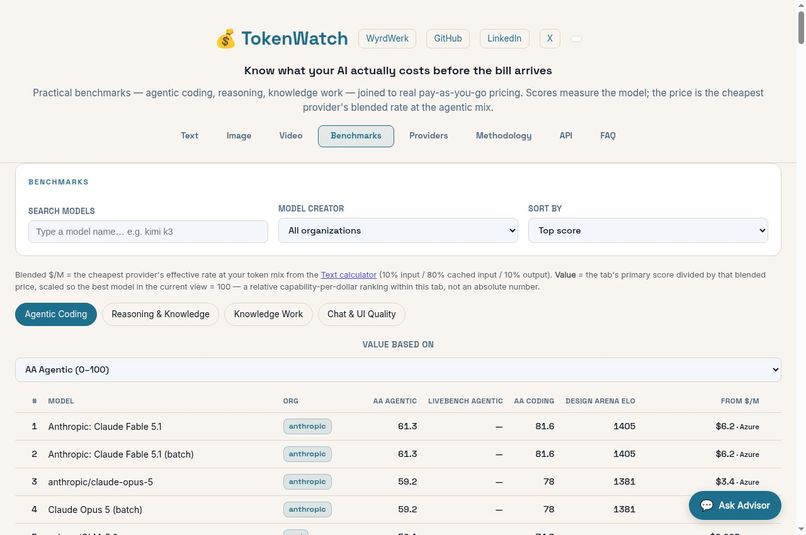
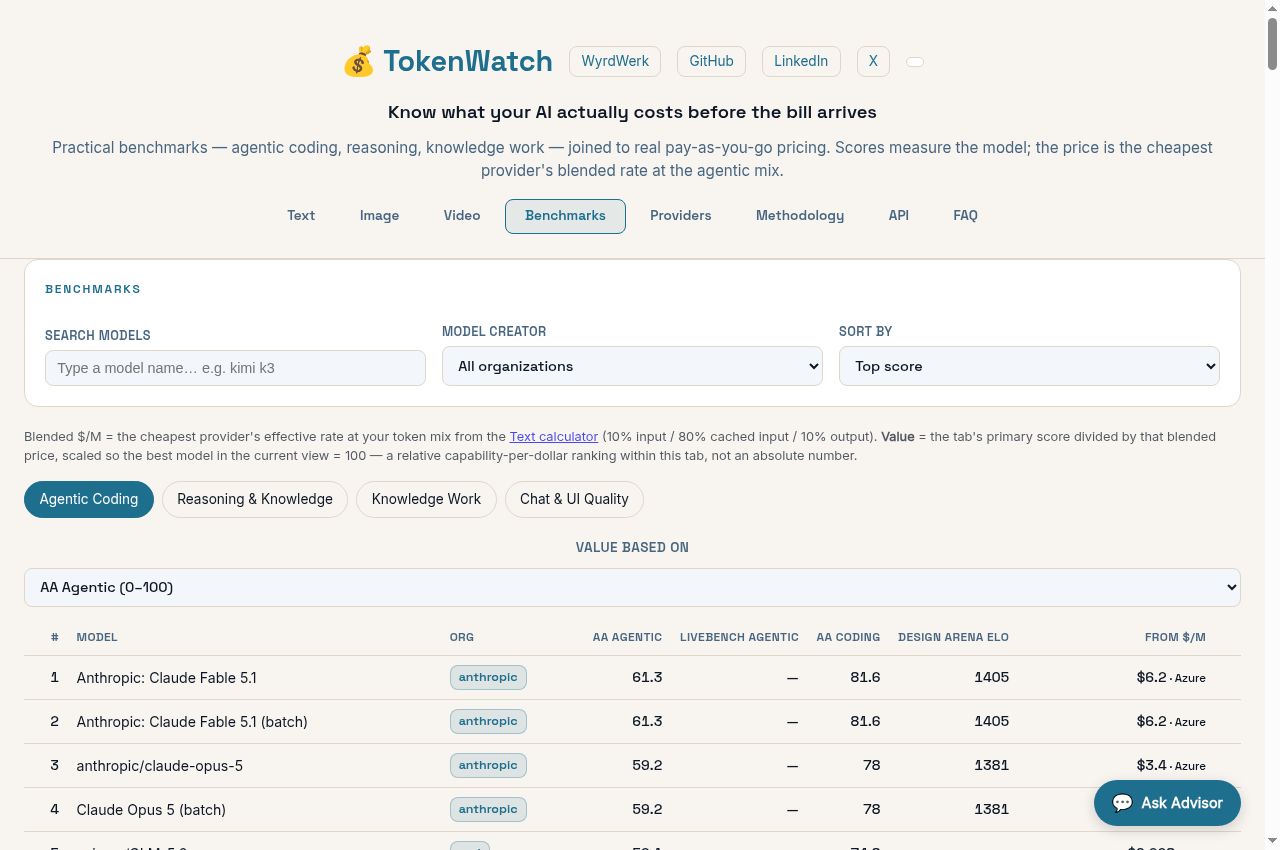
Demonstrates the newly added use-case benchmark explorer (Agentic, Reasoning, Knowledge, UI) with Value (score-per-dollar) rankings.
-
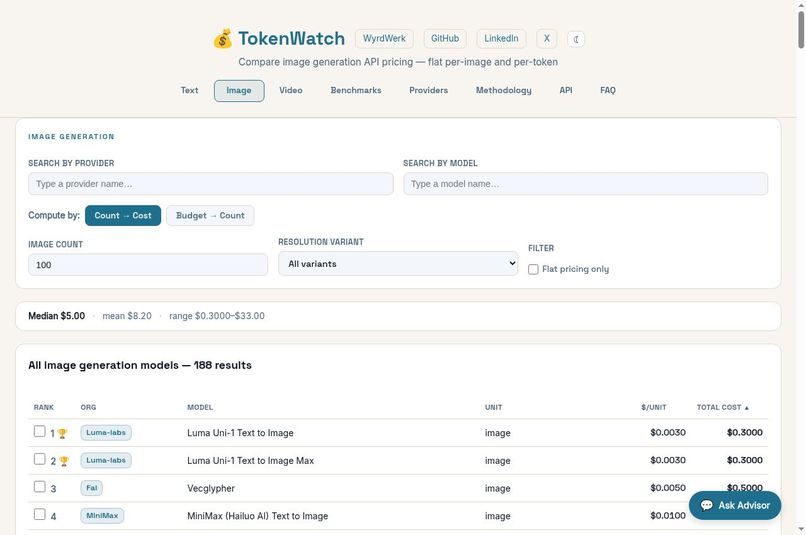
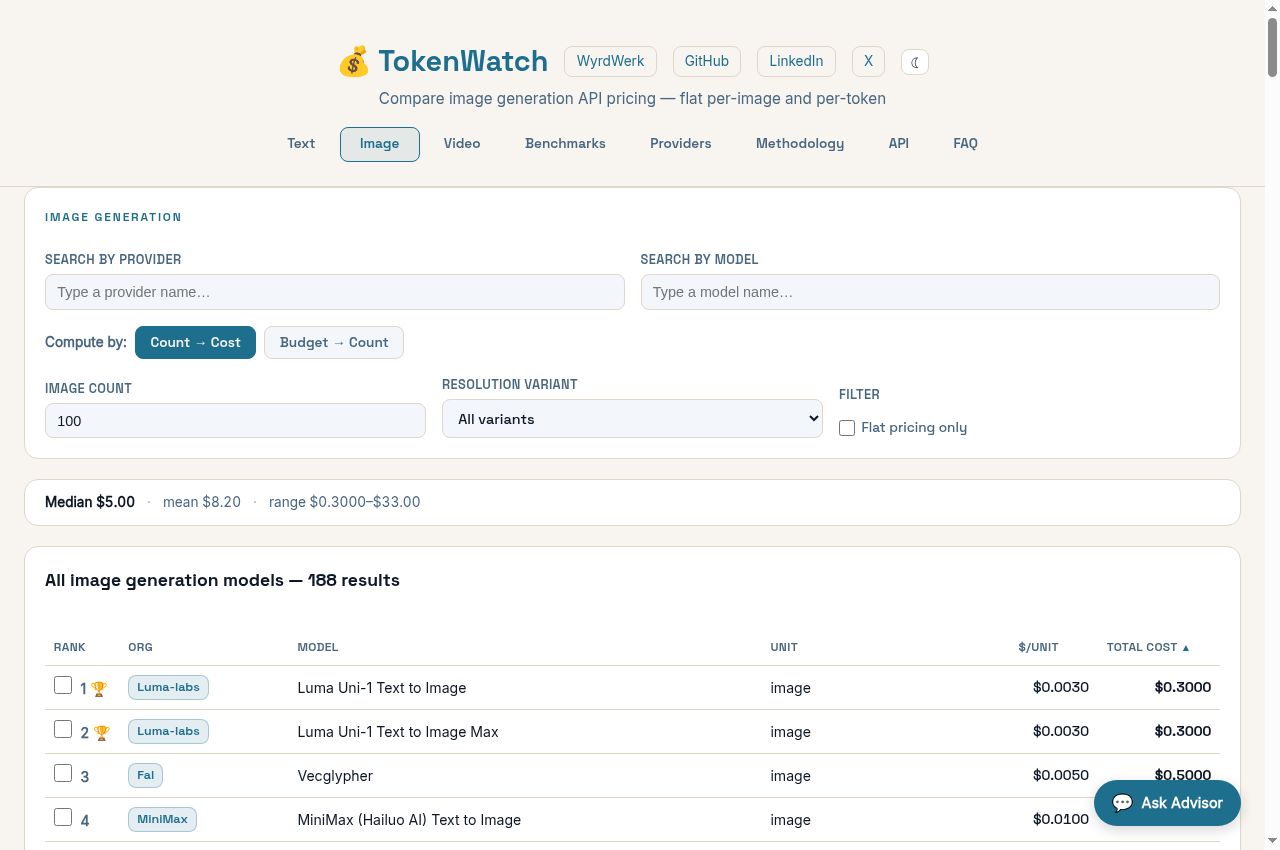
Demonstrates cross-modality WebMCP support across Image models with flat, megapixel, and token-based rates.
-
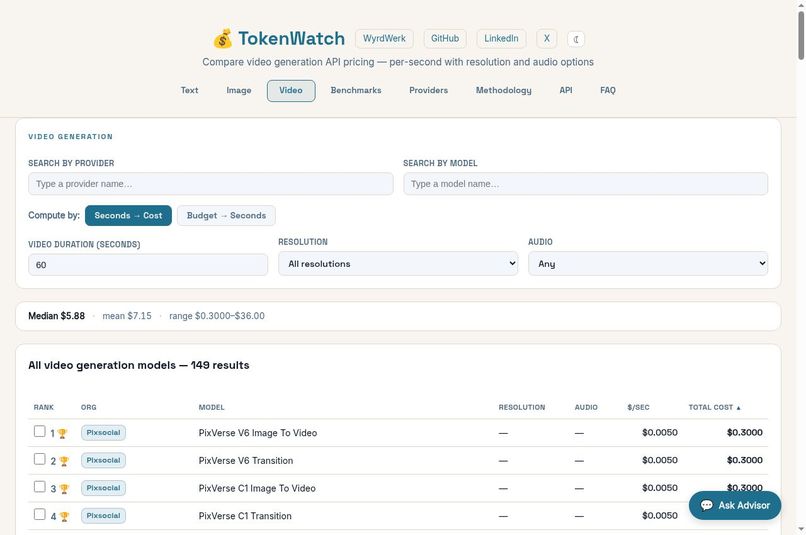
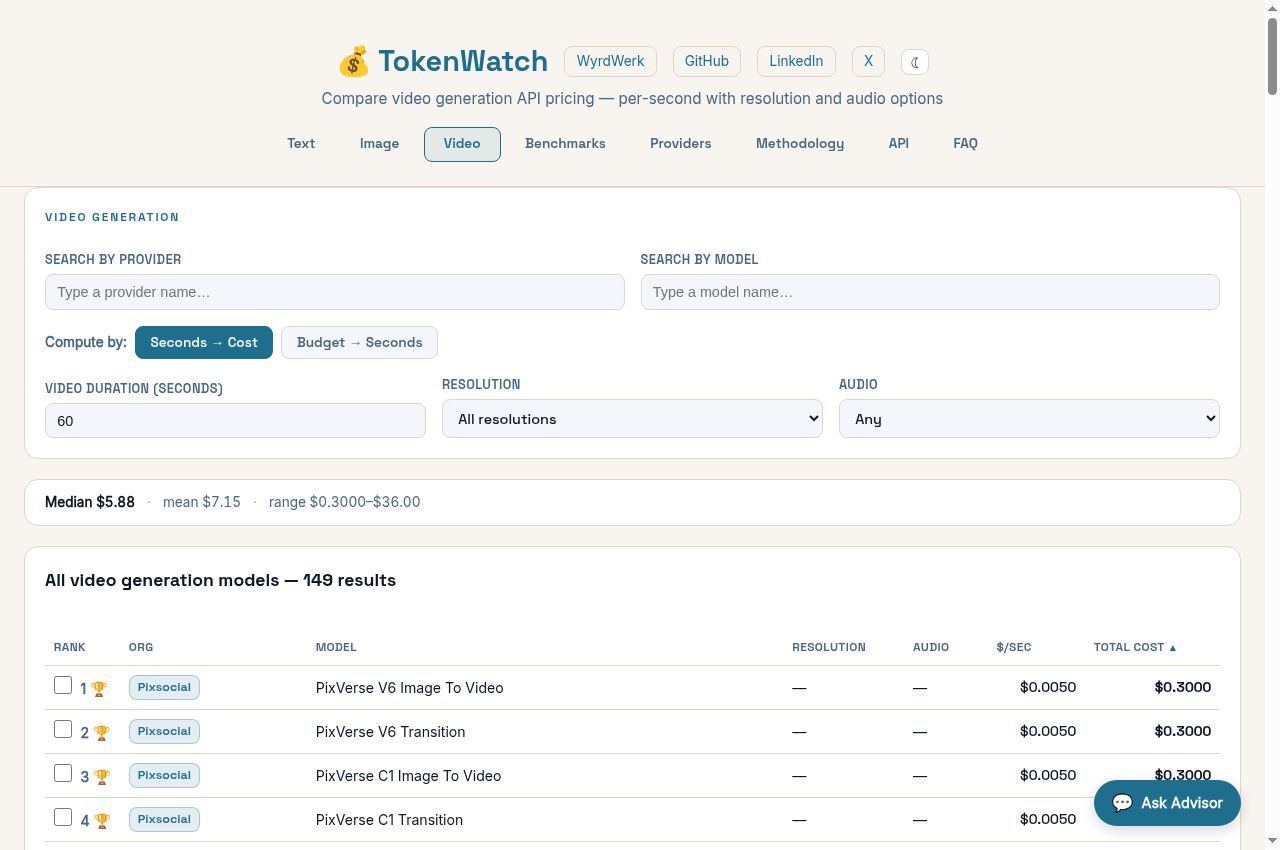
Demonstrates video generation pricing comparison with resolution and audio variants.
-
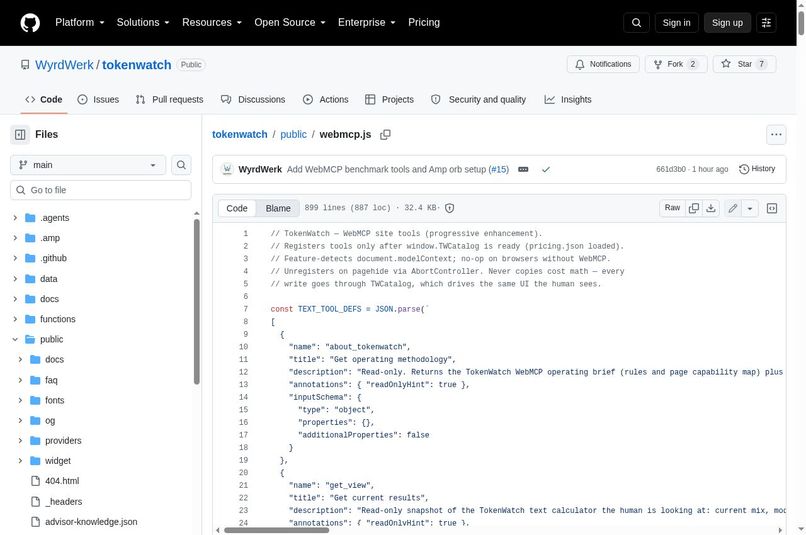
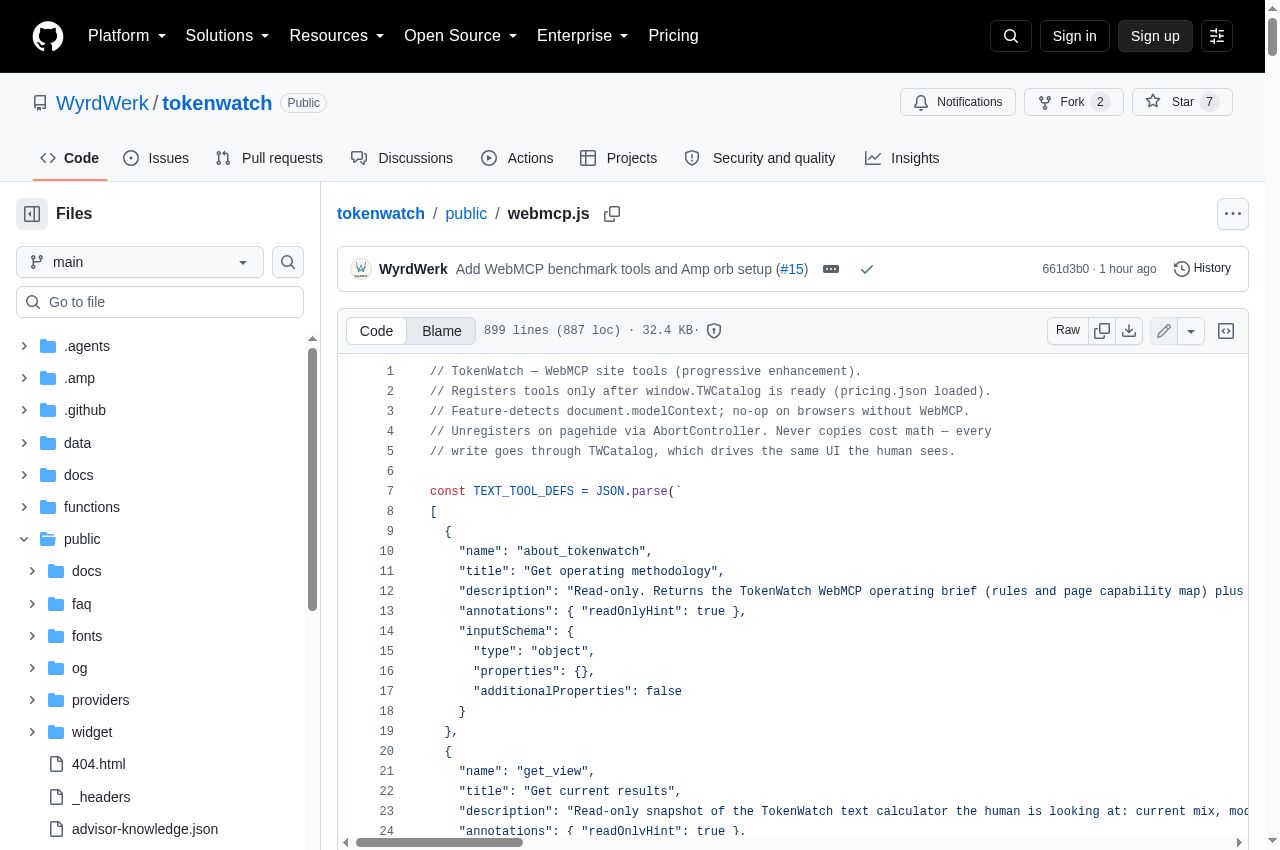
Demonstrates the progressive enhancement tool registration code using document.modelContext.registerTool() and lifecycle event binding.
TokenWatch started before the WebMCP challenge as a practical LLM pricing calculator. I kept running into the same operational problem: "Which model is cheapest?" is meaningless without modeling a real workload—token volume, input versus cached mix, output ratios, provider differences, and hard constraints like Zero Data Retention.
I come to this without an engineering or coding background. My background is in commercial banking, where cost structure, margin impact, and decision defensibility matter far more than technology for its own sake. I built TokenWatch using modern AI coding tools to make model-pricing decisions clear and legible for business operators, not just developers reading API rate cards.
During the submission period, I implemented a comprehensive WebMCP layer across TokenWatch's text, media, and benchmark calculators. Instead of an agent blindly guessing from a rendered table or web search, it operates the exact same live calculator the user sees. The agent can configure token mix, apply ZDR or benchmark thresholds, inspect ranked results, compare candidates, explain why a model won, and generate an auditable share link.
The key challenge was reliability. Rather than brittle click-emulation, TokenWatch exposes clean tools tied to the calculator's state engine. Every tool references stable {provider, id} identities rather than changing table ranks, and state modifications immediately return fresh view snapshots so human and agent stay perfectly synchronized.
Built With
- agents
- ai
- amp
- api
- chatgpt
- chrome
- cloudflare
- css
- cursor
- github
- gpt-5.6
- grok
- html
- javascript
- json
- llm
- node.js
- openapi
- pages
- rest
- webmcp
- workers


Log in or sign up for Devpost to join the conversation.