Inspiration
When working in a bilingual environment, it is vital to maintain important characteristics of text from tone, vocabulary, and emotion. However, not all large-language models provide the same translation for a given text. Thus, how can a student learning in French know that their AI-translated English study materials present a concept correctly? ** This is where Token Talk comes in. **
What it does
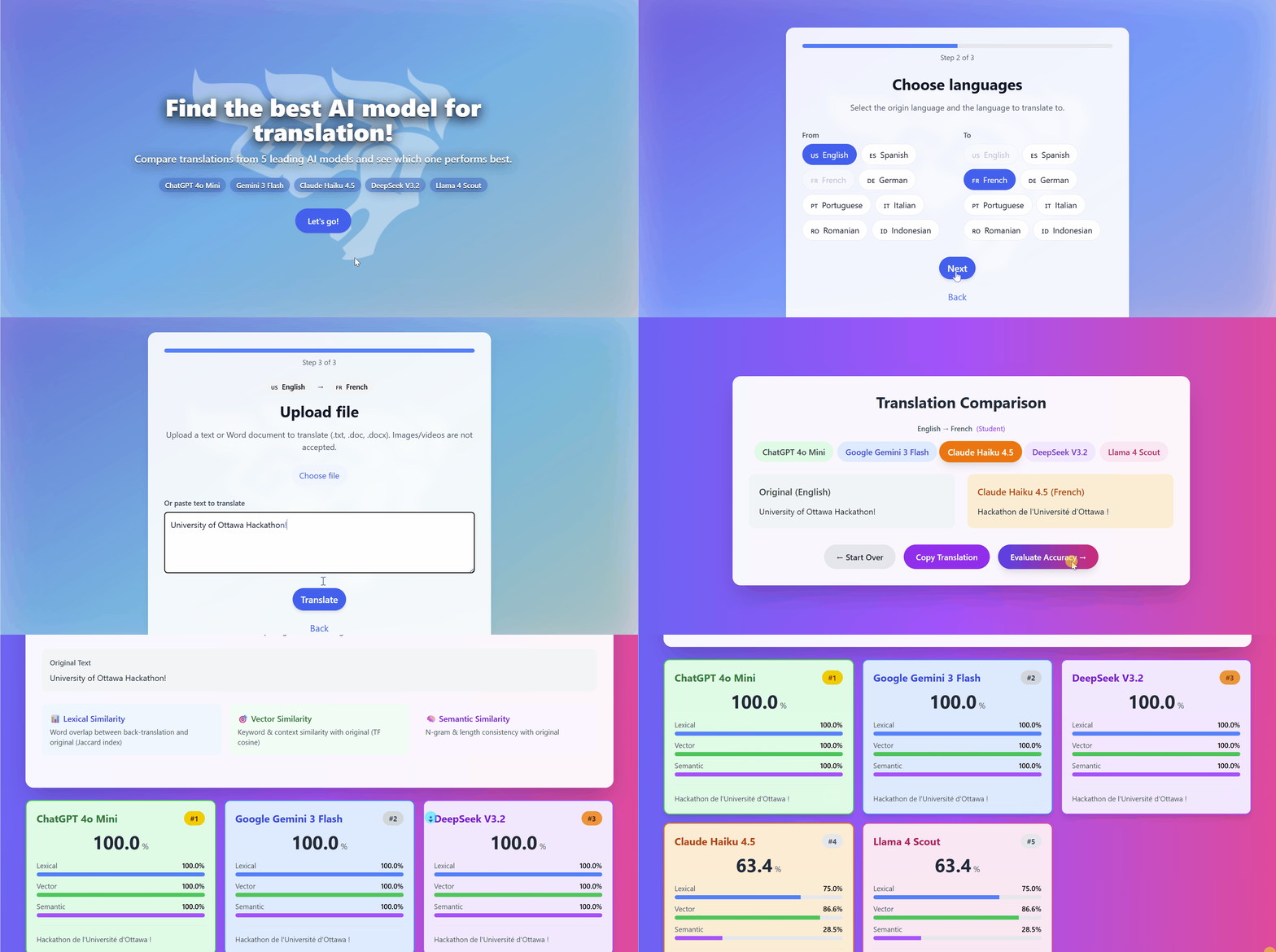
Token Talk takes in translations from a text input field or a text document and immediately translates the text, providing a result from five of the largest language models openly available today. The user, whether a student, researcher, or educator, can easily see how the resultant text compares to their original input.
How we built it
Token Talk is built using React and Typescript with Tailwind CSS to create a responsive and intuitive user interface. Token Talk utilizes OpenRouter's API, simplifying the process of querying from multiple language models.
Challenges we ran into
One challenging feature of this project was with the different AI models inability to translate non Latin Alphabet characters (such as languages like Japanese or Russian) back into English. This resulted in very low performance scores that were misleading.
Accomplishments that we're proud of
We are proud to have each team member interact with an unfamiliar technology. We took the time to incrementally test each part of our code, and included CI/CD practices to ensure deployment of our project was not effected by new code contributions, mirroring real industry practices in software engineering.
What we learned
We learned about new data science metrics for evaluating textual similarities (Jaccard index, TF cosine similarity, N-gram, etc).
What's next for Token Talk
We hope to add more large language models and additional objective measures for evaluating output to emphasize a need for eco-friendly LLM use!

Log in or sign up for Devpost to join the conversation.