-
-
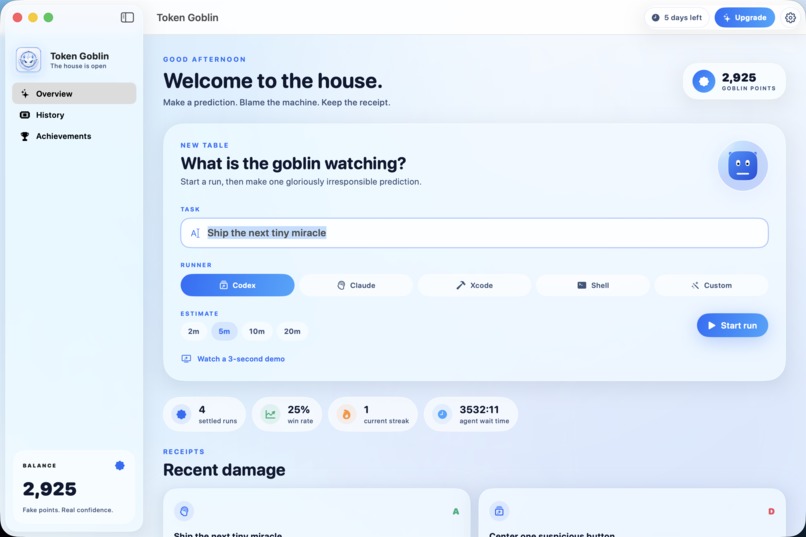
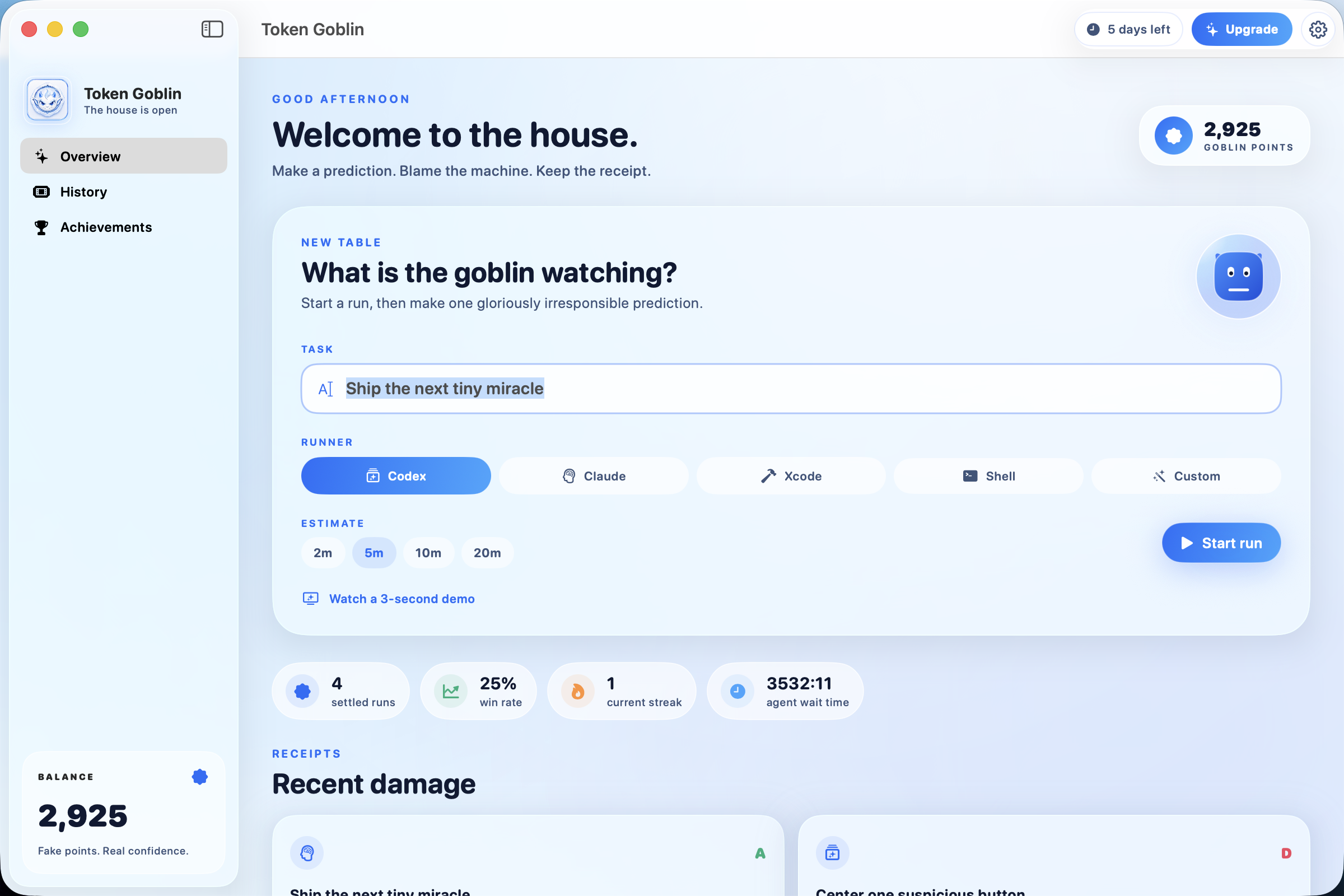
Start a run, choose your AI coding tool and estimate, then let the goblin watch while you get back to work.
-
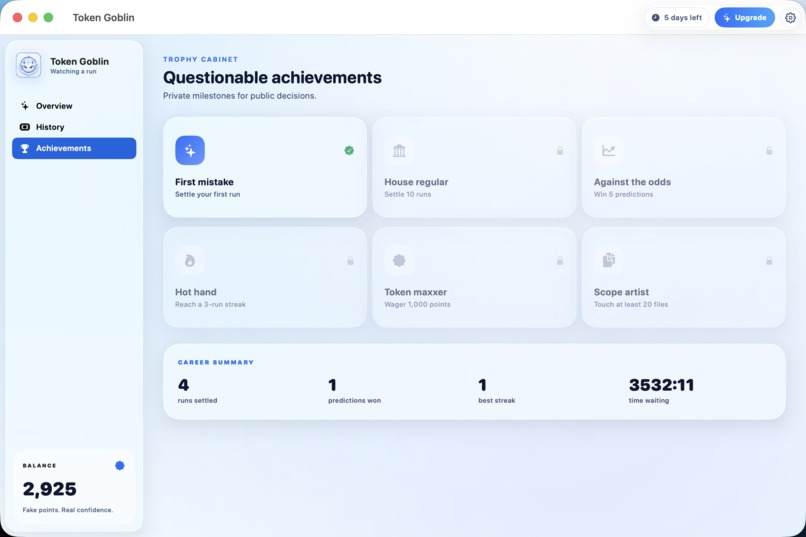
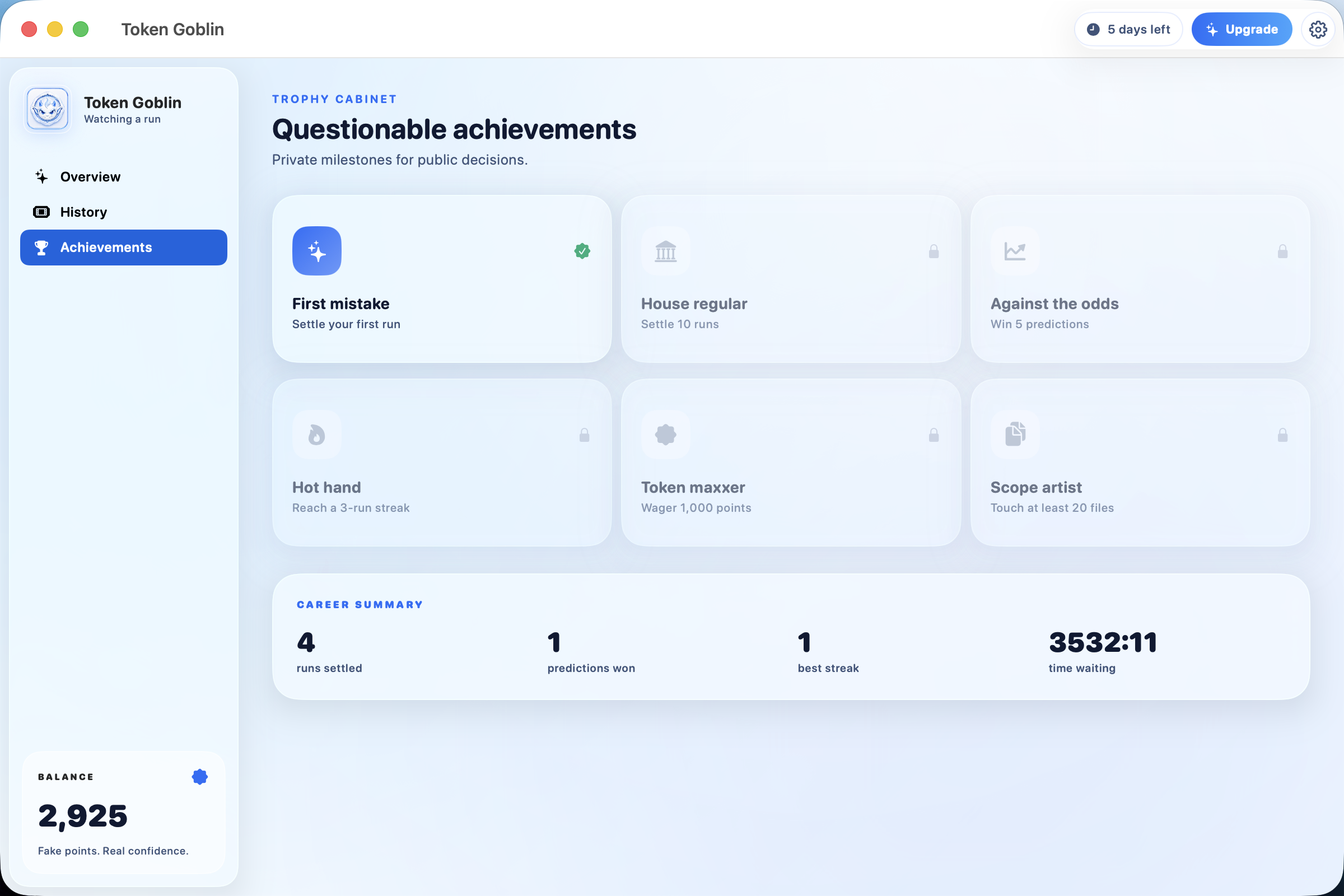
Unlock questionable achievements for bold predictions, big wagers, long waits and suspiciously clean builds.
-
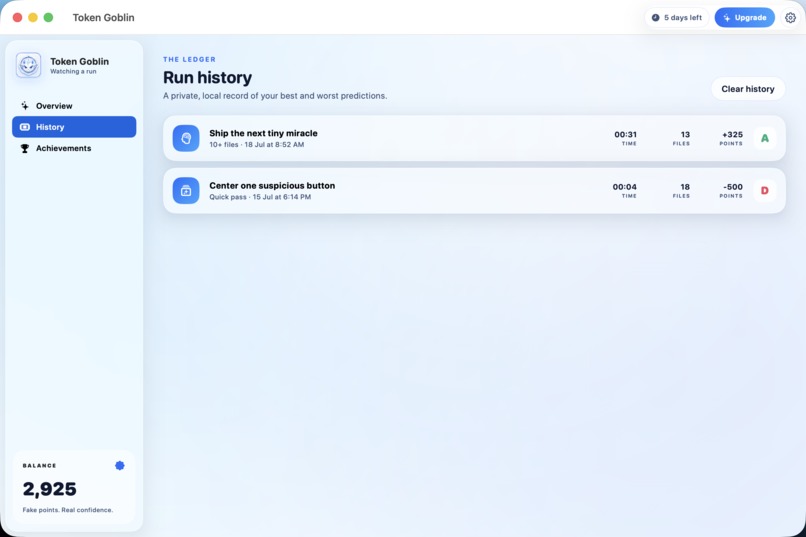
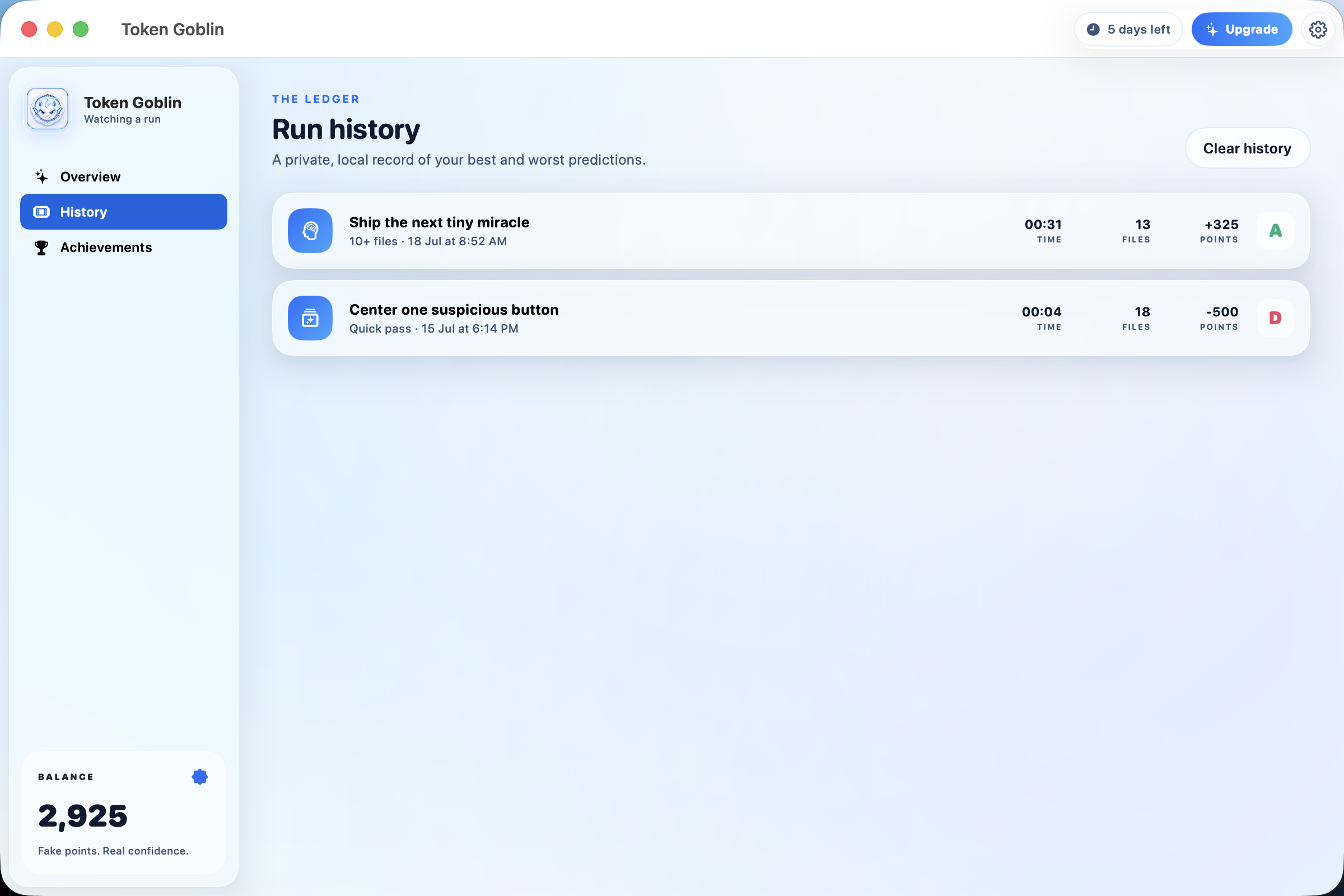
Every run leaves a private local receipt with time, files touched, points won or lost, and the final grade.
-
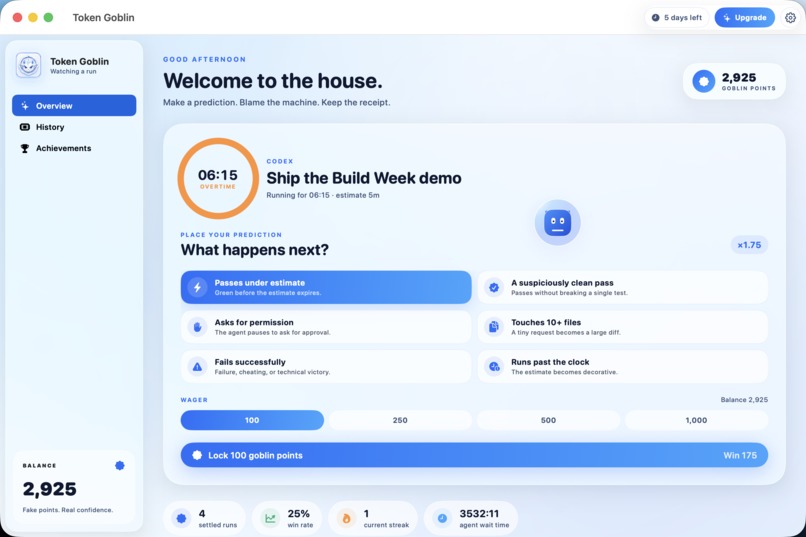
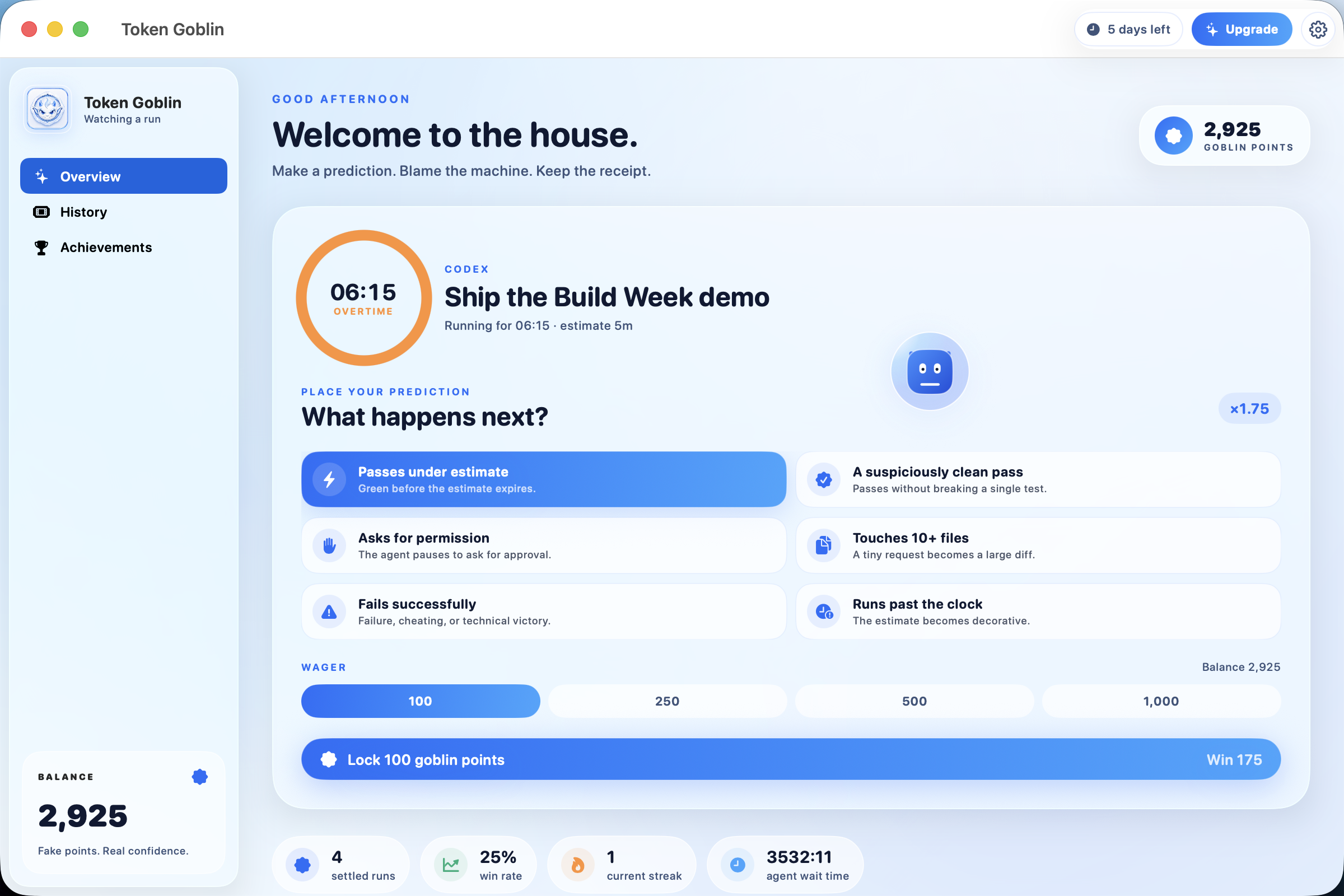
Bet fake tokens on what happens next - a clean pass, a giant diff, a permission request, or complete chaos.
Inspiration
I kept getting bored while Codex was working. A task would take a minute or two, I would open social media, and suddenly I had lost twenty minutes. I wanted to turn that awkward waiting time into something fun. The idea was simple: what if I could bet fake tokens on what my AI agent was about to do?
What it does
Token Goblin is a tiny prediction game for AI coding sessions. Before starting a task, I can place one or more bets, will it finish on time, pass on the first attempt, or touch more files than expected? Token Goblin watches the run, settles the bets when it finishes, and rewards me with fake Goblin Points. It works from both the main app and the menu bar, so placing a bet only takes a few seconds. It supports Codex, Claude, Xcode, shell commands, and custom workflows. There is no real money or gambling - just fake tokens, achievements, streaks, funny receipts, and bragging rights.
How I built it
I built Token Goblin as a native macOS app using Swift and SwiftUI. Codex with the new crazy GPT-5.6 sol helped me move from a rough idea to a working product. I used it to explore the architecture, build the interface, improve accessibility, write tests, debug process monitoring, prepare the Xcode project, and package the app for TestFlight.
The app includes:
- A native SwiftUI dashboard
- A compact menu bar experience
- CLI integration for agent and command completion
- Local run history and achievements
- Multiple bets using fake tokens
- Completion notifications
- StoreKit purchase and trial support
- A sandboxed, privacy-friendly architecture
Challenges I ran into
The hardest part was reliably knowing when an external coding task had finished. Different tools behave differently, and a command ending does not always mean the entire workflow is done. I also spent a surprising amount of time making the menu bar experience feel useful without becoming crowded. It needed to be fast enough that placing a bet never felt like extra work. StoreKit testing, signing, provisioning, sandbox permissions, and preparing a production-ready TestFlight build were their own adventures too.
Accomplishments that I'm proud of
- I turned a silly joke into a complete native macOS app
- Bets can be placed without leaving the menu bar
- Runs can be monitored across multiple developer tools
- The app keeps everything local and asks for minimal permissions
- I shipped a signed, sandboxed build through TestFlight
- The app feels playful without getting in the way of actual work
What I learned
I learned that small waiting periods can be more disruptive than they look. The problem was not that a build took two minutes, it was that those two minutes pulled me into something unrelated.
Most importantly, I learned that AI coding becomes much more useful when I treat Codex as a collaborator - testing ideas, challenging assumptions, debugging failures, and iterating with me instead of only generating code.
What's next for Token Goblin
Next, I want to add more ridiculous bets, better run detection, shareable result cards, deeper integrations with developer tools, and friendly competitions between teams. Maybe even automate listening to codex and not manually update tasks.
The long-term goal is simple, if I have to wait for an AI agent, I might as well make the wait entertaining.
Built With
- apple
- codex
- storekit
- swift


Log in or sign up for Devpost to join the conversation.