Inspiration
Since March 25, 2026, I have been using this automation system in real cooperative credit collection operations. The project was created to eliminate repetitive manual tasks that operators perform every day while processing receipt-based credit collections.
Instead of repeatedly searching records, navigating multiple screens, copying transaction information and completing the same workflow hundreds of times, I wanted a system that could automate these repetitive steps while keeping the operator in control.
During OpenAI Build Week, I used OpenAI Codex and GPT-5.6 to significantly improve the existing production system rather than starting from scratch.
What it does
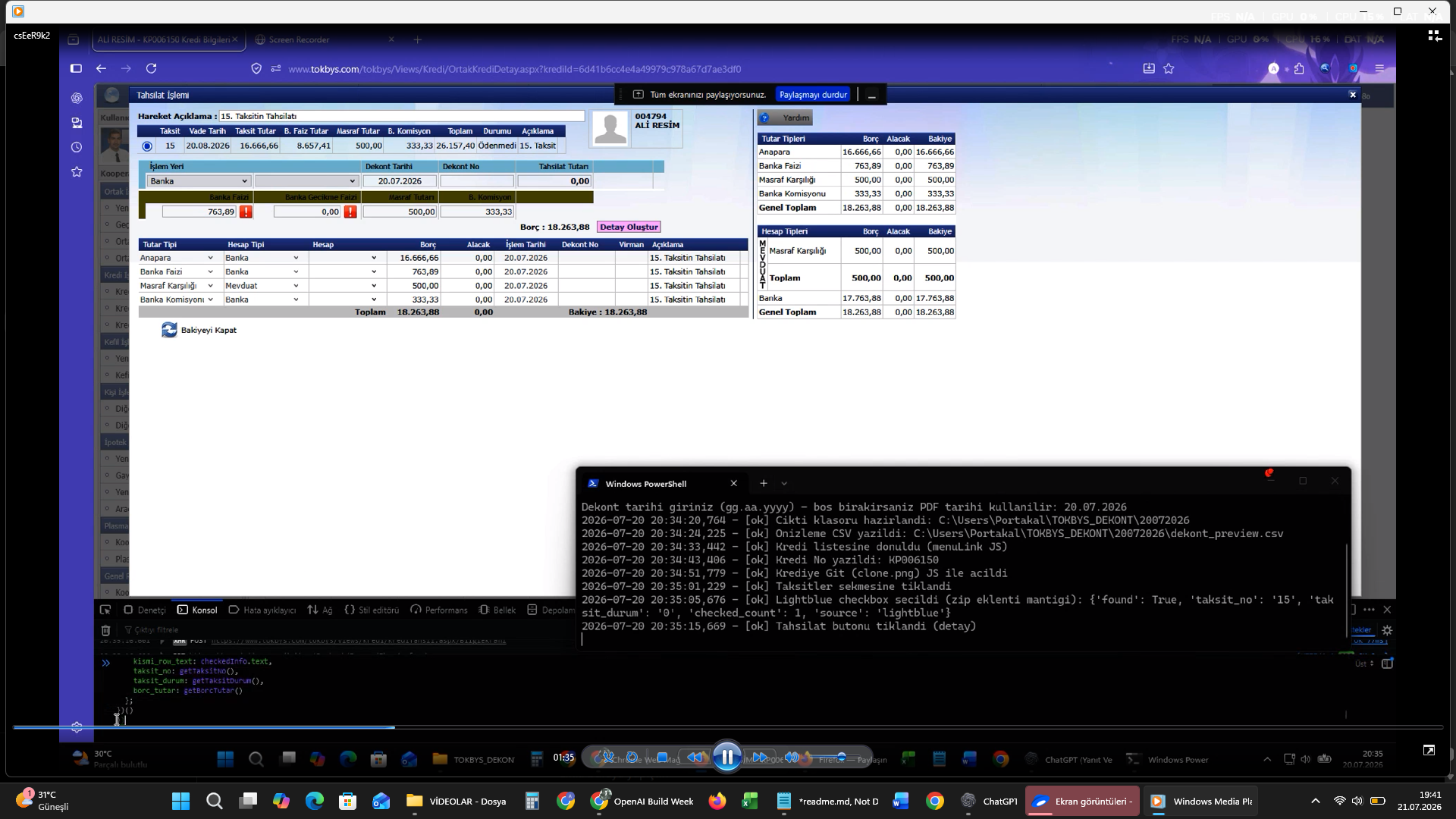
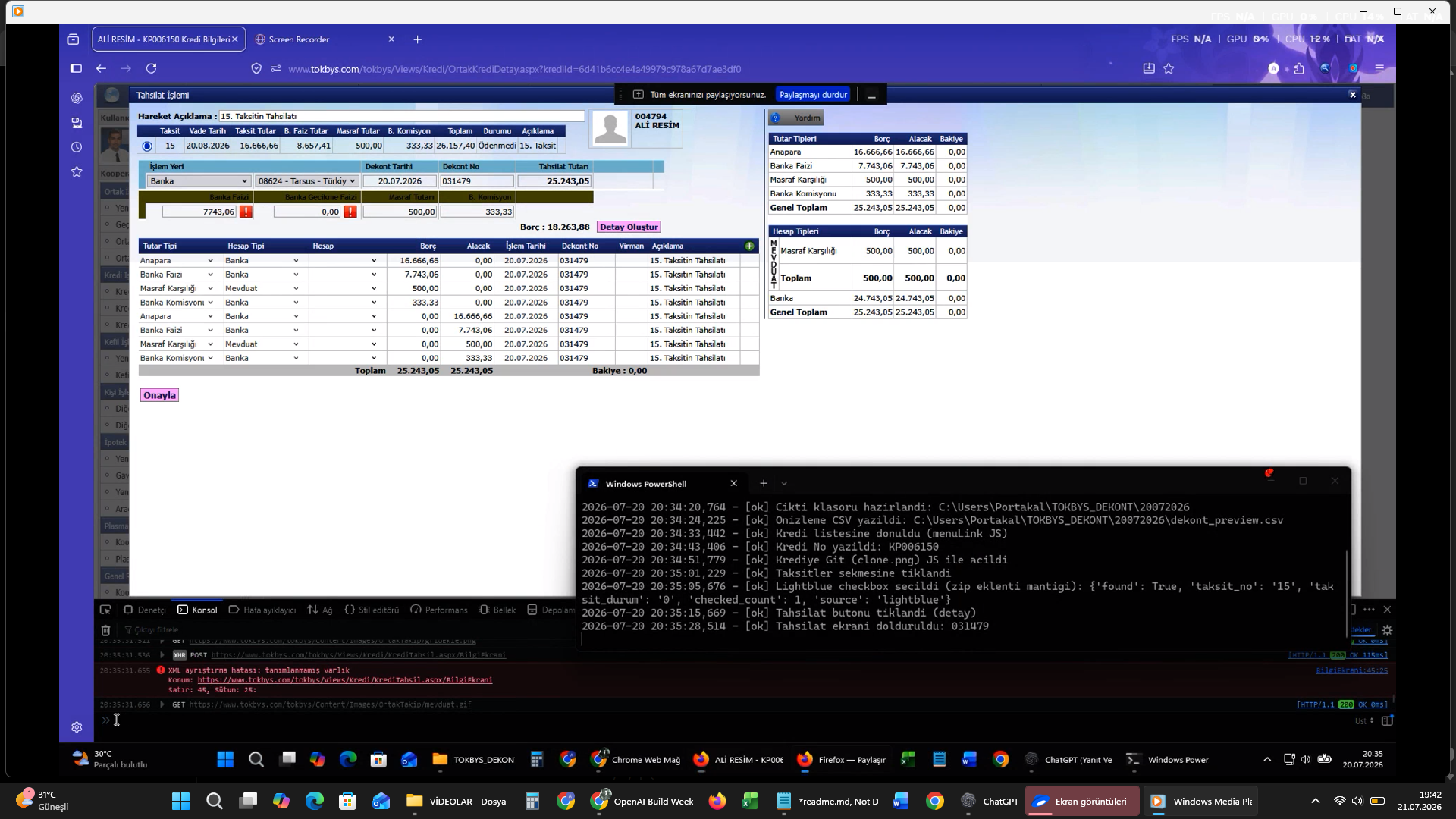
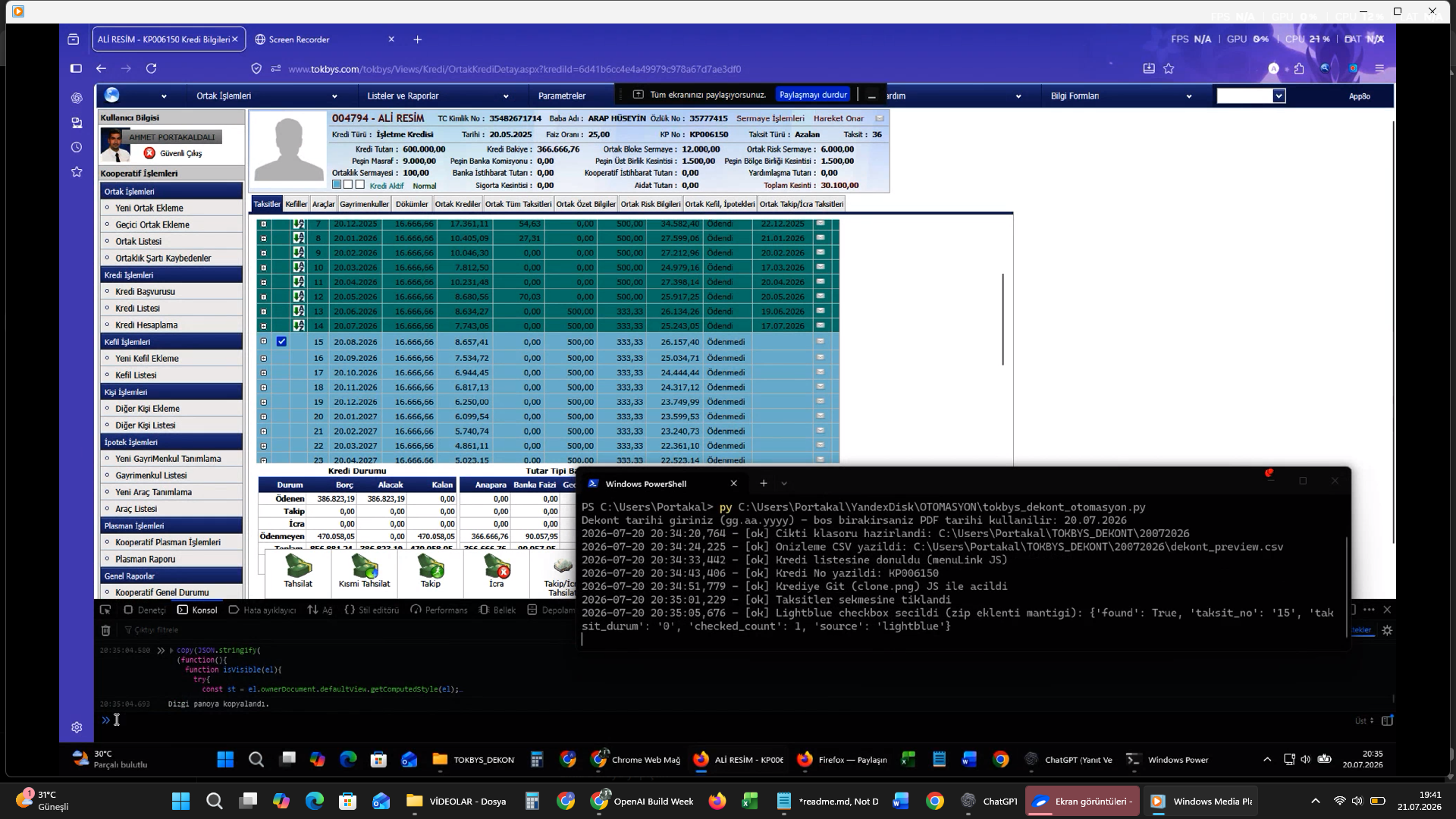
TOKBYS Intelligent Workflow Automation assists operators during cooperative credit collection workflows.
The system can:
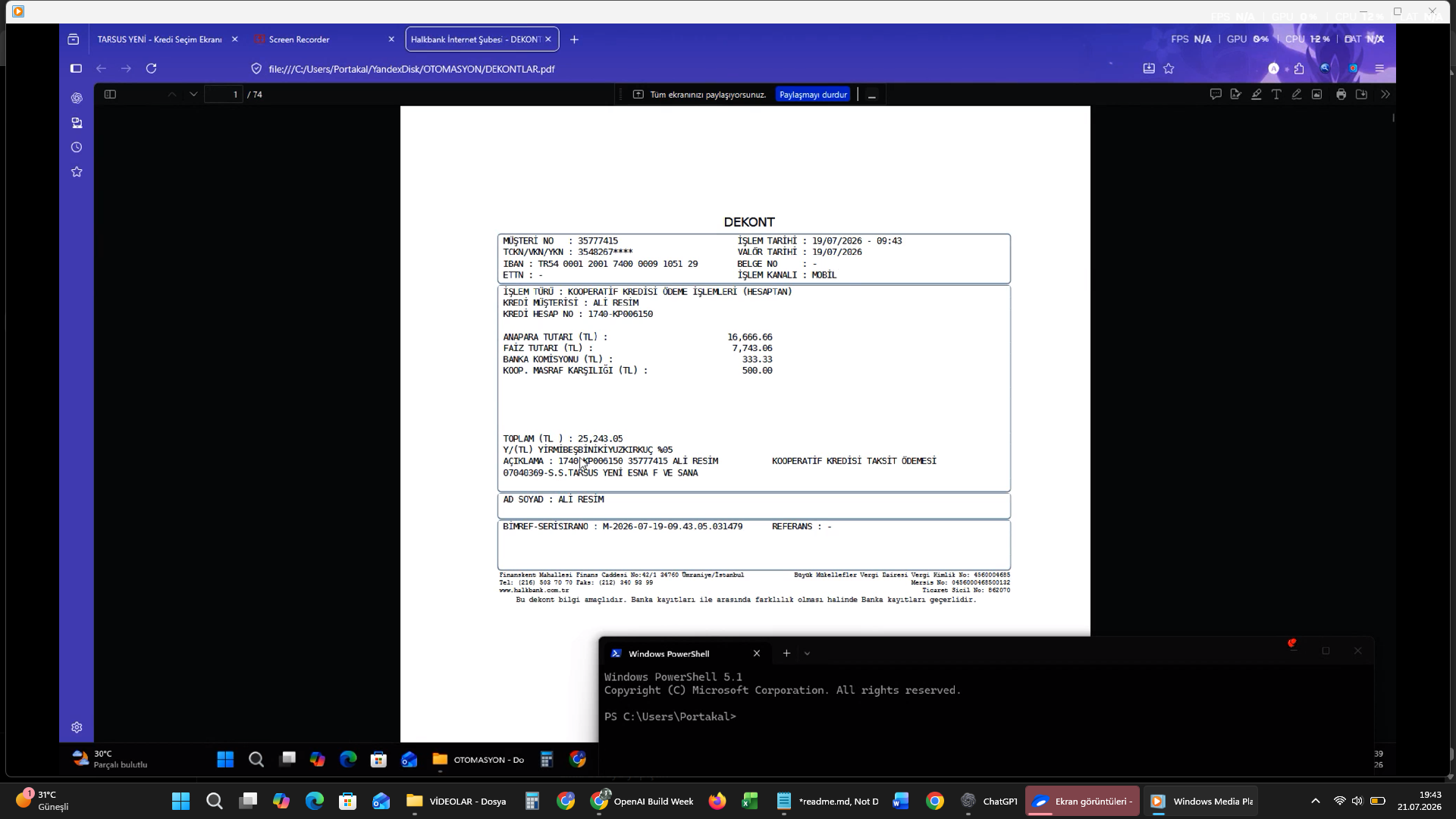
- Read receipt PDFs
- Extract transaction information
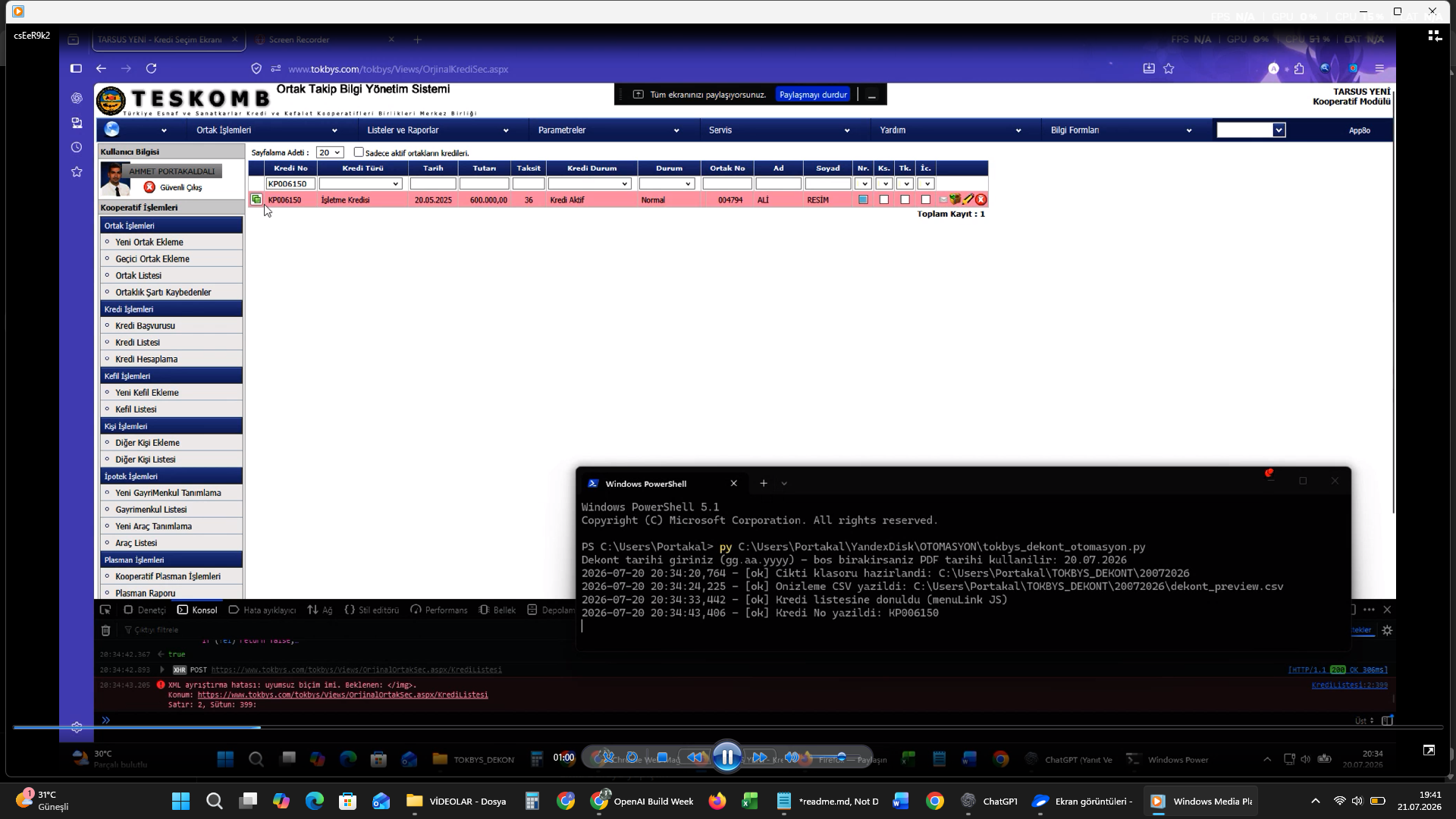
- Search credit records
- Navigate browser workflows
- Fill collection forms
- Execute JavaScript automation when appropriate
- Use coordinate-based interaction only where necessary
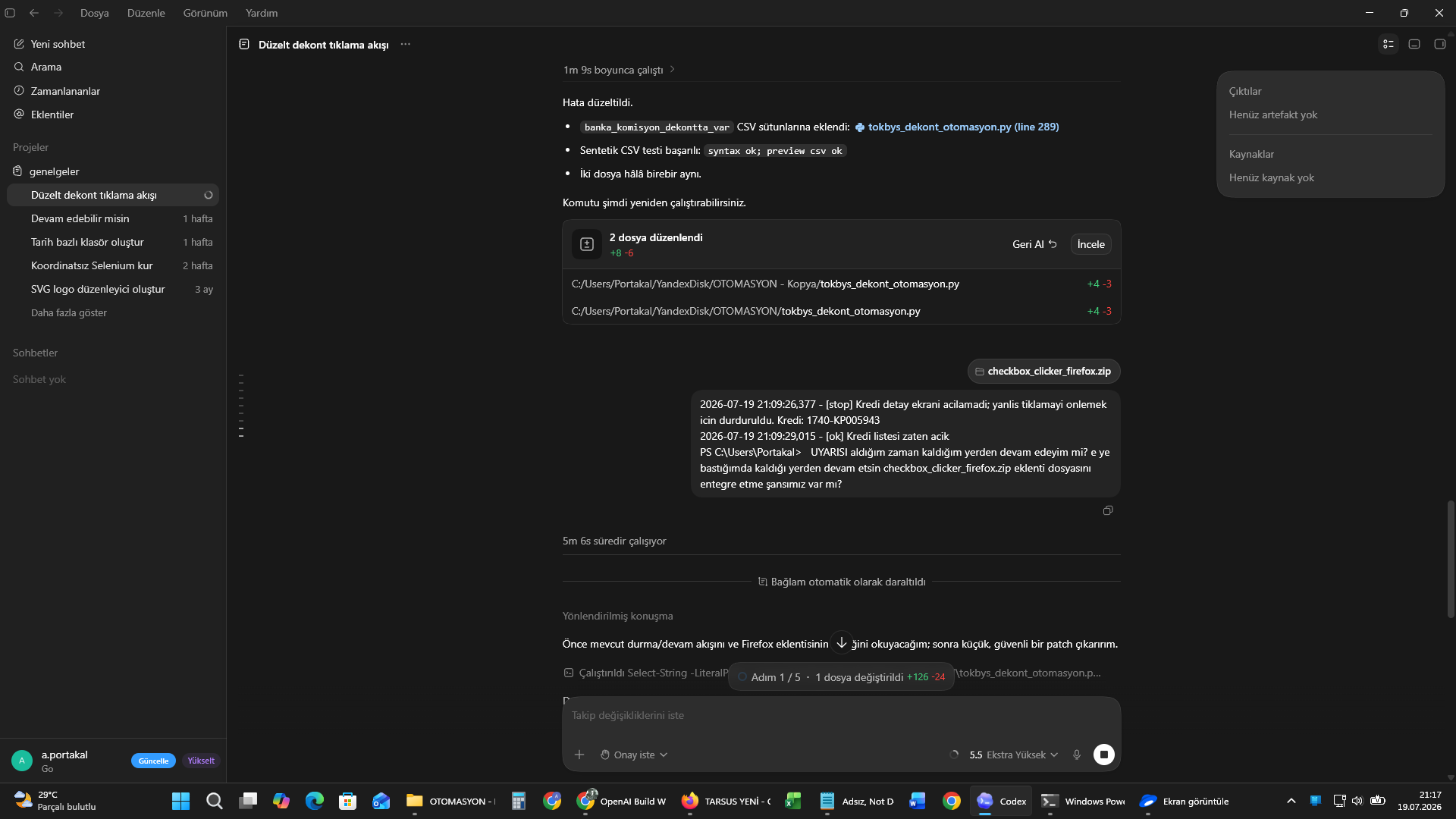
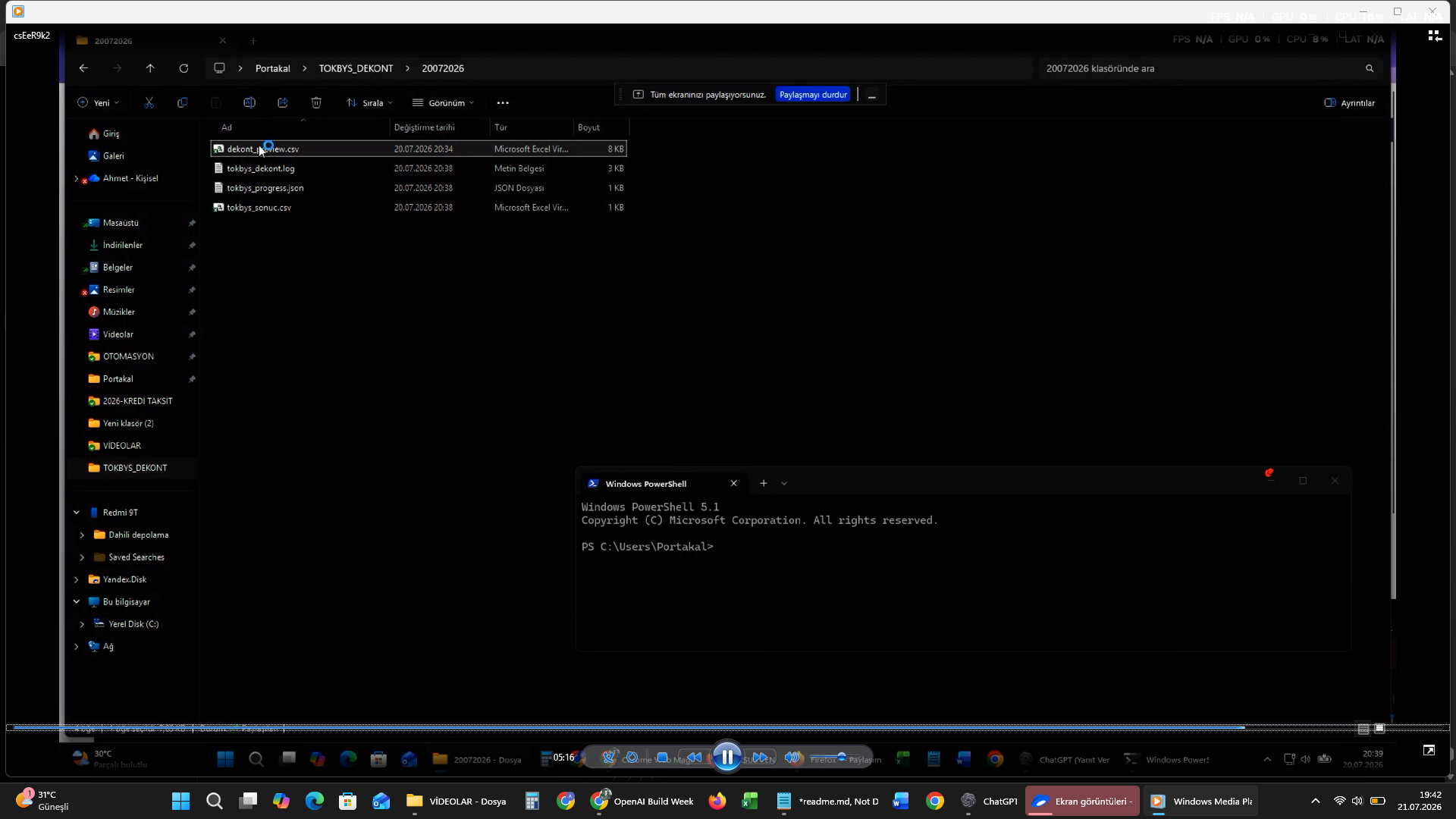
- Continue interrupted workflows
- Record execution logs
The goal is not to replace the operator, but to remove repetitive work while improving speed and consistency.
How I built it
The project is primarily written in Python.
It combines several automation techniques including:
- Python
- JavaScript
- Firefox Developer Tools
- PyAutoGUI
- PyPDF
- Pyperclip
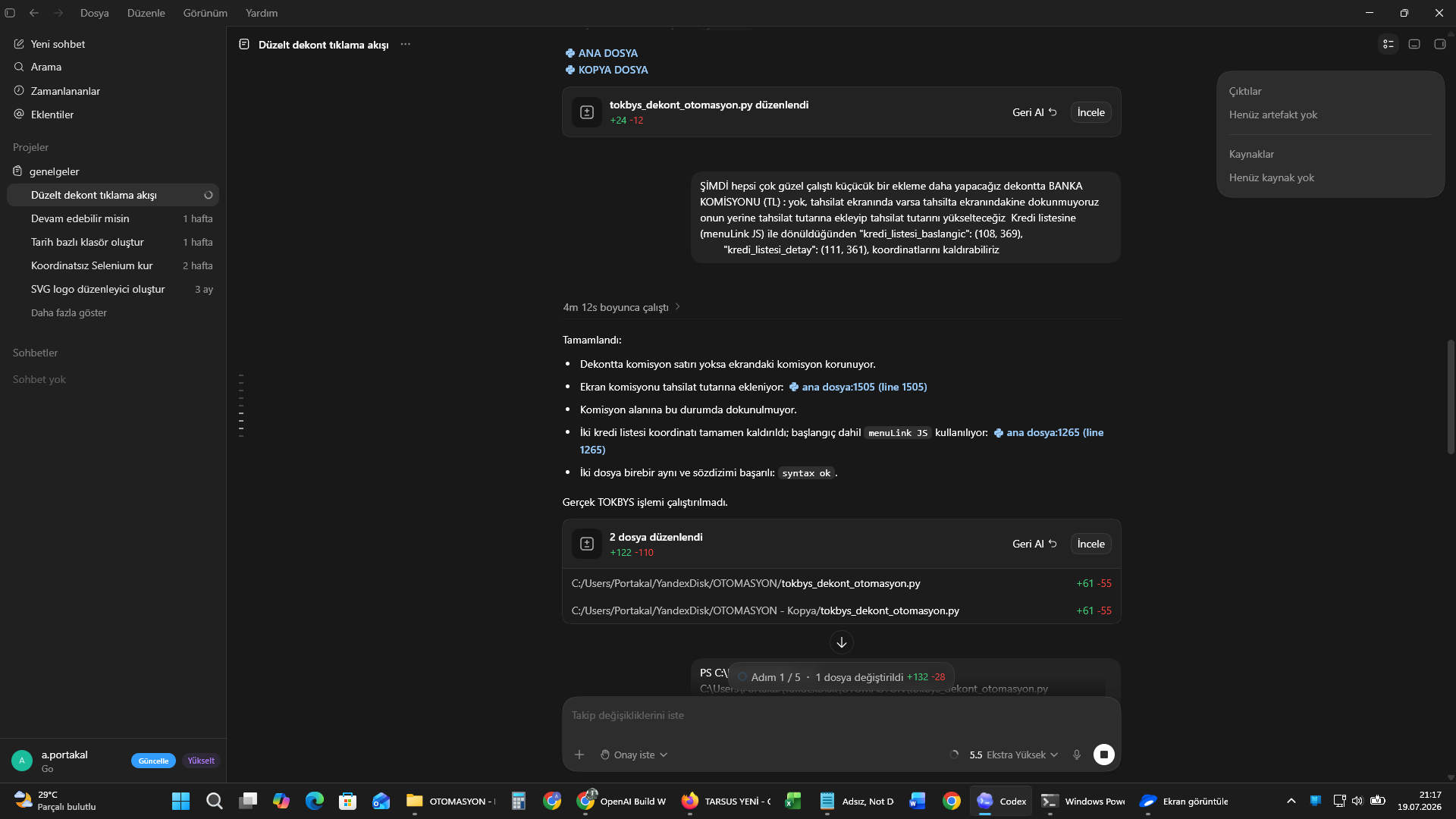
During Build Week, OpenAI Codex became my engineering assistant.
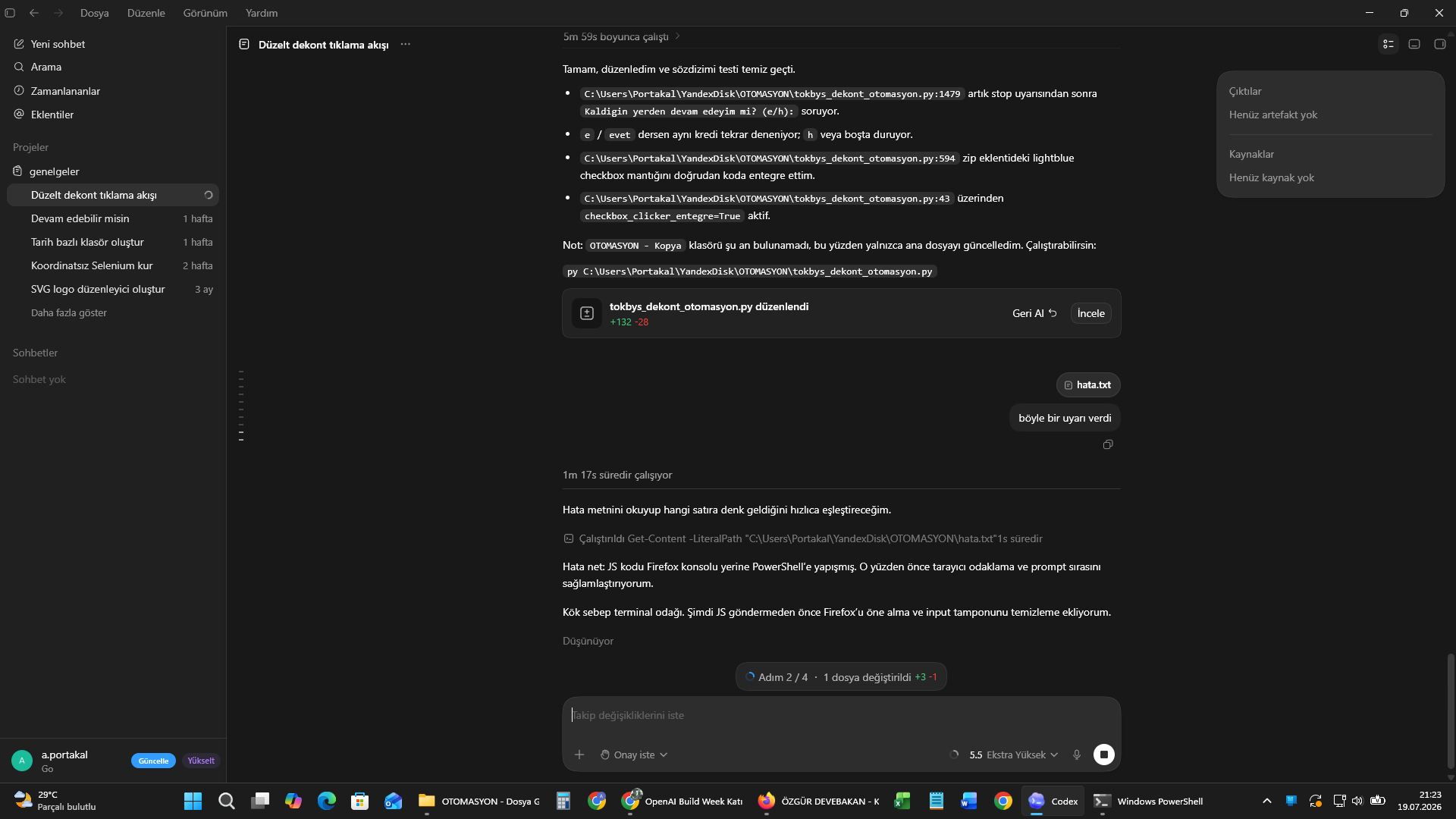
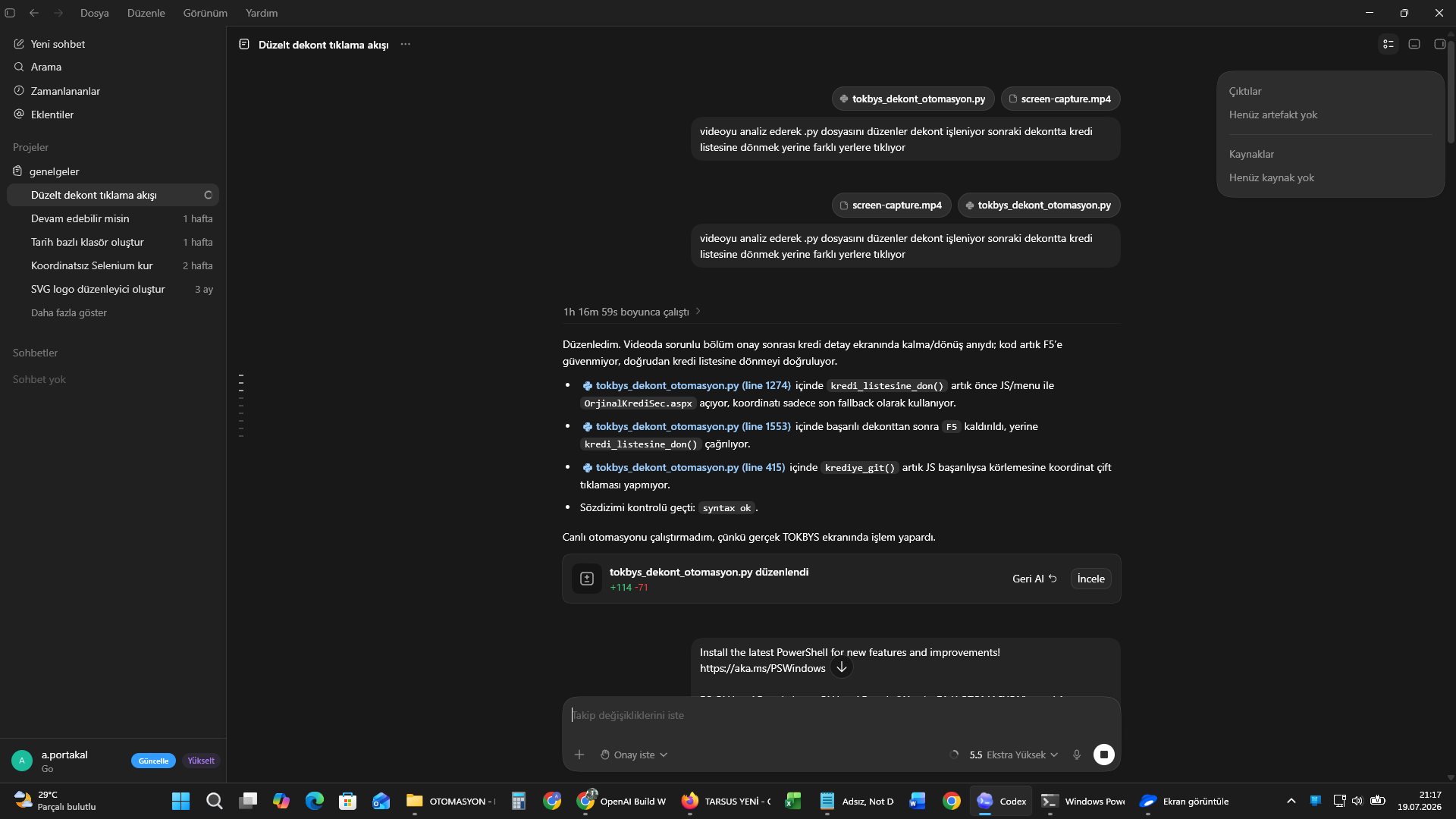
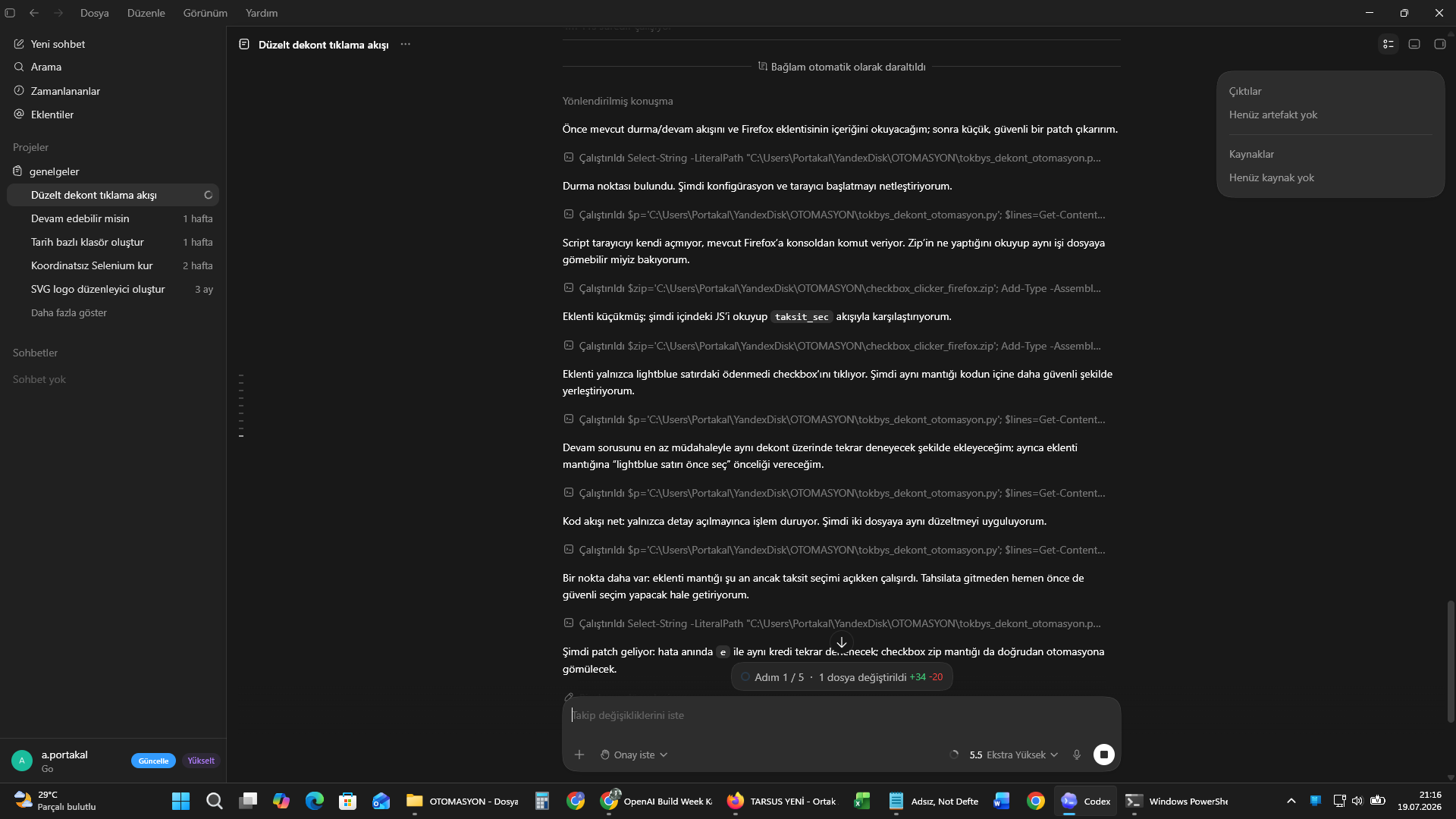
I used Codex to refactor large parts of the project, debug difficult workflow problems, analyze recorded workflow videos, improve JavaScript automation, integrate browser extension ideas into the Python implementation and continuously improve maintainability.
GPT-5.6 also helped refine documentation, architecture and development decisions.
Challenges
One of the biggest challenges was building reliable automation for a real browser-based workflow.
The application combines PDF parsing, JavaScript execution, browser interaction and coordinate-based fallback actions where necessary.
Making these components work reliably in daily production required continuous testing and refinement over several months.
Accomplishments
The biggest achievement is that this is not a prototype.
The automation has been used in real cooperative operations since March 25, 2026 and has continued to evolve through daily operational feedback.
During OpenAI Build Week, OpenAI Codex helped modernize the project by improving code quality, maintainability and reliability.
What I learned
This project showed me that AI is much more than a code generator.
Using OpenAI Codex as a development partner dramatically accelerated debugging, refactoring and feature development while allowing me to focus on solving real operational problems.
What's next
Future development plans include:
- Smarter workflow planning
- OCR support for additional document types
- Multi-user operation
- Web dashboard
- AI-assisted decision support
- Better error recovery
- Automatic workflow optimization
OpenAI Build Week
This project was already in production before Build Week.
During Build Week I focused on improving the production system using OpenAI Codex and GPT-5.6.
Development evidence includes:
- Multiple Codex development sessions
- Iterative code modifications
- Workflow video analysis
- GitHub repository
- Demo video
Built With
- automation
- codex
- desktop
- developer
- firefox
- gpt-5.6
- javascript
- openai
- pyautogui
- pypdf
- pyperclip
- python
- tools
- workflow

Log in or sign up for Devpost to join the conversation.