-
-
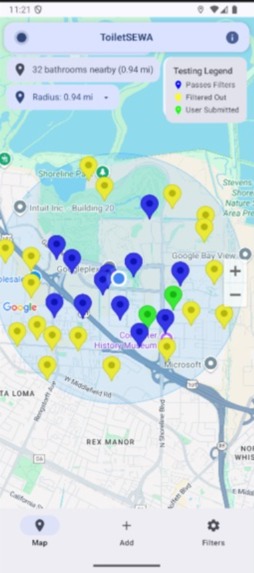
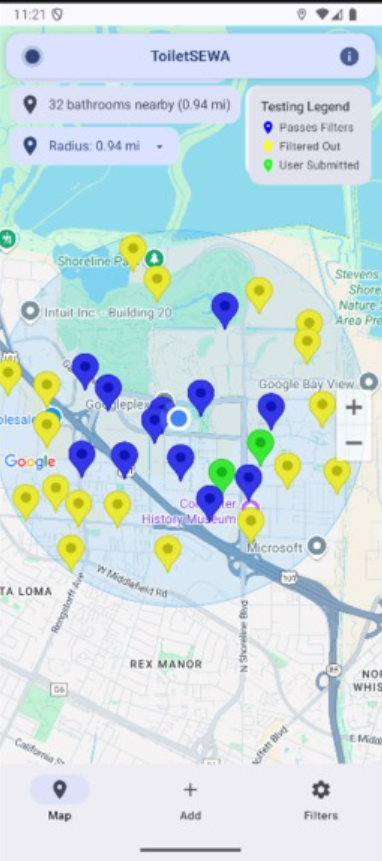
Populated map with all types of registered restrooms
-
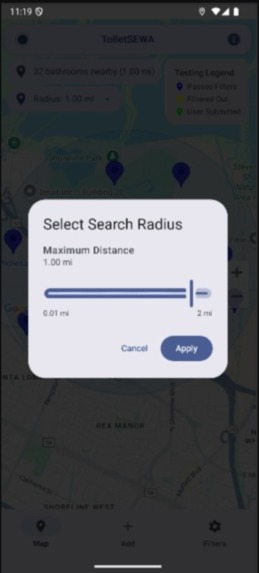
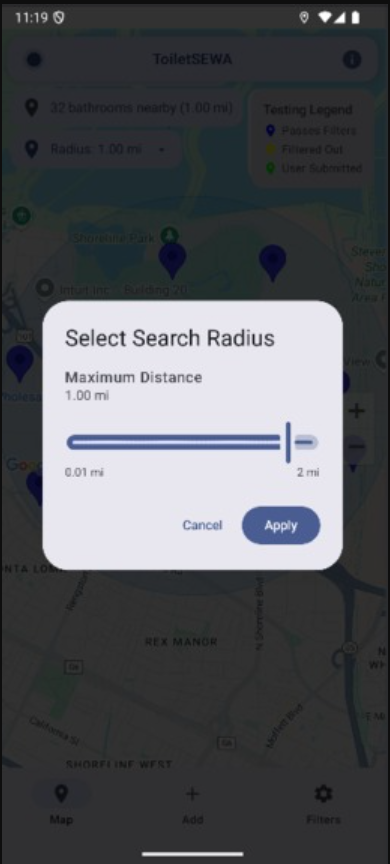
Distance manipulator
-
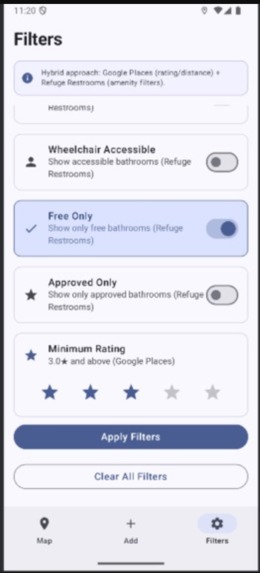
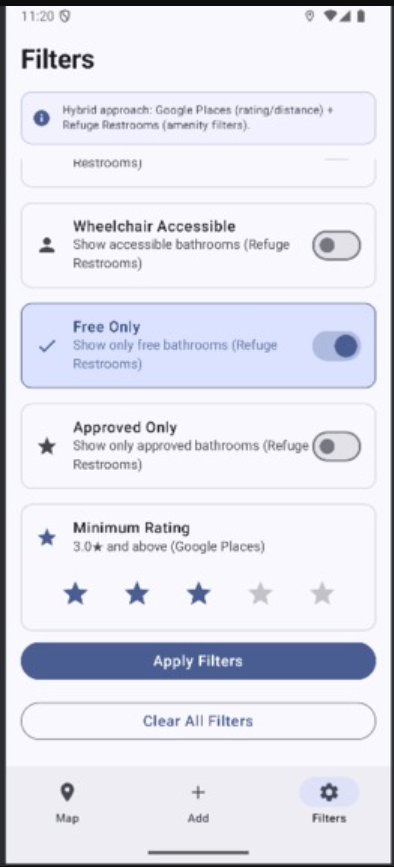
Filters being applied
-
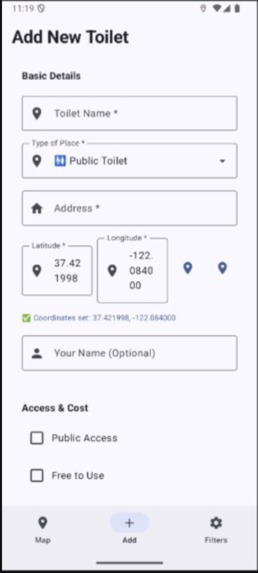
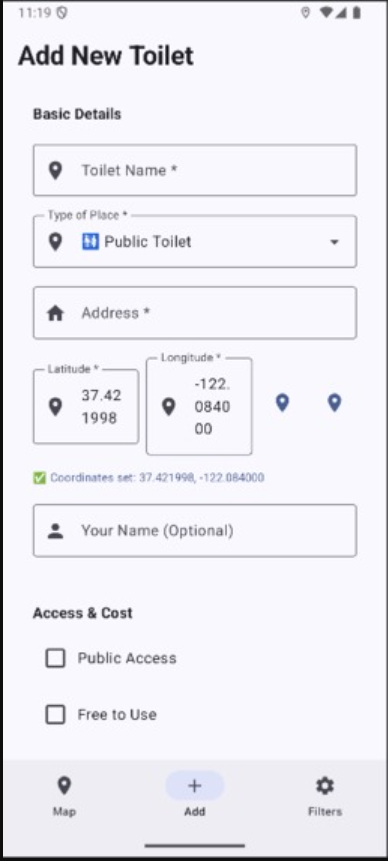
User submitted locations
-
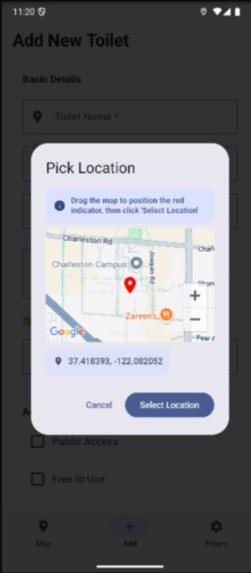
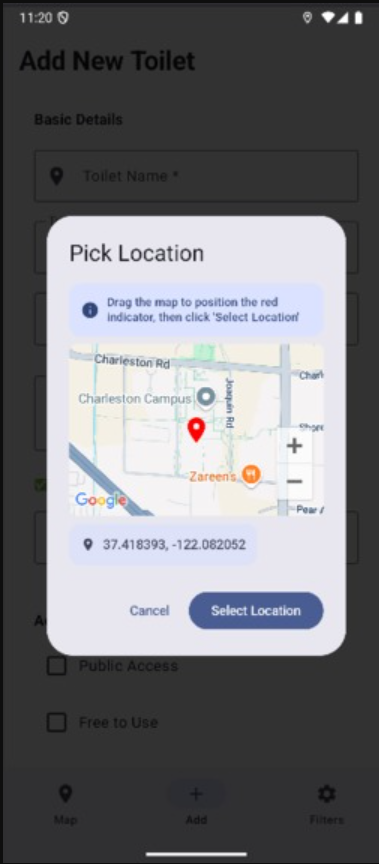
Custom location marker using LAT and LONG for user submitted locations
-
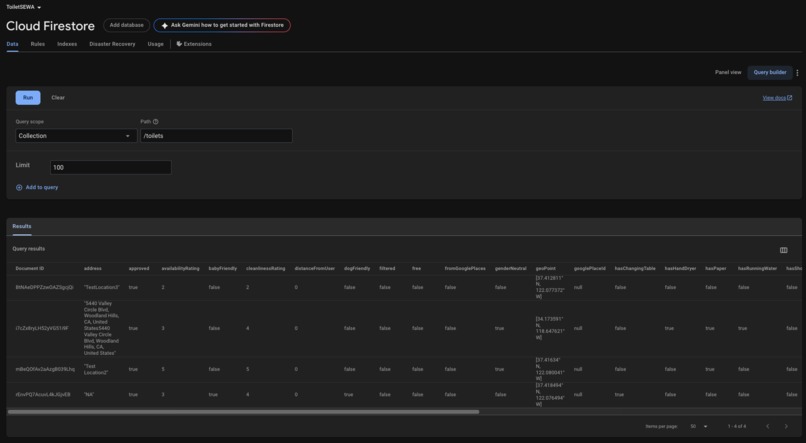
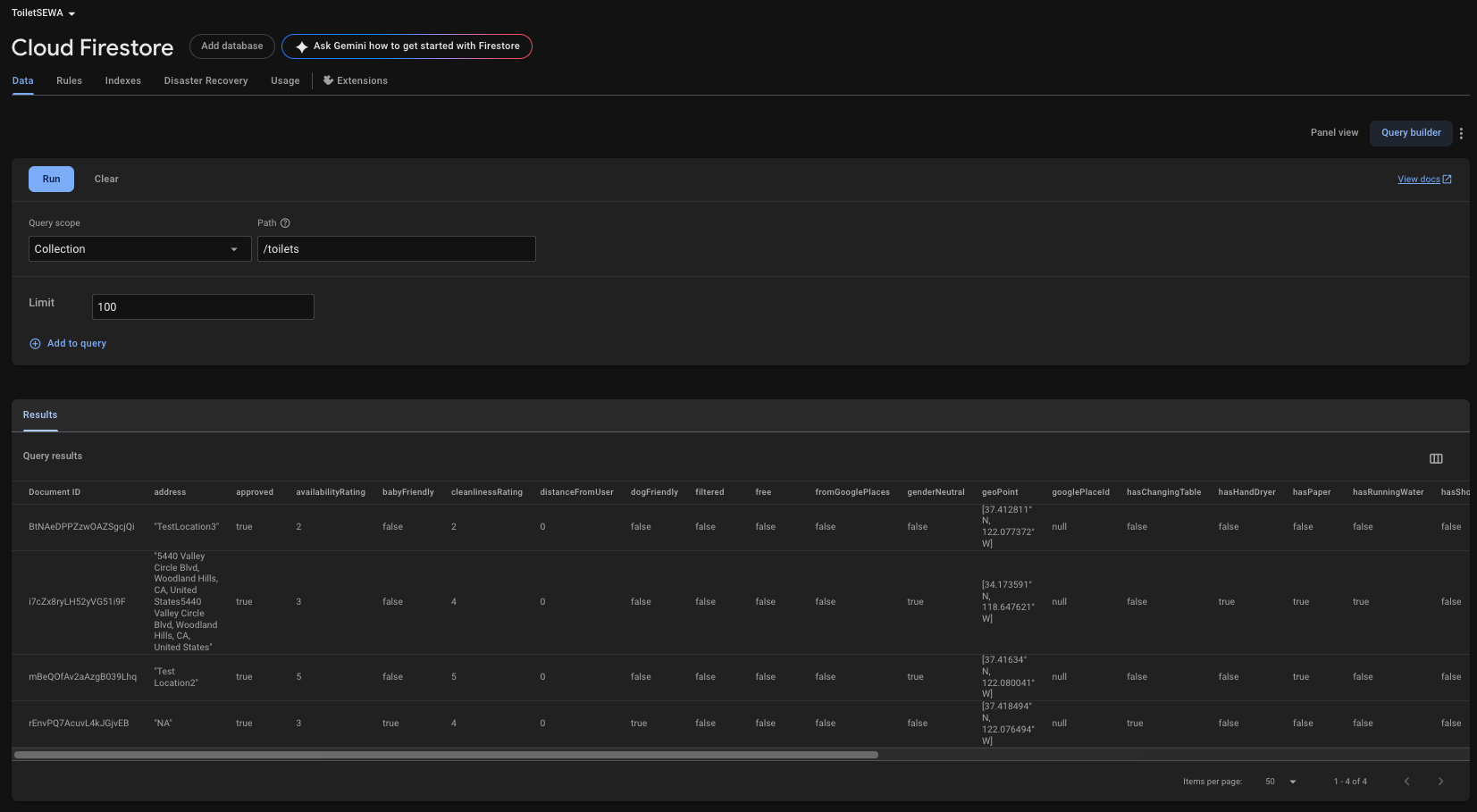
Firebase database of all incoming user submitted locations
Inspiration
Growing up in the United States, I always had access to clean, safe restrooms—something I rarely thought twice about. A recent trip to India changed that perspective completely. I saw my mother and grandmother struggle to find safe, sanitary places during long rural travels. Witnessing their discomfort opened my eyes to the global sanitation crisis. It was shocking to realize that despite incredible advancements, millions still lack access to this basic human need. Inspired by the United Nations Sustainable Development Goal 6, I wanted to create more than just an app—I wanted a tool that empowers communities, promotes hygiene, and makes sanitation accessible worldwide.
What it does
ToiletSEWA is a mobile application that enables users to find, navigate to, review, and add public and private restrooms. It combines the Google Maps SDK, Places API, Geocoding API, and Refuge Restroom API to provide verified restroom data on an interactive map. Users can filter locations by gender inclusivity, baby-changing facilities, dog-friendliness, accessibility, and cleanliness. They can also submit new restrooms via a simple form, with submissions stored in Firebase Firestore and displayed in real time. Built-in navigation lets users get directions to any selected restroom instantly, making the app practical for daily use and travel.
How we built it
The project was developed using Java and Kotlin in Android Studio, integrating a combination of powerful APIs and cloud technologies. On the backend, Firebase Firestore was used to manage dynamic user data, including restroom submissions, reviews, and filters. Firebase Authentication ensured secure interactions for authenticated users, while real-time syncing made sure any new entry or change appeared immediately on the map for others. On the frontend, I designed a clean and modern user interface using XML layouts, with Kotlin logic handling everything from map interactions to form submissions. The app not only integrates verified restroom data through the Refuge Restroom API but also merges it seamlessly with Google Places search results and user-contributed entries. One of the standout technical achievements was creating a unified map that displays these multiple data streams cohesively, allowing users to navigate to any listed location with ease, while maintaining performance and clarity. Every feature was designed with intention—from advanced filtering logic to automatic location detection—so that the app could serve users in diverse environments around the world.
Challenges we ran into
The most significant challenges were managing the integration of multiple APIs with different data formats, creating a scalable Firestore database that could handle complex metadata like reviews and filters, and keeping the app smooth while processing real-time updates. Balancing technical depth with a simple user experience was difficult, especially when adding advanced features like filters and navigation. Debugging API responses and ensuring accurate, up-to-date map markers also required persistence and testing.
Accomplishments that we're proud of
We successfully created a polished beta app that combines verified restroom data with real-time community contributions. Early testers were able to locate restrooms, submit new facilities, and navigate to them seamlessly. Integrating advanced filters, instant map updates, and a working review system in one app was a major technical achievement. Seeing users contribute and discuss sanitation issues because of ToiletSEWA was one of the most rewarding outcomes.
What we learned
The next steps include expanding the app with AI-powered restroom recommendations based on user preferences and travel routes. We plan to partner with NGOs and local governments to crowdsource and verify data globally, especially in underserved regions. Features like gamified rewards for contributions and multilingual support will further improve engagement and accessibility. By submitting ToiletSEWA to the 2025 UNity Hacks, my goal is to secure support and resources to scale the project worldwide. I believe that with collaboration and innovation, ToiletSEWA can grow into a platform that provides dignified, sustainable restroom access for everyone.
What's next for ToiletSEWA
The future of ToiletSEWA is incredibly exciting. In the coming months, I plan to expand the app with AI-powered features that can recommend restrooms based on a user’s route and preferences. I also aim to form partnerships with NGOs, governments, and sanitation initiatives to crowdsource and verify data on a global scale. By submitting ToiletSEWA to both the 2025 UNity Hacks , I hope to gain the visibility and support needed to take the project to the next level. My vision is for ToiletSEWA to grow into a globally recognized platform—one that provides real-time access to clean and safe restrooms, reduces public defecation, and supports sustainable sanitation practices worldwide. I truly believe that with collaboration and innovation, this app can play a small but meaningful role in achieving a world where basic human dignity is never compromised.
Sorry for the bad video, last minute changes affected quality, please refer to Project Media
Built With
- android-studio
- firebase
- firestore
- google-directions
- google-geocoding
- google-maps
- google-maps-sdk
- google-places
- java
- kotlin
- refuge-restroom-api

Log in or sign up for Devpost to join the conversation.