-
-
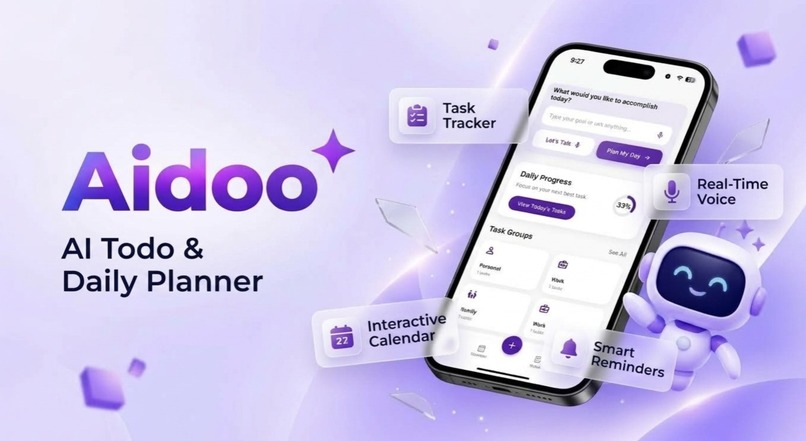
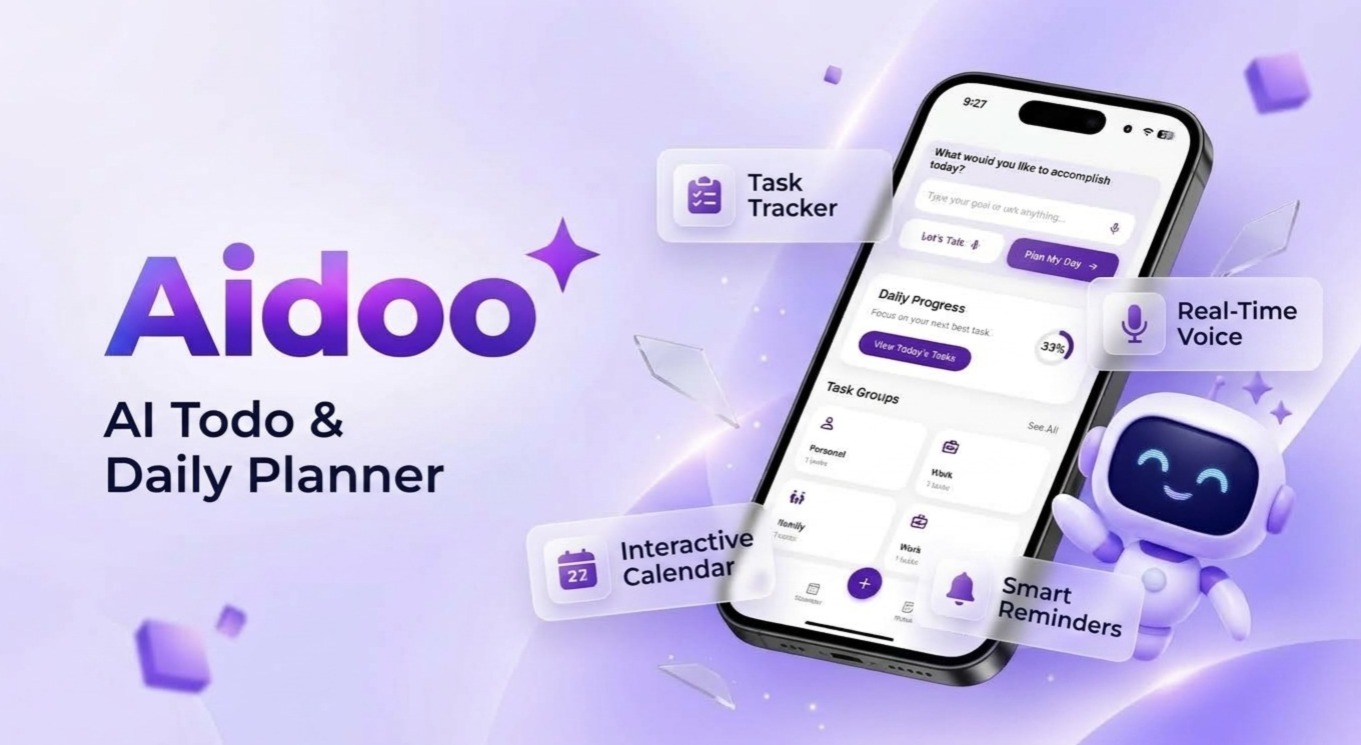
Aidoo - Ai Todo App
-
app icon 1024x1024
-
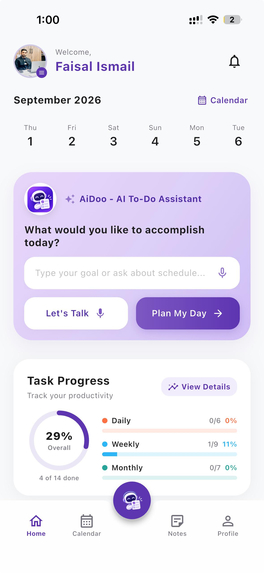
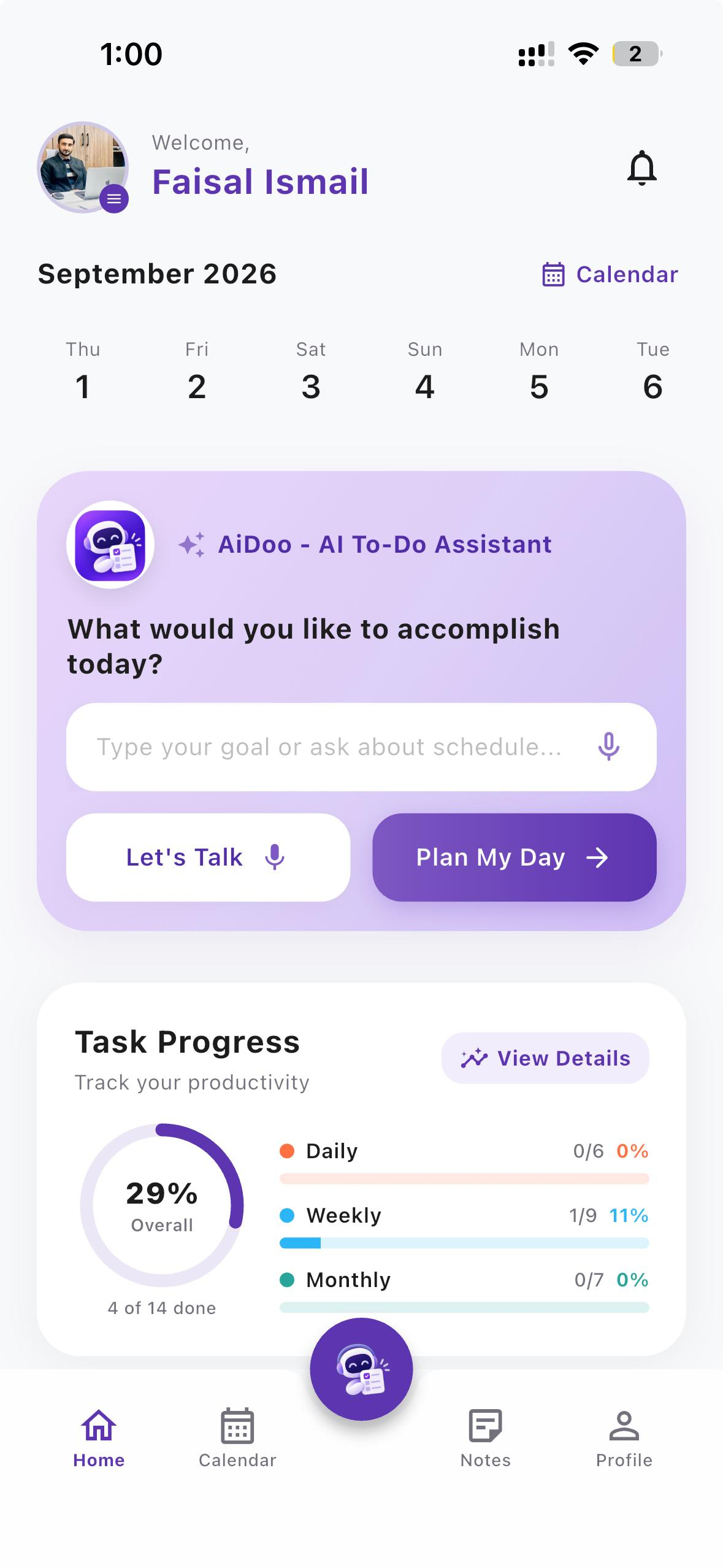
Home Screen
-
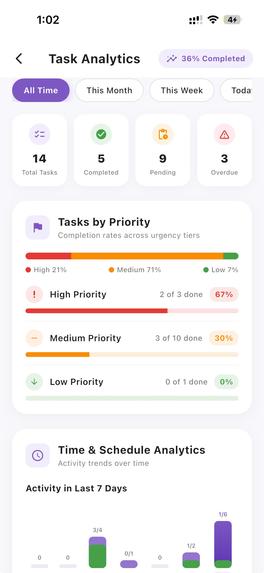
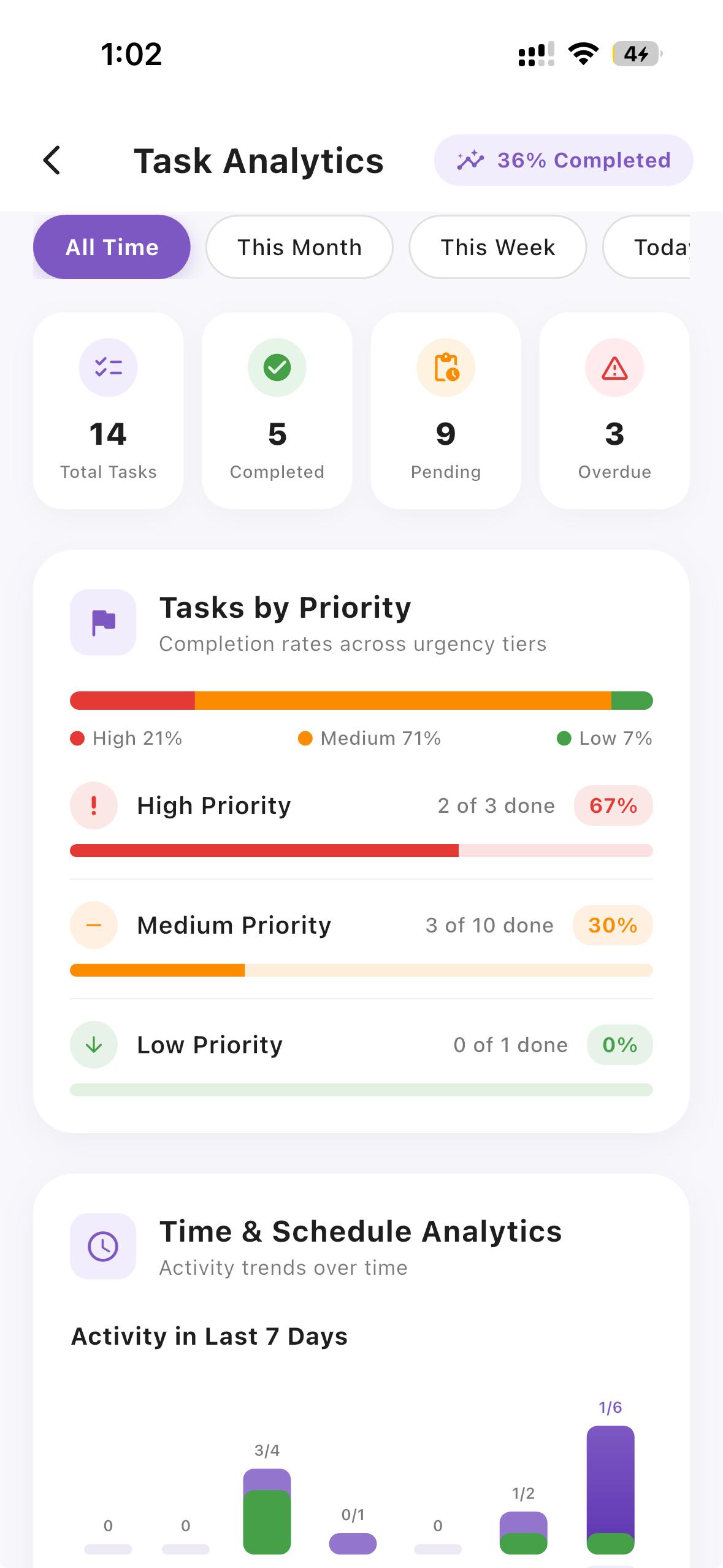
Tasks Analytics
-
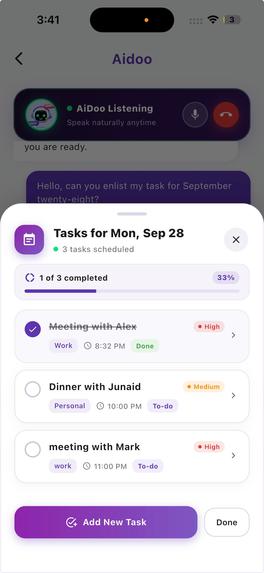
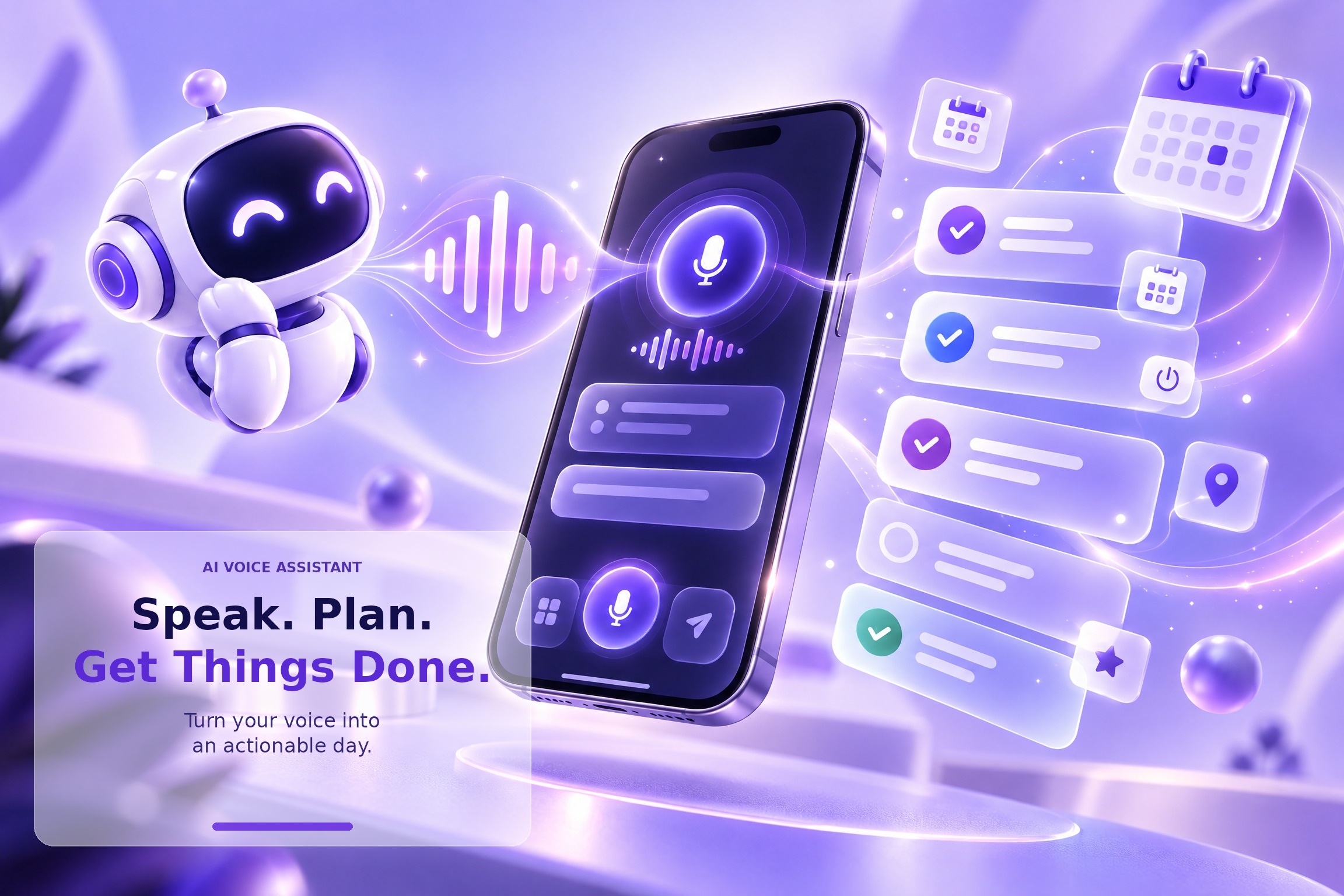
AI Voice Assistant - Speak. Plan. Get Things Done.
-
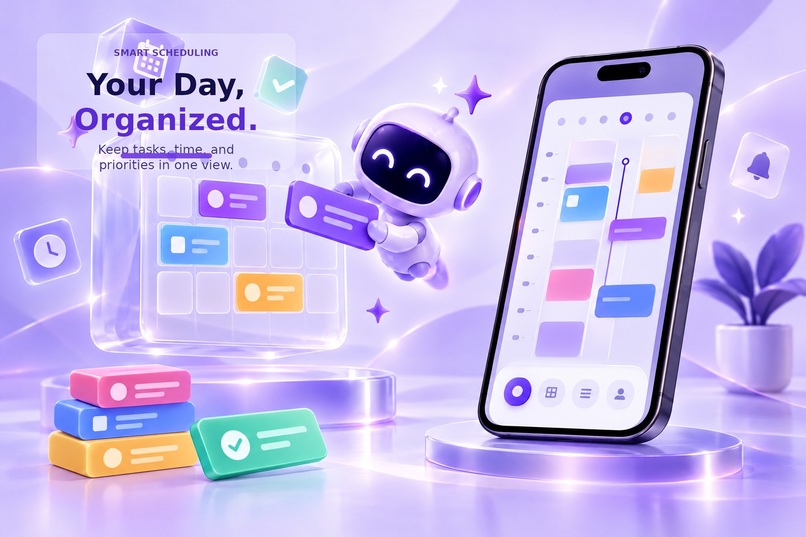
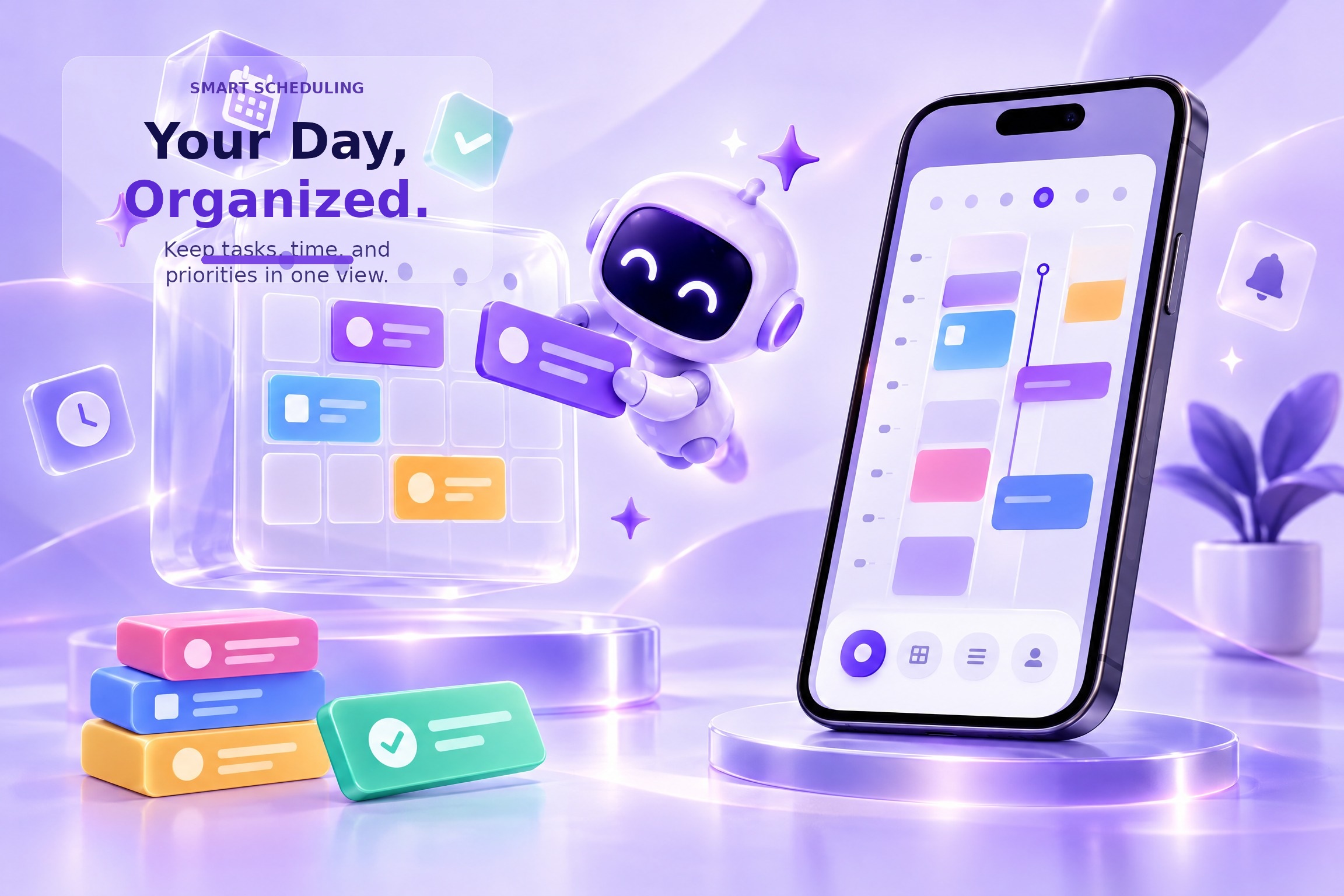
Smart Scheduling — Your Day, Organized.
-
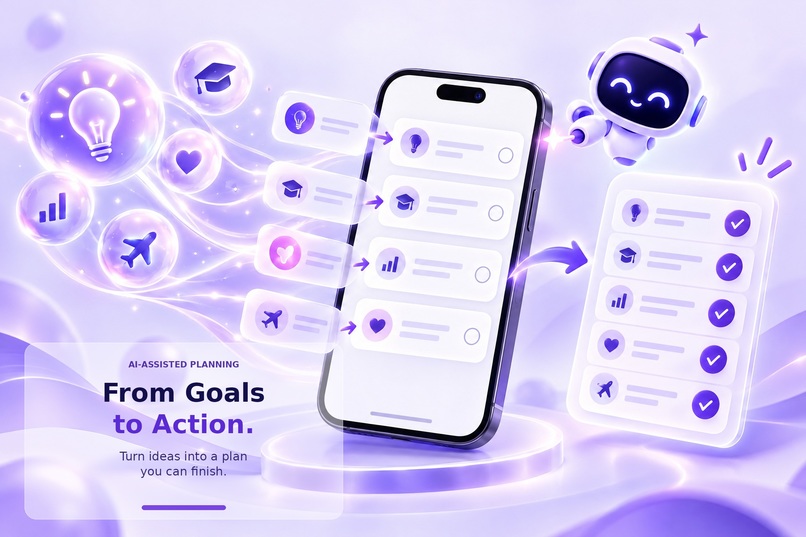
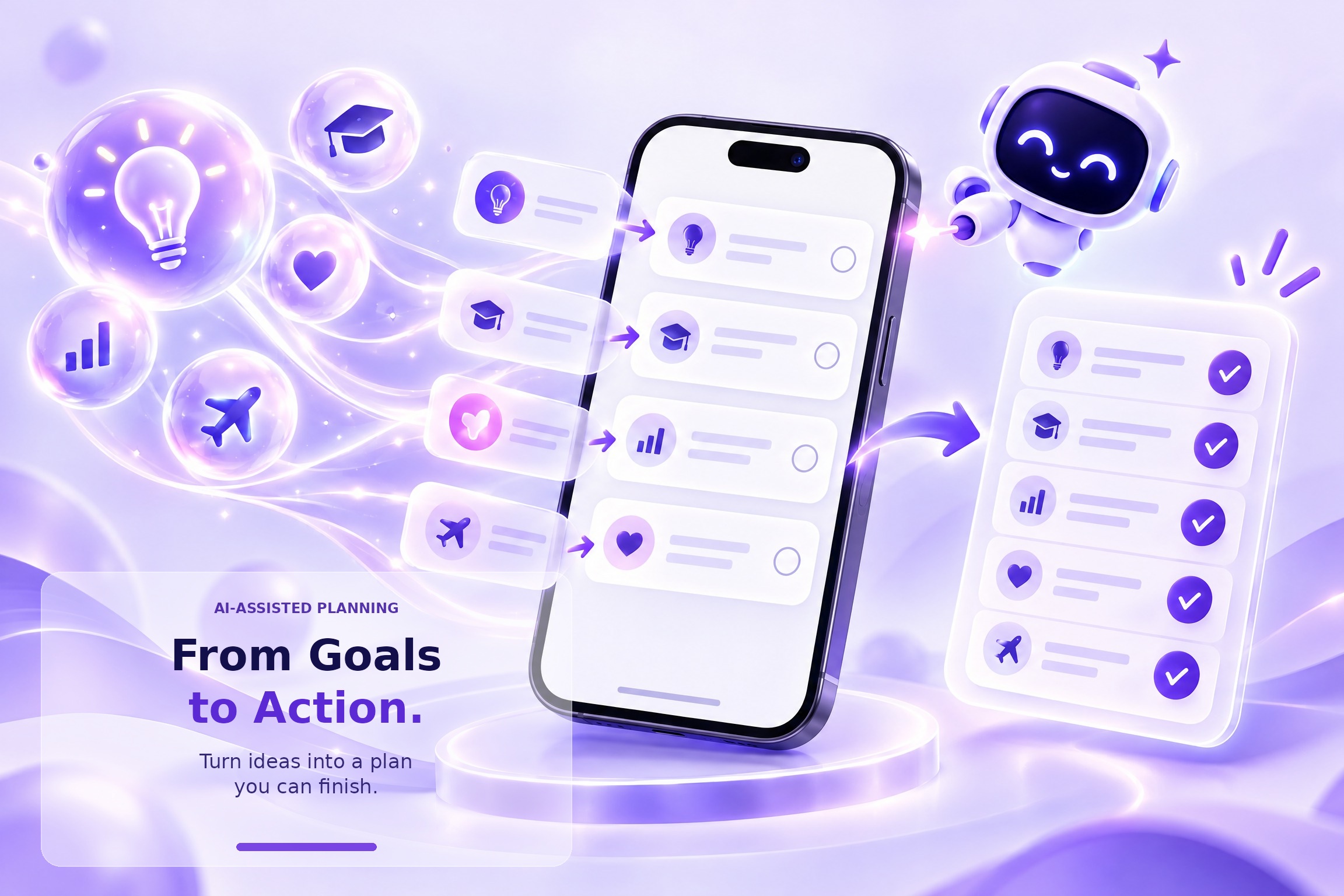
AI-Assisted Planning — From Goals to Action.
-
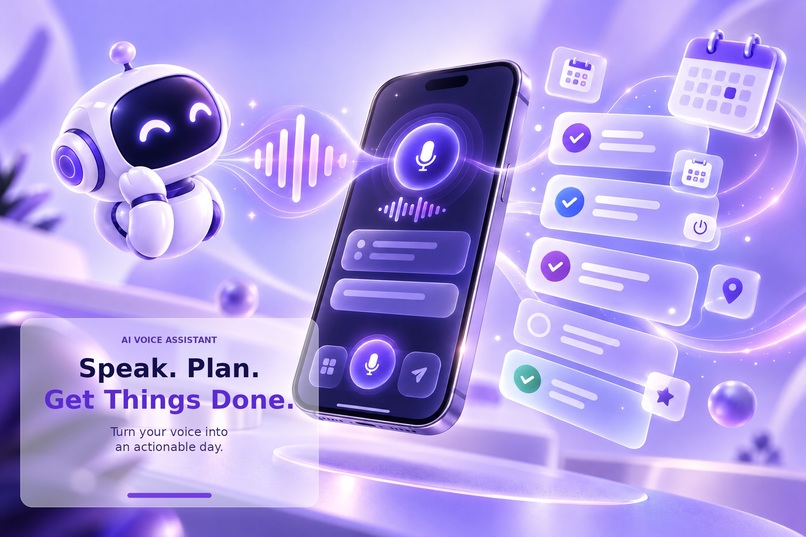
AI Voice Assistant — Speak. Plan. Get Things Done.
-
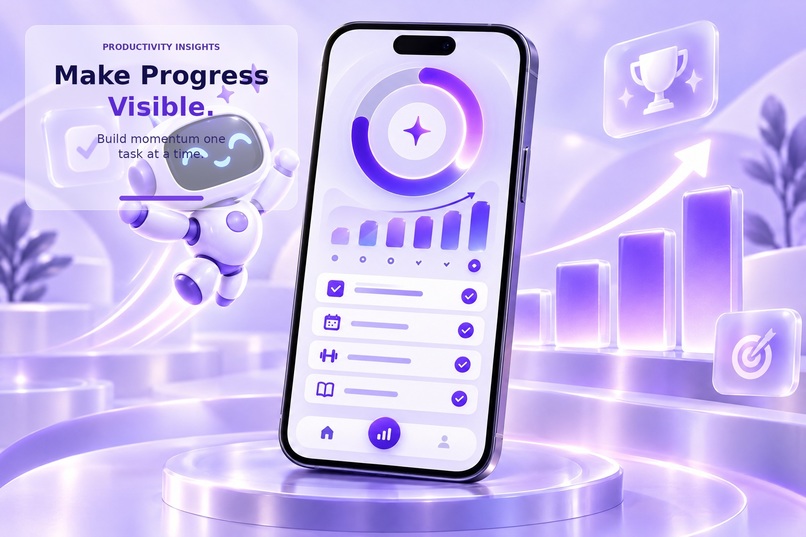
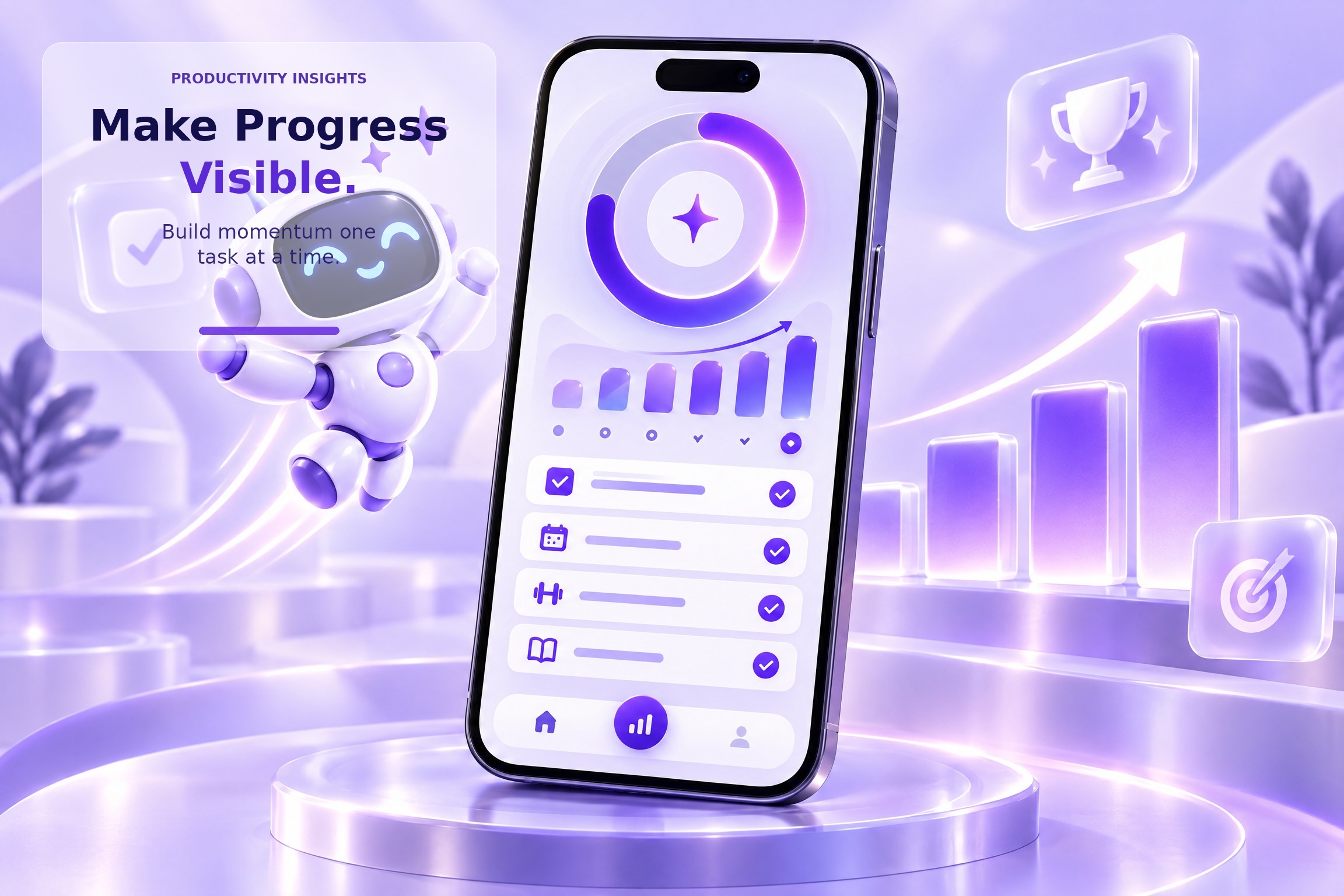
Productivity Insights — Make Progress Visible.

Inspiration
Everyone is rushing.
We move between classes, work, projects, meetings, deadlines, family responsibilities, and dozens of small things we cannot afford to forget. But when something comes to mind, we often do not have the time to stop and fill out a form just to add it to a todo list. We want to capture the thought quickly and never miss something important that matters.
The thought might start as:
"I need to go to the gym tomorrow at 7, finish my report by Friday, and remind me tonight to prepare my clothes."
Why should someone have to translate that thought into tasks, dates, priorities, and reminders manually?
That question became Aidoo, the AI assistant that plans for you.
Aidoo lets people start naturally through text, quick notes, brain dumps, or real-time voice. AI understands the input and turns it into structured, actionable plans.
But we also wanted to solve another important problem: AI should help with planning without silently taking control of someone's personal schedule.
That is why Aidoo follows a draft-first philosophy.
AI understands and proposes. The user reviews, edits, accepts, or rejects. The final decision stays with the person using the app.
What it does
Aidoo turns scattered thoughts into structured, actionable plans.
Users can type naturally, write a brain dump, create notes, or talk to Aidoo through real-time voice interaction. The AI can extract information such as:
- Tasks and subtasks
- Due dates and times
- Priorities
- Categories
- Recurrence rules
- Reminders
Instead of manually filling multiple fields, one natural-language request can become several structured task proposals.
The important part is what happens next.
Aidoo does not immediately push AI-generated actions into the user's task list. It presents them as reviewable drafts, allowing users to change them before anything becomes part of their actual plan.
Aidoo also includes Gemini Live voice interaction, allowing users to have a real-time conversation with their assistant. Through voice, Aidoo can retrieve tasks, understand requests, and prepare task changes through tool-based interactions.
Beyond the AI layer, Aidoo provides the productivity system underneath it:
- Task and subtask management
- Notes and quick brain dumps
- Categories and priorities
- Recurring tasks
- Date strip and calendar views
- Reminders and notifications
- Productivity analytics
- Completion tracking
- Daily and weekly streaks
- Progress insights
We also built authentication with Apple, Google, and email/password, along with account deletion and privacy flows designed for the iOS ecosystem.
How we built it
Aidoo is built with Flutter and Dart, using a layered architecture that separates presentation, state, data, and AI services.
Our main stack includes:
- Flutter for the cross-platform mobile application
- Riverpod for state management
- Firebase Authentication for user accounts
- Cloud Firestore for tasks, notes, and user data
- Gemini 2.5 Flash for structured AI planning and extraction
- Gemini Live for real-time bidirectional voice interaction
- RevenueCat for subscriptions and in-app purchases
- OneSignal and
flutter_local_notificationsfor notifications and reminders
One of our biggest architectural decisions was to avoid treating the LLM as a direct database operator.
Instead, the AI produces structured information that can be validated and turned into draft actions.
For example:
"Schedule gym tomorrow at 7 AM and remind me tonight to prepare my clothes."
Aidoo interprets the request and produces structured proposals containing the relevant task information. The user can then review or modify those proposals before confirming them.
This creates a clear boundary between what the AI suggests and what the application actually saves.
For Gemini Live, we built a real-time streaming experience where users can speak naturally with Aidoo. The assistant can use tools to retrieve relevant tasks and work with task drafts while maintaining the conversation.
RevenueCat
We integrated RevenueCat directly into Aidoo's monetization flow so the app could support real subscriptions instead of treating payments as a future feature.
RevenueCat handles the subscription infrastructure behind our App Store purchases, including:
- In-app subscriptions
- Entitlements
- Paywall experiences
- Subscription state
- Customer management
This allowed us to connect monetization with the actual product experience while keeping the implementation manageable under a very tight hackathon timeline.
OneSignal
Notifications are an important part of a productivity assistant because a task is only useful if people remember to act on it.
We integrated OneSignal's cloud push notification infrastructure with Aidoo so the app can deliver task alerts and important reminders across devices.
Because Aidoo is built with Flutter, OneSignal gives us a cross-platform notification layer that helps keep users connected to the things they decided were important.
The goal is not to send more notifications.
The goal is to send the right reminder at the right moment, helping turn an intention captured in Aidoo into an action that actually happens.
We also use local notifications where appropriate for reminder behavior inside the app.
The result is not just an AI chat interface. It is a complete productivity application where AI sits on top of an actual task and planning system, with monetization and notification infrastructure built into the product.
Challenges we faced
One of our biggest challenges was the timeline.
We discovered Shipaton in the final week of the hackathon, and we decided to go all in.
In roughly a week, we had to move from an idea to a production-level mobile application with AI, real-time voice, authentication, notifications, subscriptions, privacy flows, and an actual App Store-ready experience.
The hardest part was not getting an LLM to generate a task.
The harder question was:
How do we make AI useful when the user's instructions are incomplete, messy, or ambiguous?
People do not naturally speak in database fields.
They say things like:
"I'll probably do this sometime tomorrow."
"Remind me later about the report."
"I need to finish this before the weekend."
The AI has to interpret language like that, while the application still needs predictable and structured data.
That meant thinking carefully about structured outputs, validation, defaults, confirmation flows, and what should happen when the AI does not have enough information.
Then came voice.
A normal chat interface gives you time to see what happened. With real-time voice, everything happens immediately. Audio streaming, conversation state, tool calls, interruptions, latency, playback, and error handling all become part of the product experience.
We also had to connect several independent systems while keeping the application maintainable:
- Flutter
- Firebase
- Gemini
- Gemini Live
- RevenueCat
- OneSignal
- Apple Authentication
- Google Authentication
- Local notifications
And then there was the biggest constraint of all:
We had to ship.
There was no luxury of spending weeks polishing one feature before moving to the next. We had to constantly decide what was essential, what could wait, and what needed to be reliable enough for a real product.
Accomplishments we're proud of
The accomplishment we are most proud of is simple:
Aidoo went from an idea to a real, shippable iOS application in roughly a week during the Shipaton window.
We did not want to finish with only a concept or a beautiful prototype.
We wanted something that could actually be opened, used, and monetized.
Within that short timeline, we built and integrated:
- Natural-language AI task planning
- Structured AI outputs
- Draft-first AI actions
- Real-time Gemini Live voice interaction
- Tool-based task retrieval and task drafting
- Task and calendar management
- Notes and brain dumps
- Productivity analytics and streaks
- Apple, Google, and email authentication
- Account deletion workflows
- RevenueCat subscriptions and paywalls
- OneSignal cloud push notifications
- Local reminders
But the part we are most proud of is the interaction model.
We did not want to build another todo app with a chatbot attached.
We wanted AI to feel like a natural layer over the productivity system.
When your thoughts are messy, you can talk to Aidoo.
When your tasks need structure, Aidoo can help organize them.
When something important needs your attention, Aidoo can remind you.
And when an action matters, you stay in control.
What we learned
Aidoo taught us that building an AI product is much more than choosing a powerful model and writing a good prompt.
The model is only one part of the experience.
We learned how important structured outputs, validation, state management, confirmation flows, error handling, and user trust become when AI interacts with real user data.
We also learned that voice changes the way you think about an interface.
In a text interface, latency can feel like waiting.
In a voice interface, latency can feel like the assistant stopped listening.
That made streaming, interruption handling, audio feedback, and conversation state just as important as the underlying AI.
We learned a lot about monetization too.
Integrating RevenueCat showed us how much of the subscription experience exists beyond simply putting a payment button on a screen. Entitlements, paywalls, customer management, App Store configuration, and the relationship between the product experience and monetization all have to work together.
OneSignal also changed how we thought about productivity reminders.
A productivity app should not only help users organize what matters. It should also help bring their attention back to those commitments at the right time.
Most importantly, we learned something about AI UX that we want to carry into future projects:
More AI control does not always mean a better AI experience.
Sometimes the better product is the one where AI does the complicated work in the background, but the human still gets the final say.
How RevenueCat helped us ship
RevenueCat was an important part of making Aidoo more than a technical experiment.
Because we were working under an extremely compressed timeline, building subscription infrastructure from scratch would have added another major engineering challenge.
RevenueCat gave us the infrastructure to connect our subscription plans with App Store purchases and manage the subscription lifecycle inside the application.
We used it for:
- In-app subscriptions
- Entitlement management
- Paywall experiences
- Customer management
- Subscription state inside the application
This meant we could focus our limited development time on the product experience while still building a real monetization layer.
For us, RevenueCat was not simply a payment integration added at the end.
It became part of the architecture of a product we intended to ship and continue developing after the hackathon.
What's next for Aidoo
Shipaton gave us the push to turn Aidoo from an idea into a real product.
Now we want to take the same idea further.
Today, Aidoo can understand natural-language requests, create structured task drafts, support real-time voice interaction, manage tasks and notes, provide productivity insights, and remind users about what matters.
The next step is making Aidoo more proactive and context-aware.
We want it to understand not only what a user asks it to do, but also the context around their workload and routines.
We are working toward experiences where Aidoo can help answer questions like:
"What should I focus on today?"
"Can you organize my day around these priorities?"
"I have three free hours this afternoon. What can I realistically get done?"
We see the future of Aidoo moving toward:
- AI-generated daily and weekly planning recommendations
- Intelligent workload balancing
- Context-aware prioritization
- Deeper calendar ecosystem integrations
- Shared and collaborative planning
- More personalized productivity insights
- Better continuity between voice and text interactions
Our long-term goal is simple:
Aidoo should not just remember what you need to do. It should help you figure out how to actually get it done.
And that is the product we want to keep building beyond the hackathon.
Built With
- ai-assistant
- cloud
- firebase
- flutter
- google-gemini
- in-app-purchases
- ios
- natural-language-processing
- onesignal
- push-notifications
- revenuecat
- riverpod
- smart-scheduling
- todo-app
- voice-ai

Log in or sign up for Devpost to join the conversation.