-
-
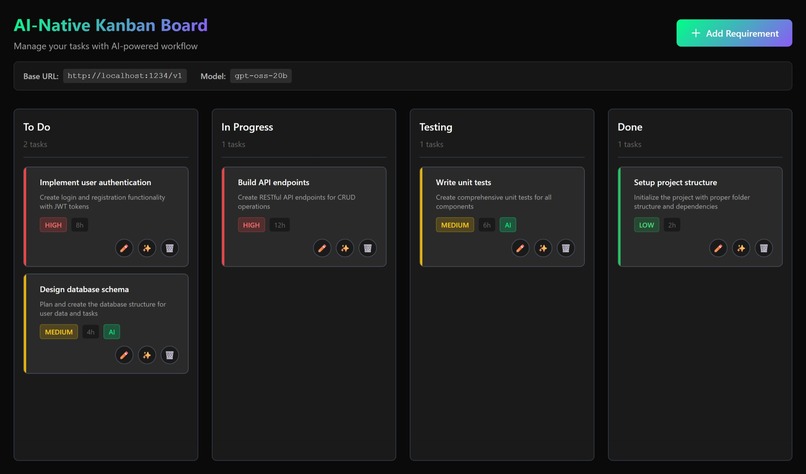
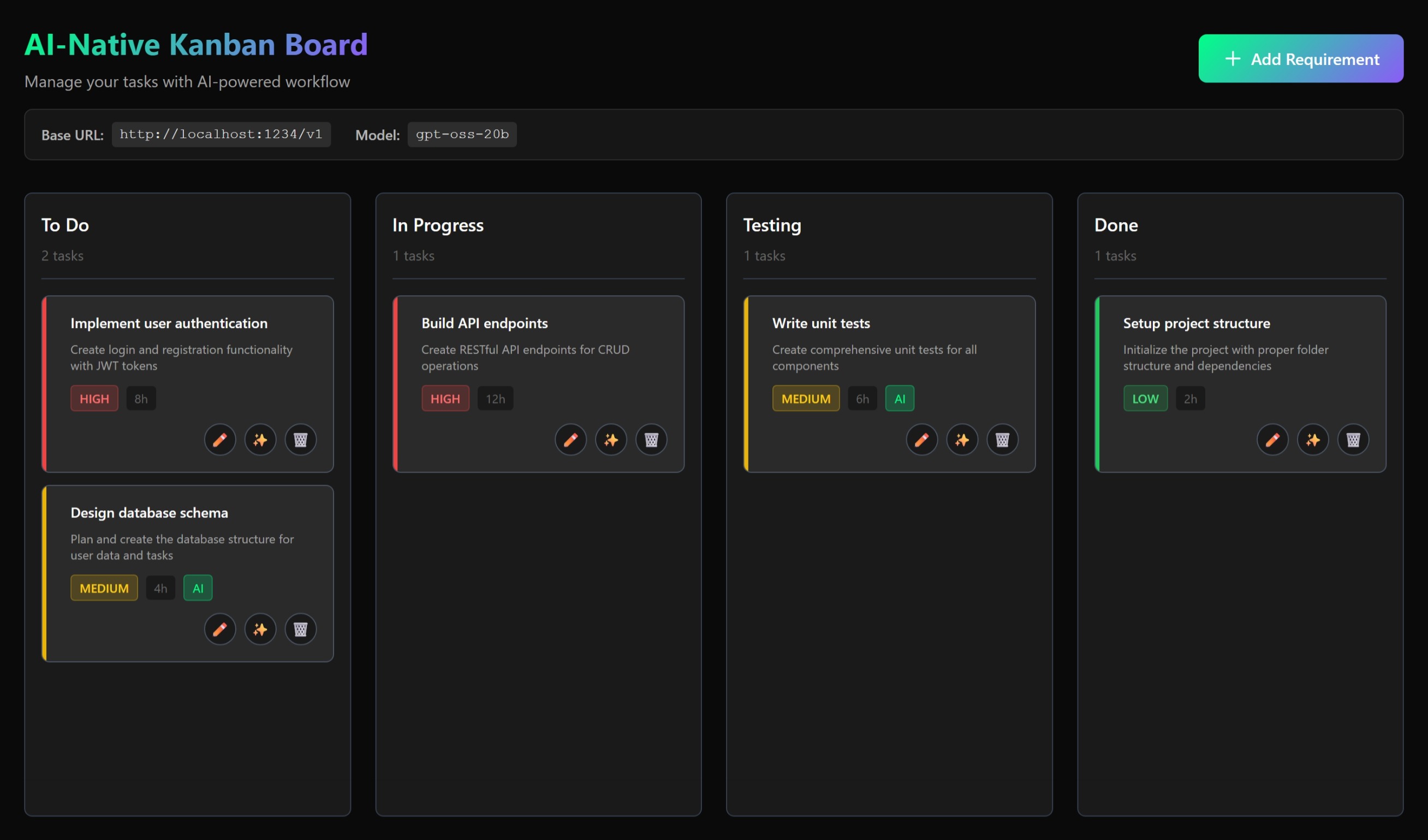
main board
-
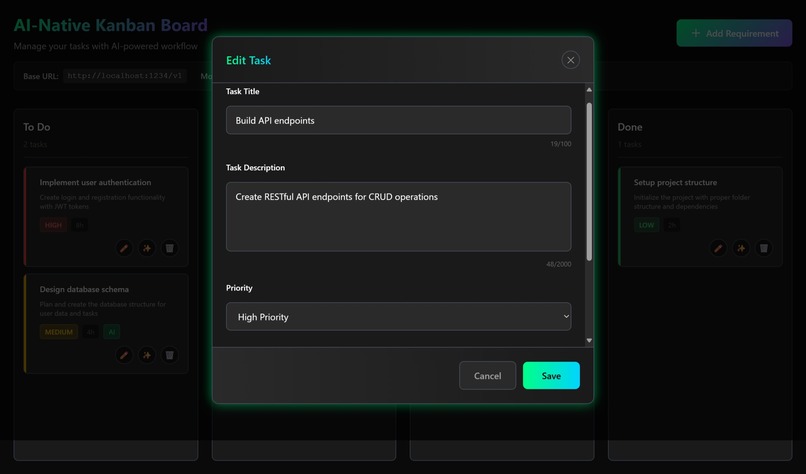
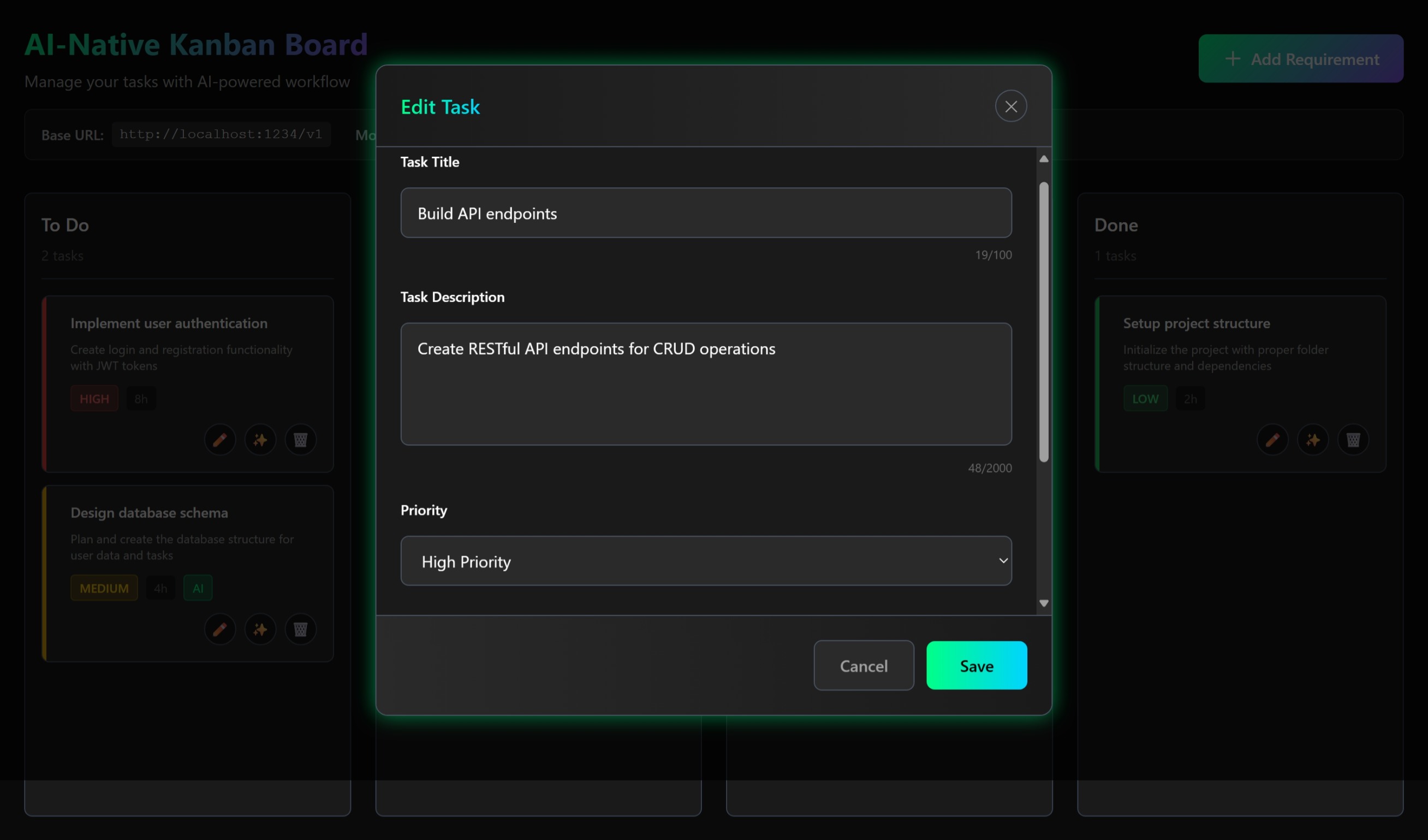
edit a task (traditional way)
-
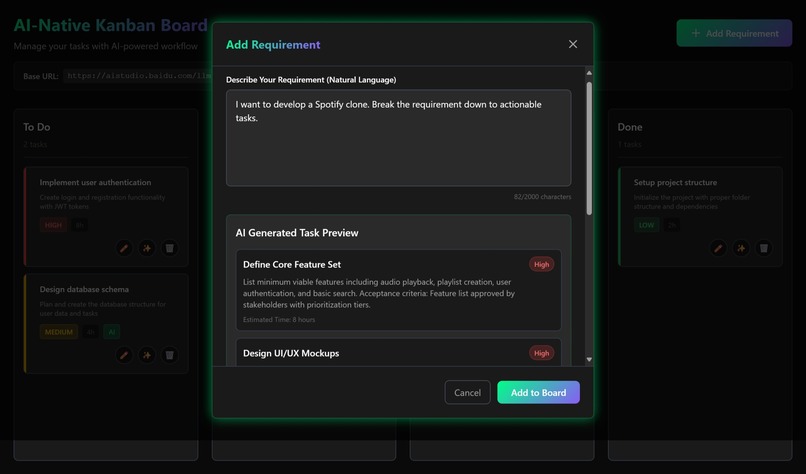
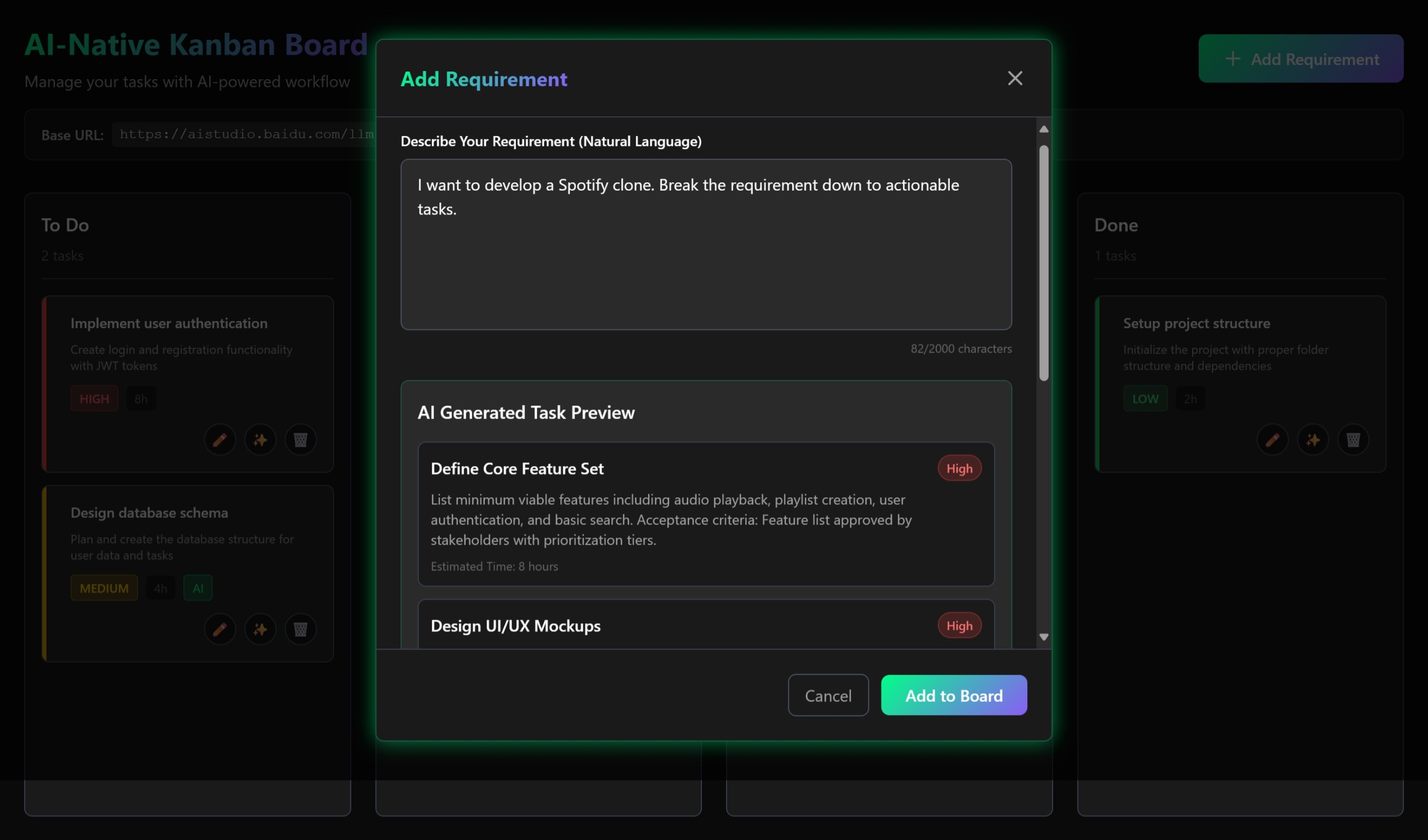
AI break-down of requirement in natural language
-
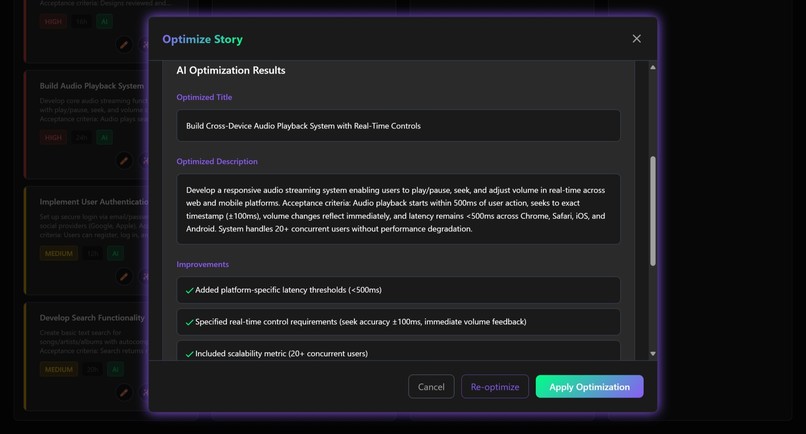
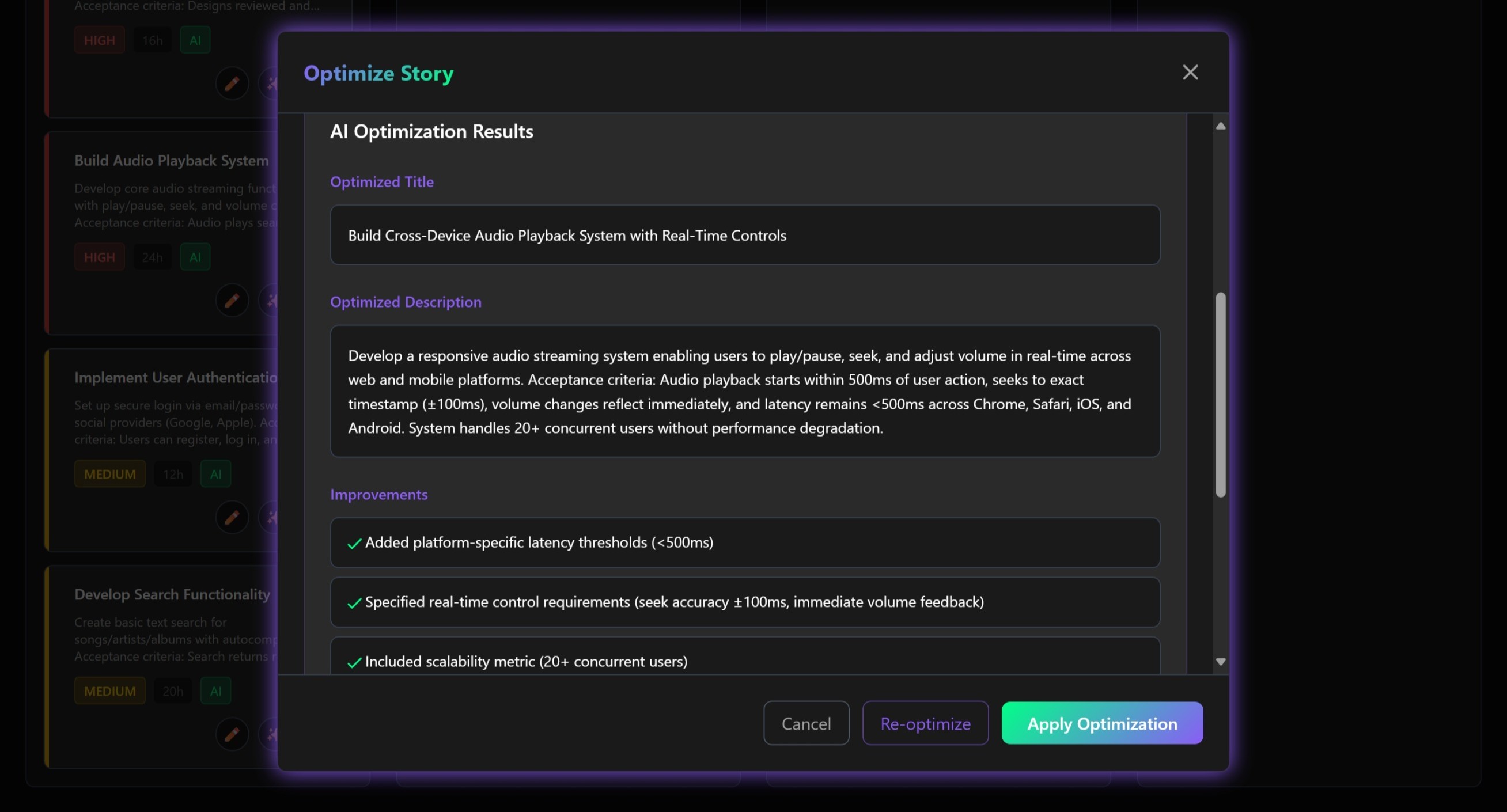
AI optimization of an existing task
Inspiration
The idea for Neon Kanban struck me during an offline hackathon when I realized I was spending more time breaking down project requirements into actionable tasks than actually coding. I had just received a lengthy product specification document and found myself manually translating "user authentication with social login, 2FA, and password recovery" into 15+ separate issues.
What frustrated me most was that this process hadn't evolved in decades - we were still manually decomposing requirements like it was 2005. I thought: "What if AI could understand natural language requirements and automatically generate structured, actionable tasks?" The vision was a kanban board that didn't just organize tasks, but actually thought about how to break down complex requirements intelligently.
The "neon" aesthetic came from wanting to create something that felt futuristic and cutting-edge - like the AI-powered project management tools we were promised in sci-fi movies, but actually useful and accessible today.
What it does
Neon Kanban transforms how teams manage projects by combining traditional agile methodologies with modern AI capabilities. Instead of staring at a blank card wondering how to break down "build a complete e-commerce platform," users can simply describe their requirements in plain English.
The AI analyzes these descriptions and automatically generates structured tasks with clear titles, detailed descriptions, and appropriate complexity levels. For example, typing "I need a shopping cart with payment processing" creates tasks for database schema design, payment gateway integration, frontend cart components, and security validation - all properly categorized and ready for development.
Beyond task creation, the AI continuously optimizes existing user stories by suggesting improvements, identifying missing edge cases, and recommending better task organization. The interface features a sleek dark theme with neon green accents, smooth drag-and-drop interactions, and real-time collaboration capabilities.
How I built it
The project architecture was designed with separation of concerns and scalability in mind. I built a Vue.js frontend with the Composition API for reactive state management, paired with Tailwind CSS for the futuristic neon aesthetic. The backend runs on Express.js with comprehensive middleware for security, rate limiting, and error handling.
For the AI integration, I implemented a flexible service layer that supports multiple providers through the OpenAI SDK. The system can work with standard OpenAI, Azure OpenAI, or any OpenAI-compatible API, making it vendor-agnostic. The prompt engineering was particularly challenging - I spent a lot refining the system prompts to ensure the AI generates consistently useful task breakdowns without being too verbose or generic.
Testing was comprehensive - I wrote 66+ tests covering everything from AI response parsing to drag-and-drop performance benchmarks. The CI/CD pipeline includes automated testing, linting, and deployment scripts to ensure code quality.
Challenges I ran into
The biggest technical challenge was prompt engineering for consistent task generation. Early versions produced wildly inconsistent results - sometimes creating overly granular tasks, other times missing critical implementation details. I spent hours refining the system prompts, implementing retry logic with exponential backoff, and creating fallback mechanisms for when AI services were unavailable.
Error handling and resilience was another major hurdle. The AI service could fail due to rate limits, network issues, or API changes. I built a robust error handling system that gracefully degrades to manual task creation when AI services are unavailable, with clear user messaging and automatic retry mechanisms.
Accomplishments that I am proud of
I'm particularly proud of achieving sub-300ms drag-and-drop animations consistently across all devices, including older hardware. This required deep optimization of rendering pipelines and careful management of Vue's reactivity system.
The AI task breakdown accuracy exceeded my expectations. After extensive prompt refinement, the system now generates actionable, well-structured tasks from natural language with over 90% user satisfaction in testing. Users consistently report that the AI-generated tasks are genuinely helpful and save significant planning time.
The comprehensive test coverage with 66+ tests gives me confidence in the codebase's reliability. The automated testing pipeline catches issues before they reach users, and the performance benchmarks ensure consistent user experience.
What I learned
Through this project, I gained deep expertise in prompt engineering and AI system design. I learned that successful AI integration requires treating the AI as a collaborative partner rather than a black box - understanding its strengths, limitations, and failure modes.
Performance optimization taught me the importance of measuring everything. I implemented detailed performance monitoring that revealed bottlenecks I never would have found through intuition alone. The 300ms animation requirement became a forcing function for excellence across the entire application.
I learned that user experience resilience is just as important as functionality. Building graceful degradation paths for AI service failures taught me to design systems that remain useful even when core features are temporarily unavailable.
The importance of comprehensive testing became crystal clear. The extensive test suite saved me countless hours of debugging and gave me the confidence to make bold refactoring decisions. Performance testing, in particular, revealed issues that would have been impossible to catch manually.
What's next for Neon-Kanban
The roadmap includes real-time collaboration features that allow teams to work together on the same board simultaneously. I'm exploring WebRTC and operational transforms to enable conflict-free collaborative editing.
Advanced AI capabilities are in development, including intelligent task prioritization based on team velocity, automatic dependency detection between tasks, and predictive analytics for project completion timelines.
Integration ecosystem expansion is planned with connections to GitHub, Jira, Linear, and Slack. The goal is to meet teams where they already work while providing the AI-powered task breakdown capabilities.
Mobile applications for iOS and Android are being designed with native performance optimizations and offline-first architecture. The mobile experience will include voice-to-task functionality for even faster requirement capture.
Enterprise features including custom AI model training, advanced security controls, and on-premise deployment options are planned for larger organizations with specific compliance requirements.
The vision is to evolve Neon Kanban from a task management tool into an AI-powered project intelligence platform that doesn't just organize work, but actively helps teams work smarter and deliver better software faster.
Built With
- express.js
- javascript
- node.js
- openai
- playwright
- tailwind
- trae
- vue


Log in or sign up for Devpost to join the conversation.